
Inferensys

Integration

AI Integration for Palo Alto Cortex XDR CSPM

Use AI to analyze cloud posture findings in Cortex XDR, prioritizing issues that create direct ingress points for attackers or violate specific compliance frameworks relevant to your organization.
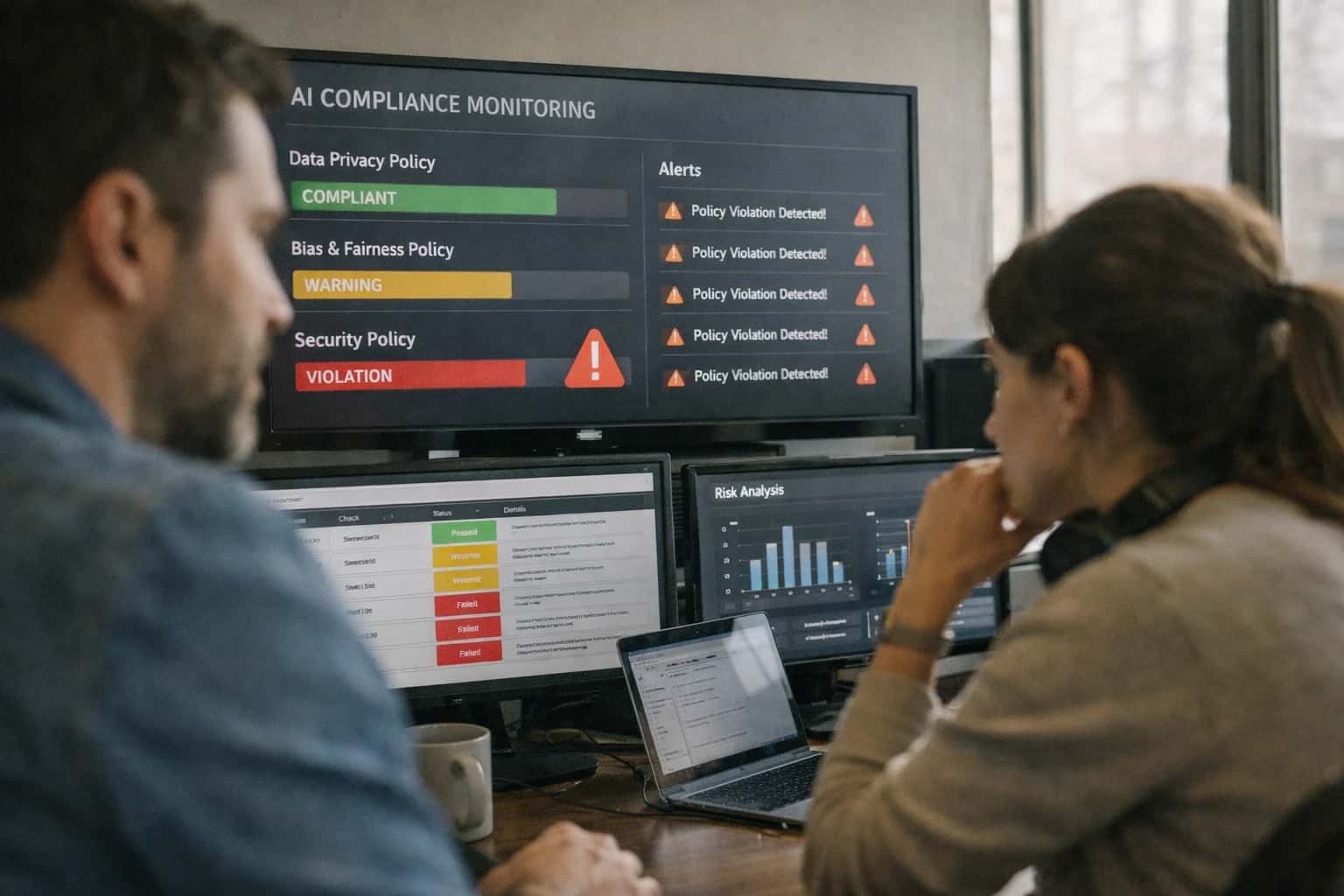
Compliance officer monitoring AI compliance agent on laptop, policy dashboards visible, modern WeWork desk setup.
ARCHITECTURE AND ROLLOUT

Where AI Fits into Cortex XDR CSPM

Integrating AI with Palo Alto Networks Cortex XDR CSPM transforms cloud posture findings from a list of misconfigurations into a prioritized, actionable remediation plan.

AI integration connects at the Cortex Data Lake API and the Cortex XDR CSPM Findings data model. The primary workflow ingests posture assessment results—covering resources across AWS, Azure, GCP, and container environments—and applies a risk-scoring model that goes beyond static CVSS or compliance checks. This model evaluates findings based on:

  • Direct Attack Path Potential: Does the misconfiguration (e.g., a publicly exposed S3 bucket, an overly permissive service account) create a clear ingress point or lateral movement opportunity for an attacker?
  • Business Context: What is the criticality of the affected asset based on tags, CMDB data, or runtime activity? A critical finding on a dormant development server is less urgent than a moderate finding on a production database.
  • Active Threat Intelligence: Are there known exploits or active adversary campaigns targeting this specific misconfiguration?


Implementation typically involves a lightweight orchestration service that polls the Cortex Data Lake API for new findings, enriches each record with the contextual factors above, and assigns a dynamic Action Priority Score. This score, along with a plain-language explanation of the risk, is written back to the finding via custom fields or comments. High-priority items can then trigger automated workflows in Cortex XSOAR to generate Jira tickets for engineering teams, create ServiceNow change requests, or even execute safe, pre-approved remediation via infrastructure-as-code (e.g., Terraform or CloudFormation updates) for low-risk, repetitive fixes like disabling unused storage accounts.

Governance is critical. Rollout should start in audit-only mode, where AI provides recommendations but takes no action. Establish a review loop where security engineers validate the AI's priority rankings for several weeks, refining the scoring model. Access to write back to Cortex XDR and execute remediation must follow RBAC controls and all actions must be logged to the Cortex Data Lake for a full audit trail. This approach shifts the SOC from manually sifting through thousands of CSPM alerts to overseeing an AI-augmented system that surfaces the 5-10% of findings that represent genuine, imminent risk.

WHERE AI ANALYZES CLOUD POSTURE

Key Integration Surfaces in Cortex XDR CSPM

AI-Powered Risk Prioritization

The Cortex XDR CSPM module surfaces thousands of cloud resource misconfigurations across AWS, Azure, and GCP. AI integration focuses on analyzing these findings to prioritize the subset that creates direct attack paths.

Key data surfaces for AI analysis include:

  • Resource metadata: Service type, region, tags, ownership.
  • Finding details: Severity, compliance framework mapping (e.g., CIS, NIST, PCI DSS).
  • Recommendation text: The prescribed remediation step.

AI models evaluate findings in context, scoring them based on:

  • Exploitability: Is the resource internet-facing? Are known exploits available?
  • Blast radius: Does the resource have access to sensitive data or critical systems?
  • Business criticality: Derived from CMDB data or resource tagging.

The output is a re-prioritized list where findings like an unrestricted S3 bucket containing PII rank above a low-severity logging misconfiguration on an internal test server.

PALO ALTO CORTEX XDR CSPM

High-Value AI Use Cases for CSPM

Move beyond static compliance dashboards. Integrate AI with Palo Alto Cortex XDR CSPM to prioritize cloud security findings based on real attacker behavior, automate evidence collection for audits, and translate posture risks into actionable remediation steps.

01

Attack Path-Aware Risk Prioritization

AI analyzes CSPM findings (like exposed storage buckets or over-permissive IAM roles) in the context of your actual cloud network topology and active threat intelligence. It identifies and ranks issues that create viable ingress points for attackers, moving beyond generic severity scores to a dynamic risk model based on exploitability.

Batch -> Real-time
Risk scoring
02

Compliance Framework-Specific Gap Analysis

Instead of manually mapping controls, an AI agent continuously correlates Cortex XDR CSPM findings with the specific requirements of frameworks like NIST CSF, PCI DSS, or HIPAA. It generates tailored evidence reports, highlights control failures, and suggests remediation steps to close gaps before an audit.

1 sprint
Audit prep time
03

Infrastructure-as-Code (IaC) Remediation Scripts

For common misconfigurations (e.g., unencrypted S3 buckets, missing flow logs), AI generates ready-to-apply Terraform or CloudFormation snippets to fix the issue. This bridges the gap between detection and DevOps execution, pushing corrected code directly to your repository or CI/CD pipeline for review and deployment.

Hours -> Minutes
Remediation drafting
04

Cross-Signal Correlation with Endpoint & Network Alerts

AI correlates a CSPM finding (like a critical vulnerability on a public-facing VM) with real-time Cortex XDR endpoint alerts and network traffic from the same asset. This creates a unified, high-fidelity security incident, showing if a detected misconfiguration is actively being probed or exploited.

Same day
Incident context
05

Natural Language Query for Posture Exploration

Enable security engineers and cloud architects to ask questions of their CSPM data in plain language: "Show me all EC2 instances in production without the latest SSM agent that are accessible from the internet." The AI translates this into the appropriate Cortex XDR Query Language (XQL) and returns a summarized result.

06

Automated Drift Detection & Policy Enforcement

AI monitors for configuration drift from your defined security baselines. When a resource is modified outside of approved pipelines (e.g., a security group rule added via console), the system automatically generates a Cortex XSOAR playbook to alert the team, revert the change, or create a ticket for exception review based on policy.

PALO ALTO CORTEX XDR CSPM

Example AI-Augmented CSPM Workflows

These workflows demonstrate how AI can be integrated directly into Palo Alto Cortex XDR CSPM to move beyond static compliance dashboards. Each example shows a concrete automation that prioritizes, explains, or remediates cloud posture findings based on business context and active threat intelligence.

This workflow uses AI to analyze CSPM findings and prioritize those that create direct, exploitable ingress points, factoring in external threat feeds and internal exposure.

  1. Trigger: A new or updated CSPM finding is ingested into Cortex XDR, such as "Security group allows unrestricted SSH (22) access from 0.0.0.0/0".
  2. Context Pulled: The AI agent queries:
    • The affected resource's tags (e.g., env:production, app:customer-db).
    • Associated vulnerability scan data for the instance.
    • External threat intelligence for recent SSH brute-force campaigns targeting the cloud region.
    • Internal network logs to see if the port has recent connection attempts.
  3. Model Action: A small language model evaluates the finding against a prompt template:

    "Given this finding, resource criticality tags, active threat intel for the port/protocol, and evidence of scanning, calculate a business risk score (1-10) and provide a 1-sentence rationale."

  4. System Update: The Cortex XDR incident or alert is automatically enriched:
    • Field Updated: xdr_risk_score is set to the AI-calculated value (e.g., 9).
    • Comment Added: AI rationale is appended: "High Risk: Exposed SSH on production database server coincides with active brute-force campaigns in us-east-1."
    • Priority Adjusted: The incident is automatically elevated to High priority and assigned to the Cloud Security team queue.
  5. Human Review Point: The analyst reviews the enriched incident. The AI suggestion includes a one-click option to deploy a pre-validated, least-privilege Terraform snippet to remediate the security group, which requires manual approval.
AI-POWERED CLOUD POSTURE ANALYSIS

Typical Implementation Architecture

A production-ready architecture for integrating AI with Palo Alto Networks Cortex XDR CSPM to prioritize cloud security findings based on real-world attack risk.

The integration is typically built as a middleware service that polls the Cortex XDR CSPM API for new findings, focusing on objects like cloud_accounts, security_groups, storage_buckets, IAM roles, and container clusters. This service ingests the raw posture data—including misconfigurations, compliance violations, and exposed assets—and enriches it with contextual signals from internal sources such as a CMDB for business criticality, vulnerability scanners for known exploits, and network topology maps for ingress/egress paths. The core AI model, often a fine-tuned classifier or a rules engine augmented with an LLM for reasoning, analyzes each finding to answer a key question: "Given our environment, does this misconfiguration create a direct, exploitable ingress point for an attacker?"

High-priority findings are then pushed back into Cortex XDR via its Incidents API or used to create high-severity alerts within the platform. The AI service can also generate specific, actionable remediation steps—such as a Terraform snippet to fix an overly permissive security group rule or a Python script to apply bucket encryption—and attach them as notes to the enriched finding. For governance, all AI inferences, data sources used, and recommended actions are logged to a separate audit trail (e.g., in a SIEM or data lake) to maintain explainability and support compliance reviews. The service itself is deployed as a containerized microservice, often using a queue (like RabbitMQ or AWS SQS) to handle bursts of findings from large cloud estates.

Rollout follows a phased approach: starting with a single cloud account or a specific resource type (e.g., publicly exposed S3 buckets) to validate the AI's prioritization logic against analyst judgment. Key to success is integrating the output into the SOC's existing Cortex XDR workflow, ensuring high-confidence AI-prioritized incidents appear in the same console and follow the same playbooks. This architecture ensures the AI acts as a force multiplier for cloud security teams, transforming thousands of generic CSPM findings into a prioritized, actionable shortlist of critical exposures.

AI INTEGRATION PATTERNS FOR CORTEX XDR CSPM

Code and Payload Examples

Enriching CSPM Findings with External Context

Use the Cortex XDR API to retrieve raw CSPM findings, then call an AI service to add business context. This Python example fetches high-severity cloud misconfigurations, sends them to an LLM for prioritization based on your specific compliance framework (e.g., PCI DSS, HIPAA), and posts the enriched analysis back as an incident comment.

python
import requests

# 1. Fetch recent high-severity CSPM findings from Cortex XDR
xdr_api_url = "https://api.xdr.us.paloaltonetworks.com/public_api/v1/alerts/get_alerts"
headers = {"Authorization": "Bearer YOUR_API_KEY", "Content-Type": "application/json"}
payload = {
    "request_data": {
        "filters": [
            {"field": "alert_category", "operator": "in", "value": ["CSPM"]},
            {"field": "severity", "operator": "in", "value": ["high", "critical"]}
        ],
        "limit": 10
    }
}

xdr_response = requests.post(xdr_api_url, json=payload, headers=headers)
alerts = xdr_response.json().get('reply', {}).get('alerts', [])

# 2. Build a prompt for the LLM with finding details and compliance context
for alert in alerts:
    prompt = f"""
    CSPM Finding: {alert.get('name')}
    Resource: {alert.get('host_ip')}
    Description: {alert.get('description')}
    
    Analyze this cloud security misconfiguration. Prioritize it based on:
    1. Direct potential for external attacker ingress.
    2. Violation of PCI DSS Requirement 1 (firewall configuration).
    3. Business criticality of the affected resource (assume production).
    Provide a short risk summary and a recommended immediate action.
    """
    # Call your LLM endpoint (e.g., OpenAI, Azure OpenAI)
    # llm_response = call_llm(prompt)
    # enriched_note = llm_response['choices'][0]['message']['content']
    
    # 3. Post the AI-generated analysis back to the XDR incident
    comment_payload = {
        "request_data": {
            "alert_id": alert.get('alert_id'),
            "comment": enriched_note
        }
    }
    # requests.post("https://api.xdr.../public_api/v1/alerts/add_comment", ...)
AI-ASSISTED CSPM PRIORITIZATION

Realistic Time Savings and Operational Impact

This table illustrates the operational impact of integrating AI with Palo Alto Cortex XDR CSPM to analyze cloud posture findings. It focuses on prioritizing issues that create direct ingress points or violate specific compliance frameworks, shifting analyst effort from manual sifting to strategic validation and action.

Workflow StageBefore AI IntegrationAfter AI IntegrationImplementation Notes

Finding Triage & Prioritization

Manual review of 1000+ findings daily

AI ranks top 5-10 critical exposures

AI model scores findings based on exploitability, asset context, and compliance mapping

Root Cause Analysis

Cross-referencing multiple consoles and config files

AI suggests likely misconfiguration source and impacted resources

Leverages infrastructure-as-code analysis and cloud resource graph APIs

Remediation Guidance

Generic vendor recommendations or tribal knowledge

AI generates environment-specific remediation steps (CLI, Terraform)

Guidance is validated against cloud environment state before suggestion

Compliance Audit Preparation

Manual mapping of findings to control frameworks (e.g., NIST, CIS)

AI auto-tags findings with relevant controls and generates evidence summaries

Dramatically reduces prep time for PCI DSS, HIPAA, or SOC 2 audits

False Positive Reduction

Time-consuming validation of benign misconfigurations

AI pre-filters low-risk, intended deviations (e.g., approved admin ports)

Model trained on historical analyst feedback to improve over time

Executive Reporting

Manual compilation of metrics and narrative

AI auto-generates posture summaries with trend analysis and risk heatmaps

Reports highlight reduction in critical attack paths over time

Team Workload

Analyst burnout from alert fatigue; critical issues buried

Focus on validated, high-impact issues; predictable review queue

Enables shift to proactive threat hunting and security architecture reviews

ARCHITECTING FOR PRODUCTION

Governance, Security, and Phased Rollout

Integrating AI with Palo Alto Cortex XDR CSPM requires a secure, governed approach that aligns with cloud security operations.

A production-ready architecture typically wires the AI service as a secure middleware layer between Cortex XDR and your data sources. This involves:

  • API-First Integration: Using Cortex XDR's public APIs (e.g., POST /public_api/v1/incidents/get_incidents) to fetch cloud posture findings, with OAuth 2.0 client credentials for authentication.
  • Data Enrichment Pipeline: The AI service ingests CSPM alerts, then enriches them by querying your CMDB for asset ownership, pulling compliance framework mappings from a policy database, and scoring each finding's exploitability based on external threat feeds.
  • Secure Context Passing: Findings and enriched context are passed back to Cortex XDR via its API, or used to create high-fidelity incidents, ensuring all actions are logged in Cortex Data Lake for a full audit trail.

Governance is critical for AI-driven security operations. Key controls include:

  • Human-in-the-Loop Gates: Before any automated remediation (e.g., modifying a security group), the system can require approval via a Cortex XSOAR playbook or a Slack/Teams notification to the cloud security owner.
  • RBAC and Scoping: The AI service's access to Cortex XDR APIs should be scoped using custom roles, limiting it to read-only access for most resources and write-access only to specific incident or case modules.
  • Explainability & Audit: Every AI-prioritized finding must include a clear rationale (e.g., "Prioritized because this public S3 bucket is tagged env=prod and was accessed from a Tor exit node in the last 24 hours"). This reasoning is stored as a comment in the Cortex XDR incident for analyst review and compliance.

A phased rollout minimizes risk and builds trust:

  1. Phase 1: Read-Only Analysis (Weeks 1-2): Deploy the AI integration in a monitoring-only mode. It ingests CSPM findings, generates priority scores and enrichment, but writes findings to a separate dashboard or log for validation against analyst decisions.
  2. Phase 2: Assisted Triage (Weeks 3-6): Begin creating low-severity Cortex XDR incidents or cases for AI-highlighted findings. Analysts work from this prioritized queue, providing feedback to tune the model's scoring logic.
  3. Phase 3: Conditional Automation (Week 7+): Implement automated, low-risk actions for high-confidence, high-severity findings—such as tagging a resource for immediate review or creating a ServiceNow ticket. All other actions remain analyst-approved. This crawl-walk-run approach ensures the AI augments—rather than disrupts—existing cloud security workflows, delivering measurable time-to-remediation improvements without introducing ungoverned risk.
AI INTEGRATION FOR PALO ALTO CORTEX XDR CSPM

Frequently Asked Questions

Common questions about implementing AI to analyze and prioritize cloud security posture findings in Cortex XDR CSPM.

The AI model needs structured finding data to be effective. You should send:

  • Finding Metadata: Resource ID, cloud service provider (AWS/Azure/GCP), region, finding type (e.g., PubliclyAccessibleS3Bucket), severity score.
  • Resource Configuration: The specific misconfiguration details (e.g., security group rules, IAM policy JSON, storage bucket ACLs).
  • Contextual Tags: Business unit, environment (prod/dev), application name, and data classification tags from your cloud management platform.
  • Temporal Data: When the finding was first detected and last observed.

This data is typically extracted via the Cortex XDR API (e.g., /public_api/v1/alerts/get_alerts filtered for CSPM alerts) or streamed from the Cortex Data Lake. The payload is normalized and enriched with internal asset context before being sent for AI analysis.

Prasad Kumkar

About the author

Prasad Kumkar

CEO & MD, Inference Systems

Prasad Kumkar is the CEO & MD of Inference Systems and writes about AI systems architecture, LLM infrastructure, model serving, evaluation, and production deployment. Over 5+ years, he has worked across computer vision models, L5 autonomous vehicle systems, and LLM research, with a focus on taking complex AI ideas into real-world engineering systems.

His work and writing cover AI systems, large language models, AI agents, multimodal systems, autonomous systems, inference optimization, RAG, evaluation, and production AI engineering.


