The QRadar Event Collector ingests raw log data from thousands of disparate sources—firewalls, endpoints, applications, and cloud services—before parsing and forwarding events to the QRadar Console for correlation. This pipeline is a critical bottleneck where AI can make intelligent, real-time decisions. Instead of treating all log sources equally, an AI model can analyze the log source criticality, current threat landscape (e.g., active campaigns targeting your industry), and ingestion volume spikes to dynamically adjust processing priority and parsing depth. For example, logs from internet-facing web servers under active scan could be parsed with higher fidelity and tagged for immediate analytics, while low-value, high-volume debug logs from a non-critical internal system might be sampled, summarized, or routed to cold storage.

Integration
AI Integration for IBM QRadar Event Collector
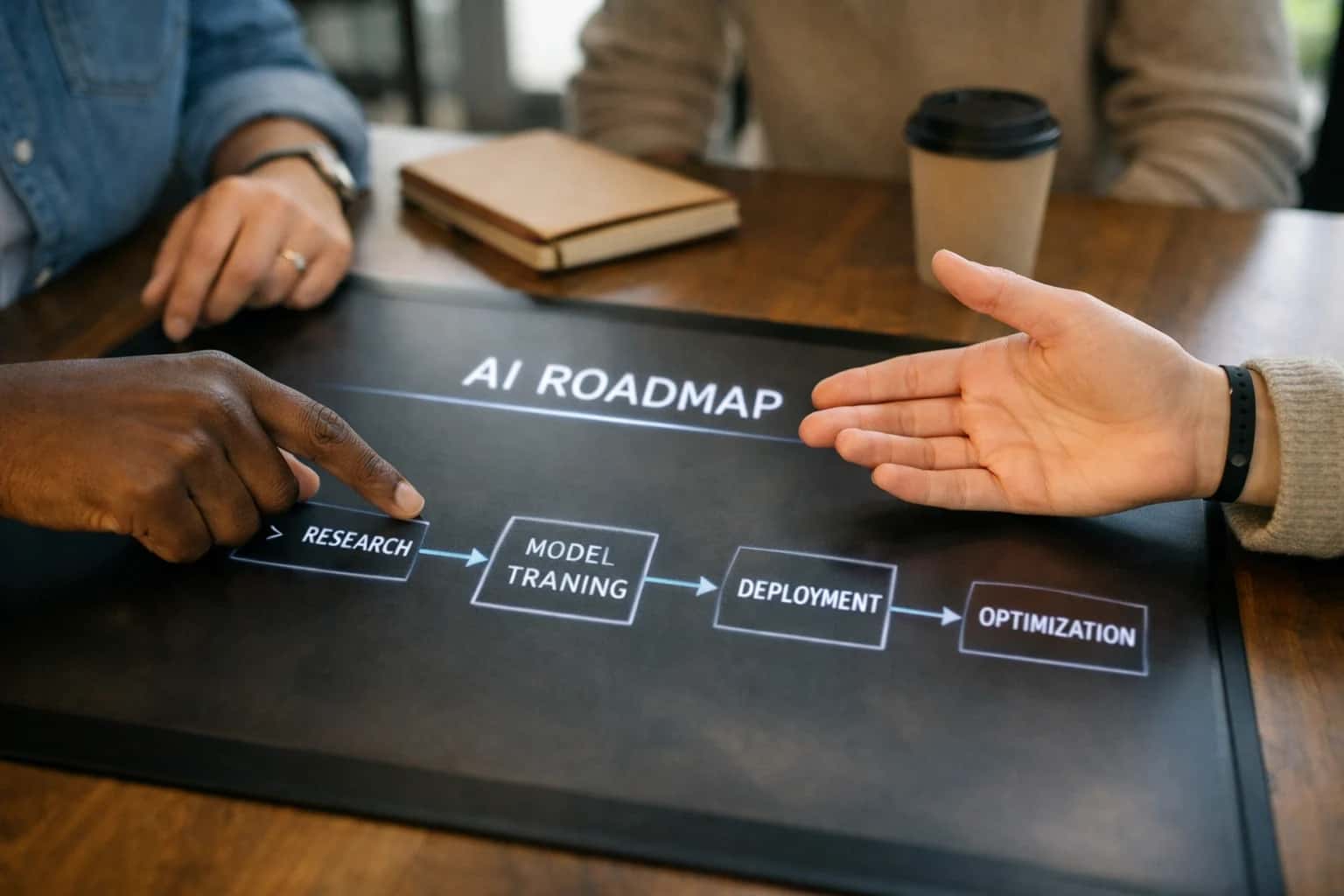
Where AI Fits in the QRadar Event Collector Pipeline
Integrating AI directly into the QRadar Event Collector pipeline optimizes performance and cost by dynamically managing log ingestion, parsing, and resource allocation based on real-time threat context and business value.
Implementation involves deploying a lightweight inference service—often as a containerized sidecar or within a QRadar Data Gateway—that intercepts the log stream. This service uses a trained model to evaluate each log batch or source against a policy. Decisions are executed via the collector's API or configuration hooks, enabling actions like:
- Intelligent Parsing: Applying custom Log Source Extension (LSE) rules or regex patterns only to high-priority logs, conserving CPU.
- Dynamic Throttling: Temporarily reducing EPS (Events Per Second) allocation for noisy, low-risk sources during volume surges to prevent license overages and maintain throughput for critical security data.
- Contextual Enrichment: Injecting metadata (e.g.,
asset_criticality: high,data_classification: PII) into the Common Event Format (CEF) payload before it reaches the correlation engine, improving downstream rule accuracy. - Anomalous Source Detection: Identifying and flagging new or behaving-erratically log sources for administrative review, potentially indicating misconfiguration or a compromised system generating log spam.
Rollout requires careful governance. The AI model's decisions must be auditable; all routing, throttling, and enrichment actions should be logged to a dedicated QRadar offense or external SIEM for review. Start with a supervised learning or rules-based approach in monitoring-only mode, comparing the AI's suggested actions against baseline collector performance. Gradually introduce control for non-critical log sources, using QRadar's own Offense data to validate that security detection is not degraded. The goal isn't full autonomy, but a co-pilot for the Event Collector that ensures precious EPS licensing and processing power are allocated to the logs that matter most for threat detection, directly improving SOC efficiency and reducing infrastructure cost.
Key Integration Surfaces in the QRadar Event Collector
Intelligent Log Source Onboarding & Classification
The QRadar Event Collector's primary function is ingesting and parsing logs from diverse sources (syslog, Windows Event Log, flat files, etc.). AI can be integrated here to automate and optimize this critical but manual process.
Key AI Integration Points:
- Automatic Protocol & Format Detection: Use lightweight ML models to analyze incoming data streams and automatically suggest or apply the correct DSM (Device Support Module) and log source type, reducing configuration errors.
- Criticality-Based Resource Allocation: AI can analyze log source metadata (IP, device type, business unit) and historical volume to assign a dynamic "criticality score." This score informs how the Event Collector allocates parsing threads and buffer memory, prioritizing security-relevant sources (e.g., domain controllers, firewalls) over low-value debug logs.
- Anomalous Volume Detection: Integrate real-time anomaly detection to identify sudden spikes or drops in EPS (Events Per Second) from a log source. This can trigger alerts for potential log source failure, attack obfuscation (log flooding), or misconfiguration, allowing for proactive management.
High-Value AI Use Cases for Event Collector Optimization
Applying AI to the QRadar Event Collector layer optimizes parsing, routing, and resource allocation, turning raw log volume into prioritized, actionable security intelligence while controlling costs and improving performance.
Intelligent Log Source Classification & Parsing
Use AI to automatically classify new, unknown, or misconfigured log sources by analyzing raw message patterns. The system can suggest or apply the correct DSM (Device Support Module), map fields to the Common Event Format (CEF), and flag sources that require custom parsing, reducing manual onboarding from days to hours.
Dynamic EPS Throttling & Resource Allocation
Implement AI models that monitor log source criticality, volume spikes, and EPS license consumption. The system can dynamically throttle low-value, high-volume sources during peak periods and prioritize critical security logs (e.g., firewall denies, admin logins) to stay within license limits and ensure high-fidelity events are never dropped.
Anomalous Volume & Source Failure Detection
Deploy AI to establish baselines for normal log volume per source and protocol. The collector can flag sudden drops (indicating a failed sensor or blocked traffic) or suspicious spikes (potential log flooding attacks) in real-time, creating low-noise alerts for infrastructure monitoring and ensuring data pipeline integrity.
Context-Aware Log Filtering & Deduplication
Move beyond simple regex filters. Use AI to analyze log content in context, identifying and suppressing redundant operational noise (e.g., routine health checks) while preserving unique security events. This reduces the volume of data sent to the QRadar Console for processing, lowering storage costs and improving analyst signal-to-noise ratio.
Automated Data Enrichment at Ingestion
Enhance raw log events with contextual metadata as they pass through the collector. AI can trigger lookups to internal CMDBs, geolocation services, or threat intel APIs to add fields like asset owner, location, and reputation score before indexing. This creates richer offenses in QRadar and accelerates initial triage.
Predictive Scaling for Collector Infrastructure
For distributed Event Collector deployments, use AI to analyze historical and seasonal log volume trends. The system can predict needed compute resources and suggest scaling actions (e.g., deploying a new EC2 instance for a collector group) ahead of anticipated load, maintaining performance during audits, mergers, or attack campaigns.
Example AI-Driven Workflows for QRadar Event Collector
These workflows illustrate how AI can optimize the QRadar Event Collector's performance, parsing, and resource allocation. Each pattern connects to specific QRadar APIs, data structures, and operational surfaces.
Trigger: A new log source is configured in QRadar Event Collector (via DSM Editor or API).
Context Pulled: The AI agent ingests the initial sample logs from the new source and metadata (source IP, port, protocol, vendor/device type).
Agent Action:
- Uses a classification model to predict the most accurate DSM (Device Support Module) or custom regex parser.
- Cross-references the predicted parser against a knowledge base of known parsing performance and resource consumption for similar sources.
- If confidence is low, it flags the source for human review and suggests a test parsing rule.
System Update: The agent calls the QRadar API (/config/event_sources/log_source_management/log_sources) to apply the recommended parser and initial configuration (e.g., coalesce_events settings).
Human Review Point: Low-confidence classifications are routed to a dashboard for SOC engineer approval before the parser is activated.
Implementation Architecture: Data Flow and AI Layer
A practical blueprint for integrating AI with IBM QRadar Event Collector to manage log volume, prioritize critical sources, and optimize parsing performance.
The integration inserts an AI decision layer between your log sources and the QRadar Event Collector. This layer analyzes incoming log metadata—source IP, log type, volume, and historical criticality—to apply intelligent routing and parsing policies in real-time. For high-value sources like Active Directory domain controllers, firewall deny logs, or critical application servers, the AI ensures logs are parsed with high-fidelity Custom Event Properties (CEPs) and routed to high-priority processing queues. For low-value, high-volume "noise" sources, it can apply sampling, aggregation, or route them to a cost-optimized storage tier, preserving EPS licensing for what matters most.
Implementation typically involves a lightweight sidecar agent or a centralized log processor (e.g., a containerized service) that intercepts syslog, WinCollect, or other log flows. This processor uses a trained model to tag and route each log batch. Key architectural components include:
- A vector store of log source profiles, updated with feedback from QRadar offenses.
- A policy engine that applies routing rules (e.g.,
route_to_high_priority_parsing,apply_sampling_50percent,use_generic_LEEF_parser). - An API integration with the QRadar Console to dynamically adjust Log Source Extension configurations or DSM Editor parsing logic based on the AI's recommendations for tuning.
Rollout is phased, starting with a monitoring-only mode where the AI layer logs its recommendations without acting, allowing teams to validate accuracy against real QRadar offense data. Governance is critical: all AI-driven routing or parsing changes should generate an audit log in a separate SIEM or QRadar itself, and a human-in-the-loop approval workflow can be maintained for any permanent changes to DSM configurations. The result is a self-optimizing collector that adapts to threat landscapes and business changes, reducing manual log source management and ensuring investigative fidelity where it counts.
Code and Payload Examples
Python: AI-Powered Log Source Classification
This script demonstrates calling an AI service to classify and prioritize new log sources before they are fully onboarded to QRadar. The model analyzes sample log lines to predict the source type, criticality, and recommended EPS allocation.
pythonimport requests import json # Sample log lines from a new, unknown source sample_logs = [ "2024-05-15 14:22:01 UTC user='svc_backup' action='login' src_ip=10.10.1.5 status=SUCCESS", "2024-05-15 14:22:05 UTC Backup job 'nightly_full' started on server 'fs01'" ] # Payload to AI classification service classification_payload = { "log_samples": sample_logs, "context": { "source_ip": "192.168.100.50", "collector_id": "EC-02" } } # Call AI service (e.g., hosted model endpoint) response = requests.post( "https://api.inferencesystems.ai/v1/classify/log-source", json=classification_payload, headers={"Authorization": "Bearer YOUR_API_KEY"} ) result = response.json() # Expected AI response structure # { # "predicted_source_type": "backup_server", # "criticality_score": 0.7, # "recommended_eps_tier": "medium", # "parsing_hints": ["look for 'Backup job' pattern", "extract job_name"] # } # Use result to configure QRadar via REST API # Example: Set EPS license allocation based on AI recommendation eps_tier_map = {"low": 100, "medium": 500, "high": 2000} allocated_eps = eps_tier_map.get(result["recommended_eps_tier"], 100) print(f"AI recommends configuring new source for {allocated_eps} EPS.")
Realistic Time Savings and Operational Impact
This table illustrates the measurable improvements in performance, cost, and analyst efficiency when applying AI to optimize the QRadar Event Collector's resource allocation and log parsing.
| Metric | Before AI | After AI | Notes |
|---|---|---|---|
Log Source Onboarding & Parser Assignment | Manual mapping, 2-4 hours per source | AI-recommended mapping, 15-30 minutes per source | AI analyzes sample logs to suggest LEE parsers or custom regex, reducing configuration errors. |
EPS License Allocation | Static, based on peak estimates | Dynamic, based on predicted criticality & volume | AI shifts EPS capacity to high-value sources during attacks, preventing data loss without over-licensing. |
High-Volume, Low-Value Log Filtering | Manual review and rule creation, days to implement | AI-identified patterns flagged for automated filtering | Reduces noise by 15-30%, lowering storage costs and improving pipeline performance for critical security logs. |
Event Collector Performance Tuning | Reactive, based on console warnings or pipeline lag | Proactive recommendations for buffer sizes and thread pools | AI monitors system metrics and log flow to suggest tuning, preventing bottlenecks before they impact ingestion. |
Parsing Error Triage | Manual review of error queues, hours per week | AI clusters and prioritizes parsing failures | SOC analysts focus on high-impact schema mismatches (e.g., critical auth logs) first, resolving 80% of errors faster. |
Resource Scaling for Event Collectors | Manual capacity planning, often over-provisioned | Forecast-driven scaling recommendations | AI predicts log volume spikes (e.g., month-end, new app rollout) to right-size VM/container resources, optimizing cloud spend. |
Critical Log Source Health Monitoring | Generic uptime checks | Anomaly detection in log flow and content patterns | AI alerts on sudden drops in flow from critical sources (e.g., firewalls) or changes in log structure, indicating potential evasion or failure. |
Governance, Security, and Phased Rollout
Integrating AI with the QRadar Event Collector requires a deliberate approach to maintain platform stability, data integrity, and operational control.
A production implementation typically introduces an AI inference layer as a sidecar service to the QRadar Event Collector infrastructure. This service ingests real-time metadata—such as EPS (Events Per Second) rates, parsing errors, log source health status, and resource utilization—via the QRadar API or syslog forwarding. The AI model, trained on historical performance data, analyzes this stream to predict volume spikes, identify misconfigured or noisy log sources, and recommend dynamic resource allocation. All AI-driven recommendations are first written to an audit log queue; no configuration changes are made to QRadar without explicit approval or passing through a gated automation workflow. This ensures the core SIEM's parsing and collection integrity is never compromised by an automated action.
Rollout follows a phased, risk-gated model. Phase 1 is observation-only: the AI service runs in parallel, generating recommendations and dashboards but taking no action, allowing teams to validate predictions against known performance issues. Phase 2 introduces human-in-the-loop approvals, where low-risk recommendations (e.g., suggesting a temporary increase in EPS license allocation for a critical server during patch Tuesday) are presented to a SOC or infrastructure engineer via a ticketing system like ServiceNow for one-click approval. Phase 3, for mature deployments, enables policy-based autonomous actions for a narrow set of pre-defined, reversible scenarios, such as automatically applying a temporary parsing rule to handle a new log format from a trusted source, all within strict guardrails defined in the policy engine.
Security and governance are paramount. The AI service must operate with least-privilege API credentials, scoped only to read performance data and, if approved, write to specific configuration endpoints. All model inputs and outputs should be hashed and logged to a separate, immutable audit trail to support explainability and compliance reviews. Furthermore, the system should include a circuit breaker that immediately halts all AI-influenced actions if anomalous behavior is detected (e.g., a recommendation to disable a critical log source), reverting control fully to the native QRadar administrators. This layered approach ensures the integration enhances operational resilience without introducing unmanaged risk to the security data pipeline.
Enabling Efficiency, Speed & Accuracy
Intelligent Analysis, Decision & Execution
We build AI systems for teams that need search across company data, workflow automation across tools, or AI features inside products and internal software.
Talk to Us
Search across company data
Give teams answers from docs, tickets, runbooks, and product data with sources and permissions.
Useful when people spend too long searching or get different answers from different systems.

Automate internal workflows
Use AI to route work, draft outputs, trigger actions, and keep approvals and logs in place.
Useful when repetitive work moves across multiple tools and teams.

Add AI to products and internal tools
Build assistants, guided actions, or decision support into the software your team or customers already use.
Useful when AI needs to be part of the product, not a separate tool.
Frequently Asked Questions (FAQ)
Practical questions about applying AI to optimize the QRadar Event Collector's performance, parsing, and resource allocation.
AI integration optimizes the QRadar Event Collector (QEC) by intelligently managing its two primary constraints: EPS licensing and system resources (CPU/memory).
Key improvements include:
- Dynamic EPS Throttling: AI models analyze incoming log volume and source criticality in real-time. For non-critical, high-volume sources (e.g., debug logs from a development environment), the AI can suggest or enact temporary EPS rate limits to preserve license capacity for critical security events.
- Intelligent Parsing Prioritization: When the QEC is under load, AI prioritizes parsing for logs from high-value sources (e.g., domain controllers, firewalls) over low-value sources, ensuring timely processing of security-relevant data.
- Anomaly Detection in Log Flow: AI monitors the health and flow metrics of the QEC itself, detecting and alerting on anomalies like a sudden drop in EPS from a critical source (potential outage or evasion) or a spike that could indicate a misconfigured device or an attack.
- Resource Allocation Recommendations: Based on historical and real-time data, the AI can recommend adjustments to QEC deployment, such as adding more resources or redistributing log sources across multiple collectors.

About the author
Prasad Kumkar
CEO & MD, Inference Systems
Prasad Kumkar is the CEO & MD of Inference Systems and writes about AI systems architecture, LLM infrastructure, model serving, evaluation, and production deployment. Over 5+ years, he has worked across computer vision models, L5 autonomous vehicle systems, and LLM research, with a focus on taking complex AI ideas into real-world engineering systems.
His work and writing cover AI systems, large language models, AI agents, multimodal systems, autonomous systems, inference optimization, RAG, evaluation, and production AI engineering.
Partnered with leading AI, data, and software stack.





How We Work
Custom AI workflows for your Business
One-fit-all AI don't work for modern businesses. At Inferensys, we aim to understand your business & custom requirements; which we use to define most efficient agentic workflows, the data, and the tools for your business.
01
Review the use case
We understand the task, the users, and where AI can actually help.
Read more02
Pick the right approach
We define what needs search, automation, or product integration.
Read more03
Build the first useful version
We implement the part that proves the value first.
Read more04
Improve from there
We add the checks and visibility needed to keep it useful.
Read moreThe first call is a practical review of your use case and the right next step.
Talk to Us