
Inferensys

Integration

AI Front-Desk Assistant for Salons

A technical blueprint for building an AI copilot that interfaces with salon management APIs to handle call deflection, FAQ resolution, and basic booking inquiries, reducing front-desk load during peak hours.
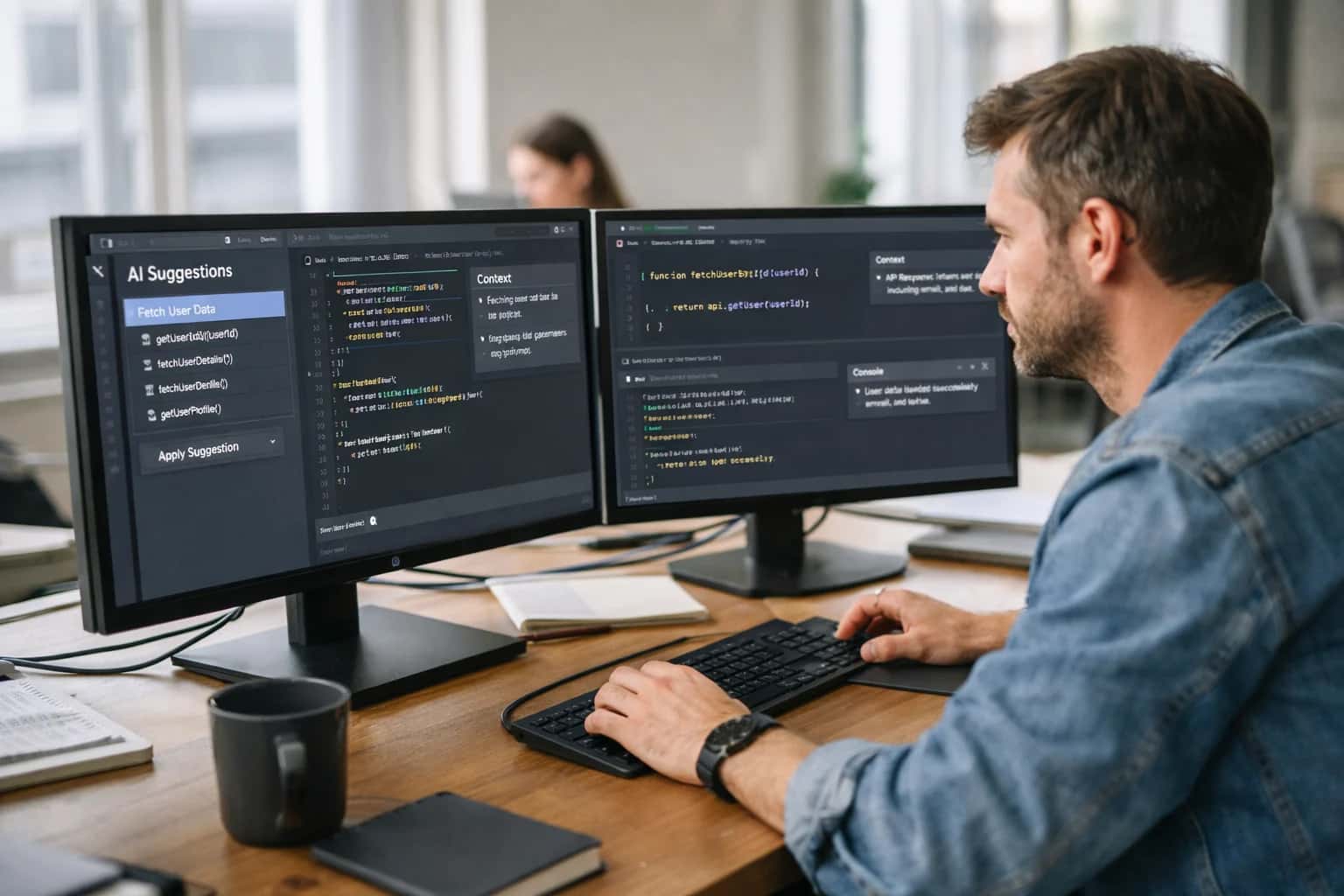
Developer using AI copilot for code completion, IDE visible on laptop screen, casual programming moment at desk.
ARCHITECTURE BLUEPRINT

Where AI Fits in the Salon Front-Desk Workflow

A practical guide to embedding an AI assistant into the core operational surfaces of salon and spa management platforms.

An effective AI front-desk assistant integrates at three key layers of platforms like Fresha, Zenoti, Mangomint, and Vagaro: the booking API, the client record, and the real-time communication queue. It acts as a copilot, not a replacement, by connecting to these systems to perform specific tasks:

  • Call/Message Deflection: Intercepts inbound calls, SMS, and website chats via integrated VoIP or webhook endpoints. Using the platform's GET /availability and GET /services APIs, it can answer FAQs about hours, pricing, and policies, and check real-time slots.
  • Basic Booking & Changes: For authenticated interactions, it uses the POST /appointments and PATCH /appointments/{id} endpoints to create, modify, or cancel appointments, adhering to business rules like cancellation windows and resource conflicts.
  • Client Lookup & Context: Before any action, it queries the GET /clients endpoint to retrieve visit history, preferences, and notes, allowing for personalized interactions (e.g., "I see you usually see Stylist Jane for balayage").


Implementation requires orchestrating a secure middleware layer—often a cloud function or container—that handles authentication (OAuth2), manages conversation state, and makes tool calls to the salon platform's REST API. A typical workflow for a "booking inquiry" looks like:

  1. Intent Recognition: User asks, "Can I book a haircut with Alex tomorrow afternoon?" via SMS.
  2. API Calls: The AI agent calls the platform to verify Alex's schedule and available service durations.
  3. Client Matching: It attempts to match the phone number to an existing clientId to pre-fill details.
  4. Proposal & Confirmation: It returns a formatted proposal (time, service, price) and, upon user approval, executes the booking, triggering the platform's native confirmation email/SMS.

Critical Nuance: The AI must be configured to escalate seamlessly to a human agent for complex requests (e.g., package refunds, medical consultations) by creating a note in the platform's internal tasking system or forwarding the live chat session.

Rollout should be phased, starting with low-risk, high-volume tasks like after-hours FAQ resolution and appointment confirmations. Governance is essential: all AI-generated bookings and client communications should be logged as activities within the salon platform's audit trail, and prompts must be regularly evaluated to ensure brand voice and compliance. For multi-location businesses, the AI agent needs to be context-aware of location-specific settings, staff, and services, which may require calls to the platform's GET /locations endpoint. The final architecture creates a resilient system where the AI handles predictable peaks, freeing staff for high-touch client service and complex problem-solving.

ARCHITECTURAL BLUEPRINTS FOR AI AGENTS

Key Integration Surfaces in Salon Management Platforms

The Core Scheduling Engine

Integrating an AI front-desk assistant starts with the platform's scheduling engine. This surface provides real-time access to the appointment book, enabling the AI to check availability, create bookings, modify existing appointments, and manage cancellations.

Key API Endpoints to Integrate:

  • GET /appointments – Retrieve bookings by date, staff, or service.
  • POST /appointments – Create a new appointment with client, service, staff, and time slot.
  • PATCH /appointments/{id} – Handle rescheduling or status updates (e.g., confirmed, canceled).
  • GET /availability – Query real-time slots for a given service, staff member, and date range.

AI Agent Workflow: The assistant uses these endpoints to process natural language requests like "book me a haircut with Sarah next Tuesday afternoon." It parses intent, calls the availability API, presents options to the user, and then creates the booking—all without human intervention. This is the primary mechanism for call deflection during peak hours.

FOR SALON AND SPA MANAGEMENT PLATFORMS

High-Value Use Cases for an AI Front-Desk Assistant

An AI front-desk assistant integrates directly with your salon software's APIs to handle routine inquiries, automate workflows, and free up staff for high-touch client service. These are the most impactful patterns for platforms like Fresha, Zenoti, Mangomint, and Vagaro.

01

Call Deflection & FAQ Resolution

Deploy an AI voice or chat agent to answer common phone and web queries (e.g., hours, pricing, cancellation policies) by querying the platform's business settings API. For complex requests like booking changes, it can authenticate the caller via phone number match to the client profile and execute actions via secure API calls, escalating only when necessary.

50-70%
Call volume deflection
02

Intelligent Booking & Rescheduling

Enable natural language booking via website chat, SMS, or voice. The AI agent parses requests ("book a highlight with Sarah next Thursday afternoon"), calls the platform's calendar API to check real-time availability and service durations, and creates or modifies appointments. It handles complex logic like waitlist management or finding alternative therapists.

24/7
Booking availability
03

Personalized Confirmation & Reminder Sequences

Move beyond generic SMS blasts. Integrate AI with the platform's client history and appointment APIs to generate hyper-personalized confirmation messages ("Hi [Name], confirming your [Service] with [Stylist] tomorrow at [Time]. We'll have your favorite [Product] ready."). It can also predict no-show risk and trigger tiered reminder workflows (SMS → email → phone call).

15-25%
No-show reduction
04

Real-Time Waitlist & Cancellation Fill

Connect AI to real-time appointment change webhooks. When a cancellation occurs, the AI instantly queries the waitlist (via API), considers client preferences and service fit, and sends a personalized offer via SMS/email with a one-click booking link. This turns empty slots into revenue within minutes, not hours.

Hours -> Minutes
Fill speed
05

Service & Retail Recommendation Engine

At checkout or in follow-ups, the AI uses a RAG (Retrieval-Augmented Generation) pattern against the client's profile, past service data, and the platform's service/product catalog. It suggests relevant add-ons ("Based on your last color service, a bond repair treatment would be perfect") or retail products, with links to book or purchase.

10-20%
Avg. ticket increase
06

Staff-Facing Operational Copilot

Provide front-desk staff with an internal AI copilot. It can answer questions like "What's [Client]'s preferred payment method?" by pulling from the client API, generate draft responses to common email inquiries, or summarize a client's recent visits and notes before they arrive—all within the existing management platform's interface.

Batch -> Real-time
Info access
FRONT-DESK AUTOMATION

Example AI Assistant Workflows

These are concrete, production-ready workflows for an AI assistant integrated with salon management APIs like those from Fresha, Zenoti, Mangomint, or Vagaro. Each flow is triggered by a real-world event, uses platform data for context, and results in a system update or human handoff.

Trigger: An inbound phone call is received via a VoIP system (e.g., Twilio) or a website chat widget initiates a session.

Context/Data Pulled: The AI assistant uses the caller's phone number or provided name/email to query the salon platform's Client API for:

  • Existing client profile and service history.
  • Upcoming appointments.
  • Current availability from the Calendar API for requested services and staff.

Model/Agent Action: A conversational AI (e.g., powered by GPT-4o) engages the caller:

  1. Identifies intent (e.g., "book a haircut," "cancel appointment," "check price").
  2. For booking: Presents available time slots, confirms service details and stylist preference.
  3. For cancellations: Identifies the specific appointment and explains the policy.

System Update/Next Step: For a successful booking flow:

  1. The agent calls the salon platform's Booking API with a payload like:
json
{
  "client_id": "CLIENT_123",
  "service_id": "HAIRCUT_45",
  "staff_id": "STYLIST_7",
  "start_time": "2024-06-15T14:00:00Z",
  "notes": "Booked via AI Assistant"
}
  1. It then triggers the platform's native confirmation SMS/email workflow.

Human Review Point: The call is live-monitored for quality. If the AI confidence score is low, the conversation is escalated in real-time to a live front-desk agent with full context.

A PRODUCTION BLUEPRINT

Implementation Architecture: Data Flow and System Design

A practical guide to wiring an AI assistant into your salon management platform's core workflows.

A production-ready AI front-desk assistant is a multi-component system that sits alongside your core salon platform (e.g., Fresha, Zenoti). It typically involves: 1) An API Gateway to securely handle requests from your website, phone system, or SMS; 2) An Orchestration Layer (using tools like n8n or a custom agent framework) that routes queries, calls the salon platform's REST API for real-time data (e.g., GET /appointments, GET /services), and manages conversation state; 3) A Reasoning Engine (a hosted LLM like GPT-4) that processes natural language to understand intent and generate responses; and 4) An Audit Log to track all AI-initiated actions for compliance and training.

The critical integration points are the salon platform's Booking API, Client API, and Webhook subscriptions. For example, to handle "Can I rebook my haircut with Elena next Thursday?", the orchestration layer must: authenticate with the platform's OAuth; call the Client API to verify identity and past services; call the Booking API to check Elena's real-time availability; and finally, if the client confirms, use the Booking API's POST /appointments endpoint to create the booking. All outbound communications (SMS/email confirmations) should be routed through the salon platform's native communication channels to maintain a single system of record and avoid channel conflict.

Rollout should be phased, starting with call deflection for simple FAQs (hours, policies, service descriptions) which requires only read-only API access. The next phase adds assisted booking where the AI suggests times but requires final human confirmation before the API write occurs. Governance is key: implement role-based access control (RBAC) so the AI agent only has API permissions scoped to specific actions (e.g., can view availability but cannot delete appointments). Always include a human-in-the-loop escalation path, such as routing complex queries to a live chat widget or creating a follow-up task in the platform's built-in staff messaging. For a deeper dive on connecting to specific platforms, see our guides on AI Integration for Fresha and AI Chatbot Integration for Zenoti.

BUILDING THE AI AGENT

Code and Payload Examples

Handling Incoming Webhooks

When a client initiates a chat on your website, the salon platform (e.g., Fresha, Zenoti) can send a structured webhook payload to your AI agent endpoint. This handler parses the intent and fetches real-time data from the platform's API to ground the AI's response.

python
# Example: Flask endpoint for handling a "check availability" webhook
from flask import request, jsonify
import requests

@app.route('/api/ai/webhook/booking-inquiry', methods=['POST'])
def handle_booking_inquiry():
    payload = request.json
    
    # Extract details from the webhook
    client_id = payload.get('client_id')
    service_slug = payload.get('service_slug', 'haircut-women')
    preferred_date = payload.get('preferred_date')
    
    # 1. Call salon platform API for real-time availability
    platform_api_url = f"https://api.fresha.com/v1/availability?service={service_slug}&date={preferred_date}"
    headers = {"Authorization": f"Bearer {FRESHA_API_KEY}"}
    availability_data = requests.get(platform_api_url, headers=headers).json()
    
    # 2. Construct context for the LLM call
    llm_prompt = f"""
    Client is asking about booking a {service_slug} on {preferred_date}.
    Available slots from the system: {availability_data['slots']}.
    Craft a friendly, concise response offering these times.
    """
    # 3. Call LLM (e.g., OpenAI) and return the generated response
    ai_response = call_llm(llm_prompt)
    
    return jsonify({"reply": ai_response})

This pattern ensures the AI agent has access to live calendar data, preventing double-bookings and providing accurate options.

AI FRONT-DESK ASSISTANT FOR SALONS

Realistic Time Savings and Operational Impact

This table illustrates the tangible operational improvements an AI assistant can deliver by integrating with your salon management platform's APIs to automate common front-desk tasks.

Workflow / TaskBefore AIAfter AIImplementation Notes

Initial Call & FAQ Handling

Staff answers 100% of calls during peak hours

AI deflects 40-60% of routine inquiries

Integrates with telephony/chat APIs; human escalation for complex issues

Basic Booking Inquiry & Availability Check

Manual calendar lookup and back-and-forth messaging

AI provides real-time availability via API and holds a slot

Connects to platform's calendar/booking API; requires clear confirmation step

Appointment Confirmations & Reminders

Bulk manual SMS/email sends or reliance on basic templates

AI sends personalized, conversational 2-way confirmations

Uses platform's comms webhooks; learns from client response patterns

Waitlist Management for Cancellations

Manual calls down a static list when a slot opens

AI automatically texts top-ranked waitlist clients via priority rules

Triggers from booking API cancellation events; integrates SMS gateway

Client Intake for New Bookings

Client fills out paper form or staff manually enters data

AI conversational agent collects details pre-visit via text/link

Pre-fills client profiles via API; flags missing required fields for staff

Post-Service Follow-up & Review Solicitation

Sporadic manual requests or batch email blasts

AI sends personalized thank-you messages with review links 24hrs post-visit

Triggers from completed appointment API data; links to platform's review module

Common Policy & Pricing Questions

Repeated explanations by front-desk staff

AI provides instant, consistent answers from a curated knowledge base

Requires initial knowledge base setup; updates via platform's service menu API

OPERATIONALIZING YOUR AI ASSISTANT

Governance, Security, and Phased Rollout

A practical guide to deploying, securing, and scaling an AI front-desk assistant within your existing salon management platform.

A production-ready AI assistant must operate within the security and data governance boundaries of your core platform (e.g., Fresha, Zenoti, Mangomint, Vagaro). This means:

  • API Credential Management: Using scoped OAuth tokens or API keys with least-privilege access, typically limited to GET for calendars and client profiles and POST for creating bookings or sending messages.
  • Data Flow Isolation: The AI agent acts as a middleware layer—client PII and booking details are processed ephemerally for intent classification but are not stored in the AI system's database. All persistent data remains in the salon software.
  • Audit Trails: Every AI-initiated action (e.g., "booking created," "SMS sent") should log a corresponding record in the platform's native activity log or be written to a secure audit table, preserving a chain of custody for compliance.

Rollout should follow a phased, risk-managed approach to build trust and measure impact:

  1. Phase 1: Shadow Mode & Call Deflection: Deploy the AI to handle website chat and SMS inquiries in a read-only capacity. It answers FAQs and checks real-time availability via the platform's API but requires a human to finalize any booking. This validates accuracy without operational risk.
  2. Phase 2: Assisted Booking with Human-in-the-Loop: Enable the AI to draft bookings and send confirmation links, but implement a soft approval gate. For example, bookings for new clients or high-value services are flagged in a Slack channel or a dashboard for a front-desk manager to review within minutes before the AI sends the final confirmation.
  3. Phase 3: Full Automation with Circuit Breakers: After confidence is built, allow the AI to autonomously handle routine bookings (e.g., existing clients, simple services). Establish automated circuit breakers—if error rates spike or a negative feedback pattern is detected via integrated review platforms, the system automatically reverts to Phase 2 rules and alerts the technical owner.

Governance is an ongoing process. Establish a weekly review of the AI's interaction logs, sampled for quality, to refine its prompts and tool-calling logic. Use the salon platform's own reporting modules to track key metrics pre- and post-integration: inbound call volume, online booking conversion rate, and front-desk staff time spent on administrative tasks. This data-driven approach ensures the AI assistant evolves as a reliable, scalable member of your operations team, directly integrated into the platforms you already trust.

IMPLEMENTATION BLUEPRINT

Frequently Asked Questions

Practical questions and workflow details for architects and salon owners planning an AI front-desk assistant. This FAQ covers integration patterns, security, rollout, and the specific automation flows that reduce front-desk load.

The assistant integrates via the platform's official REST APIs and webhooks. For example, with Fresha or Zenoti, we establish a secure service account with scoped permissions. The typical connection pattern includes:

  1. Authentication: Using OAuth 2.0 or API keys with roles limited to necessary endpoints (e.g., GET /appointments, POST /clients, GET /services).
  2. Data Context: The AI agent queries the API in real-time to answer questions. For example, when a client asks "What's available tomorrow for a haircut?", the agent calls GET /availability with the service ID and date parameters.
  3. Action Execution: For booking or modifying appointments, the agent constructs a payload and calls POST /appointments. All actions are logged with a source: ai_assistant flag for auditability.
  4. Webhook Listening: The integration subscribes to webhooks for events like appointment.cancelled to trigger automated waitlist fill workflows.

This keeps the AI grounded in live system data without requiring a full database sync.

Prasad Kumkar

About the author

Prasad Kumkar

CEO & MD, Inference Systems

Prasad Kumkar is the CEO & MD of Inference Systems and writes about AI systems architecture, LLM infrastructure, model serving, evaluation, and production deployment. Over 5+ years, he has worked across computer vision models, L5 autonomous vehicle systems, and LLM research, with a focus on taking complex AI ideas into real-world engineering systems.

His work and writing cover AI systems, large language models, AI agents, multimodal systems, autonomous systems, inference optimization, RAG, evaluation, and production AI engineering.


