An AI walk-in assistant connects directly to the spa management platform's calendar and resource APIs—typically endpoints like GET /availability, GET /therapists, and GET /rooms in systems like Zenoti, Fresha, or Mangomint. The AI's primary job is to query these APIs in real-time, parse the structured response for therapist skills, room types, and service durations, and then apply optimization logic. Instead of a front-desk agent manually scrolling through multiple calendar views, the AI instantly evaluates all feasible options against business rules (e.g., 'prefer senior therapists for specific treatments', 'minimize room changes').

Integration
AI for Walk-In Management in Spa Software
A technical blueprint for an AI assistant that helps front-desk staff manage walk-ins by instantly checking real-time availability across therapists and rooms via the platform's API and suggesting optimal options.
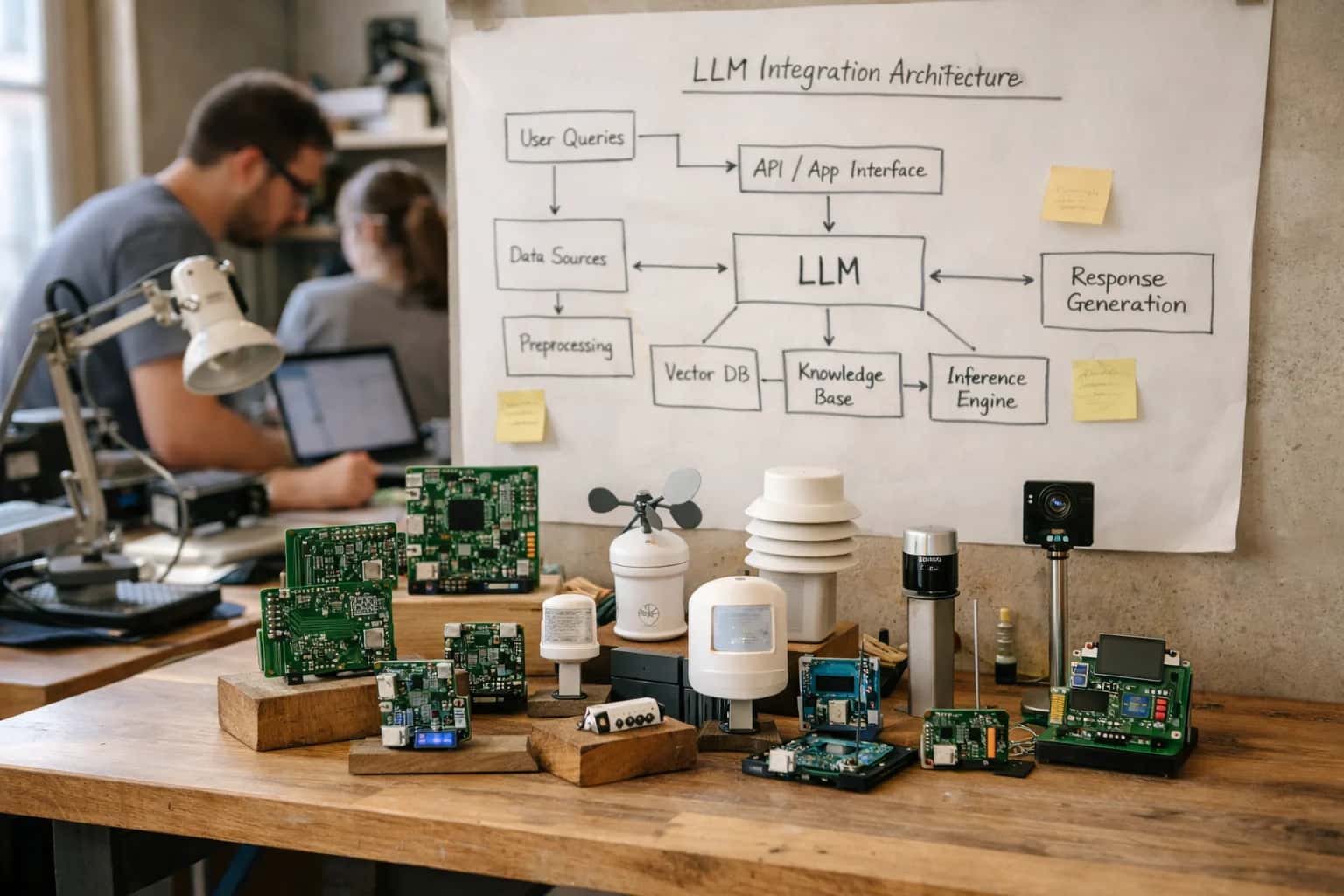
ARCHITECTURE AND ROLLOUT
Where AI Fits in Walk-In Management
A blueprint for integrating an AI assistant into spa software to handle walk-ins by connecting to real-time availability APIs and optimizing front-desk decisions.
The integration pattern is event-driven: a walk-in arrival triggers the AI via a webhook from the front-desk interface or a dedicated kiosk. The AI agent calls the platform's API, receives the availability payload, and runs a lightweight scoring model. It returns 2-3 ranked suggestions—for example: "Option 1: Jenna (facial specialist) in Room 3 at 2:15 PM, 15-min buffer before next appointment". This output is presented on the front-desk dashboard or a tablet, with one-click booking confirmation that calls the platform's POST /appointments API. The entire loop—from query to booked appointment—should take under 10 seconds, turning a previously manual 3-5 minute process into a near-instant transaction.
Rollout is typically phased: start with read-only availability checks in a single location to validate accuracy, then enable booking for high-demand services, and finally expand to multi-location resource pooling. Governance is critical: the AI's suggestions should be logged with the rationale (e.g., "chosen for highest therapist rating and room proximity") for audit, and a human override must always be possible. For platforms like Vagaro that support marketplace features, the AI can also check for cross-location availability, suggesting nearby partner spas if the home location is full—turning a potential lost walk-in into a captured referral.
AI FOR WALK-IN MANAGEMENT
Integration Surfaces Across Spa Platforms
Real-Time Resource Query Layer
The core of walk-in management is accessing live availability. AI agents must integrate with the platform's calendar APIs to query three critical data sets in real-time:
- Therapist Schedules: Check each provider's booked slots, breaks, and out-of-office blocks via endpoints like
GET /api/v1/staff/{id}/calendar. - Room/Chair Status: Determine which service rooms (e.g., massage, facial) or chairs are occupied, clean, and ready. This often requires cross-referencing the appointment book with a separate resource inventory.
- Service Duration & Buffer Rules: Pull the master service catalog to understand default durations, required cleanup buffers, and any therapist-specific certifications needed for the requested service.
This integration surface allows the AI to answer the fundamental walk-in question: "Is there a slot for a 60-minute deep tissue massage, right now?"
INTEGRATION BLUEPRINTS FOR FRESHA, ZENOTI, MANGOMINT, AND VAGARO
High-Value Walk-In Management Use Cases
Walk-ins represent immediate revenue and client acquisition opportunities, but managing them manually creates front-desk bottlenecks. These AI integration patterns connect directly to your spa software's APIs to turn walk-in inquiries into optimized, booked appointments in seconds.
01
Real-Time Availability Agent
An AI agent queries the platform's calendar API for real-time therapist and room availability across all service categories. It instantly surfaces optimal options based on the walk-in's requested service, preferred time window, and therapist specialization, presenting them to the front-desk staff on a tablet interface.
Seconds
To check all resources
02
Intelligent Waitlist Automation
When no ideal slot is available, the AI assesses cancellation probability for similar upcoming appointments using historical data. It offers the walk-in a guaranteed spot on a dynamic waitlist and automatically sends a booking confirmation via SMS the moment a slot opens, using the platform's webhook for cancellations.
70-80%
Waitlist fill rate
03
Personalized Service Matching
For walk-ins unsure of what service they need, the AI uses a RAG (Retrieval-Augmented Generation) pattern against the spa's service menu, therapist bios, and after photos. It asks a few conversational questions and recommends the most suitable services and therapists, displaying details pulled directly from the service catalog API.
Higher AOV
Through guided matching
04
Rapid Client Profile Creation
The AI assistant captures the walk-in's name, phone, and consent via a quick digital form. It then uses the platform's client API to instantly create a new profile or merge with an existing one, pre-filling intake forms based on the booked service to streamline check-in. This eliminates manual data entry at the front desk.
2 Minutes -> 30 Seconds
Profile setup time
05
Upsell & Package Recommendation Engine
At the point of booking, the AI analyzes the selected service and cross-references the platform's package and membership modules. It suggests relevant packages or add-ons (e.g., "This facial pairs well with our LED therapy add-on") with real-time pricing, increasing transaction value before the client even reaches the treatment room.
15-25%
Increase in attach rate
06
Post-Walk-In Journey Orchestrator
Once booked, the AI triggers a personalized automated workflow via the platform's marketing automation hooks. This includes a welcome text, pre-appointment reminders, and a post-service feedback request. It also tags the client in the CRM for future walk-in preference recognition, turning a one-time visit into a retained client. Learn more about automating client journeys in our guide on AI for Client Retention in Salon Software.
Same-day
Automated follow-up
CONCRETE IMPLEMENTATION PATTERNS
Example AI-Powered Walk-In Workflows
These workflows detail how an AI assistant, integrated via the platform's real-time API, can help front-desk staff manage walk-ins by instantly checking availability, suggesting optimal options, and executing bookings.
Trigger: A client walks in and requests a specific service (e.g., 'a deep tissue massage').
AI Agent Action:
- The front-desk staff inputs the service name into the AI interface (chat or voice).
- The AI agent calls the platform's
GET /servicesAPI to validate the service ID and standard duration. - It then calls
GET /staffwith filters forskills(matching the service) andis_available_now: true. - Simultaneously, it calls
GET /roomsorGET /resourcesto check for open treatment rooms.
System Update & Suggestion: The AI returns a structured, real-time response to the front-desk screen or tablet:
json{ "available_options": [ { "therapist": "Jamie", "room": "Serenity 3", "next_available_slot": "in 15 minutes", "therapist_rating": 4.9 }, { "therapist": "Alex", "room": null, // Uses therapist's assigned station "next_available_slot": "immediately", "therapist_rating": 4.7 } ], "recommendation": "Alex is available now at their station for a 60-min session." }
Human Review Point: Staff presents the options, confirms client choice, and the AI prepares the booking payload.
REAL-TIME AGENT ORCHESTRATION
Implementation Architecture & Data Flow
A production-ready AI assistant for walk-ins requires a secure, real-time bridge between conversational AI and the spa platform's core scheduling APIs.
The integration architecture centers on an AI Agent Layer that sits between the front-desk interface (chat, voice, or kiosk) and the spa management platform's API. When a walk-in request arrives, the agent executes a deterministic workflow: 1) It calls the platform's GET /availability endpoint (e.g., Zenoti's ServiceAvailability API or Fresha's Slots endpoint) with parameters for service type, duration, and preferred time window. 2) It parses the real-time JSON response for therapist IDs, room codes, and open slots. 3) It applies business logic (therapist skill matching, room equipment needs, client preference history) to rank options. 4) It returns a natural-language summary to the staff member or directly to a customer-facing kiosk.
Data flows through a secure, queued pipeline to handle peak front-desk traffic. Walk-in requests are placed into a walkin_requests queue (e.g., via Amazon SQS or Redis). A dedicated worker consumes these messages, calls the spa platform API with appropriate API keys and tenant context, and enriches the raw availability data with local business rules from a configuration store. The final suggestion payload is logged for audit and pushed to the front-desk UI via WebSocket or returned as an API response. This decoupled design ensures the spa's primary booking engine remains unaffected during high-volume walk-in periods.
Rollout is typically phased: start with a read-only integration that suggests options to staff, who then manually book in the native software. After validating accuracy and performance, move to a assisted booking mode where the agent can hold a slot temporarily via a POST /hold API call and generate a pre-filled booking form for staff confirmation. Governance is critical: all agent actions should be tagged with a source: ai_walkin_assistant and written to an audit log table. Implement a kill-switch feature in the agent dashboard to fall back to manual lookup if API latency spikes or error rates exceed a threshold.
BUILDING THE AI ASSISTANT
Code & Payload Examples
Querying the Platform API
The core of walk-in management is checking real-time availability. This requires calling the platform's calendar API with the requested service, duration, and preferred time window. The AI assistant parses the walk-in's request, formats the query, and evaluates the API response.
pythonimport requests def check_real_time_availability(platform_api_key, service_id, duration_minutes, time_window_start, time_window_end): """ Calls the spa management platform's availability API. """ headers = { "Authorization": f"Bearer {platform_api_key}", "Content-Type": "application/json" } payload = { "service_id": service_id, "duration": duration_minutes, "start_time": time_window_start.isoformat(), "end_time": time_window_end.isoformat(), "resource_types": ["therapist", "room"] } response = requests.post( "https://api.spaplatform.com/v1/availability/search", headers=headers, json=payload ) response.raise_for_status() return response.json() # Returns slots with therapist/room IDs
The response is a list of available slots, each with associated resource IDs. The AI logic then ranks these based on business rules (e.g., therapist skill match, room proximity).
AI-ASSISTED WALK-IN MANAGEMENT
Realistic Time Savings & Operational Impact
This table compares the manual walk-in process against an AI-integrated workflow, showing how front-desk staff can move from reactive searching to proactive, optimized guest placement.
| Metric | Before AI | After AI | Notes |
|---|---|---|---|
Real-time availability check | Manual tab-switching across multiple calendars | Single-query API call with ranked suggestions | AI checks all therapists, rooms, and service durations in <5 seconds |
Therapist matching | Staff memory or quick profile scan | AI-driven match based on skill, client history, and preference | Considers certifications, past client ratings, and requested service type |
Offer presentation to guest | Verbal listing of 1-2 options | Visual, ranked list of 3-5 optimal slots with therapist photos | Reduces decision fatigue and increases conversion of walk-ins to bookings |
Room and resource conflict resolution | Reactive discovery after booking | Proactive flagging of double-booking or equipment needs | AI validates against real-time room status feeds from the platform |
Waitlist activation on no-availability | Manual note-taking and later calls | Automatic addition with priority scoring and SMS trigger on cancellation | Integrates with platform's waitlist API; sends offer to highest-priority client first |
Data entry and profile update | Manual typing of client details and service notes | Pre-populated fields from past visits; AI suggests relevant intake questions | Leverages existing client profile API; reduces errors and check-in time |
Manager override or exception handling | Phone call or in-person interruption required | AI surfaces policy and suggests alternatives for staff approval | Keeps human-in-the-loop for complex cases while providing guidance |
ARCHITECTING FOR PRODUCTION
Governance, Security & Phased Rollout
A practical guide to deploying an AI walk-in assistant with controlled risk and measurable impact.
Integrating an AI assistant for walk-in management requires secure, governed access to your spa software's live data. The core architecture connects via the platform's official API (e.g., Zenoti's or Fresha's RESTful endpoints) using a dedicated service account with scoped permissions—typically read/write for the calendar, service catalog, and client lookup modules. All AI-generated suggestions, such as optimal therapist or room assignments, should be logged as a distinct suggestion_reason field in the appointment object, creating a clear audit trail. This ensures every AI-influenced decision is traceable back to the real-time availability data and logic used.
A phased rollout is critical for adoption and tuning. Start with a shadow mode where the AI assistant runs in parallel, suggesting options to front-desk staff via a simple interface (like a browser sidebar or Slack channel) without making direct API writes. This allows teams to build trust in the AI's accuracy for checking availability across therapists, rooms, and service durations. Phase two introduces assisted booking, where staff can one-click accept an AI-suggested slot, which then triggers the platform's native booking API. The final phase, conditional automation, could allow the AI to auto-book walk-ins for simple, high-availability scenarios, but only after a confidence score threshold is met and within predefined business rules (e.g., never double-book a specific premium therapist).
Governance is built into the workflow. All automated actions should route through an approval queue or require a staff member's final review before the booking is confirmed in the system. Implement a human-in-the-loop step for any booking that involves special requests, existing client notes, or complex packages. Regularly review the AI's suggestion_reason logs against booking outcomes to refine the underlying models. This controlled, phased approach minimizes operational disruption, provides clear rollback points, and ensures the AI augments—rather than replaces—the expertise of your front-desk team, turning chaotic walk-in moments into efficient, revenue-capturing opportunities.
Enabling Efficiency, Speed & Accuracy
Intelligent Analysis, Decision & Execution
We build AI systems for teams that need search across company data, workflow automation across tools, or AI features inside products and internal software.
Talk to Us
Search across company data
Give teams answers from docs, tickets, runbooks, and product data with sources and permissions.
Useful when people spend too long searching or get different answers from different systems.
Enterprise searchRAGPermissions
Read more
Automate internal workflows
Use AI to route work, draft outputs, trigger actions, and keep approvals and logs in place.
Useful when repetitive work moves across multiple tools and teams.
AI agentsWorkflow automationGovernance
Read more
Add AI to products and internal tools
Build assistants, guided actions, or decision support into the software your team or customers already use.
Useful when AI needs to be part of the product, not a separate tool.
AI integrationDecision supportModel routing
Read moreIMPLEMENTATION DETAILS
Frequently Asked Questions
Common technical and operational questions about deploying an AI assistant for walk-in management within platforms like Zenoti, Fresha, and Vagaro.
The AI agent integrates directly with the spa management platform's calendar API. When a walk-in arrives, the agent executes a sequence of API calls to:
- Query Resource Status: Fetches real-time availability for all therapists, rooms, and specialized equipment (e.g., hydrotherapy tubs) for the requested service type and duration.
- Apply Business Rules: Filters results based on configurable rules like therapist skill level, gender preference (if applicable), and minimum buffer times between appointments.
- Rank Options: Uses a scoring model to rank available slots, prioritizing factors like minimizing schedule gaps, aligning with therapist expertise, and maximizing room utilization.
The agent then presents 2-3 optimal options to the front-desk staff via a simple interface (e.g., a tablet dashboard or Slack/Teams integration).

About the author
Prasad Kumkar
CEO & MD, Inference Systems
Prasad Kumkar is the CEO & MD of Inference Systems and writes about AI systems architecture, LLM infrastructure, model serving, evaluation, and production deployment. Over 5+ years, he has worked across computer vision models, L5 autonomous vehicle systems, and LLM research, with a focus on taking complex AI ideas into real-world engineering systems.
His work and writing cover AI systems, large language models, AI agents, multimodal systems, autonomous systems, inference optimization, RAG, evaluation, and production AI engineering.
LinkedIn
Limited slotsGet a Free AI Consultation
Partnered with leading AI, data, and software stack.





How We Work
Custom AI workflows for your Business
One-fit-all AI don't work for modern businesses. At Inferensys, we aim to understand your business & custom requirements; which we use to define most efficient agentic workflows, the data, and the tools for your business.
01
Review the use case
We understand the task, the users, and where AI can actually help.
Read more02
Pick the right approach
We define what needs search, automation, or product integration.
Read more03
Build the first useful version
We implement the part that proves the value first.
Read more04
Improve from there
We add the checks and visibility needed to keep it useful.
Read moreThe first call is a practical review of your use case and the right next step.
Talk to Us