AI integrates into salon payroll by connecting directly to the platform's timesheet, service ticket, and commission rule modules. In systems like Zenoti, Fresha, or Mangomint, this means ingesting raw clock-in/out events, service codes with attached commission percentages, retail sales data, and tip allocations via their respective APIs or webhook streams. The AI's first role is auditing and enrichment: it can flag anomalies in punch times (e.g., missed clock-outs), reconcile service tickets against scheduled appointments to catch unbilled work, and apply complex, multi-tiered commission formulas that often involve thresholds, team splits, or product-specific rates. This transforms raw platform data into a clean, validated payroll input dataset.

Integration
AI for Payroll Automation in Salon Management
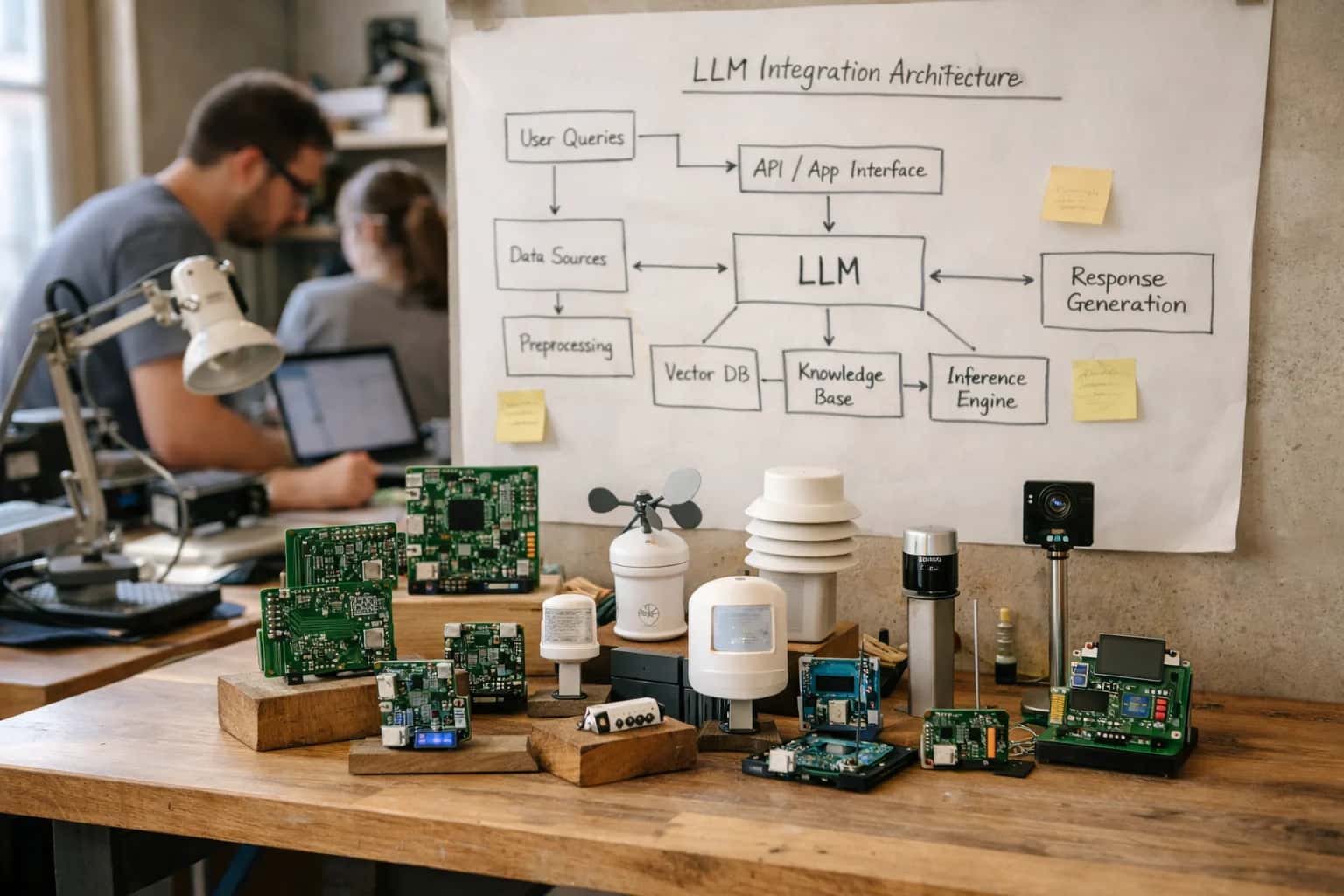
Where AI Fits into Salon Payroll Operations
A technical blueprint for integrating AI into the payroll workflows of salon and spa management platforms.
The core automation occurs in the calculation and file generation layer. An AI agent, acting as a payroll clerk, processes the enriched dataset. It calculates gross wages, commissions, and tips, while accounting for local tax regulations and platform-specific deduction rules. The output is a payroll-ready file (e.g., CSV for ADP, QuickBooks, or Gusto) or a draft batch within the platform's own payroll module. For rollout, we implement this as a scheduled, event-driven workflow: post-close-of-business data is pulled, processed by the AI, and results are pushed to a secure queue for manager review and approval via an audit dashboard before final submission. This reduces a multi-hour, error-prone manual process to a consistent, minutes-long operation.
Governance is critical. The integration must maintain a full audit trail, logging all data inputs, rule applications, and changes made by the AI for compliance. Human-in-the-loop checkpoints are built in, especially for flagged exceptions or calculations that fall outside learned patterns. For enterprise spas with multi-location setups, the AI model can be centralized, applying consistent rules across all units while allowing for location-specific pay policies. The business impact is directional but clear: reducing payroll processing time from days to hours, minimizing costly calculation errors and disputes, and freeing salon managers from manual spreadsheet work to focus on team coaching and client service.
Key Integration Points in Salon Management Platforms
Clock-In/Out Data Ingestion
Payroll automation starts with reliable time data. AI models need access to raw clock events, break logs, and override records via the platform's employee API endpoints. This includes:
- Clock Event Streams: Real-time or batched feeds of
clock_in,clock_out,break_start, andbreak_endevents, often available via webhooks or REST APIs. - Shift and Schedule Context: Cross-reference events against published schedules from the platform's
shiftsorrostersendpoints to identify early arrivals, late departures, and unscheduled work. - Override and Manual Adjustments: Audit manager overrides for corrections, which are critical for detecting potential errors or policy violations before payroll runs.
AI uses this data to flag anomalies—like missed punches, improbably long shifts, or concurrent clock-ins across locations—for manager review, creating a clean, auditable feed for downstream calculations.
High-Value AI Payroll Automation Use Cases
Integrate AI directly with your salon software's timesheet, commission, and transaction modules to automate complex payroll workflows, reduce manual errors, and free up management time for client-facing activities.
Intelligent Timesheet Auditing & Anomaly Detection
An AI agent connects to the platform's clock-in/out API and appointment calendar to automatically flag discrepancies—like missed punches or appointments without a matching clock-in. It cross-references schedules, sends verification requests to staff via the platform's messaging system, and creates an auditable log for manager review.
Automated Complex Commission Calculations
AI parses service tickets, product sales, and tip data from the platform's transaction logs. It applies the salon's tiered commission rules, split percentages, and bonus structures, generating a pre-approved calculation summary. This integrates with the payroll module to export ready-to-use earnings data, eliminating manual spreadsheet work.
Payroll-Ready File Generation & Export
Once calculations are finalized, the AI workflow aggregates all earnings, deductions, and tax data. It formats this information into a CSV or XML file structured for direct import into external payroll services (e.g., ADP, Gusto) or accounting software. The agent can also post a summary back to the staff portal within the salon management platform.
Proactive Labor Cost Forecasting
By analyzing historical appointment volume, sales data, and scheduled hours from the platform, an AI model forecasts weekly labor costs. It alerts managers if projected hours exceed budgeted thresholds before the payroll period closes, allowing for proactive schedule adjustments via the platform's team management API.
Automated Tip Pooling & Distribution
For salons using communal tip pools, AI automates the entire workflow. It ingests daily tip data from POS transactions, applies the salon's distribution formula (e.g., by hours worked or role), and allocates amounts to individual employee records. The system generates transparent reports and can trigger automated payout notifications.
Compliance & Policy Enforcement Agent
An AI copilot monitors payroll runs against platform data and business rules. It checks for overtime compliance, break violations, and correct application of local tax laws. It flags potential issues for manager review and maintains an audit trail within the system, reducing compliance risk during reviews or audits.
Example AI-Powered Payroll Workflows
These workflows illustrate how AI agents integrate directly with your salon management platform's timesheet, service, and commission APIs to automate the most time-consuming and error-prone payroll tasks. Each flow is triggered by platform events and executes a series of tool calls to fetch data, apply logic, and update records or generate files.
Trigger: A staff member clocks out via the platform's mobile app or POS terminal.
AI Agent Workflow:
- The agent receives a webhook payload with the employee ID and clock-out timestamp.
- It calls the platform's
GET /employees/{id}/timesheetsAPI for the current pay period. - Using the retrieved data, the agent analyzes the shift for anomalies:
- Consecutive Shifts: Flags shifts less than 8 hours apart (violating local rest rules).
- Break Compliance: Checks if a required 30-minute break was logged for shifts over 6 hours.
- Geolocation Mismatch: Compares clock-in location data with the employee's assigned salon location.
- The agent generates a summary and posts it as a note to the employee's timesheet record via
POST /timesheets/{id}/notes. For critical violations, it can create a task for the manager in the platform's task module.
Outcome: Payroll managers review a pre-audited timesheet with clear flags instead of manually scanning hundreds of entries.
Implementation Architecture: Data Flow & System Design
A technical blueprint for integrating AI into the payroll workflow of salon management platforms, automating complex calculations and audit tasks.
The integration architecture connects to the salon platform's timesheet/attendance API and service/commission rule engine. An AI agent first ingests raw clock-in/out events, break logs, and service tickets. It uses a rules-based LLM to audit records for common errors like missed punches, overtime thresholds, or overlapping appointments flagged against the therapist's schedule. This audit layer acts as a pre-processor, creating a cleansed, validated dataset for payroll calculation, which is then pushed to a staging table or via webhook to the next system component.
For calculation, the system retrieves the validated hours and matched service data. The core AI model, trained on the salon's specific commission structures (e.g., tiered rates, product vs. service splits, booth rental fees), processes each line item. It references the platform's employee profile object for base rates and service menu API for pricing rules. The output is a detailed, line-item pay statement for each employee. This data is then formatted into a payroll-ready file (e.g., CSV for ADP, QuickBooks, or Gusto) using templates and delivered via secure transfer or directly into the salon's accounting software integration point.
Governance is critical. The workflow includes a human-in-the-loop approval step where managers review AI-generated pay statements within the salon software's interface or a dedicated dashboard. All calculations, source data IDs, and audit flags are logged to an immutable audit trail. Rollout follows a phased approach: starting with a single location for parallel run validation, then scaling. This architecture reduces manual reconciliation from hours to minutes, minimizes costly payroll errors, and provides a clear, auditable path from timesheet to bank deposit.
Code & Payload Examples
Identifying Payroll Discrepancies
AI models analyze raw clock-in/out records from the salon platform's Timesheet API, flagging anomalies like missed punches, overlapping shifts, or unusually short breaks. The integration typically polls for new records or listens for timesheet.updated webhooks.
Example Payload for Anomaly Review:
json{ "employee_id": "EMP_78910", "date": "2024-05-15", "punches": [ { "type": "IN", "time": "09:02:00", "source": "POS_TERMINAL_1" }, { "type": "OUT", "time": "12:30:00", "source": "POS_TERMINAL_1" }, { "type": "IN", "time": "13:01:00", "source": "MANAGER_OVERRIDE" }, { "type": "OUT", "time": "16:00:00", "source": "POS_TERMINAL_1" } ], "scheduled_hours": 7.5, "calculated_hours": 6.47, "anomaly_score": 0.82, "flags": ["LONG_LUNCH_BREAK", "OVERRIDE_SOURCE_USED"] }
The AI agent can automatically request manager approval for flagged shifts via the platform's internal messaging system or create a task in the manager's queue.
Realistic Time Savings and Operational Impact
A comparison of manual payroll processes versus AI-augmented workflows integrated with salon management platforms like Fresha, Zenoti, and Vagaro.
| Payroll Task | Manual Process | AI-Augmented Process | Impact & Notes |
|---|---|---|---|
Timesheet Audit & Exception Review | 1-2 hours weekly per location | 10-15 minutes weekly | AI flags anomalies in clock-in/out data from the platform API for manager review. |
Complex Commission Calculation | 3-4 hours per pay period | 30-45 minutes | AI parses service rules, product sales, and tip allocations from transaction logs, generating a draft for approval. |
Payroll File Generation | 1-2 hours manual data entry & formatting | Automated file creation | AI consolidates approved hours, wages, and deductions into a payroll-ready CSV for your provider (e.g., ADP, Gusto). |
Tip Allocation & Reporting | Manual spreadsheet reconciliation | Automated distribution & reporting | AI allocates pooled tips based on platform sales data and generates individual reports, ensuring compliance. |
New Employee Payroll Setup | 30 minutes of manual form entry & system configuration | 5-minute profile sync & rule application | AI uses new hire data from the HR module to pre-populate payroll fields and apply correct pay rates. |
Payroll Variance & Error Detection | Reactive, found during reconciliation | Proactive alerts before processing | AI compares current period data to historical patterns, flagging outliers like overtime spikes or missing punches. |
Payroll Reporting for Management | Manual report building from multiple data exports | Automated, scheduled insight delivery | AI generates summaries of labor cost %, overtime trends, and commission payouts, sent via email or dashboard. |
Governance, Security, and Phased Rollout
A secure, controlled approach to integrating AI into your salon's most sensitive financial workflows.
Integrating AI with payroll data requires a zero-trust architecture. We design implementations where the AI agent operates as a read-only service user within your salon platform (e.g., Fresha, Zenoti), accessing only the necessary timesheet, service ticket, and commission rule objects via secured API calls. All prompts and calculations are executed in a private, VPC-isolated environment. The system never writes raw payroll decisions back to the platform; instead, it generates a draft payroll batch file and an audit log of all calculations, including source data timestamps and the applied rule logic, for manager review and approval in a separate interface before any export to your payroll provider (e.g., Gusto, ADP).
A phased rollout is critical for trust and accuracy. Phase 1 focuses on audit and anomaly detection: the AI runs in shadow mode, comparing its calculations against historical manual payroll runs to flag discrepancies in clock-in/out rounding, complex tiered commissions, or tip allocations, building confidence in its logic. Phase 2 introduces assisted generation: managers use the AI to create first-draft payroll files, reviewing and editing the detailed audit trail before finalizing. Phase 3 enables conditional automation for rule-based, low-risk pay components (e.g., standard hourly wages for non-commissioned staff), while complex cases remain in assisted review. This staged approach, coupled with role-based access controls (RBAC) for who can approve drafts, ensures financial control is never ceded to automation.
Governance is built into the workflow. Every payroll cycle generates a permanent audit artifact. This allows for retrospective analysis, dispute resolution with staff, and seamless compliance with labor regulations. By treating the AI as a governed copilot rather than a black-box replacement, salon owners and multi-location managers gain unprecedented visibility into payroll operations, reduce costly manual errors, and free up administrative time—all while maintaining full financial oversight and security. For related patterns on syncing this financial data with accounting systems, see our guide on AI Integration with Accounting Software for Salons.
Enabling Efficiency, Speed & Accuracy
Intelligent Analysis, Decision & Execution
We build AI systems for teams that need search across company data, workflow automation across tools, or AI features inside products and internal software.
Talk to Us
Search across company data
Give teams answers from docs, tickets, runbooks, and product data with sources and permissions.
Useful when people spend too long searching or get different answers from different systems.

Automate internal workflows
Use AI to route work, draft outputs, trigger actions, and keep approvals and logs in place.
Useful when repetitive work moves across multiple tools and teams.

Add AI to products and internal tools
Build assistants, guided actions, or decision support into the software your team or customers already use.
Useful when AI needs to be part of the product, not a separate tool.
Frequently Asked Questions
Common questions about integrating AI with salon management platforms like Fresha, Zenoti, Mangomint, and Vagaro to audit timesheets, calculate complex pay, and generate payroll files.
This workflow connects to the salon platform's timesheet API to validate employee attendance data against business rules.
- Trigger: A scheduled daily job runs after close of business.
- Context Pulled: The AI agent fetches raw clock-in/out events, scheduled shifts, and break policies for the day from the platform's
EmployeeTimeLogorAttendanceAPI endpoints. - Model Action: A rules-based AI model analyzes the sequence of events to detect anomalies:
- Early Clock-Ins/Late Clock-Outs beyond grace periods.
- Missing Breaks for shifts exceeding local labor law thresholds.
- Overlapping Logs for the same employee across multiple devices.
- Geolocation Mismatches (if the platform provides location data) for off-site clock-ins.
- System Update: The agent creates an audit log entry in a separate database and generates a daily discrepancy report. It can also create a low-priority ticket in the platform's internal task system (if supported) for manager review.
- Human Review Point: All flagged discrepancies are presented to a payroll administrator in a consolidated dashboard with the raw log data for final approval before pay calculation proceeds.

About the author
Prasad Kumkar
CEO & MD, Inference Systems
Prasad Kumkar is the CEO & MD of Inference Systems and writes about AI systems architecture, LLM infrastructure, model serving, evaluation, and production deployment. Over 5+ years, he has worked across computer vision models, L5 autonomous vehicle systems, and LLM research, with a focus on taking complex AI ideas into real-world engineering systems.
His work and writing cover AI systems, large language models, AI agents, multimodal systems, autonomous systems, inference optimization, RAG, evaluation, and production AI engineering.
Partnered with leading AI, data, and software stack.





How We Work
Custom AI workflows for your Business
One-fit-all AI don't work for modern businesses. At Inferensys, we aim to understand your business & custom requirements; which we use to define most efficient agentic workflows, the data, and the tools for your business.
01
Review the use case
We understand the task, the users, and where AI can actually help.
Read more02
Pick the right approach
We define what needs search, automation, or product integration.
Read more03
Build the first useful version
We implement the part that proves the value first.
Read more04
Improve from there
We add the checks and visibility needed to keep it useful.
Read moreThe first call is a practical review of your use case and the right next step.
Talk to Us