For a barbershop, the management platform is the operational system of record. AI integrations connect to three primary surfaces: the booking engine API, the client profile and transaction database, and the communication layer (SMS/email). In platforms like Squire, this means tapping into endpoints for waitlists, membership punch cards, and product sales. For Fresha or Vagaro, integration focuses on appointment objects, client history, and marketing automation hooks. The goal is to augment, not replace, the existing software—adding intelligence to the workflows barbers and managers already use daily.

Integration
AI for Barber Shop Management Software
A technical guide to integrating AI into barbershop management platforms like Squire and Fresha. Learn how to automate waitlists, manage membership punch cards, boost retail sales, and reduce front-desk load with practical workflows and code patterns.
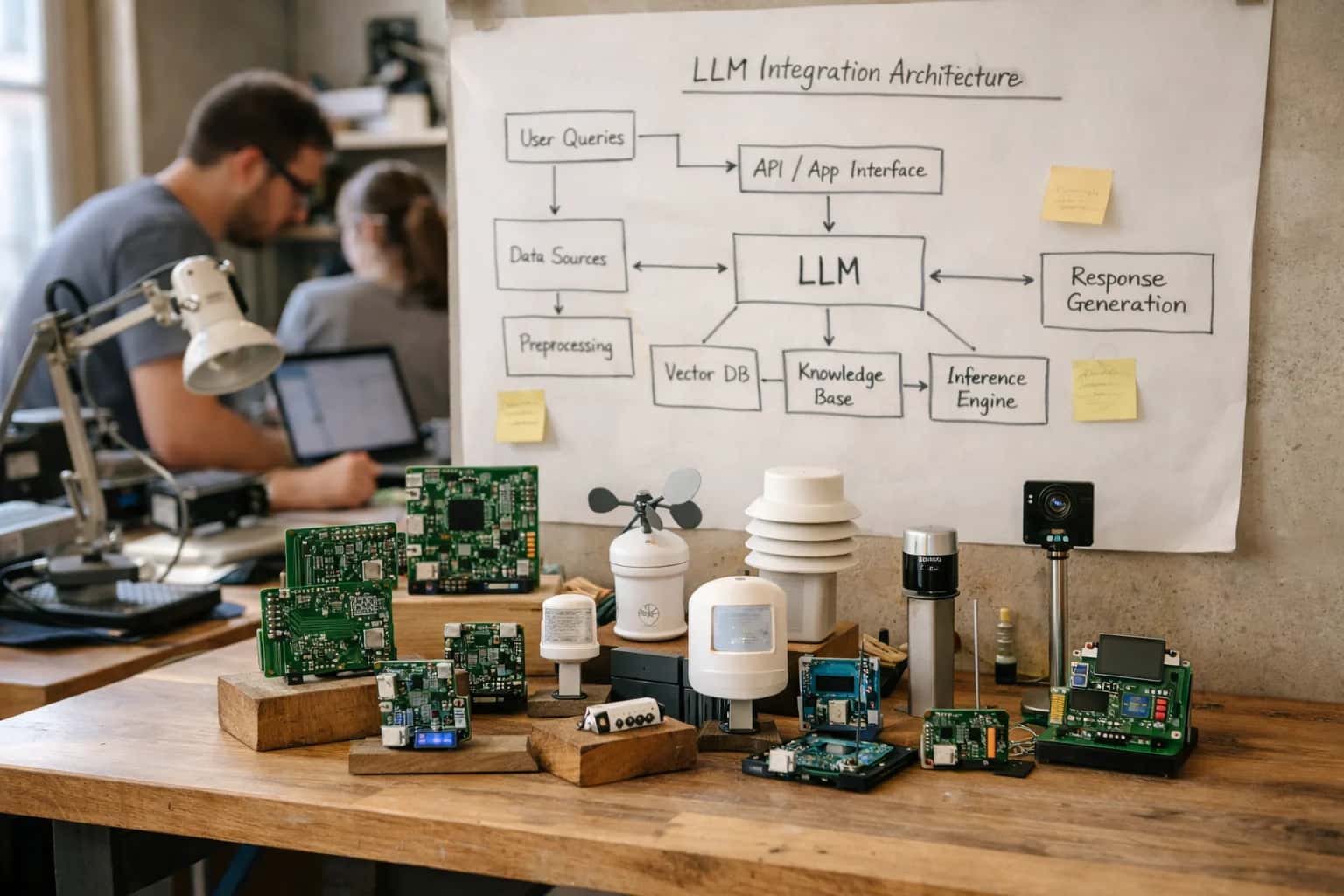
ARCHITECTURE FOR SQUIRE, FRESHA, AND VAGARO
Where AI Fits in the Modern Barbershop Stack
A technical blueprint for integrating AI into the core workflows of barbershop management platforms.
Implementation typically involves a middleware layer that subscribes to platform webhooks (e.g., appointment.created, client.updated) and uses that real-time data to power AI agents. For example, an AI model can predict no-shows by analyzing a client's booking history and local weather data, then trigger a personalized SMS confirmation sequence via the platform's comms API. Another agent can manage the waitlist dynamically, using real-time cancellation predictions to automatically text the next client in line via Squire's Waitlist API, turning empty chairs into revenue within minutes.
Rollout and governance are critical. Start with a single, high-ROI workflow like AI-powered waitlist fill or membership renewal prediction. Use API keys with scoped permissions and maintain an audit log of all AI-generated actions (e.g., SMS sent, appointment modified). For barbershops using commission structures, ensure any AI-driven product or service recommendations are integrated with the platform's sales data and commission tracking to avoid payout discrepancies. The architecture should be invisible to the client but provide clear, actionable insights to the barber at the chair and the owner at the back office.
WHERE AI CONNECTS TO SQUIRE, FRESHA, AND VAGARO
Key Integration Surfaces in Barber Shop Management Software
Real-Time Calendar and Queue Management
The core integration surface for AI in barbershops is the booking engine. Platforms like Squire, Fresha, and Vagaro expose APIs for calendar availability, appointment creation, and waitlist management. This allows an AI agent to:
- Check real-time availability across barbers, chairs, and service durations.
- Dynamically manage waitlists by predicting no-shows and automatically filling cancellations via SMS or in-app notifications.
- Process natural language requests from website chats or voice interfaces (e.g., "book a fade with Mike next Tuesday afternoon") into structured API calls.
A typical integration uses webhooks to listen for booking lifecycle events (created, canceled, rescheduled) and triggers AI workflows for confirmation sequences or waitlist promotion.
python# Example: AI agent checking Squire API for availability import requests def check_barber_availability(barber_id, service_duration, date): headers = {"Authorization": f"Bearer {API_KEY}"} params = { "barber_id": barber_id, "duration_minutes": service_duration, "date": date } response = requests.get( "https://api.squire.co/v1/availability/slots", headers=headers, params=params ) return response.json() # Returns list of open slots
INTEGRATION PATTERNS FOR SQUIRE, FRESHA, AND VAGARO
High-Value AI Use Cases for Barbershops
Practical AI workflows that connect directly to barbershop management platforms, automating high-friction tasks and personalizing the client experience for a predominantly male clientele.
01
Intelligent Waitlist & Cancellation Fill
AI monitors real-time booking APIs for cancellations and predicts no-show risk. When a slot opens, it automatically scans the waitlist (prioritizing by membership tier, preferred barber, and service type) and triggers personalized SMS offers via the platform's comms module to fill the slot within minutes.
Hours -> Minutes
Slot fill time
02
Membership Punch Card & Loyalty Automation
Integrates with the membership/punch card modules in Squire or Fresha. AI tracks usage patterns, predicts churn risk for premium members, and automatically triggers personalized win-back offers (e.g., 'Your 10th haircut is on us') or tier-upgrade suggestions via the platform's loyalty automation hooks.
Batch -> Real-time
Member engagement
03
Product & Retail Upsell at Checkout
At POS checkout (integrated via Squire or Vagaro's transaction API), an AI engine analyzes the client's service history and current purchase to suggest relevant retail products (e.g., pomade after a fade, beard oil after a trim). Recommendations respect inventory levels and can be configured for commission tracking.
1-2 sprints
Implementation timeline
04
Barber-Specific Booking & Capacity AI
Uses historical booking data from the platform's calendar API to forecast demand for individual barbers. AI then optimizes the booking grid, suggesting optimal service durations and blocking time for complex appointments (e.g., full cut & beard design). Integrates directly with the staff scheduling module to prevent overbooking.
Same day
Schedule impact
05
AI-Powered Client Rebooking Assistant
A post-appointment workflow that analyzes the service rendered (via service code and duration) and the client's typical rebooking cycle. It then drafts and sends a personalized rebooking message via the platform's native email/SMS, with a direct link to the barber's real-time availability. Built using the platform's client profile and comms APIs.
Reduce manual triage
Front-desk load
06
Gift Card & Promotional Campaign Engine
Connects to gift card sales and redemption data within the management platform. AI identifies ideal gift card buyer segments (e.g., corporate clients before holidays) and targets them with automated campaigns. It also predicts redemption peaks and alerts staff, and triggers 'use-it-or-lose-it' reminders to recipients before expiration.
Batch -> Real-time
Campaign execution
SQUIRE & FRESHA INTEGRATION PATTERNS
Example AI-Powered Workflows for Barbershops
These are concrete, implementable workflows showing how AI agents connect to barbershop management platforms like Squire and Fresha. Each pattern uses real APIs, data objects, and automation hooks to solve specific operational problems.
Trigger: A client cancels an appointment within 24 hours.
Context Pulled: The AI agent calls the platform's GET /appointments/{id} API to get the canceled slot details (time, barber, service duration). It then queries GET /clients with filters for:
- Clients on the waitlist for that specific barber or service type.
- Clients with a high lifetime value (calculated from
transaction_history). - Clients whose preferences (e.g., "prefers afternoon slots") match the opening.
Agent Action: The agent generates a personalized SMS/email via the platform's POST /communications endpoint. The message references the client's preferred barber by name and offers the slot.
System Update: If the client accepts via a secure link, the agent calls POST /appointments to book them and DELETE /waitlist/{id} to remove them from the list. The original barber's calendar is updated in real-time.
Human Review Point: None for standard clients. For VIP clients with complex service histories, the system can flag the booking for a quick manager review before the confirmation is sent.
BARBERSHOP-SPECIFIC WORKFLOWS
Implementation Architecture: Data Flow & Guardrails
A practical blueprint for integrating AI into barbershop platforms like Squire or Fresha, focusing on data flow, operational guardrails, and phased rollout.
The integration architecture connects to three core surfaces in the barbershop management platform: the booking calendar API for real-time availability, the client profile and history object for personalization, and the transaction and membership ledger for punch cards and product sales. An AI orchestration layer sits between the platform and external services (e.g., LLM APIs, SMS gateways), using webhooks for events like new bookings, cancellations, or POS transactions. For example, a waitlist_automation agent listens for cancellation webhooks, queries the client history for preferred barbers and times, and uses the booking API to offer the slot to the top-ranked waitlisted client via a templated SMS—all within 60 seconds.
Key guardrails are implemented at the data and action layer. Client data is pseudonymized before being sent to external AI models for analysis, with only a persistent internal ID used for personalization. All AI-generated actions—like sending an SMS, applying a punch card punch, or suggesting a retail product—are logged in a separate audit trail with the prompt, source data, and model reasoning before being executed via the platform's API. For membership workflows, a human-in-the-loop approval step is configured for any AI-suggested membership tier change or auto-renewal modification, requiring a manager's approval in the Squire or Fresha dashboard before the system proceeds.
Rollout follows a phased, service-specific approach. Phase 1 targets low-risk, high-volume automation: deploying the waitlist management agent and automated appointment confirmation sequences. Phase 2 introduces personalized retail and punch card recommendations at checkout, using the transaction API in a read-only mode initially to build trust in the suggestion accuracy. Phase 3 integrates predictive staffing insights, analyzing booking trends to suggest optimal barber schedules. Each phase includes a parallel monitoring dashboard built on the platform's reporting API, tracking key metrics like waitlist conversion rate, SMS engagement, and upsell attachment to validate impact and tune prompts. This staged deployment minimizes disruption while delivering tangible operational wins, such as reducing front-desk call volume and increasing membership renewal rates, within the first quarter.
AI INTEGRATION PATTERNS
Code & Payload Examples
Real-Time Waitlist Management
Integrate AI with the booking API of platforms like Squire or Fresha to dynamically manage waitlists. When a cancellation is predicted or detected, the system can query for eligible waitlisted clients based on preferences and service history, then automatically send a booking offer via SMS.
Example API Call (Python Pseudocode):
python# Fetch real-time cancellations for the day cancellations = requests.get( f"{PLATFORM_API_URL}/appointments", params={"status": "cancelled", "date": "today"}, headers={"Authorization": f"Bearer {API_KEY}"} ).json() # For each cancellation, find best waitlist match for slot in cancellations: waitlist = get_waitlist_for_service(slot['service_id']) top_match = ai_rank_clients(waitlist, slot) if top_match: # Offer the slot via platform's messaging webhook offer_payload = { "client_id": top_match['id'], "appointment_slot": slot, "message": f"A spot for {slot['service_name']} opened up at {slot['time']}. Reply YES to book." } requests.post(f"{PLATFORM_API_URL}/messaging/offer", json=offer_payload)
This pattern reduces empty chairs and improves client satisfaction by filling slots in minutes instead of hours.
AI INTEGRATION FOR BARBER SHOPS
Realistic Time Savings & Business Impact
This table illustrates the operational impact of integrating AI into barbershop management platforms like Squire or Fresha. It focuses on realistic time savings and workflow improvements for barbershop-specific operations.
| Metric | Before AI | After AI | Notes |
|---|---|---|---|
Walk-in & Waitlist Management | Manual phone calls and paper lists | Dynamic digital queue with SMS alerts | AI predicts wait times and auto-fills cancellations via API |
Membership Punch Card Tracking | Physical cards or manual CRM updates | Automated digital tracking with renewal prompts | AI analyzes usage to trigger personalized top-up offers |
Retail Product Recommendations | Generic suggestions or memory-based | Personalized suggestions at checkout | Uses purchase/service history from platform data to suggest relevant products |
Appointment Confirmation & Reminders | Batch SMS/email blasts, high no-show rates | Personalized, two-way conversational sequences | AI tailors message timing/content, reducing no-shows by 15-25% |
Client Re-engagement | Manual review of lapsed clients | Automated churn risk scoring and outreach | AI identifies at-risk clients and triggers win-back campaigns via platform |
Service Duration Scheduling | Fixed time slots based on service type | Optimized slots based on stylist historical pace | AI analyzes past appointment data to reduce gaps and overruns |
Basic Front-Desk Inquiries | Staff handles calls during peak hours | AI chatbot deflects FAQs and books appointments | Integrated with real-time availability API, reducing call volume by ~40% |
IMPLEMENTATION BLUEPRINT
Governance, Security & Phased Rollout
A practical guide to deploying AI in barbershop management platforms like Squire and Fresha with control, security, and measurable impact.
A production AI integration for a barbershop platform must respect the core data model: client profiles, appointment objects, membership/punch card records, and retail product SKUs. Your AI agents and workflows should interact with these entities via secure API calls (e.g., Squire's REST API or Fresha's webhooks) using scoped service accounts with role-based access. This ensures the AI only reads and writes to permitted data surfaces—like updating a waitlist slot or appending a note to a client record—without accessing sensitive payment details or employee personal data. All AI-generated actions, such as sending an SMS or modifying a booking, should be logged in the platform's native audit trail for full traceability.
A phased rollout is critical for adoption and risk management. Start with a read-only pilot focused on analysis and insight, such as an AI model that analyzes booking patterns to predict weekly demand for fade appointments versus beard trims. Phase two introduces assisted write operations, like an AI copilot that suggests optimal times for a client's next appointment based on their history and current barber availability, requiring staff approval before the calendar is updated. The final phase enables controlled automation for high-confidence, repetitive tasks, such as automatically moving a client from a waitlist to a canceled slot using a predefined rule set, with a nightly report of all automated actions for manager review.
Governance extends to the AI's output and client interaction. For SMS or email automation—crucial for membership renewals or product restock alerts—implement a human-in-the-loop review for the first 100 messages per campaign template. Use the platform's built-in communication logs to monitor response rates and opt-outs. For any AI-driven product recommendation (e.g., suggesting a new pomade after a haircut), ensure it pulls only from in-stock inventory flagged as 'AI-recommendable' in your product catalog. Regular audits should compare AI-suggested actions against manual outcomes to tune models and prevent drift, ensuring the integration remains a reliable tool that enhances, rather than disrupts, the fast-paced flow of the barbershop.
Enabling Efficiency, Speed & Accuracy
Intelligent Analysis, Decision & Execution
We build AI systems for teams that need search across company data, workflow automation across tools, or AI features inside products and internal software.
Talk to Us
Search across company data
Give teams answers from docs, tickets, runbooks, and product data with sources and permissions.
Useful when people spend too long searching or get different answers from different systems.
Enterprise searchRAGPermissions
Read more
Automate internal workflows
Use AI to route work, draft outputs, trigger actions, and keep approvals and logs in place.
Useful when repetitive work moves across multiple tools and teams.
AI agentsWorkflow automationGovernance
Read more
Add AI to products and internal tools
Build assistants, guided actions, or decision support into the software your team or customers already use.
Useful when AI needs to be part of the product, not a separate tool.
AI integrationDecision supportModel routing
Read moreIMPLEMENTATION GUIDE
Frequently Asked Questions
Practical questions for barbershop owners and operators evaluating AI integration with platforms like Squire and Fresha.
A phased, API-first integration is the standard approach to minimize disruption.
Typical Rollout Sequence:
- Read-Only Phase: Start by connecting the AI system to your platform's reporting or data export APIs (e.g., Squire's Business Intelligence API, Fresha's Reports API). This allows the AI to analyze historical data on appointments, clientele, and sales without making any changes.
- Notification Phase: Use webhooks from your management software to send real-time events (e.g., new booking, cancellation, checkout) to the AI system. The AI can process these and send alerts or suggestions back to a separate dashboard or manager chat (like Slack), keeping the core platform untouched.
- Assisted-Write Phase: Finally, enable specific, high-value write actions. For example, configure the AI to automatically add clients to a waitlist via the platform's API when a high-value cancellation is predicted, or to send a personalized SMS via an integrated comms provider like Twilio, with the action logged in the client's profile.
This approach lets your team build confidence in the AI's recommendations before it takes any automated actions within your primary system.

About the author
Prasad Kumkar
CEO & MD, Inference Systems
Prasad Kumkar is the CEO & MD of Inference Systems and writes about AI systems architecture, LLM infrastructure, model serving, evaluation, and production deployment. Over 5+ years, he has worked across computer vision models, L5 autonomous vehicle systems, and LLM research, with a focus on taking complex AI ideas into real-world engineering systems.
His work and writing cover AI systems, large language models, AI agents, multimodal systems, autonomous systems, inference optimization, RAG, evaluation, and production AI engineering.
LinkedIn
Limited slotsGet a Free AI Consultation
Partnered with leading AI, data, and software stack.





How We Work
Custom AI workflows for your Business
One-fit-all AI don't work for modern businesses. At Inferensys, we aim to understand your business & custom requirements; which we use to define most efficient agentic workflows, the data, and the tools for your business.
01
Review the use case
We understand the task, the users, and where AI can actually help.
Read more02
Pick the right approach
We define what needs search, automation, or product integration.
Read more03
Build the first useful version
We implement the part that proves the value first.
Read more04
Improve from there
We add the checks and visibility needed to keep it useful.
Read moreThe first call is a practical review of your use case and the right next step.
Talk to Us