AI integration targets Seismic's Playbook API and Content API to create dynamic, data-driven playbooks. The core pattern involves using a deal's attributes—like industry, deal stage, and opportunity size from your CRM—as prompts for an LLM. The model then queries a RAG index of your content library to assemble a curated list of relevant assets, email templates, call scripts, and battle cards. This logic is executed via a middleware service that calls Seismic's APIs to create or update playbook records, ensuring the assembled content is instantly available to sellers within their existing workflow.

Integration
AI Integration for Seismic Playbooks
A technical implementation guide for embedding AI into Seismic Playbooks to automate the creation of dynamic, deal-specific sales plays, content bundles, and call scripts, reducing manual assembly from hours to minutes.
ARCHITECTURE AND ROLLOUT
Where AI Fits into Seismic Playbooks
A technical blueprint for injecting AI into Seismic's playbook engine to automate assembly and personalization.
High-value use cases include automating playbook creation for new product launches, generating territory-specific playbooks for new sales hires, and dynamically refreshing playbooks based on win/loss analysis. For example, when a deal in Salesforce moves to the 'Discovery' stage, an automation can trigger the generation of a playbook containing discovery call guides, relevant case studies, and competitor battle cards specific to the prospect's vertical. This reduces manual curation time from hours to minutes and increases content relevance, directly impacting seller confidence and deal velocity.
Rollout requires a phased approach: start with a pilot for a single sales team, using a subset of content types and a simple rule-based trigger. Governance is critical; implement an approval workflow where AI-suggested playbooks are reviewed by enablement managers before being published. All AI-generated actions should be logged to Seismic's audit trails for compliance. For production, the integration service should be deployed as a resilient, containerized microservice with appropriate error handling and fallback to static playbooks if the AI service is unavailable.
AI FOR PLAYBOOKS
Key Integration Surfaces in Seismic
Injecting AI into Playbook Assembly
The core of Seismic's playbook functionality is the template and assembly engine. AI integration here focuses on automating the creation of dynamic, deal-specific playbooks.
Key API Surfaces:
- Playbook Template API: Retrieve template structures, including placeholder sections for content, email sequences, and call scripts.
- Content API: Pull approved assets (case studies, battle cards, one-pagers) from the Seismic library based on metadata tags, usage history, and performance data.
AI Implementation Pattern:
- Trigger an AI workflow when a new opportunity reaches a specific stage in Salesforce.
- The AI agent analyzes the opportunity record (industry, deal size, competitor, pain points).
- Using the Playbook Template API, it instantiates a new playbook.
- It queries the Content API with a semantic search, using the deal context to select the most relevant assets for each section.
- The AI assembles the playbook, populating it with personalized email draft snippets and tailored talking points, ready for seller review.
This transforms playbook creation from a manual, hours-long curation task into a minutes-long review and customization step.
IMPLEMENTATION PATTERNS
High-Value AI Use Cases for Seismic Playbooks
Inject AI into Seismic's playbook engine to automate the assembly of personalized sales assets, scripts, and workflows based on real-time deal context, reducing manual prep from hours to minutes.
01
Dynamic Playbook Generation
Use AI to generate a complete, personalized Seismic playbook by analyzing the CRM opportunity record. The model pulls relevant email templates, battle cards, case studies, and call scripts from the content library, assembling them into a structured playbook based on deal stage, industry, and competitor.
Hours -> Minutes
Assembly time
02
Automated Content Curation & Gap Detection
An AI agent monitors playbook usage and engagement data to identify missing assets. If a playbook for a 'manufacturing' deal lacks a relevant ROI calculator, the system alerts content managers or automatically drafts a request to the marketing team, keeping playbooks comprehensive.
Proactive
Content management
03
Context-Aware Script & Email Drafting
Integrate a large language model (LLM) with Seismic's playbook editor. Sellers trigger a 'Draft Email' action within a playbook; the AI uses the playbook's context (buyer persona, pain points) and selected assets to generate a first-draft outreach email or call script, which is then editable in Seismic.
Same day
Outreach readiness
04
Playbook Performance Intelligence
Build an AI analytics layer atop Seismic's playbook engagement data. Correlate specific asset usage within playbooks with deal velocity and win rates. Surface insights to enablement: 'Playbooks containing competitive battle cards show 22% faster progression from Stage 2 to 3.'
Data-Driven
Enablement decisions
05
RAG-Powered Playbook Search & Q&A
Implement a Retrieval-Augmented Generation (RAG) system over all playbook content. Sellers can ask natural language questions like 'How do we handle pricing objections for enterprise healthcare?' directly in Seismic. The AI retrieves relevant snippets from across playbooks and synthesizes a concise answer, citing source assets.
Seconds
Knowledge access
06
Automated Playbook Localization & Compliance
For global teams, use AI to assist in adapting playbooks for regional markets. The system can suggest regulatory disclaimers, flag non-compliant messaging, and automate the first-pass translation of playbook narratives and scripts, ensuring faster and more consistent global rollout.
1 sprint
Rollout acceleration
IMPLEMENTATION PATTERNS
Example AI-Powered Playbook Workflows
These workflows illustrate how to inject AI into Seismic's playbook automation layer, transforming static content libraries into dynamic, deal-aware guidance systems. Each pattern connects Seismic's APIs, CRM data, and AI models to assemble relevant assets, templates, and scripts in real-time.
Trigger: A new opportunity is created in Salesforce with specific attributes (e.g., Industry=Healthcare, Product Interest=Platform, Deal Size=> $250k).
Workflow:
- A webhook from Salesforce triggers an orchestration service.
- The service calls Seismic's Playbooks API to check for an existing template matching the opportunity's profile.
- If no exact match exists, an AI agent is invoked with the following context:
- CRM data: Account name, industry, key contacts, deal stage.
- Seismic metadata: Tags, usage data, and performance scores of assets related to
HealthcareandPlatform.
- The agent uses a Retrieval-Augmented Generation (RAG) model on your approved content library to:
- Assemble a core set of battle cards, case studies, and whitepapers.
- Generate a draft playbook narrative outlining a recommended sales motion.
- Pull in compliant email templates and call scripts tailored to the buyer's role.
- The system creates a new Seismic playbook via API, populating it with the curated assets and AI-generated narrative.
- An automated notification is sent to the assigned AE in Slack or Teams with a link to the new, personalized playbook.
Human Review Point: The playbook is created in a Draft state, requiring the sales manager or enablement lead to review and approve the AI-curated content before it becomes active for the seller.
AUTOMATED PLAYBOOK ASSEMBLY
Implementation Architecture & Data Flow
A technical blueprint for connecting AI to Seismic's playbook engine, enabling dynamic content assembly based on live deal data.
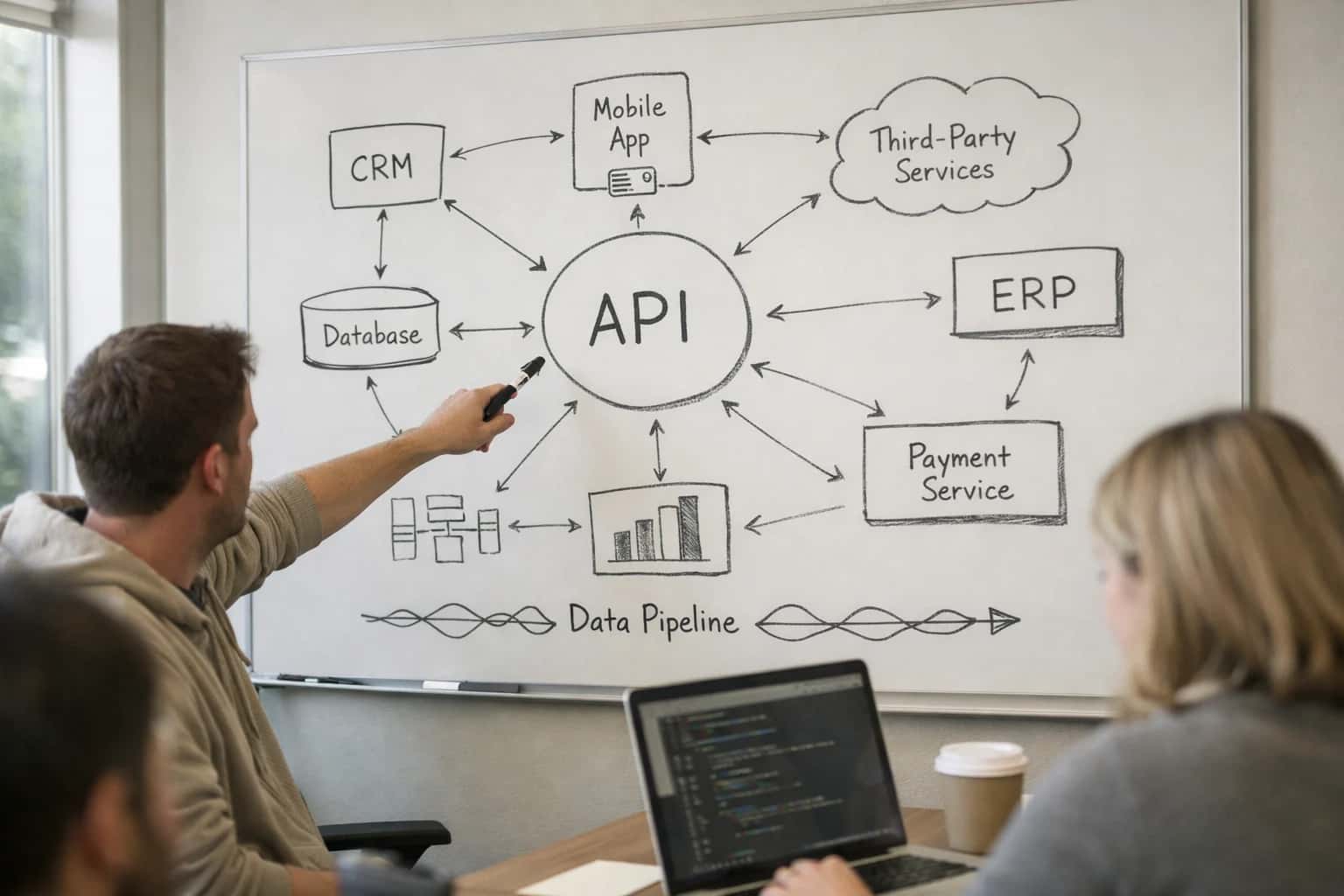
The integration architecture connects Seismic's Playbooks API and Content API to an AI orchestration layer, typically deployed as a secure microservice. This service ingests real-time context from your CRM (e.g., Salesforce opportunity stage, industry, competitor mentions) via webhook or scheduled sync. Using this context, an LLM agent executes a retrieval-augmented generation (RAG) workflow against your Seismic content library, your internal knowledge bases, and approved external sources. The agent assembles a draft playbook by selecting relevant assets, email templates, call scripts, and battle cards, structuring them into a logical sequence for the seller's specific scenario.
The data flow is governed and iterative. The AI service writes the structured playbook draft back to Seismic via the API, creating a new playbook object or updating an existing one. Approval workflows can be injected here, routing the AI-generated playbook to a sales enablement manager for review before it becomes visible to the seller. All actions are logged with full audit trails, linking the generated playbook to the source CRM opportunity and the specific AI model version used. This creates a closed-loop system where seller engagement with the playbook (views, shares, content usage) is fed back into the CRM and analytics layer to refine future AI recommendations.
Rollout is phased, starting with a pilot for a single sales segment (e.g., enterprise tech). The AI model is initially configured with conservative, rule-based guardrails on its assembly logic, focusing on high-confidence use cases like competitive displacement or new product launch playbooks. Governance is critical: a human-in-the-loop review step is mandatory in early stages, and content permissions from Seismic are strictly enforced to ensure the AI only suggests assets the seller is authorized to see. The final architecture reduces playbook creation from a multi-hour, manual research task to a same-day, context-aware automated process, directly linking seller activity to measurable pipeline outcomes.
IMPLEMENTATION PATTERNS
Code & Payload Examples
Triggering Dynamic Playbook Generation
Use Seismic's webhook system or a scheduled job to trigger playbook assembly when a deal stage changes in Salesforce. The payload includes the opportunity ID, stage, and key attributes for context-aware content selection.
json{ "event": "playbook_generation_request", "opportunity_id": "0063x00000A1b2cD", "salesforce_org": "00D3x0000001abc", "deal_stage": "Proposal/Quote", "attributes": { "industry": "Financial Services", "deal_size": "enterprise", "competitor": "CompetitorX", "key_pain_points": ["compliance", "integration"] }, "requested_components": ["email_templates", "case_studies", "call_script"] }
This payload is sent to an orchestration service that queries Seismic's Content API with vector embeddings of the attributes to retrieve the most relevant assets, then structures them into a new playbook via the Playbooks API.
AI-POWERED PLAYBOOK AUTOMATION
Realistic Time Savings & Operational Impact
How AI integration transforms manual, reactive playbook assembly into a dynamic, proactive workflow, reducing administrative drag and increasing seller relevance.
| Metric | Before AI | After AI | Notes |
|---|---|---|---|
Playbook Assembly Time | 2-4 hours per deal | 15-30 minutes for review | AI drafts initial playbook; human finalizes and approves. |
Content Relevance & Freshness | Manual search across libraries | Automated, context-aware asset pull | Leverages CRM data, buyer role, and engagement history. |
Playbook Update Frequency | Quarterly or per major launch | Continuous, event-triggered updates | AI monitors for new competitive intel, product updates, and win/loss data. |
Manager Coaching & Review | Ad-hoc, inconsistent feedback | Structured, AI-highlighted gaps | AI surfaces missing assets or weak messaging for manager intervention. |
Cross-Platform Data Synthesis | Manual copy/paste from CRM, CI tools | Automated orchestration via APIs | AI assembles data from Salesforce, Gong, and news feeds into a unified narrative. |
Compliance & Governance Check | Manual review by legal/ops | AI pre-screens for policy violations | Flags non-compliant language or outdated claims before final review. |
Seller Onboarding to First Playbook | Weeks of training and search | Day 1 access to personalized drafts | New hires receive deal-contextual playbooks immediately, accelerating ramp. |
ARCHITECTING FOR ENTERPRISE CONTROL
Governance, Security & Phased Rollout
A production-ready AI integration for Seismic Playbooks requires deliberate controls for data, content, and user impact.
Governance starts with data access. AI models query Seismic via its REST API, typically requiring read-only access to Playbook templates, Content Library assets, and user activity logs. We recommend a dedicated service account with scoped permissions, ensuring the AI cannot modify source content or user data. All AI-generated playbook drafts are written to a staging area or a new AI_Generated_Playbook custom object, requiring a manual review and publish step by a sales enablement manager or deal strategist before becoming live in Seismic. This creates a clear audit trail and maintains content quality control.
For security, the integration architecture typically uses a middleware layer (e.g., an Azure Function or AWS Lambda) that sits between Seismic and the LLM provider (like OpenAI or Anthropic). This layer handles authentication, encrypts sensitive payloads (e.g., opportunity names, amounts), and can redact or mask PII before sending data to external AI services. All prompts, context data, and generated outputs should be logged to a secure data store for compliance reviews and model performance monitoring. Role-based access within Seismic can then control who can trigger AI playbook generation and who can approve the final drafts.
A phased rollout is critical for adoption and risk management. We recommend a three-stage approach:
- Phase 1 (Pilot): Enable AI playbook generation for a single product line or sales team. Limit automation to assembling content from a pre-vetted, high-confidence asset library. Use this phase to tune prompts, establish review workflows, and measure time savings.
- Phase 2 (Expansion): Introduce dynamic generation based on deal attributes (e.g., industry, deal size, competitor). Connect to CRM data (Salesforce) for richer context. Implement feedback loops where sellers can rate the usefulness of AI-suggested content, feeding data back to improve future recommendations.
- Phase 3 (Scale & Optimize): Roll out to the entire sales org. Introduce advanced features like predictive content suggestions based on win/loss analysis or automated playbook versioning after a major product release. Continuously monitor key metrics: playbook creation time, content utilization rates, and correlation with deal velocity.
Enabling Efficiency, Speed & Accuracy
Intelligent Analysis, Decision & Execution
We build AI systems for teams that need search across company data, workflow automation across tools, or AI features inside products and internal software.
Talk to Us
Search across company data
Give teams answers from docs, tickets, runbooks, and product data with sources and permissions.
Useful when people spend too long searching or get different answers from different systems.
Enterprise searchRAGPermissions
Read more
Automate internal workflows
Use AI to route work, draft outputs, trigger actions, and keep approvals and logs in place.
Useful when repetitive work moves across multiple tools and teams.
AI agentsWorkflow automationGovernance
Read more
Add AI to products and internal tools
Build assistants, guided actions, or decision support into the software your team or customers already use.
Useful when AI needs to be part of the product, not a separate tool.
AI integrationDecision supportModel routing
Read moreIMPLEMENTATION BLUEPRINT
Frequently Asked Questions
Practical questions and workflow walkthroughs for technical teams planning an AI integration with Seismic Playbooks.
This workflow automates playbook creation when a high-value deal enters the pipeline.
- Trigger: A webhook from Salesforce fires when an Opportunity Stage changes to 'Proposal/Quote' and the Amount exceeds a configured threshold.
- Context Assembly: The integration service calls the Salesforce API to fetch:
Accountindustry, size, and key contacts.Opportunitycompetitor, pain points, and required products.Activityhistory (emails, calls) from related objects.
- AI Agent Action: A configured LLM (e.g., GPT-4, Claude 3) receives a structured prompt with this context and instructions to draft a playbook outline. It uses Retrieval-Augmented Generation (RAG) against your Seismic content library to find relevant:
- Case studies for the account's industry.
- Battle cards for the identified competitor.
- Product one-pagers and demo scripts.
- System Update: The AI service calls the Seismic Playbooks API (
POST /playbooks) to create a new playbook draft. It populates sections (e.g., "Discovery Questions," "Objection Handlers," "Relevant Assets") with the AI-generated narrative and links to the retrieved Seismic content. - Human Review Point: The playbook is created in a "Draft" state and assigned to the sales manager or enablement lead for review and final approval before being pushed to the seller's Seismic workspace.

About the author
Prasad Kumkar
CEO & MD, Inference Systems
Prasad Kumkar is the CEO & MD of Inference Systems and writes about AI systems architecture, LLM infrastructure, model serving, evaluation, and production deployment. Over 5+ years, he has worked across computer vision models, L5 autonomous vehicle systems, and LLM research, with a focus on taking complex AI ideas into real-world engineering systems.
His work and writing cover AI systems, large language models, AI agents, multimodal systems, autonomous systems, inference optimization, RAG, evaluation, and production AI engineering.
LinkedIn
Limited slotsGet a Free AI Consultation
Partnered with leading AI, data, and software stack.





How We Work
Custom AI workflows for your Business
One-fit-all AI don't work for modern businesses. At Inferensys, we aim to understand your business & custom requirements; which we use to define most efficient agentic workflows, the data, and the tools for your business.
01
Review the use case
We understand the task, the users, and where AI can actually help.
Read more02
Pick the right approach
We define what needs search, automation, or product integration.
Read more03
Build the first useful version
We implement the part that proves the value first.
Read more04
Improve from there
We add the checks and visibility needed to keep it useful.
Read moreThe first call is a practical review of your use case and the right next step.
Talk to Us