The Seismic content library—a system of record for sales assets—becomes an AI-ready surface through its REST APIs, webhook events, and metadata schema. Integration focuses on three functional layers: the asset ingestion pipeline (for new PDFs, decks, videos), the taxonomy and tagging engine, and the lifecycle management workflows. AI models connect here to automate classification against your product lines and buyer personas, detect near-duplicate assets that create seller confusion, and flag stale content for archival based on last-engagement dates and product version changes.

Integration
AI Integration for Seismic Content Library
Transform your Seismic content library from a static repository into a dynamic, intelligent knowledge base. This technical guide covers AI-driven taxonomy management, duplicate detection, and automated lifecycle workflows to reduce enablement overhead and improve seller productivity.
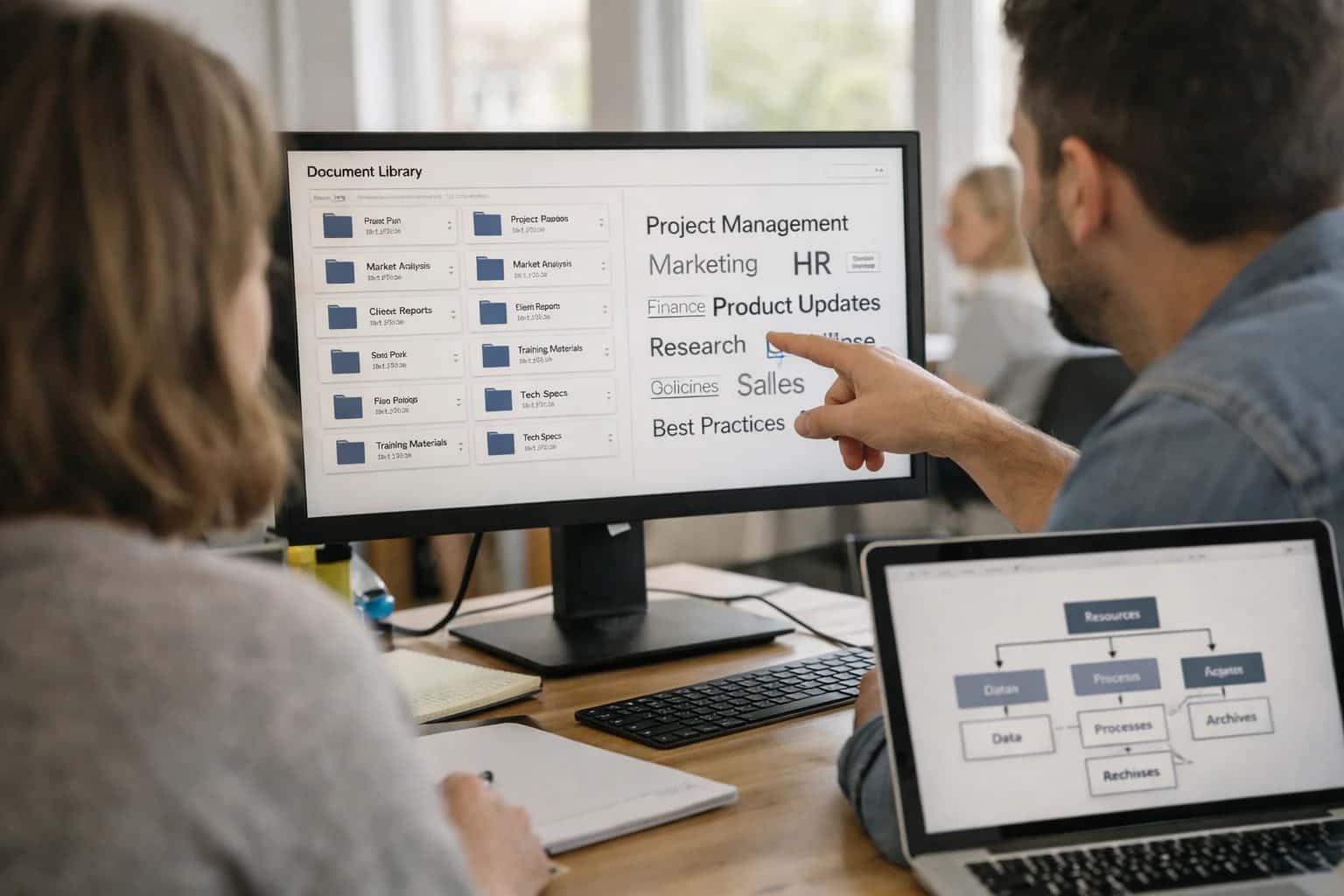
ARCHITECTURE & ROLLOUT
Where AI Fits into the Seismic Content Library
A technical blueprint for transforming Seismic's content repository into a governed, intelligent knowledge base using AI.
Implementation typically involves a middleware service that subscribes to Seismic's content.created and content.updated webhooks. Each new asset is processed: its text is extracted, a vector embedding is generated, and it's indexed in a vector database alongside its existing Seismic metadata. A separate classification service uses a fine-tuned model or a RAG pipeline over your product documentation to suggest tags for the Content Type, Industry, and Use Case fields. For governance, all AI-suggested tags are written back to Seismic via the API but can be configured to require a content manager's approval in a staging environment before publishing, maintaining an audit trail.
Rollout is phased, starting with a pilot content domain (e.g., 'competitive battle cards'). Impact is measured in operational time saved: reducing manual tagging from hours to minutes per asset and cutting the library's stale-asset volume by identifying candidates for review. The final architecture ensures the AI layer is a governed augmentation to Seismic's native CMS, not a replacement, keeping all master content and permissions within the platform while making the library dynamically smarter. For related patterns, see our guides on AI Integration for Seismic Content Recommendation and AI Integration for Sales Asset Search.
AI-READY MODULES AND APIS
Key Integration Surfaces in Seismic
Automating Content Operations
The Seismic Content Library and Digital Asset Management (DAM) system is the primary surface for AI-driven taxonomy, lifecycle, and search enhancements. Integration typically occurs via the Content API to read asset metadata, binaries, and usage analytics.
Key automation targets include:
- Automated Tagging & Categorization: Use multi-modal AI models to analyze new PDFs, videos, and presentations, generating descriptive tags, topics, and intended audience fields.
- Duplicate & Similarity Detection: Implement embedding-based similarity search to flag near-identical assets, suggesting consolidation to reduce clutter.
- Lifecycle Management: Train models to identify "stale" assets based on last access date, revision history, and mentions in deprecated playbooks, triggering archiving workflows.
This layer transforms the library from a passive repository into a self-organizing, intelligent knowledge base, directly boosting seller findability and content manager productivity.
SEISMIC CONTENT LIBRARY
High-Value AI Use Cases for Content Management
Transform your Seismic content library from a static repository into an intelligent, self-managing knowledge base. These AI integration patterns automate core library operations, improve content discoverability, and ensure sellers always have the most relevant, compliant assets at their fingertips.
01
Automated Content Taxonomy & Tagging
Use AI to analyze new assets (PDFs, decks, videos) as they are uploaded. The system automatically extracts key themes, product mentions, buyer personas, and use cases to generate and apply consistent metadata tags. This eliminates manual tagging backlog and powers precise semantic search, ensuring sellers can find competitive battle cards for healthcare or ROI calculators for mid-market in seconds.
Batch -> Real-time
Tagging workflow
02
Duplicate & Near-Duplicate Detection
Deploy AI models to scan the entire library, identifying duplicate files and, more importantly, near-duplicate content with minor variations. The system surfaces clusters of similar assets, recommends a single 'source of truth' version for archiving, and can merge engagement analytics. This reduces library clutter, prevents seller confusion, and consolidates performance data.
1 sprint
Initial library cleanup
03
Intelligent Content Lifecycle Management
Implement AI-driven archiving rules based on multiple signals: last access date, product sunset dates from the CRM, engagement metrics, and mentions of deprecated features. The system automatically flags stale or outdated content for review by enablement managers, suggesting archival or update workflows. This maintains a perpetually fresh library compliant with product and regulatory changes.
Same day
Compliance flagging
04
Semantic Search & RAG-Powered Discovery
Build a retrieval-augmented generation (RAG) layer atop the Seismic library. Sellers ask natural language questions like 'show me assets that address data security concerns for financial services'. The AI searches vectorized content and metadata, returning precise results and can generate a concise summary synthesizing key points from multiple relevant documents. Connect this to /integrations/sales-enablement-platforms/ai-integration-for-sales-asset-search for cross-platform patterns.
Hours -> Minutes
Asset discovery
05
Content Gap & Coverage Analysis
Use AI to analyze the library's metadata against your ideal content matrix—mapped to products, buyer roles, sales stages, and competitive scenarios. The system identifies gaps (e.g., no case studies for Product X in Manufacturing) and surpluses. It generates actionable reports for content creators, prioritizing new asset development to fill critical enablement holes and improve win rates in specific segments.
Batch -> Real-time
Analysis cadence
06
Automated Content Summarization for Sellers
Integrate AI to generate seller-friendly summaries for long-form assets like whitepapers, implementation guides, or complex battle cards. As part of the asset metadata, provide a 3-bullet 'elevator pitch' and key stats. This allows sellers to quickly grasp an asset's value during customer conversations without reading the entire document, dramatically increasing content utilization. Explore related implementation governance at /integrations/ai-governance-and-llmops-platforms.
Hours -> Minutes
Rep consumption time
CONTENT LIBRARY AUTOMATION
Example AI-Powered Workflows for Seismic
These workflows illustrate how AI can automate manual library management tasks, transforming Seismic from a static repository into a self-maintaining, intelligent knowledge base. Each flow is triggered by a common library event and executes a specific, valuable automation.
When a new asset (e.g., a case study PDF, battle card, or presentation) is uploaded to Seismic, this workflow automatically analyzes and tags it, ensuring immediate discoverability.
- Trigger: A new asset is uploaded to a designated Seismic folder via the Seismic API or a user interface action.
- Context Pulled: The AI system retrieves the asset file and its minimal existing metadata (e.g., filename, uploader).
- Agent Action: A multi-modal AI agent processes the asset:
- Text Extraction: Uses OCR/PDF parsing to extract all text.
- Content Analysis: Identifies key topics, mentioned products, competitor names, industries, pain points, and use cases.
- Sentiment & Intent: Classifies the asset's tone (e.g., competitive, educational, promotional).
- Metadata Generation: Produces a structured JSON payload of suggested tags for Seismic's custom metadata fields.
json{ "suggested_tags": { "primary_topic": ["Competitive Intelligence", "ROI"], "product": ["Platform X", "Module Y"], "industry": ["Financial Services", "Healthcare"], "persona": ["IT Director", "CISO"], "asset_type": "Case Study", "sentiment": "Positive/Proven" } } - System Update: The workflow calls the Seismic API to write the generated tags to the asset's metadata profile.
- Human Review Point: Optionally, the workflow can be configured to flag assets with low confidence scores for review by a content manager before tags are applied, or to apply tags to a "pending review" state.
FROM STATIC REPOSITORY TO INTELLIGENT KNOWLEDGE BASE
Implementation Architecture & Data Flow
A practical architecture for embedding AI governance directly into the Seismic content lifecycle, automating taxonomy, deduplication, and archival workflows.
The integration connects to Seismic's Content API and Event Webhooks to establish a real-time, bi-directional data flow. Inbound, the system ingests new assets (presentations, PDFs, videos, one-pagers) and their existing metadata. This payload is processed through an AI pipeline that performs three core operations: semantic classification against your custom taxonomy, vector-based similarity search to flag potential duplicates or near-duplicates, and content freshness analysis based on publication dates, mentions of deprecated features, or outdated pricing. Results are written back to Seismic via the API, enriching asset metadata with AI-generated tags, duplicate flags, and a stale_score for lifecycle management.
For production rollout, we implement this as a serverless orchestration (e.g., AWS Step Functions, Azure Logic Apps) triggered by Seismic webhooks for content.created and content.updated events. The workflow includes a human-in-the-loop approval step for high-confidence duplicate flags or archival recommendations before any action is taken. Administrators review suggestions in a separate dashboard or via a Slack/Teams alert, approving or rejecting actions that are then executed via the Seismic API. This ensures governance and prevents unintended archival of critical, even if infrequently used, assets.
Key to operational success is configuring the confidence thresholds for each AI task and establishing clear rollout phases. Phase 1 typically runs in 'analysis-only' mode, writing metadata tags without taking action, to validate model accuracy and refine taxonomies. Phase 2 introduces the approval workflow for duplicates and archival. The system maintains a full audit log of all AI suggestions and human decisions, which can be fed back into the models for continuous improvement. This architecture transforms the content library from a manual administrative burden into a self-optimizing knowledge base, ensuring sellers always have access to relevant, current, and unique materials.
AI-ENHANCED CONTENT OPERATIONS
Code & Payload Examples
Automated Taxonomy & Tagging
Use AI to analyze new assets uploaded to Seismic and automatically generate descriptive tags, categorize content, and map to existing taxonomy. This ensures consistency and improves search relevance without manual effort.
Example Workflow:
- A webhook from Seismic triggers on
content.created. - The AI service fetches the asset (PDF, PPT, DOC) via Seismic's Content API.
- A multimodal model extracts text, identifies key topics, personas, and product mentions.
- The system writes back tags and metadata using the Content Update API.
Python Pseudocode (Tagging Service):
pythonimport requests from openai import OpenAI # 1. Receive webhook from Seismic def handle_webhook(event): content_id = event['data']['contentId'] # 2. Fetch content metadata and file URL seismic_content = get_seismic_content(content_id, api_key) file_url = seismic_content['downloadUrl'] # 3. Process with AI file_text = extract_text_from_url(file_url) client = OpenAI(api_key=OPENAI_KEY) response = client.chat.completions.create( model="gpt-4o", messages=[{ "role": "system", "content": "Extract key tags for sales content. Return JSON: {\"topics\": [], \"personas\": [], \"products\": []}" }, { "role": "user", "content": file_text[:8000] }] ) tags = json.loads(response.choices[0].message.content) # 4. Update Seismic content update_payload = { "customFields": { "ai_topics": ", ".join(tags['topics'][:5]), "ai_persona": tags['personas'][0] if tags['personas'] else "", "ai_products": ", ".join(tags['products']) } } requests.patch( f"https://api.seismic.com/v2/content/{content_id}", json=update_payload, headers={"Authorization": f"Bearer {SEISMIC_API_KEY}"} )
AI-POWERED CONTENT LIFECYCLE MANAGEMENT
Realistic Time Savings & Operational Impact
How AI integration transforms manual, reactive library management into an automated, proactive system, freeing enablement teams for strategic work.
| Content Operation | Before AI | After AI | Implementation Notes |
|---|---|---|---|
New Asset Tagging & Categorization | Manual review and entry (15-30 mins per asset) | Automated taxonomy application (2-5 mins for human review) | AI analyzes asset text/imagery against defined taxonomy; human approves. |
Duplicate & Near-Duplicate Detection | Periodic manual audits (hours per quarter) | Real-time alerts on upload (minutes to resolve) | AI compares semantic content and metadata; flags potential duplicates for consolidation. |
Stale Content Identification | Quarterly manual review based on 'last updated' date | Automated lifecycle scoring & archiving suggestions | AI scores assets based on engagement, recency, and relevance; suggests archive candidates. |
Search Relevance & Findability | Keyword-dependent; sellers struggle with natural language queries | Semantic search via RAG; natural language queries work | Vector embeddings of content enable 'find assets for a manufacturing cost-reduction use case'. |
Content Gap Analysis | Manual analysis of win/loss interviews and seller feedback | Automated trend detection from CRM notes & call transcripts | AI identifies frequently mentioned buyer pain points lacking supporting content. |
Compliance & Policy Review | Manual pre-publication review for regulated industries | AI pre-screens for flagged terms & policy violations | First-pass review automates detection of non-compliant language; legal/Comms does final sign-off. |
Library Health Reporting | Manual spreadsheet compilation for leadership reviews | Automated dashboard with AI-generated insights | Weekly reports on library growth, stale asset %, and search failure trends auto-generated. |
ARCHITECTING CONTROLLED AI ADOPTION
Governance, Security & Phased Rollout
A practical framework for deploying AI in your Seismic content library with enterprise-grade controls and minimal operational disruption.
A production AI integration for Seismic must respect the platform's existing content lifecycle, permission model, and audit trails. We architect integrations to operate as a governed service layer, typically using Seismic's REST APIs and webhooks to listen for events like new asset uploads or metadata changes. AI processes—such as automated tagging, duplicate detection, or staleness scoring—run in a dedicated, secure environment. Results are written back to Seismic as custom metadata fields or via the Activity API for review, ensuring all AI-suggested changes are traceable to a system action and can be approved or overridden by content managers within Seismic's native workflow.
We recommend a phased rollout to de-risk adoption and demonstrate value incrementally:
- Phase 1: Assisted Taxonomy & Tagging – Deploy AI to analyze new assets as they enter a designated "Staging" folder in Seismic, suggesting tags, categories, and summaries. Content managers review and approve suggestions before assets are published, building trust in the system.
- Phase 2: Duplicate & Staleness Detection – Expand AI to scan the entire library, identifying near-duplicate assets and flagging content that hasn't been engaged with in a configurable period (e.g., 18 months). Reports are generated in Seismic or sent to managers for archiving decisions.
- Phase 3: Proactive Lifecycle Management – Implement automated workflows where AI-driven staleness scores trigger Seismic tasks or Slack notifications for content owners, initiating a review or refresh process. This closes the loop from insight to action.
Security is paramount. The integration service should authenticate to Seismic using OAuth 2.0 with scoped permissions, accessing only the folders and asset types necessary. Content is processed in-memory or in a transient, encrypted cache; no customer data is persisted in the AI service long-term. All AI model outputs should be logged with the source asset ID and timestamp for compliance. This architecture ensures your intelligent content library enhances productivity without compromising the governance and security controls your organization already has in place within Seismic.
Enabling Efficiency, Speed & Accuracy
Intelligent Analysis, Decision & Execution
We build AI systems for teams that need search across company data, workflow automation across tools, or AI features inside products and internal software.
Talk to Us
Search across company data
Give teams answers from docs, tickets, runbooks, and product data with sources and permissions.
Useful when people spend too long searching or get different answers from different systems.
Enterprise searchRAGPermissions
Read more
Automate internal workflows
Use AI to route work, draft outputs, trigger actions, and keep approvals and logs in place.
Useful when repetitive work moves across multiple tools and teams.
AI agentsWorkflow automationGovernance
Read more
Add AI to products and internal tools
Build assistants, guided actions, or decision support into the software your team or customers already use.
Useful when AI needs to be part of the product, not a separate tool.
AI integrationDecision supportModel routing
Read moreIMPLEMENTATION BLUEPRINT
Frequently Asked Questions
Practical questions for teams planning to add AI to their Seismic content library for automated taxonomy, duplicate detection, and lifecycle management.
A secure integration typically uses Seismic's REST APIs and a middleware layer (like an Azure Function or AWS Lambda) to orchestrate data flow.
Typical Architecture:
- Trigger: A webhook from Seismic notifies your middleware when a new asset is uploaded or an existing one is modified.
- Data Pull: The middleware uses the Seismic API (with OAuth 2.0) to fetch the asset file and its existing metadata.
- Processing: The file and metadata are sent to your AI service endpoint (e.g., an Azure OpenAI deployment or a custom model container).
- Write-back: The AI-generated tags, classification, and duplicate flags are written back to Seismic as custom metadata fields via the API.
Key Security Controls:
- API credentials are managed in a secure vault (Azure Key Vault, AWS Secrets Manager).
- All data in transit is encrypted via TLS.
- The AI service is deployed within your VPC or a private endpoint.
- Audit logs track all API calls and file processing events.

About the author
Prasad Kumkar
CEO & MD, Inference Systems
Prasad Kumkar is the CEO & MD of Inference Systems and writes about AI systems architecture, LLM infrastructure, model serving, evaluation, and production deployment. Over 5+ years, he has worked across computer vision models, L5 autonomous vehicle systems, and LLM research, with a focus on taking complex AI ideas into real-world engineering systems.
His work and writing cover AI systems, large language models, AI agents, multimodal systems, autonomous systems, inference optimization, RAG, evaluation, and production AI engineering.
LinkedIn
Limited slotsGet a Free AI Consultation
Partnered with leading AI, data, and software stack.





How We Work
Custom AI workflows for your Business
One-fit-all AI don't work for modern businesses. At Inferensys, we aim to understand your business & custom requirements; which we use to define most efficient agentic workflows, the data, and the tools for your business.
01
Review the use case
We understand the task, the users, and where AI can actually help.
Read more02
Pick the right approach
We define what needs search, automation, or product integration.
Read more03
Build the first useful version
We implement the part that proves the value first.
Read more04
Improve from there
We add the checks and visibility needed to keep it useful.
Read moreThe first call is a practical review of your use case and the right next step.
Talk to Us