In pharmaceutical sales, AI integration must connect to two primary system categories: the Sales Enablement Platform (e.g., Veeva CRM, Seismic, Highspot) and the Medical Information and Compliance layer. The integration surfaces are specific: content libraries housing approved promotional materials, MSL briefing request queues, speaker program engagement trackers, and HCP interaction logs within the CRM. AI agents operate here to automate compliant content retrieval, summarize complex clinical documents for rep consumption, and track mandatory acknowledgment workflows for materials disseminated.

Integration
AI Integration for Sales Enablement in Pharma
A technical architecture guide for embedding AI into pharmaceutical sales enablement, focusing on compliant content workflows, automated MSL briefing prep, and speaker program engagement tracking across Veeva and platforms like Seismic and Highspot.
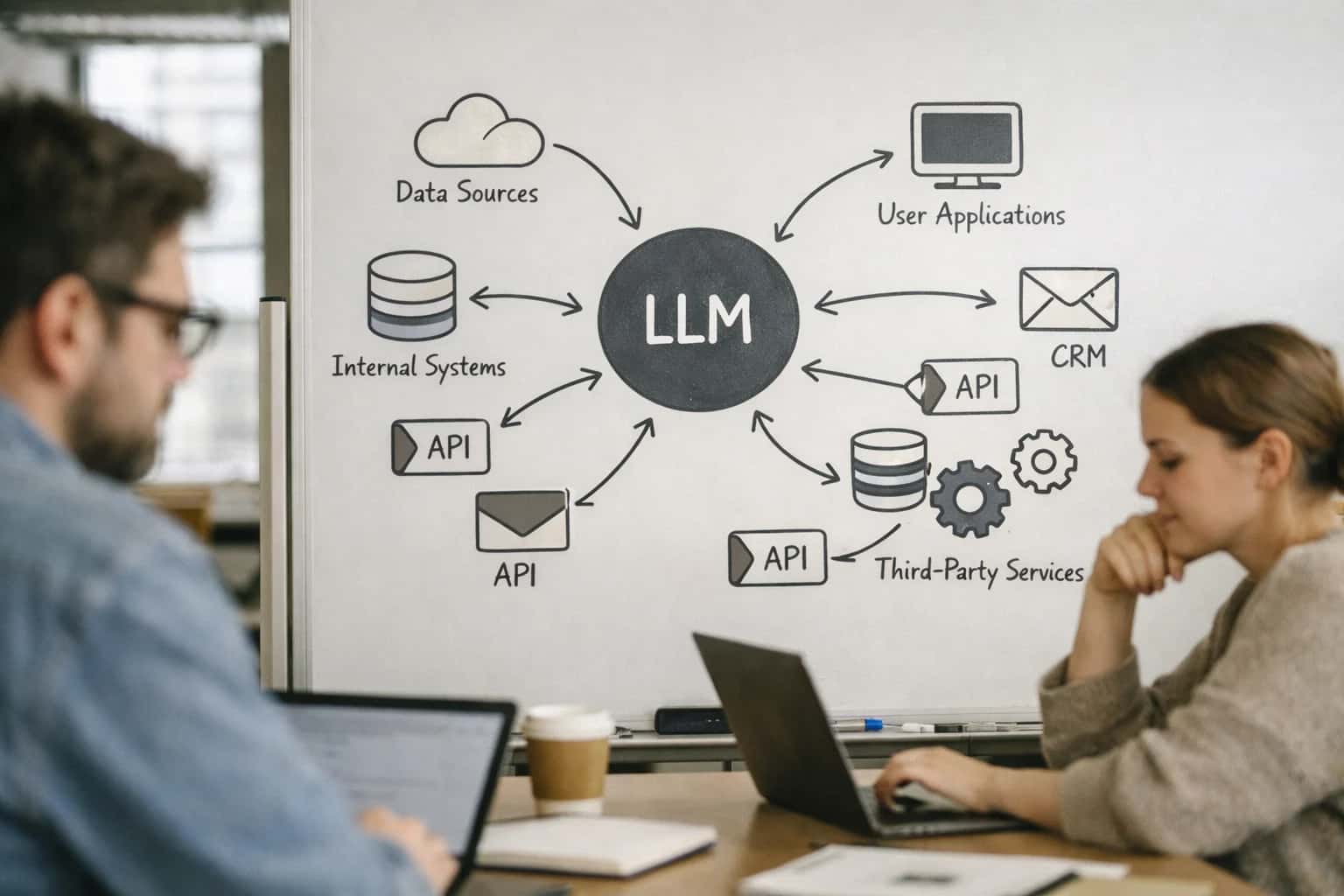
ARCHITECTURE FOR COMPLIANCE AND IMPACT
Where AI Fits into Pharma Sales Enablement
A technical blueprint for integrating AI into pharmaceutical sales enablement, focusing on compliant content workflows, automated briefing preparation, and engagement analytics.
Implementation centers on a secure middleware layer that orchestrates between the enablement platform's APIs (like Veeva's REST APIs for content and objects) and AI services. Core workflows include:
- Automated Briefing Pack Assembly: An AI agent triggers on a new MSL briefing request in the CRM, uses RAG over the latest clinical trial data and approved FAQs in Veeva Vault, and assembles a draft briefing document with citations for medical/legal/regulatory (MLR) review.
- Dynamic Content Routing: Based on a rep's planned call specialty and history, an AI model scans the tagged content library in Seismic or Highspot to recommend the most relevant, approved slide decks or leave-behinds, logging the recommendation reason for compliance audits.
- Engagement Signal Processing: Post-call, the integration ingests interaction notes (via CRM or email), uses an LLM to extract discussed topics and unmet needs, and updates the HCP profile with insights, flagging items requiring follow-up by Medical Affairs.
Rollout and governance are critical. A phased implementation starts with a read-only AI analysis of content usage patterns to build trust, followed by piloting automated briefing generation for a single therapeutic area. All AI-generated outputs must route through existing MLR review workflows; the system should tag AI-originated content and maintain a full audit trail of source data, model version, and prompting logic. The architecture must support role-based access control (RBAC) to ensure field reps only receive AI-suggested content within their approved territories and specialties.
ARCHITECTURE FOR COMPLIANT AI
Key Integration Surfaces in the Pharma Tech Stack
The System of Record for Content and HCP Data
Integrating AI with Veeva CRM and Vault is foundational. The primary surfaces are the Promotional Materials object in Vault and the Call Plan and HCP Profile objects in CRM. AI can be triggered via Veeva's REST APIs or platform events to automate compliant workflows.
Key integration patterns include:
- Automated MLR/PRC Support: Using AI to pre-screen promotional content against approved claims and references in Vault, flagging potential compliance issues before human review.
- Dynamic Call Prep: An AI agent consumes the next day's call plan from CRM, retrieves the HCP's historical interaction data, and automatically assembles a compliant briefing pack from approved materials in Vault, respecting regional and affiliation restrictions.
- Post-Call Note Enrichment: After a call, AI summarizes the rep's notes, suggests relevant follow-up materials from Vault, and logs the interaction back to the HCP profile, ensuring data hygiene and triggering next steps.
This integration ensures AI operates within the guardrails of pharma's most critical governance platform.
VEEVA & COMPLIANCE-FOCUSED
High-Value AI Use Cases for Pharma Enablement
Practical AI integration patterns for pharmaceutical sales enablement platforms, focusing on compliant content workflows, automated briefing preparation, and intelligent engagement tracking within regulated environments.
01
Automated MSL Briefing & KOL Dossier Prep
AI ingests recent publications, clinical trial updates, and internal battle cards to generate compliant, first-draft briefing documents for Medical Science Liaisons. Integrates with Veeva Vault to pull approved content and auto-tag with therapeutic area and molecule references, reducing manual research from hours to a structured starting point in minutes.
Hours -> Minutes
Briefing prep time
02
Compliant Content Dissemination & Recall
AI monitors the content library in platforms like Seismic or Highspot for materials referencing off-label uses or outdated safety data. Automatically flags assets for review by legal/medical affairs and can trigger recall workflows in Veeva PromoMats, ensuring field force always uses approved, current materials and reducing compliance risk.
Batch -> Real-time
Compliance monitoring
03
Speaker Program Engagement Intelligence
AI analyzes HCP engagement data from speaker program events—attendance, Q&A topics, feedback forms—integrated with CRM data. Identifies high-potential advocates, predicts program effectiveness, and suggests personalized follow-up content for program managers, turning post-event data into actionable insights for field teams.
Same day
Insight delivery
04
Dynamic Call Planning for Specialty Reps
An AI copilot integrated with the enablement platform and Veeva CRM pulls the HCP's prescription history, clinical trial participation, and past content interactions. It generates a tailored call plan with talking points, relevant study summaries, and compliant visual aids, personalizing the rep's approach for each visit.
1 sprint
Implementation timeline
05
RAG for Rapid Medical Inquiry Response
Implements a Retrieval-Augmented Generation (RAG) system over the internal knowledge base (Veeva Vault, SharePoint) and approved external sources. Enables field reps to ask complex medical or access questions via a chat interface and receive grounded, cited answers with links to source documents, dramatically speeding up accurate information retrieval.
Minutes -> Seconds
Info retrieval
06
Personalized HCP Content Hubs
AI orchestrates the creation of personalized digital content hubs (e.g., in Highspot Deal Rooms) for key HCPs. Curates content based on their specialty, stated interests, and engagement history, and automatically logs all interactions back to the CRM for measurement. Transforms static content portals into intelligent, adaptive engagement channels.
PHARMA-SPECIFIC IMPLEMENTATIONS
Example AI-Powered Workflows
These workflows illustrate how AI integrates with Veeva CRM and content management to automate compliant, high-value activities for MSLs, sales reps, and medical affairs teams.
Trigger: A Medical Science Liaison (MSL) schedules a meeting with a Key Opinion Leader (KOL) in Veeva CRM.
Context Pulled:
- KOL profile from Veeva (affiliation, past interactions, publication history, declared interests).
- Recent clinical trial data from internal repositories (e.g., Veeva Vault).
- Latest relevant congress abstracts and journal articles, filtered for the KOL's specialty.
- Approved medical content and slide decks from the enablement platform (e.g., Seismic or Veeva Approved Email).
AI Agent Action:
- A RAG (Retrieval-Augmented Generation) system synthesizes the pulled data.
- An LLM generates a structured briefing document containing:
- A one-page summary of the KOL's recent work and potential alignment with company data.
- 3-5 suggested discussion points, phrased as open-ended scientific questions.
- A curated list of 2-3 approved assets (PDFs, slide decks) most relevant to the conversation.
- Any compliance flags (e.g., off-label topics to avoid based on the KOL's interests).
System Update:
- The draft briefing is saved to the MSL's Veeva CRM activity record and linked to the scheduled call.
- The MSL reviews, edits if necessary, and finalizes the document within the CRM.
- All AI-generated content and source citations are logged in an audit trail.
Human Review Point: The MSL must review and approve the AI-generated briefing before the call. The system does not auto-send.
ENSURING COMPLIANCE AND CONTEXT
Implementation Architecture & Data Flow
A technical blueprint for integrating AI into pharmaceutical sales enablement, connecting Veeva CRM and Vault with platforms like Seismic or Highspot to automate compliant content workflows.
The core architecture establishes a governed data pipeline between systems of record and the AI layer. Key integration points include:
- Veeva CRM Objects: Pulling
Account,Call, andHCPdata for context. - Veeva Vault PromoMats: Ingesting approved content metadata and access permissions.
- Sales Enablement Platform APIs: Using Seismic's LiveSend API or Highspot's Custom Objects API to trigger AI actions and write back generated insights.
- Compliance Service: A middleware component that validates all AI-generated outputs against pre-approved language, fair balance rules, and internal legal policies before dissemination.
High-value workflows are orchestrated through this pipeline. For example, an AI-powered MSL Briefing Prep agent can:
- Query Veeva CRM for an upcoming HCP meeting and linked clinical trial interests.
- Retrieve compliant, relevant documents from Veeva Vault using semantic search.
- Generate a concise briefing document with key study data and talking points.
- Route the draft through a configured approval workflow in the sales enablement platform for final review by the Medical Affairs lead before the meeting.
Similarly, Speaker Program Engagement Tracking can be automated by using AI to analyze post-event feedback forms, summarize key themes, and log insights back to the HCP's record in Veeva, triggering appropriate follow-up tasks.
Rollout requires a phased, use-case-driven approach, starting with a pilot on a single therapy area. Governance is critical; all AI interactions must be logged with full audit trails linking generated content to source data and approval steps. The system should be designed for human-in-the-loop review, especially for net-new content generation, ensuring medical, legal, and regulatory (MLR) compliance is never bypassed. This architecture turns the sales enablement platform into an intelligent, compliant orchestration layer, reducing manual research from hours to minutes while maintaining strict control.
PHARMA SALES INTEGRATION PATTERNS
Code & Payload Examples
Automated MSL Briefing Prep
In pharma, Medical Science Liaisons (MSLs) need rapid access to compliant clinical data. An AI agent can query Veeva Vault's API to retrieve the latest study documents, generate a concise briefing, and push it to the enablement platform for review.
Example Python Payload for Veeva Query:
pythonimport requests # Query Veeva Vault for documents related to a specific molecule query_payload = { "q": "document_type:clinical_study AND molecule:XYZ123 AND status:approved", "limit": 5, "fields": ["id", "name", "version", "download_url"] } headers = { "Authorization": "Bearer YOUR_VEEVA_TOKEN", "Content-Type": "application/json" } response = requests.post( "https://your-veeva-instance.veevavault.com/api/v20/objects/documents/search", json=query_payload, headers=headers ) # Pass retrieved document URLs to an LLM for summarization
This pattern automates the assembly of compliant briefing packs, reducing prep time from hours to minutes.
AI-ENHANCED PHARMA SALES ENABLEMENT
Realistic Time Savings & Operational Impact
How AI integration with platforms like Veeva and Seismic transforms key pharmaceutical sales workflows, balancing automation with essential compliance and human oversight.
| Metric | Before AI | After AI | Notes |
|---|---|---|---|
MSL Briefing Document Prep | 4-6 hours manual research | 1-2 hours assisted drafting | AI pulls from clinical trial repositories; final review by MSL |
Speaker Program Content Curation | Next-day content assembly | Same-day personalized packs | Dynamic assembly from Veeva Vault based on speaker profile & past feedback |
Compliant Content Search & Retrieval | Keyword search across silos | Natural language semantic search | RAG on approved content libraries; audit trail for all retrievals |
New Product Launch Training Rollout | 2-3 weeks for full deployment | 1 week for initial adaptive cohort | AI personalizes learning paths in Mindtickle based on rep specialty & knowledge gaps |
HCP Engagement Insight Generation | Monthly manual report compilation | Weekly automated sentiment & engagement alerts | AI analyzes email & call summaries from CRM; flags at-risk accounts |
Regulatory Document Summarization | Manual review of 50+ page docs | AI-generated executive summary in minutes | Summary highlights key efficacy & safety data for rep consumption; human verification required |
Field Asset Request Fulfillment | 48-hour turnaround for custom one-pagers | 24-hour AI-assisted first draft | Drafts generated from approved modules in Seismic; legal/compliance review loop remains |
ARCHITECTING FOR REGULATED ENVIRONMENTS
Governance, Compliance & Phased Rollout
Implementing AI in pharmaceutical sales enablement requires a controlled, audit-ready approach that prioritizes compliance and user trust.
A production architecture for Veeva or Seismic in pharma must treat the AI as a governed service layer, not a direct content editor. This typically involves a middleware agent that sits between the enablement platform's APIs and the LLM. All prompts and generated outputs (e.g., MSL briefing summaries, speaker program talking points) are logged with metadata—including the source Veeva Vault document ID, user, timestamp, and the specific AI model version used. This creates an immutable audit trail for compliance reviews and is essential for adhering to principles of ALCOA+ (Attributable, Legible, Contemporaneous, Original, Accurate, plus Complete, Consistent, Enduring, and Available) for data integrity.
Rollout follows a phased, permission-gated model. Phase 1 targets internal-facing, low-risk workflows like automating the summarization of clinical trial data from Veeva Vault for internal training decks, with all outputs flagged for medical/legal/regulatory (MLR) review. Phase 2 introduces semi-assisted generation for HCP-facing materials, such as drafting first-pass content for advisory board invitations or compliant slide notes within Seismic, requiring mandatory manager approval before publication. Phase 3, after establishing trust and process, enables real-time, context-aware support, like an AI copilot that suggests compliant response snippets during a Zoom detailing call, based on the approved content library and the specific product's label.
Critical to governance is implementing a human-in-the-loop (HITL) checkpoint for any net-new content generation, especially for materials referencing safety data or off-label information. This can be automated via Veeva PromoMats or similar submission workflows, where AI-drafted content triggers a review task for the appropriate reviewer. Furthermore, the system must be configured for data sovereignty, ensuring that prompts containing sensitive information (e.g., investigator data, pre-publication study results) never leave the company's designated cloud region or tenant, aligning with global regulations like GDPR and HIPAA where applicable.
Enabling Efficiency, Speed & Accuracy
Intelligent Analysis, Decision & Execution
We build AI systems for teams that need search across company data, workflow automation across tools, or AI features inside products and internal software.
Talk to Us
Search across company data
Give teams answers from docs, tickets, runbooks, and product data with sources and permissions.
Useful when people spend too long searching or get different answers from different systems.
Enterprise searchRAGPermissions
Read more
Automate internal workflows
Use AI to route work, draft outputs, trigger actions, and keep approvals and logs in place.
Useful when repetitive work moves across multiple tools and teams.
AI agentsWorkflow automationGovernance
Read more
Add AI to products and internal tools
Build assistants, guided actions, or decision support into the software your team or customers already use.
Useful when AI needs to be part of the product, not a separate tool.
AI integrationDecision supportModel routing
Read moreAI INTEGRATION FOR SALES ENABLEMENT IN PHARMA
FAQ: Technical & Commercial Questions
Practical answers for technical leaders and commercial stakeholders planning AI integration with Veeva, Seismic, and other life sciences sales enablement platforms.
Compliance is the primary technical and governance challenge. A production architecture must enforce a multi-layered review and audit system.
Key Implementation Patterns:
- Grounding in Approved Sources: Configure your RAG (Retrieval-Augmented Generation) pipeline to retrieve information only from pre-approved, compliance-reviewed source documents in your Veeva Vault or Seismic library. The AI should never generate net-new clinical claims.
- Human-in-the-Loop (HITL) Gates: Implement mandatory review workflows for any AI-generated output before it can be shared externally. This is typically done via:
- A dedicated "Review" queue in your enablement platform.
- Integration with a CLM (Contract Lifecycle Management) or QMS (Quality Management System) for formal approval routing.
- Webhook-triggered tasks in your CRM (e.g., Salesforce) assigned to Medical/Legal/Regulatory (MLR) reviewers.
- Audit Trail & Watermarking: Every AI-generated draft must be logged with metadata: source documents used, prompt, model version, generating user, and timestamp. Outputs should be digitally watermarked as "AI-Assisted Draft - For Internal Review Only."
- Prompt Guardrails: Use a system prompt layer that enforces rules, e.g., "You are an assistant for drafting compliant sales materials. You must cite source document IDs for any claim. Never compare efficacy rates across products unless the source document explicitly does so."
Commercial Consideration: Budget for the ongoing operational cost of the HITL review process; AI reduces drafting time but does not eliminate compliance overhead.

About the author
Prasad Kumkar
CEO & MD, Inference Systems
Prasad Kumkar is the CEO & MD of Inference Systems and writes about AI systems architecture, LLM infrastructure, model serving, evaluation, and production deployment. Over 5+ years, he has worked across computer vision models, L5 autonomous vehicle systems, and LLM research, with a focus on taking complex AI ideas into real-world engineering systems.
His work and writing cover AI systems, large language models, AI agents, multimodal systems, autonomous systems, inference optimization, RAG, evaluation, and production AI engineering.
LinkedIn
Limited slotsGet a Free AI Consultation
Partnered with leading AI, data, and software stack.





How We Work
Custom AI workflows for your Business
One-fit-all AI don't work for modern businesses. At Inferensys, we aim to understand your business & custom requirements; which we use to define most efficient agentic workflows, the data, and the tools for your business.
01
Review the use case
We understand the task, the users, and where AI can actually help.
Read more02
Pick the right approach
We define what needs search, automation, or product integration.
Read more03
Build the first useful version
We implement the part that proves the value first.
Read more04
Improve from there
We add the checks and visibility needed to keep it useful.
Read moreThe first call is a practical review of your use case and the right next step.
Talk to Us