Traditional sales content analytics in platforms like Seismic, Highspot, Showpad, and Mindtickle focus on surface-level metrics: views, downloads, and shares. To build predictive intelligence, you need an AI layer that ingests activity streams from these platforms—via their event APIs or webhooks—and correlates them with opportunity stage changes, win/loss data, and conversation intelligence from your CRM. This creates a unified event log where you can train models to identify which assets, playbooks, or training modules are statistically linked to faster deal velocity, higher win rates, or reduced discounting for specific customer segments.

Integration
AI Integration for Sales Content Analytics
Move beyond views and downloads. A technical blueprint for integrating AI with Seismic, Highspot, Showpad, and Mindtickle to measure content influence on deal stage progression, sentiment, and time-to-close.
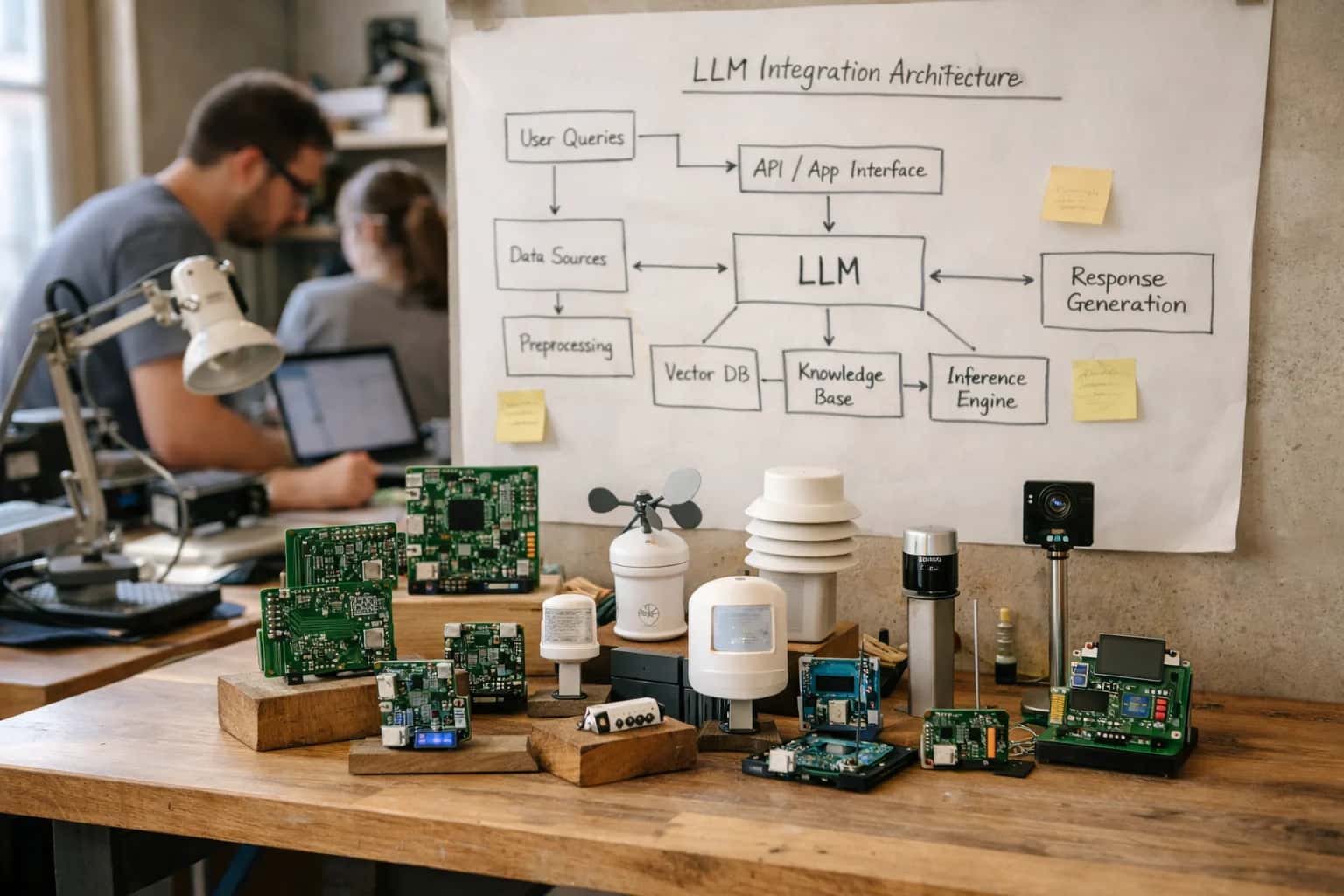
ARCHITECTURE AND IMPLEMENTATION
From Basic Metrics to Predictive Content Intelligence
Moving beyond view counts to measure how content directly influences deal progression and seller behavior.
Implementation requires mapping your sales enablement platform's data model to your commercial ontology. For Seismic, this means tracking ContentItem IDs and Send events. For Highspot, it's Spot usage and DealRoom engagement. For Mindtickle, it's Assessment scores and LearningPath completion. An AI pipeline then joins this data with CRM objects (Opportunity, Account, Contact) and timestamps to perform attribution analysis. Common patterns include using a vector database to embed content metadata and engagement sequences, enabling similarity searches to recommend high-performing asset patterns for new deals, or using time-series forecasting to predict content fatigue and recommend refresh cycles.
Rollout should be phased, starting with a single platform and a high-value segment (e.g., enterprise sales teams). Governance is critical: establish an audit trail for all AI-generated insights and maintain a human-in-the-loop review for content recommendations that could impact sensitive deals. Use the native RBAC systems in your sales enablement platform to control who sees predictive scores, ensuring managers get team-level analytics while individual sellers receive actionable, context-aware nudges within their existing workflows.
SALES CONTENT ANALYTICS
Where AI Connects to Your Enablement Stack
Measuring Content Influence on Pipeline
AI connects to your enablement platform's analytics APIs and event streams to move beyond basic view/download metrics. The goal is to attribute content usage to specific deal stages, velocity, and win rates.
Key Integration Points:
- Engagement Event Ingestion: Capture detailed events (view time, shares, downloads) from platforms like Seismic or Highspot, linked to opportunity IDs from your CRM.
- Deal Stage Correlation: Use AI models to correlate spikes in content consumption with progression through pipeline stages, identifying assets that accelerate deals.
- Attribution Modeling: Build multi-touch attribution models that weigh content influence alongside other activities, providing a clearer ROI for enablement investments.
This layer answers the critical question: "Which battle cards, case studies, or proposals actually help close business?"
SALES CONTENT ANALYTICS
High-Value AI Analytics Use Cases
Move beyond basic views and downloads. These AI-powered analytics use cases connect content engagement directly to pipeline outcomes, providing actionable intelligence for enablement managers, content strategists, and sales leadership.
01
Content Influence on Deal Velocity
Correlate asset usage in Seismic or Highspot with stage progression and time-to-close data from the CRM. AI models identify which content types (case studies, battle cards, proposals) are most associated with accelerating specific deal stages, enabling data-driven content strategy.
Weeks -> Days
Insight generation
02
Predictive Asset Performance Scoring
Automatically score and rank content in Showpad or Mindtickle libraries based on engagement patterns, deal outcomes, and freshness. Predict which new assets will perform best for a given segment (industry, deal size) before wide release, optimizing content investment.
Batch -> Real-time
Scoring cadence
03
Sentiment & Intent Analysis from Content Engagement
Analyze how buyers interact with content—time spent, sections revisited, shared materials—to infer sentiment and purchase intent. Surface signals like competitive concern or budget alignment from Highspot deal room activity, triggering alerts for sales reps.
Manual -> Automated
Signal detection
04
Personalized Content Gap Detection
Continuously analyze seller search queries, content requests, and lost deal reasons across platforms to identify missing assets. AI recommends specific content topics or formats needed for key personas, verticals, or competitive scenarios, creating a feedback loop to content creators.
1 sprint
Cycle time reduction
05
ROI Attribution for Enablement Programs
Build a unified analytics layer connecting training completion in Mindtickle, coaching feedback in Showpad, and content usage in Seismic to pipeline metrics. Quantify the impact of enablement initiatives on win rates and average deal size, justifying program spend.
Same day
Report availability
06
Dynamic Content Refresh Triggers
Monitor external data sources (competitor announcements, market news) and internal signals (declining asset engagement). AI automatically flags outdated battle cards in Highspot or playbooks in Seismic for review, ensuring the content library remains current and effective.
Proactive vs. Reactive
Management mode
FROM VIEWS TO VALUE
Example AI Analytics Workflows
Move beyond basic download counts. These workflows demonstrate how to build AI analytics that measure content's true influence on deal progression, seller behavior, and revenue outcomes by connecting your sales enablement platform with CRM and conversation intelligence data.
Trigger: A deal stage changes in the CRM (e.g., Salesforce Opportunity moves from "Proposal" to "Negotiation").
Context/Data Pulled:
- The AI agent queries the CRM for the opportunity ID, owner, and timeline.
- It calls the sales enablement platform's API (e.g., Seismic, Highspot) to fetch all content assets shared with that account/opportunity in the last 30 days, along with detailed engagement data (views, time spent, downloads).
- It optionally enriches this with conversation intelligence data (e.g., Gong) to see if specific assets were mentioned during calls.
Model/Agent Action: A lightweight classification model analyzes the engagement patterns against the successful stage progression. It assigns an influence score to each asset, weighing factors like:
- Recency of engagement before stage change.
- Depth of engagement (e.g., time spent > 2 minutes).
- Asset type (e.g., case study vs. datasheet).
- Correlation with positive sentiment in call transcripts.
System Update/Next Step: The agent writes the influence scores and a summary back to a custom object in the CRM and to the sales enablement platform's analytics module. This powers:
- A dashboard for enablement managers showing "Top 10 Assets Driving Negotiations."
- Automated alerts to content creators when their asset is flagged as high-influence.
Human Review Point: The scoring model's weights and thresholds are reviewed quarterly by sales operations to ensure alignment with current sales process.
FROM BASIC METRICS TO INFLUENCE ANALYTICS
Implementation Architecture: Building the Analytics Layer
A technical blueprint for connecting AI to Seismic, Highspot, Showpad, and Mindtickle to measure content's true impact on pipeline and seller performance.
The core of this integration is an AI analytics service that ingests platform-specific events via their native APIs and webhooks. From Seismic, we pull ContentView, Download, and LiveSend engagement events. From Highspot, we capture Deal Room activity, Battle Card opens, and Call Prep usage. Showpad provides Coaching feedback scores and Asset interaction logs, while Mindtickle streams Assessment results, Training Completion status, and Gamification data. This raw activity data is normalized into a unified event stream, tagged with user IDs, opportunity numbers (where available), and timestamps, forming the foundation for influence analysis.
The AI layer applies two primary models to this stream. First, a propensity model correlates sequences of content engagement and training completion with deal stage progression and velocity in the CRM (e.g., Salesforce). It identifies patterns—like which battle card views precede successful discovery calls or which training modules correlate with higher win rates in competitive deals. Second, a natural language processing (NLP) pipeline analyzes unstructured data: it transcribes and summarizes pitch recordings from Showpad Coaching, extracts topics and sentiment from content assets, and parses open-ended assessment responses from Mindtickle to gauge seller understanding. The output is a set of derived metrics—Content Influence Score, Seller Readiness Index, Coaching Effectiveness—surfaced back to the platforms via API or to a centralized dashboard.
Rollout follows a phased, use-case-driven approach. Phase 1 establishes the data pipeline and basic correlation dashboards for enablement managers. Phase 2 implements real-time alerts, such as notifying a manager in Slack when a seller's low Mindtickle assessment score correlates with stalled deals. Phase 3 activates predictive insights, like flagging high-value opportunities that lack engagement with key competitive assets. Governance is critical: all AI-generated insights are tagged as system-suggested, with clear audit trails linking back to source data. Access is controlled via the existing platform's RBAC, and a human-in-the-loop review step is recommended for any automated content retirement or high-stakes readiness alerts.
IMPLEMENTATION PATTERNS
Code & Payload Examples
Ingesting Engagement Data for AI Analysis
To move beyond basic views/downloads, you need to extract detailed engagement data. This example uses a typical sales enablement platform's REST API to fetch session-level data, which is then sent to an AI service for influence scoring.
pythonimport requests import json # Fetch detailed content interaction logs def fetch_content_sessions(api_key, platform_url, start_date): headers = { 'Authorization': f'Bearer {api_key}', 'Content-Type': 'application/json' } params = { 'startDate': start_date, 'include': 'user,content,deal_context' } response = requests.get( f'{platform_url}/api/v2/analytics/sessions', headers=headers, params=params ) return response.json()['sessions'] # Prepare payload for AI influence scoring sessions = fetch_content_sessions(API_KEY, PLATFORM_URL, '2024-01-01') ai_payload = { "analysis_type": "content_influence", "sessions": [ { "user_id": s['user']['id'], "content_id": s['content']['id'], "deal_stage": s.get('deal_context', {}).get('stage'), "interaction_depth": s['metrics']['time_spent_seconds'], "actions": s['metrics']['actions'] # e.g., ['download', 'share', 'present'] } for s in sessions ] } # Send to Inference Systems AI endpoint ai_response = requests.post('https://api.inferencesystems.ai/v1/analyze', json=ai_payload, headers={'X-API-Key': AI_API_KEY})
This payload structure allows AI models to correlate specific content interactions with deal stage progression, forming the basis for predictive influence scoring.
AI-POWERED CONTENT ANALYTICS
Realistic Time Savings & Business Impact
How AI integration transforms manual, lagging content metrics into proactive, predictive insights that influence deal progression and seller behavior.
| Metric | Before AI | After AI | Notes |
|---|---|---|---|
Content Performance Analysis | Monthly manual report generation | Daily automated insight dashboards | Shifts from backward-looking to real-time analysis |
Identifying High-Impact Assets | Manual review of download counts | AI-driven scoring of influence on deal stage | Correlates content usage with pipeline velocity |
Content Gap Detection | Quarterly surveys and manager feedback | Continuous analysis of search failures and deal stall patterns | Proactively surfaces missing assets for high-value scenarios |
Personalized Content Recommendations | Static playbooks and folder browsing | Dynamic, context-aware suggestions in CRM and email | Uses deal stage, industry, and conversation history |
Measuring Training Impact on Performance | Separate systems for training completion and sales results | Unified AI model linking Mindtickle/Showpad activity to quota attainment | Provides predictive readiness scores for reps and managers |
Competitive Content Refresh | Manual quarterly review of battle cards | AI monitoring of news and earnings to trigger updates | Ensures battle cards in Highspot/Seismic reflect latest market shifts |
ROI Attribution for Enablement | Estimated based on anecdotal feedback | Modeled attribution linking specific content to won/lost deal reasons | Enables data-driven budgeting for content creation and training programs |
ARCHITECTING CONTROLLED AI ADOPTION
Governance, Security, and Phased Rollout
A practical framework for deploying AI analytics in sales content platforms with appropriate controls and measurable impact.
Integrating AI into platforms like Seismic, Highspot, Showpad, or Mindtickle requires a data governance-first approach. The primary surface areas are the content metadata schema, user activity logs, and CRM sync objects. Your implementation must establish clear data contracts for ingesting asset metadata (titles, tags, versions), engagement events (views, downloads, shares), and opportunity stage data from the CRM. This ensures the AI models analyzing 'content influence' are grounded in a complete, accurate, and permissioned dataset. All data flows should be logged, with PII and sensitive deal information handled according to your existing CRM and enablement platform access policies.
A phased rollout is critical for adoption and risk management. Start with a read-only analytics pilot focused on a single product line or sales team. Use AI to generate net-new insights—such as correlating specific asset usage with shortened sales cycles—and surface them in a separate dashboard or via scheduled digests. This proves value without altering core platform workflows. Phase two involves integrating insights back into the enablement platform, such as adding AI-generated 'effectiveness scores' to asset metadata in Seismic or triggering Mindtickle learning modules based on content gap analysis. The final phase enables predictive and prescriptive actions, like automated content recommendations in Highspot deal rooms or dynamic playbook assembly in Seismic, governed by approval workflows for any AI-generated content before it reaches sellers.
Security is non-negotiable. Your AI integration should act as a zero-trust service layer, using the enablement platform's OAuth or API keys for authentication and respecting its native role-based access control (RBAC). All calls to external LLMs (e.g., for summarization or sentiment analysis) should strip identifiable customer data or use anonymized identifiers. Implement audit trails that log every AI-generated insight, its source data, and any user action taken, ensuring full traceability for compliance reviews. This controlled approach allows you to move beyond simple view/download metrics to true content intelligence, while maintaining the security and governance your sales organization requires.
Enabling Efficiency, Speed & Accuracy
Intelligent Analysis, Decision & Execution
We build AI systems for teams that need search across company data, workflow automation across tools, or AI features inside products and internal software.
Talk to Us
Search across company data
Give teams answers from docs, tickets, runbooks, and product data with sources and permissions.
Useful when people spend too long searching or get different answers from different systems.
Enterprise searchRAGPermissions
Read more
Automate internal workflows
Use AI to route work, draft outputs, trigger actions, and keep approvals and logs in place.
Useful when repetitive work moves across multiple tools and teams.
AI agentsWorkflow automationGovernance
Read more
Add AI to products and internal tools
Build assistants, guided actions, or decision support into the software your team or customers already use.
Useful when AI needs to be part of the product, not a separate tool.
AI integrationDecision supportModel routing
Read moreAI INTEGRATION FOR SALES CONTENT ANALYTICS
Frequently Asked Questions
Practical questions for technical leaders evaluating AI-driven content analytics across Seismic, Highspot, Showpad, and Mindtickle.
We integrate via the platform's APIs and webhooks to create a secure, bi-directional data pipeline.
Typical Architecture:
- API Authentication: Use OAuth 2.0 or API keys to establish a secure connection to the platform (e.g., Seismic's GraphQL API, Highspot's REST API).
- Event Ingestion: Set up webhooks for real-time events (e.g.,
content.viewed,playbook.accessed,training.completed) and batch syncs for historical data (user profiles, content metadata, opportunity links). - Data Processing: Ingested data is normalized, anonymized where required, and enriched with CRM context (e.g., deal stage, industry) from systems like Salesforce via a separate integration.
- AI Layer: Processed data feeds into our analytics models, which run in your cloud environment (AWS, Azure, GCP) or a secure Inference Systems managed instance.
- Insights Delivery: Results (e.g., content influence scores, predictive insights) are written back to the platform via API—often creating custom objects or enriching existing activity logs—and surfaced in dashboards or seller copilots.
Key Consideration: The initial data model mapping (e.g., linking a Content ID in Seismic to an Opportunity ID in Salesforce) is the most critical setup step for accurate attribution.

About the author
Prasad Kumkar
CEO & MD, Inference Systems
Prasad Kumkar is the CEO & MD of Inference Systems and writes about AI systems architecture, LLM infrastructure, model serving, evaluation, and production deployment. Over 5+ years, he has worked across computer vision models, L5 autonomous vehicle systems, and LLM research, with a focus on taking complex AI ideas into real-world engineering systems.
His work and writing cover AI systems, large language models, AI agents, multimodal systems, autonomous systems, inference optimization, RAG, evaluation, and production AI engineering.
LinkedIn
Limited slotsGet a Free AI Consultation
Partnered with leading AI, data, and software stack.





How We Work
Custom AI workflows for your Business
One-fit-all AI don't work for modern businesses. At Inferensys, we aim to understand your business & custom requirements; which we use to define most efficient agentic workflows, the data, and the tools for your business.
01
Review the use case
We understand the task, the users, and where AI can actually help.
Read more02
Pick the right approach
We define what needs search, automation, or product integration.
Read more03
Build the first useful version
We implement the part that proves the value first.
Read more04
Improve from there
We add the checks and visibility needed to keep it useful.
Read moreThe first call is a practical review of your use case and the right next step.
Talk to Us