UiPath Action Center manages human-in-the-loop exceptions from unattended bots, but its default routing is often rule-based and static. AI integration injects intelligence at three key surfaces: the Orchestrator queue, the task assignment logic, and the agent's workbench. By analyzing the exception payload, bot logs, and historical resolution data from Orchestrator, an AI layer can classify the issue, predict resolution time, and recommend the next best action—whether that's auto-fixing simple errors, routing to a specialist, or providing pre-filled resolution steps.

Integration
AI Integration for UiPath Action Center
Enhance UiPath Action Center with AI to intelligently prioritize, route, and pre-resolve human-in-the-loop exceptions using LLM reasoning and historical Orchestrator context.
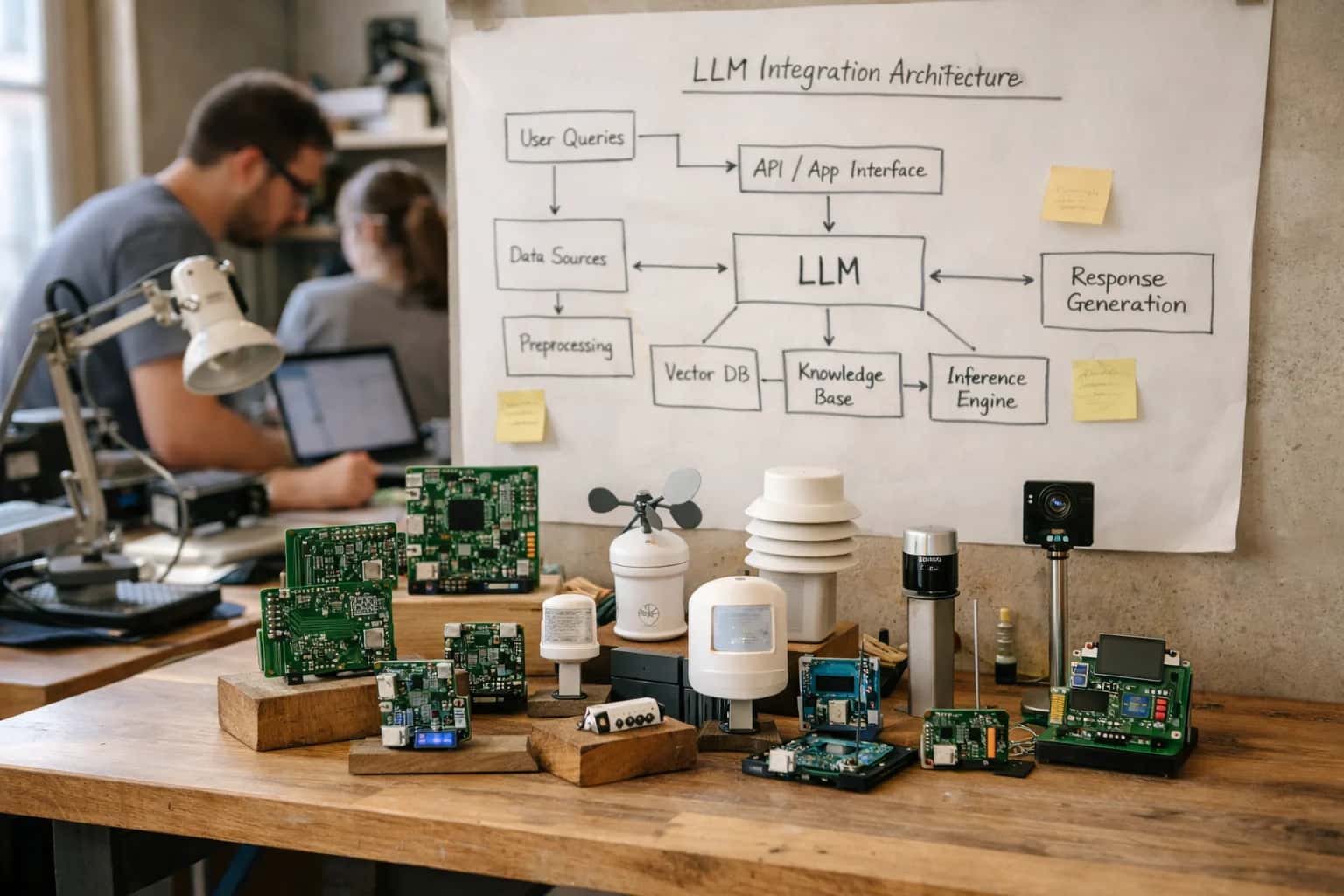
ARCHITECTING INTELLIGENT EXCEPTION HANDLING
Where AI Fits in UiPath Action Center
Transform UiPath Action Center from a simple task queue into an intelligent triage and resolution engine using historical data and contextual AI.
Implementation centers on a middleware service that subscribes to Orchestrator's QueueItem events. For each new exception, this service calls an LLM (like GPT-4 or Claude) with a structured prompt containing the error context, relevant application screenshots (if using UiPath's computer vision activities), and past similar resolutions. The AI returns a classification (e.g., DataValidationError, SystemTimeout), a confidence score, and suggested remediation steps. This metadata is then attached to the queue item via custom fields, enabling dynamic routing in Action Center's assignment policies and pre-populating the agent's form with context.
Rollout requires a phased governance approach. Start with an AI-as-advisor model, where suggestions are displayed to agents but not acted upon automatically, building trust and collecting feedback. Use this phase to fine-tune prompts and establish accuracy benchmarks. Then, progress to AI-assisted routing for high-confidence, low-risk exceptions (e.g., missing field values), automatically moving items to specialized queues. The final stage is pre-resolution, where the AI, using tools like a connected SQL database or a CRM API, retrieves missing data and pre-fills the correction, allowing the agent to simply review and approve. This layered approach ensures control while delivering measurable reductions in mean time to resolution (MTTR).
AI-ENHANCED EXCEPTION RESOLUTION
Key Integration Surfaces in the UiPath Stack
Action Center API for AI-Driven Orchestration
The Action Center REST API is the primary surface for integrating external AI services. It enables programmatic creation, prioritization, assignment, and resolution of Action Items.
Key Integration Points:
- POST
/odata/ActionCenter/ActionItems: Create new Action Items from AI-detected exceptions, enriched with context like confidence scores, suggested actions, and relevant data snippets. - PATCH
/odata/ActionCenter/ActionItems({id}): Update item status (e.g., from 'Pending' to 'AI_PreResolved') and attach AI-generated resolution notes for human review. - GET
/odata/ActionCenter/ActionItems: Retrieve items filtered by status, queue, or SLA for AI to analyze historical resolution patterns and optimize routing logic.
Example Workflow: An LLM analyzing an invoice discrepancy can call this API to create an Action Item for the AP team, pre-populating the 'Description' with the AI's analysis and a 'SuggestedResolution' field.
INTELLIGENT EXCEPTION RESOLUTION
High-Value AI Use Cases for Action Center
Transform UiPath Action Center from a simple task queue into an intelligent decision hub. By integrating AI, you can pre-analyze exceptions, prioritize work, and provide human operators with the context and suggested actions needed to resolve issues faster.
01
AI-Powered Triage & Prioritization
Use LLMs to analyze the exception payload, logs, and associated documents from the Orchestrator. Automatically assign a priority score (e.g., P0-P3) and a complexity estimate based on historical resolution data. Route high-priority, low-complexity items to junior staff and complex, high-value exceptions to senior specialists.
Batch -> Real-time
Routing logic
02
Contextual Pre-Resolution
For common exception types (e.g., 'Invoice PO Mismatch'), the AI retrieves relevant data from source systems, suggests the correct value, and drafts a resolution note. The human operator reviews, edits if needed, and approves the action, turning a 10-minute investigation into a 30-second verification. This pattern is ideal for data validation and reconciliation errors.
Hours -> Minutes
Resolution time
03
Dynamic Escalation & Knowledge Retrieval
When an exception stumps the first-line operator, an integrated AI assistant can search internal wikis, past Action Center tickets, and process documentation to find similar resolved cases. It surfaces step-by-step resolution guides or suggests escalating to a specific team or expert, reducing the 'who do I ask?' delay.
1 sprint
Typical ramp time
04
Automated Root Cause Analysis & Feedback Loop
After an exception is resolved, AI analyzes the resolution notes and the original bot failure. It classifies the root cause (e.g., 'API timeout', 'Unchanged UI element', 'New document format') and automatically creates a ticket in the developer backlog in Jira or Azure DevOps via webhook. This creates a closed-loop system for improving bot resilience.
Same day
Feedback to dev
05
Sentiment-Aware Customer Exception Handling
For exceptions involving customer-facing processes (e.g., failed loan applications, disputed charges), AI analyzes the customer's communication history and sentiment. It flags high-risk cases for expedited, sensitive handling and can draft empathetic, compliant communication templates for the operator to personalize and send.
Reduce escalations
Business impact
06
Predictive Workload & SLA Forecasting
By analyzing historical exception volumes, types, and resolution times, an AI model can forecast daily and hourly workloads for the Action Center team. It predicts potential SLA breaches before they happen, allowing managers to dynamically reallocate staff or trigger preemptive bot maintenance workflows in the Orchestrator.
Proactive > Reactive
Operational mode
ACTION CENTER INTEGRATION PATTERNS
Example AI-Enhanced Exception Workflows
These concrete workflows illustrate how generative AI and LLMs can be integrated with UiPath Action Center to transform human-in-the-loop exceptions from manual burdens into intelligent, assisted resolutions. Each pattern connects AI reasoning to Orchestrator data and updates the Action Center queue.
When an unattended Accounts Payable bot fails to process an invoice due to a data mismatch, AI determines urgency and pre-fills resolution context.
- Trigger: Orchestrator logs an exception from an AP automation, creating a task in Action Center.
- Context Pulled: The AI service retrieves the exception payload, the scanned invoice image from the document storage, and historical data (vendor payment terms, past exceptions for this vendor, invoice amount).
- Model Action: A multi-step LLM call:
- Classifies the exception root cause (e.g., "PO Number Not Found", "Price Variance > 5%", "Invalid Tax Code").
- Scores urgency based on amount, due date, and vendor criticality.
- Drafts a resolution summary (e.g., "Likely PO #45012. Vendor 'Contoso' accepts 5% variance per contract. Suggest match and pay.").
- System Update: The Action Center task is enriched with:
AI_Priority:High/Medium/LowAI_Suggested_Cause:PO_MismatchAI_Resolution_Notes: The drafted summary.- The task is sorted to the top of a high-priority queue.
- Human Review Point: The AP clerk reviews the AI summary, confirms or edits the suggested resolution, and clicks "Approve." This action triggers the original bot to re-process the invoice with the corrected data.
FROM EXCEPTION QUEUE TO RESOLUTION
Implementation Architecture & Data Flow
A production-ready architecture for integrating AI into UiPath Action Center to prioritize, pre-resolve, and route human-in-the-loop exceptions.
The integration connects at the Orchestrator API layer, specifically the Queues and QueueItems endpoints. When an unattended bot encounters an exception and creates a queue item, an event trigger (webhook or scheduled Orchestrator process) sends the item's context—including payload data, process name, error message, and screenshots—to an AI processing service. This service, typically a containerized microservice, acts as the orchestration hub, calling the appropriate LLM (OpenAI GPT-4, Anthropic Claude, or a fine-tuned open-source model) via a secure API gateway.
The AI service executes a multi-step reasoning workflow: First, it classifies the exception type (e.g., 'Data Validation', 'System Unavailable', 'Ambiguous Input'). Next, it analyzes the historical resolution data from similar past QueueItems (fetched via the Orchestrator API) to suggest a fix or retrieve missing data. For example, if the exception is a missing vendor ID in an invoice processing bot, the AI might cross-reference the vendor name in the payload against a master data list and return the correct ID. Finally, it assigns a confidence score and, if high enough, can automatically retry the transaction with the corrected data or draft a resolution note for the human operator.
Resolved or enriched queue items are updated back into Action Center via the Orchestrator API. The architecture includes a human review loop for low-confidence AI suggestions, where the item is routed to a specific operator group with the AI's analysis pre-attached. All AI interactions are logged to a separate audit database for performance monitoring, prompt iteration, and compliance, ensuring the system learns and improves without impacting the core RPA stability. For a deeper dive on orchestrating these AI services, see our guide on AI Integration for UiPath AI Center.
ACTION CENTER INTEGRATION PATTERNS
Code & Payload Examples
Processing Orchestrator Exceptions
When an exception is logged in UiPath Orchestrator, a webhook can trigger an AI analysis. This handler receives the exception payload, enriches it with contextual data, and calls an LLM to classify and suggest a resolution.
pythonimport requests import json from typing import Dict def handle_orchestrator_webhook(payload: Dict): """Process an exception from UiPath Orchestrator.""" # Extract key exception details exception_id = payload.get('Id') process_name = payload.get('ProcessName') error_message = payload.get('ExceptionMessage', '') robot_name = payload.get('RobotName') timestamp = payload.get('Timestamp') # Enrich with historical data (pseudocode) similar_past_errors = query_error_history(process_name, error_message) bot_log_snippet = fetch_recent_robot_logs(robot_name, timestamp) # Prepare LLM payload llm_payload = { "exception_id": exception_id, "process": process_name, "error": error_message, "robot": robot_name, "historical_context": similar_past_errors, "recent_logs": bot_log_snippet } # Call LLM for analysis analysis = call_llm_for_triage(llm_payload) # Update Action Center item with AI suggestions update_action_center_item(exception_id, { "ai_priority": analysis['priority_score'], "suggested_category": analysis['error_category'], "recommended_action": analysis['resolution_steps'], "confidence": analysis['confidence'] }) return {"status": "processed", "exception_id": exception_id}
AI-ENHANCED EXCEPTION RESOLUTION
Realistic Time Savings & Operational Impact
How AI integration transforms the handling of human-in-the-loop exceptions in UiPath Action Center, moving from manual triage to prioritized, pre-resolved work items.
| Exception Workflow Stage | Before AI Integration | After AI Integration | Implementation Notes |
|---|---|---|---|
Initial Triage & Categorization | Manual review of each exception by a team lead | AI auto-classifies exception type and priority using Orchestrator logs | Classification model trained on historical exception data and resolution paths |
Context Gathering | Agent manually searches Orchestrator logs, bot screenshots, and input payloads | AI automatically surfaces relevant context, error details, and similar past resolutions | RAG pipeline retrieves data from Orchestrator, document stores, and knowledge bases |
Routing Decision | Based on agent availability or simple queues | AI routes to agent with relevant expertise and current capacity | Considers agent skill tags, current workload, and historical resolution success rates |
Resolution Suggestion | Agent must diagnose and solve from scratch | AI provides a recommended resolution or pre-filled corrective action | Suggestions generated via LLM analysis of context; human approval required |
Approval Workflow | Manual supervisor review for high-risk or high-value exceptions | AI flags exceptions needing approval based on policy; auto-escalates | Approval rules configured in Orchestrator; audit trail maintained |
Post-Resolution Analysis | Ad-hoc review of resolved items for trends | AI clusters similar exceptions, identifies root causes, and suggests bot fixes | Analysis feeds back into Process Mining and automation development cycles |
Agent Onboarding & Support | Weeks of training to handle diverse exceptions | AI copilot guides new agents through resolution steps with real-time prompts | Reduces time-to-proficiency and provides consistent guidance |
PRODUCTION ARCHITECTURE FOR HUMAN-IN-THE-LOOP AI
Governance, Security & Phased Rollout
Deploying AI for UiPath Action Center requires a secure, governed architecture that integrates with your existing automation fabric.
A production integration connects the UiPath Orchestrator API and Action Center data model to your chosen AI service (e.g., OpenAI, Azure OpenAI, Anthropic) via a secure middleware layer. This layer, often a dedicated microservice or serverless function, handles authentication, prompt templating, logging, and response validation before returning prioritized actions, suggested resolutions, or routing recommendations to the Action Center queue. Critical data objects like QueueItem, ExceptionInfo, and ProcessLog are enriched with AI-generated metadata (e.g., predicted_resolution, confidence_score, escalation_path) to guide human operators.
Security is paramount. Implement role-based access control (RBAC) to ensure only authorized automations and users can trigger AI analysis on sensitive queue items. All calls to external LLMs should be proxied through your API gateway (e.g., Kong, Apigee) for credential management, rate limiting, and audit logging. For processes involving PII or PHI, implement a data masking service or use on-premises AI models to ensure data never leaves your compliance boundary. Audit trails should capture the original queue item, the AI prompt (sans sensitive data), the model used, the response, and the final human action taken.
A phased rollout mitigates risk. Start with a pilot queue handling low-risk, high-volume exceptions (e.g., invoice matching discrepancies). Implement a human-in-the-loop review step where AI suggestions are presented as recommendations that must be approved by an operator. Use this phase to calibrate confidence thresholds and refine prompts. In Phase 2, enable auto-resolution for high-confidence, low-impact items (e.g., categorizing and routing standard support requests). Finally, expand to complex queues, using AI to pre-populate resolution forms or draft communications, cutting handling time from hours to minutes. Continuous monitoring via UiPath Insights tracks key metrics: AI suggestion acceptance rate, average handling time reduction, and error rates to ensure the integration delivers operational lift without introducing new failure modes.
Enabling Efficiency, Speed & Accuracy
Intelligent Analysis, Decision & Execution
We build AI systems for teams that need search across company data, workflow automation across tools, or AI features inside products and internal software.
Talk to Us
Search across company data
Give teams answers from docs, tickets, runbooks, and product data with sources and permissions.
Useful when people spend too long searching or get different answers from different systems.
Enterprise searchRAGPermissions
Read more
Automate internal workflows
Use AI to route work, draft outputs, trigger actions, and keep approvals and logs in place.
Useful when repetitive work moves across multiple tools and teams.
AI agentsWorkflow automationGovernance
Read more
Add AI to products and internal tools
Build assistants, guided actions, or decision support into the software your team or customers already use.
Useful when AI needs to be part of the product, not a separate tool.
AI integrationDecision supportModel routing
Read moreIMPLEMENTATION AND WORKFLOW DETAILS
Frequently Asked Questions
Practical questions about integrating AI with UiPath Action Center to automate exception handling, routing, and resolution.
An AI agent analyzes the incoming exception item and its context from Orchestrator to determine priority and assign the right human operator.
Typical workflow:
- Trigger: A UiPath robot encounters an exception and sends the error context, process name, business data, and screenshots to a queue.
- Context Retrieval: An integration service pulls the item and enriches it with historical data (e.g., past resolution times for similar errors, assigned operator success rates).
- AI Analysis: A configured LLM (like GPT-4 or Claude) reviews the enriched payload. Using a system prompt, it:
- Classifies the exception type (e.g.,
Data Validation,System Unavailable,Business Rule Conflict). - Predicts resolution complexity (Low/Medium/High).
- Recommends a priority (P1-P4) based on SLA impact and business criticality.
- Suggests the best-suited operator or team based on skills and current workload.
- Classifies the exception type (e.g.,
- System Update: The AI agent's output is used to automatically:
- Set the item's
PriorityandComplexityfields in Action Center. - Assign it to the recommended user or queue.
- Pre-populate the
Suggested Resolutionfield with steps or a knowledge base article link.
- Set the item's
- Human Review: The assigned operator sees the AI-generated context immediately, reducing triage time from minutes to seconds.

About the author
Prasad Kumkar
CEO & MD, Inference Systems
Prasad Kumkar is the CEO & MD of Inference Systems and writes about AI systems architecture, LLM infrastructure, model serving, evaluation, and production deployment. Over 5+ years, he has worked across computer vision models, L5 autonomous vehicle systems, and LLM research, with a focus on taking complex AI ideas into real-world engineering systems.
His work and writing cover AI systems, large language models, AI agents, multimodal systems, autonomous systems, inference optimization, RAG, evaluation, and production AI engineering.
LinkedIn
Limited slotsGet a Free AI Consultation
Partnered with leading AI, data, and software stack.





How We Work
Custom AI workflows for your Business
One-fit-all AI don't work for modern businesses. At Inferensys, we aim to understand your business & custom requirements; which we use to define most efficient agentic workflows, the data, and the tools for your business.
01
Review the use case
We understand the task, the users, and where AI can actually help.
Read more02
Pick the right approach
We define what needs search, automation, or product integration.
Read more03
Build the first useful version
We implement the part that proves the value first.
Read more04
Improve from there
We add the checks and visibility needed to keep it useful.
Read moreThe first call is a practical review of your use case and the right next step.
Talk to Us