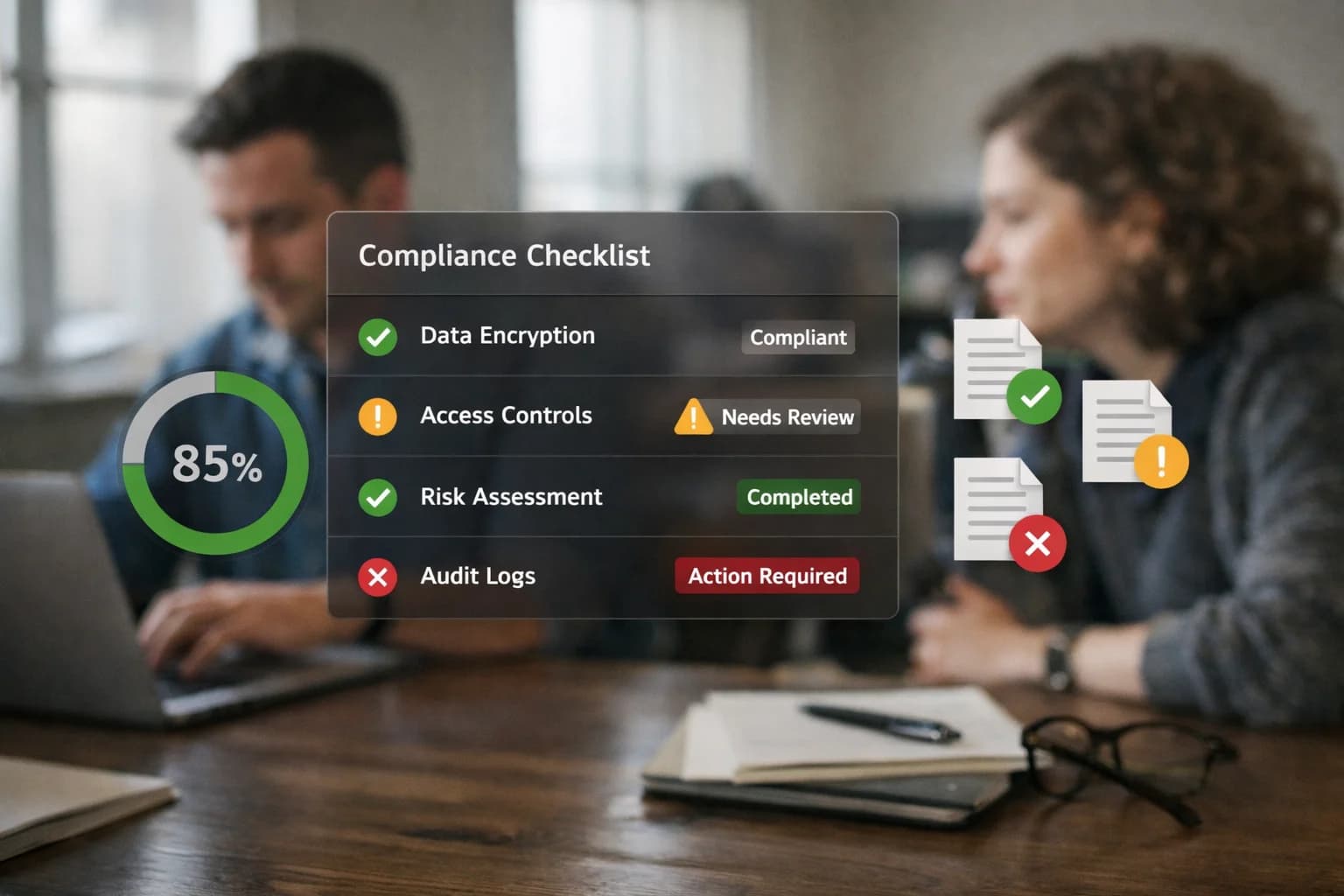
Use AI to monitor RPA platform logs, detect bot drift, ensure compliance, and optimize license usage. A practical guide for RPA CoE leaders and platform engineers.
From Reactive Monitoring to Proactive RPA Governance with AI
Shift from manual oversight to AI-driven governance for your UiPath, Automation Anywhere, and Blue Prism deployments.
Traditional RPA governance in platforms like UiPath Orchestrator, Automation Anywhere Control Room, and Blue Prism Control Room is reactive. Teams monitor dashboards for bot failures, manually review logs for compliance, and adjust resource allocation based on lagging indicators. AI integration transforms this by injecting intelligence directly into the governance layer. This means using LLMs to analyze execution logs, queue backlogs, and license usage patterns to detect anomalies, predict bottlenecks, and recommend corrective actions before processes break.
Implementation centers on connecting your RPA platform's REST APIs and database logs to an AI orchestration layer. Key workflows include:
Bot Drift Detection: Continuously comparing bot execution times, step success rates, and output data against historical baselines to flag performance degradation—often a sign of underlying application changes.
Compliance & Audit Automation: Using NLP to scan bot execution logs and audit trails for unauthorized data access, policy violations, or deviations from approved process maps, generating summary reports for risk teams.
Resource Optimization: Analyzing queue lengths, bot utilization, and infrastructure metrics to dynamically recommend license reallocation, scaling decisions, or schedule adjustments to maximize ROI on your RPA investment.
Rollout requires a phased approach, starting with a single process group or environment (e.g., Development). Governance AI agents should be deployed as a separate microservice that polls the RPA platform's APIs, ensuring no impact on bot performance. Critical to success is establishing clear escalation workflows—defining which AI-generated alerts auto-remediate (e.g., restarting a hung bot), which require human review in an Action Center, and which must trigger a full incident response. This creates a closed-loop system where governance becomes a proactive, data-driven function, not a periodic audit.
PLATFORM SURFACES
Where AI Connects: RPA Governance Surfaces and APIs
Centralized Bot Execution Logs
AI models connect directly to the central logging APIs of platforms like UiPath Orchestrator and Automation Anywhere Control Room. These logs provide a real-time stream of bot activities, errors, execution times, and resource consumption.
Key data points for AI analysis include:
Job status and error codes for pattern-based failure prediction.
Execution duration outliers to detect process drift or system latency.
Credential usage and session data to audit security compliance.
Queue backlogs and bot idle times for license optimization.
AI continuously analyzes this telemetry to flag anomalies, predict SLA breaches, and generate prescriptive alerts for operations teams, moving governance from reactive monitoring to proactive management.
MONITORING, COMPLIANCE, AND OPTIMIZATION
High-Value AI Use Cases for RPA Governance
Governance is the critical layer that ensures RPA investments deliver reliable, compliant, and cost-effective automation. AI transforms reactive monitoring into proactive intelligence, enabling teams to manage scale, mitigate risk, and optimize license spend.
01
Anomaly & Drift Detection in Bot Logs
Continuously analyze execution logs from UiPath Orchestrator or Automation Anywhere Control Room using ML models to detect subtle deviations in bot behavior—like slower processing times, new error patterns, or data field mismatches—that signal process drift or environmental issues before they cause failures.
Reactive -> Proactive
Detection shift
02
Compliance & Audit Trail Analysis
Automate the review of bot audit trails for SOX, GDPR, or internal policy compliance. An LLM scans activity logs, flags unauthorized access or data handling anomalies, and generates plain-English summaries for auditors, reducing manual review from days to hours.
Days -> Hours
Audit prep
03
License & Resource Optimization
Analyze bot utilization, peak loads, and infrastructure metrics to identify underused named user licenses or runtime sessions. AI recommends right-sizing strategies, such as converting attended to unattended bots or rescheduling non-critical automations, directly impacting OpEx.
10-20% Savings
Typical license efficiency
04
Intelligent Exception Triage & Routing
When a bot fails, an AI classifier analyzes the error context, screenshots, and system state from the Orchestrator queue. It categorizes the issue, retrieves relevant KB articles or past resolutions, and routes it to the correct support tier—or suggests an automated fix—dramatically reducing MTTR.
Hours -> Minutes
Mean time to resolve
05
Predictive Bot Health Scoring
Build a predictive model that scores bot health based on historical success rates, dependency system latency, and data quality signals. Integrate this score into UiPath Insights or a custom dashboard to forecast failures and schedule preventive maintenance during low-impact windows.
Batch -> Real-time
Health monitoring
06
Automated Runbook & Documentation Updates
Use an LLM to analyze change tickets, process updates, and bot execution logs, then automatically draft updates to bot runbooks and operational documentation in Confluence or SharePoint. Ensures governance artifacts stay synchronized with production automation.
Same day
Document sync
PRODUCTION PATTERNS
Example AI-Enhanced Governance Workflows
These are practical, deployable workflows that integrate AI with RPA platform logs and control systems to automate governance, ensure compliance, and optimize operations. Each pattern can be implemented within tools like UiPath Orchestrator, Automation Anywhere Control Room, or Blue Prism Control Room.
Trigger: A scheduled Orchestrator/Control Room job runs every 4 hours to analyze the last 24 hours of bot execution logs.
Historical performance baseline (average runtime, success rate, common error codes) for each process.
Associated business context (process criticality, SLA).
Model/Agent Action:
An LLM-powered agent is called with a structured prompt to analyze the logs.
The agent identifies anomalies: significant runtime deviations (>20%), new error patterns, or silent failures where a bot completes but produces no output.
It correlates anomalies with recent system changes (deployments, credential rotations) logged in the platform.
System Update/Next Step:
The agent generates a concise alert summary: "Process 'InvoiceProcessing_Prod' runtime increased by 45%. New error 'ElementNotFound' detected in 12% of runs. No recent deployment linked."
This summary is posted to a dedicated Slack/Teams channel and creates a high-priority ticket in ServiceNow or Jira.
The Orchestrator job can be configured to automatically pause the affected bot queue if the drift score exceeds a critical threshold.
Human Review Point: The alert summary is sent to the RPA CoE lead and the bot developer for investigation. The system suggests relevant log snippets and a comparison to the last stable run.
MONITORING, DETECTION, AND OPTIMIZATION
Implementation Architecture: Data Flow, Models, and Guardrails
A practical architecture for using AI to monitor RPA platform logs, detect bot drift, ensure compliance, and optimize license usage.
The core data flow begins by ingesting logs and operational metrics from your RPA platform's control plane—such as UiPath Orchestrator, Automation Anywhere Control Room, or Blue Prism Control Room—via their respective REST APIs or database exports. This includes execution logs, bot statuses, queue depths, license consumption, error codes, and process-specific metadata. A central data pipeline normalizes this telemetry, creating a unified event stream for AI analysis. Key entities to track are BotSession, Job, QueueItem, Exception, and LicenseMetric.
For detection and insight, we layer two types of AI models on this stream. First, supervised and unsupervised ML models analyze historical patterns to establish baselines for bot performance, resource usage, and process duration. They flag anomalies like sudden increases in processing time, abnormal error rates, or deviations in data volumes that suggest 'bot drift' or a broken process. Second, LLM-based analysis engines parse unstructured log messages and exception details. Using techniques like few-shot prompting, they classify error root causes (e.g., 'application update', 'credential expiry', 'data format change') and suggest remediation steps, pulling from a knowledge base of past resolutions. For governance, a separate model continuously scans execution logs against compliance rulebooks, flagging actions that deviate from approved workflows or data access policies.
Guardrails are implemented at multiple levels. An orchestration layer manages the AI's recommendations, requiring human-in-the-loop approval for any corrective action (like restarting a bot fleet or modifying a queue) via integration with platforms like UiPath Action Center. All AI inferences, data accessed, and recommended actions are written to an immutable audit trail. For optimization, the system can generate reports on license utilization peaks and bot idle time, recommending reallocation or scaling adjustments. Rollout typically starts with a pilot on a single, high-value process group, with AI outputs monitored by the RPA CoE before enabling automated alerts or actions. This approach turns reactive platform monitoring into a proactive, intelligence-driven governance function. For related architectural patterns, see our guides on AI Integration for RPA with AI Orchestration and AI Integration for Exception Handling with AI.
IMPLEMENTATION PATTERNS
Code and Payload Examples
Analyzing Orchestrator Logs for Anomalies
AI models can monitor RPA execution logs to detect bot drift—where a bot's performance degrades due to application changes or data variations. This involves querying log data, extracting key metrics (execution time, error codes, retry counts), and flagging anomalies for review.
Example Python script to fetch logs and score for drift:
python
import requests
import pandas as pd
from sklearn.ensemble import IsolationForest
# Fetch recent bot execution logs from UiPath Orchestrator API
headers = {"Authorization": "Bearer YOUR_ORCHESTRATOR_TOKEN"}
logs_response = requests.get(
"https://platform.uipath.com/odata/Jobs",
headers=headers,
params={"$filter": "startTime gt 2024-01-01"}
).json()
# Transform to features
logs_df = pd.DataFrame(logs_response['value'])
features = logs_df[['Duration', 'RobotId', 'State']].copy()
features['State_Encoded'] = features['State'].map({"Successful": 0, "Faulted": 1, "Pending": 2})
# Train anomaly detection model on historical data
model = IsolationForest(contamination=0.05)
model.fit(features[['Duration', 'State_Encoded']])
# Predict anomalies in latest runs
features['anomaly_score'] = model.decision_function(features[['Duration', 'State_Encoded']])
features['is_anomaly'] = model.predict(features[['Duration', 'State_Encoded']])
# Flag bots for governance review
anomalous_bots = features[features['is_anomaly'] == -1]['RobotId'].unique()
print(f"Bots requiring review: {anomalous_bots}")
AI-POWERED RPA GOVERNANCE
Realistic Time Savings and Operational Impact
How AI integration transforms manual oversight of RPA platforms like UiPath Orchestrator, Automation Anywhere Control Room, and Blue Prism Control Room into proactive, intelligent governance.
Governance Activity
Before AI
After AI
Notes
Bot Performance Anomaly Detection
Manual log review (weekly)
Real-time alerting & root cause suggestion
Shifts from reactive troubleshooting to predictive maintenance
License Utilization Analysis
Monthly spreadsheet audit
Continuous dashboard with optimization recommendations
Identifies underutilized licenses and peak demand periods for cost control
Ensures 100% coverage of bot actions against internal and regulatory policies
Exception Queue Triage
First-in, first-out manual assignment
AI-prioritized routing based on complexity & SLA
Reduces resolution time for critical exceptions by focusing expert attention
Process Drift Identification
Quarterly process comparison
Weekly automated comparison of bot execution paths vs. baseline
Early detection of unauthorized workflow changes or environmental shifts
Resource Allocation Planning
Historical trend-based forecasting
Predictive load forecasting for bot scheduling & infrastructure
Optimizes VM/container provisioning and prevents performance bottlenecks
Governance Report Generation
Days of manual data compilation
Automated, narrative-driven reports in hours
Frees up Center of Excellence (CoE) staff for strategic initiatives
PRODUCTION DEPLOYMENT
Governance of the Governance AI: Phased Rollout and Controls
A practical guide to deploying AI for RPA governance with phased controls, audit trails, and human oversight.
Deploying AI to govern your RPA platform requires the same rigor you apply to the automations themselves. Start with a pilot focused on a single, high-value control surface, such as monitoring for license overutilization in UiPath Orchestrator or detecting process drift in Automation Anywhere Control Room logs. Instrument this pilot to log all AI inferences, the underlying bot performance data analyzed, and the recommended actions (e.g., 'flag bot for review', 'suggest license reallocation'). This creates an initial audit trail and establishes a performance baseline for the AI model before broader rollout.
Architect the integration with a human-in-the-loop approval layer. For example, an AI agent analyzing Blue Prism runtime logs might detect an emerging pattern of exceptions in a payment reconciliation bot. Instead of auto-remediating, the system should create a structured ticket in your ITSM platform (like ServiceNow or Jira) with the AI's findings and suggested script adjustments, routing it to the RPA CoE lead for review. This controlled handoff is critical for compliance-sensitive processes and builds operator trust in the AI's recommendations.
Phase two expands monitoring coverage to additional governance functions: compliance adherence (e.g., ensuring bots execute only approved processes), resource forecasting (predicting infrastructure needs from historical run data), and business impact validation (correlating bot uptime with business KPIs). Implement role-based access controls (RBAC) so that, for instance, finance leads can see cost optimization insights while only platform admins can view security-related anomaly alerts. Finally, schedule regular model review cycles to retrain on new log data and adjust alert thresholds, preventing alert fatigue and ensuring the governance AI evolves with your digital workforce.
Enabling Efficiency, Speed & Accuracy
Intelligent Analysis, Decision & Execution
We build AI systems for teams that need search across company data, workflow automation across tools, or AI features inside products and internal software.
AI-ENHANCED RPA GOVERNANCE
FAQ: Technical and Commercial Questions
Practical questions for teams implementing AI to monitor, secure, and optimize their RPA platforms like UiPath Orchestrator, Automation Anywhere Control Room, and Blue Prism.
AI models analyze historical and real-time logs from your RPA orchestrator to establish a baseline for normal bot behavior. This includes:
Data Patterns: Volume and type of records processed, typical values in extracted fields.
System Interaction: Timing of API calls, screen scrape success rates, and application response times.
Anomaly detection algorithms (like isolation forests or statistical process control) flag deviations. For example, a bot that suddenly takes 3x longer to process an invoice might trigger an alert for "potential system slowdown or changed UI." The AI can correlate this with infrastructure logs or recent application patches to suggest a root cause, moving from simple alerting to diagnostic support.
Governance teams review these AI-generated alerts in a dashboard, prioritizing based on severity and business impact.
About the author
Prasad Kumkar
CEO & MD, Inference Systems
Prasad Kumkar is the CEO & MD of Inference Systems and writes about AI systems architecture, LLM infrastructure, model serving, evaluation, and production deployment. Over 5+ years, he has worked across computer vision models, L5 autonomous vehicle systems, and LLM research, with a focus on taking complex AI ideas into real-world engineering systems.
His work and writing cover AI systems, large language models, AI agents, multimodal systems, autonomous systems, inference optimization, RAG, evaluation, and production AI engineering.
Partnered with leading AI, data, and software stack.
How We Work
Custom AI workflows for your Business
One-fit-all AI don't work for modern businesses. At Inferensys, we aim to understand your business & custom requirements; which we use to define most efficient agentic workflows, the data, and the tools for your business.
The first call is a practical review of your use case and the right next step.