Off-the-shelf POS features are built for the average restaurant. Custom AI is built for your specific menu, traffic patterns, supplier network, and operational bottlenecks. The goal is to embed intelligence directly into your unique data flows—connecting to POS APIs for sales, inventory, labor, and customer objects—to automate decisions that generic software can't. This means building agents that read your historical transaction streams to predict tomorrow's 6 PM rush, or workflows that analyze your specific waste logs to suggest prep adjustments, not just industry benchmarks.

Integration
Custom AI Development for Restaurant POS Platforms
A technical guide for CTOs and engineering leads on scoping, building, and deploying bespoke AI applications that extend beyond off-the-shelf POS features for Toast, Square for Restaurants, TouchBistro, and Clover.
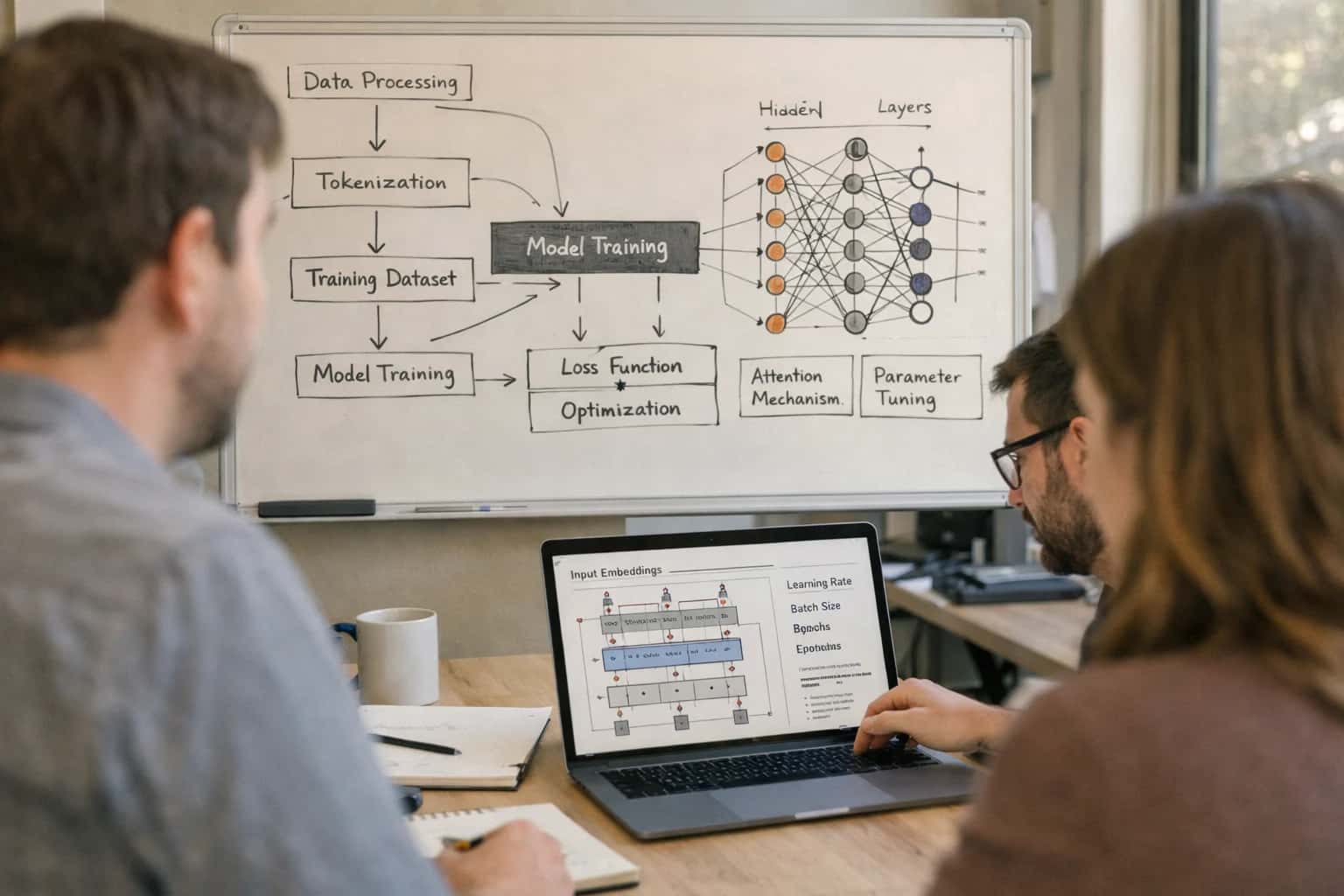
BEYOND OFF-THE-SHELF FEATURES
Why Build Custom AI on Your Restaurant POS?
A practical guide for technical leaders evaluating bespoke AI builds that directly extend your Toast, Square, or Clover platform.
Implementation starts with scoping high-impact, contained workflows. A common MVP is an AI-powered prep list generator: a model consumes yesterday's sales_item data from the Toast Sales API, today's reservation counts, and local weather feeds via a scheduled job; it outputs a par sheet that automatically populates a kitchen checklist in your back-of-house system. Another is a support copilot: staff ask a Slack bot "how many ribeyes do we have left?", the agent queries the Clover Inventory API in real-time, checks against tonight's reservations, and replies with a grounded answer and a suggested vendor order link.
Rollout requires a sandbox-first approach. You'll prototype against your POS platform's developer sandbox (Toast Developer Portal, Square Developer Dashboard) to build and test API calls for data extraction and action triggering without touching production. Governance is critical: any AI action that modifies a ticket, discount, or employee_schedule should route through an approval queue or audit log. Deployment typically involves a lightweight middleware layer (often a cloud function) that sits between your AI models and the POS, handling authentication, rate limiting, and fallback logic for when the POS API is unreachable.
The investment shifts operational tempo from reactive to predictive. Instead of a manager spending an hour each morning building a labor schedule, an AI agent analyzes the forecast and pushes an optimized draft to the Square Team Management API for final review. The value isn't in vague "transformation" but in compounding time savings, reduced waste, and consistent execution of complex decisions across multiple locations—turning your POS from a system of record into a system of intelligence.
ARCHITECTURAL BLUEPRINT
POS Platform Entry Points for Custom AI
Foundation for AI Models
Custom AI development starts with structured access to the POS data layer. For platforms like Toast and Square for Restaurants, this means integrating with their RESTful APIs and webhook streams to pull real-time and historical data. Key data entities include:
- Transaction Records: Sales, voids, discounts, and payment methods.
- Menu & Modifier Data: Item-level details, pricing, and ingredient-level composition.
- Labor & Scheduling: Employee hours, roles, and scheduled shifts.
- Inventory Levels: Current stock, supplier costs, and waste tracking.
A robust data pipeline is essential. Use a middleware layer or directly ingest into a cloud data warehouse (e.g., Snowflake, BigQuery) to create a unified source for training and inference. Ensure your integration respects rate limits and uses OAuth 2.0 for secure, scoped access to sandbox and production environments.
RESTAURANT POS PLATFORMS
High-Value Targets for Custom AI Development
For technical teams evaluating bespoke AI builds on platforms like Toast, Square for Restaurants, TouchBistro, and Clover. These are the most impactful, production-ready integration patterns that extend beyond off-the-shelf POS features.
01
Real-Time Kitchen Orchestration
Inject AI logic between the POS and Kitchen Display System (KDS) to optimize fire times and order sequencing. Models analyze order complexity, cook time, and ingredient prep status to sequence tickets, predict delays, and alert chefs about potential errors or special requests before firing.
Batch -> Real-time
Order flow
02
Predictive Prep & Par Automation
Build AI models that consume POS historical sales, local event calendars, and weather APIs to generate automated prep lists and ideal par levels. The system pushes actionable prep tasks directly into back-of-house checklists or inventory modules, reducing waste and last-minute rushes.
Same day
Forecast lead time
03
Dynamic Labor Scheduler
Go beyond basic forecasting. Integrate with POS labor data and employee preference apps to build legally-compliant, optimized schedules. AI models predict no-shows, manage shift-swap requests automatically, and alert managers for potential overtime violations before publishing.
Hours -> Minutes
Schedule creation
04
Hyper-Personalized Loyalty Engine
Enhance POS customer databases with an AI layer for next-visit prediction and micro-segmentation. System triggers hyper-personalized offers (e.g., 'Your usual burger, but try the new bacon') at the point of sale or via automated SMS, using individual purchase history and redemption patterns.
1 sprint
MVP build time
05
Automated Inventory Reconciliation
Connect AI to POS inventory modules and IoT scale data to automatically track waste and assign cost. System categorizes waste (spoilage, over-portioning), suggests corrective recipe adjustments, and generates compliance-ready reports for health inspections and financial reviews.
Batch -> Real-time
Waste tracking
06
Multi-Location Performance Copilot
Build a central AI layer that aggregates data from multiple POS instances (e.g., 10 Toast locations) to benchmark performance and propagate best practices. AI identifies underperforming dayparts, suggests cross-location inventory transfers, and automates the generation of regional manager digests.
Hours -> Minutes
Insight generation
IMPLEMENTATION PATTERNS
Example Custom AI Workflows
For technical teams evaluating bespoke AI builds, these workflows illustrate how to scope, develop, and deploy custom agents that extend your POS platform's native capabilities. Each pattern assumes secure access to sandbox APIs, a structured data pipeline, and a deployment strategy for production.
Trigger: Scheduled nightly job, 2 hours after close.
Context/Data Pulled:
- POS API: Historical sales for the same day-of-week over the last 8 weeks, filtered by menu item.
- External API: Local weather forecast for the upcoming day.
- External API: Scheduled local events (concerts, sports) from a public calendar feed.
- Inventory API: Current on-hand counts for key perishable ingredients.
Model/Agent Action: A forecasting model consumes the historical and contextual data to predict unit sales per menu item for the next day. An agent then:
- Translates predicted item sales into ingredient-level demand using the POS's built-in recipe (BOM) data.
- Adjusts demand based on current inventory to calculate "to-prep" quantities.
- Generates a prioritized prep list, grouping tasks by station (e.g., grill, pantry, fry).
System Update/Next Step: The agent formats the output as a markdown checklist and posts it via webhook to the kitchen's designated Slack channel. It also creates a draft prep list record in the restaurant's custom operations app (built on the POS's app framework) for manager review and adjustment.
Human Review Point: The kitchen manager reviews the Slack post and the draft in the operations app one hour before the morning prep shift begins, making manual adjustments based on intuition or known variables the model lacks.
A PRACTICAL BLUEPRINT FOR BESPOKE AI
Implementation Architecture: From Sandbox to Production
A technical guide to scoping, building, and deploying custom AI applications that extend beyond off-the-shelf POS features.
Custom AI development for platforms like Toast, Square for Restaurants, or TouchBistro begins with sandbox API access to the POS's core data objects: Transactions, Items, Modifiers, Labor Entries, Inventory Counts, and Customer Profiles. We scope the MVP by identifying a single, high-impact workflow—such as automated prep list generation from forecasted sales—and build a prototype that ingests historical sales data via the POS reporting API, processes it through a forecasting model, and outputs a structured prep list. This initial build runs in an isolated environment, using webhook listeners in a staging mode to simulate real-time events like order.completed or inventory.updated without touching production systems.
The production architecture layers AI logic atop the existing POS data flow. A typical pattern involves a middleware service (often deployed as a containerized microservice) that subscribes to critical POS webhooks. For a custom dynamic pricing engine, this service would consume real-time sales data and external ingredient_cost feeds, run the pricing model, and then make secure PATCH requests to the POS's Menu API to update item prices within predefined guardrails. All model inferences are logged with the associated order_id or item_id for auditability, and human approval workflows can be integrated via a simple admin dashboard before any system-triggered changes are executed. The service is designed for idempotency to handle duplicate webhooks and includes circuit breakers to fail gracefully if the POS API is unreachable.
Rollout follows a phased, location-based strategy. We deploy the AI service in a single restaurant, shadowing production decisions (e.g., generating labor schedules without auto-publishing them) to validate accuracy and performance. Governance is managed through a prompt registry and model evaluation dashboard, tracking key operational metrics like forecast error rate or prep list accuracy against actual waste. Once validated, the integration is scaled using the POS's location-grouping APIs, with configuration and prompts tailored per concept (e.g., a breakfast-centric location vs. a dinner-only venue). The final architecture ensures the custom AI acts as a stateless enhancement layer, leaving the POS as the single source of truth for all transactional data and system-of-record operations.
CUSTOM AI DEVELOPMENT
Code & Payload Patterns
Connecting to POS APIs
Custom AI development begins with reliable data ingestion. For platforms like Toast and Square, this involves authenticating with OAuth 2.0 and structuring calls to retrieve historical and real-time data. A common pattern is to use a scheduled extractor for bulk historical data (sales, labor, inventory) while setting up webhook listeners for real-time events (new orders, clock-ins, low-stock alerts).
Key API Endpoints:
GET /orders/v2(Toast) for historical order data with line-item details.GET /v2/labor/shifts(Square) for shift and wage data.POST /webhooks/subscriptionsto register for real-time event streams.
Handling pagination, rate limits, and idempotency is critical for production pipelines. Data is typically landed in a cloud data warehouse (Snowflake, BigQuery) or a vector store for RAG applications, with schemas designed to support both analytical models and operational agents.
FOR RESTAURANT POS PLATFORMS
Realistic Operational Impact of Custom AI Builds
A pragmatic comparison of manual processes versus AI-augmented workflows, based on typical custom builds for platforms like Toast, Square for Restaurants, and TouchBistro.
| Operational Workflow | Before AI / Manual Process | After AI / Augmented Process | Implementation & Impact Notes |
|---|---|---|---|
Labor Schedule Creation | Manager spends 2-4 hours weekly analyzing spreadsheets and intuition | AI generates draft schedule in <15 minutes using POS sales and forecast data | Human manager reviews and adjusts; focuses on exceptions and team dynamics |
Daily Prep List Generation | Chef reviews yesterday's sales and manually estimates needs each morning | AI auto-generates prep list 1 hour before open based on forecasts and waste data | Integrated into KDS or back-of-house tablet; reduces over-prep and stockouts |
Inventory Replenishment | Manual weekly count, followed by phone/email orders to multiple suppliers | System suggests purchase orders based on par levels and predicts 3-day depletion | Triggers via POS API; buyer approves and sends; consolidates vendor communication |
Customer Offer Personalization | Broad monthly email blasts or static loyalty rewards | POS-triggered, next-visit offers generated at checkout based on individual order history | Requires CRM integration; increases redemption by targeting high-propensity moments |
Support Ticket Triage (Internal) | Manager interrupted for procedural questions (e.g., 'how to split a check?') | Staff chatbot answers common queries using POS knowledge base, escalates complex issues | Reduces manager interruptions by 40-60%; built on Slack/Teams with secure API access |
End-of-Day Financial Review | GM spends 45+ minutes reconciling Z reports and investigating anomalies | AI copilot highlights top variances and suggests causes via natural language summary | Answers queries like 'why was comp sales down Tuesday?'; directs attention to root causes |
Online Order Moderation | Expediter manually checks third-party tickets for allergies/feasibility | AI flags high-risk modifications and suggests auto-corrections before kitchen receives | Webhook-based integration between delivery platform and POS; reduces errors and refunds |
SAFE DEPLOYMENT FOR CUSTOM AI IN RESTAURANTS
Governance, Security, and Phased Rollout
A pragmatic approach to deploying custom AI applications that interact with sensitive POS data and critical restaurant workflows.
Custom AI development for platforms like Toast, Square for Restaurants, or Clover requires a security-first architecture. This means implementing strict API key and OAuth scoping, ensuring AI agents and models only access the specific POS objects they need—such as Sales, Labor, or Inventory APIs—and never raw payment card data. All data flows should be encrypted in transit, and any data persisted for model training or context must be anonymized or pseudonymized. A critical governance layer involves audit logging every AI-initiated action (e.g., an agent suggesting a schedule change or generating a purchase order) back to the POS's native audit trail or a separate system, maintaining a clear chain of responsibility.
A successful rollout follows a phased, value-driven path, starting with a sandbox environment. We begin by integrating with the POS platform's sandbox API to build and test the AI application against synthetic data, validating core workflows like generating a prep list from forecasted sales or triaging a support ticket. The first live phase typically targets a single, high-impact, low-risk workflow, such as an AI copilot that answers staff questions from a knowledge base without making system changes. Subsequent phases introduce agentic workflows with human-in-the-loop approvals, like a system that proposes labor schedules but requires manager review before pushing to the POS, or that suggests menu substitutions but needs kitchen lead confirmation.
Final phases expand to multi-location deployments and more autonomous operations. Here, continuous evaluation is key: monitoring AI decision accuracy (e.g., was the forecasted prep list accurate?), tracking business impact (e.g., reduction in waste or labor cost variance), and setting up alerts for model drift or anomalous behavior. This phased approach de-risks the investment, builds organizational trust, and ensures the custom AI solution evolves as a reliable, governed component of the restaurant's operational stack.
Enabling Efficiency, Speed & Accuracy
Intelligent Analysis, Decision & Execution
We build AI systems for teams that need search across company data, workflow automation across tools, or AI features inside products and internal software.
Talk to Us
Search across company data
Give teams answers from docs, tickets, runbooks, and product data with sources and permissions.
Useful when people spend too long searching or get different answers from different systems.
Enterprise searchRAGPermissions
Read more
Automate internal workflows
Use AI to route work, draft outputs, trigger actions, and keep approvals and logs in place.
Useful when repetitive work moves across multiple tools and teams.
AI agentsWorkflow automationGovernance
Read more
Add AI to products and internal tools
Build assistants, guided actions, or decision support into the software your team or customers already use.
Useful when AI needs to be part of the product, not a separate tool.
AI integrationDecision supportModel routing
Read moreIMPLEMENTATION & ARCHITECTURE
FAQ: Custom AI Development for Restaurant POS Platforms
For technical leaders evaluating bespoke AI builds on platforms like Toast, Square for Restaurants, or TouchBistro. These FAQs address the practical realities of scoping, building, and deploying custom AI applications that extend beyond off-the-shelf POS features.
We start with a discovery workshop focused on your POS data model and operational pain points. The goal is to map AI opportunities to specific POS surfaces and quantify the effort-to-impact ratio.
Typical scoping process:
- Data & API Audit: Review your POS platform's available APIs (e.g., Toast's Orders, Labor, Inventory APIs), webhook events, and data export capabilities. We identify what's accessible in real-time vs. batch.
- Workflow Mapping: Walk through high-friction workflows (e.g., manual schedule creation, nightly inventory counts, manager cash-out) to pinpoint where AI decisions or automations can be injected.
- MVP Definition: Prioritize 1-2 use cases with clear success metrics. For example: "An AI agent that consumes yesterday's sales and today's reservations from the POS to generate a draft labor schedule in 5 minutes, reducing manager planning time by 70%."
- Integration Complexity Assessment: We classify the build:
- Tier 1 (Read-Only Analysis): Pull data via POS reporting APIs for insights (e.g., sales forecasting copilot).
- Tier 2 (Assisted Workflows): Read POS data + write to a separate system or send notifications (e.g., AI predicts low stock and emails a manager).
- Tier 3 (Closed-Loop Automation): Read POS data + write back via POS management APIs (e.g., AI automatically adjusts par levels in the inventory module). Tier 3 requires rigorous testing, often in a sandbox first.

About the author
Prasad Kumkar
CEO & MD, Inference Systems
Prasad Kumkar is the CEO & MD of Inference Systems and writes about AI systems architecture, LLM infrastructure, model serving, evaluation, and production deployment. Over 5+ years, he has worked across computer vision models, L5 autonomous vehicle systems, and LLM research, with a focus on taking complex AI ideas into real-world engineering systems.
His work and writing cover AI systems, large language models, AI agents, multimodal systems, autonomous systems, inference optimization, RAG, evaluation, and production AI engineering.
LinkedIn
Limited slotsGet a Free AI Consultation
Partnered with leading AI, data, and software stack.





How We Work
Custom AI workflows for your Business
One-fit-all AI don't work for modern businesses. At Inferensys, we aim to understand your business & custom requirements; which we use to define most efficient agentic workflows, the data, and the tools for your business.
01
Review the use case
We understand the task, the users, and where AI can actually help.
Read more02
Pick the right approach
We define what needs search, automation, or product integration.
Read more03
Build the first useful version
We implement the part that proves the value first.
Read more04
Improve from there
We add the checks and visibility needed to keep it useful.
Read moreThe first call is a practical review of your use case and the right next step.
Talk to Us