
Inferensys

Integration

AI Integration for Toast

A technical blueprint for embedding AI agents and workflows into the Toast POS ecosystem to automate forecasting, support, inventory, and customer operations using Toast's APIs and webhooks.
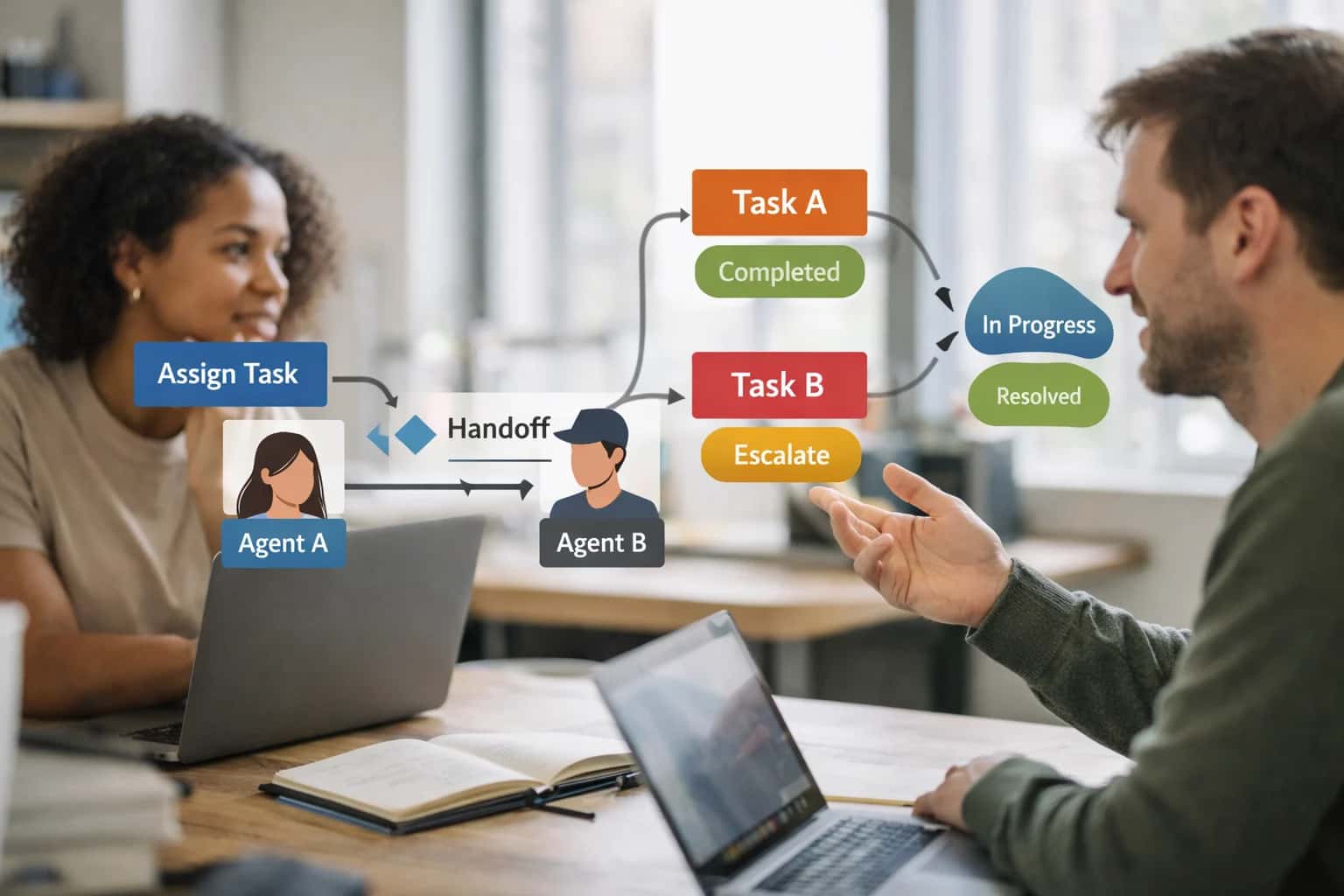
Engineer reviewing agent handoff workflow on laptop, task routing diagrams visible, technical office setup.
ARCHITECTURE BLUEPRINT

Where AI Fits into the Toast POS Stack

A practical guide to connecting AI agents and workflows to the core data and automation surfaces of the Toast platform.

Integrating AI into Toast means connecting to its REST APIs and webhook streams to read from and write to key operational surfaces. The primary integration points are:

  • Labor & Scheduling API: For ingesting sales forecasts and pushing optimized schedules.
  • Inventory API: To read current stock levels, waste logs, and supplier lists for predictive ordering.
  • Reporting & Analytics API: To access historical sales, product mix, and customer data for trend analysis and natural language querying.
  • Order & Menu API: To read real-time order flow for kitchen display system (KDS) optimization and dynamic upselling logic.
  • Customer & Loyalty API: To segment guest data and trigger personalized marketing actions.
  • Webhooks for Events: Subscribing to events like order.created, payment.settled, or inventory.low to trigger real-time AI agents.

A production implementation typically involves a middleware layer—often a cloud function or containerized service—that sits between your AI models and Toast. This layer handles authentication (OAuth 2.0), rate limiting, data transformation, and secure webhook ingestion. For example, an AI agent for predictive labor scheduling would:

  1. Poll the Reporting API each night for the latest sales and traffic data.
  2. Combine this with external data (weather, local events) in your AI model.
  3. Generate an optimized labor schedule.
  4. Push the schedule directly into Toast via the Labor API, ready for manager review. Similarly, an agent for real-time support could listen to a Slack channel, use a RAG system grounded in your Toast knowledge base and SOPs, and even execute corrective actions via the Toast API (e.g., voiding a transaction) after receiving manager approval via a quick-approval workflow.

Governance and rollout are critical. Start with a single, high-impact workflow like automated daily sales digests or inventory depletion alerts. Use Toast's sandbox environment for development and testing. Implement strict role-based access control (RBAC) in your AI layer to mirror Toast's permissions—a server support agent shouldn't have API access to financial reports. Always include a human-in-the-loop for writes (like schedule publishing or order modification) during initial pilots. Log all AI-driven API calls with a distinct audit trail for traceability. This phased, governed approach de-risks the integration while delivering quick operational wins, such as reducing manual schedule planning from hours to minutes or cutting food waste through smarter prep lists. For a deeper look at connecting these data pipelines, see our guide on Restaurant API and Data Pipeline Architecture.

ARCHITECTURAL BLUEPRINT

Toast Modules and Surfaces for AI Integration

Labor Management API

Integrate AI directly with Toast's Labor Management module to automate forecasting and scheduling. The API provides access to sales data, employee records, and posted schedules.

Key Integration Points:

  • Sales & Labor Data: Pull historical sales by hour, day, and server role to train forecasting models.
  • Employee Profiles: Access availability, roles, certifications, and wage rates for constraint-aware scheduling.
  • Schedule API: Programmatically post optimized schedules, manage shift swaps, and track actual hours worked.

AI Use Case Workflow:

  1. An AI model consumes forecasted covers (from reservations/events) and historical sales.
  2. It generates an optimal labor plan, balancing cost and service levels.
  3. The system pushes the final schedule via the Toast API, sending notifications to staff.

This integration reduces manual planning from hours to minutes and adapts to real-time demand shifts. For foundational data pipeline architecture, see /integrations/restaurant-point-of-sale-platforms/ai-integration-for-restaurant-api-and-data-pipeline-architecture.

PRACTICAL INTEGRATION PATTERNS

High-Value AI Use Cases for Toast

These cards detail specific workflows where AI can connect to Toast's APIs, webhooks, and data model to automate operations, enhance decision-making, and improve guest experiences without replacing your core POS.

01

Automated Labor Forecasting & Scheduling

AI models ingest historical sales, traffic, and event data from the Toast Sales API and Labor API to predict hourly demand. The system automatically generates and pushes optimized labor schedules back to Toast, adjusting for forecasted covers and sales per labor hour (SPLH) targets.

Hours -> Minutes
Schedule creation
02

Intelligent Inventory & Auto-Purchasing

Connects to the Toast Inventory API and vendor price lists. AI predicts depletion based on sales velocity, menu mix, and seasonality, then generates and submits purchase orders to preferred suppliers via email or integration. Flags potential waste and suggests recipe adjustments.

Batch -> Real-time
Replenishment
03

Menu Performance & Pricing Copilot

Analyzes item-level sales data, ingredient costs (via Inventory API), and aggregated customer sentiment to recommend menu changes. Provides data-driven suggestions for promoting high-margin items, retiring underperformers, and testing dynamic pricing for specials or peak times.

1 sprint
Insight cycle
04

Staff Support Agent for POS Queries

Deploys an AI chatbot (e.g., in Slack or Teams) that answers staff questions by querying Toast data. Agents can ground responses in your restaurant's specific procedures (e.g., 'How to split a check?', 'What's the modifier for gluten-free?'), reducing manager interruptions and training time.

Same day
Issue resolution
05

Predictive Prep List Automation

Uses AI models fed by the Toast Reporting API (historical sales), local weather feeds, and event calendars to generate automated prep lists and par levels. Integrates with back-of-house checklists or KDS to tell chefs exactly what and how much to prepare for the upcoming shift.

Hours -> Minutes
Daily planning
06

Personalized Loyalty & Marketing Triggers

Enhances the Toast Customer API with AI to segment guests, predict next-visit likelihood, and generate hyper-personalized offers. Automatically triggers SMS or email campaigns via Toast or a connected CRM based on individual purchase behavior and visit frequency.

Batch -> Real-time
Offer personalization
PRACTICAL IMPLEMENTATION BLUEPRINTS

Example AI-Powered Workflows for Toast

These are concrete, API-driven workflows that connect AI agents directly to the Toast POS ecosystem. Each example outlines the trigger, data flow, AI action, and system update to illustrate how production-ready integrations are built.

Trigger: A scheduled cron job runs every Sunday evening.

Context/Data Pulled: The AI agent calls the Toast Labor API to pull:

  • Historical sales data for the upcoming weekdays.
  • Previous year's sales for the same period (for seasonality).
  • Current employee profiles, roles, availability, and wage rates.
  • Local event data from a connected calendar API (e.g., sports games, concerts near the restaurant).
  • Forecasted weather data for the upcoming week.

Model/Agent Action: A forecasting model analyzes the data to predict 15-minute interval customer traffic and sales. An orchestration agent then:

  1. Calculates optimal labor needs per role (server, cook, host).
  2. Builds a compliant schedule, respecting break laws and employee preferences.
  3. Flags potential conflicts or overtime risks for manager review.

System Update/Next Step: The finalized schedule is formatted into a Toast API payload and POSTed to the /labor/schedules endpoint. The new schedule appears in the Toast Team Management app for employee viewing and shift confirmation.

Human Review Point: The manager receives a Slack summary of the proposed schedule and must approve it via a button before the API push is executed. The agent can adjust based on manual overrides.

BUILDING A RESILIENT, CONTROLLED AI LAYER FOR TOAST

Implementation Architecture: Data Flow and Guardrails

A production-ready AI integration for Toast connects to specific APIs, orchestrates data flows, and embeds governance to ensure reliable, secure operations.

A robust integration architecture connects AI agents to Toast's core operational surfaces via its REST API and Webhook systems. The primary data flows are:

  • Ingestion: Pulling historical data from the Labor, Sales, Inventory, and Customer API endpoints for model training and baseline analysis.
  • Real-time Triggers: Listening for webhook events like order.created, check.closed, or inventory.low to initiate AI workflows (e.g., dynamic labor alerts, predictive prep lists).
  • Action & Write-back: Using the API to push AI-generated outputs—such as an optimized schedule to the Labor API or a suggested menu special to the Menu API—often via a controlled, human-in-the-loop approval step.

Implementation follows a decoupled, event-driven pattern to avoid impacting POS performance. A typical setup includes:

  1. Event Router: Captures Toast webhooks and places them on a message queue (e.g., AWS SQS, Google Pub/Sub).
  2. Orchestration Layer: A service (using tools like n8n or a custom Node.js app) retrieves the event, enriches it with additional context from the Toast API, and routes it to the appropriate AI agent.
  3. Agent & Tool Layer: Specialized agents (e.g., a Labor Forecasting Agent, a Menu Intelligence Agent) process the request. They use RAG against your restaurant's specific operational guides and historical data (stored in a vector database like Pinecone) to ground responses.
  4. Guardrail & Approval Service: Before any write-back action is taken, critical outputs (e.g., schedule changes over 15%, new menu prices) are routed to a manager dashboard in Slack or a custom UI for review, with a full audit log.

Rollout and governance are critical for restaurant operations. Start with a read-only pilot, such as an AI copilot that answers manager questions about sales data, before progressing to low-risk write actions like automated waste logging. Establish role-based access controls (RBAC) so only authorized managers can approve AI-suggested schedule changes. Finally, implement continuous evaluation to monitor for model drift—ensuring your labor forecasts remain accurate as seasonal patterns shift—and maintain a clear rollback plan to disable specific AI workflows via feature flags if needed.

TOAST API INTEGRATION PATTERNS

Code and Payload Examples

Ingesting Real-Time Labor Events

Toast emits webhooks for key labor events, such as clock-ins, breaks, and shift ends. An AI agent can consume these events to monitor compliance, predict overtime, and trigger real-time manager alerts. The payload includes employee details, job codes, and timestamps, enabling immediate analysis against forecasted schedules.

Example Webhook Payload:

json
{
  "event_type": "labor.clock_in",
  "event_id": "evt_abc123",
  "created": "2024-05-15T11:30:00Z",
  "data": {
    "employee": {
      "id": "emp_789",
      "name": "Alex Chen",
      "position": "Line Cook"
    },
    "labor_entry": {
      "id": "le_456",
      "job_code": "KITCHEN",
      "clock_in_time": "2024-05-15T11:28:00Z",
      "expected_clock_out": "2024-05-15T19:30:00Z",
      "location_id": "loc_101"
    }
  }
}

An AI system can process this payload to check if the clock-in aligns with the forecasted demand for that job code and location, flagging early arrivals that may lead to unnecessary labor costs.

AI INTEGRATION FOR TOAST

Realistic Time Savings and Operational Impact

A practical comparison of manual processes versus AI-assisted workflows within the Toast POS ecosystem, based on typical integration patterns for labor, inventory, and customer operations.

Workflow / MetricBefore AI IntegrationAfter AI IntegrationImplementation Notes

Daily Labor Schedule Creation

Manager reviews 2+ hours of sales forecasts, events, and staff availability

AI generates a draft schedule in 15 minutes for manager review

Integrates with Toast Labor API; human manager approves final schedule

Inventory Depletion Alert & PO Draft

Manual spot checks and weekly inventory counts trigger reactive orders

AI predicts low stock 3-5 days out and drafts purchase orders

Connects to Toast Inventory API and supplier price lists via webhook

Menu Item Performance Review

Monthly spreadsheet analysis of sales mix and food cost

Weekly automated insights on top/underperforming items with margin analysis

Pulls from Toast Sales and Recipe Costing APIs; delivers via Slack digest

Customer Loyalty Offer Personalization

Broad, segment-based email blasts or static in-POS promotions

Dynamic, next-visit prediction triggers personalized offers at checkout

Leverages Toast Customer API and purchase history; requires offer API integration

Staff Support Query Triage

Manager interrupted for procedural questions (e.g., 'how to split a check?')

AI chatbot answers common queries using POS knowledge base, escalates complex issues

Deployed via Slack/Teams; uses RAG on Toast documentation and internal guides

End-of-Day Financial Review

GM spends 30-45 minutes reconciling sales reports and cash drops

AI copilot highlights anomalies and summarizes key metrics via natural language query

Reads from Toast Reporting API; provides summary via email or dashboard

Kitchen Order Sequencing (KDS)

Expediter manually prioritizes orders based on intuition and ticket times

AI suggests fire times and sequence based on item cook time and complexity

Intercepts POS-to-KDS webhooks; requires pilot testing in a single station

ARCHITECTING FOR PRODUCTION

Governance, Security, and Phased Rollout

A practical approach to deploying AI in your Toast environment with control, security, and measurable impact.

Production AI integrations for Toast require careful scoping of data access and API permissions. Start by identifying the specific Toast Data Objects your AI agents need: Labor, Sales, Menu Items, Inventory Counts, or Customer Profiles. Use Toast’s granular OAuth scopes to grant read-only or write access only to the necessary endpoints, never blanket admin rights. All AI interactions should be logged to a separate audit trail, correlating agent actions (e.g., 'adjusted forecasted labor hours') with the source API call, user context, and the specific Toast location ID for multi-unit governance.

Adopt a phased rollout, beginning with a single, high-value workflow in a pilot location. A common starting point is AI-Powered Labor Forecasting: ingest last week's sales and traffic data via the Labor API, let the AI generate a proposed schedule, and push it to Toast as a draft for manager review and manual publish. This 'human-in-the-loop' pattern builds trust before automating write-backs. Next, expand to Menu Intelligence, where an agent analyzes Sales Mix and Recipe Cost data to suggest menu changes, but requires an approval workflow in a tool like Slack or Microsoft Teams before any live menu updates are made via the Menu API.

For security, never store raw Toast data in external vector databases without a clear data residency and anonymization strategy. Instead, use the AI layer for real-time querying or cache only non-PII aggregates. Implement a kill switch—a simple dashboard toggle or webhook listener—to immediately deactivate any AI agent's write capabilities if unexpected behavior is detected in your Toast sandbox environment. Finally, measure success with operational metrics native to Toast, like reduction in manual schedule adjustment time or decrease in out-of-stock events, not just AI accuracy scores, to ensure the integration delivers tangible restaurant-level impact.

TOAST INTEGRATION

Frequently Asked Questions

Common technical and operational questions about embedding AI agents and workflows into the Toast POS ecosystem.

Secure integration is built through Toast's official APIs and webhooks, following a zero-trust, principle-of-least-access architecture.

Typical Implementation Pattern:

  1. Service Account & OAuth 2.0: Create a dedicated service account in the Toast Developer Portal with scoped permissions (e.g., ORDERS_READ, LABOR_WRITE).
  2. API Gateway & Proxy: Route all AI system calls through a secure API gateway. This layer handles authentication token management, rate limiting, and request logging.
  3. Data Isolation: Ingest only the necessary data objects (e.g., sales summaries, labor events) into a transient cache or vector store for the AI session. Persistent raw data is not stored in the AI system.
  4. Audit Trail: All API calls from the AI system are tagged with a unique session ID and logged for compliance, linking every AI action back to a specific trigger and user.

This ensures the AI operates as a controlled, auditable extension of your Toast environment.

Prasad Kumkar

About the author

Prasad Kumkar

CEO & MD, Inference Systems

Prasad Kumkar is the CEO & MD of Inference Systems and writes about AI systems architecture, LLM infrastructure, model serving, evaluation, and production deployment. Over 5+ years, he has worked across computer vision models, L5 autonomous vehicle systems, and LLM research, with a focus on taking complex AI ideas into real-world engineering systems.

His work and writing cover AI systems, large language models, AI agents, multimodal systems, autonomous systems, inference optimization, RAG, evaluation, and production AI engineering.




