Integrating AI with Clover means connecting to its Developer Dashboard APIs and webhook system to inject intelligence into three primary layers: transaction processing, inventory and menu management, and customer engagement. The core integration points are the Orders API for real-time sales data, the Items API for menu and inventory state, and the Customers API for loyalty and history. AI models consume this stream to power applications like automated fraud scoring on card-present transactions, dynamic prep list generation based on predicted sales, and personalized SMS offers triggered by a customer's visit frequency.

Integration
AI Integration for Clover
A technical implementation guide for embedding AI agents and workflows into the Clover POS ecosystem, covering API patterns, webhook ingestion, and custom app deployment for automated operations, fraud detection, and support.
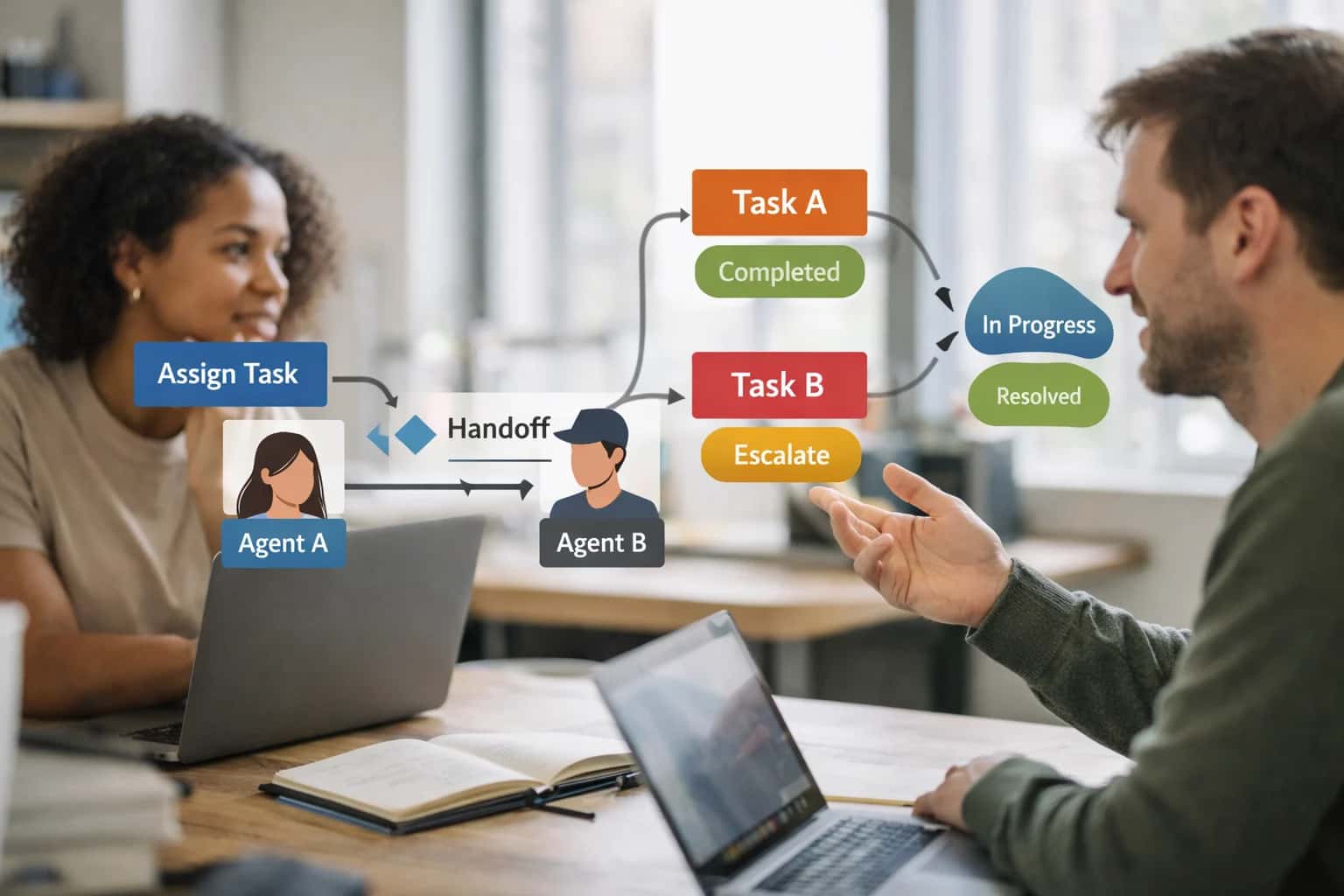
ARCHITECTURE BLUEPRINT
Where AI Fits into the Clover POS Stack
A practical guide to embedding AI agents and workflows into the Clover platform's data flows and automation surfaces.
Implementation follows a serverless or microservices pattern: Clover webhooks (e.g., ORDER_CREATED, INVENTORY_LEVEL_LOW) publish events to a secure queue. An AI agent service processes each event—for example, an ORDER_CREATED event triggers a model to check for anomalous modifiers or high-risk patterns, then uses the Clover API to flag the order in the dashboard or hold it for review. For inventory, a daily batch job via the Items/Variants endpoints can feed an AI model that predicts depletion and automatically creates purchase order suggestions in a connected system like Shopmonkey or a custom vendor portal.
Rollout requires careful scoping, starting with a single high-impact workflow like support automation. Deploy an AI chatbot for staff that uses the Clover Merchant API to answer questions like "how do I refund a mobile order?" or "what's our best-selling item today?" This grounds the AI in your specific data, builds trust, and validates the integration pattern. Governance is critical: all AI-driven actions via the API (e.g., auto-applying discounts, modifying orders) should be logged in an audit trail and, for high-stakes workflows, require a human-in-the-loop approval step configured in the Clover Developer Dashboard.
ARCHITECTURAL BLUEPRINT
Clover APIs and Surfaces for AI Integration
Real-Time Transaction Intelligence
The Orders API (GET /v3/merchants/{mId}/orders) and Payments API provide the primary stream of customer behavior and financial data. This surface is critical for AI models that require live context.
Key AI Integration Points:
- Real-Time Fraud Detection: Ingest webhooks for new payments (
PAYMENT_CAPTURED) to analyze transaction velocity, location, and amount anomalies against historical patterns. Flag suspicious activity for manual review before settlement. - Dynamic Upsell Agents: Use the current order's item list (
lineItems) to query an AI model for contextually relevant add-ons (e.g., "add garlic bread with that pasta") and push suggestions to the Clover device via the custom activity API. - Automated Reporting: Batch-process completed orders nightly to generate natural-language summaries of sales trends, top-performing items, and server performance, delivered via email or Slack.
Implementation Note: Use OAuth 2.0 for server-side integrations to maintain a secure, long-lived connection for polling and webhook verification.
IMPLEMENTATION PATTERNS
High-Value AI Use Cases for Clover
Practical AI integrations for the Clover platform, connecting to its Developer Dashboard, webhooks, and custom app ecosystem to automate workflows, enhance decision-making, and improve operational efficiency.
01
Automated Daily Sales & Labor Reporting
Build an AI agent that ingests Clover's Orders and Labor APIs at close-of-day. It generates a natural-language summary of sales vs. forecast, top-selling items, labor cost variance, and anomalies, then posts it to a manager's Slack channel or email. Eliminates manual report compilation.
Hours -> Minutes
Report generation
02
Real-Time Fraud & Anomaly Detection
Deploy a model that monitors the PAYMENT webhook stream for suspicious patterns: excessive voids, unusual discount applications, or out-of-sequence transactions. The system can flag high-risk events in a dashboard or automatically pause a terminal via the Devices API for investigation.
Batch -> Real-time
Risk monitoring
03
Intelligent Inventory Replenishment
Connect AI to Clover's Inventory API and supplier price lists. The system predicts depletion dates for items based on historical sales velocity and seasonality, then generates optimized purchase orders—suggesting substitutions for out-of-stock items—and pushes them to a vendor portal.
Same day
PO lead time
04
Customer Service Agent for Staff
Deploy a chatbot (Slack/Teams) that answers internal operational questions by querying Clover's knowledge base and live data. Staff can ask, 'How do I apply a comp?' or 'What's the modifier for gluten-free?' and get grounded, step-by-step answers, reducing manager interruptions.
1 sprint
Typical deployment
05
Personalized Loyalty & Offer Automation
Use the Customers API to analyze individual purchase history. An AI workflow segments customers and triggers personalized SMS/email offers via Clover's Marketing API (e.g., a discount on a frequently purchased item after a 30-day lapse) or prints a targeted coupon at the next checkout.
06
Smart Shift Scheduling & Compliance
Ingest forecasted sales, historical traffic, and employee availability. An AI agent generates an optimized labor schedule that meets demand while respecting break and overtime rules, then pushes it directly to Clover's Employee Schedules via API, with alerts for potential compliance issues.
Hours -> Minutes
Schedule creation
IMPLEMENTATION PATTERNS
Example AI Workflows for Clover
These concrete workflows demonstrate how to connect AI agents and automations to Clover's APIs and webhooks, moving from reactive reporting to proactive operations.
Trigger: A scheduled job runs 30 minutes after close each day.
Context Pulled: The AI agent calls the Clover Developer API to fetch:
- Today's sales totals by category and hour.
- Labor hours logged vs. scheduled via the
employeesandshiftsendpoints. - Historical averages for the same day-of-week from the past 8 weeks.
Agent Action: A lightweight model compares today's data against historical patterns, flagging anomalies such as:
- Labor cost percentage exceeding a dynamic threshold.
- A specific menu category underperforming despite high traffic.
- Unusually high void or discount rates.
System Update: The agent generates a concise, plain-English summary and posts it to a designated Slack channel for the management team. For critical anomalies (e.g., potential theft pattern), it can also create a high-priority ticket in the restaurant's task management system via a webhook.
Human Review Point: The manager reviews the alert. The system does not auto-correct schedules or void transactions without human approval.
CLOVER DEVELOPER DASHBOARD INTEGRATION
Implementation Architecture: Data Flow and System Design
A production-ready blueprint for connecting AI agents and workflows to the Clover platform via its Developer Dashboard, webhooks, and custom app deployment.
A robust AI integration for Clover is built on three core components: the Clover Developer Dashboard for app registration and OAuth, webhook subscriptions for real-time event ingestion, and a custom middleware layer that hosts your AI logic. The architecture begins by creating a 'Custom App' in the Developer Dashboard to obtain API credentials (APP_ID, APP_SECRET). This app is then installed on target Clover merchant accounts, granting scoped access to objects like Orders, Items, Employees, Payments, and Inventory Levels. Your middleware—deployed as a secure cloud service—uses these tokens to poll the Clover REST API for historical data and subscribes to webhooks for events like ORDER_CREATED, PAYMENT_SUCCEEDED, or INVENTORY_LEVEL_LOW. This event stream becomes the trigger for AI agents.
For an AI-powered fraud detection workflow, the data flow is: 1) A PAYMENT_SUCCEEDED webhook payload is sent to your endpoint. 2) Your middleware enriches this event by fetching the full Order and Customer details via the Clover API. 3) This enriched payload is sent to an AI model (e.g., via OpenAI) trained to flag anomalous patterns—unusual order size, time, or payment method. 4) If a high-risk score is returned, the middleware can execute a corrective action via the Clover API, such as placing a hold on the order in the Order object and creating a Note for the manager. All actions are logged with a correlation ID for a full audit trail. For reporting copilots, the flow reverses: a natural language query from a manager interface triggers your middleware to query the Clover Reporting API, transform the data, and use an LLM to generate a narrative summary (e.g., "Labor cost was 24% last Tuesday due to a scheduled event and two call-outs").
Rollout should follow a phased approach: start in a single-location Clover Sandbox environment to test webhook reliability and API rate limits. Use the Clover SDKs for mock data generation. For governance, implement role-based access control (RBAC) in your middleware to ensure only authorized systems can trigger AI actions on live merchant data. All prompts and model outputs should be versioned and logged for evaluation. A critical caveat: Clover's webhook delivery is best-effort; your architecture must be idempotent and include a reconciliation job that periodically polls for missed events. Deployment of the final custom app to the Clover App Market requires a rigorous security review, so plan for 4-6 weeks of lead time for public distribution.
CLOVER API INTEGRATION PATTERNS
Code and Payload Examples
Real-Time Event Processing
Clover webhooks push JSON payloads for events like ORDER_CREATED, PAYMENT_TENDERED, and INVENTORY_LEVEL_LOW. An AI service can ingest these to trigger immediate workflows.
Example Webhook Handler (Python Flask):
pythonfrom flask import Flask, request import requests app = Flask(__name__) @app.route('/clover/webhook', methods=['POST']) def handle_webhook(): payload = request.json event_type = payload.get('eventType') merchant_id = payload.get('merchantId') object_id = payload.get('objectId') # Route to specific AI workflows if event_type == 'ORDER_CREATED': # Call AI service for order analysis ai_response = requests.post( 'https://ai-service/inference/order-review', json={ 'order_id': object_id, 'merchant_id': merchant_id, 'intent': 'predict_high_risk' } ) # Log result or trigger action if ai_response.json().get('is_high_risk'): # Flag order in Clover via API pass return '', 200
This pattern enables real-time fraud scoring, inventory prediction, and automated support ticket creation based on live POS activity.
AI INTEGRATION FOR CLOVER
Realistic Time Savings and Operational Impact
This table outlines the practical, incremental improvements achievable by integrating AI agents and workflows with the Clover platform, based on common implementation patterns.
| Workflow / Metric | Before AI Integration | After AI Integration | Implementation Notes |
|---|---|---|---|
Daily Sales Report Generation | Manual export, spreadsheet analysis (30-45 min) | Automated synthesis & anomaly flagging (5 min) | AI agent queries Clover Reporting API, generates narrative summary |
Inventory Reorder Point Calculation | Weekly manual review of stock levels & sales | Dynamic, daily prediction with PO suggestions | Model ingests Clover item sales & inventory webhooks |
Customer Support Ticket Triage | Manager interruption for procedural questions | Staff chatbot answers 60% of common queries | Agent uses Clover Dev docs & custom app knowledge base |
Fraudulent Transaction Review | End-of-day batch review of flagged transactions | Real-time scoring & alerting for top 5% risk | AI analyzes Clover transaction stream, flags via webhook |
Menu Item Performance Analysis | Monthly review of sales mix & gross margin | Weekly insights on underperformers & opportunities | Cross-references Clover sales data with supplier cost API |
Labor Schedule Optimization | Manual creation based on last week's sales | Forecast-driven schedule with shift trade management | AI model uses Clover sales history & events calendar |
End-of-Month Financial Close | Manual reconciliation of discounts, voids, & tips | Automated variance detection & exception report | Agent validates Clover data against bank feeds, highlights discrepancies |
PRODUCTION DEPLOYMENT PATTERNS
Governance, Security, and Phased Rollout
A secure, controlled implementation strategy for integrating AI into your Clover environment.
A production AI integration with Clover must respect the platform's data model and security boundaries. This starts with scoping access in the Clover Developer Dashboard, where you define an OAuth app with specific permissions (ORDERS_READ, INVENTORY_READ_WRITE, EMPLOYEES_READ). AI agents and workflows should interact with Clover data via these scoped API tokens, never storing raw PII or payment data. For real-time triggers, set up webhook endpoints for events like ORDER_CREATED or INVENTORY_LOW; these endpoints should validate payload signatures and queue events for asynchronous AI processing to avoid blocking POS operations.
A phased rollout is critical for operational stability. Start with a read-only analysis phase, where AI models consume historical order and inventory data via the Clover API to build forecasts or generate insights, with all outputs delivered to a separate dashboard. Next, implement assistive workflows, such as an AI agent that suggests inventory purchase orders but requires manager approval in the Clover app before creation. Finally, deploy closed-loop automations for low-risk, high-volume tasks—like auto-categorizing new inventory items or sending personalized SMS birthday offers—where the AI acts via API but all actions are logged to a dedicated audit table in your integration layer.
Governance requires embedding checks at each step. Implement role-based access control (RBAC) so only authorized managers can enable AI features for specific menu categories or locations. Use prompt templates and grounding to ensure all generated content (e.g., customer messages, menu descriptions) aligns with brand voice and compliance rules. Establish a human-in-the-loop review queue for any AI-generated action exceeding a confidence threshold or involving sensitive changes, such as modifying item prices. All API calls, webhook receipts, and AI decisions should be written to an immutable audit log, traceable back to the specific Clover merchant ID, employee, and transaction for full accountability.
Enabling Efficiency, Speed & Accuracy
Intelligent Analysis, Decision & Execution
We build AI systems for teams that need search across company data, workflow automation across tools, or AI features inside products and internal software.
Talk to Us
Search across company data
Give teams answers from docs, tickets, runbooks, and product data with sources and permissions.
Useful when people spend too long searching or get different answers from different systems.
Enterprise searchRAGPermissions
Read more
Automate internal workflows
Use AI to route work, draft outputs, trigger actions, and keep approvals and logs in place.
Useful when repetitive work moves across multiple tools and teams.
AI agentsWorkflow automationGovernance
Read more
Add AI to products and internal tools
Build assistants, guided actions, or decision support into the software your team or customers already use.
Useful when AI needs to be part of the product, not a separate tool.
AI integrationDecision supportModel routing
Read moreCLOVER AI INTEGRATION
Frequently Asked Questions (FAQ)
Common technical and operational questions for teams planning to build AI-powered applications on the Clover platform.
Access is managed through the Clover Developer Dashboard using OAuth 2.0. The standard pattern is:
- Create an App: Register your application in the dashboard to get a
client_idandclient_secret. - Merchant Authorization: Merchants install your app via the Clover App Market or a direct OAuth flow, granting specific data permissions (scopes) like
READ_ORDERSorWRITE_INVENTORY. - API Access: Your backend uses the merchant's granted OAuth token to call Clover's REST APIs. For AI workloads, you typically:
- Batch Ingest: Pull historical data (e.g., last 2 years of orders) during initial sync.
- Stream Updates: Subscribe to webhooks for real-time events like
ORDER_CREATEDorPAYMENT_UPDATEDto keep your AI context fresh.
Security Note: Never store raw OAuth tokens or client secrets in front-end code. All API calls from your AI service should originate from a secure backend. Consider a data pipeline that anonymizes or tokenizes sensitive fields like customer names before processing in LLM contexts.

About the author
Prasad Kumkar
CEO & MD, Inference Systems
Prasad Kumkar is the CEO & MD of Inference Systems and writes about AI systems architecture, LLM infrastructure, model serving, evaluation, and production deployment. Over 5+ years, he has worked across computer vision models, L5 autonomous vehicle systems, and LLM research, with a focus on taking complex AI ideas into real-world engineering systems.
His work and writing cover AI systems, large language models, AI agents, multimodal systems, autonomous systems, inference optimization, RAG, evaluation, and production AI engineering.
LinkedIn
Limited slotsGet a Free AI Consultation
Partnered with leading AI, data, and software stack.





How We Work
Custom AI workflows for your Business
One-fit-all AI don't work for modern businesses. At Inferensys, we aim to understand your business & custom requirements; which we use to define most efficient agentic workflows, the data, and the tools for your business.
01
Review the use case
We understand the task, the users, and where AI can actually help.
Read more02
Pick the right approach
We define what needs search, automation, or product integration.
Read more03
Build the first useful version
We implement the part that proves the value first.
Read more04
Improve from there
We add the checks and visibility needed to keep it useful.
Read moreThe first call is a practical review of your use case and the right next step.
Talk to Us