AI integrates into restaurant waste workflows by connecting to two primary data sources: your Point of Sale (POS) waste-tracking module (like those in Toast, Square for Restaurants, or Clover) and IoT sensors on bins, scales, or prep stations. The AI agent acts as a central interpreter, ingesting discrete waste entries (e.g., waste_reason='spoilage', item_id=103, quantity=2.5 lbs) from the POS API and continuous weight/volume data from sensor webhooks. It uses this combined stream to automatically categorize waste against your configured reasons (spoilage, over-production, trim waste), assign accurate food cost using live ingredient prices from your inventory system, and flag anomalies—like a sudden spike in 'over-production' waste for a specific menu item during off-peak hours.

Integration
AI for Restaurant Waste Reduction and Compliance
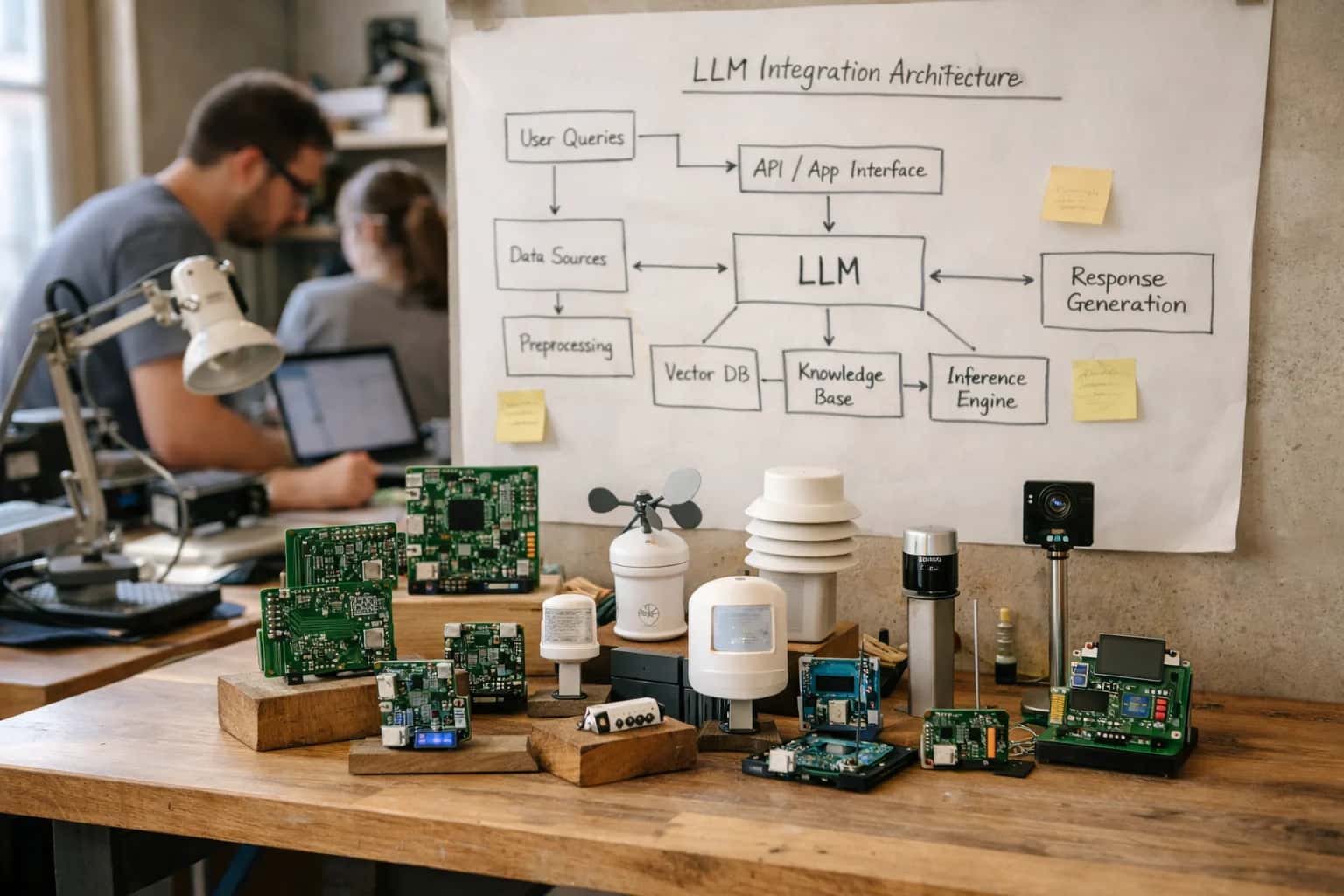
Where AI Fits into Restaurant Waste and Compliance Workflows
A practical blueprint for connecting AI to your POS and IoT systems to automate waste tracking, cost assignment, and compliance reporting.
For corrective action and compliance, the AI generates two primary outputs. First, it pushes corrective recipe suggestions back into kitchen management systems, such as adjusting prep pars or highlighting frequently wasted ingredients for recipe review. Second, it automates compliance report generation. By structuring all waste data with timestamps, categories, and costs, the AI can produce pre-formatted reports for health inspections or internal audits, answering questions like 'show all protein waste for the last 30 days, categorized by reason.' This is typically deployed as a nightly batch job that emails a PDF digest to the GM and kitchen manager, with critical anomalies triggering real-time Slack alerts.
Rollout should start with a pilot on a single high-waste category (e.g., produce trim). Governance is critical: the AI's waste categorizations should be logged in an audit trail, with a simple override mechanism in the POS for staff to correct misclassifications. This creates a feedback loop that improves the model. The final architecture is a lightweight middleware service that sits between your POS, IoT sensors, and inventory system, requiring read/write API permissions but not replacing core POS functions. For a deeper technical dive on building these data pipelines, see our guide on Restaurant API and Data Pipeline Architecture.
Integration Surfaces: Where AI Connects to Your POS and Sensors
Core Data Capture Points
AI integration begins with the waste-tracking modules native to platforms like Toast Waste Management, Square for Restaurants Inventory, and Clover's Item Waste features. These modules are the system of record for manual waste entries, typically capturing:
- Item/Ingredient: The SKU or menu item being discarded.
- Quantity & Unit: Amount wasted (e.g., lbs, oz, count).
- Reason Code: Pre-defined categories like Spoilage, Over-Prep, Customer Return, or Expired.
- Cost: Often auto-calculated from inventory COGS.
AI connects here to:
- Automate Categorization: Use computer vision on waste bin images (from integrated cameras) or natural language processing on staff notes to auto-assign accurate reason codes, replacing error-prone manual dropdowns.
- Predictive Flagging: Analyze waste patterns against sales forecasts to flag likely over-prep before it happens, pushing alerts to kitchen displays.
- Cost Attribution: Enrich waste entries by automatically pulling real-time ingredient cost from integrated supplier invoices, ensuring accurate loss reporting.
High-Value Use Cases for AI-Powered Waste Management
Practical AI integrations that connect to your POS waste-tracking modules and IoT sensors to automate categorization, assign cost, suggest corrective actions, and streamline compliance reporting.
Automated Waste Categorization & Costing
AI agents ingest waste log entries from your POS (Toast, Square) and images from kitchen cameras or connected scales. They automatically categorize waste (spoilage, prep trim, overproduction, customer plate) and assign a direct cost using current menu item and ingredient prices from the POS database. This turns manual guesswork into auditable, itemized waste reports.
Predictive Prep List & Par Level Adjustments
AI models analyze historical POS sales data, current waste patterns, and external factors (weather, local events) to generate dynamic prep lists. The system suggests reduced par levels for items with high spoilage rates and increased prep for items with consistent sales and low waste, pushing these adjustments directly into the kitchen management system or prep checklist apps.
Recipe Optimization & Substitution Guidance
When waste logs show consistent over-trimming or spoilage of a specific ingredient, the AI cross-references recipe specs and supplier catalogs. It can suggest minor recipe adjustments to utilize trim or recommend lower-waste, cost-equivalent substitute ingredients, presenting these insights to the chef via a connected dashboard or kitchen display.
Compliance Report Automation for Health Inspections
AI aggregates categorized waste data, temperature logs (from integrated IoT sensors), and cleaning schedules. It automatically generates pre-filled compliance reports required for health inspections, highlighting areas of risk (e.g., recurring spoilage in a specific cooler) and providing an audit trail. Reports are formatted for direct submission or manager review.
Vendor Performance & Order Accuracy Analysis
By linking waste data (e.g., spoilage upon delivery) to specific purchase orders and vendors in the POS, AI can analyze vendor performance. It flags suppliers with consistently short shelf-life produce or order inaccuracies, providing data-backed insights for manager negotiations or to trigger automated reorder logic with alternative vendors.
Staff Training & Behavioral Nudges
AI identifies waste patterns correlated with specific shifts, menu items, or preparation stations. It can trigger targeted training alerts (e.g., a short video on proper produce storage sent to the morning prep crew) or display real-time, gentle nudges on kitchen displays ("Remember to date the soup") to reinforce best practices and reduce preventable waste.
Example AI Automation Workflows
These workflows demonstrate how to connect AI agents to your POS waste logs and IoT sensors. Each flow is triggered by a specific event, uses contextual data, and results in a system update or corrective action, turning reactive waste tracking into a predictive, cost-saving operation.
Trigger: A staff member logs a waste event in the POS (e.g., Toast Waste Log or Clover Inventory Count).
Context Pulled: The AI agent receives the waste entry and immediately queries:
- The specific menu item or ingredient ID from the POS.
- Current supplier cost per unit from the integrated inventory module.
- The reason code selected by the staff (e.g.,
spoilage,over-portion,customer return).
Agent Action: A small, fast model classifies the waste into a granular category (e.g., prep_error, spec_waste, theft) beyond the basic staff code, using historical patterns. It calculates the exact financial impact using real-time cost data.
System Update: The enriched waste record is written back to a dedicated field in the POS database or a connected analytics platform. The total cost is automatically deducted from the theoretical inventory and added to a real-time Waste Dashboard.
Human Review Point: The system flags any waste event costing over a configurable threshold (e.g., $50) for manager review in a daily digest, linking directly to the POS record.
Implementation Architecture: Data Flow and System Design
A production-ready AI system for waste reduction integrates directly with your POS and IoT hardware to create a closed-loop feedback system for kitchen operations.
The architecture is built on three primary data sources: 1) POS waste-tracking modules (like Toast Waste Tracking or Square Inventory) that log item-level waste with reason codes, 2) IoT scales and smart bins that provide real-time weight data, and 3) supplier invoices and recipe costing data. An integration layer, typically using the POS platform's REST API (e.g., POST /v1/waste/entries) and MQTT for sensor data, streams this information into a central data store. The AI model processes this combined dataset to perform core functions: automatically categorizing waste (e.g., spoilage, over-portioning, prep error), assigning precise food cost impact using current ingredient prices, and identifying the root-cause station or shift.
High-value workflows are triggered by this analysis. For instance, when the system detects a consistent spike in over-portioning waste for a specific menu item, it can automatically generate and push a corrective prep card to the kitchen display system (KDS) or manager tablet, reminding staff of the proper portion size. For compliance, the AI aggregates waste data by category and maps it to health code requirements (e.g., proper disposal logs for raw proteins), auto-generating inspection-ready reports that can be scheduled for delivery to a platform like Compli or printed directly from the POS back office. The impact is operational: reducing manual waste log audits from hours to minutes, cutting food cost variance by providing actionable, station-level insights, and turning compliance reporting from a weekly scramble into an automated, audit-trailed process.
Rollout follows a phased approach. Phase 1 establishes the data pipeline from the POS waste log and one pilot station with a smart scale. Phase 2 layers in recipe costing data and deploys the first AI model for categorization and reporting. Governance is critical: waste reason codes must be standardized across locations, and a human-in-the-loop review step is initially required for AI-generated corrective actions before they are auto-pushed to the kitchen. This ensures manager buy-in and allows the model to learn from corrections. The system's credibility stems from its grounding in the restaurant's own operational data—it doesn't invent metrics but illuminates patterns already present in the POS and sensor streams.
Code and Payload Examples
Ingesting Waste Events from the POS
When a waste entry is logged in Toast, Square, or Clover, a webhook is sent to your AI service. This handler validates the payload, enriches it with item cost data from your inventory API, and queues it for analysis.
pythonimport json from datetime import datetime # Example webhook payload from a POS waste log module example_payload = { "event_type": "waste_logged", "restaurant_id": "RST_78910", "timestamp": "2024-05-15T14:30:00Z", "waste_data": { "item_id": "ING_12345", "item_name": "Heirloom Tomatoes", "quantity": 2.5, "unit": "lbs", "reason_code": "SPOILAGE", "logged_by": "user_456", "station": "Prep Line 1" } } def handle_waste_webhook(payload: dict): """Process incoming waste event from POS.""" # 1. Validate payload structure required_fields = ["restaurant_id", "timestamp", "waste_data"] if not all(field in payload for field in required_fields): raise ValueError("Invalid webhook payload structure") # 2. Enrich with current cost from inventory system item_cost = get_item_cost(payload["restaurant_id"], payload["waste_data"]["item_id"]) payload["waste_data"]["unit_cost"] = item_cost payload["waste_data"]["total_cost"] = item_cost * payload["waste_data"]["quantity"] # 3. Push to analysis queue for AI categorization publish_to_analysis_queue(payload) return {"status": "queued", "item": payload["waste_data"]["item_name"]}
The enriched event is now ready for AI-powered categorization and root cause analysis.
Realistic Time Savings and Operational Impact
A comparison of manual waste management processes versus an AI-integrated system connected to your POS and IoT sensors, showing realistic efficiency gains and operational improvements.
| Workflow / Task | Manual Process (Before AI) | AI-Assisted Process (After AI) | Key Impact & Notes |
|---|---|---|---|
Waste Log Entry & Categorization | 15-20 minutes per shift (manual tally sheets) | Real-time, automated via scale sensors & image recognition | Eliminates manual data entry errors; captures 100% of waste events. |
Cost Assignment & Root-Cause Analysis | Next-day review by manager (1-2 hours weekly) | Immediate cost attribution & cause tagging (e.g., 'over-preparation', 'spoilage') | Shifts analysis from reactive to proactive; identifies waste patterns daily. |
Compliance Report Generation for Health Dept. | 4-6 hours monthly compiling logs and manifests | Automated report draft in <30 minutes, ready for manager review | Ensures audit readiness; reduces administrative burden before inspections. |
Corrective Recipe & Prep List Suggestions | Ad-hoc, based on chef's intuition and weekly review | AI-generated suggestions at POS (e.g., 'adjust prep yield by 10%') | Data-driven kitchen guidance; integrates waste data directly into prep workflows. |
Supplier & Order Reconciliation | Manual cross-check of invoices against waste logs (2-3 hours weekly) | Automated variance alerts when waste spikes align with recent deliveries | Flags potential quality issues with suppliers faster; informs purchasing decisions. |
Team Communication & Training Alerts | Weekly team meeting highlights | Real-time alerts to kitchen display system (KDS) for immediate corrective action | Closes the feedback loop from data to action within the same shift. |
Waste Trend Forecasting | Seasonal guesswork based on past experience | Weekly predictive insights on waste drivers (e.g., 'expected 15% increase in produce waste') | Enables proactive menu and inventory adjustments to preempt waste. |
Governance, Security, and Phased Rollout
A practical guide to deploying AI for waste reduction with the right controls, data security, and incremental rollout strategy.
A production AI integration for waste reduction must operate within the POS platform's existing security model. This means AI agents and workflows should authenticate via secure service accounts with scoped API permissions (e.g., read-only access to inventory items, waste logs, and sales data). All data exchanges between your POS (Toast, Square) and the AI layer should be encrypted in transit. For IoT scale integrations, data ingestion should use a secure, queued pipeline to handle intermittent connectivity without data loss, ensuring every waste event from a connected scale is captured and attributed to the correct inventory SKU in your system.
Governance is critical for compliance reporting. Implement an audit trail that logs every AI-generated suggestion—like a recipe adjustment to use excess prep—and its subsequent manual approval or override by kitchen staff within your POS or companion app. This creates a defensible record for health inspectors, showing reasoned decision-making. Furthermore, establish a human-in-the-loop review for any AI-driven corrective action that impacts food safety, such as suggesting a hold time extension. These approvals can be routed via a simple mobile task to a manager, with the decision and timestamp written back to a custom object in your POS for full traceability.
Roll out in phases to manage risk and build trust. Phase 1: Observation & Reporting. Connect AI to POS waste logs and scale data to provide daily automated waste categorization and cost reports, with no operational changes. Phase 2: Assisted Workflows. Introduce AI-generated prep list suggestions and low-risk corrective recipes, presented as recommendations for manager review within existing kitchen checklists. Phase 3: Automated Compliance. After validating accuracy, activate automated generation of key compliance report sections (e.g., temperature logs linked to waste events) for health inspection prep. Each phase should be piloted in a single location or for a specific waste category (e.g., produce) before scaling. This measured approach ensures the integration delivers value without disrupting critical kitchen operations.
Enabling Efficiency, Speed & Accuracy
Intelligent Analysis, Decision & Execution
We build AI systems for teams that need search across company data, workflow automation across tools, or AI features inside products and internal software.
Talk to Us
Search across company data
Give teams answers from docs, tickets, runbooks, and product data with sources and permissions.
Useful when people spend too long searching or get different answers from different systems.

Automate internal workflows
Use AI to route work, draft outputs, trigger actions, and keep approvals and logs in place.
Useful when repetitive work moves across multiple tools and teams.

Add AI to products and internal tools
Build assistants, guided actions, or decision support into the software your team or customers already use.
Useful when AI needs to be part of the product, not a separate tool.
Frequently Asked Questions
Practical questions for restaurant operators and technical teams planning AI integrations for waste tracking and compliance.
The integration is built on a secure data pipeline that ingests and unifies data from multiple sources:
- POS Waste Logs: Via the platform's API (e.g., Toast Waste Module API, Square Inventory API), we pull real-time waste entries, including item name, quantity, reason code, and employee ID.
- IoT Scale/Sensor Data: We connect to IoT devices (e.g., smart scales, bin sensors) via their cloud APIs or a local gateway, streaming weight and fill-level data.
- Data Unification: A middleware service matches timestamps and location data (e.g.,
prep_station_scale_1) to POS waste entries, creating enriched waste events. - AI Processing: These enriched events are sent to an AI service that categorizes waste (e.g., spoilage, over-production, trim), assigns a cost using current ingredient prices from your inventory system, and flags potential compliance issues (e.g., improper temp log for spoiled item).
Example Payload to AI Service:
json{ "event_id": "waste_20240415_093012", "pos_item_name": "Heirloom Tomatoes, sliced", "pos_quantity": "2 lbs", "pos_reason": "Spoilage", "scale_weight_kg": 0.95, "station": "Cold Prep 1", "timestamp": "2024-04-15T09:30:12Z", "employee_id": "EMP_2045" }
The AI returns structured data for your reporting dashboard and can trigger corrective workflows.

About the author
Prasad Kumkar
CEO & MD, Inference Systems
Prasad Kumkar is the CEO & MD of Inference Systems and writes about AI systems architecture, LLM infrastructure, model serving, evaluation, and production deployment. Over 5+ years, he has worked across computer vision models, L5 autonomous vehicle systems, and LLM research, with a focus on taking complex AI ideas into real-world engineering systems.
His work and writing cover AI systems, large language models, AI agents, multimodal systems, autonomous systems, inference optimization, RAG, evaluation, and production AI engineering.
Partnered with leading AI, data, and software stack.





How We Work
Custom AI workflows for your Business
One-fit-all AI don't work for modern businesses. At Inferensys, we aim to understand your business & custom requirements; which we use to define most efficient agentic workflows, the data, and the tools for your business.
01
Review the use case
We understand the task, the users, and where AI can actually help.
Read more02
Pick the right approach
We define what needs search, automation, or product integration.
Read more03
Build the first useful version
We implement the part that proves the value first.
Read more04
Improve from there
We add the checks and visibility needed to keep it useful.
Read moreThe first call is a practical review of your use case and the right next step.
Talk to Us