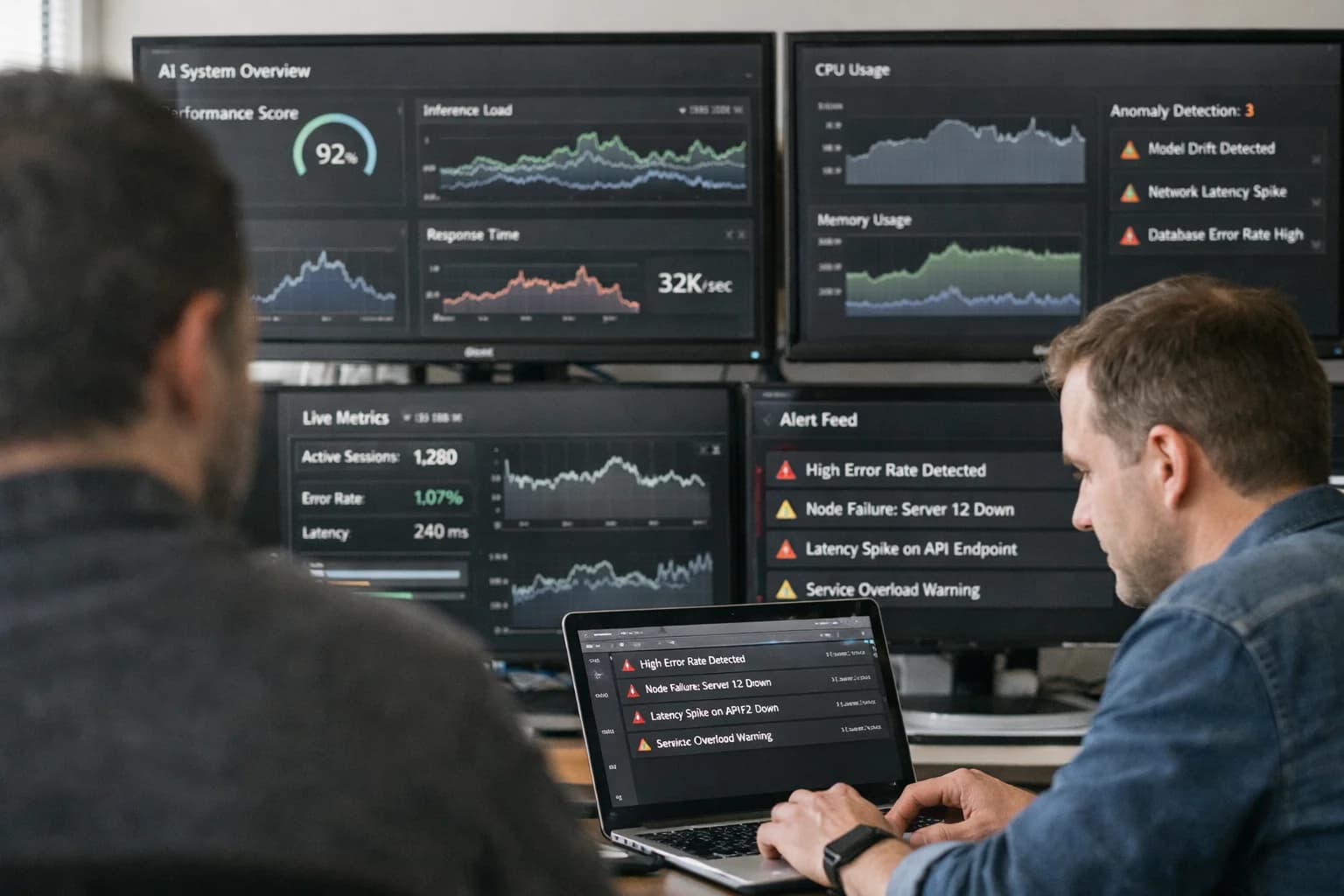
A technical blueprint for connecting AI to Meltwater's media monitoring and analytics APIs to automate mention analysis, sentiment scoring, and executive briefing generation, reducing manual review from hours to minutes.
Where AI Fits into Meltwater's Media Intelligence Stack
A technical guide to connecting AI models directly to Meltwater's APIs and data streams to automate core PR workflows.
AI integration for Meltwater connects at three primary layers: the Data Ingestion API for real-time mention streams, the Analytics and Reporting API for aggregated insights, and the Media Contacts & CRM module for outreach workflows. This allows AI agents to act on raw media data—such as news articles, social posts, and broadcast transcripts—before it's fully processed by Meltwater's native dashboards, enabling same-minute alerting and automated response workflows. Key data objects include Mentions, Alerts, Dashboards, Media Lists, and Coverage Reports, which serve as the triggers and surfaces for AI-powered actions.
Implementation typically involves setting up a middleware service that subscribes to Meltwater webhooks for new mentions. This service uses an orchestration layer (like an AI agent platform) to route data: high-volume mentions are summarized and scored for sentiment using an LLM; alerts matching a crisis keyword pattern trigger a predefined workflow to assemble a response team and draft a statement; and daily coverage is automatically analyzed to generate an executive briefing. For example, an AI agent can monitor the Mentions stream, use a RAG system over your past coverage and messaging guidelines to draft a social media response, and then post it via Meltwater's publishing capabilities or a connected social platform after human approval.
Rollout should start with a single, high-value workflow—such as automated executive briefing generation from the daily Dashboard—to validate the integration pattern and governance controls. Critical considerations include implementing RBAC to ensure AI-generated drafts are approved by the correct comms lead, maintaining audit logs of all AI actions on Meltwater data for compliance, and setting up human-in-the-loop gates for any external communications. By treating Meltwater as the system-of-record for media intelligence and AI as the automation layer on top, teams can shift from manual monitoring and reporting to proactive reputation management and insight generation.
ARCHITECTURAL BLUEPRINT
Key Meltwater Surfaces for AI Integration
The Core Data Feed for AI Analysis
The Mentions & Alerts API (/v4/mentions) is the primary surface for real-time AI integration. This stream of media coverage—articles, broadcasts, social posts—provides the raw material for automated analysis.
Key AI Integration Points:
Real-time Ingestion: Webhook payloads from this API can trigger immediate AI processing for sentiment, entity extraction, and topic classification as mentions are captured.
Batch Enrichment: Historical mention data can be pulled and enriched with AI-generated scores (e.g., nuanced sentiment, relevance to specific product lines) not available in Meltwater's native analytics.
Alert Refinement: AI models can analyze incoming alert volumes to suppress noise (irrelevant mentions) and escalate truly critical coverage, reducing alert fatigue for PR teams.
Typical Workflow: An AI agent listens to the webhook, processes the mention text through a custom classification model, and posts enriched metadata back to the mention via the API or to a separate analytics dashboard.
PR AND MEDIA MONITORING AUTOMATION
High-Value AI Use Cases for Meltwater
Connect AI directly to Meltwater's APIs to automate manual analysis, generate real-time insights, and scale your communications team's impact. These are practical, production-ready integration patterns.
01
Automated Mention Triage & Sentiment Scoring
Route incoming media mentions through an AI layer to classify sentiment (positive/negative/neutral), detect urgency, and tag by topic using your custom taxonomy. Automatically escalate crisis signals and route relevant clips to stakeholder teams via Slack or email.
Batch -> Real-time
Analysis speed
02
Executive Briefing Generation
Automatically synthesize daily or weekly coverage into narrative-driven briefs for leadership. AI pulls key quotes, calculates share of voice vs. competitors, highlights trending themes, and summarizes impact—delivered to email or a live dashboard.
Hours -> Minutes
Report creation
03
Crisis Detection & Alert Orchestration
Deploy AI agents that monitor Meltwater streams for spikes in negative volume, specific high-risk keywords, or emerging narrative shifts. Trigger automated workflows: assemble response teams via PagerDuty, draft holding statements, and update a central incident log.
Same day
Response readiness
04
Competitive Intelligence Dashboards
Continuously analyze competitor mentions to track campaign launches, spokesperson messaging, media sentiment, and share of voice. AI generates trend alerts and visualizes comparative performance, feeding directly into tools like Tableau or Power BI.
Real-time
Market tracking
05
Multilingual Coverage Analysis
Process global media coverage in its native language. AI provides accurate translation, cultural nuance-aware sentiment scoring, and entity extraction for unified reporting across regions, eliminating the need for separate market-level tools.
1 sprint
Global rollout
06
Influencer & Journalist Profile Enrichment
Augment Meltwater's media database by using AI to analyze recent articles and social posts, extracting beat expertise, tone, and topical focus. Automatically score relevance for your brand and suggest personalized pitch angles for outreach teams.
Hours -> Minutes
Profile research
PR AUTOMATION BLUEPRINTS
Example AI-Powered Workflows for Meltwater
These concrete workflows illustrate how AI agents can be integrated with Meltwater's APIs and data to automate high-volume, manual tasks, turning monitoring data into immediate action.
Trigger: A new mention is ingested via Meltwater's Streaming API or webhook.
Context Pulled: The agent retrieves the full article/social post text, historical sentiment for the brand/topic, and pre-defined crisis keywords (e.g., "recall," "lawsuit," "outage").
AI Action: A classification model (e.g., fine-tuned for severity) analyzes the content for crisis signals. A summarization model generates a 3-bullet summary highlighting the core allegation, source credibility, and reach estimate.
System Update: If crisis probability exceeds a threshold (e.g., 85%), the agent:
Creates a high-priority alert in the team's incident management tool (e.g., Jira, ServiceNow) via API.
Posts the summary and link to a designated crisis channel in Slack/MS Teams.
Tags the mention in Meltwater with CRISIS_FLAGGED and initiates a data pull for the last 24 hours on the topic for context.
Human Review Point: The alert is automatically routed to the on-call communications lead for immediate assessment and response initiation.
A PRODUCTION-READY BLUEPRINT
Implementation Architecture: Data Flow and System Design
A practical technical overview of how AI models connect to Meltwater's APIs and data streams to automate media intelligence workflows.
A production integration for Meltwater typically follows a middleware-first architecture, where an external AI service layer sits between Meltwater's APIs and your internal systems. The core data flow begins with webhook subscriptions to Meltwater's Alerting API for real-time mention delivery or scheduled batch pulls from its Mentions API and Analytics API. Incoming JSON payloads containing article metadata, full text, and engagement metrics are routed to a processing queue. Here, AI models perform tasks like sentiment scoring (beyond basic positive/negative to identify urgency or controversy), entity extraction (for people, products, competitors), and topic clustering to group related coverage. The enriched data is then written back to a dedicated vector database (e.g., Pinecone, Weaviate) for semantic search and to your data warehouse, while key insights trigger actions in downstream systems like Slack, Salesforce, or a custom executive dashboard.
Critical design considerations include idempotent processing to handle duplicate alerts, fallback logic for API rate limits, and configurable routing rules based on mention volume, source tier, or sentiment. For example, a high-volume, low-sentiment news aggregator mention might only receive basic classification, while a low-volume mention in a tier-1 publication with negative sentiment would trigger a full analysis pipeline and a high-priority alert. The system should also maintain an audit log linking original Meltwater mention IDs to all AI-generated annotations and subsequent actions, which is essential for governance and measuring analysis accuracy over time.
Rollout is best done in phases: start with batch historical analysis on a month of past coverage to calibrate models and establish baselines, then move to real-time processing for a single high-value alert topic (e.g., executive names or product launches). Finally, expand to full monitoring streams. Governance is managed through a human-in-the-loop review interface where PR managers can correct AI classifications, feeding those corrections back as fine-tuning data. This architecture ensures the integration scales, remains accountable, and delivers the promised shift from manual clip review to automated insight generation.
AI INTEGRATION FOR MELTWATER
Code and Payload Examples
Automating Sentiment and Entity Extraction
Integrate AI directly into Meltwater's mention ingestion pipeline to enrich raw media clips with structured intelligence. Use webhooks from the Mentions API to trigger real-time processing, appending sentiment scores, key entities (people, brands, products), and custom topic tags to each mention record.
This enables automated alert filtering, dashboard segmentation, and trend analysis without manual review. A typical implementation involves a lightweight service that calls an LLM endpoint, parses the response, and posts the enriched data back to a custom field via the Meltwater API.
python
# Example: Enrich a mention payload from Meltwater webhook
import requests
mention_data = {
"id": "mention_123",
"title": "New Acme Corp product receives mixed reviews",
"content": "The latest launch shows promise but faces supply chain critiques...",
"url": "https://example.com/article",
"published_at": "2024-01-15T10:30:00Z"
}
# Call enrichment service (e.g., OpenAI, Anthropic, or custom model)
enrichment_payload = {
"text": mention_data["content"],
"tasks": ["sentiment", "entities", "topics"]
}
response = requests.post("https://your-ai-service/enrich", json=enrichment_payload)
enriched = response.json()
# Post back to Meltwater custom fields
meltwater_update = {
"custom_fields": {
"ai_sentiment": enriched["sentiment"],
"ai_entities": ", ".join(enriched["entities"]),
"ai_topics": enriched["topics"]
}
}
requests.patch(f"https://api.meltwater.com/v1/mentions/{mention_data['id']}", json=meltwater_update, headers={"Authorization": "Bearer YOUR_TOKEN"})
AI INTEGRATION FOR MEDIA MONITORING
Realistic Time Savings and Operational Impact
How AI integration transforms manual, time-consuming PR workflows into assisted, high-speed operations. Metrics are based on typical Meltwater usage patterns before and after adding AI to the platform's APIs and data streams.
Workflow / Metric
Before AI Integration
After AI Integration
Implementation Notes
Daily Mention Review & Triage
2–3 hours of manual scanning
15–30 minutes of assisted prioritization
AI pre-filters noise, scores sentiment, and surfaces critical alerts for human review.
Executive Briefing Generation
Half-day manual compilation
On-demand, automated draft in <10 minutes
AI synthesizes top stories, sentiment trends, and key quotes; comms lead edits final version.
Sentiment Analysis & Tagging
Sample-based manual scoring
Real-time, comprehensive scoring for 100% of coverage
Applies consistent sentiment and custom topic tags across all mentions via API.
Crisis Alert Detection
Reliant on keyword alerts & manual spotting
Proactive anomaly detection with contextual scoring
AI models baseline conversation volume/tone and flag deviations for immediate review.
Competitor Share of Voice Report
Weekly manual data pull and analysis
Automated daily dashboard with trendlines
AI continuously aggregates and attributes mentions, updating live reports.
Media List Enrichment for Outreach
Hours of manual journalist profiling
AI-assisted profile suggestions in minutes
Suggests relevant journalists based on past coverage analysis and beat alignment.
Campaign Performance Summary
Post-campaign manual aggregation (1-2 days)
Real-time performance dashboard with narrative insights
AI correlates coverage with campaign KPIs and generates narrative highlights automatically.
ARCHITECTING FOR ENTERPRISE PR TEAMS
Governance, Security, and Phased Rollout
A production-ready AI integration for Meltwater requires deliberate controls, secure data handling, and a phased rollout to manage risk and demonstrate value.
Governance starts with defining which Meltwater data surfaces the AI can access and act upon. Common integration points include the Mentions API for real-time media streams, the Analytics API for historical coverage and share-of-voice data, and the Alerts engine for triggering automated workflows. Access should be scoped using Meltwater's existing API keys and project-level permissions, ensuring the AI only processes data from authorized client accounts and campaigns. All AI-generated outputs—like sentiment summaries or briefing drafts—should be logged with metadata (source mention IDs, timestamp, model version) to create a full audit trail for compliance and reporting.
For security, the integration architecture typically uses a secure middleware layer. This layer brokers requests between Meltwater's APIs and the AI service, handling authentication, rate limiting, and data masking. Sensitive fields within mention data (like unpublished financials or personal contact info) can be redacted before being sent for processing. The system should be designed to never persist raw Meltwater data alongside AI outputs longer than necessary for the workflow, adhering to data residency and retention policies. For teams in regulated industries, a human-in-the-loop approval step can be mandated for any AI-drafted external communications before they are sent via connected channels.
A phased rollout mitigates risk and builds team trust. Phase 1 (Read-Only Analysis) connects AI to the Mentions API to deliver automated, daily digest emails with sentiment scoring and trend highlights—providing immediate value without altering workflows. Phase 2 (Assisted Drafting) introduces AI-powered tools within the PR team's environment, such as a briefing generator that pulls from the last week's coverage, requiring a user to review and edit before sharing. Phase 3 (Conditional Automation) enables targeted, rule-based actions, like auto-adding high-priority crisis mentions to a dedicated Slack channel or drafting a first-response holding statement for alerts exceeding a predefined sentiment threshold. Each phase includes feedback loops to refine prompts and adjust thresholds, ensuring the AI augments rather than disrupts the PR team's expert judgment.
Enabling Efficiency, Speed & Accuracy
Intelligent Analysis, Decision & Execution
We build AI systems for teams that need search across company data, workflow automation across tools, or AI features inside products and internal software.
Practical answers to common technical and commercial questions about connecting AI models to Meltwater's media monitoring and analytics APIs for automated mention analysis, sentiment scoring, and briefing generation.
The integration is built using Meltwater's official REST APIs, which require OAuth 2.0 authentication. We implement the connection as a secure middleware service (often deployed in your cloud) that acts as a bridge. This service:
Manages API credentials securely via a vault (e.g., AWS Secrets Manager, Azure Key Vault).
Handles rate limiting and retries to respect Meltwater's API quotas.
Pulls data on a scheduled basis (e.g., every 15 minutes) or via webhook if Meltwater supports it for real-time alerts.
Sends only the necessary data fields (like article text, metadata) to the AI model endpoint, which can be hosted privately (e.g., Azure OpenAI, AWS Bedrock) or via a secure VPN.
No Meltwater credentials are exposed to the AI provider, and all data flows are logged for auditability. The architecture ensures compliance with typical enterprise security policies.
About the author
Prasad Kumkar
CEO & MD, Inference Systems
Prasad Kumkar is the CEO & MD of Inference Systems and writes about AI systems architecture, LLM infrastructure, model serving, evaluation, and production deployment. Over 5+ years, he has worked across computer vision models, L5 autonomous vehicle systems, and LLM research, with a focus on taking complex AI ideas into real-world engineering systems.
His work and writing cover AI systems, large language models, AI agents, multimodal systems, autonomous systems, inference optimization, RAG, evaluation, and production AI engineering.
Partnered with leading AI, data, and software stack.
How We Work
Custom AI workflows for your Business
One-fit-all AI don't work for modern businesses. At Inferensys, we aim to understand your business & custom requirements; which we use to define most efficient agentic workflows, the data, and the tools for your business.
The first call is a practical review of your use case and the right next step.