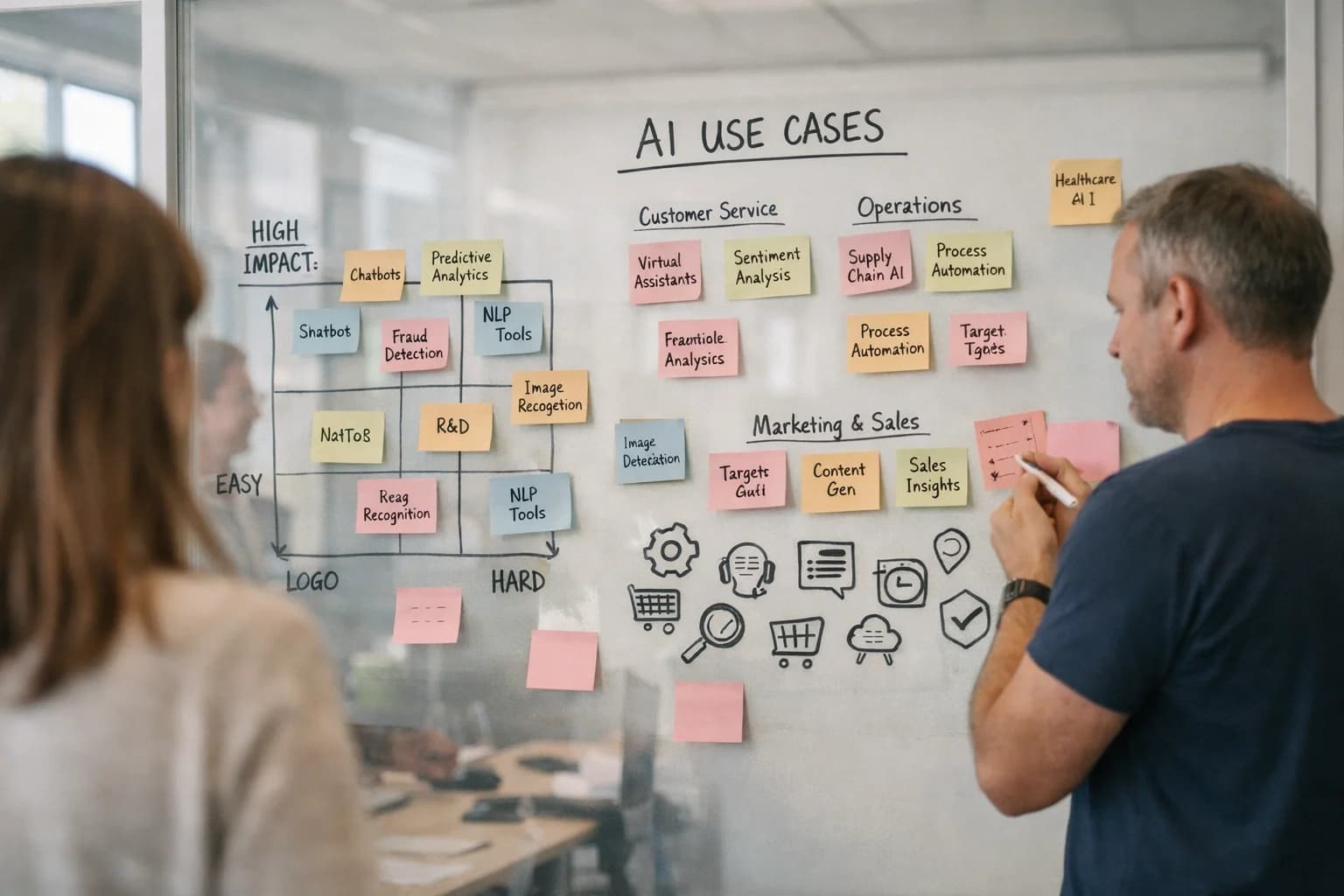
A technical implementation guide for embedding AI into PR and social listening platforms to automate the discovery of rising influencers, analyze audience authenticity, predict campaign fit, and track partnership performance.
Where AI Fits into PR Platform Influencer Workflows
A technical guide to integrating AI into platforms like Meltwater, Cision, and Muck Rack for intelligent influencer identification and partnership management.
AI connects to the media database and social listening modules of your PR platform (e.g., Meltwater's influencer analytics, Cision's media contacts, Muck Rack's profiles). The integration typically ingests platform APIs to analyze profiles, historical posts, and audience data. An AI agent then processes this data to score influencers based on custom criteria like audience authenticity, campaign thematic fit, engagement rate trends, and predicted partnership performance. This moves identification from manual list-building to a scored, prioritized pipeline.
In practice, the AI workflow runs as a background job or triggered search. For example, when a campaign brief is created in the platform, an agent can automatically query the database, returning a ranked list with justification summaries. High-impact use cases include:
Identifying rising micro-influencers before they appear on standard lists by analyzing follower growth and content velocity.
Predicting campaign fit by comparing an influencer's past content sentiment and topics against your brand's messaging pillars.
Audience analysis to flag inauthentic follower patterns or demographic mismatches.
Performance forecasting to estimate potential reach and engagement based on historical post data.
Rollout requires a phased approach: start with a read-only integration for discovery and scoring within the existing platform UI, then progress to write-back workflows where approved influencers are automatically added to media lists or CRM records. Governance is critical; implement human-in-the-loop approval for final selections and maintain audit logs of all AI-generated scores and recommendations to ensure brand safety and explainability. The result is not full automation, but a copilot for PR teams that reduces research from days to hours and surfaces high-potential candidates that manual searches might miss.
AI-POWERED INFLUENCER IDENTIFICATION
Integration Touchpoints Across Leading PR Platforms
Core Platform Surfaces for AI Integration
AI connects directly to the media database and search APIs of platforms like Meltwater, Cision, and Muck Rack. The integration enriches standard keyword and filter-based searches with semantic understanding and predictive scoring.
Key Integration Points:
Search API Enhancement: Augment platform-native search queries with AI-generated semantic vectors to find influencers based on nuanced topics, not just keywords.
Profile Enrichment Pipeline: Trigger AI analysis on new or updated journalist/influencer profiles to extract themes, past coverage sentiment, and audience demographics from linked social bios and articles.
Bulk Analysis Endpoints: Use platform APIs to send batches of profile IDs for AI scoring on criteria like authenticity, rising star potential, or campaign fit, returning results to a custom dashboard or CRM object.
This layer transforms static databases into dynamic, scored networks, helping teams prioritize outreach.
PR AND MEDIA MONITORING PLATFORMS
High-Value AI Use Cases for Influencer Identification
Practical AI integration patterns for platforms like Meltwater, Cision, and Muck Rack to move influencer identification from manual list-building to a predictive, data-driven workflow.
01
Predictive Influencer Discovery
AI models analyze historical coverage, social engagement patterns, and topic affinity to identify rising influencers before they peak. Integrates with platform search APIs to score and rank profiles based on predicted relevance and future impact, not just current follower count.
Weeks -> Days
Lead time on trends
02
Audience Authenticity & Fraud Detection
Automated analysis of follower growth patterns, engagement rates, and comment sentiment to flag inauthentic audiences. This workflow connects to social listening APIs, runs batch scoring on media lists, and surfaces risk scores directly in the PR platform's influencer profile to prevent wasted budget.
03
Campaign Fit Scoring at Scale
An AI agent reads campaign briefs (goals, messaging, KPIs) and cross-references thousands of influencer profiles from the media database. It outputs a match score based on content style, past brand partnerships, audience demographics, and estimated cost-per-engagement, automating the initial long-list creation.
Hours -> Minutes
Long-list creation
04
Automated Partnership Performance Tracking
Post-campaign, AI ingests coverage reports, social analytics, and platform data to generate performance summaries. It correlates influencer deliverables (posts, stories) with earned media pickup, sentiment shifts, and site traffic, automating the ROI report that typically takes days to compile manually. Connects to tools like CoverageBook via API.
05
Dynamic Media List Enrichment
An always-on workflow that monitors newly published articles and social posts to discover new voices commenting on your brand's space. Using entity recognition and clustering, it suggests new influencers for existing media lists in platforms like Muck Rack or Cision, keeping lists fresh without manual research.
Batch -> Real-time
List updates
06
Competitor Influencer Mapping
AI scans competitor mentions and branded content to identify and profile their key influencer relationships. This workflow analyzes partnership history, estimated investment, and engagement performance, providing strategic intelligence for your own outreach planning. Outputs integrate directly into competitive dashboards within the PR platform.
IMPLEMENTATION PATTERNS
Example AI-Powered Influencer Workflows
These workflows illustrate how AI agents can be integrated into PR and social listening platforms to automate high-value influencer identification and management tasks. Each pattern connects to platform APIs, analyzes data, and triggers actions within existing PR team tools.
Trigger: Scheduled daily scan of social listening data (e.g., Meltwater, Brandwatch) for a defined industry or topic cluster.
Author metadata (follower count, verification status, bio keywords).
Historical mention data for the author from the platform's database.
AI Agent Action:
A classification model scores each author on a rising_influencer index based on:
Engagement spike relative to their historical baseline.
Audience growth rate.
Content relevance to brand keywords.
Absence of prior brand partnership records (in the CRM).
A summarization model generates a brief profile note highlighting the author's niche, top recent post, and potential fit.
System Update:
Creates a new "Prospect" record in the connected PR platform (e.g., Muck Rack profile) or CRM.
Tags the record with AI-Identified and Rising Star.
Posts an alert to a designated Slack channel or creates a task in Asana for the PR team with the profile summary.
Human Review Point: A team member reviews the alert, assesses the profile, and can approve adding the influencer to a targeted media list with one click.
ARCHITECTING A PRODUCTION-GRADE IDENTIFICATION PIPELINE
Implementation Architecture: Data Flow and Model Layer
A practical technical blueprint for building an AI-powered influencer identification system that integrates directly with your PR platform's data and workflows.
The core architecture connects to your PR platform's media database APIs (e.g., Muck Rack's journalist profiles, Cision's influencer lists) and social listening streams (e.g., Meltwater, Brandwatch) to ingest raw candidate data. A processing layer normalizes profiles, extracting key entities like follower counts, engagement rates, topics, and recent content. This structured data feeds into a multi-model AI layer where specialized classifiers operate in sequence: a relevance model filters for campaign-fit topics, an authenticity model flags inauthentic engagement patterns using network analysis, and a rising-talent model detects velocity signals and emerging audience overlap. Outputs are written back to the PR platform as enriched contact records or custom list objects, triggering native workflows for outreach or campaign assignment.
For production rollout, we implement the pipeline as a containerized service that polls platform webhooks or runs on a scheduled cron job. Governance is built in: all AI-scored profiles include confidence scores and reasoning (e.g., "flagged for bot-like comment patterns"), with an optional human-in-the-loop approval step configured in the platform's workflow engine before a contact is promoted. Audit logs track which model versions scored each profile, ensuring reproducibility for compliance. This setup allows PR teams to move from manual list-building to a continuously updated, AI-curated pipeline of vetted influencers, reducing research time from days to hours while improving campaign match quality.
Key Integration Surfaces: Media Database APIs, Social Listening Feeds, Contact/List Management Modules, Workflow Automation Engines, CRM Objects (for partnership tracking).
This architecture is designed for incremental adoption. Teams can start by enriching existing media lists with AI-generated fit scores, then progress to fully automated discovery for specific campaign briefs. By leveraging the PR platform as the system of record, all AI-generated insights remain within existing governance, security, and workflow contexts, avoiding data silos and enabling measurable ROI tracking through native platform analytics.
AI FOR INFLUENCER IDENTIFICATION
Code and Payload Examples
Enriching Platform Profiles with AI
PR platforms like Meltwater or Muck Rack store basic influencer profiles. An AI integration can call external APIs to fetch and analyze recent posts, audience demographics, and engagement patterns, enriching the native database.
A typical workflow involves:
Querying the platform's API for a list of new or unvetted influencer candidates.
Sending their social handles to a service like Brandwatch or a custom model for analysis.
Receiving a JSON payload with calculated authenticity scores, topic affinities, and predicted campaign fit.
Writing this enriched data back to a custom object or tag within the PR platform for segmentation.
python
# Example: Enrich a Muck Rack profile via webhook
import requests
# 1. Get influencer candidate from platform webhook
candidate = request.json # {'id': '123', 'handle': '@tech_insider'}
# 2. Call AI analysis service
analysis_payload = {
'handle': candidate['handle'],
'metrics': ['audience_authenticity', 'topic_affinity', 'engagement_rate']
}
response = requests.post('https://api.inference-systems.com/analyze', json=analysis_payload)
ai_scores = response.json()
# 3. Update platform record with scores
update_data = {
'influencer_id': candidate['id'],
'ai_audience_score': ai_scores.get('authenticity', 0),
'ai_topics': ai_scores.get('topics', []),
'last_analyzed': datetime.now().isoformat()
}
# POST to platform's PATCH endpoint for the influencer object
AI-ASSISTED VS. MANUAL WORKFLOWS
Realistic Time Savings and Operational Impact
This table compares typical manual processes for influencer identification and qualification against an AI-integrated workflow, showing realistic operational improvements for PR teams using platforms like Meltwater, Cision, or Muck Rack.
Metric
Before AI
After AI
Notes
Initial list generation
4-8 hours of manual search and filtering
30-60 minutes of AI-assisted discovery
AI scans profiles, content, and audience data to surface candidates
Audience authenticity analysis
Manual review of 5-10 posts per profile
Automated scoring for fraud, bot activity, and engagement quality
Human review focuses on high-scoring, pre-vetted shortlists
Campaign fit scoring
Subjective assessment based on limited data
Multi-factor scoring (audience overlap, content style, past brand work)
Scores integrate platform data and external social signals
Performance prediction
Gut-feel based on follower count
Estimated engagement rate and sentiment impact
Predictive model uses historical performance of similar influencers
Outreach personalization
Generic template customization
AI-drafted personalized hooks from recent content analysis
Reps edit and approve drafts, maintaining brand voice control
Partnership tracking & reporting
Manual compilation of mentions and metrics
Automated performance dashboards and ROI calculations
AI correlates influencer posts with campaign KPIs and web traffic
Program scaling
Adding 10 influencers requires linear effort increase
Adding 50 influencers with marginal additional analyst time
AI handles repetitive analysis, freeing strategists for relationship management
CONTROLLED DEPLOYMENT FOR REPUTATION-SENSITIVE WORKFLOWS
Governance, Security, and Phased Rollout
Implementing AI for influencer identification requires a controlled approach that protects brand reputation and ensures strategic alignment.
In platforms like Meltwater, Muck Rack, or Cision, AI should operate as a governed layer that enriches existing media databases, contact profiles, and campaign objects—not as a black-box replacement. The integration typically connects via the platform's REST APIs to read public social and web data, then writes enriched scores (e.g., audience_authenticity_score, campaign_fit_prediction) back to custom fields on influencer or journalist records. All data processing should occur in your secure cloud environment, with API keys managed via a secrets vault and all influencer profiles cached to respect rate limits and ensure repeatable analysis.
A phased rollout is critical. Start with a human-in-the-loop pilot: the AI surfaces a shortlist of potential rising influencers in a dedicated dashboard or a Slack channel via webhook, where a PR manager reviews and approves before any profile is updated in the primary PR platform. Phase two introduces automated scoring for existing database contacts, flagging anomalies (e.g., sudden follower drops) for review. The final phase enables proactive alerting, where the AI agent monitors for new influencers matching defined brand personas and creates draft contact records in the PR platform, pending a final compliance check.
Governance focuses on audit trails and bias mitigation. Every AI-recommended influencer should have an associated log showing the data sources, scoring factors, and which team member approved the addition. Use RBAC to control which team members can promote AI suggestions to live campaigns. Regularly audit the model's recommendations for diversity and relevance, using the PR platform's own reporting modules to track the performance of AI-identified contacts versus traditionally sourced ones. This measured, traceable approach turns AI into a scalable assistant for PR teams, not an unpredictable autopilot.
We build AI systems for teams that need search across company data, workflow automation across tools, or AI features inside products and internal software.
Practical questions about implementing AI-driven influencer identification within platforms like Meltwater, Cision, and Muck Rack.
AI integrates via the platform's API layer, typically using a secure, cloud-based middleware agent. The standard pattern is:
Trigger: A scheduled job or user-initiated search in the PR platform (e.g., "find micro-influencers in sustainable fashion").
Data Pull: The agent calls the platform's API to retrieve raw social profiles, post history, audience demographics, and engagement metrics based on initial keywords or criteria.
AI Enrichment: This raw data is sent to configured AI models (e.g., for authenticity scoring, audience analysis, content categorization).
System Update: The enriched profiles—now with AI-generated scores for fit, authenticity, and predicted performance—are written back to a custom object or tag within your PR platform.
Human Review: Results are presented in a ranked list within the platform's UI, with flags for potential inauthentic activity, allowing PR teams to make the final selection.
This keeps the workflow inside your familiar platform while augmenting its native search capabilities.
About the author
Prasad Kumkar
CEO & MD, Inference Systems
Prasad Kumkar is the CEO & MD of Inference Systems and writes about AI systems architecture, LLM infrastructure, model serving, evaluation, and production deployment. Over 5+ years, he has worked across computer vision models, L5 autonomous vehicle systems, and LLM research, with a focus on taking complex AI ideas into real-world engineering systems.
His work and writing cover AI systems, large language models, AI agents, multimodal systems, autonomous systems, inference optimization, RAG, evaluation, and production AI engineering.
Partnered with leading AI, data, and software stack.
How We Work
Custom AI workflows for your Business
One-fit-all AI don't work for modern businesses. At Inferensys, we aim to understand your business & custom requirements; which we use to define most efficient agentic workflows, the data, and the tools for your business.
The first call is a practical review of your use case and the right next step.