AI integration for commercial property management targets specific functional surfaces within platforms like MRI Software, Yardi Voyager, and AppFolio Investment Management. The primary connection points are the platform's APIs and webhooks for core objects: Leases, Tenants, WorkOrders, Vendors, and GLTransactions. AI agents and workflows are typically deployed as a middleware layer that listens for events (e.g., a new service request via the resident portal) and acts by calling platform APIs to create records, update statuses, or trigger communications. This preserves the system of record while injecting intelligence into the workflow.

Integration
AI Integration for Property Management Platforms in Commercial Real Estate
Architect AI integrations for office, retail, and industrial portfolios, focusing on lease abstraction, tenant billing, capital project analysis, and portfolio-level reporting with AppFolio, Yardi, Entrata, and MRI.
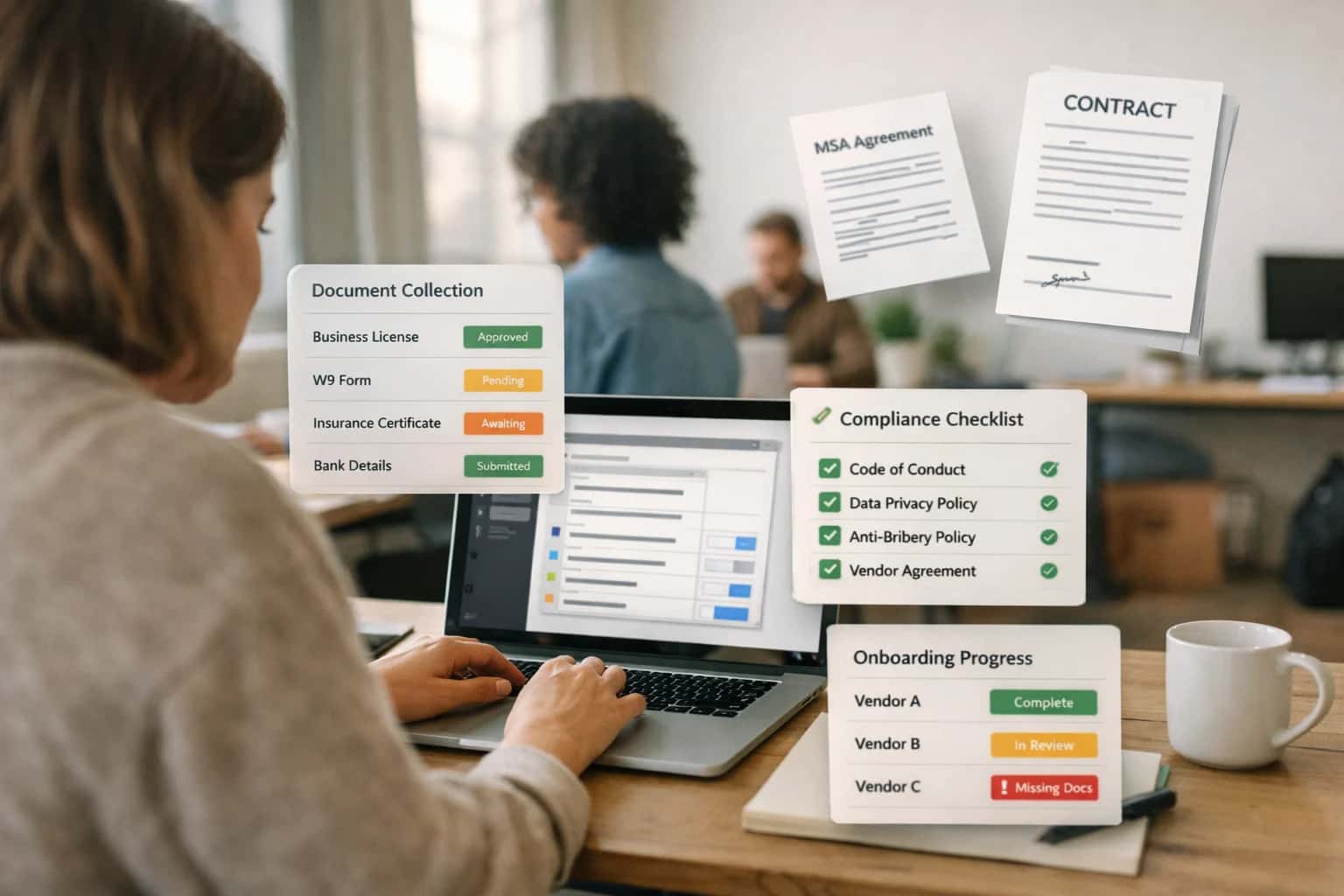
ARCHITECTURE & ROLLOUT
Where AI Fits in Commercial Property Management
A practical blueprint for integrating AI into the operational and financial workflows of commercial real estate portfolios.
High-impact use cases are tied to data-intensive, manual processes. For lease abstraction and administration, AI document intelligence can extract key terms (commencement dates, CPI escalations, renewal options) from PDF leases and populate structured fields in the platform, turning a multi-hour review into minutes. For CAM reconciliation, an AI agent can audit tenant chargebacks by analyzing expense invoices, lease language, and square footage allocations, flagging discrepancies for review. For portfolio analytics, an external AI service can securely query rent roll and financial data via APIs to generate predictive insights on vacancy risk or capital expenditure planning, surfacing recommendations back into the platform's reporting modules.
A production rollout follows a phased, workflow-specific approach. Start with a single, high-volume process like maintenance triage, where an AI classifier ingests tenant-submitted descriptions and photos to automatically categorize urgency, suggest resolution steps, and assign the correct priority in the CMMS module. Governance is critical: implement human-in-the-loop approvals for financial recommendations (e.g., rent adjustments) and maintain a full audit trail of AI-generated actions within the platform's native activity logs. Successful integration requires aligning AI outputs with the platform's existing data model and user permissions (RBAC), ensuring agents act only within their configured scope and authority.
COMMERCIAL REAL ESTATE
AI Integration Surfaces by Platform Module
Lease Abstraction & Administration
AI integration targets the core lease object and financial modules (e.g., MRI's Lease Administration, Yardi's Commercial Suite). The primary workflow involves using document intelligence to ingest new lease PDFs, extract key financial terms (rent, escalations, options), critical dates, and co-tenancy clauses into structured fields. This automates data entry, reduces abstraction time from days to hours, and ensures portfolio-wide data consistency.
For ongoing management, AI agents can monitor lease expirations, trigger renewal workflows, and audit CAM reconciliations by analyzing expense invoices against lease language. Integration is typically via REST APIs to push structured lease data and create calendar alerts or tasks for asset managers. This creates a searchable, AI-augmented lease repository directly within the property management platform.
AI INTEGRATION FOR PROPERTY MANAGEMENT PLATFORMS
High-Value AI Use Cases for Commercial Portfolios
For office, retail, and industrial portfolios, AI integration connects directly to platforms like AppFolio, Yardi, Entrata, and MRI Software. The goal is to automate high-volume workflows, inject intelligence into financial and operational data, and provide 24/7 support—without replacing your core system of record.
01
Automated CAM Reconciliation & Audit
AI parses complex Common Area Maintenance (CAM) invoices and lease abstracts to audit tenant charges, allocate expenses, and generate reconciliation reports. Integrates with the PM platform's financial modules to push adjusted entries and communicate findings, turning a quarterly manual slog into a continuous, auditable process.
Weeks -> Days
Reconciliation cycle
02
Lease Abstraction & Portfolio Intelligence
AI document intelligence extracts key terms (escalations, options, co-tenancy) from hundreds of lease PDFs into structured data fields within Yardi Voyager or MRI. Enables portfolio-wide lease auditing, critical date alerts, and exposure analysis for asset managers, transforming static documents into a queryable database.
Batch -> Real-time
Data availability
03
Predictive CapEx & Maintenance Forecasting
AI models analyze historical work order data, asset age, and IoT sensor feeds from building systems to predict equipment failures and budget for capital projects. Forecasts and recommended schedules are written back to the PM platform's project management or maintenance modules, enabling proactive portfolio stewardship.
Reactive -> Proactive
Planning mode
04
AI-Powered Tenant Retention & Renewal Scoring
An AI agent monitors tenant payment history, service request patterns, and communication sentiment from the PM platform's CRM and resident portal. It scores renewal likelihood and triggers personalized retention workflows—such as lease renewal offers or manager check-ins—before a tenant considers moving.
Same day
Intervention trigger
05
Commercial Rent Roll Analysis & Optimization
AI continuously analyzes the rent roll extracted via API, benchmarking rates against submarket comps and modeling the financial impact of lease expirations. Provides data-driven recommendations for renewal pricing, tenant mix, and hold/sell decisions, with insights surfaced directly in portfolio dashboards.
06
Vendor Invoice Processing & Spend Intelligence
AI automates the Procure-to-Pay workflow for vendor invoices. It extracts line-item data from PDFs, codes expenses to the correct property/GL account, and routes for approval within Yardi Procure or AppFolio Accounting. Continuously analyzes spend patterns to flag anomalies and identify cost-saving opportunities.
Hours -> Minutes
Invoice processing
COMMERCIAL REAL ESTATE
Example AI Automation Workflows
These workflows illustrate how AI agents and automations connect to property management platform APIs to handle complex, high-volume tasks for office, retail, and industrial portfolios. Each flow is designed to augment—not replace—existing systems like Yardi Voyager or MRI Software.
Trigger: Monthly close period or upon receipt of new vendor invoices in the accounting module.
Context Pulled: AI agent queries the PM platform (e.g., MRI Commercial) via API for:
- Current lease abstracts for the property (escalation clauses, CAM caps, exclusions).
- Year-to-date actual CAM expenses by GL code.
- Tenant pro-rata share percentages.
- Prior year reconciliation history.
Agent Action:
- Extracts & Classifies: Uses document intelligence on uploaded invoice PDFs to pull vendor, amount, date, and service description.
- Validates Allocation: Cross-references each expense against lease clauses to verify it's a recoverable CAM cost.
- Flags Anomalies: Identifies expenses that exceed typical benchmarks, are miscoded, or fall under landlord responsibility.
- Generates Draft: Creates a preliminary tenant chargeback report with line-item justifications.
System Update: Draft report and anomaly flags are posted to a dedicated work queue in the PM platform for accountant review. Approved charges are pushed via API to create batch invoices in the tenant accounts receivable module.
Human Review Point: Senior property accountant reviews flagged anomalies and the final chargeback report before posting.
A BLUEPRINT FOR COMMERCIAL PORTFOLIOS
Typical Integration Architecture & Data Flow
A secure, event-driven architecture to inject AI into core property management workflows without disrupting existing operations.
A production integration for commercial real estate typically uses an AI middleware layer that sits between your property management platform (AppFolio, Yardi, MRI) and the AI models. This layer ingests events via platform webhooks or scheduled API polls for key data objects like new WorkOrder, Lease, Invoice, or Prospect records. It processes this data—for example, classifying a maintenance description or extracting clauses from a lease PDF—using orchestration tools like n8n or CrewAI, then calls the appropriate LLM (OpenAI, Anthropic, or open-source) via a secure gateway. The results, such as a prioritized ticket or a summarized rent roll analysis, are written back to the PM platform via its REST API, often creating a new record or updating a custom field for the property team to review.
For a use case like lease abstraction, the flow is: 1) A new lease document is uploaded to the PM platform's document repository. 2) A webhook triggers the AI middleware to fetch the PDF. 3) The document is processed through a vision model or OCR service, then a structured extraction LLM call pulls key terms (commencement date, base rent, CPI escalations) into JSON. 4) This JSON is mapped to the platform's custom lease object fields or written to an external database, and a summary is posted to the asset's activity log. For maintenance triage, incoming tenant portal requests are routed through an AI classifier that analyzes the description and tenant history to assign a priority score (emergency, routine, deferred) and suggest a resolution, automatically setting the corresponding fields in the WorkOrder before a human dispatcher ever sees it.
Governance and rollout are critical. Implementations start with a pilot asset or workflow, using a human-in-the-loop design where AI suggestions are presented as recommendations within the existing PM platform UI (e.g., a custom dashboard or a side panel). All AI actions should generate audit logs linking the source record, the prompt/input sent, the model's output, and the user who approved it. Access is controlled via the PM platform's existing RBAC, ensuring only authorized portfolio managers or asset managers can trigger bulk analyses. The architecture must be built for resilience—queuing failed API calls, handling PM platform rate limits, and falling back gracefully to manual processes—ensuring AI enhances but never blocks core property operations.
ARCHITECTURE PATTERNS
Code & Payload Examples
Lease Abstraction Agent
This pattern uses an AI agent to extract key financial and legal terms from commercial lease PDFs and push structured data into the property management platform (PMP). The agent orchestrates a multi-step workflow: document parsing, clause classification, data validation, and API submission.
Typical Integration Flow:
- A new lease PDF is uploaded to the PMP's document repository, triggering a webhook.
- The AI service fetches the document via the PMP's API.
- A vision-capable LLM (e.g., GPT-4V) extracts structured data (commencement date, base rent, CPI escalations, renewal options, CAM responsibilities).
- Extracted data is validated against business rules and previous leases.
- The agent calls the PMP's lease administration API to create or update a lease record with the abstracted terms.
Example Payload to PMP API (Yardi Voyager-like):
json{ "leaseId": "L-78910", "abstractedTerms": { "commencementDate": "2024-07-01", "expirationDate": "2029-06-30", "baseRent": 12500.00, "rentEscalationType": "CPI", "escalationCap": 3.5, "tenantImprovementAllowance": 75000.00, "camReimbursement": "Net", "renewalOptions": 2 }, "sourceDocument": "s3://bucket/lease_78910.pdf", "extractionConfidence": 0.92 }
This automation turns a manual, hours-long review into a minutes-long assisted workflow, ensuring critical dates and obligations are captured consistently for portfolio reporting.
COMMERCIAL REAL ESTATE PORTFOLIO OPERATIONS
Realistic Operational Impact & Time Savings
This table illustrates the tangible workflow improvements and time savings achievable by integrating AI with platforms like MRI, Yardi Voyager, and AppFolio Investment Manager for office, retail, and industrial portfolios.
| Operational Workflow | Before AI Integration | After AI Integration | Implementation Notes |
|---|---|---|---|
Lease Abstraction & Data Entry | Manual review of 50+ page PDFs; 2-4 hours per lease | AI-assisted extraction & population into PM platform; 15-30 minutes review per lease | Human review for critical clauses remains; AI populates structured fields in MRI/Yardi |
Monthly Rent Roll Variance Analysis | Manual spreadsheet comparison; 8-16 hours per portfolio | Automated anomaly detection & report generation; 1-2 hours for review | AI flags >5% variances in CAM, base rent, or vacancies; triggers alerts in platform |
Capital Project Budget Forecasting | Historical spend analysis & manual modeling; 1-2 weeks | AI-driven predictive modeling using asset age & condition data; 2-3 days | Integrates with PM platform's project module; provides data-backed budget scenarios |
Tenant AR & Collections Triage | Manual review of aging reports; reactive calls/emails | AI-prioritized list by risk score; automated payment plan outreach | Agent suggests contacts for high-value delinquencies; automates follow-up for low-risk |
Portfolio-Level Performance Reporting | Manual data pulls, consolidation, and slide creation; 3-5 days monthly | AI-generated narrative insights & automated deck drafts; 1 day for refinement | Queries PM platform APIs; highlights NOI trends, occupancy risks, and market comps |
CAM Reconciliation Audit Support | Sample-based manual audit of expense allocations; high risk of oversight | AI-driven full-population audit of charges; flags exceptions for review | Processes bulk invoice and ledger data; integrates findings into MRI/Yardi workflow |
Maintenance Work Order Prioritization (Commercial) | First-in, first-out or manual urgency assessment | AI scoring based on tenant tier, asset criticality, and request context | Routes emergency HVAC for anchor tenant immediately; batches low-impact items |
ARCHITECTING FOR ENTERPRISE CONTROL
Governance, Security, and Phased Rollout
A production AI integration for commercial real estate must be built with institutional-grade security, clear data governance, and a phased rollout that de-risks adoption.
Start with a sandbox and a single workflow. A proven first phase is implementing an AI agent for tenant communications via the property management platform's messaging API (e.g., AppFolio's Resident Communications API, Yardi's Voyager Resident Portal API). This creates a controlled environment where the AI handles common, low-risk inquiries about rent payments, office hours, or package deliveries. All interactions are logged back to the tenant record, and a human-in-the-loop escalation path is mandatory for complex issues. This initial phase validates the integration's stability, measures resident satisfaction, and builds internal trust without disrupting core financial or leasing operations.
Governance is defined by data access and audit trails. The AI system should authenticate using service accounts with role-based access control (RBAC) scoped to specific API endpoints and data objects—never super-user credentials. For instance, a maintenance triage agent may only have read/write access to the WorkOrder and Unit objects, while a portfolio analytics agent might have read-only access to Lease, FinancialTransaction, and Property objects. Every AI-generated action—creating a ticket, sending a message, updating a record—must write an immutable audit log entry linking the action to the source tenant request, the AI model used, and the prompting logic, ensuring full traceability for compliance.
Security extends to data in motion and at rest. Sensitive tenant PII, lease terms, and financial data must never be sent to a third-party LLM in plaintext. The architecture employs a secure proxy layer that strips or tokenizes sensitive fields before external API calls, or uses a private cloud/VPC-deployed model. For workflows like lease abstraction or CAM reconciliation, where document analysis is required, files are processed in a transient, encrypted workspace with outputs (key dates, amounts, clauses) being the only structured data written back to the platform. This minimizes data exposure while delivering the analytical benefit.
Phased rollout follows the value chain. After communications, phase two typically automates maintenance triage, using AI to classify incoming work order descriptions from portals and assign priority/contractor type. Phase three might introduce lease renewal prediction, analyzing historical payment, service request, and communication data from the platform to score renewal likelihood. Each phase incorporates feedback loops, performance monitoring against key SLAs (e.g., ticket resolution time, resident CSAT), and a rollback plan. This iterative approach allows portfolio managers to scale AI's role from operational efficiency to predictive analytics, ensuring each step delivers measurable ROI before expanding scope.
Enabling Efficiency, Speed & Accuracy
Intelligent Analysis, Decision & Execution
We build AI systems for teams that need search across company data, workflow automation across tools, or AI features inside products and internal software.
Talk to Us
Search across company data
Give teams answers from docs, tickets, runbooks, and product data with sources and permissions.
Useful when people spend too long searching or get different answers from different systems.
Enterprise searchRAGPermissions
Read more
Automate internal workflows
Use AI to route work, draft outputs, trigger actions, and keep approvals and logs in place.
Useful when repetitive work moves across multiple tools and teams.
AI agentsWorkflow automationGovernance
Read more
Add AI to products and internal tools
Build assistants, guided actions, or decision support into the software your team or customers already use.
Useful when AI needs to be part of the product, not a separate tool.
AI integrationDecision supportModel routing
Read moreCOMMERCIAL REAL ESTATE INTEGRATION
Frequently Asked Questions
Common technical and strategic questions about integrating AI into commercial property management platforms like AppFolio, Yardi, Entrata, and MRI Software for office, retail, and industrial portfolios.
Secure integration follows a layered architecture:
- Authentication & API Gateway: Use the PM platform's official REST APIs (OAuth 2.0, API keys) through a dedicated integration service account with role-based access control (RBAC). Never embed credentials in AI model code.
- Data Orchestration Layer: Build a middleware service that:
- Handles API rate limiting and pagination.
- Maps platform-specific objects (e.g., Yardi
RentRoll, MRILease) to a normalized internal schema. - Performs necessary anonymization or pseudonymization before data reaches the AI layer.
- Context Caching: Use a vector database (like Pinecone or Weaviate) to store embeddings of historical documents (leases, work orders) for Retrieval-Augmented Generation (RAG). This keeps sensitive source data out of the model's static training set.
- Audit Trail: Log all AI-initiated queries and writes to the PM platform. Every action (e.g., "created work order #12345") should have a traceable log entry linking it to the AI agent's session and the triggering user or event.

About the author
Prasad Kumkar
CEO & MD, Inference Systems
Prasad Kumkar is the CEO & MD of Inference Systems and writes about AI systems architecture, LLM infrastructure, model serving, evaluation, and production deployment. Over 5+ years, he has worked across computer vision models, L5 autonomous vehicle systems, and LLM research, with a focus on taking complex AI ideas into real-world engineering systems.
His work and writing cover AI systems, large language models, AI agents, multimodal systems, autonomous systems, inference optimization, RAG, evaluation, and production AI engineering.
LinkedIn
Limited slotsGet a Free AI Consultation
Partnered with leading AI, data, and software stack.





How We Work
Custom AI workflows for your Business
One-fit-all AI don't work for modern businesses. At Inferensys, we aim to understand your business & custom requirements; which we use to define most efficient agentic workflows, the data, and the tools for your business.
01
Review the use case
We understand the task, the users, and where AI can actually help.
Read more02
Pick the right approach
We define what needs search, automation, or product integration.
Read more03
Build the first useful version
We implement the part that proves the value first.
Read more04
Improve from there
We add the checks and visibility needed to keep it useful.
Read moreThe first call is a practical review of your use case and the right next step.
Talk to Us