AI integration for CAM reconciliation targets three core functional surfaces within your property management platform: the General Ledger for expense posting, the Tenant Billing module for charge generation, and the Document Management system for audit trails. The AI layer acts as a middleware audit engine, ingesting raw vendor invoices, lease abstracts, and prior-year reconciliations via platform APIs or secure file feeds. It performs three critical validations: 1) matching invoice line items to the correct CAM expense categories defined in the lease, 2) verifying calculations for prorations, caps, and escalations against the lease's operating expense clause, and 3) flagging non-recoverable or incorrectly allocated charges for human review before they hit the tenant ledger.

Integration
AI Integration for CAM Reconciliation AI
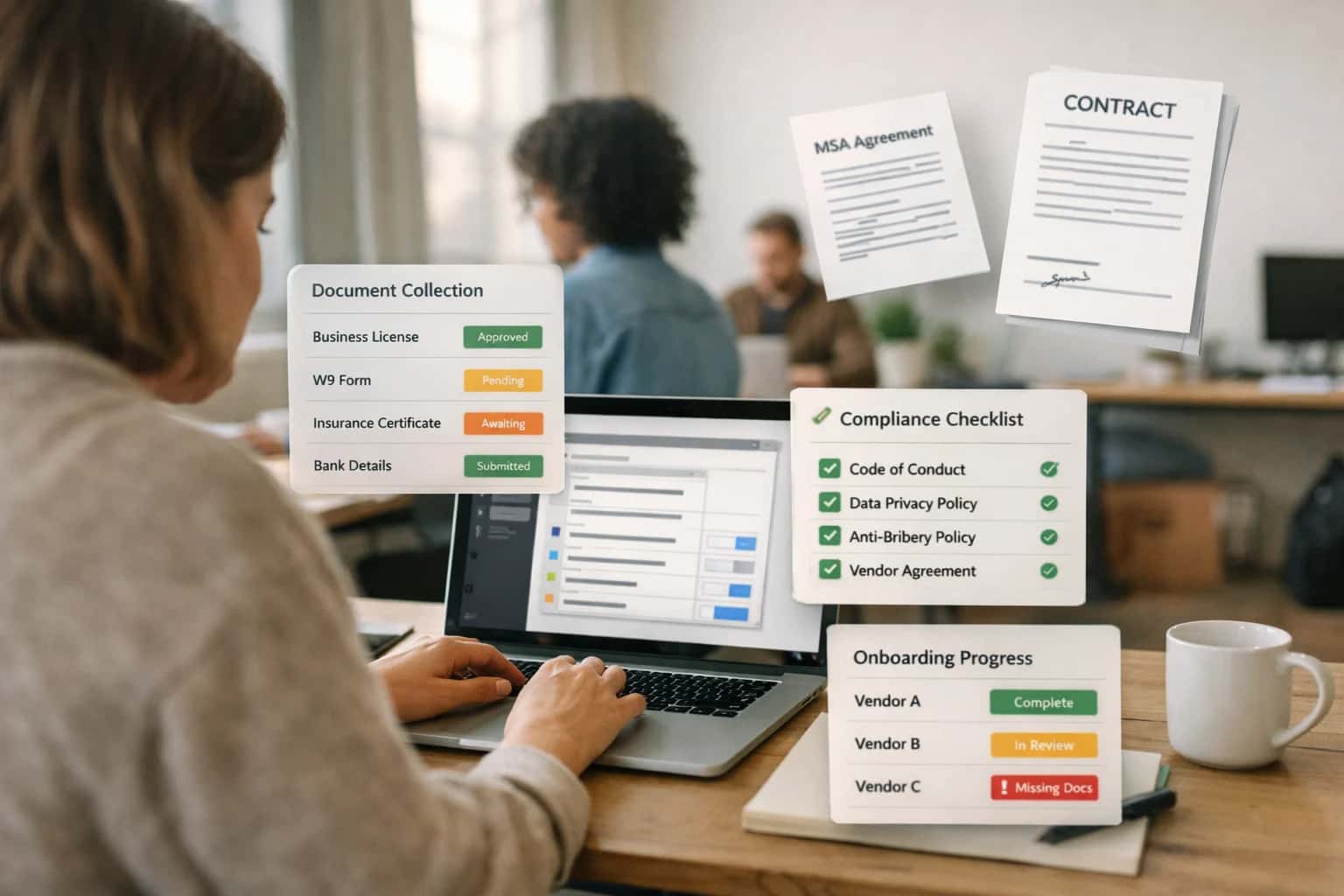
Where AI Fits into CAM Reconciliation
A practical blueprint for integrating AI into the complex, error-prone process of Common Area Maintenance reconciliation within platforms like Yardi, MRI, and AppFolio.
A production implementation typically involves a queue-based architecture. Vendor invoices are posted to the PM platform's GL as usual, but also pushed to a secure processing queue. An AI agent extracts line-item data, classifies it against the lease library, and runs validation rules. Approved charges are returned via API to create tenant-specific billable items in the Tenant Billing module, with a detailed audit log attached. Flagged exceptions are routed to a dedicated review dashboard for the property accountant, complete with the AI's reasoning and suggested correction. This shifts the workflow from manual, line-by-line auditing to exception-based management, reducing reconciliation time from weeks to days and minimizing costly billing errors and tenant disputes.
Governance is critical. The AI system must maintain a complete audit trail linking every AI-suggested charge back to the source invoice and the specific lease clause justification. Role-based access controls (RBAC) ensure only authorized staff can override AI recommendations. A phased rollout is advised: start with a pilot asset, using the AI as a 'co-pilot' to generate draft reconciliations for full human verification. As confidence grows, you can expand to more assets and increase automation levels. This approach de-risks the integration while delivering immediate value in audit efficiency and accuracy. For a deeper technical dive on connecting to specific platform APIs, see our guide on Property Management Platform APIs.
Integration Surfaces in Your Property Management Platform
Core Data Source for Reconciliation
The Tenant Ledger is the system of record for all tenant charges, including CAM estimates, true-ups, and payments. AI integration here focuses on extracting and auditing line-item charges.
Key Integration Points:
- API Endpoints: Fetch tenant charge codes, billing periods, and invoice details.
- Data Model: Map
CAMRecoveryCode,ChargeAmount,BillPeriodStart/End, andTenantLeaseID. - AI Workflow: An AI agent periodically queries for new or modified CAM charges, validates them against lease language (stored in the Document Management module), and flags discrepancies for review. This automates the initial audit sweep that typically consumes days of manual work each reconciliation period.
Example Use: An AI process runs nightly, pulling the previous day's posted CAM charges from Yardi Voyager's TransactionAPI. It compares amounts and expense types against the approved budget and lease stipulations, creating an exception report in a connected dashboard.
High-Value AI Use Cases for CAM
Common Area Maintenance (CAM) reconciliation is a complex, document-heavy process prone to errors and disputes. Integrating AI directly with your property management platform (AppFolio, Yardi, MRI, Entrata) can automate audit workflows, analyze expense allocations, and generate defensible reports, turning a quarterly burden into a controlled, efficient operation.
Automated Invoice Audit & Coding
AI reviews vendor invoices (janitorial, landscaping, utilities) against lease language and historical spend. It extracts line items, validates rates, and automatically codes expenses to the correct tenant and GL account within the PM platform, flagging non-recoverable or out-of-scope charges for human review.
Lease Abstraction for Proration Logic
An AI agent reads lease PDFs stored in the PM platform's document management system to extract critical CAM clauses: proration methods (RSF/USF), expense inclusions/exclusions, caps, and audit rights. This structured data populates a reconciliation engine, ensuring calculations are lease-accurate for each tenant.
Anomaly Detection in Operating Expenses
AI models analyze year-over-year and portfolio-wide expense data pulled via PM platform APIs. They identify statistical outliers—like a 40% spike in snow removal or unusual utility consumption—and trigger alerts for property managers to investigate before charges are passed through to tenants.
AI-Generated Tenant Reconciliation Packages
At reconciliation time, the system automatically compiles a tenant-specific package. Using a structured prompt, AI drafts a narrative summary explaining charge variances, generates visual charts from platform data, and prepares a detailed, line-item backup report—all formatted for delivery via the PM platform's tenant portal.
Dispute Triage & Response Drafting
When a tenant disputes a CAM charge via the portal, AI analyzes the claim against the lease, invoices, and calculation history. It categorizes the dispute (valid, invalid, needs clarification) and drafts a preliminary response with supporting evidence for the property manager to review and send, logged directly in the tenant's communication history.
Forecast vs. Actual Analysis & True-Up
AI compares the original CAM estimate (budget) stored in the PM platform against year-end actuals. It automatically calculates the true-up amount owed by or to each tenant, generates the adjustment invoice or credit memo, and updates the tenant's ledger—all while maintaining a clear audit trail of the calculation methodology.
Example AI-Powered CAM Workflows
These workflows detail how AI integrates with your Property Management Platform (AppFolio, Yardi, Entrata, MRI) to automate the complex, manual CAM reconciliation process. Each flow connects to platform APIs to fetch data, applies AI for analysis, and pushes results or creates actions back in the system.
Trigger: Monthly close period or upon receipt of new property-level expense reports.
Workflow:
- Data Pull: AI agent calls the PM platform's
GET /properties/{id}/financials/expensesAPI endpoint for the reconciliation period, fetching categorized expense data (e.g.,CAM_Janitorial,CAM_Landscaping,CAM_Utilities). - Context Enrichment: Agent simultaneously retrieves the relevant lease abstracts for the property via
GET /leasesto gather each tenant's pro-rata share, expense caps, and base year details. - AI Analysis: A specialized model analyzes the expense data against:
- Historical Benchmarks: Compares line-item costs to prior periods for anomalies.
- Market Benchmarks: Flags expenses (e.g., per-square-foot landscaping) that deviate from local averages.
- Lease Compliance: Checks each calculated charge against tenant-specific caps and base year exclusions.
- System Update: The agent generates a variance report and, for approved/explained variances, creates draft tenant charge records in the PM platform via
POST /tenants/{id}/charges. It flags high-severity discrepancies for human review in a dedicated reconciliation queue. - Human Review Point: All charges exceeding a pre-defined variance threshold (e.g., >5% or $500) are held in a "Review Required" status, triggering a task for the property accountant.
Implementation Architecture: Data Flow & Guardrails
A secure, multi-system integration that connects AI document intelligence to your property management platform's financial core.
The integration is built as a middleware layer that orchestrates data between your property management platform (AppFolio, Yardi, Entrata, MRI) and the AI engine. The typical flow begins when a batch of tenant invoices, vendor bills, and general ledger expense files are posted to a secure cloud storage bucket (e.g., AWS S3, Azure Blob). A webhook or scheduled job triggers the AI service, which performs optical character recognition (OCR), data extraction, and line-item classification on each document. Key data points like vendor name, service period, invoice amount, and GL account codes are extracted and structured into a JSON payload.
This structured data is then validated against business rules and cross-referenced with master data from the PM platform via its REST API. The system checks for vendor ID matches, validates tenant lease IDs, and confirms expense account mappings. The AI's primary role is to audit allocations and flag anomalies—comparing extracted charges against lease clauses (e.g., CAM caps, expense exclusions) and historical billing patterns. Discrepancies or items requiring human review are routed to a workflow queue within the PM platform or a connected task management system, with full audit trails. Approved reconciliation entries are then posted back to the PM platform's tenant receivable modules or general ledger via API to generate final reconciliation statements.
Governance is critical. The architecture includes role-based access controls (RBAC) tied to the PM platform's user permissions, ensuring only authorized staff can approve AI-generated adjustments. All AI decisions are explainable and logged, with the original document, extracted data, audit logic, and final action stored in an immutable audit log. The system is designed for phased rollout, starting with a single property or expense category in a supervised learning mode, where AI suggestions are reviewed by accounting staff before any system-of-record updates are made, ensuring accuracy and building trust before full automation.
Code & Payload Examples
Ingesting and Classifying Vendor Invoices
The first step in automating CAM reconciliation is extracting structured data from vendor invoices, utility bills, and tax statements. An AI pipeline can process PDFs uploaded to the property management platform or received via email, using vision models to parse tables and line items.
Example Python payload for sending a document to an extraction service and mapping the result to a platform's general ledger code:
pythonimport requests # Payload to AI document processing endpoint extraction_payload = { "document_url": "https://storage.example.com/invoices/2025-03-electric.pdf", "extraction_schema": { "fields": ["vendor_name", "invoice_date", "total_amount", "tax_amount", "service_period"] } } # Call extraction service extraction_response = requests.post( 'https://api.inferencesystems.com/v1/extract', json=extraction_payload, headers={'Authorization': 'Bearer YOUR_API_KEY'} ).json() # Map extracted data to PM platform GL code structure gl_payload = { "property_id": "PROP-78910", "expense_type": "UTILITIES_ELECTRIC", "vendor_id": "VEND-456", "invoice_number": extraction_response.get('invoice_number'), "period_start": extraction_response.get('service_period', {}).get('start'), "period_end": extraction_response.get('service_period', {}).get('end'), "total_amount": extraction_response.get('total_amount'), "line_items": [ { "gl_code": "6400-ELEC", "amount": extraction_response.get('total_amount'), "description": "Base period electricity charges" } ] }
This structured data is then ready for allocation logic and audit.
Realistic Time Savings & Operational Impact
This table illustrates the operational impact of integrating an AI layer with your Property Management Platform (AppFolio, Yardi, Entrata, MRI) for Common Area Maintenance (CAM) reconciliation. It compares manual processes against an AI-assisted workflow, focusing on time savings, accuracy, and team capacity.
| Process Stage | Manual / Before AI | AI-Assisted / After AI | Impact & Notes |
|---|---|---|---|
Expense Document Collection & Sorting | Hours to days of manual download, filing, and naming from vendor portals and accounting exports | Minutes via automated ingestion; AI classifies and tags documents by property, vendor, and expense type | Eliminates pre-audit clerical work; ensures a complete, organized dataset for analysis |
Invoice Data Extraction & Validation | Manual data entry and cross-checking against contracts; high risk of transposition errors | Automated extraction via OCR/IDP; AI validates amounts, dates, and GL codes against master data | Reduces data entry errors by >90%; frees up accounting staff for exception review |
Tenant Charge Allocation Calculation | Complex spreadsheet work, prone to formula errors and version control issues | Rules-based engine executes calculations; AI flags anomalies in square footage or usage data for review | Ensures calculation consistency; audit trail is automatically generated and stored |
Reconciliation Statement Drafting | Days of compiling data, writing narratives, and formatting reports for each property | AI generates first-draft statements with summaries, variance explanations, and supporting schedules | Cuts initial drafting time by 70%; allows analysts to focus on high-value review and client communication |
Variance Analysis & Exception Identification | Manual spot-checking; significant financial anomalies can be missed in large portfolios | AI continuously benchmarks expenses, flags outliers against budget/history, and suggests probable causes | Proactive risk detection; shifts focus from finding problems to solving them |
Tenant Inquiry & Dispute Resolution | Back-and-forth emails and calls to locate supporting documentation for each query | AI-powered self-service portal provides tenants instant access to audit trails, invoices, and allocation details | Reduces property manager time spent on dispute admin by ~50%; improves tenant satisfaction |
Final Review, Approval & Distribution | Manual routing for manager sign-off and batch emailing/printing of final packages | Automated workflow routes exceptions for approval; AI manages bulk distribution via secure portal or email | Accelerates closing cycle; ensures compliant, trackable delivery to all stakeholders |
Governance, Security, and Phased Rollout
Implementing AI for CAM reconciliation requires a controlled, audit-ready approach that respects the financial sensitivity of the process.
A production integration for CAM reconciliation AI is typically architected as a middleware layer that sits between your property management platform (like Yardi Voyager or MRI Commercial) and the AI models. This layer handles secure data extraction via APIs—pulling tenant ledgers, expense invoices, lease abstracts, and prior reconciliation reports—and orchestrates the AI analysis. All data flows are logged, and the system enforces role-based access controls (RBAC) aligned with your PM platform's user permissions, ensuring only authorized asset managers or accountants can trigger or review AI-generated findings.
The AI's output—such as flagged overcharges, allocation discrepancies, or draft reconciliation statements—should never auto-post adjustments. Instead, findings are pushed into a dedicated review queue within the PM platform or a connected task management system. This creates a clear human-in-the-loop checkpoint where a CAM specialist can validate, adjust, and approve recommendations before any financial entries are made. Each AI-suggested adjustment is traceable back to the source data and model reasoning, creating an audit trail for both internal accounting and potential tenant audits.
Rollout follows a phased, risk-managed path: Phase 1 begins with a single property or a subset of tenant accounts, using AI in an assistive mode to surface potential discrepancies for manual review. Phase 2 expands to portfolio-wide analysis but limits automation to generating draft reports and populating review queues. Phase 3, after validation of accuracy and stability, may enable automated generation of tenant-ready reconciliation packages, but final release still requires manager sign-off. This crawl-walk-run approach builds confidence, allows for tuning of prompts and logic based on real data, and ensures financial controls are never bypassed.
Governance is continuous. Regular audits compare AI-identified discrepancies against a sample of manually reconciled accounts to monitor precision and recall. Model performance and data lineage are tracked using LLMOps platforms, and a clear rollback plan is maintained. By treating the AI as a highly skilled, auditable assistant within the existing financial workflow—not a black-box replacement—you gain efficiency and insight while maintaining the rigor required for CAM operations. For a deeper technical look at connecting to these platforms, see our guide on Property Management Platform APIs.
Enabling Efficiency, Speed & Accuracy
Intelligent Analysis, Decision & Execution
We build AI systems for teams that need search across company data, workflow automation across tools, or AI features inside products and internal software.
Talk to Us
Search across company data
Give teams answers from docs, tickets, runbooks, and product data with sources and permissions.
Useful when people spend too long searching or get different answers from different systems.

Automate internal workflows
Use AI to route work, draft outputs, trigger actions, and keep approvals and logs in place.
Useful when repetitive work moves across multiple tools and teams.

Add AI to products and internal tools
Build assistants, guided actions, or decision support into the software your team or customers already use.
Useful when AI needs to be part of the product, not a separate tool.
Frequently Asked Questions
Common technical and operational questions about integrating AI into the Common Area Maintenance (CAM) reconciliation process within property management platforms like Yardi, MRI, and AppFolio.
The integration is built on secure API connections to your platform's core financial and lease modules. Here’s the typical data flow:
- API Authentication: We establish a secure, token-based connection (OAuth 2.0 or API key) to your PM platform's API endpoints.
- Data Extraction: The AI system periodically queries or receives webhooks for:
- Lease Data: Tenant names, square footage, lease terms, and CAM responsibility clauses.
- Vendor Invoices: Raw invoice PDFs and line-item data from the accounts payable module.
- General Ledger: Actual expense postings to CAM-related accounts.
- Budget Data: Annual CAM budgets for each property.
- Processing & Storage: Extracted data is processed in a secure, isolated environment. Sensitive PII is masked, and financial data is normalized for AI analysis.
- Action & Update: The AI pushes its findings—audit flags, allocation calculations, draft reconciliation statements—back into the platform via API, typically creating draft records or attaching analysis reports to the relevant property or tenant record.

About the author
Prasad Kumkar
CEO & MD, Inference Systems
Prasad Kumkar is the CEO & MD of Inference Systems and writes about AI systems architecture, LLM infrastructure, model serving, evaluation, and production deployment. Over 5+ years, he has worked across computer vision models, L5 autonomous vehicle systems, and LLM research, with a focus on taking complex AI ideas into real-world engineering systems.
His work and writing cover AI systems, large language models, AI agents, multimodal systems, autonomous systems, inference optimization, RAG, evaluation, and production AI engineering.
Partnered with leading AI, data, and software stack.





How We Work
Custom AI workflows for your Business
One-fit-all AI don't work for modern businesses. At Inferensys, we aim to understand your business & custom requirements; which we use to define most efficient agentic workflows, the data, and the tools for your business.
01
Review the use case
We understand the task, the users, and where AI can actually help.
Read more02
Pick the right approach
We define what needs search, automation, or product integration.
Read more03
Build the first useful version
We implement the part that proves the value first.
Read more04
Improve from there
We add the checks and visibility needed to keep it useful.
Read moreThe first call is a practical review of your use case and the right next step.
Talk to Us