The integration surfaces at three key layers in Asana's data model: the Milestone task object, its preceding dependent tasks, and the Portfolio or Goal it rolls up to. An AI agent, typically deployed as a background service polling the Asana API or reacting to webhooks, continuously analyzes the progress, comments, and custom fields (like % Complete, Blocked, Confidence Score) of all tasks feeding into a milestone. This analysis happens outside Asana but writes back actionable intelligence directly into the milestone's description, custom fields, or linked subtasks.

Integration
AI Integration for Asana Milestones
Add predictive intelligence to Asana milestones by connecting AI models to analyze task progress, forecast attainment, and automate executive updates for portfolio managers.
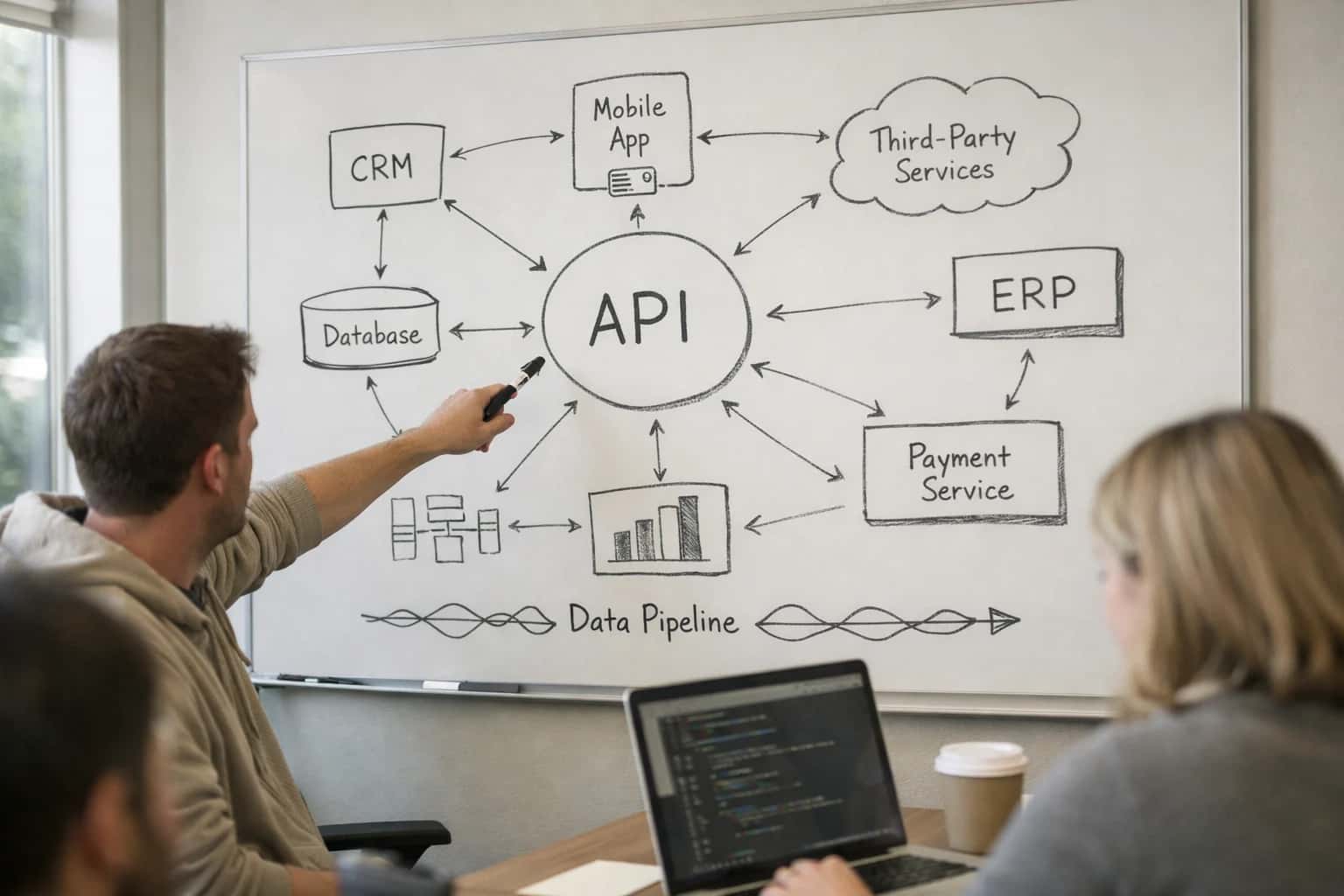
ARCHITECTURE FOR PREDICTIVE PORTFOLIO CONTROL
Where AI Fits into Asana Milestone Management
Integrating AI into Asana's milestone system transforms static date tracking into a dynamic forecasting engine for portfolio managers.
For portfolio managers, this means moving from manual weekly check-ins to real-time predictive updates. Common workflows include:
- Attainment Forecasting: The AI evaluates the velocity of preceding tasks against the milestone due date, calculating a daily-updated
Likelihood of On-Time Deliveryscore written to a custom number field. - Bottleneck Triage: By analyzing task descriptions and comment sentiment, the AI can flag specific dependent tasks that are
At Riskand automatically @mention the owner or create a follow-up action. - Narrative Reporting: Instead of just a red/yellow/green status, the AI can generate a concise, natural-language summary in the milestone description (e.g., "Milestone is trending 2 days late due to delays in design approval on Task X. Recommended action: escalate to [Project Lead]."). The impact is operational: reducing the time portfolio managers spend hunting for status from hours to minutes and providing early warning signals days before a milestone is officially missed.
Rollout is typically phased, starting with a single high-visibility portfolio. Governance is critical: the AI's predictions and automated field updates should be clearly labeled (e.g., AI Forecast: 75%) and logged in an audit trail. A human-in-the-loop approval step for any automated task creation or owner reassignment is recommended initially. This architecture doesn't replace the project manager but acts as a copilot, synthesizing data from across the project hierarchy to give portfolio leaders a quantified, predictive view of delivery health, directly within the Asana interface they already use.
ARCHITECTURE FOR PREDICTIVE MILESTONE MANAGEMENT
Key Integration Surfaces in Asana for Milestone AI
The Primary Data Layer for AI
Milestones in Asana are represented as tasks with a specific type. The most powerful integration surface is the custom field ecosystem surrounding these tasks. AI models can read and write to fields to create a predictive data layer.
Key fields to instrument:
- Predictive Confidence Score: A number field (0-100%) where the AI writes its calculated likelihood of on-time completion.
- Milestone Health Status: A dropdown field (e.g., On Track, At Risk, Off Track) updated by the AI based on progress analysis.
- Key Risk Factors: A text field where the AI lists the top 1-3 contributing tasks or dependencies causing delay risk.
- Forecasted Date: A date field the AI populates with its predicted completion date, which may differ from the original due date.
These fields become the interface for the AI, allowing portfolio managers to filter, sort, and create rules based on AI-generated insights without leaving Asana.
PREDICTIVE PORTFOLIO MANAGEMENT
High-Value AI Use Cases for Asana Milestones
Milestones represent critical delivery commitments. AI integration transforms them from static markers into dynamic intelligence points, analyzing upstream task data to predict attainment, surface risks, and automate stakeholder communication.
01
Predictive Milestone Health Scoring
AI continuously analyzes the progress, dependencies, and comments of all tasks leading to a milestone. It calculates a real-time confidence score (e.g., High/Medium/Low) and writes it to a milestone custom field, giving portfolio managers an at-a-glance view of delivery risk.
Reactive → Predictive
Risk visibility
02
Automated Milestone Narrative Updates
Instead of manual status emails, an AI agent synthesizes progress from preceding tasks and generates a concise, narrative update for the milestone. This update is posted to the milestone's comment thread or sent via a connected Slack/email automation on a scheduled cadence.
1 hour → 5 minutes
Status reporting
03
Cascade Delay Impact Forecasting
When a key task is marked at-risk or delayed, AI models the downstream impact on connected milestones. It automatically creates subtasks or comments on affected milestones, estimating new projected dates and flagging dependent work for review.
Days → Real-time
Impact analysis
04
Stakeholder-Specific Briefing Generation
AI tailors milestone communications based on the stakeholder. For an executive, it generates a high-level summary with confidence scores. For a project team, it lists blocking tasks and action owners. These are auto-posted to dedicated Asana portfolios or sent via integrated channels.
Batch → Targeted
Communication
05
Milestone Attainment Post-Mortem
After a milestone is completed (or missed), AI analyzes the historical trail of tasks, updates, and time logs. It generates a brief lessons-learned summary highlighting what drove success or delay, and posts it as a document linked to the milestone for future reference.
1 sprint
Insight cycle
06
Portfolio-Level Risk Radar
AI aggregates health scores and predictions from all milestones across multiple Asana Portfolios. It creates a centralized dashboard view (via API to a BI tool or a dedicated Asana project) ranking milestones by risk level, enabling proactive portfolio rebalancing and resource shifting.
Manual Triage → Automated
Portfolio oversight
ARCHITECTURE PATTERNS
Example AI-Powered Milestone Workflows
These workflows demonstrate how AI agents can connect to Asana's API and webhooks to monitor, analyze, and predict milestone attainment, transforming static dates into dynamic, intelligence-driven management tools.
Trigger: Daily scheduled job or webhook on task completion/update within the milestone's project hierarchy.
Context Pulled:
- All incomplete predecessor tasks (names, due dates, assignees, completion % from custom fields).
- Recent comment activity and attachment updates.
- Historical velocity data for similar tasks/projects.
- Current milestone date and any linked Asana Goals.
AI Agent Action: A model analyzes the aggregated context to generate a health score (e.g., 0-100) and a confidence-adjusted predicted delay (e.g., "+3 days, 85% confidence"). It uses a prompt engineered for project risk:
codeGiven the following tasks preceding milestone [Milestone Name], assess the likelihood of on-time delivery. Consider task completion rates, comment sentiment, historical delays for similar work, and assignee workload. Output a score and a brief rationale.
System Update:
The agent writes the score and prediction to dedicated Asana custom fields on the milestone task (e.g., AI Health Score, AI Predicted Delay). If the score drops below a threshold (e.g., 60), it automatically creates a subtask for the project manager titled "Review Milestone Risk" and tags the milestone in a dedicated "At-Risk Milestones" portfolio.
Human Review Point: The project manager reviews the flagged milestone and the AI's rationale. They can adjust the plan, update the milestone date, or mark the AI alert as resolved.
BUILDING A PREDICTIVE MILESTONE COPILOT
Implementation Architecture: Data Flow & System Design
A production-ready architecture for connecting AI models to Asana's milestone and task data to generate predictive status updates.
The core integration pattern uses Asana's Events API to subscribe to changes on tasks and subtasks linked to a milestone. A lightweight middleware service listens for webhook events (e.g., task.updated, story.created) and enqueues relevant task IDs for analysis. The system then calls the Asana API to fetch the full task object, its custom fields (like Percent Complete, Blocked, Confidence), and the complete thread of comments and status changes from the preceding 7-14 days. This data payload—task metadata, timeline changes, and collaboration context—forms the input for the predictive model.
The AI service, typically a containerized microservice, processes this payload. It uses a rules engine combined with a fine-tuned LLM to analyze patterns: Is the completion rate slowing? Are new blockers being reported? Is the comment sentiment shifting? The model outputs a structured prediction: a confidence score (e.g., High, Medium, Low), a predicted delay in days, and a narrative reason (e.g., 'Progress on key predecessor task X has stalled'). This output is written back to the Asana milestone via the API, populating dedicated custom fields: AI Confidence, AI Predicted Date, AI Risk Summary. An optional automation can be triggered to post a story to the milestone or tag the portfolio manager.
Governance is managed through a human-in-the-loop approval step for high-risk predictions before they are posted. The system maintains an audit log linking each prediction to the source task data snapshots, allowing for model performance review. Rollout is typically phased: start with a single "test" portfolio, where predictions are written to a hidden custom field for validation, before enabling visible updates and notifications for portfolio managers.
IMPLEMENTATION PATTERNS
Code & Payload Examples
Analyzing Predecessor Task Completion
This pattern uses the Asana API to fetch all tasks linked to a milestone, analyzes their completion status and due dates, and calculates a predictive health score. The score is written back to a custom field on the milestone for dashboard visibility.
Key steps involve:
- Querying the milestone's
subtasksor tasks filtered by a custom field linking them to the milestone. - Calculating completion percentage and weighted risk based on overdue or blocked tasks.
- Applying a simple model (or a more complex ML model) to predict on-time attainment probability.
- Updating the milestone's custom field via a
PUTrequest.
python# Example: Fetch tasks for a milestone and calculate health import requests # Asana API endpoint to get tasks for a specific project/milestone url = "https://app.asana.com/api/1.0/tasks" params = { "project": "<MILESTONE_PROJECT_GID>", "opt_fields": "completed,due_on,name,custom_fields" } headers = {"Authorization": "Bearer <ASANA_PAT>"} response = requests.get(url, headers=headers, params=params) tasks = response.json()["data"] # Simple health calculation completed = sum(1 for t in tasks if t.get('completed')) total = len(tasks) completion_ratio = completed / total if total > 0 else 1.0 # Write score back to milestone custom field milestone_url = f"https://app.asana.com/api/1.0/tasks/<MILESTONE_TASK_GID>" update_payload = { "data": { "custom_fields": { "<HEALTH_SCORE_FIELD_GID>": int(completion_ratio * 100) } } } requests.put(milestone_url, headers=headers, json=update_payload)
AI-ENHANCED MILESTONE MANAGEMENT
Realistic Time Savings & Operational Impact
How AI integration transforms milestone tracking from a manual reporting task into a predictive, proactive function, saving portfolio managers hours each week.
| Workflow | Before AI | After AI | Key Impact |
|---|---|---|---|
Milestone Progress Analysis | Manual review of 50+ preceding tasks, spreadsheets | Automated daily analysis of task completion, dependencies, and comments | Reduces weekly prep from 4-6 hours to 30 minutes |
Attainment Likelihood Forecast | Gut-feel estimate based on latest status meeting | Predictive score (e.g., 85% likely) based on trend analysis and risk factors | Provides data-driven confidence for stakeholder updates |
Stakeholder Status Report Drafting | Manual compilation of updates, writing narrative | AI-generated first draft with key highlights, risks, and recommended actions | Cuts report creation time from 2-3 hours to 20-30 minutes of review |
Risk Flagging & Mitigation Logging | Reactive logging after a delay is confirmed | Proactive alerts on tasks showing early warning signs (e.g., repeated delays, blocker comments) | Identifies potential slips 1-2 weeks earlier for intervention |
Portfolio Health Roll-up | Manual aggregation of milestone statuses across multiple portfolios | Automated dashboard with AI-synthesized health scores and trend lines | Enables real-time portfolio review instead of monthly manual consolidation |
Dependency Impact Simulation | Manual, error-prone analysis of cascade effects | AI models 'what-if' scenarios for a delayed task on downstream milestones | Supports faster, more informed rescheduling decisions |
Retrospective & Lessons Learned | Ad-hoc discussion in post-mortem meetings | AI summarizes common delay patterns and success factors from completed milestones | Creates a knowledge base for improving future project planning |
CONTROLLED DEPLOYMENT FOR PORTFOLIO INTELLIGENCE
Governance, Security, and Phased Rollout
Implementing predictive milestone tracking requires a structured approach to data access, model governance, and user adoption.
A production integration connects to the Asana API using a dedicated service account with scoped OAuth tokens, limiting access to specific portfolios, projects, and custom fields (e.g., Milestone Date, Confidence Score, Blocking Tasks). The AI agent operates as a background process, polling for updates via webhooks on tasks linked to milestones. All predictions and the rationale (e.g., "3 critical path tasks are behind schedule") are written back to designated Asana custom fields and a dedicated audit log channel, creating a transparent, versioned history of all AI-generated insights for compliance and review.
Rollout follows a phased, portfolio-first strategy:
- Phase 1 (Read-Only Analysis): Deploy the model in a monitoring-only capacity for a single pilot portfolio. It analyzes task completion rates, dependency delays, and comment sentiment, generating internal confidence scores and alerts without writing to Asana.
- Phase 2 (Controlled Write-Back): Enable the system to write a
Predicted Attainmentstatus (On Track, At Risk, Off Track) and aNext Review Dateto custom fields for the pilot portfolio. A daily digest is sent to the portfolio manager for review and override before any automated notifications are sent. - Phase 3 (Expanded Automation): Scale to additional portfolios, enabling automated, templated status updates in milestone tasks and scheduled summary reports to stakeholders, all configurable per portfolio's risk tolerance.
Governance is maintained through a human-in-the-loop layer. High-confidence, low-impact updates (e.g., adjusting a review date) can be automated, while high-stakes predictions (e.g., flagging a strategic milestone as "Off Track") trigger an Asana approval task for the portfolio manager. Regular model performance is evaluated against actual milestone outcomes, and the prompt logic driving the analysis is versioned and managed in a system like LangChain or a dedicated LLMOps platform. This ensures the AI remains an assistive, auditable copilot rather than a black-box decision-maker, building trust and ensuring the integration enhances—rather than disrupts—existing portfolio management rhythms.
Enabling Efficiency, Speed & Accuracy
Intelligent Analysis, Decision & Execution
We build AI systems for teams that need search across company data, workflow automation across tools, or AI features inside products and internal software.
Talk to Us
Search across company data
Give teams answers from docs, tickets, runbooks, and product data with sources and permissions.
Useful when people spend too long searching or get different answers from different systems.
Enterprise searchRAGPermissions
Read more
Automate internal workflows
Use AI to route work, draft outputs, trigger actions, and keep approvals and logs in place.
Useful when repetitive work moves across multiple tools and teams.
AI agentsWorkflow automationGovernance
Read more
Add AI to products and internal tools
Build assistants, guided actions, or decision support into the software your team or customers already use.
Useful when AI needs to be part of the product, not a separate tool.
AI integrationDecision supportModel routing
Read moreIMPLEMENTATION
Frequently Asked Questions
Practical questions for teams planning to integrate AI with Asana Milestones for predictive portfolio management.
You connect via the Asana API, typically using a service account with appropriate OAuth scopes. The integration architecture follows these steps:
- Authentication & Scoping: Use a service account token with
projects:readandtasks:readpermissions for the relevant portfolios. - Data Extraction: Query the API for all tasks linked to a specific milestone. Key data points include:
- Task
due_date,start_on,completed_at - Custom fields for
percent_complete,effort_estimate,blocker_status - Subtask completion status
- Comments for recent updates
- Task
- Context Enrichment: Combine this with historical project data (e.g., past milestone delay patterns) from your data warehouse.
- Model Inference: Send the structured dataset to your AI model (e.g., hosted LLM or custom forecasting model) via a secure API call.
- Write-back: The model's output (e.g.,
predicted_attainment_date,confidence_score,key_risk_factor) is written back to the milestone as a custom field or a formatted comment via an APIPUTrequest.
Example Payload to AI Model:
json{ "milestone_id": "1202461732616925", "name": "Q2 Product Launch", "due_date": "2024-06-30", "linked_tasks": [ { "task_id": "1202461732616926", "name": "Finalize Marketing Assets", "due_date": "2024-06-15", "completed": false, "percent_complete": 75, "days_late": 2 } ], "historical_slippage_for_similar_milestones": 4.5 }

About the author
Prasad Kumkar
CEO & MD, Inference Systems
Prasad Kumkar is the CEO & MD of Inference Systems and writes about AI systems architecture, LLM infrastructure, model serving, evaluation, and production deployment. Over 5+ years, he has worked across computer vision models, L5 autonomous vehicle systems, and LLM research, with a focus on taking complex AI ideas into real-world engineering systems.
His work and writing cover AI systems, large language models, AI agents, multimodal systems, autonomous systems, inference optimization, RAG, evaluation, and production AI engineering.
LinkedIn
Limited slotsGet a Free AI Consultation
Partnered with leading AI, data, and software stack.





How We Work
Custom AI workflows for your Business
One-fit-all AI don't work for modern businesses. At Inferensys, we aim to understand your business & custom requirements; which we use to define most efficient agentic workflows, the data, and the tools for your business.
01
Review the use case
We understand the task, the users, and where AI can actually help.
Read more02
Pick the right approach
We define what needs search, automation, or product integration.
Read more03
Build the first useful version
We implement the part that proves the value first.
Read more04
Improve from there
We add the checks and visibility needed to keep it useful.
Read moreThe first call is a practical review of your use case and the right next step.
Talk to Us