AI Integration for PLM in Regulated Industries | Inference Systems
Integration
AI Integration for PLM in Regulated Industries
A practical guide to embedding AI into Siemens Teamcenter, PTC Windchill, and Dassault PLM systems to automate compliance evidence collection, audit trail generation, and controlled document workflows under GxP, FDA, and FAA frameworks.
A practical blueprint for embedding AI into Siemens Teamcenter, PTC Windchill, and Dassault Systèmes workflows while maintaining GxP, FDA, and FAA compliance.
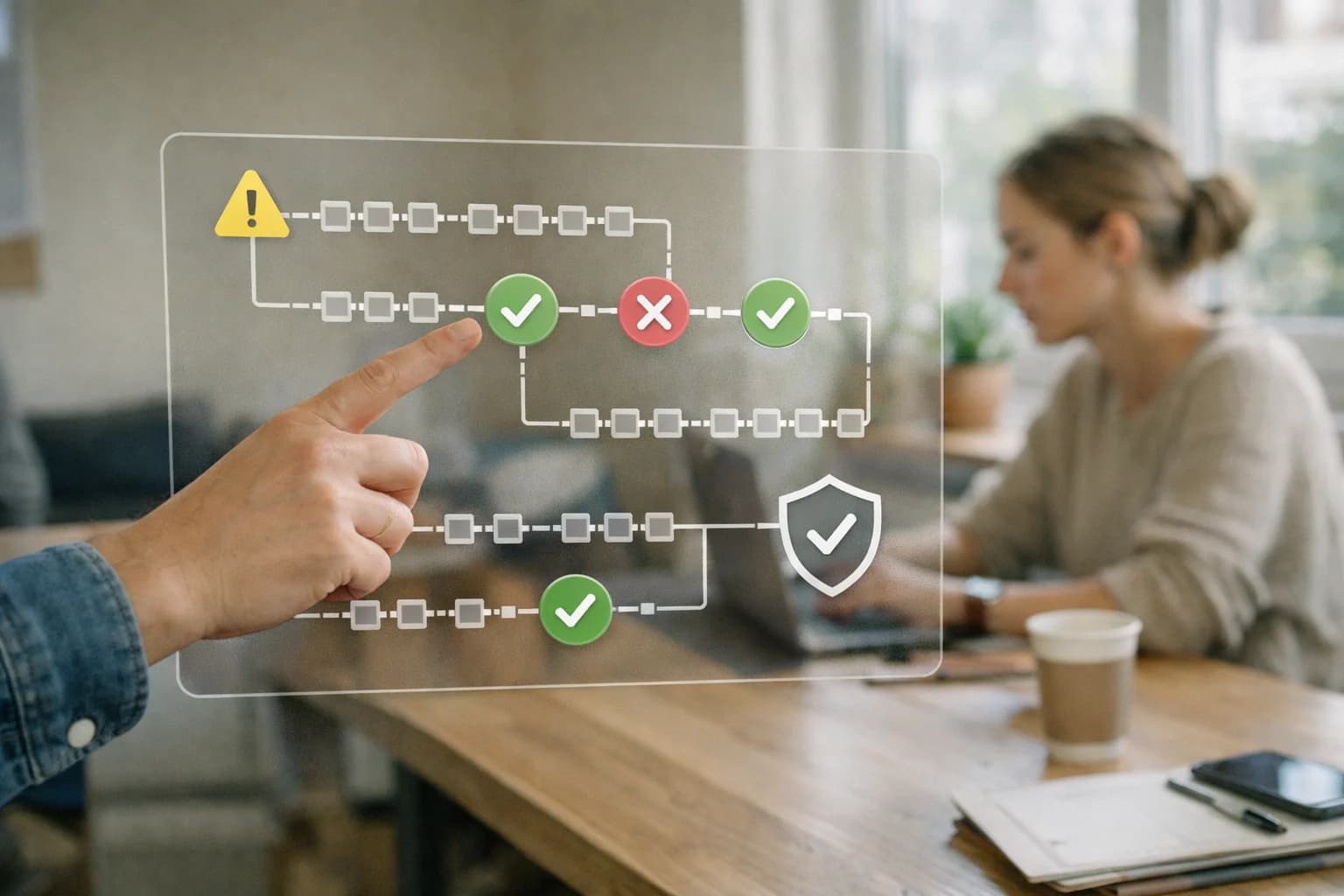
In regulated PLM, AI doesn't replace the workflow; it automates the evidence collection, document review, and audit trail generation within it. This means connecting AI agents to specific surfaces: the Change Management module for analyzing ECO impact statements, the Document Management vault for extracting metadata from test reports and certificates, and the Quality Management (QMS) workflows for automating deviation reviews and CAPA initiation. The integration point is often a secure API call from the PLM's workflow engine to an AI service, passing controlled data like a Change Request ID or Document Version for processing, with all actions logged back to the PLM audit trail.
For a typical use case—automating a Design History File (DHF) compilation for a medical device submission—the workflow is precise: 1) An engineer releases a design item in Teamcenter, triggering a webhook. 2) An AI agent retrieves all linked requirements, test results, and risk documents. 3) Using a governed LLM, it drafts a summary of evidence for traceability. 4) The draft is routed within the existing PLM approval workflow to a Quality Engineer for review and electronic signature. The AI acts as a copilot within the validated system, reducing manual collation from days to hours while keeping the human-in-the-loop for final release.
Rollout requires a phased, validation-friendly approach. Start with a single, high-volume, low-risk workflow like auto-classifying incoming supplier documents against a controlled taxonomy in Windchill. Implement strict RBAC so AI suggestions are only visible to authorized roles, and ensure all AI-generated content is watermarked and versioned in the PLM vault. Governance is maintained by treating the AI model as a "process" within your quality system, requiring documented testing for accuracy (e.g., 95%+ document classification rate) and regular audits of its outputs against human decisions. This controlled automation turns compliance from a bottleneck into a structured data advantage.
IN REGULATED INDUSTRIES
Key PLM Modules and Surfaces for AI Integration
Managing Regulated Change Workflows
In regulated PLM environments, the Engineering Change Order (ECO) and controlled document workflows are primary surfaces for AI integration. AI agents can be embedded to automate the initial triage of change requests by analyzing the proposed modification against historical data, flagging items with past compliance issues or high failure rates. For document control, AI can pre-process submissions—such as updated specifications or test reports—extracting key metadata (revision, effective date, referenced standards) and auto-classifying them against a compliance framework (e.g., FDA 21 CFR Part 11, ISO 13485). This accelerates the routing of changes to the correct approvers and ensures the audit trail is populated with structured, searchable data from the outset.
GxP, FDA, FAA, AND ISO COMPLIANCE
High-Value AI Use Cases for Regulated PLM
In regulated industries, PLM systems like Teamcenter and Windchill are the system of record for product quality and compliance. AI integration automates evidence collection, audit trail generation, and controlled document workflows, reducing manual overhead and audit risk.
01
Automated Regulatory Submission Package Assembly
AI agents analyze the Design History File (DHF) in PLM to identify required documents (specs, test reports, risk analyses) for FDA 510(k) or PMA submissions. The system auto-assembles packages, flags gaps, and generates submission-ready summaries, ensuring traceability from requirements to verification.
Weeks -> Days
Submission prep
02
AI-Powered Change Control & Impact Analysis
For an Engineering Change Order (ECO), AI evaluates the change against regulated items, supplier qualifications, and linked manufacturing processes. It auto-populates the affected items list, suggests required re-validation tests, and drafts the regulatory impact statement for reviewer approval within the PLM workflow.
Batch -> Real-time
Risk assessment
03
Continuous Audit Trail Generation & Gap Detection
Monitors all PLM transactions—item revisions, document approvals, BOM updates—and uses NLP to generate human-readable audit narratives. AI compares activity against SOPs (e.g., four-eye principle for approvals) to detect procedural deviations in real-time, alerting quality managers before an audit.
Same day
Deviation alerts
04
Controlled Document Review & Redlining
Integrates AI into the PLM document check-in/check-out workflow. For SOPs, specifications, or validation protocols, AI suggests reviewers based on content and role, performs clause-level comparison against previous revisions, and highlights substantive changes for focused human review, maintaining version control.
Hours -> Minutes
Review cycle
05
Supplier Technical Document Compliance Check
When suppliers submit material certifications, test reports, or process validations via a PLM portal, AI extracts key data (lot numbers, specification values, expiry dates) and validates it against the approved component record. Non-conformances are automatically routed to Quality for disposition, creating a closed-loop in the PLM quality module.
1 sprint
Onboarding review
06
Automated Training Assignment & Curriculum Management
Links the PLM item master (e.g., a new instrument or software release) to the training management system. AI analyzes the device classification and intended use to map required GxP training curricula for R&D, manufacturing, and service roles, triggering assignment workflows and tracking completion within the compliance record.
GxP, FDA, FAA, AND OTHER FRAMEWORKS
Example AI-Augmented Compliance Workflows
In regulated industries, PLM systems are the system of record for product design history and compliance evidence. These workflows show how AI agents can automate evidence collection, audit trail generation, and controlled document processes within Siemens Teamcenter, PTC Windchill, and similar platforms.
Trigger: An engineer marks a medical device's design freeze milestone as complete in the PLM system.
AI Agent Action:
Queries the PLM system (e.g., Teamcenter) via its API to retrieve all items linked to the device's product structure.
Uses a RAG pipeline over the PLM document vault to locate and extract key documents: requirements specs, risk management files (FMEA), verification & validation protocols/results, and design review minutes.
Analyzes document content to identify gaps against FDA 21 CFR Part 820 requirements (e.g., missing signature on a test protocol, outdated risk file version).
Generates a structured DHF index and a summary report highlighting completeness, gaps, and potential issues.
System Update: The agent creates a new 'DHF Review Package' item in the PLM system, attaches the generated index and report, and routes a task to the Quality Assurance lead for review. All actions are logged in the PLM audit trail.
Human Review Point: The QA lead reviews the AI-generated package, addresses flagged gaps, and provides final approval before locking the DHF for submission.
GOVERNANCE AND ROLLOUT FOR REGULATED INDUSTRIES
Implementation Architecture: Connecting AI to PLM
A practical blueprint for integrating AI into PLM systems like Teamcenter and Windchill while maintaining strict compliance with GxP, FDA, and FAA frameworks.
In regulated environments, AI integration must be anchored to the PLM's controlled data model and audit trail. The architecture typically injects AI agents at key workflow junctions—such as Engineering Change Order (ECO) initiation, Design History File (DHF) compilation, or Supplier Document review—using secure API calls (e.g., Teamcenter SOA, Windchill REST) to fetch item records, BOMs, and document metadata. AI services run in a governed, containerized environment, with all inputs and outputs logged back to the PLM as versioned attachments or auditable activity records, preserving the digital thread. This ensures AI-generated summaries, risk assessments, or compliance checks become traceable artifacts within the official product record.
Rollout follows a phased, validation-driven approach. Start with a closed-loop pilot on a non-critical workflow, like automating the metadata tagging of legacy specification PDFs in the PLM vault. Use this to establish IQ/OQ/PQ protocols for the AI service: defining input data quality checks, verifying the accuracy of output classifications against human review, and documenting performance boundaries. Subsequent phases can target higher-impact use cases, such as using a RAG system to answer natural language queries against regulated design controls or an AI agent to pre-populate FDA 510(k) submission sections by analyzing test reports linked in the PLM. Each phase requires updating Standard Operating Procedures (SOPs) and training materials to include AI-assisted steps, with clear human-in-the-loop approval gates before any automated decision is committed to the production item master.
Governance is enforced through role-based access controls (RBAC) integrated with the PLM's security model, ensuring only authorized engineers or quality managers can trigger AI analyses on sensitive data. A dedicated AI Operations (AIOps) dashboard monitors for model drift or anomalies in the AI's outputs, triggering re-validation workflows if confidence scores drop below a pre-defined threshold for regulated tasks. This controlled, incremental architecture allows organizations to capture AI's efficiency gains—turning weeks of manual evidence collection into days—without compromising the integrity of the compliance audit trail. For a deeper technical dive on building these secure connectors, see our guide on PLM System Integration and APIs.
IMPLEMENTATION PATTERNS FOR REGULATED PLM
Code and Payload Examples
Automating GxP Evidence Collection
In regulated PLM, proving compliance for a design change or part release requires assembling evidence from documents, test reports, and approval records. An AI agent can be triggered upon an ECO submission to automatically gather and validate this evidence.
The agent queries the PLM system for related items, extracts text from attached PDFs (e.g., test certificates, material declarations), and checks for required signatures and dates. It then generates a structured compliance summary, flagging any missing elements for the quality manager before the change is approved.
python
# Pseudocode for an evidence collection agent
async def collect_compliance_evidence(eco_id: str, plm_client, ai_client):
"""Orchestrates evidence gathering for a change order."""
# 1. Fetch ECO and linked items from PLM API
eco_data = plm_client.get_eco(eco_id)
linked_items = plm_client.get_affected_items(eco_id)
# 2. Retrieve all attached documents
documents = []
for item in linked_items:
docs = plm_client.get_item_documents(item['id'])
documents.extend(docs)
# 3. Use AI to extract and classify key evidence
evidence_report = []
for doc in documents:
text = extract_text(doc.content)
# Classify document type and extract key fields
analysis = ai_client.analyze_document(
text=text,
instructions="Extract part numbers, test standards, dates, and approvals."
)
evidence_report.append({
'document': doc.name,
'type': analysis.document_type,
'extracted_data': analysis.fields
})
# 4. Validate against required evidence checklist
checklist = get_regulatory_checklist(eco_data['product_class'])
validation_result = validate_evidence(evidence_report, checklist)
# 5. Post summary back to PLM as a linked comment
plm_client.create_comment(eco_id, validation_result.summary)
return validation_result
FOR REGULATED PLM WORKFLOWS
Realistic Time Savings and Operational Impact
This table illustrates the directional impact of integrating AI into core, compliance-heavy PLM workflows. It focuses on reducing manual effort and cycle times while maintaining the rigorous audit trails and human oversight required in regulated environments.
Workflow / Activity
Before AI (Manual Process)
After AI (Assisted Process)
Key Considerations for Compliance
Evidence Collection for Audit
Days of manual document gathering and cross-referencing
Hours of AI-assisted search, summarization, and linkage
AI suggests sources; human verifies for accuracy and chain of custody
Engineering Change Order (ECO) Impact Analysis
2-3 days for manual BOM and document review
Same-day preliminary analysis with flagged items and risk scores
Engineer reviews and approves AI-generated impact assessment before routing
Regulatory Document (e.g., DHF) Generation
Weeks of manual compilation from disparate sources
Days with AI drafting sections and auto-populating traceability matrices
Quality Assurance performs final review and sign-off on AI-assisted drafts
Controlled Document Review & Routing
Manual routing based on reviewer lists; frequent follow-ups
Dynamic routing with AI-suggested reviewers based on content and change history
Workflow engine enforces electronic signatures and maintains a complete audit trail
Deviation / Non-Conformance (NC) Triage
Manual classification and initial routing can take 1-2 days
Initial triage and routing suggestions within hours
AI proposes CAPA linkages from historical data; QA Manager makes final assignment
Supplier Technical Document Review
Manual review of PDFs for compliance with specs
AI pre-scans documents, extracts key data, and flags discrepancies for engineer review
Engineer focuses review on AI-flagged exceptions, not entire documents
Part Classification & Attribute Validation
Manual data entry and validation against standards
AI suggests classifications and flags missing/ inconsistent attributes upon check-in
Data steward approves AI suggestions, ensuring master data governance policies are met
CONTROLLED DEPLOYMENT FOR GXP, FDA, AND FAA ENVIRONMENTS
Governance, Security, and Phased Rollout
Implementing AI in regulated PLM environments requires a controlled architecture that prioritizes auditability, data integrity, and phased validation.
In regulated PLM systems like Siemens Teamcenter or PTC Windchill, AI integrations must be designed as a governed adjunct layer, not a core modification. This means AI services for document analysis or change impact assessment operate via secure APIs, processing copies of data or acting as a decision-support tool within existing, validated workflows. All AI-generated outputs—such as a suggested root cause from a CAPA analysis or a draft regulatory submission section—must be treated as proposed data, requiring explicit review and approval by a qualified human (e.g., a Quality Engineer or Regulatory Affairs Specialist) before being committed to the official PLM record. This maintains the system of record's integrity and creates a clear, audit-trailed separation between AI suggestion and approved action.
A production architecture typically involves a dedicated, isolated environment for AI model inference, connected to the PLM via secure REST APIs or message queues. Key implementation patterns include:
Immutable Audit Logs: Every AI call—including the input context (e.g., document ID, change order number), the prompt or query, and the raw output—is logged to a secure, immutable store separate from the PLM. This log is linked to the resulting PLM activity (like an updated document or approved ECO) for full traceability.
Role-Based Access Control (RBAC) Integration: AI tool access is gated by the same PLM roles and permissions. For instance, an AI agent that reviews design history files (DHF) for FDA submission readiness is only accessible to users with ‘Regulatory Viewer’ privileges in Teamcenter.
Controlled Data Egress: Data sent to AI models is stripped of unnecessary metadata and PII where possible, using data masking or tokenization for highly sensitive fields, ensuring compliance with ITAR or GDPR within the PLM's data governance framework.
Rollout follows a validated, phased approach, often starting with a single, low-risk use case in a pilot division. A common sequence is:
Phase 1 - Assisted Search & Retrieval: Deploy a RAG-powered semantic search across controlled documents (e.g., standard operating procedures, material certificates) in a read-only capacity. This validates the infrastructure without altering records.
Phase 2 - Draft Generation & Triage: Introduce AI to draft Engineering Change Order (ECO) justifications or triage non-conformance reports based on historical data. All outputs require a mandatory ‘Review & Edit’ step by an engineer before submission.
Phase 3 - Predictive Workflow Support: Activate AI for risk scoring on change requests or predicting approval path delays, integrating alerts directly into the PLM user's dashboard. Each phase includes defined performance validation against accuracy benchmarks and updates to Quality Management System (QMS) procedures for AI-assisted work.
Ultimately, governance is maintained by treating the AI integration as a validated system component. This means maintaining rigorous documentation for the integration's design specification, operational procedures, and change control process—often managed within the PLM's own quality or document control module. Regular audits review the AI's impact on process efficiency and error rates, ensuring the integration demonstrably supports compliance rather than introducing new risk. For teams operating under GxP, FDA 21 CFR Part 11, or similar frameworks, this controlled, phased approach is not optional—it's the blueprint for achieving AI's efficiency gains while upholding the stringent data integrity requirements of regulated product development.
Enabling Efficiency, Speed & Accuracy
Intelligent Analysis, Decision & Execution
We build AI systems for teams that need search across company data, workflow automation across tools, or AI features inside products and internal software.
IMPLEMENTING AI IN REGULATED PLM ENVIRONMENTS
Frequently Asked Questions
Integrating AI into PLM systems like Teamcenter, Windchill, and 3DEXPERIENCE within regulated frameworks (GxP, FDA 21 CFR Part 11, FAA) requires a deliberate approach to validation, auditability, and control. Below are answers to common technical and operational questions.
An AI agent can be orchestrated to traverse the PLM digital thread, assembling the Design History File (DHF) from disparate records.
Trigger: A user initiates a "Prepare Submission Package" workflow for a specific product version in the PLM system.
Context Pulled: The agent queries the PLM API to retrieve the item structure (BOM), linked change orders (ECOs), requirements, risk documents (FMEA), test protocols/results, and design specifications.
Agent Action: Using a Retrieval-Augmented Generation (RAG) model over the document vault, the agent extracts key evidence statements. It cross-references requirements IDs with verification test IDs, flagging any gaps in traceability.
System Update: The agent generates a structured summary document (e.g., a traceability matrix draft) and attaches it to a new, controlled document record in the PLM system, initiating a pre-configured electronic signature workflow.
Human Review Point: The generated document is routed to the Quality Assurance lead for review, correction, and final approval within the validated electronic signature system. All agent actions are logged with a timestamp, user context, and data sources for the audit trail.
About the author
Prasad Kumkar
CEO & MD, Inference Systems
Prasad Kumkar is the CEO & MD of Inference Systems and writes about AI systems architecture, LLM infrastructure, model serving, evaluation, and production deployment. Over 5+ years, he has worked across computer vision models, L5 autonomous vehicle systems, and LLM research, with a focus on taking complex AI ideas into real-world engineering systems.
His work and writing cover AI systems, large language models, AI agents, multimodal systems, autonomous systems, inference optimization, RAG, evaluation, and production AI engineering.
Partnered with leading AI, data, and software stack.
How We Work
Custom AI workflows for your Business
One-fit-all AI don't work for modern businesses. At Inferensys, we aim to understand your business & custom requirements; which we use to define most efficient agentic workflows, the data, and the tools for your business.
The first call is a practical review of your use case and the right next step.