Traditional PLM dashboards in Siemens Teamcenter, PTC Windchill, and Dassault Systèmes are built on static queries and rear-view metrics. AI integration injects predictive analytics and root-cause intelligence directly into these surfaces. Instead of just showing that time-to-market is slipping, an AI-augmented dashboard can analyze linked project tasks, change order volume, and supplier delays to predict the slip weeks in advance and surface the primary contributing factor—such as a specific component awaiting regulatory approval.

Integration
AI Integration for PLM Executive Dashboards and KPIs
Build AI-powered executive dashboards that aggregate Siemens Teamcenter, PTC Windchill, and Dassault PLM data to track predictive KPIs like time-to-market, engineering change volume, and design reuse, with automated root-cause analysis.
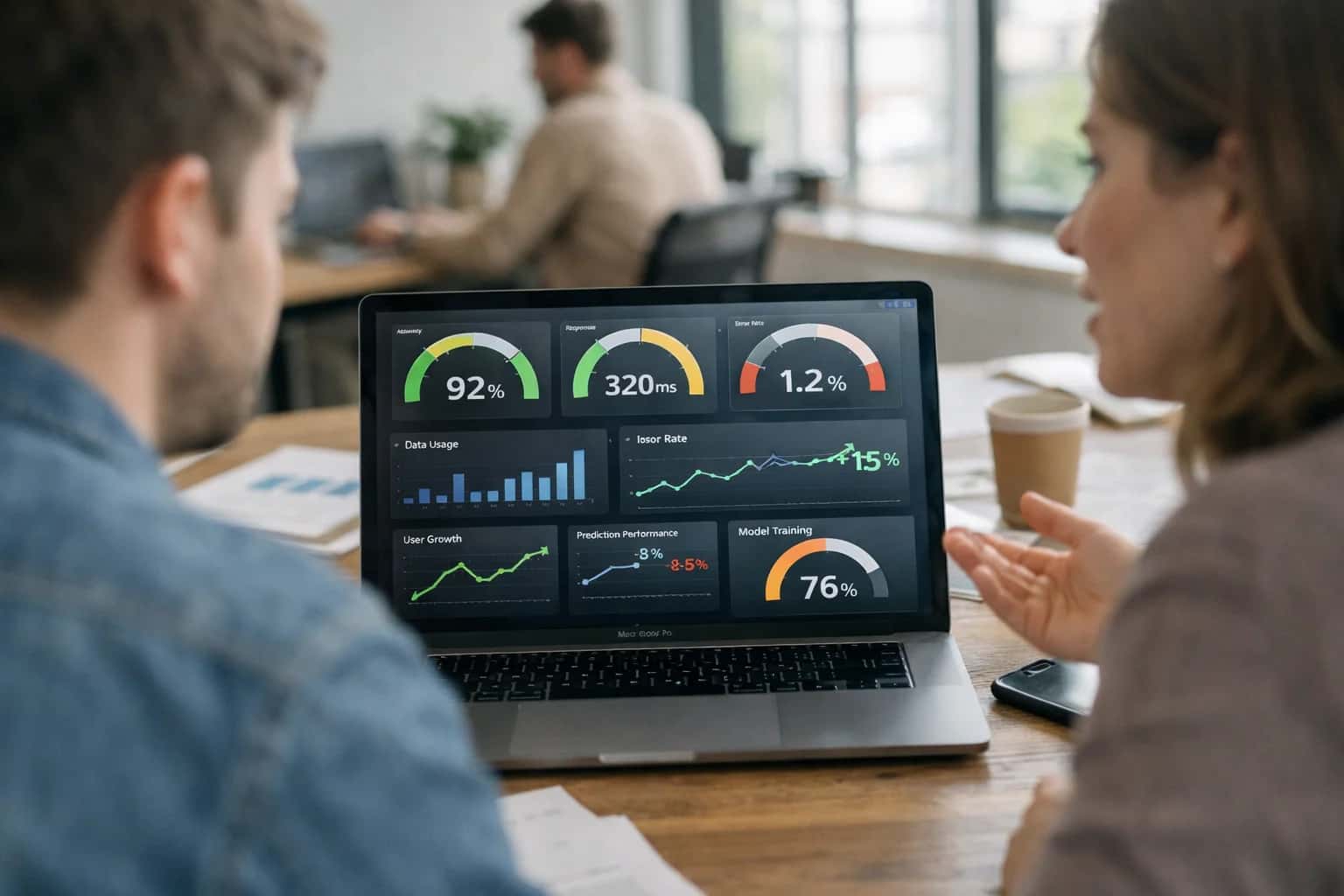
AI-POWERED DASHBOARDS FOR PLM LEADERS
From Static Reports to Predictive Intelligence
Transform PLM data into proactive insights by integrating AI directly into executive dashboards and KPI tracking.
Implementation connects to the PLM system's core APIs—like Teamcenter's SOA or Windchill's REST services—to pull real-time data on Engineering Change Orders (ECOs), item release status, design reuse rates, and supplier submission timelines. An AI layer processes this data to calculate dynamic KPIs, generate natural-language summaries, and trigger alerts. For example, a spike in ECOs for a specific product line can automatically trigger a workflow that pulls related quality reports and supplier communications into a summary for the engineering VP, moving from 'what happened' to 'why it happened and what to do next.'
Rollout is phased, starting with a single predictive KPI—like engineering change forecast—integrated into the existing dashboard framework. Governance is critical: all AI-generated insights are logged with source data references, and key predictions (e.g., a projected milestone delay) can be configured to require a human-in-the-loop confirmation before triggering official notifications. This ensures the AI augments decision-making without creating unvetted noise, building trust as the system scales to cover more of the product portfolio.
PLATFORM SURFACES
Where AI Connects to Your PLM Data
Dashboards and Scorecards
AI integrates directly into the executive-facing reporting layer of your PLM system. This surface includes custom dashboards, KPI scorecards, and data visualization tools that consume aggregated PLM data. AI agents can be embedded here to provide predictive alerts, automated commentary, and root-cause analysis.
Key Connection Points:
- KPI Widgets: Inject AI-generated insights into widgets tracking time-to-market, engineering change volume, and design reuse rates.
- Alerting Systems: Configure AI to monitor live data feeds and trigger alerts when KPIs deviate from forecasts or thresholds.
- Drill-Down Interfaces: Enable natural language queries (e.g., "Why is the ECO approval cycle time increasing?") that use RAG to retrieve relevant documents, change orders, and user activity logs from the PLM backend.
This transforms static reports into interactive, diagnostic tools for VPs of Engineering and Product Development.
EXECUTIVE AND OPERATIONAL KPI TRACKING
High-Value AI Dashboard Use Cases for PLM
Transform static PLM reports into proactive, predictive dashboards. By integrating AI directly with Siemens Teamcenter, PTC Windchill, and Dassault Systèmes, these dashboards aggregate data to track critical KPIs, provide root-cause analysis, and deliver predictive alerts for engineering and operations leadership.
01
Predictive Time-to-Market Tracking
Aggregates data from project timelines, ECO queues, and test results to predict launch delays. The dashboard highlights bottlenecks (e.g., prolonged change approvals) and forecasts completion dates, shifting focus from reporting to proactive intervention.
Weeks -> Days
Visibility lead time
02
Engineering Change Order (ECO) Volume & Impact Analysis
Monitors the volume, type, and approval velocity of ECOs across product lines. AI classifies changes (e.g., cost reduction, compliance) and correlates them with downstream impacts on BOMs and manufacturing schedules, identifying high-risk change patterns.
Batch -> Real-time
ECO monitoring
03
Design Reuse & Standardization Dashboard
Tracks part reuse rates and identifies 'rogue' custom designs. The dashboard analyzes item masters and CAD metadata to recommend existing components for new projects, promoting standardization and reducing part proliferation and qualification costs.
1 sprint
Insight generation
04
Compliance & Regulatory Readiness Monitor
Provides a real-time view of product compliance status against regulations like REACH or RoHS. By scanning PLM item attributes and linked substance data, the dashboard flags components with expiring certificates or missing documentation, automating audit preparation.
Same day
Gap identification
05
Supplier & Component Risk Heatmap
Visualizes supply chain risk by integrating PLM BOM data with supplier performance metrics. The dashboard uses AI to score components for obsolescence, single-source risk, and geopolitical exposure, enabling proactive redesign or sourcing decisions.
06
Digital Thread Health & Consistency Score
Measures data consistency across the digital thread from PLM to ERP and MES. The dashboard runs automated checks on BOM synchronization, revision alignment, and attribute mapping, providing a single score and pinpointing integration exceptions for data stewards.
Hours -> Minutes
Anomaly detection
PRACTICAL IMPLEMENTATION PATTERNS
Example AI-Powered Dashboard Workflows
These workflows illustrate how AI agents can transform static PLM dashboards into proactive, predictive command centers. Each example connects live PLM data to AI models, generating actionable insights for engineering and business leadership.
Trigger: A scheduled daily agent run or a real-time webhook from the PLM project management module when a key deliverable status changes.
Context Pulled: The agent retrieves:
- Current project phase, milestone dates, and task completion percentages from PLM (e.g., Teamcenter Project).
- Historical data for similar projects, including actual vs. planned durations.
- Recent change order volume and severity linked to the project from the PLM change module.
- Team member availability and open action items.
AI Action: A model analyzes the aggregated data to:
- Calculate a probabilistic delay risk score (e.g., High/Medium/Low).
- Identify the primary contributing factors (e.g., "3 critical ECOs pending approval," "Key resource at 120% allocation").
- Generate a natural language summary: "Project Alpha's System Design phase is at 45% risk of a 2-week delay due to unresolved high-impact change requests and resource constraints."
Dashboard Update & Next Step: The KPI dashboard updates the project's status tile with the new risk score and summary. An alert is queued for the project manager's notification feed. The dashboard may also surface recommended mitigation actions, such as "Expedite ECO-2024-087 review" or "Reassign task TSK-456."
FROM RAW DATA TO ACTIONABLE KPIS
Implementation Architecture: Building the Data Pipeline
A production-ready data pipeline that aggregates, cleans, and enriches PLM data to power executive dashboards with predictive insights.
The foundation is a real-time data ingestion layer that connects to your PLM system's core APIs—such as Siemens Teamcenter's SOA or PTC Windchill's REST services—to extract key entities. This layer continuously pulls structured data (e.g., item masters, BOMs, change orders, project timelines) and unstructured documents (specifications, meeting notes, CAD metadata). For initial historical loads, we implement batch extraction with delta detection to capture only new or modified records, ensuring efficiency and minimizing API load. This data is landed in a staging area, preserving its raw state for auditability.
A cleansing and enrichment pipeline then processes this raw data. Using pre-trained models, we automatically classify documents, extract key attributes (like material type or regulatory status), and flag inconsistencies such as duplicate part numbers or missing critical fields. For KPIs like design reuse rate, the pipeline calculates relationships between items across product families. For predictive alerts—such as a potential delay in time-to-market—the system analyzes project milestone dates, change order volume, and resource assignment data to identify at-risk projects. This processed data is stored in a time-series optimized database and a vector store for semantic querying, creating a single source of truth for dashboard consumption.
Finally, a governed API and access layer exposes this enriched data to your dashboarding tools (e.g., Tableau, Power BI) or a custom executive portal. We implement role-based access control (RBAC) to ensure users only see data pertinent to their domain, and all data transformations are logged for compliance. The pipeline is monitored for data freshness and quality, with automated alerts to data stewards if ingestion fails or anomaly detection flags a KPI deviation. This architecture ensures executives see reliable, timely insights—like a spike in engineering change volume or a dip in design reuse—enabling data-driven decisions without manual data wrangling.
IMPLEMENTATION PATTERNS
Code and Payload Examples
Querying PLM for Dashboard Metrics
A production dashboard needs to pull structured data from multiple PLM modules to calculate KPIs like time-to-market or change order volume. This typically involves querying the PLM's API or database for item masters, change records, and project timelines.
Below is a Python example using a hypothetical REST API client for Siemens Teamcenter to fetch data for a weekly engineering change volume KPI. The query filters by date and change type, returning a count for aggregation.
pythonimport requests from datetime import datetime, timedelta def get_weekly_eco_volume(teamcenter_base_url, auth_token): """Fetches count of Engineering Change Orders created in the last 7 days.""" headers = { 'Authorization': f'Bearer {auth_token}', 'Accept': 'application/json' } # Calculate date range end_date = datetime.utcnow() start_date = end_date - timedelta(days=7) # Construct query for Change Management module query_params = { 'type': 'ChangeOrder', 'fields': 'creation_date,status', 'filter': f'creation_date gt {start_date.isoformat()}Z', 'aggregate': 'count' } response = requests.get( f'{teamcenter_base_url}/api/v1/items', headers=headers, params=query_params ) response.raise_for_status() data = response.json() return data.get('aggregations', {}).get('count', 0)
This function returns a raw count that can be fed into a time-series chart, with the logic easily adapted for PTC Windchill or Aras Innovator using their respective SDKs.
AI-POWERED EXECUTIVE INSIGHTS
Realistic Time Savings and Business Impact
How AI integration transforms manual KPI tracking and reporting in PLM systems like Teamcenter and Windchill into proactive, predictive dashboards for leadership.
| Metric | Before AI | After AI | Notes |
|---|---|---|---|
KPI Report Generation | Manual data pulls, spreadsheet assembly (4-8 hours weekly) | Automated dashboard refresh (near real-time) | Eliminates manual consolidation from multiple PLM modules and reports |
Root-Cause Analysis for Delays | Ad-hoc investigation, manual correlation of change orders and project data (1-2 days) | AI-driven correlation with suggested causes (within minutes) | Identifies patterns across ECOs, resource allocations, and supplier data |
Design Reuse Rate Tracking | Quarterly audit via manual part searches and classification | Continuous monitoring with alerts on reuse opportunities | Proactively surfaces similar components to accelerate design and reduce cost |
Regulatory Compliance Status | Manual review of item records and documents before audits (weeks of prep) | Continuous compliance scoring with predictive gap alerts | Monitors for REACH, RoHS, and other standards against the live BOM |
Engineering Change Order (ECO) Volume Trend Analysis | Static monthly reports, lagging insight by 30+ days | Dynamic trend visualization with predictive volume forecasts | Helps anticipate resource needs and bottleneck risks in change workflows |
Time-to-Market Forecast Accuracy | Gut-feel estimates based on past projects | Data-driven projections using AI on project milestone and delay data | Improves portfolio planning and launch commitment reliability |
Cross-Functional Dashboard Alignment | Separate reports from Engineering, Quality, and Supply Chain | Unified, role-based views from a single source of truth | Reduces meeting time spent reconciling different data sets across departments |
OPERATIONALIZING AI FOR EXECUTIVE INSIGHTS
Governance, Security, and Phased Rollout
A practical approach to deploying, governing, and scaling AI-powered dashboards for PLM leadership.
Integrating AI into PLM executive dashboards requires a secure, governed architecture that respects the sensitivity of product data. A typical implementation uses a dedicated service layer that sits between the PLM system (e.g., Siemens Teamcenter, PTC Windchill) and the dashboard frontend (e.g., Power BI, Tableau). This layer, often built with a framework like CrewAI or n8n, orchestrates AI agents to query PLM APIs, aggregate data from BOMs, change orders, and project timelines, and generate predictive insights. All data flows are authenticated via the PLM system's RBAC, ensuring executives only see KPIs for their authorized programs and products. The AI service itself should be deployed within the enterprise cloud boundary, with all prompts, model calls, and data transformations logged to an immutable audit trail for compliance.
A phased rollout is critical for adoption and risk management. Phase 1 focuses on read-only, diagnostic KPIs like 'Engineering Change Order Volume by Program' or 'Design Reuse Rate,' built from structured PLM data. This validates the data pipeline and builds trust. Phase 2 introduces predictive alerts and root-cause analysis, such as flagging projects at risk of missing a phase-gate based on historical delay patterns or correlating a spike in ECOs with a specific supplier component. These insights are generated by AI models running in a controlled sandbox, with a human-in-the-loop review step before alerts are surfaced. Phase 3 enables interactive, natural-language exploration, allowing leaders to ask questions like 'What's driving the cost increase for Product Line X?' with the AI querying across PLM, ERP, and quality systems to synthesize an answer.
Governance is established through a cross-functional steering group (Engineering, IT, Security, Data Privacy) that approves each new KPI and AI use case. Key controls include: data anonymization for training sets, regular reviews of AI-generated insight accuracy, and clear procedures for correcting erroneous data or model drift. This ensures the dashboard remains a reliable source of truth, transforming PLM data from a static record into a dynamic system for strategic decision-making.
Enabling Efficiency, Speed & Accuracy
Intelligent Analysis, Decision & Execution
We build AI systems for teams that need search across company data, workflow automation across tools, or AI features inside products and internal software.
Talk to Us
Search across company data
Give teams answers from docs, tickets, runbooks, and product data with sources and permissions.
Useful when people spend too long searching or get different answers from different systems.
Enterprise searchRAGPermissions
Read more
Automate internal workflows
Use AI to route work, draft outputs, trigger actions, and keep approvals and logs in place.
Useful when repetitive work moves across multiple tools and teams.
AI agentsWorkflow automationGovernance
Read more
Add AI to products and internal tools
Build assistants, guided actions, or decision support into the software your team or customers already use.
Useful when AI needs to be part of the product, not a separate tool.
AI integrationDecision supportModel routing
Read moreAI INTEGRATION FOR PLM EXECUTIVE DASHBOARDS AND KPIS
Frequently Asked Questions
Common questions from engineering leadership and IT teams about implementing AI-powered dashboards that aggregate PLM data for predictive insights and root-cause analysis.
An effective dashboard pulls from multiple PLM modules to create a holistic view. Key sources include:
- Project Management: Timelines, deliverables, and resource assignments from modules like Teamcenter Project or Windchill ProjectLink.
- Change Management: Volume, cycle times, and approval states from Engineering Change Order (ECO) workflows.
- Item & BOM Management: Part counts, reuse rates, and obsolescence flags from the Item Master and Bill of Materials.
- Quality & Compliance: Non-conformance reports, audit findings, and regulatory status (e.g., REACH, RoHS) linked to parts.
- Document Management: Metadata on drawings, specifications, and certificates to track documentation completeness.
- Supplier Data: Component sourcing information and risk scores from integrated Supplier Collaboration modules.
The AI layer correlates this data, often requiring a staging area or data lake, to calculate KPIs like engineering change lead time, design reuse percentage, and regulatory compliance coverage.

About the author
Prasad Kumkar
CEO & MD, Inference Systems
Prasad Kumkar is the CEO & MD of Inference Systems and writes about AI systems architecture, LLM infrastructure, model serving, evaluation, and production deployment. Over 5+ years, he has worked across computer vision models, L5 autonomous vehicle systems, and LLM research, with a focus on taking complex AI ideas into real-world engineering systems.
His work and writing cover AI systems, large language models, AI agents, multimodal systems, autonomous systems, inference optimization, RAG, evaluation, and production AI engineering.
LinkedIn
Limited slotsGet a Free AI Consultation
Partnered with leading AI, data, and software stack.





How We Work
Custom AI workflows for your Business
One-fit-all AI don't work for modern businesses. At Inferensys, we aim to understand your business & custom requirements; which we use to define most efficient agentic workflows, the data, and the tools for your business.
01
Review the use case
We understand the task, the users, and where AI can actually help.
Read more02
Pick the right approach
We define what needs search, automation, or product integration.
Read more03
Build the first useful version
We implement the part that proves the value first.
Read more04
Improve from there
We add the checks and visibility needed to keep it useful.
Read moreThe first call is a practical review of your use case and the right next step.
Talk to Us