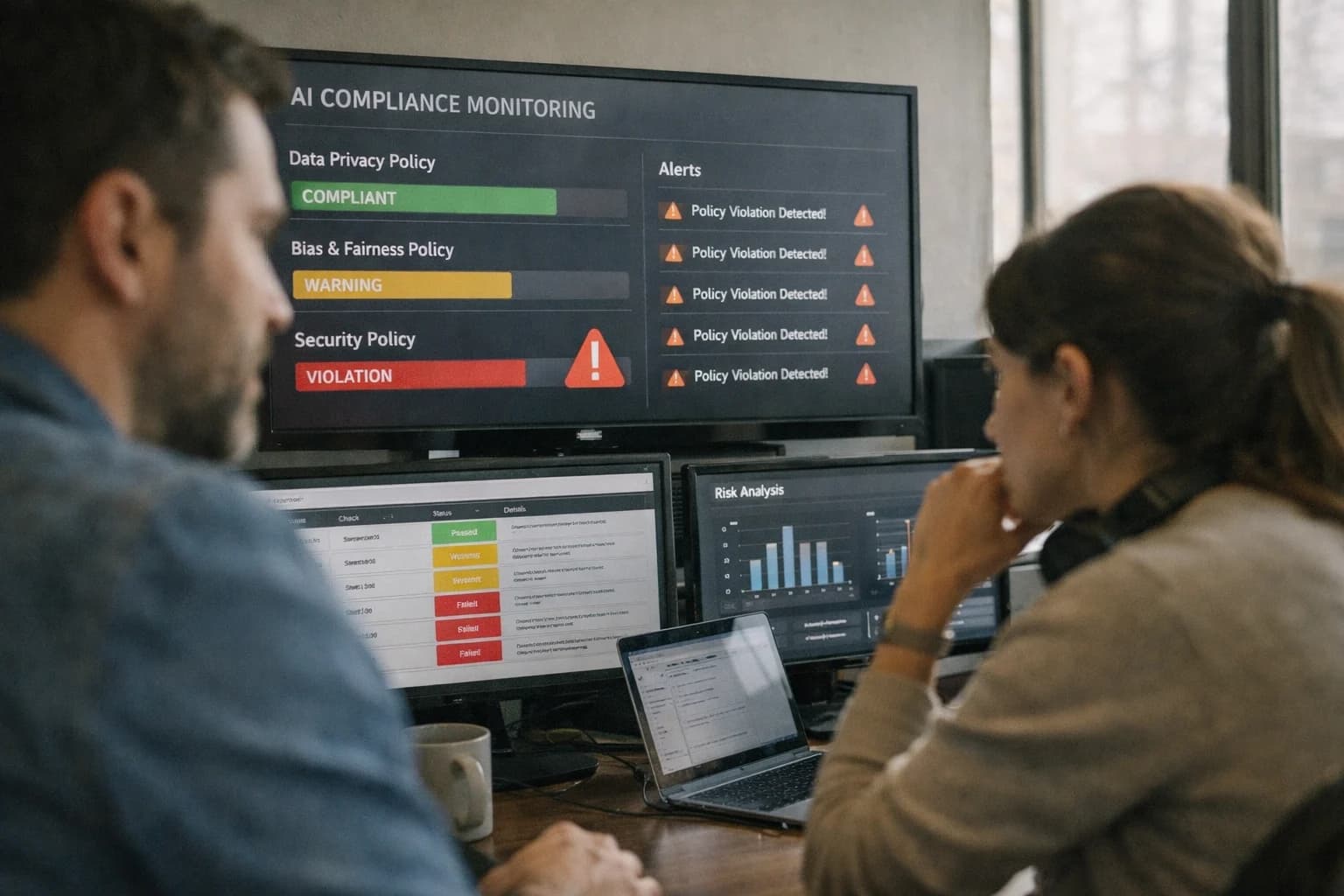
Automate regulatory monitoring (REACH, RoHS) in Siemens Teamcenter, PTC Windchill, and Dassault Systèmes. Use AI to flag compliance gaps, suggest required tests, and generate audit trails for quality managers.
Integrating AI into PLM compliance tracking transforms a reactive, document-heavy process into a proactive, data-driven system of record.
AI agents connect directly to the PLM data model—monitoring Item Masters, Document Vaults, and Change Objects in systems like Siemens Teamcenter or PTC Windchill. They scan for regulatory triggers (e.g., a new substance declaration, a revised RoHS directive) and automatically flag affected parts, assemblies, or suppliers. This shifts compliance from a periodic audit to a continuous, event-driven workflow embedded within the engineering lifecycle.
Implementation typically involves a service layer that subscribes to PLM events via REST/SOAP APIs or webhooks. When a new part revision is released or a material specification is updated, the AI pipeline extracts relevant attributes and documents, checks them against a governed rules engine (e.g., REACH, Conflict Minerals), and creates a Compliance Task or Deviation Record directly in the PLM workflow queue. For quality managers, this means gaps are identified in hours, not months, with a full audit trail linking the AI finding to the source PLM data.
Rollout requires careful governance: AI suggestions should route to a human-in-the-loop for final approval before any regulatory submission. Start with a pilot on a single product line or regulation, using the PLM's native role-based access controls (RBAC) to manage who receives alerts. This phased approach builds trust in the AI's accuracy while delivering immediate value in reducing manual screening time and mitigating compliance risk before production.
COMPLIANCE TRACKING
PLM Modules and Surfaces for AI Integration
Core Compliance Data Objects
The foundation of AI-driven compliance tracking lies in the Item Master and Part records within your PLM system. These objects contain critical attributes like material composition, supplier data, and revision history. AI integration focuses on these surfaces to:
Monitor Attribute Updates: Use webhooks or scheduled jobs to detect changes to fields like Material_Type, RoHS_Status, or REACH_Substance_List. An AI agent can analyze the delta to determine if a compliance gap has been introduced.
Enrich Sparse Data: When a new part is created with minimal data, an AI service can call supplier APIs or internal databases to suggest and auto-populate compliance-related attributes, reducing manual entry.
Flag Inconsistencies: Cross-reference part records against linked Specification Documents and Engineering Drawings. AI can identify discrepancies, such as a drawing calling for a lead-based solder not reflected in the item's compliance flags.
This continuous, automated audit at the record level prevents non-compliant items from progressing through the lifecycle.
AUTOMATED AUDIT PREPARATION & RISK MITIGATION
High-Value AI Use Cases for PLM Compliance Tracking
Integrate AI directly into Siemens Teamcenter, PTC Windchill, and Dassault Systèmes to automate the monitoring of item records, documents, and BOMs for regulatory adherence. These use cases target REACH, RoHS, conflict minerals, and other frameworks, reducing manual review cycles and closing compliance gaps before audits.
01
Automated Substance Declaration Review
AI scans item masters, material specifications, and supplier documentation upon release or change to validate against restricted substance lists (RSL). It flags components missing required declarations or containing non-compliant materials, automatically routing exceptions to the Materials Engineering team for review within the PLM change workflow.
Batch -> Real-time
Compliance check
02
Dynamic Audit Trail Generation
For every compliance-relevant action (e.g., part approval, document revision), an AI agent analyzes the change context and auto-generates a narrative audit entry. This creates a searchable, plain-English timeline of decisions linked to PLM records, slashing the time Quality Managers spend reconstructing evidence for internal or external audits.
1 sprint
Audit prep time
03
Test Requirement & Gap Analysis
By parsing product requirements and regional market rules stored in PLM, AI suggests required compliance tests (e.g., flammability, chemical leaching) and maps them to components. It identifies gaps in the test plan and can automatically generate Request for Test (RFT) documents in the linked QMS or lab system, ensuring nothing is missed before production.
Hours -> Minutes
Test plan creation
04
BOM-Level Compliance Roll-Up & Reporting
AI aggregates substance and certification data from individual part records to perform a full Bill of Materials (BOM) compliance roll-up. It generates instant reports showing the compliance status of a finished product assembly, highlighting any non-conforming sub-assemblies. This enables Product Stewards to make go/no-go decisions for new market launches faster.
05
Supplier Document Intelligence & Validation
Integrates with PLM supplier collaboration modules to process incoming Material Data Sheets (MDS), certificates of compliance (CoC), and test reports. AI extracts key data points (substance percentages, test standards), validates them against purchase order requirements, and flags discrepancies for the Sourcing team before the part is approved for use.
06
Proactive Obsolescence & Regulation Change Alerts
Monitors external regulatory databases and component lifecycle feeds. When a new regulation is published or a part is declared obsolete, AI cross-references it with the PLM item database and active BOMs. It automatically creates Engineering Change Requests (ECRs) for affected products, assigning them to the responsible engineer with suggested alternate parts or required redesign actions.
Same day
Risk notification
FOR QUALITY AND REGULATORY MANAGERS
Example AI-Powered Compliance Workflows
These workflows illustrate how AI agents can be integrated into your PLM system to automate compliance monitoring, reduce manual review burdens, and maintain a defensible audit trail. Each flow is triggered by a change in the PLM system and executes a series of automated checks and actions.
Trigger: A new part or material record is created or a BOM is updated in the PLM (e.g., Teamcenter Item Revision released).
Workflow:
An AI agent is notified via a PLM webhook or polls a 'released items' queue.
The agent extracts the part number, description, supplier data, and linked material specification documents.
It calls a document intelligence model to parse substance data from safety datasheets (SDS) or compliance certificates.
The extracted substance list is cross-referenced against configured regulatory lists (REACH SVHC, RoHS, Prop 65) and internal banned substance policies.
System Update: The agent writes results back to the PLM item as custom attributes:
Flagged_Substances: List of substances of concern.
Evidence_Document: Link to the parsed source document.
If status is Review_Required, a task is automatically created in the PLM workflow for the Quality Engineer, pre-populated with the analysis.
Human Review Point: The Quality Engineer reviews the flagged substances and evidence, making a final determination to approve or reject the part for use.
AUTOMATED COMPLIANCE WORKFLOWS
Implementation Architecture: Data Flow and Integration Patterns
A practical blueprint for integrating AI into PLM compliance tracking, connecting regulatory intelligence to item records and change processes.
The integration architecture connects to the PLM system's core data model—typically the Item Master, Document Management (DM) vault, and Change Management modules in systems like Siemens Teamcenter or PTC Windchill. An AI service layer acts as a middleware, subscribing to PLM events via webhooks or polling APIs for key triggers: a new part creation, a document revision release, or an Engineering Change Order (ECO) submission. For each item, the AI agent extracts relevant attributes (material composition, supplier data, intended use) and linked documents (specifications, test reports, certificates) from the PLM vault. This payload is sent to a compliance analysis engine, which cross-references the data against a continuously updated rules database for regulations like REACH, RoHS, or conflict minerals directives.
The analysis engine, often built on a RAG (Retrieval-Augmented Generation) architecture over a vector store of regulatory texts and historical audit findings, performs two primary functions: Gap Detection and Action Recommendation. It flags missing required tests, insufficient documentation, or substance concentration violations. It then generates specific, actionable recommendations—such as "Require ICP-MS test for cadmium on supplier XYZ-123"—and attaches this intelligence back to the PLM item as a structured compliance object or a linked analysis report. For change workflows, the AI can be embedded as an automated checkpoint in the ECO routing process, analyzing the proposed change's compliance impact and either auto-approving low-risk modifications or escalating high-risk ones to a designated Quality or Regulatory reviewer.
Governance and rollout require a phased approach. Start with a pilot on a single product family or commodity type (e.g., all plastic components) to refine the AI's classification accuracy and recommendation relevance. Implement a human-in-the-loop review step for all AI-generated flags during initial deployment, logging overrides to improve the model. The architecture must maintain a complete audit trail, linking the AI's analysis, the source PLM data snapshot, and any subsequent manual actions. For production scale, the integration should leverage the PLM system's native role-based access control (RBAC) to ensure only authorized users can view or act on compliance intelligence, and all data flows should be encrypted in transit and at rest to protect sensitive product information. This pattern turns the PLM system from a passive repository into an active compliance sentinel, reducing manual review from days to hours and providing a defensible, data-driven audit trail for regulators.
IMPLEMENTATION PATTERNS
Code and Payload Examples
Analyzing Item Records for Regulatory Gaps
An AI agent monitors newly released or modified PLM item records, checking material composition and supplier data against a rules engine for regulations like REACH, RoHS, or PFAS. It flags items missing required declarations or containing restricted substances. The agent typically runs on a schedule or is triggered by a Item.Released webhook.
python
# Example: Agent checking a PLM item record
import requests
# Fetch item data from PLM API (e.g., Teamcenter SOA)
item_response = requests.get(
f"{plm_base_url}/items/{item_id}",
headers={"Authorization": f"Bearer {token}"}
)
item_data = item_response.json()
# Prepare payload for compliance LLM call
analysis_payload = {
"item_id": item_data["id"],
"material_list": item_data["attributes"].get("materials", []),
"supplier_name": item_data["supplier"],
"product_category": item_data["classification"]
}
# Call AI service for rule evaluation
ai_response = requests.post(
"https://api.inferencesystems.com/v1/compliance/check",
json=analysis_payload,
headers={"X-API-Key": ai_api_key}
)
# Result contains flags and suggested actions
compliance_result = ai_response.json()
if compliance_result["status"] == "NON_COMPLIANT":
# Create a task or non-conformance in PLM's quality module
create_compliance_task(item_id, compliance_result["issues"])
AI-ASSISTED COMPLIANCE WORKFLOWS
Realistic Time Savings and Operational Impact
How AI integration transforms manual, reactive compliance tracking into a proactive, assisted process for quality managers and engineers.
Workflow
Before AI
After AI
Key Impact
Regulatory Gap Detection
Manual review of item specs & docs against spreadsheets
Automated scanning & flagging of PLM records for REACH/RoHS gaps
Shifts detection from days to hours, reduces oversight risk
Test Requirement Suggestion
Engineer references historical data or external standards
AI cross-references BOM materials with regulatory databases to suggest required tests
Accelerates NPI planning, ensures no test is missed
Audit Trail Generation
Manual compilation of evidence from documents and change logs
Auto-generated compliance report with linked PLM records, approvals, and test results
Cuts audit prep from weeks to days, ensures defensible records
Supplier Document Validation
Quality team manually reviews supplier CoC/MSDS submissions
AI pre-scans uploaded documents for completeness and flags discrepancies
Reduces manual review load by ~70%, accelerates onboarding
Change Impact Analysis for Compliance
Manual assessment of ECOs for potential compliance impact
AI analyzes affected items and suggests compliance re-validation steps
Prevents non-conforming releases, integrates compliance into change flow
Substance Declarations
Engineer manually populates substance fields in item master
AI extracts material data from specs/drawings and auto-fills PLM attributes
Eliminates data entry errors, ensures declaration accuracy
Exception & Waiver Management
Ad-hoc tracking of compliance waivers via email and spreadsheets
Structured workflow in PLM with AI tracking waiver expiry and re-validation triggers
Provides full visibility, prevents lapsed waivers from causing delays
ENSURING CONTROLLED, AUDITABLE AI FOR REGULATED PRODUCTS
Governance, Security, and Phased Rollout
A practical guide to implementing AI for PLM compliance tracking with security, governance, and a low-risk rollout plan.
Integrating AI into a PLM system for compliance tracking introduces new data flows and decision points that must be governed. A secure architecture typically involves a dedicated AI service layer that interacts with the PLM (e.g., Teamcenter, Windchill) via its official APIs (SOA or REST). This layer ingests Item Revision records, Document objects, and Change Order workflows for analysis, but never stores a full copy of the regulated data. All AI prompts, model calls, and generated outputs (like compliance gap flags or suggested test plans) are logged with full traceability back to the source PLM object ID, user, and timestamp, creating an immutable audit trail for quality managers and regulatory auditors.
A phased rollout is critical for user adoption and risk management. Phase 1 (Read-Only Analysis) might deploy AI agents to silently monitor newly released items and documents, flagging potential REACH or RoHS compliance gaps in a dedicated dashboard without altering any PLM records. Phase 2 (Assisted Workflow) integrates these findings into the Engineering Change Order (ECO) process, where the AI suggests required tests or documentation updates as tasks within the change workflow, requiring engineer approval. Phase 3 (Proactive Governance) enables the system to automatically hold the release of an item if a critical, unaddressed compliance gap is detected, triggering a predefined approval escalation path. This crawl-walk-run approach builds trust and allows for tuning the AI's confidence thresholds at each stage.
Security is paramount, especially for ITAR-controlled or sensitive product data. The AI service must operate within the enterprise's security perimeter, with strict Role-Based Access Control (RBAC) mirroring PLM permissions. For instance, a supplier collaboration user should not trigger AI analysis on classified military components. All data in transit is encrypted, and calls to external LLM APIs (like OpenAI or Anthropic) should use a zero-data-retention policy and, where possible, be routed through a private endpoint. A human-in-the-loop review step should be mandated for all AI-generated compliance recommendations before they are committed to the official product record, ensuring final accountability rests with the qualified engineer or quality manager.
Enabling Efficiency, Speed & Accuracy
Intelligent Analysis, Decision & Execution
We build AI systems for teams that need search across company data, workflow automation across tools, or AI features inside products and internal software.
IMPLEMENTATION AND GOVERNANCE
Frequently Asked Questions (FAQ)
Common questions from quality managers, engineering leaders, and IT architects planning AI integration for compliance tracking within Siemens Teamcenter, PTC Windchill, or similar PLM systems.
The integration follows a secure, API-first pattern:
Authentication & RBAC: The AI service authenticates to the PLM system (e.g., Teamcenter SOA, Windchill REST API) using a dedicated service account with scoped permissions, adhering to the principle of least privilege. It only accesses specific item types, document classes, and attributes needed for compliance checks.
Data Extraction: For each monitored item revision or document, the agent retrieves:
Linked compliance documents (Material Declarations, Test Certificates, RoHS/REACH statements)
Unstructured text from attached spec sheets or notes
Secure Processing: Extracted data is sent to the inference endpoint (e.g., Azure OpenAI, Anthropic) over a private endpoint/VPC. No raw PLM data is stored permanently in the AI service's context. Processed results (compliance flags, gaps, suggestions) are written back to the PLM via API, creating a secure, auditable loop.
Audit Trail: Every AI-initiated action—data pull, analysis, flag creation—is logged in the PLM's native audit system or a separate SIEM, capturing the user/service context, timestamp, and item ID.
About the author
Prasad Kumkar
CEO & MD, Inference Systems
Prasad Kumkar is the CEO & MD of Inference Systems and writes about AI systems architecture, LLM infrastructure, model serving, evaluation, and production deployment. Over 5+ years, he has worked across computer vision models, L5 autonomous vehicle systems, and LLM research, with a focus on taking complex AI ideas into real-world engineering systems.
His work and writing cover AI systems, large language models, AI agents, multimodal systems, autonomous systems, inference optimization, RAG, evaluation, and production AI engineering.
Partnered with leading AI, data, and software stack.
How We Work
Custom AI workflows for your Business
One-fit-all AI don't work for modern businesses. At Inferensys, we aim to understand your business & custom requirements; which we use to define most efficient agentic workflows, the data, and the tools for your business.
The first call is a practical review of your use case and the right next step.