AI integrates directly into Ecanvasser's mobile canvassing workflow through its API, acting as a real-time copilot for field staff. The integration surfaces at three key functional layers: the Turf Management module for intelligent route optimization, the Live Canvassing interface for script assistance and data validation, and the Survey Response backend for instant sentiment analysis. This allows AI to process geospatial data, voter history, and live input from the Ecanvasser mobile app to guide the volunteer's next action without leaving the platform.

Integration
AI Integration for Ecanvasser Canvassing
Add real-time AI intelligence to Ecanvasser's door-to-door canvassing workflow. Optimize routes, assist volunteers with live scripts, validate data instantly, and get actionable field insights.
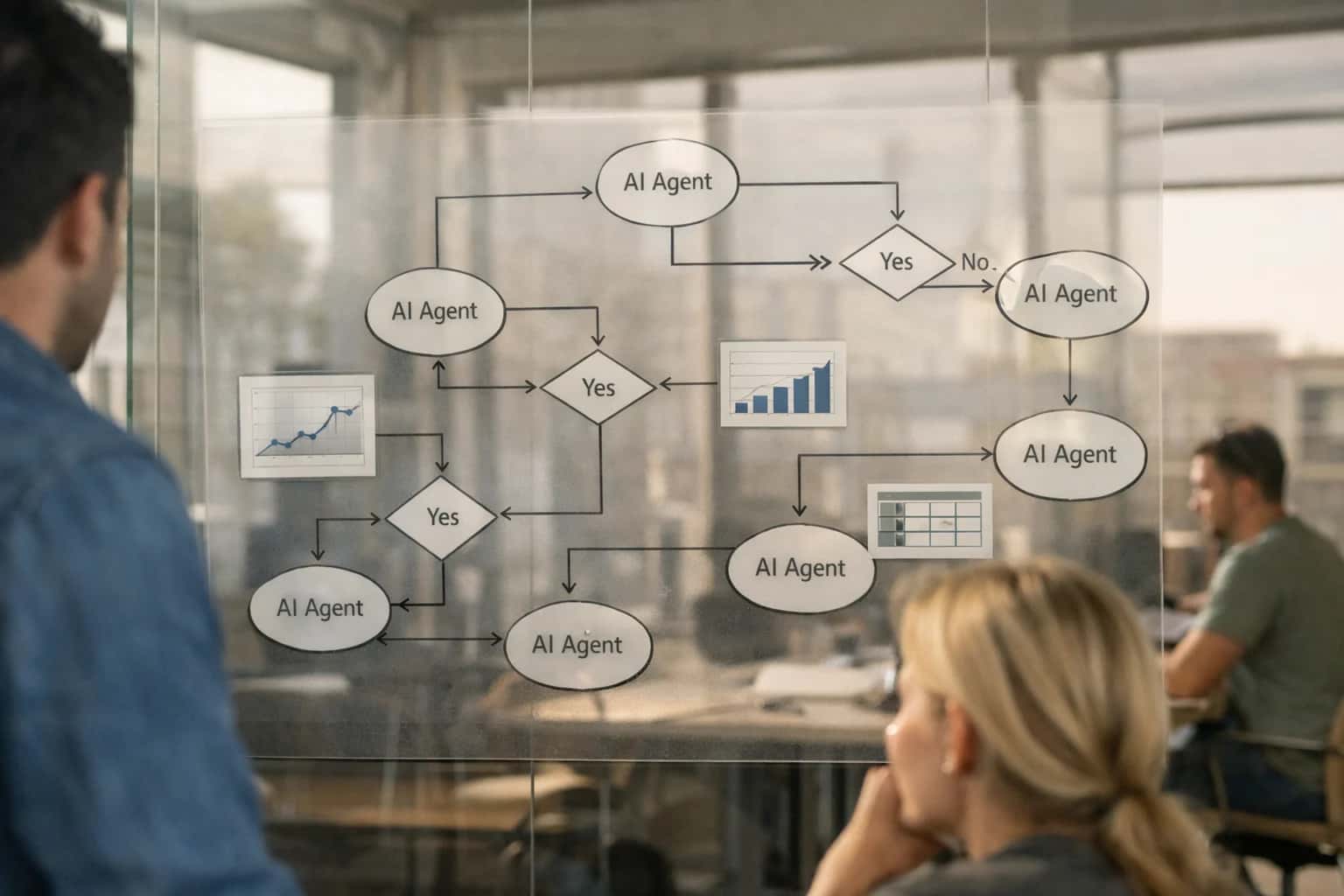
ARCHITECTURE FOR FIELD OPERATIONS
Where AI Fits in the Ecanvasser Canvassing Workflow
A technical blueprint for embedding AI into the door-to-door canvassing process to augment volunteer efficiency and data quality.
For implementation, a lightweight agent architecture listens to Ecanvasser webhooks for events like canvasser_check_in, survey_response_submitted, or turf_assigned. This triggers AI workflows—such as dynamically reordering a walk list based on updated voter propensity scores or validating an address against a master list—with results posted back via the Ecanvasser API to update records or push notifications to the canvasser's device. A common pattern uses a vector store for campaign knowledge (e.g., policy FAQs) that volunteers can query via natural language in the app, reducing calls to field directors.
Rollout focuses on a phased, turf-by-turf deployment to manage change. Governance is critical: all AI-generated suggestions (like a revised script prompt) should be logged in an audit trail linked to the Ecanvasser contact record, and a human-in-the-loop approval step is recommended for high-stakes data overrides. This ensures the ground game remains agile and data-driven while maintaining the accountability required in political fieldwork. For related architectural patterns, see our guide on AI Integration for Field Service Management Platforms.
CANVASSING WORKFLOW
Key Integration Surfaces in Ecanvasser
Real-Time Canvassing Intelligence
The Ecanvasser mobile app is the primary interface for field staff. AI integration here focuses on augmenting the live canvassing experience.
Key Integration Points:
- Script Assistance: Inject dynamic talking points or rebuttals based on the voter's profile (e.g., past survey responses, demographic data from the voter file) directly into the canvasser's script flow.
- Data Validation: Use AI to validate free-text survey responses as they are entered, flagging inconsistencies (e.g., a "Strongly Support" response with a negative comment) for the canvasser to confirm before submission.
- Next-Step Prompting: Based on the conversation flow and disposition, the AI can suggest logical next actions, such as scheduling a follow-up volunteer shift, sending a specific follow-up email, or marking the household for a lawn sign.
Integration is achieved via the Ecanvasser API, pushing AI-generated context to the app and receiving structured activity logs in return.
ECANVASSER INTEGRATION PATTERNS
High-Value AI Use Cases for Door-to-Door Canvassing
Integrate AI directly into Ecanvasser's field operations to transform manual, reactive canvassing into an intelligent, data-driven ground game. These patterns connect to the mobile app, API, and data model to deliver immediate operational lift.
01
Dynamic Walk List Optimization
AI re-orders canvassing routes in real-time based on updated voter propensity scores, time of day, and live feedback from earlier doors. Integrates with Ecanvasser's mapping API to push the optimal sequence to canvassers' mobile devices, prioritizing high-value households and clustering contacts efficiently.
15-25%
More contacts per shift
02
Live Script Assistance & Answer Engine
A copilot for canvassers that provides tailored talking points and instant answers based on the voter's profile and the issue at hand. Connects via a secure webview or companion app, using Ecanvasser's API to pull household data and log voter concerns as structured data for later analysis.
Hours -> Minutes
Onboarding new volunteers
03
Instant Survey Data Validation & Coding
As canvassers input free-text survey responses, NLP models categorize sentiment, extract key issues, and flag urgent voter concerns in real-time. Automatically tags data in Ecanvasser, enabling field managers to see emerging trends on their dashboard immediately, not after a manual data review.
Batch -> Real-time
Insight generation
04
Predictive Canvasser Performance Support
AI analyzes individual canvasser metrics (contact rate, survey completion, conversion) to identify struggling volunteers and deliver micro-coaching. Sends automated, personalized tips via Ecanvasser's in-app messaging or to the field manager's dashboard, helping improve team-wide efficiency.
1-2 Sprints
To pilot & measure impact
05
Automated Voter Profile Enrichment
Post-canvass, AI processes notes and survey responses to update supporter scores, flag strong advocates, and identify undecided voters for follow-up. This workflow syncs enriched intelligence back to the core voter profile in Ecanvasser, making field data immediately actionable for the next contact.
Same Day
Data becomes intelligence
06
Safety & Compliance Monitoring
Monitors geolocation pings and canvasser-submitted notes for anomalies or keywords indicating safety issues or potential compliance violations. Triggers real-time alerts to field managers within Ecanvasser and can log incidents automatically, helping protect volunteers and campaign integrity.
IMPLEMENTATION PATTERNS
Example AI-Augmented Canvassing Workflows
These workflows illustrate how AI agents connect to Ecanvasser's API and mobile data stream to augment the physical canvassing process. Each pattern is designed to be triggered by field activity, leverage campaign data, and return actionable intelligence or automation to the canvasser or manager.
Trigger: A field manager initiates a new walk list or a canvasser completes a block.
Context Pulled: The AI agent queries the Ecanvasser API for:
- The initial list of assigned addresses/voters.
- Historical contact data and survey responses for those voters.
- Real-time canvasser GPS location and average contact time.
- Campaign priority scores (e.g., persuasion priority, turnout likelihood) from an integrated model.
Agent Action: A routing algorithm (powered by an LLM for rule interpretation or a dedicated optimization model) reorders the list. It considers:
- Voter Priority: Clusters high-priority voters to ensure they are contacted first.
- Geospatial Efficiency: Creates the most time-efficient walking route, adjusting for one-way streets and physical barriers.
- Dynamic Factors: Re-weights based on time of day (avoiding evenings in certain areas) or real-time canvasser pace.
System Update: The optimized list is pushed via the Ecanvasser API to update the canvasser's mobile app in near-real-time. The agent logs the rationale for the reorder for manager review.
Human Review Point: Managers can set a confidence threshold; if the AI suggests a drastic deviation from the original turf cut, it can flag the new list for approval before sending to the field.
CONNECTING AI TO FIELD OPERATIONS
Implementation Architecture: Data Flow and APIs
A production-ready blueprint for wiring AI into the Ecanvasser API to augment canvassing workflows without disrupting your ground game.
The core integration pattern connects a secure AI service layer to Ecanvasser's REST API and webhook system. Key data objects flow bidirectionally: canvassers, surveys, responses, contacts, and tasks. The AI layer typically acts as a middleware processor, subscribing to webhooks for new survey submissions or GPS check-ins. It enriches this raw field data—applying NLP to free-text responses for sentiment and issue tagging, validating addresses, or scoring contact quality—before posting enriched metadata back to custom fields on the contact or response record via the API. This keeps the canonical data inside Ecanvasser while adding an intelligence layer.
For live script assistance, the architecture uses Ecanvasser's mobile SDK or a companion app that calls an AI agent endpoint. When a canvasser opens a contact record, the app sends the voter's history and survey questions to the AI service, which returns context-aware talking points or suggested rebuttals, displayed inline. Route optimization requires a batch process: nightly, the AI service fetches the walk_list and canvasser location data, runs an optimization algorithm (factoring in priority scores, walkability, and time windows), and pushes an optimized route sequence back as a custom task order. All API calls must respect Ecanvasser's rate limits and use OAuth 2.0, with sensitive voter data encrypted in transit and at rest.
Rollout should be phased, starting with a single pilot team and a non-critical workflow like automated data validation. Governance is critical: establish clear audit logs for all AI-generated suggestions and edits, and implement a human-in-the-loop approval step for any AI-driven changes to core voter data (e.g., support scores). This ensures field directors retain oversight while benefiting from AI augmentation. For a deeper dive on orchestrating these real-time data flows, see our guide on API Integration for Real-Time Field Data.
INTEGRATION PATTERNS
Code and Payload Examples
Real-Time Canvasser Assistance
When a canvasser submits a survey response via the Ecanvasser mobile app, a webhook can trigger an AI agent to provide instant script guidance or validate data. This handler receives the payload, enriches it with context, and posts a helpful tip back to the canvasser's device.
pythonfrom flask import Flask, request, jsonify import os from inference_client import AgentClient # Hypothetical client app = Flask(__name__) AGENT = AgentClient(api_key=os.getenv('INFERENCE_API_KEY')) @app.route('/ecanvasser-webhook', methods=['POST']) def handle_survey_response(): data = request.json # Extract key fields from Ecanvasser webhook payload survey_data = data.get('survey_response', {}) question = survey_data.get('question_text') answer = survey_data.get('answer_text') voter_id = data.get('voter_id') # Call AI agent for live guidance agent_prompt = f""" A canvasser just asked: '{question}' The voter responded: '{answer}' Provide one concise follow-up question or data validation note for the canvasser. """ guidance = AGENT.complete(prompt=agent_prompt) # Post guidance back to Ecanvasser via its API for in-app display # (Implementation uses Ecanvasser's PATCH /tasks or in-app messaging) return jsonify({"agent_guidance": guidance, "voter_id": voter_id}), 200
This pattern enables real-time coaching, improving data quality and conversion rates during the conversation.
AI-ENHANCED CANVASSING WORKFLOWS
Realistic Time Savings and Operational Impact
A comparison of manual vs. AI-assisted processes within Ecanvasser's door-to-door canvassing workflow, showing realistic efficiency gains and operational improvements.
| Metric | Before AI | After AI | Notes |
|---|---|---|---|
Walk List Prioritization | Manual sorting by turf or basic filters | Dynamic scoring & route optimization | AI uses voter propensity, past contact history, and real-time field data |
Canvasser Script Assistance | Static paper script or PDF | Live, context-aware talking points | AI suggests responses based on voter profile and previous survey answers |
Survey Data Entry & Validation | Manual typing into app post-visit | Voice-to-text transcription with auto-tagging | Reduces errors and ensures data is captured before canvasser leaves location |
Issue & Sentiment Triage | Manager reviews notes nightly | Real-time alerts for urgent voter concerns | Flags high-priority issues (e.g., strong opposition, new supporter) for immediate follow-up |
Turf Performance Analysis | End-of-day spreadsheet review | Live dashboard with predictive insights | AI identifies underperforming areas and suggests resource reallocation |
Volunteer Shift Management | Manual calls/texts for scheduling | Predictive no-show alerts & automated fill-ins | AI forecasts availability and optimizes team composition for the day |
Data Sync to Campaign HQ | Batch upload at end of canvass | Continuous, validated sync via API | Ensures field data is immediately available for strategists and other systems |
IMPLEMENTING AI IN A REGULATED ENVIRONMENT
Governance, Security, and Phased Rollout
Deploying AI for Ecanvasser requires a secure, controlled approach that protects voter data and maintains campaign integrity.
A production AI integration for Ecanvasser canvassing must be built with a zero-trust data architecture. This means the AI agent or workflow never directly accesses the raw Ecanvasser database. Instead, it interacts solely through secure API calls with scoped permissions, typically using OAuth 2.0 or API keys tied to a service account with the minimum necessary access—often read/write for survey_responses, contacts, and canvassing_tasks. All AI-generated outputs, such as suggested script responses or route optimizations, should be written to a dedicated ai_suggestions custom object or an external audit log before being presented to the user, creating a clear lineage for review.
Governance is critical for voter contact. Implement a human-in-the-loop approval layer for high-stakes actions. For example, an AI that dynamically re-orders a walk list based on predicted support scores should require a field director's approval via an in-app prompt or a dedicated Slack/Teams channel before the updated list is pushed to volunteers' Ecanvasser mobile apps. Similarly, AI-generated summaries of voter sentiment from open-text survey responses should be flagged for campaign manager review before being used to adjust messaging. This ensures strategic control and mitigates the risk of AI-driven missteps in a fast-moving campaign.
Rollout should follow a phased, metrics-driven approach. Start with a pilot turf—a single precinct or volunteer team—using AI for a single, high-value workflow like live script assistance. Monitor key metrics: volunteer completion rate, data entry accuracy, and qualitative feedback. After validating impact and stability, expand to route optimization for the pilot group. Only after multiple successful sprint cycles should you scale AI to core workflows like real-time data validation and predictive task assignment across the entire campaign. This incremental approach de-risks the integration and allows for tuning prompts and logic based on real-world Ecanvasser usage patterns.
Finally, establish a continuous compliance review. Political data is governed by a patchwork of state laws and platform terms of service. Your AI integration should include automated checks to ensure AI-suggested actions or data annotations do not inadvertently violate consent (e.g., contacting a voter who requested no contact) or create biased outcomes. Regular audits of the AI's decision logs against Ecanvasser's activity history are essential. For a deeper dive on building secure, policy-aware agents, see our guide on AI Governance and LLMOps Platforms.
Enabling Efficiency, Speed & Accuracy
Intelligent Analysis, Decision & Execution
We build AI systems for teams that need search across company data, workflow automation across tools, or AI features inside products and internal software.
Talk to Us
Search across company data
Give teams answers from docs, tickets, runbooks, and product data with sources and permissions.
Useful when people spend too long searching or get different answers from different systems.
Enterprise searchRAGPermissions
Read more
Automate internal workflows
Use AI to route work, draft outputs, trigger actions, and keep approvals and logs in place.
Useful when repetitive work moves across multiple tools and teams.
AI agentsWorkflow automationGovernance
Read more
Add AI to products and internal tools
Build assistants, guided actions, or decision support into the software your team or customers already use.
Useful when AI needs to be part of the product, not a separate tool.
AI integrationDecision supportModel routing
Read moreIMPLEMENTATION BLUEPRINT
Frequently Asked Questions
Practical questions from field directors and technical leads planning AI integration for Ecanvasser's door-to-door canvassing workflow.
AI integrates via Ecanvasser's REST API and webhook system to act as a real-time copilot for field staff. The typical data flow is:
- Trigger: A canvasser opens a voter profile or submits a survey response via the Ecanvasser mobile app.
- Context Pull: The integration calls the Ecanvasser API to fetch the voter's history, survey questions, and any existing notes.
- AI Action: An agent (using a model like GPT-4) analyzes the context and provides:
- Script assistance: Tailored talking points based on the voter's demographic data and past interactions.
- Data validation: Flags inconsistent or improbable survey responses (e.g., a 120-year-old voter).
- Priority alerting: Highlights high-propensity or undecided voters based on campaign scoring models.
- System Update: The AI's output is delivered back to the canvasser's app interface. Critical alerts can also create follow-up tasks in Ecanvasser for field managers.
- Human Review: All AI suggestions are presented as guidance. The canvasser makes the final decision on what to record, ensuring human-in-the-loop control.

About the author
Prasad Kumkar
CEO & MD, Inference Systems
Prasad Kumkar is the CEO & MD of Inference Systems and writes about AI systems architecture, LLM infrastructure, model serving, evaluation, and production deployment. Over 5+ years, he has worked across computer vision models, L5 autonomous vehicle systems, and LLM research, with a focus on taking complex AI ideas into real-world engineering systems.
His work and writing cover AI systems, large language models, AI agents, multimodal systems, autonomous systems, inference optimization, RAG, evaluation, and production AI engineering.
LinkedIn
Limited slotsGet a Free AI Consultation
Partnered with leading AI, data, and software stack.





How We Work
Custom AI workflows for your Business
One-fit-all AI don't work for modern businesses. At Inferensys, we aim to understand your business & custom requirements; which we use to define most efficient agentic workflows, the data, and the tools for your business.
01
Review the use case
We understand the task, the users, and where AI can actually help.
Read more02
Pick the right approach
We define what needs search, automation, or product integration.
Read more03
Build the first useful version
We implement the part that proves the value first.
Read more04
Improve from there
We add the checks and visibility needed to keep it useful.
Read moreThe first call is a practical review of your use case and the right next step.
Talk to Us