
Inferensys

Integration

AI Integration for McKesson EnterpriseRx Workflow Automation

A technical blueprint for connecting AI agents to McKesson EnterpriseRx to orchestrate complex, multi-step pharmacy workflows—reducing manual handoffs and accelerating prescription-to-patient cycles.
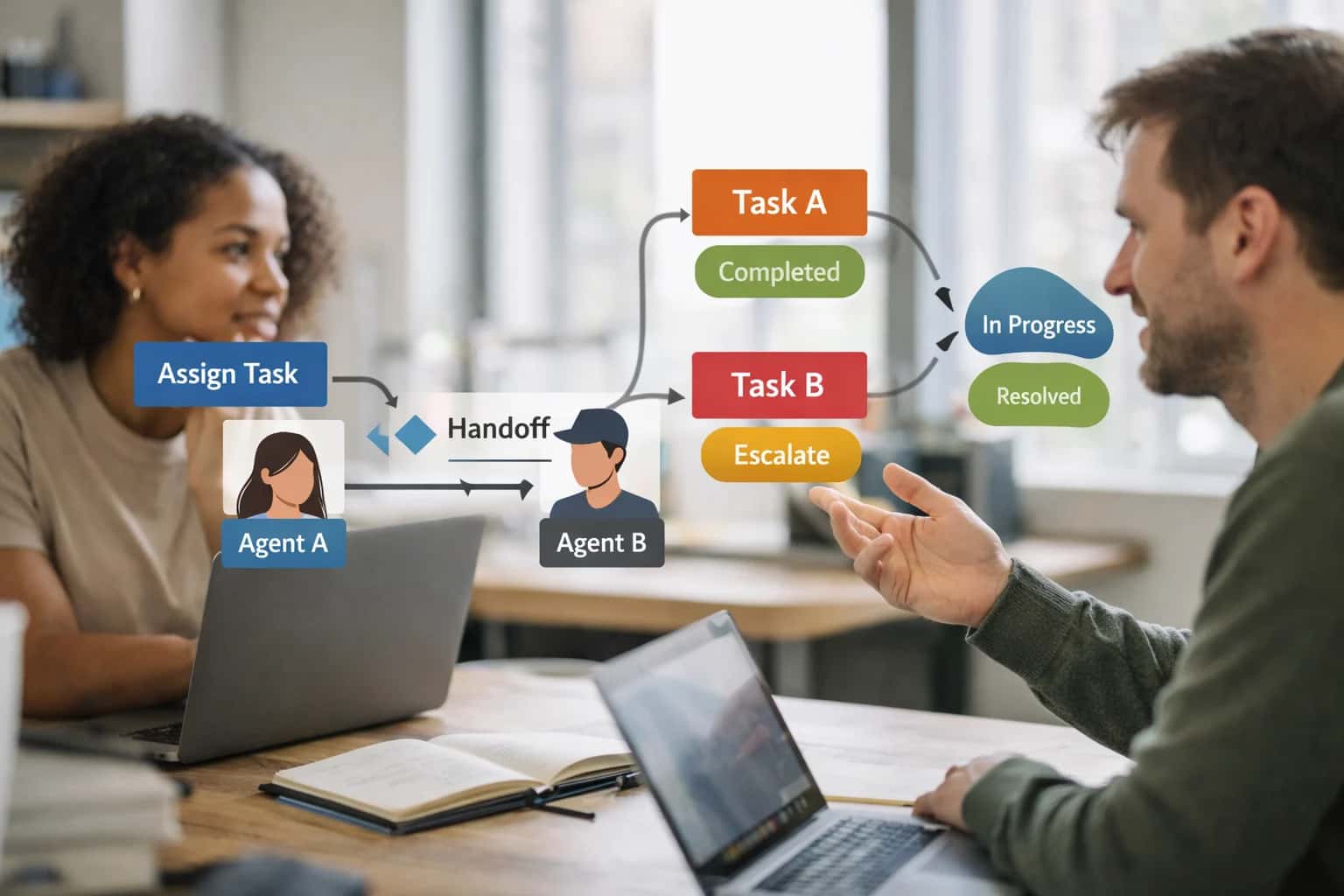
Engineer reviewing agent handoff workflow on laptop, task routing diagrams visible, technical office setup.
ARCHITECTURE AND ROLLOUT

Where AI Fits into McKesson EnterpriseRx Workflows

A practical blueprint for integrating AI agents and copilots into McKesson's core prescription, inventory, and revenue cycle workflows.

AI integration for McKesson EnterpriseRx is not about replacing the platform but augmenting its existing data model and automation layer. The most effective implementations connect to key surfaces via its API, webhooks, and database extensions to inject intelligence into high-friction, manual processes. Primary integration points include:

  • Prescription Verification Queue: Injecting AI-powered clinical safety checks (drug interactions, dosage appropriateness) before a pharmacist's final review.
  • Prior Authorization (PA) Module: Triggering AI agents from a PA_REQUIRED status flag to auto-draft submissions, track payer portals, and update the PA_STATUS field.
  • Inventory Management Tables: Connecting AI models to stock_level, purchase_history, and supplier_catalog data for predictive reordering and expiry management.
  • Claims Adjudication Engine: Intercepting REJECTED claims to analyze denial reasons, suggest corrective NDC or Dx codes, and automate resubmission workflows.
  • Patient Profile and Communication Logs: Using patient_id, last_refill_date, and preferred_channel to power personalized adherence nudges and refill reminders.

A production rollout typically follows a phased, workflow-specific approach. Start with a single high-impact use case, such as AI-assisted prior authorization. The architecture involves:

  1. Event Capture: A listener on McKesson's PA workflow table or using its EnterpriseRx API to detect new PA-required prescriptions.
  2. Agent Orchestration: An AI agent retrieves the patient's medication_history, diagnosis_codes from the profile, and relevant clinical notes from connected EHRs via an integration middleware.
  3. Tool Calling & Submission: The agent uses tools to navigate payer portals or format a structured submission (e.g., a PDF form 278), logs the attempt, and posts the draft back to a PA_NOTES field for pharmacist review and sign-off.
  4. Status Synchronization: A separate process polls for payer responses and updates the McKesson record, closing the loop. This pattern—detect, enrich, act, sync—can be replicated for inventory forecasting, denial management, and patient communication workflows, ensuring each AI action is traceable within the platform's existing audit trails.

Governance is critical. AI outputs in clinical and financial workflows must be designed for pharmacist-in-the-loop review, not autonomous action. Implement role-based access controls (RBAC) so AI suggestions are visible only to authorized roles (e.g., Pharmacist, Inventory Manager). All AI-generated content, such as PA draft letters or patient messages, should be logged with a source: ai_agent tag in the platform's activity logs. Start with a pilot in a single store or for a specific drug class, measure impact in terms of PA turnaround time (hours reduced) or inventory waste (dollars saved), and scale workflows only after validating accuracy and pharmacist trust. The goal is to create a seamless extension of McKesson's workflow surfaces, where AI handles the data gathering and drafting, enabling staff to focus on high-value verification and patient care.

AI WORKFLOW AUTOMATION

Key Integration Surfaces in McKesson EnterpriseRx

The Core Verification and Dispensing Pipeline

This is the central nervous system of EnterpriseRx, where AI can inject intelligence into the linear prescription lifecycle. Key integration surfaces include the Verification Queue API, which allows an external AI agent to fetch pending scripts, apply clinical safety checks, and return a flagged status (e.g., READY, REVIEW_NEEDED, PA_REQUIRED). The Dispensing Status webhook can be configured to trigger AI actions at critical stages, such as when a script moves to 'Product Selection' or 'Final Check'.

For workflow automation, AI can act as a pre-verification layer, analyzing e-prescription data (SIG, drug, patient history) against external knowledge bases for drug-drug interactions or dosage appropriateness before a pharmacist reviews. The output can be written back to the prescription's Clinical Notes field or a custom AI Insights extension table via the Data Layer API, providing a clear audit trail of AI-assisted decisions within the native platform workflow.

MCKESSON ENTERPRISERX

High-Value AI Workflow Automation Use Cases

Integrating AI agents into McKesson EnterpriseRx transforms isolated tasks into orchestrated, intelligent workflows. These patterns connect prescription verification, billing, dispensing, and patient communication into seamless, agent-managed processes that reduce manual handoffs and accelerate pharmacy operations.

01

End-to-End Prior Authorization Orchestration

AI agents automate the entire PA lifecycle. Triggered by a flagged prescription in the Verification Queue, the agent extracts clinical data from the patient profile, drafts the submission using payer-specific templates, interfaces with payer portals via secure automation, and monitors for a response. Upon receipt, it parses the decision, updates the PA Status field in EnterpriseRx, and alerts the pharmacist—turning a multi-day, manual process into a same-day, hands-off workflow.

Days -> Hours
Submission timeline
02

Intelligent Refill Management & Patient Outreach

Agents monitor the Refill Queue and patient adherence history to proactively manage renewals. For eligible refills, the agent performs automated benefit verification, checks for drug interactions against updated patient history, and initiates multi-channel patient outreach (SMS, email, IVR) for confirmation. Upon patient approval, it routes the prescription through the appropriate workflow (e.g., central fill, in-store) and updates the Patient Communication Log, creating a closed-loop refill automation system.

Batch -> Real-time
Outreach model
03

Exception-Based Claims Adjudication & Denial Triage

Instead of manual review for every rejected claim, AI agents intercept Adjudication Rejections from the claims engine in real-time. Using historical data and payer rules, the agent categorizes the denial (e.g., COB, invalid code), suggests a corrective action (e.g., submit with a different NDC), and can either auto-resubmit simple fixes or escalate complex cases to a billing specialist with a drafted appeal note. Outcomes are logged back to the Claim History for continuous learning.

80%+
Auto-resolution target
04

Predictive Inventory & Smart Reordering

Agents analyze EnterpriseRx Inventory Movement, prescription trends, seasonal data (e.g., flu season), and supplier lead times to forecast demand. They generate daily purchase suggestions, highlight slow-moving items nearing expiry, and can automatically create Purchase Orders within defined thresholds. The agent also monitors order confirmations and shipment tracking, alerting staff to delays that could cause stockouts, effectively acting as a 24/7 inventory manager.

Reduce waste
Key outcome
05

Central Fill & Multi-Store Workflow Coordination

For pharmacies using central fill or managing multiple locations, AI agents orchestrate the routing logic. Based on real-time queue length at each store, technician availability, and drug location, the agent intelligently routes new prescriptions or refills. It manages the handoff between the Central Fill System and the dispensing EnterpriseRx instance, synchronizes patient notifications, and ensures the final product status is accurately reflected in the originating store's workflow.

Optimized routing
Workload balance
06

Clinical Verification Copilot & DUR Support

Integrated directly into the pharmacist's Verification Screen, an AI copilot provides real-time, context-aware support. It cross-references the prescription against the patient's full medication history (including external EHR data via integrated feeds), highlights potential drug-drug or drug-allergy interactions beyond basic DUR, suggests therapeutic alternatives for non-formulary drugs, and flags high-risk scenarios like opioid overlaps. This augments the pharmacist's review without disrupting their native workflow.

Enhanced safety
Clinical review
MCKESSON ENTERPRISERX

Example AI-Agent Orchestrated Workflows

These concrete workflows illustrate how AI agents can be embedded into McKesson EnterpriseRx to automate complex, multi-step operational sequences. Each example details the trigger, data context, agent actions, and resulting platform updates.

Trigger: A new prescription requiring a PA is entered into the EnterpriseRx workflow and flagged in the PriorAuthQueue.

Context Pulled: The AI agent retrieves:

  • Patient demographics and insurance details from the PatientProfile.
  • Prescription details (drug, dose, quantity) from the RxRecord.
  • Relevant diagnosis codes and clinical notes from linked MedicalHistory or scanned documents.
  • Payer-specific PA form requirements and submission portal URLs from a configured PayerRules knowledge base.

Agent Action:

  1. Form Population: Uses an LLM to extract necessary information and populate the payer's PA form (PDF or web form).
  2. Clinical Justification: Drafts a concise medical necessity statement based on guidelines and patient history.
  3. Submission: Logs into the payer portal via secure, headless browser automation or submits via a direct API if available.
  4. Tracking: Initiates a monitoring loop, checking the portal or a designated webhook endpoint for a status update.

System Update: Upon receiving an approval/denial response, the agent:

  • Updates the PriorAuthStatus field on the RxRecord to "Approved," "Denied," or "Pending Additional Info."
  • Logs the decision, reference number, and effective dates in the RxNotes.
  • If denied, flags the record for pharmacist review and attaches the denial reason.

Human Review Point: The pharmacist reviews the AI-drafted form and justification before the agent submits, or is alerted immediately for any denials requiring an appeal.

WORKFLOW ORCHESTRATION

Implementation Architecture: Connecting AI to McKesson EnterpriseRx

A technical blueprint for embedding AI agents into McKesson's prescription lifecycle to automate multi-step operational sequences.

Connecting AI to McKesson EnterpriseRx requires a layered approach that respects the platform's data model and existing workflows. The primary integration surfaces are its RESTful APIs for prescription, patient, and inventory data, coupled with database triggers or event listeners for real-time workflow initiation. An AI orchestration layer sits adjacent to EnterpriseRx, acting on events like a new e-prescription drop into the verification queue, a prior authorization flag, or a low-stock alert. This layer uses agents to execute multi-step tasks—such as gathering patient history from an integrated EHR, checking a payer portal for PA requirements, drafting a submission, and updating the PA_Status field in EnterpriseRx—all within a single, auditable workflow.

For workflow automation, the architecture typically involves: 1) Event Capture via McKesson's API or database polling, 2) Context Assembly where an agent retrieves related records (patient profile, drug details, inventory levels), 3) Tool Calling where sub-agents perform discrete actions like benefit verification or clinical screening, and 4) Action Execution where results are written back to EnterpriseRx via API or used to trigger platform-native automations. High-impact targets include the verification screen for AI-assisted clinical review, the PA work queue for automated form population and submission, and the inventory module for predictive reorder suggestions. Each integration point must include RBAC checks to mirror McKesson's user permissions and maintain a full audit trail linked to the original prescription ID.

Rollout is phased, starting with read-only agents that provide recommendations to pharmacists within existing screens, progressing to supervised automation for non-clinical tasks like patient refill reminders, and finally to autonomous agents for closed-loop workflows like inventory reordering. Governance is critical; all AI actions should be logged in a separate system-of-record, and key decisions (like overriding a drug interaction alert) must require a pharmacist-in-the-loop approval step within the McKesson UI. This architecture ensures AI augments—rather than disrupts—the validated, compliant workflows pharmacies depend on, turning sequential manual tasks into parallel, agent-managed processes. For related patterns, see our guides on AI Integration for Pharmacy Management Platform Workflow Automation and AI Integration for McKesson EnterpriseRx Prior Authorization.

ENTERPRISERX WORKFLOW AUTOMATION

Code & Payload Examples

AI-Assisted Clinical Review

Integrate AI agents into the prescription verification queue to pre-screen for drug interactions, dosage appropriateness, and prior authorization flags before pharmacist final approval. This reduces manual review time and surfaces clinical insights directly within the workflow.

Example: Triggering an AI Review via Webhook When a new Rx enters the verification queue, EnterpriseRx can POST a payload to your AI service. The agent analyzes the data and returns a structured recommendation.

json
// Sample Webhook Payload from EnterpriseRx
{
  "event_type": "rx_verification_pending",
  "rx_id": "RX-2024-567890",
  "patient": {
    "id": "PAT-12345",
    "date_of_birth": "1978-05-15",
    "allergies": ["penicillin", "sulfa"]
  },
  "medication": {
    "ndc": "00074-4357-05",
    "name": "Lisinopril 10mg",
    "sig": "Take 1 tablet by mouth daily",
    "days_supply": 30
  },
  "prescriber_npi": "1234567890",
  "payer": {
    "bin": "610014",
    "pcn": "MEDDP",
    "group": "GRP123"
  }
}
AI-ENHANCED WORKFLOW ORCHESTRATION

Realistic Time Savings & Operational Impact

This table illustrates the tangible impact of integrating AI agents into McKesson EnterpriseRx to connect disparate manual tasks into streamlined, orchestrated processes. Metrics are based on typical independent pharmacy and health system pharmacy operations.

Workflow StageBefore AI IntegrationAfter AI IntegrationImplementation Notes

Prior Authorization (PA) Submission

20-45 minutes per PA (gather notes, call payer, fill forms)

5-10 minutes review & submit (AI drafts form, fetches clinical data)

AI agent interfaces with payer portals; pharmacist reviews draft and provides final approval.

Prescription Verification & Clinical Review

3-5 minutes per Rx (manual checks for interactions, dosage)

< 1 minute flag review (AI pre-scans, surfaces high-risk alerts)

AI integrates with verification queue, providing prioritized flags. Pharmacist final sign-off remains.

Inventory Reorder Point Analysis

Daily manual review of 50+ SKUs for low stock

Automated daily report with 5-10 prioritized action items

AI analyzes movement, expiry, and supplier lead times; suggests POs integrated with wholesaler API.

Patient Refill Outreach & Adherence

Batch calls/ texts for 50+ overdue refills, 2-3 hours weekly

Personalized, triggered outreach for 100+ patients, <30 min weekly review

AI uses refill history to identify at-risk patients, sends multi-channel nudges, logs responses in patient profile.

Claim Denial Triage & Resubmission

15-25 minutes per denial to research and correct

5 minutes to review AI-suggested correction & resubmit

AI categorizes denial reason from ERA, suggests code fixes, and pre-populates resubmission form in platform.

Payer Benefit Verification

3-8 minutes per new Rx via phone or portal navigation

Real-time check (<30 sec) triggered during data entry

AI agent runs in background during Rx entry, fetching formulary, copay, and PA requirements from payer API.

End-of-Day Reconciliation & Reporting

45-60 minutes manual compilation from multiple screens

10-minute review of automated summary & exception report

AI aggregates data from transaction logs, cash drawer reports, and DUR logs, flagging discrepancies for review.

Multi-Step New Patient Onboarding

Disconnected steps across profile, benefits, med history (20+ min)

Orchestrated workflow guided by AI agent (8-12 min)

AI agent sequences tasks: creates profile, runs benefits, requests records from EHR, and schedules pharmacist consult.

ARCHITECTING CONTROLLED AI OPERATIONS

Governance, Security & Phased Rollout

A practical framework for implementing AI agents in McKesson EnterpriseRx with security, auditability, and incremental value delivery.

Integrating AI into a regulated workflow like McKesson EnterpriseRx requires a governance-first architecture. This means building agents that operate within the platform's existing RBAC (Role-Based Access Control) and audit trail systems. For example, an AI agent suggesting a therapeutic alternative should log its reasoning as a note in the prescription record, tagged with the agent's service account, for pharmacist review and approval. All tool calls to external APIs (e.g., for drug interaction databases or payer portals) must be executed through a secure middleware layer that enforces data masking, rate limiting, and comprehensive logging before any data enters or leaves the EnterpriseRx data layer.

A phased rollout is critical for adoption and risk management. Phase 1 typically starts with a single, high-volume, low-risk workflow like automated refill eligibility checking. Here, an AI agent monitors the refill queue, checks for refill-too-soon flags or expired prescriptions using platform APIs, and updates the queue status—all without autonomous action. This builds trust. Phase 2 might introduce prior authorization draft generation, where the agent pulls clinical data from the patient profile and populates a PA form, but requires a pharmacist to review and submit. Phase 3 could expand to multi-step workflow orchestration, such as handling a rejected claim by analyzing the rejection code, pulling correct coding guidelines, and automatically re-submitting—but only after a configurable business rule is met and the action is logged in the platform's transaction history.

Security is non-negotiable. AI services should never have direct, persistent access to the EnterpriseRx production database. Instead, integration should use McKesson's published APIs and webhook endpoints where possible, with credentials managed in a vault. For workflows requiring data analysis, a nightly sync to a secure, isolated data environment can feed the AI models, with results pushed back via API. This pattern keeps the live system secure while enabling AI insights. Furthermore, all AI-generated outputs—whether a PA draft or an inventory suggestion—must include a human-in-the-loop approval step in the initial rollout, with the ability to define which user roles can approve or override agent decisions directly within the EnterpriseRx UI.

MCKESSON ENTERPRISERX WORKFLOW AUTOMATION

Frequently Asked Questions

Practical answers to common technical and operational questions about integrating AI agents into McKesson EnterpriseRx workflows.

AI agents integrate via a middleware layer that listens to EnterpriseRx API webhooks and monitors specific database tables. Common triggers include:

  • New prescription entry in the Rx table with a status of Entered.
  • Prior Authorization flag set to Pending in the PAAuthorization object.
  • Inventory reorder point breach logged in the InventoryTransaction table.
  • Claim rejection posted to the Claim table with a denial reason.

Upon trigger, the middleware securely passes the relevant record IDs and context (patient ID, drug NDC, etc.) to the agent orchestration platform. Agents then call back to update EnterpriseRx via its REST API, writing results to fields like ClinicalNotes, PAStatus, or InternalComments.

Prasad Kumkar

About the author

Prasad Kumkar

CEO & MD, Inference Systems

Prasad Kumkar is the CEO & MD of Inference Systems and writes about AI systems architecture, LLM infrastructure, model serving, evaluation, and production deployment. Over 5+ years, he has worked across computer vision models, L5 autonomous vehicle systems, and LLM research, with a focus on taking complex AI ideas into real-world engineering systems.

His work and writing cover AI systems, large language models, AI agents, multimodal systems, autonomous systems, inference optimization, RAG, evaluation, and production AI engineering.



