AI integration for McKesson EnterpriseRx payer workflows focuses on three primary surfaces within the platform's billing module: the Claims Status Inquiry queue, the Explanation of Benefits (EOB) processing pipeline, and the Prior Authorization (PA) Tracking dashboard. The integration uses EnterpriseRx's API webhooks—such as those triggered by a Claim Rejection event or a PA Required flag—to launch AI agents. These agents are granted secure, read-only access to specific data objects (e.g., Patient, Prescription, Payer, ClaimHistory) to gather context before executing external tasks like drafting payer inquiries or parsing uploaded EOB PDFs.

Integration
AI Integration for McKesson EnterpriseRx Payer Communication
Automate time-consuming payer phone calls, document parsing, and status updates directly within McKesson EnterpriseRx's billing and claims modules using AI agents.
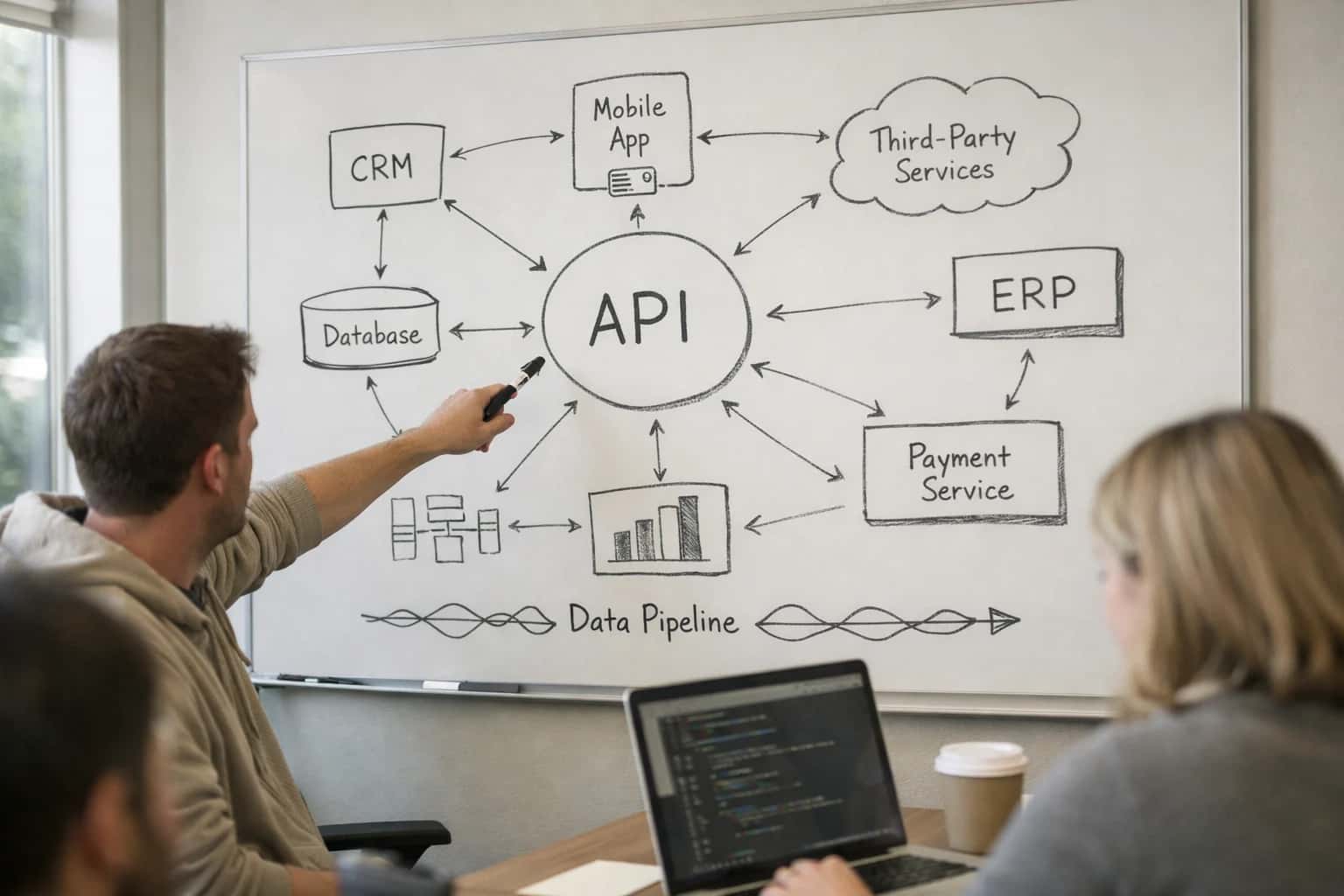
ARCHITECTURE & ROLLOUT
Where AI Fits into McKesson EnterpriseRx Payer Workflows
A practical blueprint for integrating AI agents into the billing and claims adjudication workflows of McKesson EnterpriseRx to automate payer communication.
In a typical implementation, an AI agent is triggered from a pending claim in the Workflow Queues. It autonomously logs into the designated payer portal via a secure browser automation layer, retrieves the current status, and parses the response. The agent then drafts a concise, structured note—citing the claim ID, status code, and next steps—and posts it back to the Claim Notes field via API, while also updating the Claim Status if a resolution is reached. For prior authorizations, a separate agent uses clinical data from the Patient Profile to populate CMS-1500 or electronic PA forms, submits them, and monitors the payer's portal for a decision, updating the PA Status field in EnterpriseRx accordingly.
Rollout is typically phased, starting with a single high-volume payer or claim type (e.g., Medicare Part B rejections) in a pilot store. Governance is critical: all agent actions are logged to a separate audit trail with a human-in-the-loop approval step configured for any status override or form submission. The integration runs as a middleware service, keeping the core EnterpriseRx system unchanged, which simplifies maintenance and ensures compliance with the platform's update cycles. The primary impact is operational: turning manual, phone-based payer follow-up that takes hours per day into an automated background process that provides same-day status updates, allowing pharmacy staff to focus on clinical and patient-facing tasks.
PAYER COMMUNICATION
Integration Surfaces in McKesson EnterpriseRx
Core Adjudication Engine
The Billing Module is the primary surface for payer communication, handling real-time claims submission, adjudication responses, and denial tracking. AI integration here focuses on automating the manual follow-up that occurs after an initial rejection.
Key Integration Points:
- Claim Status Inquiry API: Trigger an AI agent to check the status of a
PENDINGorREJECTEDclaim via payer portals or clearinghouse APIs. The agent parses the response and updates theClaim.Statusfield in EnterpriseRx. - Denial Reason Code Mapping: When a claim is denied, the AI can analyze the
RejectionCodeandRejectionTextfrom the 835/ERA. It then maps this to a specific action—like requesting a copy of the EOB, correcting a NDC, or initiating a prior authorization—and creates a follow-up task in the platform's work queue. - Automated Re-submission Workflow: For clean, fixable rejections (e.g., invalid date of birth), the AI can correct the data in the claim object and automatically re-submit via the platform's billing engine, logging the entire activity for audit.
This turns a static log of denials into an active, automated resolution workflow.
MCKESSON ENTERPRISERX
High-Value AI Use Cases for Payer Coordination
Integrating AI into McKesson EnterpriseRx's payer communication workflows automates the manual, time-intensive tasks that delay revenue and burden pharmacy staff. These use cases connect directly to the platform's adjudication engine, billing module, and external payer portals.
01
Automated Claim Status Inquiry
AI agents monitor the adjudication queue for pending or rejected claims, automatically logging into payer portals (like CoverMyMeds or Change Healthcare) to check statuses. Results are parsed and written back to the claim record in EnterpriseRx, eliminating manual phone calls and portal navigation.
Hours -> Minutes
Status resolution
02
EOB/ERA Intelligent Parsing
When electronic remittance advice (ERA) files are received, AI extracts key data—adjustment reason codes, patient responsibility amounts, and denial details—and maps them to the corresponding claim in EnterpriseRx. This automates reconciliation and flags claims needing follow-up.
Batch -> Real-time
Data ingestion
03
Denial Triage & Appeal Drafting
AI analyzes denial patterns from the platform's rejection reports. For common denials (e.g., 'Prior Authorization Required', 'Invalid NDC'), it drafts initial appeal letters by pulling clinical notes and prescription details from the patient profile, ready for pharmacist review.
Same day
Appeal initiation
04
Real-Time Benefit Verification (BVT)
Triggered from the new prescription workflow, an AI agent performs a real-time benefit check by interfacing with payer APIs or portals. It returns formulary status, copay, deductible status, and PA requirements directly into the prescription screen, preventing downstream rejections.
< 30 seconds
Verification time
05
Payer-Specific Inquiry Automation
For payers requiring phone calls, AI uses voice agents to navigate IVR systems, wait on hold, and conduct structured inquiries. Conversation summaries and outcomes are logged in the payer communication notes field within EnterpriseRx, creating a full audit trail.
80% reduction
Manual call volume
06
Contract & Fee Schedule Analysis
AI analyzes historical claim data from EnterpriseRx against payer contract terms and fee schedules. It identifies underpayments and reimbursement discrepancies, generating exception reports for the billing team to pursue corrective action.
Proactive
Revenue recovery
PAYER COMMUNICATION AUTOMATION
Example AI Agent Workflows
These workflows detail how AI agents can be integrated into McKesson EnterpriseRx to automate specific, high-friction payer communication tasks. Each flow connects to the platform's data model and APIs to execute actions and update records, reducing manual phone calls and portal navigation.
Trigger: A new prescription is entered into the EnterpriseRx workflow with a PAYER_ID and DRUG_NDC.
Agent Action:
- The agent is triggered via a webhook from EnterpriseRx's prescription queue, receiving the
PATIENT_ID,DRUG_NDC, andPAYER_ID. - It authenticates with the payer's portal API (or uses a secure RPA layer) using stored credentials from a vault.
- It submits a real-time eligibility and benefits (E&B) check, parsing the structured response or OCR-ing a PDF Explanation of Benefits (EOB).
- The agent extracts key fields:
COPAY_AMOUNT,FORMULARY_STATUS,PA_REQUIRED(Yes/No),QUANTITY_LIMIT, andREFILL_LIMIT.
System Update:
- The agent calls the EnterpriseRx API to update the prescription record with the fetched data, populating custom fields like
AUTO_VERIFIED_COPAYandAUTO_PA_FLAG. - If
PA_REQUIREDisYes, it automatically creates a Prior Authorization task in the platform's work queue, pre-populated with the payer's specific form ID and clinical criteria pulled from the response.
Human Review Point: The pharmacist reviews the auto-populated PA task and attached criteria before initiating the clinical submission.
CONNECTING AI TO THE BILLING MODULE
Implementation Architecture: Data Flow & APIs
A technical blueprint for integrating AI agents directly into McKesson EnterpriseRx to automate payer communication workflows.
The integration architecture centers on the Billing and Claims Module within EnterpriseRx. AI agents are triggered by specific events in the platform's workflow, such as a claim rejection (ClaimStatus = 'Rejected'), a new prior authorization requirement (PA_Required = TRUE), or a manual request from the billing queue. These events are captured via EnterpriseRx's API webhooks or by monitoring designated database tables (e.g., tblClaims, tblPayerCommunications). The payload includes the prescription NDC, patient ID, payer ID, and the specific denial code or PA reason, which is routed to the AI orchestration layer.
Our AI agents then execute a multi-step workflow: First, they retrieve the full patient and prescription context from EnterpriseRx via its RESTful APIs (e.g., GET /api/v1/prescriptions/{id}). Next, they call external payer portals or clearinghouse APIs (like Change Healthcare or RelayHealth) using secure, credentialed sessions to fetch real-time eligibility or claim details. For tasks requiring human-like interaction, such as drafting a detailed clinical justification for a PA, an LLM agent uses a pre-configured prompt template populated with the retrieved data. The generated draft inquiry, EOB summary, or appeal letter is then posted back to a dedicated AI_Notes custom field in the claim record and logged in the platform's activity audit trail for pharmacist review and submission.
Rollout is phased, starting with a single high-volume denial code or payer. Governance is critical: all AI-generated content is flagged as a Draft - AI Assisted and requires a pharmacist's electronic sign-off via a one-click approval button injected into the EnterpriseRx UI before any external submission. The system maintains a full audit log of all AI actions, including the source data, prompt used, and output, ensuring compliance with pharmacy regulations. This architecture does not replace the pharmacist's final judgment but creates a powerful copilot that turns hours of manual phone calls and form-filling into minutes of review and confirmation.
PAYER COMMUNICATION WORKFLOWS
Code & Payload Examples
Parsing Explanation of Benefits (EOB) PDFs
When a payer responds with an EOB document (often a PDF), an AI agent can extract key data to update the claim status in EnterpriseRx. This involves:
- Using a vision or document model to parse the EOB for claim number, adjudication status (paid, denied, pending), paid amount, and denial reason codes.
- Structuring this data into a JSON payload.
- Calling the EnterpriseRx API to update the corresponding
ClaimorBillingTransactionrecord.
This automates a manual data entry task, ensuring the platform's billing dashboard reflects the latest payer status within minutes of receipt.
json// Example Payload for EnterpriseRx Claim Status Update { "externalClaimId": "CLM20241115-8472", "enterpriseRxClaimId": "a1b2c3d4-e5f6-7890", "adjudicationStatus": "DENIED", "payerResponseDate": "2024-11-15T14:30:00Z", "paidAmount": 0.00, "denialReasonCode": "CO-97", "denialReasonText": "Payment adjusted because the benefit for this service is included in the payment/allowance for another service/procedure.", "actionRequired": "RESUBMIT_WITH_MODIFIER", "sourceDocument": "EOB_SCAN_8472.pdf" }
AI-ASSISTED PAYER COORDINATION
Realistic Time Savings & Operational Impact
This table illustrates the tangible workflow improvements when integrating AI agents into McKesson EnterpriseRx's billing and communication modules to handle repetitive payer interactions.
| Payer Communication Task | Before AI | After AI | Implementation Notes |
|---|---|---|---|
Benefit Verification & PA Requirement Check | Manual portal login and search (5-15 min per Rx) | Automated API query and summary (1-2 min) | AI agent logs into payer portals, returns formulary status and PA flag to the Rx record. |
EOB/ERA Review & Denial Categorization | Staff reads each EOB to identify denial reason (3-5 min each) | AI parses document, categorizes denial, suggests action (30 sec) | Human review of AI summary required before appeal initiation. |
Status Inquiry for Pending Claims | Phone hold times or portal navigation (10-20 min per call) | AI agent makes automated call or checks portal, logs result (2-3 min) | Result logged in platform notes; exceptions flagged for staff. |
Drafting Prior Authorization Clinical Summaries | Pharmacist composes from scratch using chart notes (10-20 min) | AI drafts initial summary from patient history for review (2-3 min) | Pharmacist edits and approves AI draft, ensuring clinical accuracy. |
Updating Claim Status in EnterpriseRx | Manual data entry from EOB or portal into billing module (2-3 min) | AI auto-populates status fields via API based on parsed data (Instant) | Requires mapping AI output to specific McKesson billing fields. |
Identifying Recurring Denial Patterns | Monthly manual report review to spot trends (2-4 hours monthly) | Weekly automated analysis of rejection codes with root cause insights (15 min review) | AI analyzes platform rejection data, surfaces top denial reasons by payer. |
Patient Copay Assistance Eligibility Scan | Manual check of multiple manufacturer program websites (5-10 min) | AI scans patient/medication data against program criteria (1 min) | Returns applicable program links and forms to the patient profile for staff follow-up. |
ENTERPRISE-GRADE IMPLEMENTATION
Governance, Security & Phased Rollout
A controlled, secure approach to deploying AI for payer communication within McKesson EnterpriseRx.
Integrating AI into the billing and claims module of McKesson EnterpriseRx requires a governance-first architecture. This typically involves a middleware layer that sits between EnterpriseRx and AI services, handling secure data extraction, prompt orchestration, and audit logging. Key integration points include the Claim Status Inquiry and EOB/ERA processing workflows. Data is extracted via API or database query, de-identified if necessary, and sent to the AI model for tasks like drafting payer calls or parsing denial reasons. All AI-generated content and actions are logged back to a dedicated audit table within the platform or an external system, creating a complete lineage from the original prescription to the AI-assisted resolution.
Security is paramount when handling PHI and payer data. The implementation enforces strict role-based access control (RBAC) aligned with existing EnterpriseRx user permissions—only authorized billing staff or pharmacists can trigger or review AI actions. Communication with external AI models occurs over encrypted channels, and sensitive data can be processed in a virtual private cloud (VPC) endpoint. For payer portal interactions, AI agents operate through secure, monitored browser automation sessions, with credentials managed in a vault and never exposed in prompts or logs. This ensures compliance with HIPAA and payer security requirements while automating previously manual tasks.
A phased rollout minimizes risk and maximizes adoption. Phase 1 often targets a single, high-volume workflow like automated Claim Status Inquiries, deploying in a pilot location with a human-in-the-loop review step for all AI-drafted communications. Phase 2 expands to EOB/ERA summarization and denial coding, integrating AI suggestions directly into the platform's claim edit screen. Phase 3 introduces full automation for low-risk, repetitive payer follow-ups, with AI agents updating the Claim Status field in EnterpriseRx upon successful resolution. Each phase includes monitoring for accuracy, pharmacist feedback loops, and adjustments to prompts and workflows, ensuring the AI augments—rather than disrupts—the established revenue cycle process.
Enabling Efficiency, Speed & Accuracy
Intelligent Analysis, Decision & Execution
We build AI systems for teams that need search across company data, workflow automation across tools, or AI features inside products and internal software.
Talk to Us
Search across company data
Give teams answers from docs, tickets, runbooks, and product data with sources and permissions.
Useful when people spend too long searching or get different answers from different systems.
Enterprise searchRAGPermissions
Read more
Automate internal workflows
Use AI to route work, draft outputs, trigger actions, and keep approvals and logs in place.
Useful when repetitive work moves across multiple tools and teams.
AI agentsWorkflow automationGovernance
Read more
Add AI to products and internal tools
Build assistants, guided actions, or decision support into the software your team or customers already use.
Useful when AI needs to be part of the product, not a separate tool.
AI integrationDecision supportModel routing
Read moreIMPLEMENTATION AND SECURITY
Frequently Asked Questions
Common technical and operational questions about integrating AI agents into McKesson EnterpriseRx to automate payer communication, claims status inquiries, and denial management workflows.
The integration uses a layered security approach:
- Service Account Authentication: A dedicated, non-human service account is provisioned within EnterpriseRx with role-based access control (RBAC) scoped strictly to the Billing and Claims modules.
- API Gateway & Webhooks: All AI agent interactions are routed through a secure API gateway that handles authentication, rate limiting, and audit logging. The agent listens for webhook events (e.g.,
claim.rejected,pa.required) from EnterpriseRx. - Data Minimization: The agent only requests the specific data fields needed for a task (e.g., patient ID, drug NDC, claim number, rejection code) via the EnterpriseRx API. Full patient records are not pulled unless required for complex clinical review.
- Encrypted Context: Data passed to the LLM (like OpenAI or Anthropic) is encrypted in transit and at rest. We use zero-retention policies with the AI provider and never send PHI for model training.
- Audit Trail: Every agent action—data pull, draft generation, status update—is logged with a timestamp, user/service account ID, and action type back to a secure audit table, creating a complete lineage for compliance.

About the author
Prasad Kumkar
CEO & MD, Inference Systems
Prasad Kumkar is the CEO & MD of Inference Systems and writes about AI systems architecture, LLM infrastructure, model serving, evaluation, and production deployment. Over 5+ years, he has worked across computer vision models, L5 autonomous vehicle systems, and LLM research, with a focus on taking complex AI ideas into real-world engineering systems.
His work and writing cover AI systems, large language models, AI agents, multimodal systems, autonomous systems, inference optimization, RAG, evaluation, and production AI engineering.
LinkedIn
Limited slotsGet a Free AI Consultation
Partnered with leading AI, data, and software stack.





How We Work
Custom AI workflows for your Business
One-fit-all AI don't work for modern businesses. At Inferensys, we aim to understand your business & custom requirements; which we use to define most efficient agentic workflows, the data, and the tools for your business.
01
Review the use case
We understand the task, the users, and where AI can actually help.
Read more02
Pick the right approach
We define what needs search, automation, or product integration.
Read more03
Build the first useful version
We implement the part that proves the value first.
Read more04
Improve from there
We add the checks and visibility needed to keep it useful.
Read moreThe first call is a practical review of your use case and the right next step.
Talk to Us