AI connects to Eyefinity's Staff Scheduling APIs and Practice Analytics data feeds to create a dynamic scheduling layer. The integration ingests historical appointment volume, provider calendars, staff credentials, and employee preference rules. This allows the AI to model future demand at the clinic and provider level, generating optimized schedules that balance patient access, staff preferences, and labor cost targets. The system acts as a copilot for the practice manager, proposing weekly schedules that adhere to compliance rules (e.g., optician licensing per location) and contractual hours, which are then reviewed and published back to Eyefinity.

Integration
AI Integration with Eyefinity Employee Scheduling
Add AI to Eyefinity's staff scheduling APIs for dynamic, multi-location workforce management. Automate demand-based staffing, enforce compliance rules, and fill last-minute shifts with intelligent recommendations.
ARCHITECTURE AND ROLLOUT
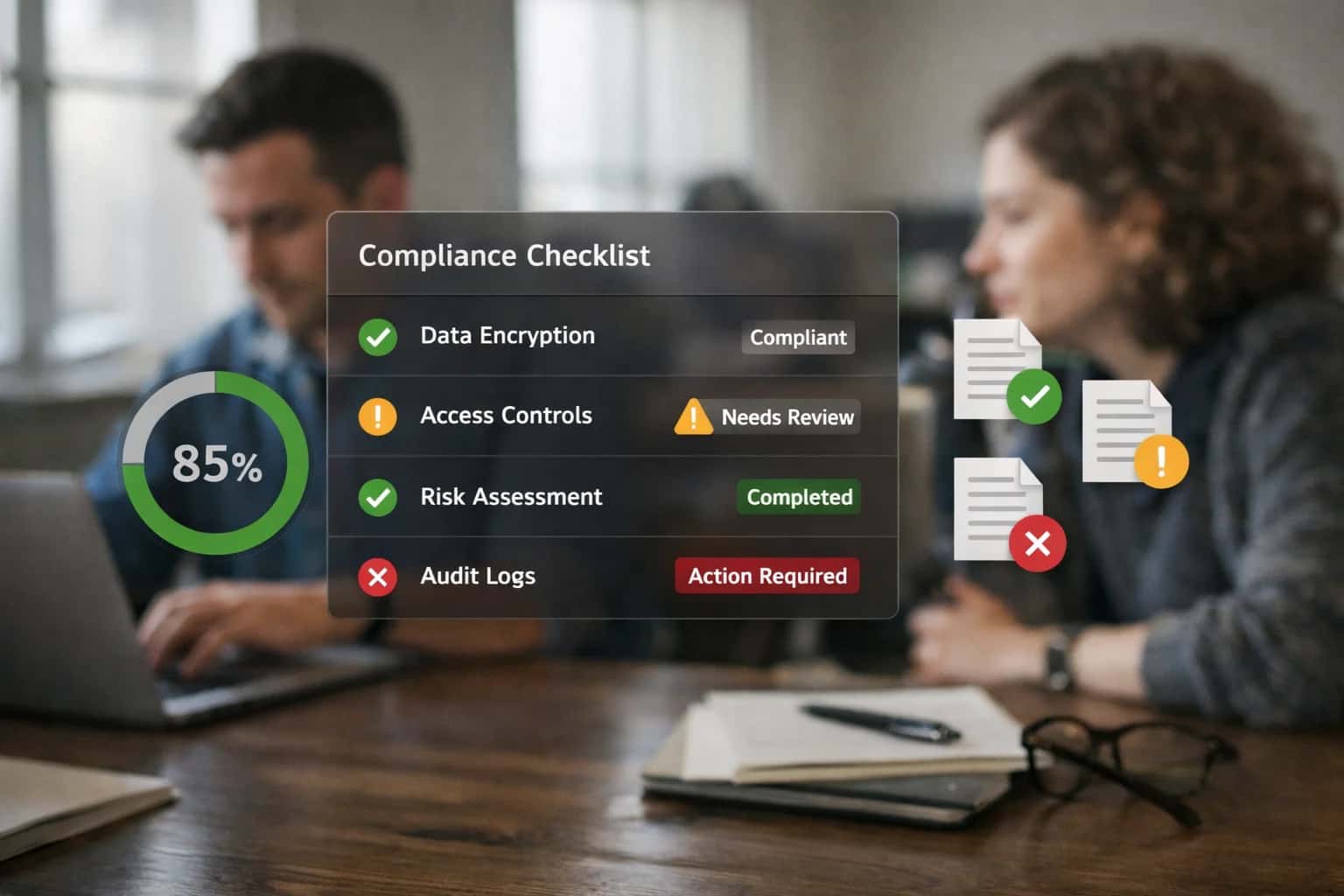
Where AI Fits in Eyefinity Staff Scheduling
AI integrates with Eyefinity's scheduling APIs to automate demand forecasting, shift assignment, and last-minute coverage, reducing administrative load for practice managers.
Implementation typically involves a secure middleware layer that polls Eyefinity for real-time schedule changes and appointment bookings. The AI engine, often a rules-based scheduler augmented with a forecasting model, runs nightly or on-demand. Key outputs include shift fill recommendations for open slots, overtime alerts based on projected demand spikes, and coverage gap identification. For last-minute changes, the system can query a prioritized internal float pool or suggest approved per-diem staff from integrated HR systems, automating the outreach via Eyefinity's messaging APIs. This reduces manual phone calls and fill time from hours to minutes.
Rollout is phased, starting with a single location to calibrate forecasting models against actual foot traffic. Governance is critical: all AI-proposed schedule changes should route through an approval workflow in Eyefinity, creating an audit trail. The system must be trained on practice-specific rules (e.g., no back-to-back Saturday shifts). A common pattern is to deploy the AI as a background optimizer, with managers retaining final publish authority. Over time, as trust builds, auto-acceptance rules can be set for low-risk adjustments like shift swaps. This controlled approach ensures the AI augments—rather than disrupts—established clinic operations.
PLATFORM SURFACES
Eyefinity Scheduling Surfaces for AI Integration
Core Scheduling Data Model
The Staff Scheduling API provides programmatic access to the core scheduling objects within Eyefinity. This surface is essential for AI agents that need to read, analyze, or modify schedules based on dynamic conditions.
Key Objects for AI Integration:
- Providers & Staff: Retrieve availability, credentials, specialties, and preferred locations.
- Appointment Slots: Access booked and open slots with metadata like duration, type (e.g., comprehensive exam, contact lens fitting), and required resources.
- Shifts & Schedules: Pull master schedules, recurring shift patterns, and time-off requests.
AI Use Case: An agent can query this API to understand current staffing coverage, identify gaps against forecasted patient demand, and propose optimal shift adjustments or last-minute fill recommendations. It serves as the primary source of truth for any dynamic scheduling logic.
EYEFINITY EMPLOYEE SCHEDULING
High-Value AI Scheduling Use Cases
Integrate AI directly into Eyefinity's staff scheduling APIs to automate complex, multi-location workforce planning. These use cases focus on dynamic, rule-aware scheduling that reduces administrative overhead and improves clinic coverage.
01
Demand-Based Staffing Engine
Connect AI to Eyefinity's appointment book and historical visit data to predict daily staffing needs per location and role. The model analyzes scheduled exams, optical sales volume, and seasonal trends to generate shift recommendations that align forecasted demand with available labor hours.
Batch -> Real-time
Planning cycle
02
Multi-Location Float Pool Optimization
Automate the assignment of float staff across a practice's locations. AI evaluates travel time, skill certifications, and location-specific demand gaps in Eyefinity to suggest optimal daily assignments, maximizing coverage while respecting labor budgets and employee preferences.
Hours -> Minutes
Assignment time
03
Compliance & Rule Adherence Monitor
Use AI as a pre-submission check for Eyefinity schedules. The system parses generated schedules against complex labor rules (OT thresholds, break compliance, credentialing requirements) and flags violations before publishing, reducing manual review and compliance risk.
Manual -> Automated
Audit process
04
Preference-Aware Shift Bidding
Implement an AI-facilitated shift marketplace. Employees submit availability and preferences via an interface; the AI scores and matches open shifts in Eyefinity based on seniority, historical fairness, and business need, automating a traditionally manual and political process.
1 sprint
Implementation
05
Last-Minute Call-Out Coverage
Trigger an automated coverage workflow when a shift is marked open in Eyefinity. AI identifies qualified, available staff based on proximity, overtime status, and recent hours, then sends prioritized outreach via SMS or app, logging responses back to the schedule.
Same day
Fill rate impact
06
Long-Term Capacity Planning
Go beyond weekly scheduling to analyze Eyefinity data for quarterly hiring and cross-training needs. AI models projected growth, attrition trends, and certification expiration dates to recommend hiring plans and skill gap initiatives, feeding into budget cycles.
IMPLEMENTATION PATTERNS
Example AI Scheduling Workflows
These workflows illustrate how AI agents integrate with Eyefinity's Staff Scheduling APIs to automate complex, multi-location scheduling tasks. Each pattern connects real-time practice data with LLM reasoning to generate recommendations or take actions, governed by configurable rules and human review gates.
Trigger: End-of-day batch process, or a manual trigger from a practice manager.
Context Pulled: The AI agent calls Eyefinity APIs to gather:
- Historical appointment data for the next 7-14 days, segmented by location, provider, and appointment type (e.g., comprehensive exam, contact lens fitting).
- Current staff schedules, including approved time-off requests and recurring availability from the Staff Scheduling module.
- Staff credentials, roles (OD, optician, technician, front desk), and preferred locations.
Agent Action: A forecasting model (or LLM with chain-of-thought) analyzes the data to:
- Predict patient volume and required staff hours per role for each location and day.
- Generate a preliminary shift schedule, optimizing for:
- Coverage of predicted demand peaks.
- Adherence to labor budget targets.
- Respect for staff preferences and compliance rules (e.g., break periods).
System Update: The proposed shifts are posted as draft schedules in Eyefinity's Staff Scheduling module, tagged as AI-Generated Draft.
Human Review Point: Practice managers receive a notification to review the drafts. They can approve, modify, or reject shifts. The agent logs all changes for model feedback.
CONNECTING AI TO EYEFINITY'S SCHEDULING ENGINE
Implementation Architecture & Data Flow
A production-ready AI integration for Eyefinity Employee Scheduling connects to its staff scheduling APIs, ingests historical and real-time data, and returns optimized staffing recommendations.
The integration architecture is built around Eyefinity's Staff Scheduling API and Practice Management Database. A middleware service, typically deployed as a secure container, acts as the orchestration layer. It performs three core functions: 1) Data Ingestion - Pulls historical appointment volumes, staff credentials, availability, and location data on a scheduled basis. 2) Real-time Context - Listens for webhooks or polls APIs for last-minute cancellations, no-shows, and same-day booking surges. 3) AI Processing - Sends anonymized, aggregated context to a governed LLM (like GPT-4 or Claude) with a structured prompt that includes business rules (e.g., 'RN must cover pre-testing', 'prefer 10-hour shifts for full-time opticians'). The LLM returns a JSON payload with shift fill suggestions, flagged compliance risks, and demand-based staffing adjustments.
The optimized schedule payload is then posted back to Eyefinity's API to update the Master Schedule or create Open Shift records. For high-trust automation, the system can be configured to operate in a 'recommendation-only' mode, pushing suggestions to a Manager Approval Queue within Eyefinity's interface. Key data objects involved include StaffMember, Shift, AppointmentType, Location, and TimeOffRequest. The AI model is trained on practice-specific patterns, learning that 'frame adjustments' may spike on Saturdays or that a particular optometrist's exams require 20% more chair time.
Rollout is phased, starting with a single location to validate predictions and tune prompts. Governance is critical: all LLM calls are logged with the input context and output for audit, and a human-in-the-loop step is maintained for final schedule publication. The integration's impact is directional: reducing manual schedule balancing from hours to minutes, increasing shift fill rates for last-minute openings, and adhering to complex labor rules that are often missed in manual planning.
EYEFINITY STAFF SCHEDULING INTEGRATION
Code & API Payload Examples
Fetching Staff Availability and Current Schedule
To build a dynamic schedule, the AI first needs the current state: staff profiles, existing shifts, and availability constraints. This typically involves calling Eyefinity's Staff Scheduling API to retrieve a JSON payload containing staff members, their roles (e.g., Optometrist, Technician, Front Desk), certifications, and weekly preference templates.
A key integration point is pulling the StaffAvailability object, which includes hard constraints (unavailable dates, max hours) and soft preferences (desired shift times, location preferences). This data, combined with real-time appointment demand from the practice calendar, forms the foundation for AI optimization.
json// Example API Response for Staff Data { "staff": [ { "id": "EMP_1001", "name": "Dr. Jane Smith", "role": "Optometrist", "primaryLocation": "LOC_01", "certifications": ["TPA", "Optomap"], "weeklyMaxHours": 40, "availability": [ { "dayOfWeek": "Monday", "preferredShift": "9AM-5PM", "isAvailable": true } ] } ] }
This data is cached and vectorized to allow the AI agent to quickly reason about staff matching for open shifts.
AI-ENHANCED SCHEDULING FOR MULTI-LOCATION PRACTICES
Realistic Time Savings & Operational Impact
This table shows the operational impact of integrating AI with Eyefinity's staff scheduling APIs to automate demand-based staffing, rule adherence, and shift management.
| Workflow / Metric | Before AI Integration | After AI Integration | Implementation Notes |
|---|---|---|---|
Weekly schedule creation for 3+ locations | Manager spends 4-6 hours manually balancing demand, preferences, and compliance | AI generates a draft schedule in ~15 minutes for manager review and adjustment | AI uses historical visit data, staff rules, and demand forecasts via Eyefinity APIs |
Last-minute shift coverage | Manual calls/texts to on-call list; 30-60 minutes to fill a shift | AI identifies and notifies available, qualified staff in <5 minutes; auto-updates schedule | Integrates with staff availability preferences and credential rules in Eyefinity |
Overtime and labor cost forecasting | Reactive analysis after payroll; budget variances common | Proactive alerts on projected overtime during schedule creation; suggests alternatives | AI models schedule against budget and historical labor cost data from financial modules |
Compliance rule adherence (breaks, certifications) | Manual checklist review; risk of oversights leading to penalties | Automated validation flags conflicts during schedule generation | AI enforces rules configured in Eyefinity's compliance and credentialing settings |
Staff preference and satisfaction tracking | Informal surveys or spreadsheets; hard to incorporate into planning | AI optimizes for stated preferences (e.g., shift types, locations) where operationally feasible | Learns from staff feedback and schedule acceptance rates via API data |
Demand-based staffing adjustments | Static schedules; over/under-staffing based on manager intuition | Dynamic shift recommendations adjust for predicted patient volume and appointment types | AI analyzes Eyefinity appointment book and seasonal trends to suggest staffing levels |
Multi-location staff deployment | Complex manual coordination; staff often underutilized across sites | AI recommends optimal staff assignments across locations based on real-time need | Considers travel time, site-specific skills, and cross-credentialing via location APIs |
OPERATIONALIZING AI IN EYEFINITY
Governance, Security & Phased Rollout
A practical guide to implementing, securing, and scaling AI-driven scheduling in a multi-location optometry practice.
A production AI integration with Eyefinity’s staff scheduling APIs requires a governance model that respects clinical operations and data sensitivity. Start by defining a role-based access control (RBAC) matrix for the AI system, ensuring only authorized practice managers or administrators can approve or modify AI-generated schedules. All schedule recommendations and overrides should be logged to an immutable audit trail, linking each change to a specific user and the AI’s reasoning (e.g., "shift swap suggested due to predicted high demand in pediatrics on Tuesday"). This audit log should be accessible within Eyefinity’s reporting module or a separate dashboard for compliance reviews.
For security, the integration should operate on a zero-trust data principle. The AI agent does not store persistent copies of staff PII, credentials, or patient schedules. It calls Eyefinity’s APIs in real-time using short-lived tokens scoped to specific endpoints (e.g., GET /api/v1/staff/availability, POST /api/v1/schedules/drafts). PHI from linked patient appointment data used for demand forecasting should be de-identified or aggregated at the clinic and appointment-type level before being sent to the LLM for analysis. All API traffic should be encrypted in transit, and any intermediate data caches (e.g., for performance) must be ephemeral and encrypted at rest.
Roll out the integration in three controlled phases. Phase 1 (Read-Only Analysis): Deploy the AI to analyze historical scheduling data and Eyefinity’s real-time calendar feeds, generating "shadow" schedule recommendations sent via a daily digest email to managers. This builds trust and provides a baseline accuracy metric without any system writes. Phase 2 (Draft Generation with Human-in-the-Loop): Enable the AI to create draft schedules within Eyefinity as unapproved Draft records. Managers review, adjust, and publish these drafts through the standard Eyefinity interface, with the AI providing change justification. Phase 3 (Conditional Automation): Implement rules-based automation for low-risk scenarios, such as auto-filling last-minute open shifts from a pre-approved volunteer list or adjusting break times based on real-time patient flow data, with high-staffing-impact changes still requiring manager approval.
Continuous monitoring is critical. Establish key performance indicators (KPIs) tied to the integration’s goals, such as reduction in manual schedule adjustment time, shift fill rate for last-minute openings, and staff satisfaction scores related to schedule fairness. Use Eyefinity’s reporting APIs to feed these metrics back into the AI system for retraining and calibration. This closed-loop, phased approach minimizes operational risk, ensures alignment with practice policies, and allows the practice to scale AI benefits from a single location to the entire enterprise.
Enabling Efficiency, Speed & Accuracy
Intelligent Analysis, Decision & Execution
We build AI systems for teams that need search across company data, workflow automation across tools, or AI features inside products and internal software.
Talk to Us
Search across company data
Give teams answers from docs, tickets, runbooks, and product data with sources and permissions.
Useful when people spend too long searching or get different answers from different systems.
Enterprise searchRAGPermissions
Read more
Automate internal workflows
Use AI to route work, draft outputs, trigger actions, and keep approvals and logs in place.
Useful when repetitive work moves across multiple tools and teams.
AI agentsWorkflow automationGovernance
Read more
Add AI to products and internal tools
Build assistants, guided actions, or decision support into the software your team or customers already use.
Useful when AI needs to be part of the product, not a separate tool.
AI integrationDecision supportModel routing
Read moreIMPLEMENTATION AND WORKFLOW DETAILS
Frequently Asked Questions
Common technical and operational questions about integrating AI agents with Eyefinity's staff scheduling APIs to automate and optimize employee scheduling in multi-location optometry practices.
The integration connects via Eyefinity's RESTful Staff Scheduling APIs, which provide secure, token-based access. The typical workflow is:
- Authentication: The AI system uses OAuth 2.0 to obtain a scoped access token, typically with permissions for
staff.read,schedule.read, andschedule.write. - Data Pull: The agent calls endpoints like
GET /api/v1/locations/{id}/schedulesto retrieve current schedules, shift templates, and staff profiles (including certifications, preferences, and availability rules). - Processing: The LLM-powered agent analyzes this data against forecasted patient demand (often from a separate data feed).
- Update: The agent constructs and sends
POSTorPATCHrequests to propose new shifts, fill open slots, or adjust assignments, adhering to Eyefinity's payload schema for shifts and assignments.
All updates are first generated as draft recommendations in a staging area within the AI platform, requiring a manager's review and approval in Eyefinity before being published to the live schedule, ensuring human oversight.

About the author
Prasad Kumkar
CEO & MD, Inference Systems
Prasad Kumkar is the CEO & MD of Inference Systems and writes about AI systems architecture, LLM infrastructure, model serving, evaluation, and production deployment. Over 5+ years, he has worked across computer vision models, L5 autonomous vehicle systems, and LLM research, with a focus on taking complex AI ideas into real-world engineering systems.
His work and writing cover AI systems, large language models, AI agents, multimodal systems, autonomous systems, inference optimization, RAG, evaluation, and production AI engineering.
LinkedIn
Limited slotsGet a Free AI Consultation
Partnered with leading AI, data, and software stack.





How We Work
Custom AI workflows for your Business
One-fit-all AI don't work for modern businesses. At Inferensys, we aim to understand your business & custom requirements; which we use to define most efficient agentic workflows, the data, and the tools for your business.
01
Review the use case
We understand the task, the users, and where AI can actually help.
Read more02
Pick the right approach
We define what needs search, automation, or product integration.
Read more03
Build the first useful version
We implement the part that proves the value first.
Read more04
Improve from there
We add the checks and visibility needed to keep it useful.
Read moreThe first call is a practical review of your use case and the right next step.
Talk to Us