AI integration connects at three key surfaces within Compulink's telemedicine workflow: the digital intake API, the scheduling engine, and the visit documentation objects. For intake, an AI agent can pre-fill patient forms by pulling data from the EHR, validate insurance eligibility in real-time via payer APIs, and triage visit reasons to ensure the right provider and time slot are booked. Within the scheduling module, AI optimizes virtual appointment slots by analyzing provider availability, typical visit duration, and patient no-show risk scores, feeding recommendations directly into Compulink's calendar via its scheduling API.

Integration
AI Integration with Compulink Telemedicine
A technical guide for integrating AI into Compulink's telemedicine workflows to optimize scheduling, automate intake forms, and suggest billing codes for virtual visits.
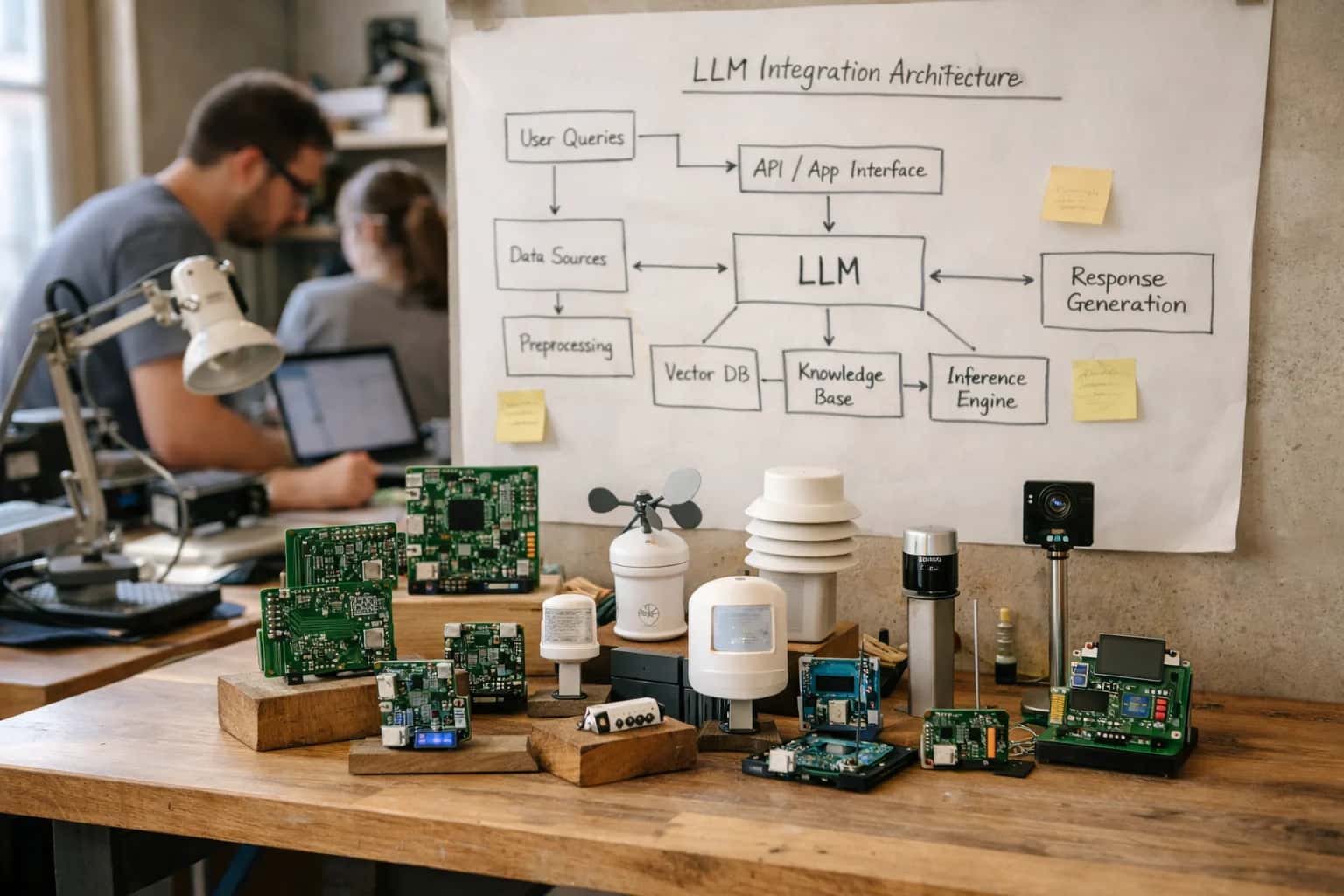
ARCHITECTURE AND ROLLOUT
Where AI Fits into Compulink's Telemedicine Workflow
A practical blueprint for integrating AI agents and automation into Compulink's telemedicine module to streamline virtual visits from intake to billing.
During and after the virtual visit, AI workflows attach to the telemedicine encounter record. An ambient documentation agent, integrated via the video platform's webhook, can generate a structured SOAP note draft from the visit transcript and provider dialogue, which is then routed to the clinician in Compulink for review and sign-off. Simultaneously, a billing support agent analyzes the documented diagnosis and procedures against the patient's plan rules—accessed through Compulink's insurance module—to suggest accurate billing codes (CPT/ICD-10) and flag potential prior authorization requirements before the claim is submitted.
Rollout should be phased, starting with non-clinical automation like intake and scheduling to build trust and data quality. Governance is critical: all AI-generated clinical notes must be clearly marked as drafts, require provider attestation within Compulink's audit trail, and follow a human-in-the-loop approval workflow. Implementation typically uses a middleware layer that securely brokers data between Compulink's APIs, LLM services, and external systems like payment gateways or lab networks, ensuring PHI compliance and maintaining a complete activity log for each AI-touched transaction.
AI INTEGRATION BLUEPOINTS
Key Integration Surfaces in Compulink Telemedicine
Core Scheduling & Visit Orchestration
Integrate AI directly into Compulink's scheduling engine and virtual visit platform to optimize provider time and patient access. Key surfaces include the appointment calendar API, virtual room management, and the patient portal's scheduling widget.
Primary Use Cases:
- Dynamic Slot Optimization: Use historical no-show rates, patient travel time (for hybrid visits), and provider preference to suggest optimal virtual slots.
- Intelligent Waitlist Management: Automatically match waitlisted patients with last-minute cancellations based on visit reason acuity and insurance compatibility.
- Pre-Visit Triage: A lightweight chatbot in the patient portal can gather chief complaints before the visit, structuring data for the provider's EHR view.
Implementation Pattern: AI services call the POST /api/appointments endpoint to book or modify slots and listen to webhooks from the scheduling module for cancellation events to trigger waitlist logic.
VIRTUAL VISIT OPTIMIZATION
High-Value AI Use Cases for Compulink Telemedicine
Integrate AI directly into Compulink's telemedicine workflows to automate administrative overhead, enhance clinical support, and improve the economics of virtual care delivery.
01
Automated Digital Intake & Triage
Use AI to process patient-submitted forms and chief complaints before the visit. The system can pre-fill the EHR encounter note, flag urgent symptoms for immediate review, and suggest the appropriate visit type or provider based on history and complaint complexity. This reduces manual data entry and ensures patients are routed correctly from the start.
Minutes Saved
Per visit setup
02
Real-Time Visit Documentation Support
Integrate ambient AI scribe capabilities with Compulink's telemedicine video API. The system generates structured SOAP note drafts in real-time from the provider-patient conversation, adhering to Compulink's clinical documentation model. This allows providers to focus on the patient, not the chart, especially during remote exams.
Hours -> Minutes
Charting time
03
Intelligent Billing Code Suggestion
Connect AI to the visit documentation and telemedicine platform metadata (e.g., duration, complexity). The system analyzes the note and visit data to suggest accurate CPT and ICD-10 codes for virtual visits, reducing coding errors and supporting proper reimbursement for telemedicine services under evolving payer rules.
Claim Accuracy
First-pass rate
04
Post-Visit Follow-Up & Instruction Automation
Trigger AI workflows via Compulink's telemedicine completion hooks. After a visit, the system automatically generates personalized after-visit summaries, medication instructions, and follow-up task lists. It then dispatches them via the patient's preferred channel (portal, SMS, email) through Compulink's communication APIs, ensuring continuity of care.
Batch -> Real-time
Instruction delivery
05
No-Show Prediction & Scheduling Optimization
Leverage AI on Compulink's scheduling engine and patient history data. The model predicts telemedicine no-show likelihood and can suggest proactive interventions like automated confirmations or waitlist management. It can also recommend optimal virtual visit slots based on provider telehealth availability and historical patient show rates.
Fill Rate
Virtual schedule
06
Remote Patient Monitoring (RPM) Alert Triage
Integrate AI as a middleware layer between Compulink and connected device data (e.g., home tonometers). The system continuously analyzes incoming RPM data streams, identifies significant deviations from baselines, and creates prioritized alerts or tasks directly within Compulink's workflow engine for clinical staff review, turning raw data into actionable insights.
Same day
Issue identification
COMPULINK TELEMEDICINE INTEGRATION
Example AI-Agent Workflows for Virtual Visits
These concrete workflows illustrate how AI agents can automate high-friction tasks within Compulink's telemedicine platform, connecting to its scheduling engine, patient portal, and billing APIs to reduce manual work and improve visit quality.
Trigger: A patient books a virtual visit via the Compulink patient portal.
Agent Actions:
- Context Pull: The agent retrieves the appointment details and the patient's record via Compulink's Telemedicine API.
- Form Activation: It triggers a personalized digital intake form, pre-populating known demographics and history.
- Triage & Prioritization: As the patient submits the form, the agent analyzes chief complaints and symptoms using a clinical LLM. It flags urgent cases for staff review and can suggest moving the appointment earlier.
- System Update: The agent attaches structured intake data and a triage note to the appointment record in Compulink.
- Human Review Point: Urgent flags are routed to a clinical coordinator's dashboard within Compulink for immediate follow-up.
Technical Integration: Uses Compulink's Patient Portal hooks and Telemedicine API for real-time data sync. The agent acts as an orchestration layer between the form tool, LLM service, and Compulink.
SECURE TELEMEDICINE INTEGRATION
Implementation Architecture: Data Flow & Security
A production-ready architecture for adding AI to Compulink's telemedicine workflows, built on secure data flows and governed tool calling.
The integration connects to Compulink's Telemedicine API and Scheduling Engine to power three core workflows: appointment optimization, digital intake processing, and billing code suggestion. AI agents act as middleware, subscribing to webhook events (e.g., visit.scheduled, intake.submitted) and using secure, scoped API credentials to read and write data. For example, an optimization agent analyzes the schedule, patient history from the EHR, and provider preferences via the GET /api/schedules and GET /api/patients/{id} endpoints before suggesting optimal slots via POST /api/appointments.
Patient data is never sent directly to a third-party LLM. Instead, a retrieval-augmented generation (RAG) layer queries a private vector store containing de-identified practice guidelines, insurance policy excerpts, and historical coding patterns. The AI uses this internal knowledge base, along with structured data pulled via API, to generate draft intake summaries or code suggestions. These drafts are written to a secure audit log and, for clinical or financial actions, pushed into a human-in-the-loop approval queue within Compulink's workflow engine before final submission.
Rollout follows a phased, governance-first model. Phase 1 deploys non-clinical agents for appointment reminder personalization and intake form triage, using read-only APIs and generating notifications. Phase 2, after validation and staff training, introduces billing code assistants and visit summarization, with all outputs requiring provider review and sign-off within the Compulink UI. All agent actions are logged with a unique correlation_id back to the source telemedicine session, maintaining a complete audit trail for compliance.
INTEGRATION PATTERNS FOR COMPULINK TELEMEDICINE
Code & Payload Examples
Scheduling Optimization via Compulink API
Integrating AI with Compulink's scheduling engine allows for dynamic slot recommendations and waitlist automation. A common pattern involves calling the Compulink GET /api/v1/appointments/availability endpoint, enriching the data with patient no-show risk scores and provider preferences, and then using an LLM to suggest optimal booking times. The AI agent can then call POST /api/v1/appointments to book the slot or add the patient to an intelligent waitlist.
Example API Payload for AI-Enhanced Booking:
json{ "patientId": "PAT-78910", "providerId": "PROV-456", "appointmentType": "Telemedicine Follow-up", "preferredDateRange": "2024-06-01 to 2024-06-07", "ai_metadata": { "noShowRiskScore": 0.15, "suggestedSlots": [ "2024-06-03T10:00:00", "2024-06-05T14:30:00" ], "optimizationReason": "Matches patient history of afternoon visits and provider's low-cancellation rate for Tuesday AM." } }
This payload demonstrates how AI-derived insights can be passed alongside standard booking data to inform scheduling decisions within Compulink's workflow.
AI-ENHANCED TELEMEDICINE WORKFLOWS
Realistic Time Savings & Operational Impact
This table illustrates the operational impact of integrating AI into Compulink's telemedicine workflows, focusing on measurable improvements in staff efficiency and patient experience.
| Workflow / Metric | Before AI Integration | After AI Integration | Implementation Notes |
|---|---|---|---|
Digital Intake Form Processing | Manual review and data entry (5-10 min/patient) | Automated data extraction & EHR pre-fill (1-2 min/patient) | AI validates insurance info and flags inconsistencies for staff review |
Appointment Scheduling & Optimization | Manual slot matching based on basic rules | AI-driven slot recommendations & waitlist automation | Considers provider preference, patient history, and predicted no-show risk |
Billing Code Suggestion for Virtual Visits | Manual code lookup and entry post-visit | AI-assisted code generation based on visit notes | Suggests CPT/ICD-10 codes, reducing coding errors and speeding up charge capture |
Post-Visit Follow-Up & Instructions | Manual drafting and sending of summaries | Automated draft generation & personalized delivery | AI creates visit summaries and care instructions; staff approves and sends via patient portal |
Pre-Visit Patient Triage & Preparation | Generic pre-visit checklists and calls | AI-powered symptom checker & resource routing | Chatbot collects chief complaint and ensures correct visit type, reducing mis-scheduled appointments |
Prior Authorization Drafting Support | Staff composes narratives from scratch | AI generates draft narratives from clinical data | Pulls relevant data from EHR to create first draft for staff review and submission |
IMPLEMENTING AI IN A REGULATED CLINICAL WORKFLOW
Governance, Compliance & Phased Rollout
A practical guide to deploying AI in Compulink Telemedicine with appropriate controls, auditability, and a risk-managed rollout.
Integrating AI into Compulink's telemedicine platform requires a governance model that treats the AI as a clinical support tool, not an autonomous decision-maker. Key controls include:
- API-Level Access Control: AI services should authenticate via Compulink's API using scoped service accounts, accessing only the
Patient,Appointment, andClinicalNoteobjects necessary for the defined use case (e.g., intake form processing). - Audit Trail Integration: Every AI-generated draft, suggestion, or automated action must write a traceable log entry back to Compulink's audit system, linking the AI's output to the triggering user, patient, and session.
- Human-in-the-Loop (HITL) Gates: For clinical or financial outputs—like a suggested billing code for a virtual visit or a triage recommendation—the system should be configured to present the AI's suggestion as a draft requiring staff review and sign-off before it is committed to the patient record or claim.
A phased rollout minimizes disruption and builds trust. Start with non-clinical, high-volume automation to demonstrate value and iron out integration patterns:
- Phase 1: Digital Intake & Scheduling Optimization: Deploy AI to pre-fill patient forms using historical data and optimize appointment slots. Impact is operational (reduced front-desk time) with low clinical risk.
- Phase 2: Administrative Support: Introduce AI-assisted visit summarization and billing code suggestions for virtual visits. Implement a mandatory review step where the provider edits and approves the AI-generated note and codes within the Compulink interface before finalizing.
- Phase 3: Clinical Support Tools: After establishing reliability and trust, pilot AI-driven pre-visit triage or patient education personalization, ensuring these tools are clearly presented as informational aids to clinicians.
Compliance is not a one-time check. Maintain it through continuous monitoring:
- Data Minimization & PHI Handling: Ensure your AI pipeline processes only the necessary data fields from Compulink's telemedicine API and that any external AI service calls are covered under a BAA, with PHI stripped or encrypted in transit.
- Performance Drift Monitoring: Track the accuracy of AI outputs (e.g., code suggestion acceptance rate) against a baseline. A significant drop can trigger a review and model retraining cycle.
- Rollback Protocols: Design integrations to have a simple kill-switch—disabling AI features without breaking core Compulink telemedicine workflows—allowing for quick reversion if an issue arises during any phase.
Enabling Efficiency, Speed & Accuracy
Intelligent Analysis, Decision & Execution
We build AI systems for teams that need search across company data, workflow automation across tools, or AI features inside products and internal software.
Talk to Us
Search across company data
Give teams answers from docs, tickets, runbooks, and product data with sources and permissions.
Useful when people spend too long searching or get different answers from different systems.
Enterprise searchRAGPermissions
Read more
Automate internal workflows
Use AI to route work, draft outputs, trigger actions, and keep approvals and logs in place.
Useful when repetitive work moves across multiple tools and teams.
AI agentsWorkflow automationGovernance
Read more
Add AI to products and internal tools
Build assistants, guided actions, or decision support into the software your team or customers already use.
Useful when AI needs to be part of the product, not a separate tool.
AI integrationDecision supportModel routing
Read moreAI INTEGRATION FOR COMPULINK TELEMEDICINE
Frequently Asked Questions
Practical questions for optometry practices planning AI integration with Compulink's telemedicine platform, covering workflows, security, implementation, and governance.
AI connects to Compulink's scheduling API to optimize virtual visit slots. A typical workflow involves:
- Trigger: A patient requests a telemedicine appointment via the patient portal.
- Context Pull: The AI agent calls the Compulink API to retrieve:
- Provider availability and preferred virtual visit blocks.
- Patient's history (last visit type, chronic conditions like dry eye or myopia management).
- Current wait times for in-person vs. virtual appointments.
- Agent Action: The LLM analyzes the context to suggest the optimal slot. It considers:
- Clinical appropriateness: Is the visit reason (e.g., 'contact lens discomfort follow-up') suitable for telemedicine based on practice rules?
- Provider match: Does the patient have a preferred provider? Is that provider scheduled for virtual sessions?
- Efficiency: Schedules back-to-back virtual visits to minimize provider context switching.
- System Update: The agent returns the recommended slot(s) to the portal UI or directly books the appointment via API, sending a confirmation through Compulink's messaging system.
- Human Review Point: For new patient telemedicine requests or complex reasons, the system can flag the appointment for front-desk review before final booking.

About the author
Prasad Kumkar
CEO & MD, Inference Systems
Prasad Kumkar is the CEO & MD of Inference Systems and writes about AI systems architecture, LLM infrastructure, model serving, evaluation, and production deployment. Over 5+ years, he has worked across computer vision models, L5 autonomous vehicle systems, and LLM research, with a focus on taking complex AI ideas into real-world engineering systems.
His work and writing cover AI systems, large language models, AI agents, multimodal systems, autonomous systems, inference optimization, RAG, evaluation, and production AI engineering.
LinkedIn
Limited slotsGet a Free AI Consultation
Partnered with leading AI, data, and software stack.





How We Work
Custom AI workflows for your Business
One-fit-all AI don't work for modern businesses. At Inferensys, we aim to understand your business & custom requirements; which we use to define most efficient agentic workflows, the data, and the tools for your business.
01
Review the use case
We understand the task, the users, and where AI can actually help.
Read more02
Pick the right approach
We define what needs search, automation, or product integration.
Read more03
Build the first useful version
We implement the part that proves the value first.
Read more04
Improve from there
We add the checks and visibility needed to keep it useful.
Read moreThe first call is a practical review of your use case and the right next step.
Talk to Us