AI integration connects to Compulink's patient communication stack at three primary surfaces: its omnichannel messaging APIs for SMS and email, its patient portal hooks for in-app notifications and educational content delivery, and its scheduling and billing data models that trigger communication workflows. The goal is not to replace Compulink but to layer intelligence on top of its existing automation engine (Compulink Automation Manager) and its Information Delivery modules. This means using AI to decide which message to send, when to send it, and which channel (text, email, portal) a specific patient is most likely to engage with, based on their historical behavior and appointment type.

Integration
AI Integration with Compulink Information Delivery
A technical guide for adding AI to Compulink's omnichannel patient communication workflows. Learn how to personalize message channel selection, optimize timing, and automate feedback using its APIs.
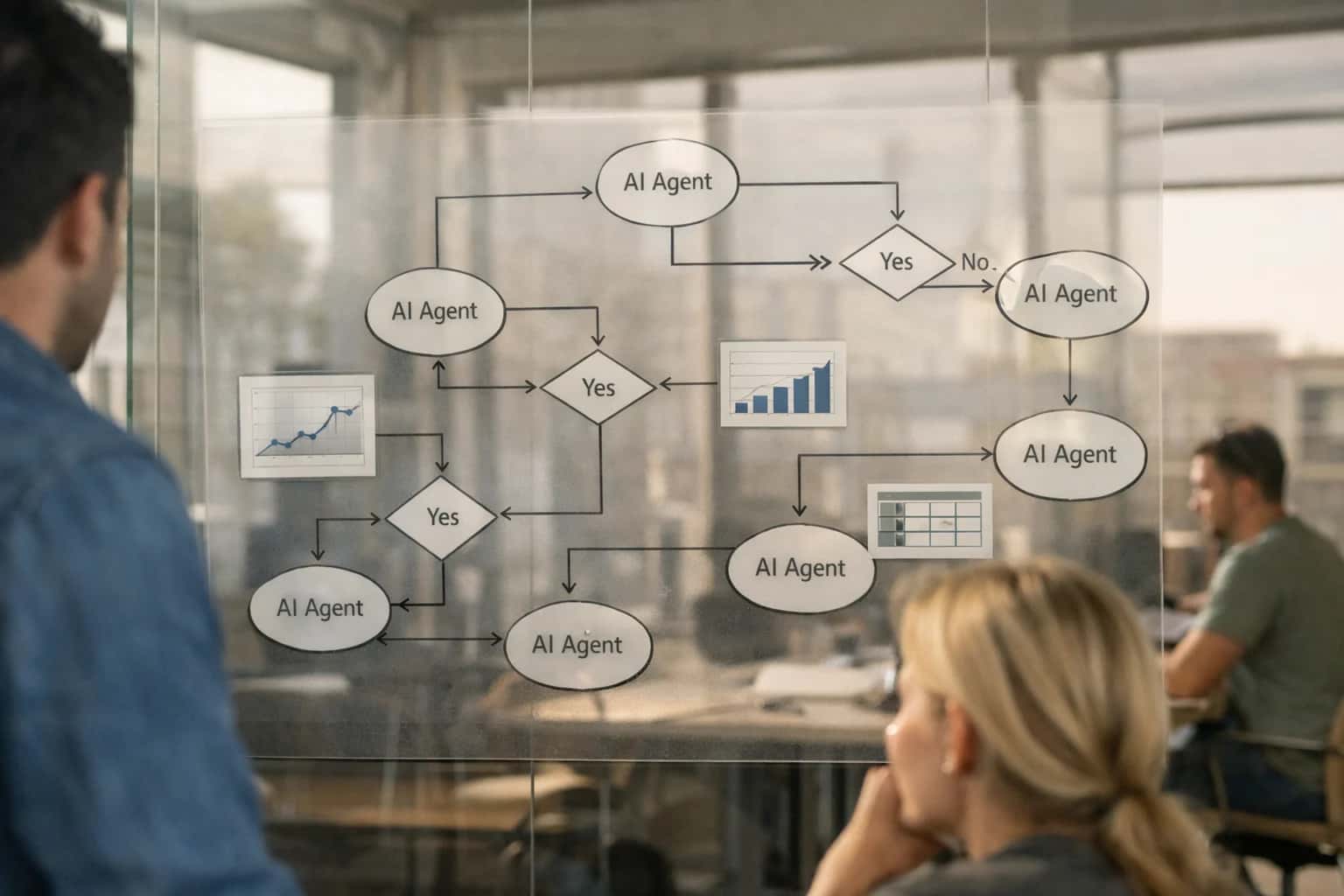
ARCHITECTURE AND ROLLOUT
Where AI Fits into Compulink's Patient Communication Stack
A practical blueprint for integrating AI into Compulink's omnichannel messaging to automate and personalize patient touchpoints.
Implementation typically involves a middleware service that subscribes to events from Compulink's database (via API listeners or webhooks for new appointments, completed visits, or outstanding balances). This service uses an LLM to generate personalized message variants and a decision engine to select the optimal channel and timing. For example, a post-cataract-surgery follow-up might trigger a detailed email with embedded educational videos via the portal, while a routine exam reminder might be an SMS with a one-tap confirm link. The AI layer writes the personalized content and channel logic back to Compulink's messaging queue via its Communication Center API, maintaining the audit trail within the native system.
Rollout should be phased, starting with low-risk, high-volume workflows like appointment reminders and recall campaigns, where you can measure impact on show rates and re-engagement. Governance is critical: all AI-generated messages should pass through a human-in-the-loop review step initially, with clear opt-out mechanisms and compliance checks for PHI. A successful integration reduces front-desk call volume for routine inquiries and shifts staff time to higher-value patient interactions, while ensuring communication feels more relevant and timely.
OMNICHANNEL MESSAGING WORKFLOWS
Compulink API Surfaces for AI Integration
Core Messaging Channels
Compulink's API ecosystem provides distinct endpoints for orchestrating patient communications across channels, each with specific payload requirements and delivery guarantees.
- SMS/Text Messaging API: Send appointment reminders, pre-visit instructions, and post-care follow-ups. Requires patient consent flags and supports template-based messages with dynamic fields like
{patient_name},{appointment_time}, and{clinic_phone}. - Email API: Deliver educational content, statements, and satisfaction surveys. Supports HTML templates and attachments, integrating with Compulink's patient portal for secure document delivery.
- Patient Portal Notification API: Trigger in-app alerts and badge updates for new messages, lab results, or forms. This server-to-server API updates the portal's notification center without requiring an outbound message.
AI integration typically involves a decision layer that selects the optimal channel based on patient preference, message urgency, and historical engagement data, then calls the appropriate Compulink endpoint with a personalized payload.
OMNICHANNEL MESSAGING OPTIMIZATION
High-Value AI Use Cases for Compulink Communications
Integrating AI with Compulink's Information Delivery APIs enables intelligent, personalized patient outreach that reduces staff workload and improves engagement. These use cases focus on optimizing channel, timing, and content based on patient behavior and practice goals.
01
Personalized Channel Orchestration
AI analyzes patient history (age, prior response rates, appointment type) to automatically select the optimal first-contact channel—SMS, email, or patient portal—for reminders and recalls. Workflow: Rules engine integrates with Compulink's omnichannel APIs to dispatch messages, then learns from open/click rates to refine future channel selection for each patient.
Batch -> Dynamic
Message routing
02
Dynamic Reminder Timing
Predicts the ideal send time for appointment reminders to minimize no-shows. Workflow: Model uses historical check-in times, patient commute data (from zip code), and past engagement patterns to schedule SMS/email sends via Compulink's API, shifting from a fixed 48-hour rule to personalized, behavior-driven timing.
2-5%
No-show reduction
03
Automated Post-Visit Follow-Ups
Triggers personalized follow-up sequences after specific visit types (e.g., new glasses fitting, post-operative check). Workflow: After visit coding, AI drafts tailored messages (e.g., care instructions, satisfaction survey link) and routes them through Compulink's messaging queue. Can escalate lack of response to front desk for callback.
Same day
Automated outreach
04
Intelligent Recall Campaigns
Segments patients for recall campaigns based on risk and predicted responsiveness. Workflow: AI scores patients due for annual exams using clinical data (diagnosis history) and engagement signals, then generates prioritized recall lists. Integrates with Compulink to launch multi-touch campaigns (SMS → email → portal alert) for high-priority segments first.
Hours -> Minutes
Campaign setup
05
Feedback Collection & Triage
Automates post-visit feedback requests and routes concerning responses for immediate follow-up. Workflow: AI sends survey links via preferred channel, then uses sentiment analysis on open-text responses to flag dissatisfaction or clinical concerns. Integrates with Compulink's tasking API to create alerts for practice managers.
Real-time
Sentiment alerting
06
Educational Content Delivery
Personalizes and schedules delivery of condition-specific education (e.g., glaucoma, dry eye) based on patient diagnosis and treatment plan. Workflow: Links Compulink's diagnosis codes to a content library. AI determines optimal send schedule post-visit and selects content format (short video link, article) matching patient's channel preference via the messaging API.
1 sprint
Content integration
OPTIMIZING PATIENT ENGAGEMENT
Example AI-Enhanced Communication Workflows
These workflows demonstrate how AI can be integrated with Compulink Information Delivery's omnichannel APIs to automate and personalize patient communications, reducing front-desk workload and improving patient experience.
Trigger: An appointment is confirmed or updated in the Compulink schedule.
AI Action:
- Context Pull: The agent retrieves the patient's profile, appointment details (type, provider, duration), and historical communication preferences (open/click rates for email vs. SMS, time of day).
- Channel & Timing Prediction: A lightweight model analyzes the data to predict:
- The most effective channel (SMS, email, patient portal notification).
- The optimal send time (e.g., 48 hours before, or a specific time of day based on past engagement).
- Message Generation: Using a template and patient/appointment context, an LLM personalizes the reminder message, adding specific instructions (e.g., "Please bring your new insurance card") or pre-visit form links.
System Update: The AI agent calls the appropriate Compulink Information Delivery API (POST /messages) with the crafted payload, specifying the channel, timing, and content. The message is queued for delivery.
Human Review Point: For new appointment types or high-value procedures, the system can flag the generated message for a quick staff review before sending.
OMNICHANNEL MESSAGING & PATIENT DATA
Implementation Architecture: Data Flow & Integration Patterns
A secure, event-driven architecture for adding AI-driven personalization to Compulink's patient communication workflows.
The integration connects to Compulink's Omnichannel Messaging APIs and Patient Portal hooks to act on key events like appointment confirmations, recall triggers, and post-visit follow-ups. AI agents are triggered via webhooks, consuming patient context (appointment type, history, preferences) and practice rules from Compulink's data model. The system then executes a retrieval-augmented generation (RAG) step against approved educational content and practice policies before generating a personalized message draft.
A decision engine evaluates the optimal channel (SMS, email, patient portal), timing, and content format based on patient engagement history and message urgency. For example, a post-cataract surgery follow-up might prioritize a detailed email with attached care instructions, while a frame-ready notification uses a concise SMS. All generated content is logged with its source context and routed through a human-in-the-loop approval queue within Compulink's workflow engine before being sent via its native delivery infrastructure, ensuring compliance and brand consistency.
Rollout is phased, starting with non-clinical reminders to validate accuracy and patient response. Governance is maintained through integrated audit trails that link each AI-suggested message back to the source patient data and prompting logic, providing full transparency for compliance reviews. The architecture is designed to scale across multiple practice locations by leveraging Compulink's centralized messaging dashboard for oversight and reporting.
COMPULINK INFORMATION DELIVERY
Code Examples: API Calls & Decision Logic
Determining the Optimal Message Channel
For each patient and message type, an AI agent can evaluate historical engagement data and appointment context to select the highest-probability delivery channel (SMS, Email, Patient Portal). This logic is executed before calling Compulink's messaging APIs.
python# Pseudocode for channel selection logic def select_message_channel(patient_id, message_type, appointment_data): """ Returns 'sms', 'email', or 'portal' based on patient profile. """ patient_profile = get_patient_engagement_history(patient_id) # Rule 1: Urgent reminders default to SMS if message_type == "appointment_reminder_24hr": if patient_profile.get('sms_opt_in') and patient_profile.get('sms_open_rate', 0) > 0.7: return "sms" else: return "email" # Rule 2: Educational content prefers portal for engaged patients if message_type == "post_op_instructions": if patient_profile.get('portal_logins_last_30d', 0) > 2: return "portal" elif patient_profile.get('email_open_rate', 0) > 0.5: return "email" else: return "sms" # Fallback # Default rule based on highest historical open rate channels = [('sms', patient_profile.get('sms_open_rate', 0)), ('email', patient_profile.get('email_open_rate', 0)), ('portal', patient_profile.get('portal_view_rate', 0))] return max(channels, key=lambda x: x[1])[0]
This decision function can be integrated as a pre-processing step before the Compulink POST /api/v1/messages call, setting the channel parameter dynamically.
AI-ENHANCED PATIENT COMMUNICATIONS
Realistic Time Savings & Operational Impact
How AI integration with Compulink Information Delivery transforms manual, reactive communication workflows into proactive, personalized patient engagement.
| Workflow | Before AI | After AI | Notes |
|---|---|---|---|
Appointment Reminder Channel Selection | Manual selection or uniform SMS blast | AI-driven personalization (text, email, portal) based on patient history and open rates | Reduces no-shows by 5-15% and improves patient satisfaction |
Post-Visit Educational Content Delivery | Manual email sends with generic content, often delayed | Automated, condition-specific content bundles sent same-day via preferred channel | Increases patient comprehension and adherence to treatment plans |
Feedback Collection & Triage | Manual survey distribution and review; low response rates | Automated, conversational feedback collection with sentiment analysis and priority routing | Critical issues flagged for manager review within 1 hour |
Intake Form Follow-up & Completion | Staff manually call patients with incomplete forms | AI assistant sends personalized nudges via text/email with direct portal links | Cuts front-desk follow-up time by 70% and improves form completion rates |
Recall & Re-engagement Campaigns | Batch campaigns based on simple date triggers | Segmented campaigns with AI-predicted optimal timing and messaging for lapsed patients | Improves reactivation rates by targeting patients most likely to return |
Omnichannel Message Orchestration | Separate systems for text, email, and portal; no unified view | AI coordinates cross-channel sequences from a single Compulink workflow | Ensures consistent messaging and prevents channel fatigue |
Operational Reporting on Communication KPIs | Manual export and spreadsheet analysis weekly | Automated dashboard with AI-generated insights on channel performance and patient engagement trends | Provides actionable data for monthly operational reviews |
IMPLEMENTING AI IN A REGULATED PRACTICE ENVIRONMENT
Governance, Security & Phased Rollout
A secure, phased approach to deploying AI-driven patient communications within Compulink's omnichannel framework.
Deploying AI for patient information delivery requires a governance-first architecture. This means establishing clear data boundaries: the AI agent interacts with Compulink's messaging APIs (/api/v1/messaging/send, /api/v1/patient/preferences) and patient portal data, but never writes directly to core clinical records without an audit trail. All outbound messages—whether AI-drafted educational content, appointment reminders, or feedback requests—should be queued for human review or logged in a dedicated ai_message_audit table within Compulink before sending, ensuring compliance with HIPAA's Minimum Necessary Standard and your practice's communication policies.
A phased rollout minimizes risk and builds internal trust. We recommend starting with a single, high-volume, low-risk workflow, such as automating post-operative care instructions for cataract patients. In this phase, the AI uses Compulink's patient data (procedure date, surgeon, prescribed drops) and the practice's approved content library to generate a personalized multi-channel plan (SMS for drop reminders, email for detailed instructions, portal for video links). Staff review and approve batches in Compulink's interface before sending. Success metrics like patient comprehension scores and call volume reduction are tracked before expanding to more complex workflows like chronic condition education or pre-appointment intake nudges.
Long-term governance integrates with your existing Compulink security model. The AI system should respect Compulink's role-based access controls (RBAC); for instance, a front-desk agent may only trigger AI drafts for routine reminders, while a doctor must approve clinical education content. All AI-generated content should be versioned and attributable, with prompts and data sources logged. This creates a transparent chain of custody for patient communications, turning your AI integration from a point solution into a governed, scalable layer on top of Compulink's reliable practice management foundation.
Enabling Efficiency, Speed & Accuracy
Intelligent Analysis, Decision & Execution
We build AI systems for teams that need search across company data, workflow automation across tools, or AI features inside products and internal software.
Talk to Us
Search across company data
Give teams answers from docs, tickets, runbooks, and product data with sources and permissions.
Useful when people spend too long searching or get different answers from different systems.
Enterprise searchRAGPermissions
Read more
Automate internal workflows
Use AI to route work, draft outputs, trigger actions, and keep approvals and logs in place.
Useful when repetitive work moves across multiple tools and teams.
AI agentsWorkflow automationGovernance
Read more
Add AI to products and internal tools
Build assistants, guided actions, or decision support into the software your team or customers already use.
Useful when AI needs to be part of the product, not a separate tool.
AI integrationDecision supportModel routing
Read moreAI INTEGRATION WITH COMPULINK INFORMATION DELIVERY
FAQ: Technical & Commercial Questions
Common questions about implementing AI to optimize patient information delivery within the Compulink practice management platform, covering technical architecture, rollout, and business impact.
The AI agent uses historical engagement data from Compulink's messaging logs and patient profile attributes to personalize delivery. The workflow is:
- Trigger: A scheduled task (e.g., post-visit instructions) or an event (e.g., lab result ready) initiates the workflow.
- Context Pull: The agent retrieves the patient's communication history (open/click rates per channel), stated preferences from their profile, and recent interaction timestamps via Compulink's
PatientCommunicationandPatientProfileAPIs. - Model Action: A lightweight classifier model (or rules engine) scores channel options (SMS, Email, Patient Portal) and calculates an optimal send window based on timezone and past response patterns.
- System Update: The agent calls Compulink's omnichannel messaging API (e.g.,
POST /api/v1/messages) with the personalized payload, channel, and scheduled time. - Human Review Point: For high-risk or first-time communications, the system can route the drafted message and timing recommendation to a staff dashboard for approval before sending.

About the author
Prasad Kumkar
CEO & MD, Inference Systems
Prasad Kumkar is the CEO & MD of Inference Systems and writes about AI systems architecture, LLM infrastructure, model serving, evaluation, and production deployment. Over 5+ years, he has worked across computer vision models, L5 autonomous vehicle systems, and LLM research, with a focus on taking complex AI ideas into real-world engineering systems.
His work and writing cover AI systems, large language models, AI agents, multimodal systems, autonomous systems, inference optimization, RAG, evaluation, and production AI engineering.
LinkedIn
Limited slotsGet a Free AI Consultation
Partnered with leading AI, data, and software stack.





How We Work
Custom AI workflows for your Business
One-fit-all AI don't work for modern businesses. At Inferensys, we aim to understand your business & custom requirements; which we use to define most efficient agentic workflows, the data, and the tools for your business.
01
Review the use case
We understand the task, the users, and where AI can actually help.
Read more02
Pick the right approach
We define what needs search, automation, or product integration.
Read more03
Build the first useful version
We implement the part that proves the value first.
Read more04
Improve from there
We add the checks and visibility needed to keep it useful.
Read moreThe first call is a practical review of your use case and the right next step.
Talk to Us