AI integration for regulatory reporting in Crystal PM typically connects at three key surfaces: the Clinical Quality Measure (CQM) data warehouse, the report drafting and submission modules, and the audit trail and error log systems. The primary workflow involves an AI agent that, on a scheduled trigger, queries Crystal PM's reporting database for raw patient encounter, diagnosis, and procedure data required for programs like MIPS. The agent then structures this data, applies the relevant measure logic, and generates a draft report narrative, flagging any gaps in documentation that could impact scores before submission.

Integration
AI Integration for Crystal PM Regulatory Reporting
Automate MIPS, CQM, and government quality reporting in Crystal PM using AI for data extraction, narrative drafting, and submission validation. Reduce manual effort from days to hours.
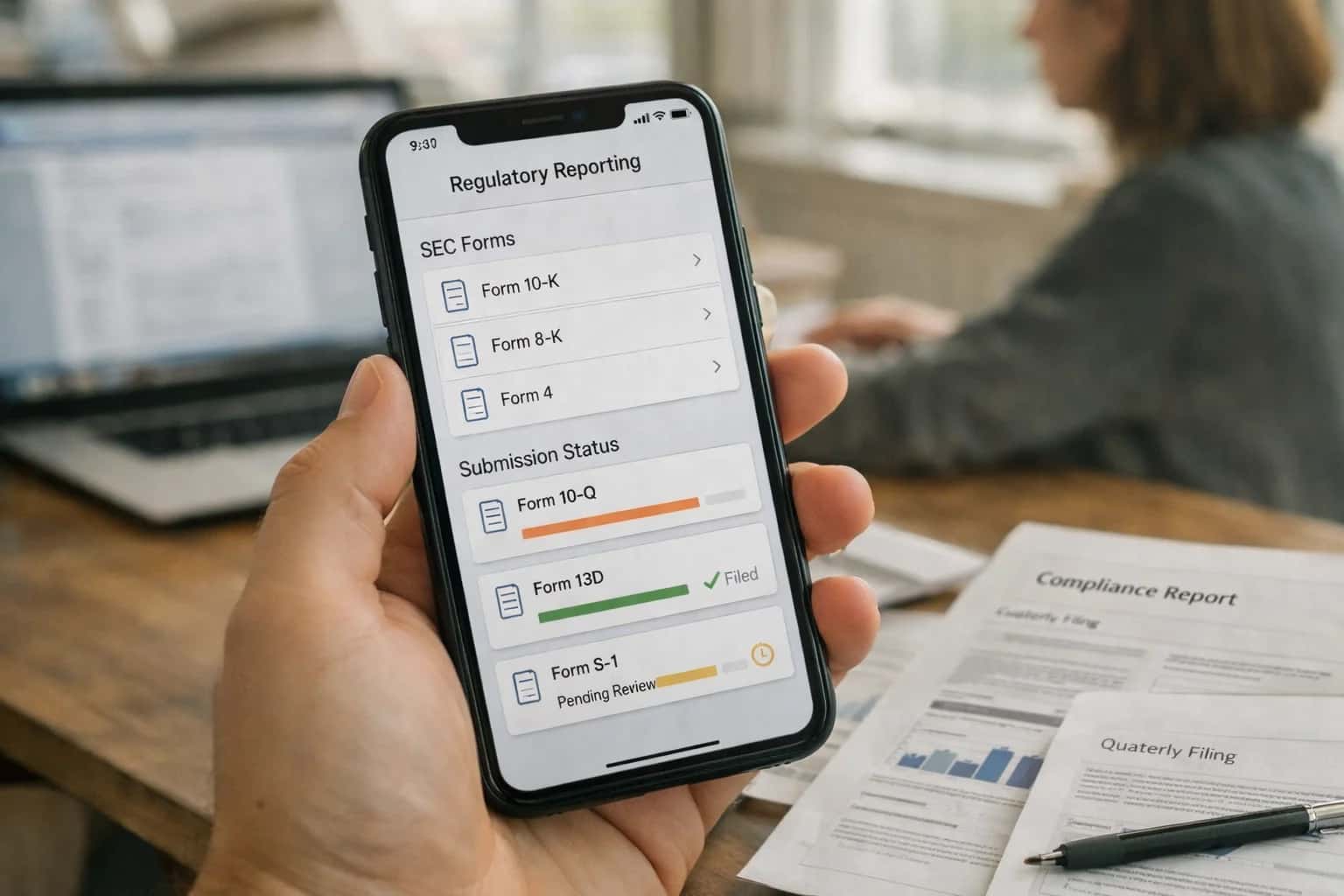
ARCHITECTURE FOR AUTOMATED QUALITY REPORTING
Where AI Fits in Crystal PM Regulatory Workflows
Integrating AI into Crystal PM for regulatory reporting shifts the burden from manual data wrangling to automated, auditable compliance operations.
A production implementation uses a secure middleware layer to handle the bidirectional data flow. Crystal PM exports CQM data via its reporting APIs or a dedicated data feed (often a nightly batch). The AI system—hosted in a compliant cloud environment—processes this data, using a combination of rule-based engines for measure calculation and a governed LLM for narrative summarization and error explanation. The draft report and any submission-ready files are then posted back to a designated Crystal PM document management folder or via an API to a government portal connector (e.g., for the CMS Quality Payment Program), with all actions logged against the specific practice and reporting period in Crystal PM's audit system.
Rollout and governance are critical. A phased approach starts with a single MIPS measure category (e.g., Quality) for a pilot practice location. The AI's outputs should enter a human-in-the-loop review workflow within Crystal PM before final submission, using its existing tasking or approval modules. Governance focuses on model drift detection for the LLM components to ensure consistent narrative quality and data lineage tracking to prove the audit trail from raw Crystal PM data to the final submitted report. This architecture doesn't replace Crystal PM's native reporting but automates the most labor-intensive, error-prone steps of extraction, calculation, and drafting, turning a quarterly multi-day manual process into a same-day, review-ready operation.
REGULATORY REPORTING
Crystal PM Modules and Data Surfaces for AI Integration
Data Extraction and Validation
Crystal PM's clinical modules house the raw data for MIPS and other quality programs. AI integration focuses on automated extraction of structured and unstructured data points—like visual acuity results, medication lists, and procedure codes—from patient encounters and chart notes. This involves querying specific database tables (e.g., patient_encounters, diagnosis_codes, vitals) via Crystal PM's reporting APIs or direct database connectors.
Once extracted, AI models can validate completeness and accuracy against measure specifications, flagging missing documentation or potential discrepancies before submission. This pre-submission scrub reduces manual review time and improves first-pass acceptance rates by payer and regulatory portals.
CRYSTAL PM
High-Value AI Use Cases for Regulatory Reporting
Automate the most time-consuming, error-prone reporting workflows in Crystal PM by integrating AI for data extraction, validation, and submission. These patterns target MIPS, PQRS, and other quality reporting mandates, connecting directly to clinical quality measure (CQM) data and government portal APIs.
01
Automated MIPS Data Extraction & Validation
Use AI to continuously scan Crystal PM's clinical and financial modules for MIPS-relevant data points (e.g., e-prescribing rates, preventive care screenings). The agent validates data completeness, flags discrepancies against historical benchmarks, and prepares structured extracts for submission, reducing manual chart reviews.
Hours -> Minutes
Data compilation
02
Intelligent Clinical Quality Measure (CQM) Calculation
Deploy an AI agent that connects to Crystal PM's patient records and appointment data to automatically calculate CQM performance scores. It handles complex logic for denominator exclusions, numerator compliance, and risk adjustment, generating audit-ready reports that explain each calculation step for reviewer transparency.
1 sprint
Implementation timeline
03
Regulatory Report Drafting & Narrative Generation
Integrate an LLM with access to prior submission templates and current performance data. The AI drafts narrative sections for improvement activities and promoting interoperability, tailoring language to specific practice size and specialty. It ensures all required elements from CMS guidelines are addressed before human review.
Batch -> Real-time
Draft generation
04
Pre-Submission Error Checking & Anomaly Detection
Before connecting to the CMS QPP portal, run an AI validation layer that compares the current year's submission package to historical patterns and known error signatures. It detects outliers in measure scores, missing attestations, or data format mismatches that commonly trigger audits or rejections.
Same day
Error identification
05
Automated Submission via Government Portal APIs
Orchestrate the final submission step by integrating an AI workflow that handles secure authentication, file upload, and confirmation tracking with the QPP API. The agent manages retry logic for transient errors, provides real-time status updates back to Crystal PM, and archives the complete submission package for compliance.
Batch -> Real-time
Submission workflow
06
Post-Submission Performance Benchmarking & Planning
After scores are published, use AI to analyze your practice's performance against regional and specialty benchmarks available within Crystal PM's analytics. The system generates actionable insights and recommends specific clinical or administrative workflows to target for the next performance year, creating a closed-loop improvement cycle.
Hours -> Minutes
Insight generation
CRYSTAL PM REGULATORY REPORTING
Example AI-Powered Reporting Workflows
These workflows illustrate how AI agents can automate the extraction, validation, and submission of regulatory and quality data from Crystal PM, specifically targeting Merit-based Incentive Payment System (MIPS) reporting and clinical quality measure (CQM) data. Each flow connects to Crystal PM's data model and external government portals via secure APIs.
Trigger: Scheduled monthly batch job or manual trigger by the Quality Manager before reporting period.
Context/Data Pulled:
- Agent queries Crystal PM's reporting database or API for the target date range.
- Extracts patient encounter data, diagnosis codes (ICD-10), procedure codes (CPT/HCPCS), and demographic fields needed for selected MIPS measures (e.g., Preventive Care and Screening, Controlling High Blood Pressure).
- Pulls denominator and numerator criteria from a maintained measure definition library.
Model or Agent Action:
- The agent applies logic to filter the patient population for each measure's denominator.
- For each patient in the denominator, it evaluates clinical data against the numerator criteria (e.g., was a blood pressure reading documented and was it under control?).
- It calculates the performance rate for each measure and flags patients who fall into the "exception" or "performance not met" categories for review.
System Update or Next Step:
- Results are written to a structured JSON or CSV file, stored in a secure cloud bucket.
- A summary dashboard is updated in the practice's internal BI tool, showing current performance against targets.
- The agent creates a task in the practice's project management system for the Quality Manager to review flagged cases.
Human Review Point: The Quality Manager reviews all flagged patient cases where the agent could not confidently determine numerator eligibility due to missing or ambiguous data in Crystal PM.
AUTOMATING MIPS AND QUALITY REPORTING
Implementation Architecture: Data Flow and Integration Points
A production-ready AI integration for Crystal PM connects to clinical quality measure (CQM) data, automates report drafting, and validates submissions against government portal requirements.
The integration architecture centers on Crystal PM's reporting database and clinical data extracts. Key data sources include patient encounter records, procedure codes (CPT/HCPCS), diagnosis codes (ICD-10), and outcome measures stored in Crystal PM's structured fields. An automated ETL pipeline, typically via Crystal PM's ODBC/JDBC connectors or scheduled report exports, pulls this data into a secure processing environment. The AI layer then maps this raw data to specific Merit-based Incentive Payment System (MIPS) measures or other Clinical Quality Measures (CQMs), calculating performance rates and identifying gaps for manual review.
For report generation, a Retrieval-Augmented Generation (RAG) system is implemented. This system grounds a large language model (LLM) in the latest CMS program guidelines, measure specification documents, and the practice's historical submission data. The AI drafts narrative explanations for performance, highlights improvement activities, and prepares data for the Quality Payment Program (QPP) portal submission format. Before submission, a validation agent cross-references the draft against the QPP API's validation rules, checking for common errors in measure IDs, patient counts, and performance period alignment to reduce rejection risk.
Governance and rollout require a phased approach. Initially, the system operates in a human-in-the-loop mode, where AI-generated reports and validations are presented to an administrator within Crystal PM's interface (or a connected dashboard) for review and approval. Audit trails log all data accesses, AI suggestions, and final submissions. For practices with multiple locations, the architecture supports a centralized deployment where a single AI service processes data from multiple Crystal PM instances, enforcing consistent reporting logic while maintaining data segregation by practice ID. The final integration point is the secure, automated submission to the QPP portal via its REST API, with success/failure statuses fed back into Crystal PM for tracking.
CRYSTAL PM REGULATORY REPORTING
Code and Payload Examples
Extracting Clinical Quality Measure Data
AI agents can query Crystal PM's clinical and billing modules to extract structured data for MIPS and other quality programs. This involves pulling patient demographics, diagnosis codes (ICD-10), procedure codes (CPT), and visit dates to calculate measure denominators and numerators.
A common pattern is to run scheduled batch jobs that query the database for eligible patient cohorts, then use an LLM to validate data completeness and flag missing documentation. The extracted payload is structured for submission to registries or CMS.
Example Python Pseudocode for Cohort Extraction:
python# Pseudo-query for Diabetic Eye Exam Measure (CMS122v10) eligible_patients_query = """ SELECT p.patient_id, p.date_of_birth, d.diagnosis_date, v.visit_date, p.primary_insurance FROM patients p JOIN diagnoses d ON p.patient_id = d.patient_id JOIN visits v ON p.patient_id = v.patient_id WHERE d.icd10_code LIKE 'E11%' -- Type 2 Diabetes AND v.visit_date BETWEEN '2024-01-01' AND '2024-12-31' AND v.procedure_code IN ('92004', '92014', '92250'); -- Relevant eye exams """ # Use Crystal PM's reporting API or direct DB connection (with governance) cohort_data = execute_crystal_query(eligible_patients_query) # LLM step: Review cohort for data anomalies validation_prompt = f"Validate this patient cohort for measure CMS122: {cohort_data}" validation_result = llm_call(validation_prompt)
CRYSTAL PM REGULATORY REPORTING
Realistic Time Savings and Operational Impact
How AI integration transforms manual, error-prone reporting tasks into streamlined, assisted workflows for MIPS, CQMs, and other regulatory submissions.
| Reporting Task | Before AI | After AI | Notes |
|---|---|---|---|
MIPS Data Extraction & Aggregation | Manual chart review, spreadsheet compilation (2-4 hours per provider) | Automated data pull and initial aggregation (15-30 minutes) | AI queries EHR for CQM-relevant data; human reviews for accuracy before submission. |
Clinical Quality Measure (CQM) Calculation | Manual calculation, prone to human error and audit risk | Assisted calculation with anomaly flagging | AI runs calculations against defined logic; staff reviews flagged outliers or data gaps. |
Report Narrative Drafting | Manual writing from scratch for narrative components | AI-assisted draft generation from structured data | LLM creates first draft of required narratives; clinician or admin edits and finalizes. |
Submission Error Checking | Manual review of portal error logs and resubmission | Pre-submission validation and error prediction | AI checks for common data format errors and missing fields before portal submission. |
Audit Trail & Documentation Assembly | Manual gathering of supporting documents for potential audit | Automated document retrieval and packet assembly | AI identifies and collates relevant visit notes, orders, and results based on report data. |
Regulatory Change Impact Assessment | Manual review of updates to reporting requirements | Automated summarization of changes against current workflows | AI monitors regulatory sources and highlights new fields or modified measures affecting your practice. |
Multi-Portal Submission Coordination | Manual login and data entry across different government portals | Orchestrated submission with status tracking | AI workflow manages credentialing and data formatting for target portals (e.g., CMS, state systems). |
IMPLEMENTING AI FOR REGULATED REPORTING
Governance, Security, and Phased Rollout
A secure, phased approach to integrating AI into Crystal PM's regulatory reporting workflows, ensuring data integrity and compliance.
Integrating AI into Crystal PM's regulatory reporting requires a governance-first architecture. This means establishing a secure data pipeline from the Clinical Quality Measure (CQM) modules, patient encounter data, and billing systems to a private inference environment. All data extraction via Crystal PM's APIs should be logged, with PHI fields pseudonymized or redacted before processing. The AI's role is to draft reports and check for submission errors—final review and sign-off must remain a human-in-the-loop step, logged within Crystal PM's audit trail.
A phased rollout mitigates risk and demonstrates value. Phase 1 could target a single, high-volume report like MIPS Quality Reporting, automating data extraction and populating a draft template for clinician review. Phase 2 expands to error checking, where the AI cross-references extracted data against payer-specific submission rules (e.g., via government portal API sandboxes) to flag inconsistencies before submission. Phase 3 introduces predictive analytics, using historical submission data to forecast potential audit triggers or identify patterns in reporting gaps.
Governance is enforced through technical controls: Role-Based Access Control (RBAC) in Crystal PM dictates who can trigger AI-assisted reporting, all AI-generated drafts are versioned and stored as attachments to the relevant patient or practice record, and a dedicated audit log tracks every AI interaction—what data was accessed, which prompts were used, and who approved the output. This creates a transparent chain of custody, essential for compliance audits and maintaining provider trust in the augmented workflow.
Enabling Efficiency, Speed & Accuracy
Intelligent Analysis, Decision & Execution
We build AI systems for teams that need search across company data, workflow automation across tools, or AI features inside products and internal software.
Talk to Us
Search across company data
Give teams answers from docs, tickets, runbooks, and product data with sources and permissions.
Useful when people spend too long searching or get different answers from different systems.
Enterprise searchRAGPermissions
Read more
Automate internal workflows
Use AI to route work, draft outputs, trigger actions, and keep approvals and logs in place.
Useful when repetitive work moves across multiple tools and teams.
AI agentsWorkflow automationGovernance
Read more
Add AI to products and internal tools
Build assistants, guided actions, or decision support into the software your team or customers already use.
Useful when AI needs to be part of the product, not a separate tool.
AI integrationDecision supportModel routing
Read moreIMPLEMENTATION PATTERNS
Frequently Asked Questions
Technical questions and workflow blueprints for integrating AI into Crystal PM's regulatory reporting processes, focusing on MIPS, clinical quality measures (CQMs), and government portal submissions.
AI models need structured, normalized data to analyze performance against Clinical Quality Measures (CQMs). The typical workflow involves:
-
Trigger & Source Identification: The process is triggered on a schedule (e.g., end of reporting period) or manually. Data sources within Crystal PM include:
- Encounter/visit records linked to diagnosis and procedure codes.
- Patient demographic and problem list data.
- Lab result observations and vital signs.
- Medication lists and immunization records.
-
API-Based Data Pull: Use Crystal PM's reporting or clinical APIs to extract the relevant patient cohorts and data points defined by the CQM specification (e.g., "Patients 18-75 with Diabetes and an HbA1c test in the period").
-
Data Normalization & Enrichment: The raw API payloads often need transformation:
- Map local codes to standard terminologies (e.g., SNOMED CT, LOINC, RxNorm).
- Calculate derived fields (e.g., patient age at encounter).
- Handle missing data flags according to CQM logic.
-
AI-Ready Payload: Structure the data into a JSON format that includes patient IDs, measure parameters, and timestamps. This payload is sent to an AI service for the next steps.
json// Example payload for AI-driven CQM numerator/denominator analysis { "measure_id": "CMS122v10", "reporting_period": "2024-01-01 to 2024-12-31", "patient_cohort": [ { "patient_id": "P12345", "denominator_eligible": true, "numerator_met": false, "exclusion_applies": null, "key_data_points": [ { "date": "2024-06-15", "code": "8302-2", "description": "HbA1c", "value": "8.5 %" }, { "date": "2024-03-10", "code": "E11.9", "description": "Type 2 Diabetes" } ] } ] }

About the author
Prasad Kumkar
CEO & MD, Inference Systems
Prasad Kumkar is the CEO & MD of Inference Systems and writes about AI systems architecture, LLM infrastructure, model serving, evaluation, and production deployment. Over 5+ years, he has worked across computer vision models, L5 autonomous vehicle systems, and LLM research, with a focus on taking complex AI ideas into real-world engineering systems.
His work and writing cover AI systems, large language models, AI agents, multimodal systems, autonomous systems, inference optimization, RAG, evaluation, and production AI engineering.
LinkedIn
Limited slotsGet a Free AI Consultation
Partnered with leading AI, data, and software stack.





How We Work
Custom AI workflows for your Business
One-fit-all AI don't work for modern businesses. At Inferensys, we aim to understand your business & custom requirements; which we use to define most efficient agentic workflows, the data, and the tools for your business.
01
Review the use case
We understand the task, the users, and where AI can actually help.
Read more02
Pick the right approach
We define what needs search, automation, or product integration.
Read more03
Build the first useful version
We implement the part that proves the value first.
Read more04
Improve from there
We add the checks and visibility needed to keep it useful.
Read moreThe first call is a practical review of your use case and the right next step.
Talk to Us