AI integration connects to Crystal PM's vendor and provider management data, typically housed in custom objects or modules for tracking partnerships, contracts, and credentialing status. Key surfaces include the provider directory, contract repository, and credentialing workflow engine. AI agents can be triggered via API webhooks from status changes (e.g., a new contract upload) or scheduled batch jobs to analyze network performance data. The primary data objects are provider profiles, service agreements, performance metrics, and compliance documents, which serve as the context for LLM-powered analysis and automated tasks.

Integration
AI Integration for Crystal PM Network Management
Add AI to Crystal PM's network management workflows to automate credentialing, analyze contracts, and benchmark partner performance using secure API integration and LLM-powered agents.
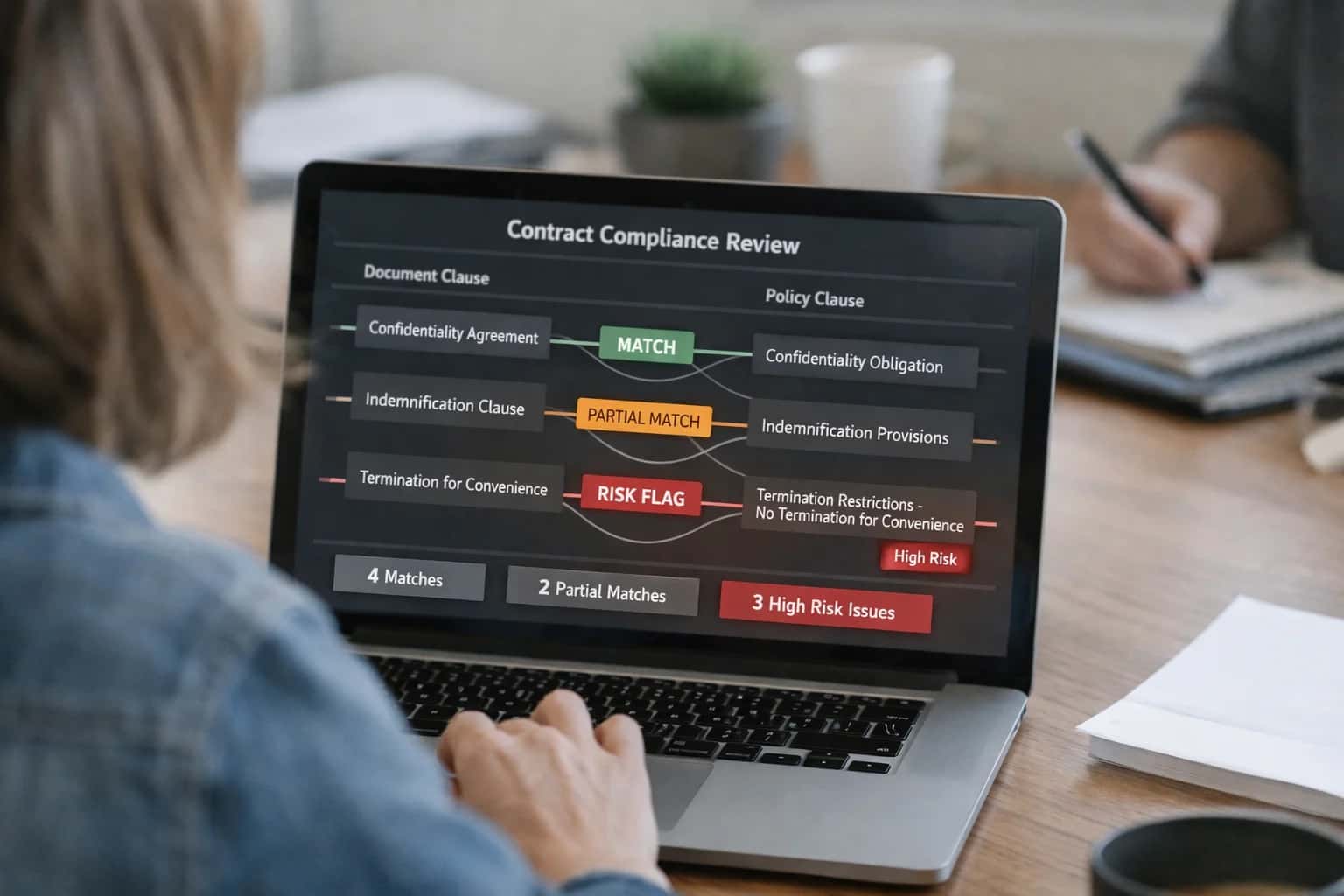
ARCHITECTURE AND ROLLOUT
Where AI Fits in Crystal PM Network Management
Integrating AI into Crystal PM's network management modules automates credentialing, contract analysis, and performance benchmarking for provider partnerships.
Implementation focuses on three high-value workflows: automated credentialing status checks that cross-reference provider data against external sanction lists and license databases via API calls; contract analysis and obligation tracking where AI extracts key terms, renewal dates, and service-level agreements (SLAs) from uploaded PDFs; and performance benchmarking that synthesizes claims data, patient satisfaction scores, and referral patterns to identify top-performing or at-risk network partners. A production setup typically involves a middleware layer that pulls data from Crystal PM's APIs, enriches it with external sources, and uses a governed LLM to generate summaries, flag discrepancies, or draft communications, with all actions logged back to Crystal PM's audit trails.
Rollout should be phased, starting with read-only analysis and reporting before enabling any write-back actions like status updates. Governance is critical: implement role-based access controls (RBAC) to ensure only authorized users can trigger AI actions on sensitive provider data, and establish a human-in-the-loop review step for any AI-generated credentialing alerts or contract amendments before they are committed to the system. This controlled approach minimizes risk while delivering operational gains, such as reducing manual credentialing review from days to hours and providing data-driven insights for network contracting decisions.
NETWORK MANAGEMENT
Key Integration Surfaces in Crystal PM
Centralized Partner Records
Crystal PM's vendor management data hub is the primary surface for AI integration. This includes master records for labs, frame suppliers, lens manufacturers, and managed care organizations. AI can connect here to automate and enhance network operations.
Key AI Workflows:
- Contract Analysis: Extract key terms, auto-renewal dates, and pricing tiers from uploaded vendor agreements using document intelligence.
- Performance Benchmarking: Continuously analyze order fulfillment times, defect rates, and cost trends across suppliers to flag underperformers.
- Credentialing Status Checks: Automate periodic checks against external databases (e.g., CAQH) to ensure network providers maintain active licenses and credentials, updating Crystal PM records.
Integration is typically achieved via Crystal PM's vendor API endpoints for CRUD operations on partner objects, combined with webhooks to trigger AI analysis when new contracts are uploaded or performance data is updated.
CRYSTAL PM
High-Value AI Use Cases for Network Management
Integrate AI into Crystal PM's vendor and provider network modules to automate credentialing, analyze partnership performance, and optimize contract management for multi-location optometry practices.
01
Automated Provider Credentialing Status Checks
Deploy an AI agent to monitor and report on the credentialing status of optometrists, ophthalmologists, and optical labs within the network. The agent connects to Crystal PM's provider data tables and external CAQH or payer portals via secure APIs, flagging expiring documents, incomplete applications, and status changes. This moves credentialing verification from a manual, periodic audit to a real-time dashboard, reducing credentialing-related billing delays.
Weeks -> Real-time
Status visibility
02
Contract Analysis & Obligation Tracking
Use an LLM with retrieval-augmented generation (RAG) to analyze managed care organization (MCO) and vendor contracts stored in Crystal PM's document management system. The AI extracts key terms—reimbursement rates, notification periods, quality metrics—and creates a structured obligations database. It can then cross-reference claims data to identify underpayments or trigger renewal workflows, ensuring contract compliance and maximizing revenue.
Hours -> Minutes
Review time
03
Network Performance Benchmarking
Build an AI analytics layer atop Crystal PM's reporting database to benchmark individual providers and labs within the network. Analyze metrics like patient volume, claim denial rates, optical sales per patient, and referral patterns. The system generates natural language insights, identifies top performers and outliers, and suggests targeted support or re-negotiation opportunities, enabling data-driven network management decisions.
Batch -> Continuous
Insight delivery
04
Intelligent Vendor Onboarding & Management
Automate the onboarding workflow for new frame/lens vendors or service partners. An AI workflow ingests vendor submissions via portal or email, extracts key data using OCR, validates it against Crystal PM's vendor master list, and routes the packet for internal review. Post-onboarding, it monitors order fulfillment rates, return rates, and invoice accuracy to provide a vendor performance score, streamlining procurement operations.
1 sprint
Onboarding cycle
05
Partner Communication & Dispute Triage
Implement an AI assistant to handle initial triage for partner communications (labs, referring MDs) received via Crystal PM's integrated messaging or email. The assistant classifies inquiries (e.g., order status, Rx clarification, billing dispute), retrieves relevant records from Crystal PM's order and patient modules, and either provides an immediate answer or routes a summarized case with context to the appropriate staff member, reducing response time and misrouting.
Same day
Initial response
06
Network Gap Analysis & Expansion Planning
Leverage AI to analyze Crystal PM's patient demographic data, referral out patterns, and service utilization reports to identify geographic or specialty gaps in the provider network. The model can suggest optimal locations for new practice affiliations or highlight services (e.g., pediatric optometry, low vision) where patient demand is unmet, supporting strategic network growth and patient retention initiatives.
CRYSTAL PM INTEGRATION PATTERNS
Example AI-Powered Network Management Workflows
These workflows demonstrate how AI agents can automate credentialing, analyze contracts, and benchmark performance within Crystal PM's vendor and provider network data. Each pattern connects to specific Crystal PM APIs and data objects to deliver operational intelligence.
This workflow reduces manual follow-up by continuously monitoring and reporting on credentialing statuses for new providers or network partners.
- Trigger: A new provider record is created in Crystal PM's
Vendor/Provider Managementmodule, or a credentialing expiration date approaches within a configurable window (e.g., 60 days). - Context/Data Pulled: The agent retrieves the provider's NPI, Tax ID, and specialty from the Crystal PM
Providerobject. It then queries the Crystal PMCredentialing Logor linked document repository for the latest application packet and status. - Model or Agent Action: An LLM-powered agent analyzes the status field and any notes. For "Pending" statuses exceeding a service-level agreement (SLA), it can:
- Draft a follow-up email to the credentialing body or internal coordinator using a templated prompt.
- Summarize the delay reason for a manager dashboard.
- Check external payer portals (via integrated credentials) for real-time status if APIs are available.
- System Update or Next Step: The agent logs its action in a Crystal PM custom object (
AI_Action_Log) and can update aNext Follow-Up Datefield on the provider record. A task is created for a human if intervention is required. - Human Review Point: All drafted external communications are sent to a "Pending Review" queue in Crystal PM's task system before being dispatched.
NETWORK MANAGEMENT INTEGRATION
Implementation Architecture: Data Flow & Security
A secure, API-first architecture for connecting AI agents to Crystal PM's vendor and credentialing data to automate network operations.
The integration connects to Crystal PM's Vendor Management and Provider Credentialing modules via its RESTful APIs. Core data objects include VendorContract records, ProviderCredential statuses, and PerformanceBenchmark datasets. AI agents are deployed as a middleware layer, using secure service accounts with role-based access control (RBAC) scoped to read vendor data and update credentialing status fields. All data flows are logged for audit, with PHI and PII fields masked or excluded before processing by external LLMs.
A typical workflow begins with a scheduled agent querying the Crystal PM API for providers with expiring credentials. The agent retrieves the relevant ProviderCredential record and attached documents (like licenses or certificates), uses a document intelligence service for extraction and validation, and then calls a state medical board's public API (or a credentialing service) for verification. Based on the result, the agent updates the status in Crystal PM and creates a task for staff review if discrepancies are found. For contract analysis, another agent ingests new VendorContract PDFs from a designated network folder, summarizes key terms (rate schedules, auto-renewal clauses, termination windows), and posts the analysis to a shared dashboard or a Crystal PM custom object for procurement review.
Rollout is phased, starting with read-only credential status monitoring and moving to automated status updates after validation. Governance is managed through a human-in-the-loop approval step for any system-generated updates to core provider or vendor records. The architecture uses a message queue to handle API call retries and avoid overloading the Crystal PM system during peak hours. This approach turns manual, calendar-driven credential checks into a continuous monitoring operation and shifts contract review from a multi-hour document dive to a summarized, prioritized task list.
AI INTEGRATION PATTERNS
Code & Payload Examples
Analyzing Provider Contracts with AI
Integrate AI to parse and monitor Crystal PM's vendor and provider network agreements. Use document intelligence to extract key terms, performance obligations, and renewal dates, syncing structured data back to the platform's vendor management modules.
Typical Workflow:
- Fetch contract PDFs from Crystal PM's document storage via its
GET /documentsAPI. - Process documents through an AI service for entity extraction (parties, effective dates, SLAs, termination clauses).
- Map extracted data to Crystal PM's vendor object using a
PATCH /vendors/{id}call to update custom fields forcontract_renewal_date,performance_metrics, andobligation_summary.
Example Payload for Vendor Update:
json{ "vendor": { "custom_fields": { "ai_contract_summary": "3-year term with quarterly performance reviews. Auto-renews with 90-day notice.", "next_review_date": "2024-10-15", "key_sla": "48-hour credentialing turnaround" } } }
This creates a searchable, actionable record of network obligations directly within the operational system.
AI FOR PROVIDER NETWORK OPERATIONS
Realistic Time Savings & Operational Impact
This table illustrates the tangible impact of integrating AI into Crystal PM's network management workflows, focusing on credentialing, contract analysis, and partner performance.
| Network Management Workflow | Before AI | After AI | Implementation Notes |
|---|---|---|---|
Provider Credentialing Status Checks | Manual portal logins and phone calls (30-45 min per provider) | Automated API checks and summary reports (5 min per batch) | Integrates with CAQH, PECOS, and state board APIs via Crystal PM's vendor data connectors |
Contract & Fee Schedule Analysis | Manual PDF review and spreadsheet comparison (2-4 hours per contract) | AI-assisted clause extraction and term comparison (30-45 min per contract) | Uses Crystal PM's document storage; human legal review remains for final approval |
Partner Performance Benchmarking | Monthly manual report compilation from disparate systems (6-8 hours) | Automated dashboard with anomaly alerts and trend analysis (1-2 hours review) | Connects to Crystal PM's reporting database and external claims/remittance feeds |
Network Gap Analysis (Specialty/Location) | Quarterly manual analysis using spreadsheets and maps (1-2 days) | Dynamic mapping and demand modeling with automated alerts (2-4 hours) | Leverages Crystal PM's provider directory and patient zip code data |
Credentialing Document Packet Assembly | Manual collection, naming, and PDF assembly (20-30 min per packet) | Automated document retrieval, redaction, and packet generation (5 min per packet) | Works with Crystal PM's file storage and requires defined naming conventions |
Re-credentialing Workflow Initiation | Calendar-based reminders with manual data entry for kickoff | Automated timeline tracking with pre-populated task lists and notifications | Triggers from Crystal PM's provider module; integrates with task management |
Contract Renewal & Negotiation Prep | Manual extraction of key terms and performance data for meetings | AI-generated negotiation briefs with performance highlights and risk flags | Pulls from executed contract repository and recent claims history in Crystal PM |
IMPLEMENTING AI IN A REGULATED ENVIRONMENT
Governance, Compliance & Phased Rollout
A secure, controlled approach to deploying AI for network management within Crystal PM.
Integrating AI into Crystal PM's network management modules—such as vendor credentialing, contract repositories, and performance dashboards—requires a governance-first architecture. This means implementing strict access controls via Crystal PM's user roles and permissions, ensuring AI tools only retrieve data for authorized provider networks or partnerships. All AI-generated outputs, like contract summaries or credentialing status alerts, should be written back to Crystal PM as draft records or notes, triggering standard approval workflows and maintaining a full audit trail within the system's native logs.
A phased rollout mitigates risk and builds trust. Start with a read-only pilot focused on contract analysis, where the AI summarizes key terms from uploaded vendor agreements stored in Crystal PM without making any system changes. Phase two introduces assistive automation, such as flagging expiring credentials or benchmarking partner performance against historical data, with results presented in a Crystal PM dashboard for manager review. The final phase enables controlled writes, like auto-populating credentialing status fields or generating draft correspondence for network outreach, each step gated by configurable business rules and supervisor approvals within the Crystal PM workflow engine.
Compliance is managed by treating the AI as a privileged user within Crystal PM's data model. All queries to external LLMs use de-identified data or secure enclaves, and any PHI or sensitive contract terms are processed in accordance with HIPAA and business associate agreements. Regular audits should compare AI-suggested actions (e.g., contract renewal flags) against human decisions, with feedback loops used to refine prompts and logic. This controlled, incremental approach ensures the integration enhances network management efficiency without compromising the integrity of Crystal PM's core provider data or operational compliance.
Enabling Efficiency, Speed & Accuracy
Intelligent Analysis, Decision & Execution
We build AI systems for teams that need search across company data, workflow automation across tools, or AI features inside products and internal software.
Talk to Us
Search across company data
Give teams answers from docs, tickets, runbooks, and product data with sources and permissions.
Useful when people spend too long searching or get different answers from different systems.
Enterprise searchRAGPermissions
Read more
Automate internal workflows
Use AI to route work, draft outputs, trigger actions, and keep approvals and logs in place.
Useful when repetitive work moves across multiple tools and teams.
AI agentsWorkflow automationGovernance
Read more
Add AI to products and internal tools
Build assistants, guided actions, or decision support into the software your team or customers already use.
Useful when AI needs to be part of the product, not a separate tool.
AI integrationDecision supportModel routing
Read moreIMPLEMENTATION AND WORKFLOWS
Frequently Asked Questions
Common technical and operational questions about integrating AI into Crystal PM's network management modules for provider credentialing, contract analysis, and performance benchmarking.
This workflow connects Crystal PM's vendor management data to external primary source verification services and payer portals to maintain real-time credentialing status.
- Trigger: A scheduled daily job or a manual trigger from the Crystal PM provider record.
- Context/Data Pulled: The AI agent extracts the provider's NPI, state license numbers, and specialty from Crystal PM's
ProviderNetworkobject. It also retrieves the target payer IDs and health plan networks from the associatedContractrecords. - Model/Agent Action: The agent uses tool-calling to:
- Query the Council for Affordable Quality Healthcare (CAQH) ProView API for attestation status.
- Check state medical board websites for active license status via web scraping or official APIs.
- Log into configured payer portals (using secure credential vaults) to pull enrollment and status information.
- System Update: Results are parsed and a summary is written back to a
CredentialingStatuscustom object in Crystal PM. Key fields updated include:Last_Verified_DateOverall_Status(e.g., "Active", "Pending", "Expired")Next_Verification_Due_DateFlagsfor any expiring credentials within 60 days.
- Human Review Point: The system generates a task in Crystal PM for the network manager only if a status is found to be "Expired" or "Deactivated," or if data from sources conflict, requiring manual intervention.

About the author
Prasad Kumkar
CEO & MD, Inference Systems
Prasad Kumkar is the CEO & MD of Inference Systems and writes about AI systems architecture, LLM infrastructure, model serving, evaluation, and production deployment. Over 5+ years, he has worked across computer vision models, L5 autonomous vehicle systems, and LLM research, with a focus on taking complex AI ideas into real-world engineering systems.
His work and writing cover AI systems, large language models, AI agents, multimodal systems, autonomous systems, inference optimization, RAG, evaluation, and production AI engineering.
LinkedIn
Limited slotsGet a Free AI Consultation
Partnered with leading AI, data, and software stack.





How We Work
Custom AI workflows for your Business
One-fit-all AI don't work for modern businesses. At Inferensys, we aim to understand your business & custom requirements; which we use to define most efficient agentic workflows, the data, and the tools for your business.
01
Review the use case
We understand the task, the users, and where AI can actually help.
Read more02
Pick the right approach
We define what needs search, automation, or product integration.
Read more03
Build the first useful version
We implement the part that proves the value first.
Read more04
Improve from there
We add the checks and visibility needed to keep it useful.
Read moreThe first call is a practical review of your use case and the right next step.
Talk to Us