The integration connects to the MDM platform's REST API and syslog/webhook streams to ingest real-time events for device enrollment failures, policy application errors, compliance drift, and application installation issues. Key data objects include Device, Policy, ComplianceStatus, EventLog, and ScriptExecutionResult. The AI system acts on this raw telemetry, which is often siloed and voluminous, making manual pattern detection impractical for support teams.

Integration
AI-Powered Root Cause Analysis for MDM Issues
Build an AI system that ingests logs and events from MDM platforms to automatically diagnose the root cause of common device enrollment, policy, and compliance failures, speeding up resolution from hours to minutes.
ARCHITECTURE AND ROLLOUT
Where AI Fits into MDM Troubleshooting
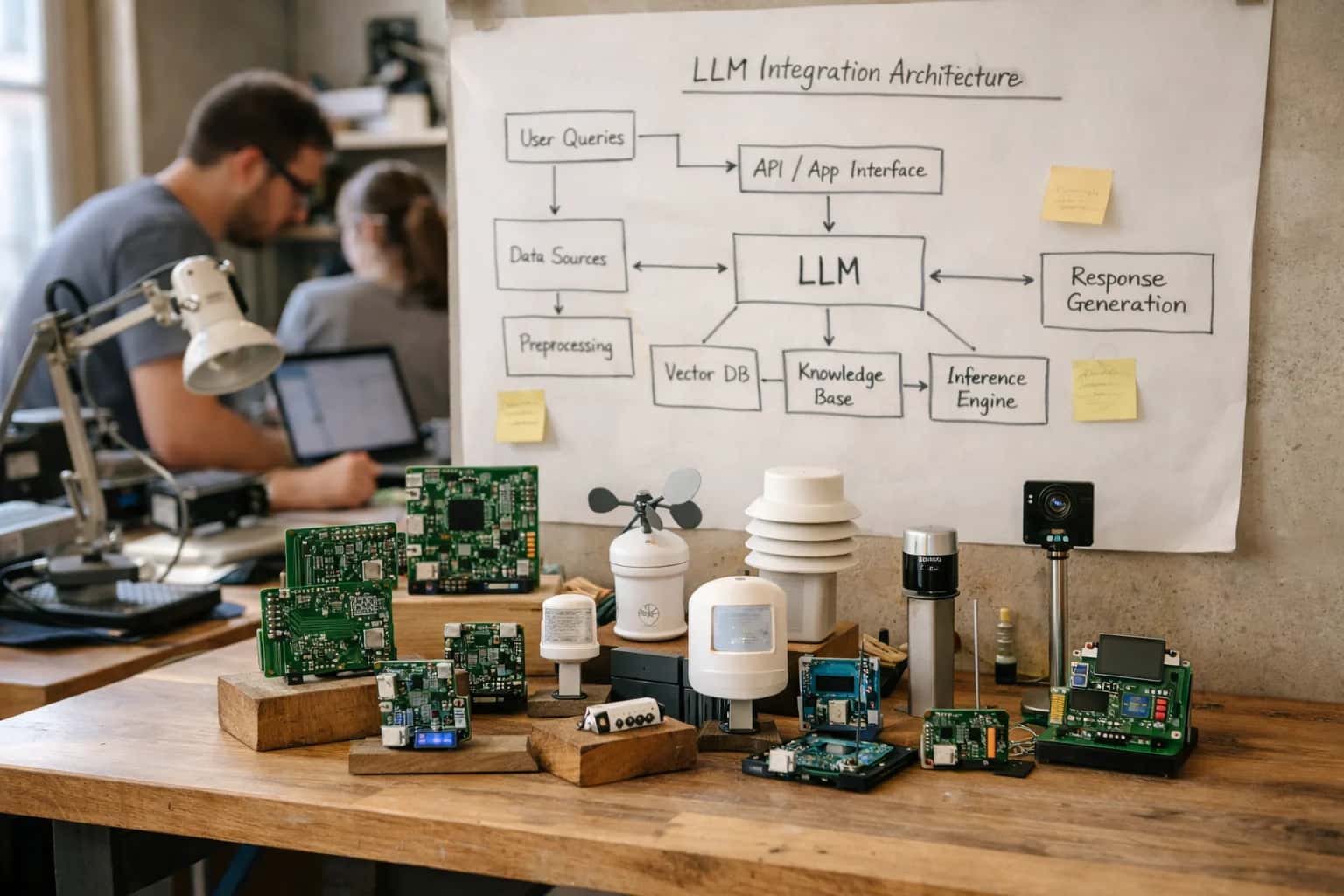
An AI-powered root cause analysis system integrates as a diagnostic layer between your MDM platform's event logs and your IT support workflows.
In a typical workflow, the AI model correlates multiple low-level events—like a failed device enrollment program (DEP) token refresh, a timeout on a configuration profile push, and a subsequent network restriction error—into a single, high-confidence root cause diagnosis: "DEP server communication blocked by corporate firewall rule." It then suggests the specific remediation, such as updating the firewall allow list for apple.com endpoints, and can optionally trigger an automated fix via the MDM API, like re-triggering enrollment with corrected network settings. This reduces mean time to resolution (MTTR) from hours of manual log sifting to minutes of automated diagnosis.
Rollout should begin with a read-only analysis phase, where the AI diagnoses issues but all remediations require human approval. This builds trust and provides a training dataset. Governance requires defining which automated actions (e.g., pushing a configuration profile, running a remediation script) the AI can execute autonomously versus which require a ticket in your ITSM like ServiceNow. An audit trail must log every AI-generated diagnosis, suggested action, and executed remediation, tying back to the source MDM events for compliance and review.
DATA SOURCES FOR ROOT CAUSE ANALYSIS
Key MDM Data Surfaces for AI Ingestion
Device Inventory & State
This foundational data layer provides the baseline for any diagnostic system. AI models ingest inventory reports to understand device composition, configuration, and real-time health.
Key Data Points:
- Hardware Attributes: Model, serial number, OS version, storage capacity, battery health, and installed RAM.
- Software Inventory: All installed applications with versions, from both enterprise catalogs and user-installed sources.
- Configuration Profiles: A complete list of applied MDM profiles (e.g., Wi-Fi, VPN, restrictions, certificates) and their compliance status.
- Extension Attributes (Jamf)/Custom Attributes: Custom fields populated by scripts, containing data like last user login, departmental tags, or custom compliance flags.
AI uses this to correlate failures with specific hardware models, OS versions, or missing critical profiles, moving from generic alerts to targeted hypotheses.
MDM PLATFORM INTEGRATION
High-Value Use Cases for AI-Powered RCA
Integrate AI-powered root cause analysis directly into your MDM platform to automatically diagnose common device enrollment, policy, and compliance failures. These workflows consume logs and events from Jamf, Intune, or Workspace ONE to speed up resolution and reduce manual triage.
01
Automated Enrollment Failure Diagnosis
AI analyzes enrollment logs from Jamf Pro, Intune, or Workspace ONE to identify the specific stage of failure (e.g., authentication, profile assignment, network timeout). It correlates errors with device type, OS version, and network conditions to provide a precise root cause and recommended fix to the help desk.
Hours -> Minutes
Diagnosis time
02
Dynamic Policy Compliance & Drift Remediation
Continuously monitors device compliance states against MDM policy benchmarks. When drift is detected (e.g., a required security setting is turned off), the AI identifies the likely cause—user action, OS update conflict, or script error—and triggers an automated remediation workflow via the MDM's API, such as re-applying a configuration profile or executing a corrective script.
Batch -> Real-time
Compliance monitoring
03
App Installation & License Failure Analysis
Diagnoses failures in application deployment workflows by analyzing VPP/ABM errors, storage issues, and user license conflicts. The AI system ingests installation logs and inventory data to determine if a failure is due to device eligibility, license exhaustion, or corrupted app bundles, then suggests corrective actions or automates license reclamation.
1 sprint
Saved investigation time
04
Network-Dependent Failure Triage
Correlates device connectivity failures (VPN, Wi-Fi, certificate errors) with network telemetry from platforms like Cisco Meraki. AI pinpoints whether an issue is device-specific (misconfigured payload), user-location-based, or a wider network outage, enabling targeted troubleshooting and automated profile updates.
Same day
Resolution target
05
Automated ITSM Ticket Enrichment & Routing
When a device issue is detected, AI automatically creates a pre-populated ticket in ServiceNow or Jira Service Management. The ticket includes the diagnosed root cause, affected device details from the MDM, and a link to the recommended KB article or script, ensuring faster, more accurate tier-1 support.
Batch -> Real-time
Ticket creation
06
Predictive Failure Prevention for Critical Devices
Uses historical RCA data to build models that predict common failures for specific device models or user groups. Proactively triggers preventive MDM actions, such as pushing a configuration update or scheduling a diagnostic script before a widespread issue impacts productivity, especially for field or executive devices.
AUTOMATED ROOT CAUSE ANALYSIS
Example AI Diagnosis Workflows
These workflows illustrate how an AI system consumes logs, events, and inventory data from your MDM platform to diagnose common failures, predict issues, and trigger automated remediation or create enriched support tickets.
Trigger: A device enrollment attempt fails, generating an error event in the MDM platform (e.g., Jamf Pro enrollment failure log, Intune enrollment failure via Graph API).
Context/Data Pulled:
- Raw error message and enrollment step from MDM logs.
- Device type, OS version, and serial number.
- Network details (IP, proxy settings) from the device's last known state.
- Enrollment profile or configuration policy details.
- Historical success/failure rates for similar devices/user groups.
Model or Agent Action:
- The AI agent parses the error, classifies it against a known taxonomy (e.g., "Authentication Failure," "Profile Delivery Timeout," "Certificate Mismatch").
- It cross-references the error with network conditions and profile configuration to identify the most probable root cause.
- Example output: "Root Cause: Enrollment failed due to an expired SCEP certificate on the enrollment profile. The profile was last updated 60 days ago, exceeding the 30-day validity period configured in your PKI."
System Update or Next Step:
- Automated Remediation: If policy allows, the agent can trigger an API call to the MDM to renew the certificate and re-push the updated enrollment profile.
- Ticket Creation: If human review is required, it creates a ticket in your ITSM (e.g., ServiceNow) with the diagnosis, affected device list, and recommended fix, assigned to the appropriate identity or certificate team.
Human Review Point: All automated certificate renewal actions are logged to an audit dashboard for the security team's weekly review.
FROM MDM LOGS TO ACTIONABLE INSIGHTS
Implementation Architecture: Data Flow & AI Layer
A production-ready blueprint for connecting AI to your MDM platform to diagnose and resolve device issues automatically.
The integration architecture begins by ingesting structured and unstructured data from your MDM platform's APIs and logs. This includes device inventory records, compliance events, script execution logs, and enrollment session details from platforms like Jamf Pro, Microsoft Intune, or VMware Workspace ONE. This raw telemetry is normalized and streamed into a central data pipeline, where a Retrieval-Augmented Generation (RAG) layer indexes historical incidents and resolution guides. An AI orchestration agent then analyzes incoming failure patterns—such as repeated policy application errors or enrollment timeouts—against this knowledge base to identify the most probable root cause, such as a misconfigured network payload or a conflicting configuration profile.
Once a diagnosis is made, the system follows a governed workflow. For low-risk, common issues (e.g., a cached credential blocking enrollment), the AI agent can call the MDM's REST API to execute a predefined remediation script or push a configuration update automatically. For more complex or high-risk scenarios, the agent generates a detailed incident summary, suggests specific remediation steps, and creates a ticket in your connected ITSM platform like ServiceNow, assigning it to the appropriate support tier with all relevant device context. All actions are logged with a full audit trail, and the system's predictions are continuously evaluated against human-administered resolutions to improve accuracy.
Rollout is typically phased, starting with a pilot group of non-critical devices. Governance is critical: we recommend implementing a human-in-the-loop approval step for any automated remediation during the initial phases and defining clear RBAC rules within the AI layer to control which MDM actions it can perform. This architecture doesn't replace your MDM console; it adds an intelligent automation layer on top, turning reactive log analysis into proactive device health management. For related patterns, see our guides on /integrations/mobile-device-management-platforms/ai-integration-for-automated-script-remediation-with-mdm and /integrations/mobile-device-management-platforms/ai-integration-with-itsm-platforms-like-servicenow.
AI-POWERED ROOT CAUSE ANALYSIS
Code & Payload Examples
Ingesting MDM Event Streams
A root cause analysis system begins by consuming structured logs and events from the MDM platform's API. This Python example uses the Jamf Pro Classic API to fetch recent enrollment failure events, enriches them with device model data from inventory, and prepares a payload for the AI analysis engine.
pythonimport requests import json from datetime import datetime, timedelta # Fetch enrollment failure events from Jamf Pro def fetch_enrollment_events(jamf_url, username, password): auth = (username, password) # Query for computers with enrollment status 'Failed' in last 24h date_filter = (datetime.now() - timedelta(hours=24)).strftime('%Y-%m-%d') url = f"{jamf_url}/JSSResource/computers" params = { 'subset': 'Basic', 'enrollment_status': 'Failed', 'created-after': date_filter } response = requests.get(url, auth=auth, params=params) computers = response.json().get('computers', []) events = [] for computer in computers: # Get detailed inventory for context detail_url = f"{jamf_url}/JSSResource/computers/id/{computer['id']}" detail_resp = requests.get(detail_url, auth=auth) detail = detail_resp.json().get('computer', {}) events.append({ 'event_type': 'ENROLLMENT_FAILURE', 'device_id': computer['id'], 'serial_number': detail.get('general', {}).get('serial_number'), 'model': detail.get('hardware', {}).get('model'), 'os_version': detail.get('general', {}).get('os_version'), 'timestamp': detail.get('general', {}).get('last_enrolled_date_utc'), 'error_logs': detail.get('extension_attributes', []) # Custom attributes for logs }) return events # Prepare enriched payload for AI analysis enriched_events = fetch_enrollment_events( jamf_url="https://yourcompany.jamfcloud.com", username="api_user", password="api_pass" ) payload = { 'analysis_request_id': 'rca_001', 'platform': 'jamf_pro', 'event_batch': enriched_events, 'analysis_scope': 'enrollment_failures' } print(json.dumps(payload, indent=2))
AI-Powered Root Cause Analysis for MDM Issues
Realistic Time Savings & Operational Impact
This table compares typical manual diagnostic workflows against an AI-assisted system that analyzes logs from Jamf, Intune, or Workspace ONE to automatically identify the root cause of common device enrollment, policy, and compliance failures.
| Diagnostic Scenario | Manual Process (Before AI) | AI-Assisted Process (After AI) | Operational Notes |
|---|---|---|---|
Device Enrollment Failure | 30-90 minutes of log review across MDM console, network logs, and device records | 2-5 minutes for AI to analyze correlated logs and suggest the top 3 probable causes | AI surfaces specific error codes and remediation steps; engineer validates and executes |
Policy Compliance Drift | Manual spot-checks and script execution across a sample of devices, taking 2-4 hours weekly | Continuous monitoring with daily automated reports highlighting non-compliant devices and suggested fixes | AI prioritizes devices by risk and provides ready-to-push remediation scripts for platforms like Jamf Pro or Intune |
Application Installation Failure | 15-45 minutes reviewing installation logs, dependency checks, and user context | AI correlates failure with device model, OS version, and user group in <1 minute, suggesting a fix | Reduces repetitive ticket volume for common app conflicts; integrates with app catalog workflows |
Security Policy Non-Compliance | Ad-hoc investigation triggered by audit or alert; 1-2 hours to trace policy assignment and device state | Proactive detection with root cause (e.g., "policy conflict with profile X") flagged in 5 minutes | AI explains why a device is out of compliance, enabling faster policy tuning and reducing false positives |
Network Connectivity Issue on Managed Device | Triage between MDM, network team, and endpoint logs; 45-120 minutes to isolate cause | AI analyzes MDM telemetry and correlating network events, suggesting cause (e.g., VPN config, proxy) in 5-10 minutes | Cross-system analysis reduces finger-pointing; provides evidence for network or device team action |
Bulk Device Performance Degradation | Reactive investigation after user reports; 3-6 hours to identify common pattern (e.g., recent OS update, conflicting app) | AI detects anomaly pattern across fleet and links to a recent change event (e.g., patch rollout) within 30 minutes | Enables proactive communication and rollback before widespread impact; feeds into change advisory boards |
Automated Remediation Script Execution | Manual script selection and testing based on best-guess cause; 20-40 minutes per device | AI recommends validated script from library based on diagnosed root cause; execution via MDM API in <5 minutes | Human-in-the-loop approval for high-risk actions; success/failure feedback improves AI model accuracy |
ARCHITECTING A CONTROLLED, PRODUCTION-READY SYSTEM
Governance, Security, and Phased Rollout
A successful AI-powered root cause analysis system requires a secure, governed architecture and a phased rollout to build trust and demonstrate value.
The integration architecture is built around a secure, dedicated AI service that acts as a middleware layer between your MDM platform and your support teams. It ingests logs and events from Jamf Pro, Microsoft Intune, or Workspace ONE via their respective APIs or webhook streams, processes them in an isolated environment, and returns structured root cause analyses to a designated system like a ServiceNow ticket or a dedicated operations dashboard. All data flows are encrypted in transit, and the AI service should be configured with role-based access control (RBAC) to ensure only authorized personnel can trigger analyses or view sensitive diagnostic data. Audit logs for every analysis request and result are essential for compliance and troubleshooting.
A phased rollout is critical for managing risk and refining the system. Start with a pilot group of common, high-volume, low-risk issues like "Device Enrollment Stuck on 'Awaiting Configuration'" or "Compliance Policy 'Encryption Check' Failing". In this phase, the AI provides analysis as a recommendation to human agents, who validate the accuracy before acting. This creates a feedback loop to improve the model. Subsequent phases can expand to more complex issues and introduce automated remediation workflows, where the AI system can, for example, automatically execute a Jamf Pro script to fix a misconfiguration or push an Intune device configuration profile after receiving approval via an integrated ticketing system.
Governance is maintained through a human-in-the-loop approval step for any automated action, especially those involving security commands like remote wipes. Establish clear metrics for the pilot, such as Mean Time to Resolution (MTTR) and first-call resolution rate, to measure impact. Regularly review the AI's diagnostic accuracy and bias, retraining models with new data from your environment. This controlled, iterative approach ensures the system delivers operational speed—reducing triage time from hours to minutes—while maintaining the security and compliance standards required for enterprise device management.
Enabling Efficiency, Speed & Accuracy
Intelligent Analysis, Decision & Execution
We build AI systems for teams that need search across company data, workflow automation across tools, or AI features inside products and internal software.
Talk to Us
Search across company data
Give teams answers from docs, tickets, runbooks, and product data with sources and permissions.
Useful when people spend too long searching or get different answers from different systems.
Enterprise searchRAGPermissions
Read more
Automate internal workflows
Use AI to route work, draft outputs, trigger actions, and keep approvals and logs in place.
Useful when repetitive work moves across multiple tools and teams.
AI agentsWorkflow automationGovernance
Read more
Add AI to products and internal tools
Build assistants, guided actions, or decision support into the software your team or customers already use.
Useful when AI needs to be part of the product, not a separate tool.
AI integrationDecision supportModel routing
Read moreAI-POWERED ROOT CAUSE ANALYSIS
Frequently Asked Questions
Practical questions about implementing AI-driven diagnostics for MDM enrollment, policy, and compliance failures.
The system integrates directly with the MDM platform's APIs and log streaming services. A typical implementation involves:
- API Ingestion: Pulling structured data via REST APIs for device inventory, compliance states, policy assignments, and enrollment profiles.
- Log Streaming: Consuming real-time or batched event logs (e.g., enrollment attempts, policy push results, error codes) via webhooks or syslog forwarding to a secure ingestion endpoint.
- Context Enrichment: Optionally correlating this data with external sources like ITSM tickets (
/integrations/itsm-platforms/ai-integration-with-itsm-platforms-like-servicenow) or Active Directory to add user role and group context.
The AI models are trained on historical, anonymized log sequences to recognize patterns that precede common failures like Error 0x87D1FDE8 in Intune or The activation lock could not be removed in Jamf.

About the author
Prasad Kumkar
CEO & MD, Inference Systems
Prasad Kumkar is the CEO & MD of Inference Systems and writes about AI systems architecture, LLM infrastructure, model serving, evaluation, and production deployment. Over 5+ years, he has worked across computer vision models, L5 autonomous vehicle systems, and LLM research, with a focus on taking complex AI ideas into real-world engineering systems.
His work and writing cover AI systems, large language models, AI agents, multimodal systems, autonomous systems, inference optimization, RAG, evaluation, and production AI engineering.
LinkedIn
Limited slotsGet a Free AI Consultation
Partnered with leading AI, data, and software stack.





How We Work
Custom AI workflows for your Business
One-fit-all AI don't work for modern businesses. At Inferensys, we aim to understand your business & custom requirements; which we use to define most efficient agentic workflows, the data, and the tools for your business.
01
Review the use case
We understand the task, the users, and where AI can actually help.
Read more02
Pick the right approach
We define what needs search, automation, or product integration.
Read more03
Build the first useful version
We implement the part that proves the value first.
Read more04
Improve from there
We add the checks and visibility needed to keep it useful.
Read moreThe first call is a practical review of your use case and the right next step.
Talk to Us