AI integration connects to the MDM platform's VPN payload management APIs—such as those in Jamf Pro, Microsoft Intune, or VMware Workspace ONE—to dynamically adjust configuration profiles. The AI layer acts as a policy engine that consumes real-time signals like user geolocation, network security posture (e.g., from Cisco Meraki), device compliance status, and application usage patterns. Instead of static configurations, the system can automatically push updated VPN payloads that select optimal gateways, adjust split-tunnel rules, or enforce stricter encryption based on the assessed risk and performance requirements of the current session.

Integration
AI-Optimized VPN Configuration Management
Use AI to dynamically adjust MDM VPN payloads based on real-time user location, network security posture, and application requirements, ensuring optimal connectivity and security.
ARCHITECTURE & ROLLOUT
Where AI Fits in MDM VPN Configuration Management
Integrating AI into MDM VPN management automates policy tuning, optimizes connectivity, and enforces security based on real-time context.
A practical implementation involves an AI orchestration agent that sits between your identity provider, network sensors, and the MDM's API. For example:
- The agent evaluates a device connecting from a new country: it checks threat intelligence feeds, confirms the user's travel calendar, and if the risk is acceptable, pushes an MDM command to update the VPN profile with a regional gateway for lower latency.
- For a device marked non-compliant (e.g., out-of-date OS), the agent can trigger an MDM workflow to restrict VPN access to remediation networks only.
- Using historical data, the AI can predict bandwidth needs for remote offices and pre-emptively adjust VPN QoS settings in the MDM payload before peak usage hours.
This moves VPN management from a reactive, one-size-fits-all model to a context-aware system, reducing help desk tickets for connectivity issues and tightening security without manual admin intervention.
Rollout requires a phased approach, starting with a pilot group of devices. Governance is critical: all AI-driven profile changes should be logged in the MDM's audit trail and require a human-in-the-loop approval step for high-risk actions initially. The AI's decision logic must be transparent, allowing admins to review the 'why' behind a configuration change via a dashboard. Integration with existing ITSM platforms like ServiceNow can auto-create tickets for review when the AI proposes significant policy modifications. This ensures control and auditability while automating routine optimizations, ultimately ensuring optimal, secure connectivity for every managed device.
AI-OPTIMIZED VPN CONFIGURATION MANAGEMENT
MDM VPN Payload Touchpoints for AI Integration
AI-Driven Dynamic Payload Assignment
MDM VPN configuration payloads define the connection parameters for managed devices. AI can transform static payloads into dynamic, context-aware policies. Key surfaces for integration include:
- Per-Connection Payloads: AI can analyze user role, current location (via MDM geolocation), and network security posture to select and push the optimal VPN configuration (e.g., split-tunnel vs. full-tunnel, specific gateway selection).
- On-Demand Rules: Integrate with the MDM's API to modify on-demand VPN rules based on real-time threat intelligence. For example, an AI agent can add domains to the "Trigger Domains" list if they are associated with a newly identified phishing campaign.
- Certificate-Based Authentication: AI can monitor certificate expiration dates within the payload and orchestrate automated renewal workflows via the MDM, preventing connectivity outages.
This moves VPN management from a set-and-forget model to an intelligent, adaptive layer of your zero-trust architecture.
INTELLIGENT CONNECTIVITY AUTOMATION
High-Value AI VPN Use Cases
AI transforms static VPN payloads into dynamic, context-aware connectivity policies. By analyzing user location, network security posture, and application requirements, AI can automate configuration management, optimize performance, and enforce security—reducing manual overhead and improving the user experience for mobile and remote workforces.
01
Dynamic Policy Assignment Based on Risk & Location
AI analyzes real-time signals—device compliance status, geolocation, network type (corporate, home, public Wi-Fi)—to automatically assign the appropriate VPN configuration payload. High-risk scenarios trigger stricter tunnel configurations or mandatory always-on VPN, while trusted locations may allow split-tunneling for performance.
Batch -> Real-time
Policy Application
02
Automated Bandwidth Optimization & App Prioritization
Instead of static split-tunneling rules, AI monitors application usage patterns and network congestion. It dynamically adjusts VPN routing—prioritizing latency-sensitive apps like VoIP through the tunnel while routing bulk updates directly—to maintain performance without compromising security for critical data flows.
1 sprint
To implement logic
03
Predictive Tunnel Health & Self-Healing Configurations
AI models consume VPN connection logs and device telemetry to predict tunnel failures (e.g., due to MTU mismatches, DNS issues). The system can automatically push remediating configuration updates via the MDM API or provide guided self-service steps to users via the company portal before a drop impacts productivity.
Hours -> Minutes
MTTR Reduction
04
Intelligent On-Demand VPN Triggering
Moves beyond always-on or manual VPN. AI agents monitor user activity—such as accessing sensitive internal apps, cloud services with IP restrictions, or uploading files to corporate repositories—and automatically establish the VPN tunnel only when needed. Reduces battery drain and improves the user experience for typical work.
Same day
User experience gain
05
Compliance-Aware Tunnel Enforcement
Integrates with MDM compliance engines (Jamf, Intune). If a device falls out of compliance (e.g., OS patch missing, disk encryption off), AI automatically updates its VPN payload to a restrictive 'quarantine' profile that only allows access to remediation resources until compliance is restored, enforcing zero-trust principles.
06
Automated Certificate Lifecycle Management
Manages the complex PKI behind VPN authentication. AI tracks certificate expiration dates across the fleet, automates renewal requests via the MDM API, and stages new certificate payloads for deployment. It identifies and remediates devices with broken certificate trust chains, preventing silent connectivity failures.
Hours -> Minutes
Renewal Workflow
AUTOMATED CONFIGURATION MANAGEMENT
Example AI-Driven VPN Workflows
These workflows illustrate how AI agents can dynamically manage VPN configurations within MDM platforms like Jamf, Intune, or Workspace ONE, adjusting policies based on real-time context to optimize security and user experience.
Trigger: A managed device (e.g., a corporate laptop) connects to a new Wi-Fi network.
Context/Data Pulled:
- MDM agent reports the new SSID and BSSID to the MDM platform.
- AI system queries internal and external threat intelligence APIs to score the network's risk (e.g., public hotspot vs. known corporate office).
- AI checks the device's current security posture from the MDM (OS patch level, EDR status).
Model/Agent Action: An AI agent evaluates the risk score, device posture, and user role (from HRIS integration) against predefined policy rules.
System Update/Next Step:
- High-Risk Network: The agent immediately triggers the MDM API (e.g.,
PATCH /api/v1/devices/{id}/profiles) to push a "Always-On VPN" configuration profile with strict split-tunneling disabled. - Trusted Corporate Network: The agent pushes a "Direct Access" profile that bypasses the VPN for local resources, optimizing performance.
- Medium Risk: The agent pushes a standard VPN profile but adds a user notification via the MDM (e.g., a Jamf script dialog) advising caution.
Human Review Point: The AI system logs all automatic profile changes in an audit dashboard. Security teams can review the "policy decision log" weekly to tune risk thresholds.
AI-OPTIMIZED VPN CONFIGURATION MANAGEMENT
Implementation Architecture: Data Flow and Guardrails
A practical blueprint for integrating AI-driven logic into MDM VPN payload workflows to automate connectivity and security decisions.
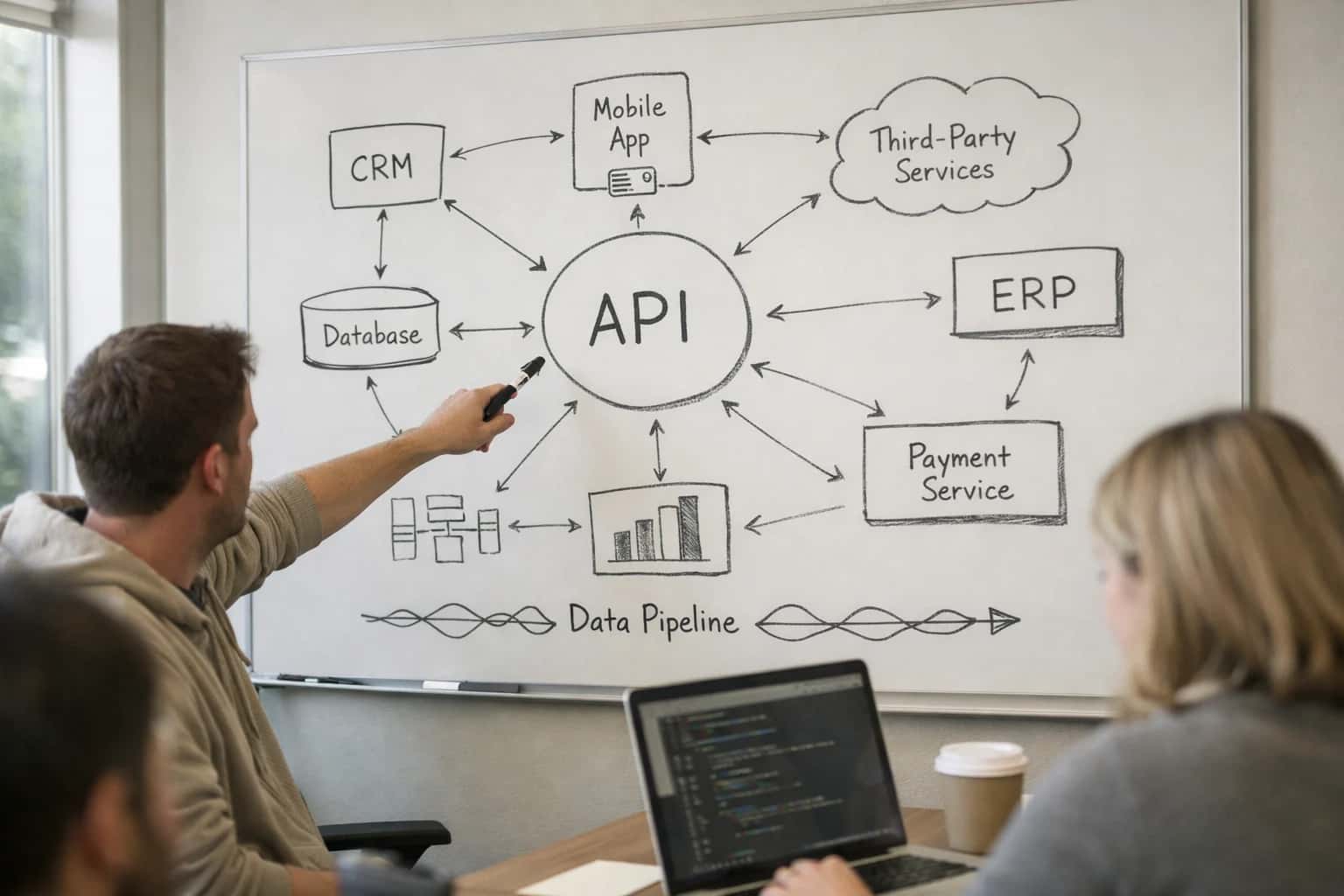
The core integration pattern connects an AI decision engine to your MDM platform's API (e.g., Jamf Pro, Microsoft Intune, or VMware Workspace ONE UEM) and its VPN payload configuration surfaces. The AI system ingests real-time context—such as user location from device GPS or Wi-Fi SSID, network security posture from firewalls or SD-WAN controllers, and application usage data—to evaluate risk and performance requirements. Based on this analysis, it dynamically generates or selects an appropriate VPN configuration payload (specifying protocols like IKEv2 or WireGuard, split-tunnel rules, DNS servers, and on-demand triggers) and pushes it to the device via the MDM's configuration profile or script deployment APIs. This replaces static, one-size-fits-all VPN settings with adaptive policies that respond to the operational environment.
A typical production implementation involves several key components wired in sequence:
- Context Ingestion Layer: Polls or receives webhook events from MDM inventory, network access control (NAC) systems like Cisco ISE, and location services.
- AI Decision Engine: A lightweight model or ruleset evaluates the ingested signals against security policies (e.g., "if on public Wi-Fi, enforce always-on VPN") and performance goals (e.g., "if video conferencing is active, prioritize low-latency gateway").
- Orchestrator: Maps the AI decision to the specific syntax required by the target MDM's VPN payload schema (e.g., a Jamf
.mobileconfigXML or an Intune device configuration profile). - MDM API Execution: Uses service accounts with appropriate RBAC to deploy the new or updated configuration profile to individual devices or dynamic device groups.
- Feedback Loop: Monitors MDM compliance reports and device connectivity logs to validate the change and feed success/failure metrics back into the AI model for continuous tuning.
Critical guardrails must be architected to prevent disruption. All AI-generated configuration changes should first deploy to a canary group of non-critical devices. An approval workflow can be integrated for high-risk changes, such as modifying global split-tunnel rules. The system must maintain a rollback capability, instantly reverting to a last-known-good configuration stored in the MDM if connectivity failures spike post-deployment. Furthermore, all AI-driven actions must be logged to an immutable audit trail, capturing the input context, the decision rationale, the exact payload deployed, and the initiating service account for compliance and troubleshooting.
AI-OPTIMIZED VPN CONFIGURATION MANAGEMENT
Code and Payload Examples
AI-Driven VPN Payload Assembly
AI agents can dynamically assemble VPN configuration payloads by evaluating real-time context before pushing to the MDM API. This example shows a Python function that retrieves user and device context, calls an LLM for a configuration decision, and formats the final XML payload for Jamf Pro.
pythonimport requests import xml.etree.ElementTree as ET from openai import OpenAI # Fetch device/user context from MDM and other sources def get_context_for_device(device_id): # Example: Get location from network logs, user role from HR system context = { "device_id": device_id, "last_location": "coffee_shop_wifi", "user_role": "field_sales", "required_apps": ["sales_crm", "secure_docs"] } return context # Use LLM to decide optimal VPN config def get_ai_vpn_recommendation(context): client = OpenAI() prompt = f"""Given a {context['user_role']} user on a device last seen on {context['last_location']} network,\n which requires access to {context['required_apps']}, recommend a VPN configuration:\n - Primary Server: (corporate or regional) - Split Tunnel Rules: (which apps/domains use VPN) - Security Protocol: (IKEv2 or Always-On) - Idle Disconnect: (True/False)""" response = client.chat.completions.create( model="gpt-4", messages=[{"role": "user", "content": prompt}] ) return response.choices[0].message.content # Build the XML payload for Jamf Pro def build_jamf_vpn_payload(device_id, ai_recommendation): # Parse AI text into structured config (simplified) config = { "server": "vpn-eu.corp.com", "split_tunnel": ["*.crm.internal", "docs.corp.com"], "protocol": "IKEv2", "on_demand": True } root = ET.Element("vpn_configuration") ET.SubElement(root, "vpn_type").text = "Custom SSL" ET.SubElement(root, "connection_name").text = "Dynamic-Corp-VPN" ET.SubElement(root, "server").text = config['server'] on_demand = ET.SubElement(root, "on_demand") for domain in config['split_tunnel']: rule = ET.SubElement(on_demand, "rule") ET.SubElement(rule, "domain").text = domain ET.SubElement(rule, "action").text = "Connect" return ET.tostring(root, encoding='unicode') # Main orchestration context = get_context_for_device("JAMFDEVICE001") ai_decision = get_ai_vpn_recommendation(context) vpn_payload = build_jamf_vpn_payload("JAMFDEVICE001", ai_decision) print(f"Generated Payload:\n{vpn_payload}")
VPN CONFIGURATION MANAGEMENT
Realistic Time Savings and Operational Impact
A comparison of manual versus AI-assisted VPN configuration workflows in MDM platforms, showing realistic improvements in time, accuracy, and operational overhead.
| Workflow Stage | Manual Process | AI-Assisted Process | Key Impact |
|---|---|---|---|
New Site/User Group VPN Setup | 2-4 hours of manual payload creation and testing | 15-30 minutes for AI-drafted config with admin review | Reduces setup time by ~85%, minimizes human error in syntax |
Policy Update for Security Threat | Next-business-day rollout after manual triage and change advisory | Same-day automated policy adjustment with human-in-the-loop approval | Accelerates response to critical vulnerabilities, shrinking exposure window |
Troubleshooting User Connectivity | 30-60 minutes of log analysis and manual parameter tweaking | 5-10 minutes for AI root-cause analysis and suggested fix | Frees up L2/L3 support for complex issues, improves user uptime |
Compliance Audit for VPN Configs | Days of manual sampling and spreadsheet reconciliation | Hours for AI-generated audit trail and drift report | Enables continuous compliance, provides evidence for regulatory reviews |
Bandwidth Optimization Rule Creation | Ad-hoc, reactive adjustments based on user complaints | Proactive, dynamic rules based on AI analysis of usage patterns | Improves network performance preemptively, reduces help desk tickets |
Global Configuration Rollback | High-risk, manual process with potential for misconfiguration | Automated, version-controlled rollback to last known-good state | Minimizes business disruption from faulty policy pushes |
Lifecycle Management (Onboarding/Offboarding) | Manual profile assignment/removal tied to HR tickets | Automated, event-driven provisioning/deprovisioning | Ensures immediate access for new hires and secure offboarding |
FOR AI-OPTIMIZED VPN CONFIGURATION MANAGEMENT
Governance and Phased Rollout Strategy
A practical framework for deploying and governing AI-driven VPN policy automation within your MDM platform.
Start with a controlled pilot targeting a single, high-value VPN use case, such as dynamically adjusting split-tunnel rules for a remote sales team based on their geographic location and accessed applications. Use your MDM's API (e.g., Jamf Pro's configurationProfiles endpoint or Intune's deviceConfigurations) to deploy AI-generated payloads to a pilot device group. Implement a human-in-the-loop approval step where proposed configuration changes are logged to a dashboard for a network engineer to review and approve before the MDM pushes the update. This phase validates the AI's logic, measures impact on connectivity metrics, and builds trust in the automated workflow.
For broader rollout, integrate the AI agent with your ITSM ticketing system (e.g., ServiceNow) and security information platform. This creates an audit trail where every AI-suggested VPN change generates a ticket for tracking, and the agent consumes real-time threat intelligence to avoid routing traffic through risky network nodes. Establish RBAC controls within the MDM to ensure the AI service account has permissions only to update specific VPN payload objects, not other device policies. Use the MDM's built-in reporting to monitor for configuration conflicts and set up alerts if the AI agent attempts an anomalous change rate.
Govern the system by defining key performance indicators (KPIs) tied to operational outcomes, such as reduction in VPN-related help desk tickets, improved throughput for business-critical apps, and adherence to security compliance frameworks. Schedule regular reviews where the AI's decision logs, derived from MDM event history, are analyzed to tune its models and update the business rules that guide its optimizations. This ensures the integration remains a controlled, value-driving component of your endpoint management strategy, not a black-box automation.
Enabling Efficiency, Speed & Accuracy
Intelligent Analysis, Decision & Execution
We build AI systems for teams that need search across company data, workflow automation across tools, or AI features inside products and internal software.
Talk to Us
Search across company data
Give teams answers from docs, tickets, runbooks, and product data with sources and permissions.
Useful when people spend too long searching or get different answers from different systems.
Enterprise searchRAGPermissions
Read more
Automate internal workflows
Use AI to route work, draft outputs, trigger actions, and keep approvals and logs in place.
Useful when repetitive work moves across multiple tools and teams.
AI agentsWorkflow automationGovernance
Read more
Add AI to products and internal tools
Build assistants, guided actions, or decision support into the software your team or customers already use.
Useful when AI needs to be part of the product, not a separate tool.
AI integrationDecision supportModel routing
Read moreMOBILE DEVICE MANAGEMENT
AI-Optimized VPN Configuration FAQ
Practical answers for IT teams implementing AI to automate and optimize VPN payload management in Jamf, Intune, Workspace ONE, and other MDM platforms.
An AI agent analyzes multiple real-time signals from the MDM platform and other enterprise systems to select the optimal VPN payload. The decision logic typically follows this pattern:
- Trigger: A device checks in, changes network, or a scheduled policy evaluation runs.
- Context Pulled: The AI system queries the MDM API for:
- Device location (GPS, IP geolocation from the MDM or network gear)
- Current network SSID and type (corporate Wi-Fi, public hotspot, cellular)
- Device security posture (compliance status, EDR health score)
- User role and group membership from Azure AD/Okta
- Currently used applications (from MDM inventory or network logs)
- Model Action: A rules engine or lightweight ML model evaluates the context against predefined policies. For example:
yaml
IF user_role == 'finance' AND network == 'public' AND location != 'approved_country' THEN vpn_payload = 'strict_finance_tunnel' ELSE IF application_running IN ['salesforce', 'crm'] THEN vpn_payload = 'app_specific_split_tunnel' ELSE vpn_payload = 'default_corp_tunnel' - System Update: The AI agent calls the MDM's API (e.g.,
PATCH /api/v1/devices/{id}/vpnpayload) to assign the new configuration profile. The MDM then pushes it to the device on the next check-in or via a push command. - Human Review Point: Significant changes (e.g., blocking a high-risk country) can generate an alert in a SIEM or ITSM tool for an admin to review the AI's decision logic.

About the author
Prasad Kumkar
CEO & MD, Inference Systems
Prasad Kumkar is the CEO & MD of Inference Systems and writes about AI systems architecture, LLM infrastructure, model serving, evaluation, and production deployment. Over 5+ years, he has worked across computer vision models, L5 autonomous vehicle systems, and LLM research, with a focus on taking complex AI ideas into real-world engineering systems.
His work and writing cover AI systems, large language models, AI agents, multimodal systems, autonomous systems, inference optimization, RAG, evaluation, and production AI engineering.
LinkedIn
Limited slotsGet a Free AI Consultation
Partnered with leading AI, data, and software stack.





How We Work
Custom AI workflows for your Business
One-fit-all AI don't work for modern businesses. At Inferensys, we aim to understand your business & custom requirements; which we use to define most efficient agentic workflows, the data, and the tools for your business.
01
Review the use case
We understand the task, the users, and where AI can actually help.
Read more02
Pick the right approach
We define what needs search, automation, or product integration.
Read more03
Build the first useful version
We implement the part that proves the value first.
Read more04
Improve from there
We add the checks and visibility needed to keep it useful.
Read moreThe first call is a practical review of your use case and the right next step.
Talk to Us