AI integration for Microsoft Intune targets three primary surfaces: the Microsoft Graph API for Intune, device configuration profiles, and compliance policies. The Graph API serves as the central nervous system, allowing AI agents to ingest real-time telemetry on device health, application inventory, user compliance status, and security posture. This data layer enables use cases like predictive device failure scoring, where AI models analyze battery cycles, storage degradation, and crash reports to flag endpoints for proactive replacement. For policy automation, AI can dynamically adjust conditional access rules or configuration profile assignments based on real-time risk signals, such as geolocation anomalies or software vulnerability detections.

Integration
AI Integration with Microsoft Intune
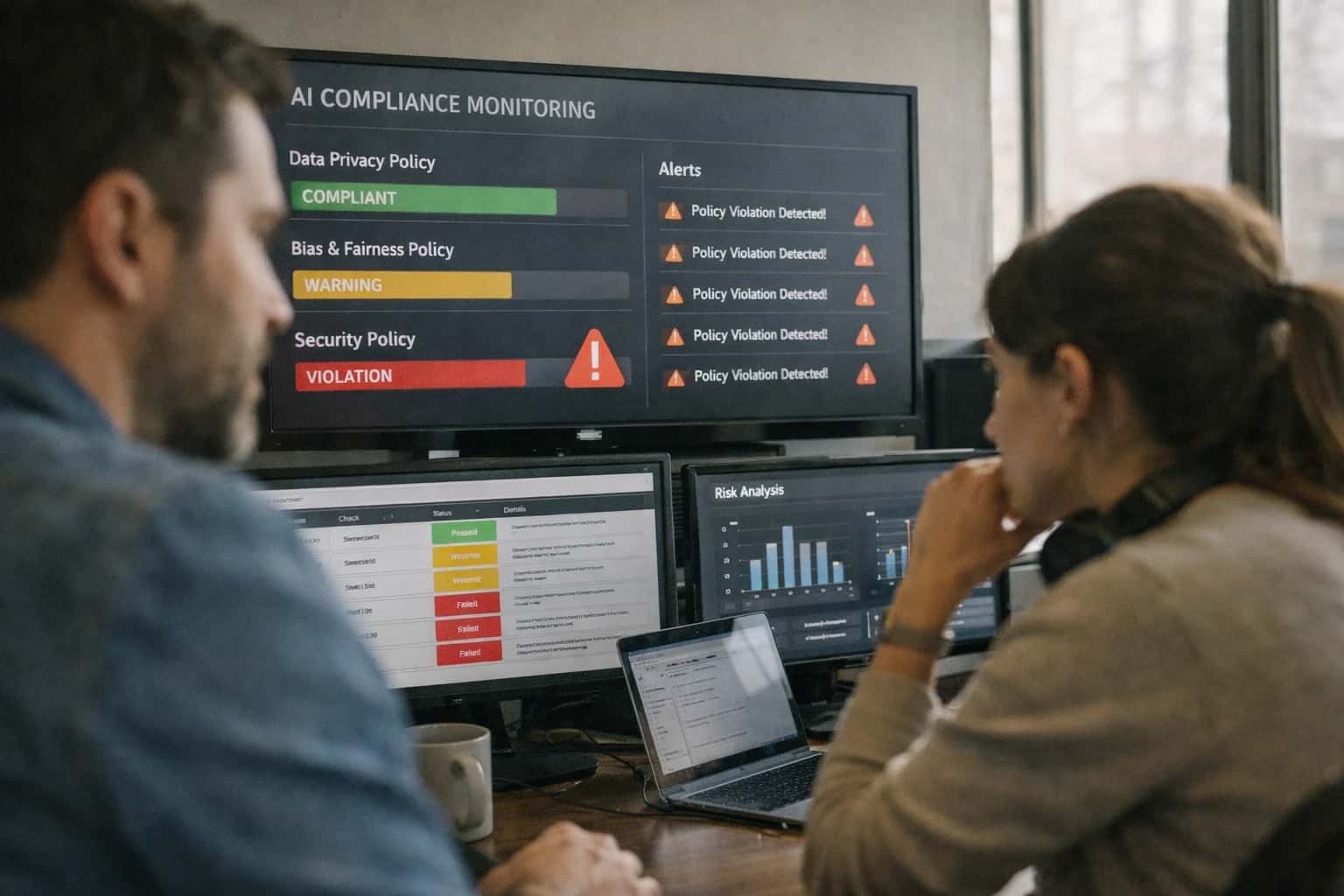
Where AI Fits into Microsoft Intune Management
A practical guide to embedding AI agents and workflows into Intune's Graph API and policy surfaces for predictive operations and automated compliance.
Implementation typically involves a middleware layer—often built with Azure Functions or Logic Apps—that sits between your AI models and the Intune Graph API. This layer handles authentication, rate limiting, and payload transformation. For example, an AI system detecting a compliance drift (like a missing security patch) can call the /deviceManagement/managedDevices/{id}/executeAction endpoint to trigger a remote remediation script. For rollout, start with a pilot group of non-critical devices, instrumenting the AI layer to log all proposed actions to an audit queue for human review before execution. This 'human-in-the-loop' phase is critical for validating AI decision logic and building trust before moving to fully automated workflows for low-risk, high-volume tasks like app license reclamation or automated ticket creation for non-compliant devices.
Governance is paramount. Any AI-driven action taken via Intune APIs must be traceable. Implement a service principal with least-privilege RBAC exclusively for your AI agents, and ensure all actions are logged with a correlation ID back to the original AI inference event. Consider integrating with Azure Monitor and Log Analytics to create a unified audit trail. A key caveat: Intune's data model is optimized for management, not real-time analytics. For time-sensitive AI use cases like instant threat response, you'll need to complement Graph API polling with webhook subscriptions for critical events and potentially blend Intune data with signals from Microsoft Defender for Endpoint or your SIEM for a complete risk picture.
Key Intune API Surfaces for AI Integration
Device Management & Compliance Graph
The Microsoft Graph /deviceManagement endpoints provide the primary surface for AI-driven automation of device lifecycle and policy enforcement. Key objects include managedDevices, deviceCompliancePolicies, and deviceConfigurationProfiles.
AI Integration Patterns:
- Predictive Compliance: Train models on historical
deviceComplianceStatedata to forecast violations before they occur, triggering automated remediations viadeviceManagementScripts. - Dynamic Grouping: Use AI to analyze device attributes (
operatingSystem,model,enrollmentType) and user behavior to auto-assign devices to dynamic Azure AD groups for targeted policy application. - Automated Remediation: Build agents that listen for
deviceCompliancePolicyStateChangeevents via webhooks, evaluate context, and execute corrective PowerShell scripts or configuration profile updates.
Example Workflow: An AI agent detects a device drifting from its secure baseline, automatically pushes a remediation script via the deviceManagement/deviceHealthScripts API, and logs the action for audit.
High-Value AI Use Cases for Intune
Integrate AI directly with Microsoft Graph for Intune to automate policy enforcement, predict device failures, and enable self-healing endpoints. These patterns use Intune's APIs as an execution layer for intelligent device lifecycle management.
Predictive Device Health Scoring
Build ML models that analyze Intune diagnostic data (battery cycles, storage health, crash reports) to predict hardware failures. Automatically generate ServiceNow tickets for proactive replacement and adjust conditional access policies to limit network access for high-risk devices.
AI-Driven Conditional Access Automation
Deploy AI agents that evaluate real-time risk signals—device compliance state, network location, login anomalies—to dynamically adjust Azure AD Conditional Access policies via the Graph API. Automatically quarantine non-compliant devices or require step-up authentication without admin intervention.
Automated Compliance Reporting & Audit Trails
Use AI to synthesize raw Intune compliance data across thousands of devices into narrative executive reports and audit-ready evidence packs. Automatically highlight anomalous devices, track policy drift over time, and generate summaries for standards like HIPAA or NIST.
Self-Healing Endpoint Remediation
Orchestrate AI systems that detect common configuration issues (VPN misconfigurations, certificate expirations) from Intune logs and automatically execute remediation scripts via Proactive Remediations or PowerShell scripts. Close the loop from detection to fix without help desk tickets.
Intelligent Application Management
Implement AI logic to optimize Win32 and Store app deployments. Analyze user role, department, and past usage patterns to dynamically assign application groups in Intune. Automatically reclaim unused licenses and trigger uninstall workflows for redundant software.
AI Copilot for IT Admins
Embed a conversational assistant within IT admin tools that connects to the Microsoft Graph for Intune. Enable natural language queries for device states ("Show me all non-compliant iOS devices in the Sales OU"), generate PowerShell scripts for common tasks, and guide troubleshooting steps.
Example AI-Driven Intune Workflows
These workflows illustrate how AI agents and models can be integrated with Microsoft Intune's Graph API and policy surfaces to automate complex, conditional operations. Each pattern is designed to be triggered by specific events, consume relevant device and user context, execute a model-driven decision, and update Intune or connected systems.
Trigger: A device compliance check-in via Microsoft Graph reports a new security finding (e.g., a new critical vulnerability detected, or a device falls out of compliance).
Context Pulled: The AI agent queries:
- Device compliance state and details from
/deviceManagement/managedDevices/{id}/deviceCompliancePolicyStates. - User risk score from Microsoft Entra ID (if integrated).
- Device network location and login time.
- The user's group memberships and sensitivity of accessed applications.
Model/Agent Action: A lightweight classifier model evaluates the aggregated risk signals against a configured policy. It decides on one of three actions: Allow, Require Step-Up Authentication, or Block.
System Update: The agent uses the Microsoft Graph API to dynamically update the user's Azure AD group membership, moving them into a group that is targeted by a pre-configured Conditional Access policy enforcing the required control (e.g., CA-Policy-Block-HighRisk).
Human Review Point: All Block decisions are logged to a Sentinel incident and a ticket is created in ServiceNow for security admin review. The agent can be configured to auto-revert the block after 24 hours unless a human confirms.
Implementation Architecture: Data Flow & System Design
A practical blueprint for connecting AI agents to Intune's Graph API to automate policy enforcement, compliance reporting, and predictive device health.
The core of the integration is the Microsoft Graph API for Intune, which provides programmatic access to the key objects and workflows you manage in the admin center. Your AI layer will primarily interact with these surfaces:
- Device Management Objects: Managed devices, enrollment records, and configuration profiles.
- Compliance & Conditional Access: Device compliance policies, conditional access rules, and the compliance state of each device.
- Remediation & Scripts: Proactive remediations and PowerShell scripts for automated fixes.
- Reporting & Detections: Raw logs, reports, and security detections for analytics.
An effective architecture uses this API as a control plane, where AI agents evaluate telemetry, make decisions, and execute actions by pushing new policies, triggering remediations, or adjusting group memberships.
A typical high-value workflow is AI-driven conditional access automation. Here’s the data flow:
- An AI agent consumes a real-time stream of device compliance states and security detections from the Graph API.
- The agent evaluates each device against a risk model that factors in compliance status, network location, user role, and threat signals.
- For devices flagged as high-risk, the agent automatically updates Azure AD group memberships or triggers Intune remediation scripts via the API.
- This change dynamically influences Azure AD Conditional Access policies, restricting access to corporate resources until the device is remediated.
- The agent logs all actions to a dedicated audit trail and can create a ticket in a connected ITSM platform like
/integrations/it-service-management-platforms/ai-integration-for-servicenow.
This moves policy enforcement from a static, rules-based system to a dynamic, context-aware one, reducing the window of exposure for non-compliant devices.
For rollout, start with a pilot device group and implement a human-in-the-loop approval step for all automated policy changes. Use Intune's built-in reporting to monitor the AI agent's impact on compliance rates and help desk ticket volume. Governance is critical: ensure the service principal used by the AI agent has least-privilege API permissions (e.g., DeviceManagementManagedDevices.ReadWrite.All, DeviceManagementConfiguration.ReadWrite.All) and that all automated actions are traceable back to a specific AI decision session. For managing the underlying AI models and prompts, consider integrating with an LLMOps platform like those covered in /integrations/ai-governance-and-llmops-platforms.
Code & Payload Examples
Automating Conditional Access with the Microsoft Graph API
Integrating AI with Intune's Graph API allows you to build dynamic, risk-aware conditional access policies. A common pattern is to have an AI agent consume real-time device compliance signals, user location, and threat intelligence to calculate a risk score. This score can then trigger automated policy adjustments via the Graph API.
For example, an AI model detecting anomalous sign-in behavior from a device with outdated OS patches can automatically trigger a remediation script via Intune and temporarily enforce stricter conditional access rules, requiring step-up authentication before granting access to sensitive resources. This moves security from static rule sets to adaptive, context-aware enforcement.
Example API Call to Fetch Device Compliance State:
httpGET https://graph.microsoft.com/v1.0/deviceManagement/managedDevices ?$select=id,deviceName,complianceState,operatingSystem,osVersion &$filter=complianceState eq 'noncompliant' Authorization: Bearer {access_token}
This payload retrieves non-compliant devices, which an AI system can then prioritize for analysis and automated remediation workflows.
Realistic Time Savings & Operational Impact
This table illustrates the practical impact of integrating AI with Microsoft Intune's Graph API and policy surfaces, based on typical enterprise deployments managing Windows, iOS, and Android endpoints.
| Metric | Before AI | After AI | Notes |
|---|---|---|---|
Compliance Violation Triage | Manual review of 1000+ devices | AI-prioritized list of 10-20 high-risk devices | Focuses admin effort on anomalies needing immediate action |
Conditional Access Policy Updates | Reactive, manual adjustments post-incident | AI-suggested policy tweaks based on risk signals | Human approval required before deployment |
Device Health Scoring | Ad-hoc checks based on user complaints | Predictive scoring for battery, storage, crashes | Enables proactive replacement scheduling |
Security Configuration Drift Detection | Scheduled quarterly audits | Continuous monitoring with weekly anomaly reports | Reduces window of exposure for misconfigurations |
Audit Report Generation for Compliance | Manual data pull and formatting (4-8 hours) | AI-synthesized draft report in 30 minutes | Human review and finalization still required |
Application Deployment Conflict Prediction | Testing in pilot group, then broad rollout | AI analysis of existing profiles predicts 80% of conflicts | Reduces help desk tickets from failed deployments |
Root Cause Analysis for Enrollment Failures | Manual log review across multiple systems | AI-correlated event analysis suggests top 3 likely causes | Cuts mean time to resolution (MTTR) by 60-70% |
Governance, Security, and Phased Rollout
A practical blueprint for deploying AI-driven automation in Intune with enterprise-grade controls, auditability, and incremental value delivery.
Integrating AI with Microsoft Intune requires a security-first architecture that respects the platform's role as a critical control plane for endpoints. Your implementation should treat the Microsoft Graph API for Intune as the single source of truth and execution layer, with AI agents operating through a secure, audited middleware service. This service must enforce role-based access control (RBAC) scoped to the least-privilege Intune admin roles, log all Graph API calls and policy changes to a dedicated audit trail, and implement approval workflows for high-impact actions like conditional access policy modifications or remote device wipes. Data flows should be designed to keep sensitive device inventory and user data within your Azure tenant, using managed identities for secure API authentication.
A phased rollout is critical for managing risk and proving value. Start with read-only and diagnostic use cases in a pilot group: use AI to analyze Intune device compliance reports and highlight anomalies, or synthesize operational health data into executive summaries. The next phase introduces closed-loop automation for low-risk remediations, such as AI agents that automatically push a configuration profile to non-compliant devices or trigger a PowerShell remediation script based on predicted failure patterns. Final phases graduate to conditional access and policy automation, where AI evaluates real-time risk signals (device health score, network location) to suggest dynamic group membership changes or temporary access policy adjustments—all with a human-in-the-loop approval step before any production policy change is committed.
Governance is maintained through continuous evaluation and sandboxing. Run proposed AI-driven policy changes against a test device ring in Intune to validate impact before broad deployment. Implement a prompt management and versioning system for any generative AI components that draft scripts or policy descriptions, ensuring consistency and compliance. Finally, establish Key Performance Indicators (KPIs) tied to operational outcomes—like reduction in manual compliance review hours or mean-time-to-remediation for common device issues—to measure the ROI of your Intune AI integration and guide iterative improvement. For related architectural patterns, see our guides on /integrations/mobile-device-management-platforms/ai-integration-with-itsm-platforms-like-servicenow and /integrations/identity-and-access-management-platforms/ai-integration-for-conditional-access-automation-with-intune.
Enabling Efficiency, Speed & Accuracy
Intelligent Analysis, Decision & Execution
We build AI systems for teams that need search across company data, workflow automation across tools, or AI features inside products and internal software.
Talk to Us
Search across company data
Give teams answers from docs, tickets, runbooks, and product data with sources and permissions.
Useful when people spend too long searching or get different answers from different systems.

Automate internal workflows
Use AI to route work, draft outputs, trigger actions, and keep approvals and logs in place.
Useful when repetitive work moves across multiple tools and teams.

Add AI to products and internal tools
Build assistants, guided actions, or decision support into the software your team or customers already use.
Useful when AI needs to be part of the product, not a separate tool.
Frequently Asked Questions
Practical answers for enterprise architects and IT leaders planning to add AI-driven automation to their Microsoft Intune-managed Windows, iOS, and Android endpoint estate.
Production integrations require a service principal with delegated or application permissions in Microsoft Entra ID. The recommended pattern is:
- Register an App in Entra ID and grant it the necessary
DeviceManagementManagedDevices.ReadWrite.AllandDeviceManagementConfiguration.ReadWrite.Allpermissions. - Use Managed Identity or Certificate-Based Auth for server-to-server communication, avoiding secret storage.
- Implement Least Privilege: Scope permissions to specific Intune workloads (e.g., only compliance, only device actions) based on the agent's function.
- Audit via Log Analytics: All Graph API calls made by the AI service principal should be logged to a separate Azure Log Analytics workspace for security monitoring and compliance audits.
Example of a minimal HTTP call to fetch a device's compliance state:
httpGET https://graph.microsoft.com/v1.0/deviceManagement/managedDevices/{deviceId}/deviceCompliancePolicyStates Authorization: Bearer {access_token}

About the author
Prasad Kumkar
CEO & MD, Inference Systems
Prasad Kumkar is the CEO & MD of Inference Systems and writes about AI systems architecture, LLM infrastructure, model serving, evaluation, and production deployment. Over 5+ years, he has worked across computer vision models, L5 autonomous vehicle systems, and LLM research, with a focus on taking complex AI ideas into real-world engineering systems.
His work and writing cover AI systems, large language models, AI agents, multimodal systems, autonomous systems, inference optimization, RAG, evaluation, and production AI engineering.
Partnered with leading AI, data, and software stack.





How We Work
Custom AI workflows for your Business
One-fit-all AI don't work for modern businesses. At Inferensys, we aim to understand your business & custom requirements; which we use to define most efficient agentic workflows, the data, and the tools for your business.
01
Review the use case
We understand the task, the users, and where AI can actually help.
Read more02
Pick the right approach
We define what needs search, automation, or product integration.
Read more03
Build the first useful version
We implement the part that proves the value first.
Read more04
Improve from there
We add the checks and visibility needed to keep it useful.
Read moreThe first call is a practical review of your use case and the right next step.
Talk to Us