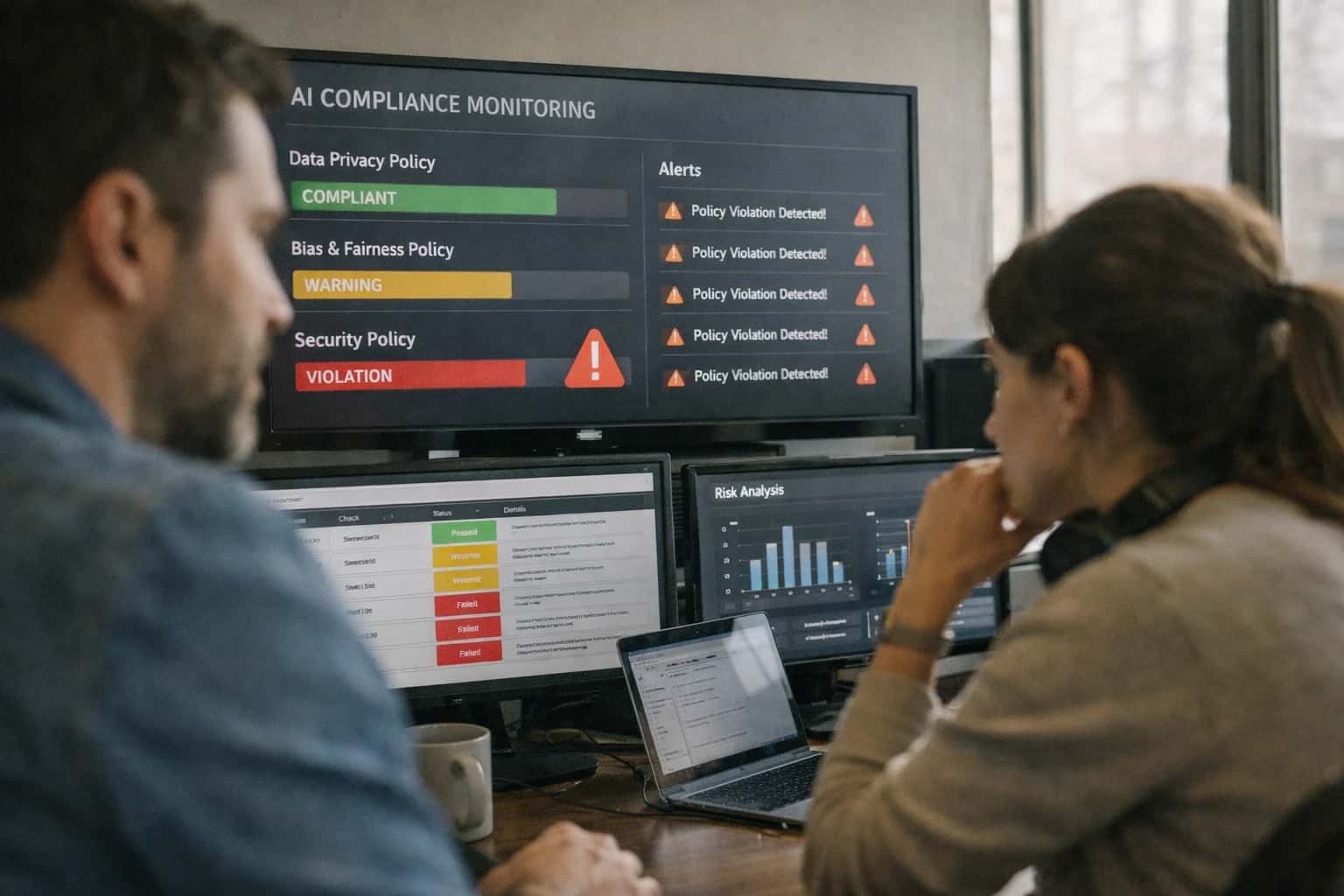
AI connects to ManageEngine Mobile Device Manager Plus primarily through its REST API and webhook system, targeting key data objects and management surfaces. The integration layer typically sits between your AI orchestration platform and MDM Plus, consuming inventory data (devices, apps, policies), pushing scripted remediations, and listening for real-time events like compliance state changes or enrollment completions. High-value surfaces include the Device Management, Policy Management, and Security & Compliance modules, where AI can automate tasks that are currently manual, reactive, and time-consuming for IT teams managing diverse OS platforms (Android, iOS, Windows, macOS).

Integration
AI Integration for ManageEngine Mobile Device Manager Plus
A technical blueprint for integrating AI with ManageEngine MDM Plus to automate compliance monitoring, predictive device analytics, and script-based remediation across diverse OS fleets.
ARCHITECTURE AND ROLLOUT
Where AI Fits into ManageEngine MDM Plus
A practical blueprint for integrating AI into ManageEngine's REST API surfaces to automate compliance, remediation, and lifecycle workflows.
Implementation focuses on three core patterns: 1) Predictive Compliance Monitoring, where AI models analyze historical compliance reports and device telemetry (OS version, encryption status, jailbreak detection) to flag devices at high risk of future violations, triggering automated policy adjustments or admin alerts. 2) Automated Script Remediation, where an AI agent identifies a common issue (e.g., low storage, misconfigured Wi-Fi), selects or generates an appropriate shell script or command from a library, and uses the MDM Plus API to push and execute it on the target device group, then validates the fix. 3) Intelligent Lifecycle Operations, where AI correlates device enrollment dates, warranty information, and performance metrics to predict hardware failures or recommend refresh cycles, automating work orders in integrated ITSM systems like ServiceNow.
Rollout should be phased, starting with a pilot device group and non-destructive monitoring workflows. Governance is critical: all AI-initiated actions (like script execution or policy changes) should be logged in MDM Plus's audit trail and require approval workflows for high-risk operations. Use MDM Plus's role-based access control (RBAC) to limit the AI service account's permissions to specific API endpoints. This approach turns MDM Plus from a static policy enforcement tool into a self-healing, predictive system that reduces manual triage by IT support and cuts the mean time to resolution (MTTR) for common device issues from hours to minutes.
PLATFORM SURFACES
Key ManageEngine MDM Plus APIs and Surfaces for AI Integration
Device Inventory and Telemetry Endpoints
These APIs provide the foundational data layer for any AI-driven device management system. The /api/devices and /api/devices/{deviceId}/details endpoints return comprehensive inventory data, including hardware specs, installed applications, OS versions, and real-time telemetry like battery health, storage utilization, and network connectivity.
For AI use cases, this data is critical for:
- Predictive Failure Analysis: Training models to flag devices at risk of hardware failure based on battery cycles, storage health, and crash reports.
- Compliance Drift Detection: Continuously comparing device states against security baselines to identify configuration drift.
- Lifecycle Forecasting: Analyzing device age, performance metrics, and warranty status to optimize refresh cycles.
Integrate these endpoints via scheduled polling or leverage webhooks (/api/webhooks) for event-driven updates when device attributes change.
AUTOMATE COMPLIANCE, REMEDIATION, AND LIFECYCLE WORKFLOWS
High-Value AI Use Cases for ManageEngine MDM Plus
Integrate AI with ManageEngine MDM Plus's REST API to automate complex device operations, predict issues, and enforce compliance across Windows, macOS, iOS, and Android fleets. Move from reactive monitoring to proactive, intelligent endpoint management.
01
Predictive Compliance & Automated Reporting
AI models analyze device inventory, security policies, and compliance logs to predict violations before they occur. Automatically generates audit-ready reports and triggers remediation scripts via the MDM API, shifting compliance from a monthly scramble to continuous assurance.
Batch -> Real-time
Compliance monitoring
02
Intelligent Script Remediation Orchestrator
An AI agent consumes device health alerts (battery, storage, crashes) from MDM Plus, selects or generates the optimal PowerShell or shell script, and orchestrates its execution via the Execute Custom Script API. Validates fixes and logs outcomes, creating a self-healing loop for common issues.
Hours -> Minutes
Issue resolution
03
AI-Optimized Patch & Software Deployment
Go beyond scheduled patches. AI analyzes patch reports, threat intelligence, and device usage patterns to dynamically prioritize and schedule deployments via the MDM's software distribution module. Targets high-risk groups first and avoids disrupting critical users, minimizing vulnerability windows.
Reduce by 40-60%
Vulnerability window
04
Predictive Device Lifecycle & Procurement
Forecast device refresh needs by analyzing MDM inventory data (purchase date, model, repair history, performance metrics). AI models predict failure likelihood and optimal replacement timing, auto-generating procurement requests and staging retirement workflows in the ITAM/CMDB.
1-2 Quarters
Lead time forecast
05
Dynamic Policy & Profile Management
Move from static groups to context-aware policy assignment. AI evaluates user role, location, network security, and device type in real-time to dynamically assign or adjust MDM configuration profiles, VPN settings, and resource access via the API, balancing security and productivity.
Same day
Policy adaptation
06
Automated ITSM Ticket Enrichment & Routing
Integrate MDM Plus with ServiceNow or Jira. AI analyzes device events (enrollment failures, policy errors) to auto-create, categorize, and enrich support tickets with full device context. Suggests known solutions to agents and can execute approved remediations directly from the ticket.
Minutes saved per ticket
Agent productivity
PRACTICAL AUTOMATION BLUEPRINTS
Example AI-Driven Workflows for ManageEngine MDM
These workflows demonstrate how to connect AI agents and models to ManageEngine Mobile Device Manager Plus APIs to automate complex, manual IT operations. Each pattern uses real MDM objects—scripts, compliance policies, inventory records, and profiles—as triggers and action surfaces.
Trigger: Scheduled daily scan of device inventory via the DeviceResource API, focusing on devices flagged with nonCompliant status or specific high-risk extension attributes (e.g., diskEncryptionStatus, lastSecurityPatch).
Context/Data Pulled:
- AI agent queries the MDM for devices where
complianceStatus != 'Compliant'. - For each non-compliant device, it fetches detailed inventory: OS version, installed apps, security settings, and recent event logs via the
DeviceDetailsandAuditLogendpoints. - The agent also pulls the specific
CompliancePolicyrules the device failed.
Model/Agent Action:
- A classification model analyzes the failure reason (e.g., "Rooted device," "Outdated OS," "Blacklisted app detected").
- For known, automatable issues, the agent selects a pre-approved remediation script from the MDM's
ScriptLibrary. Example mapping:Failure: "Disk encryption disabled"->Action: Execute 'Enable-BitLocker' script (ID: 45)Failure: "App XYZ (blacklisted) found"->Action: Execute 'Uninstall-App-XYZ' script (ID: 89)
System Update/Next Step:
- The agent uses the
ExecuteScriptOnDeviceAPI to run the chosen script on the target device. - It then polls the
ScriptExecutionStatusendpoint. On success, it updates a custom device group ("Recently Auto-Remediated") for tracking. - If the script fails or the device remains non-compliant, the workflow creates a ticket in the integrated ITSM (e.g., ServiceNow) via webhook, attaching all context.
Human Review Point: The agent is configured to escalate to a human for any failure reason it cannot confidently map to a script, or if a device fails the same auto-remediation three times in a row.
AUTOMATED REMEDIATION & PREDICTIVE COMPLIANCE
Implementation Architecture: Connecting AI to ManageEngine MDM Plus
A practical blueprint for layering AI agents on top of ManageEngine MDM Plus APIs to automate device compliance and support workflows.
The integration connects to ManageEngine MDM Plus via its REST API and leverages its core data objects: Device, Policy, Profile, Script, and ComplianceRule. AI agents are built to monitor the DeviceInventory and ComplianceReports endpoints in near real-time. When a compliance violation is detected—such as a device missing a required security patch or falling below a storage threshold—the AI system evaluates the context (device type, user role, severity) and selects an appropriate remediation action. This action is executed by calling the MDM Plus API to push a pre-configured Script payload or update a Profile assignment, closing the loop without manual admin intervention.
For predictive analytics, the architecture ingests historical device telemetry—battery health, crash reports, and performance metrics—from the MDM Plus DeviceDetails API. A separate ML model processes this data to forecast hardware failures or performance degradation. These predictions are fed into a workflow engine that can automatically generate service desk tickets in integrated ITSM platforms like ServiceNow or schedule proactive maintenance tasks, shifting operations from reactive to preventive. The system's decisions are logged in an immutable audit trail, linking the AI's reasoning to the specific API call made to MDM Plus for full governance.
Rollout follows a phased approach: start with a pilot group of non-critical devices and a limited set of high-confidence, low-risk automated scripts (e.g., clearing cache, restarting services). Governance is maintained through a human-in-the-loop approval step for any remediation action on executive or high-security devices initially. Over time, as confidence in the AI's accuracy grows, approvals can be automated based on policy rules. This architecture doesn't replace MDM Plus; it turns it into an intelligent execution layer, transforming static compliance checks into a self-healing device estate.
MANAGEENGINE MDM PLUS API INTEGRATION
Code and Payload Examples
Automated Compliance Triage
Set up a webhook listener to receive real-time compliance events from ManageEngine MDM Plus. This allows an AI agent to analyze non-compliance patterns and trigger automated remediation scripts.
Example JSON Payload from ManageEngine:
json{ "eventType": "DEVICE_COMPLIANCE_CHANGED", "timestamp": "2024-05-15T14:30:00Z", "deviceId": "DEV-7A83B2", "platform": "iOS", "complianceStatus": "NON_COMPLIANT", "violatedPolicies": [ "Password Policy - Minimum length 8 characters", "Encryption Policy - Device encryption required" ], "deviceDetails": { "model": "iPhone 14 Pro", "osVersion": "17.4.1", "lastCheckin": "2024-05-15T14:25:00Z" } }
An AI system can consume this payload, classify the severity, and decide whether to trigger an automated script via the MDM API or create a support ticket in your ITSM platform like ServiceNow.
AI-ENHANCED MDM OPERATIONS
Realistic Time Savings and Operational Impact
A practical comparison of manual vs. AI-assisted workflows for ManageEngine Mobile Device Manager Plus, based on common enterprise deployment patterns.
| Metric | Before AI | After AI | Notes |
|---|---|---|---|
Compliance Audit Preparation | Manual data aggregation and report building (4-6 hours per audit) | Automated evidence synthesis and report generation (30-45 minutes) | AI pulls from MDM APIs, Active Directory, and script logs; human review required for final submission. |
Script Remediation for Common Issues | Manual ticket review, script selection, and targeted deployment (Next business day) | AI-driven root cause analysis and automated script execution (Same-day resolution) | AI analyzes device inventory and event logs to trigger predefined remediation workflows via MDM API. |
Device Health & Failure Prediction | Reactive support based on user tickets and scheduled checks | Proactive alerts based on predictive analytics (battery, storage, crash logs) | Models ingest MDM telemetry; flags high-risk devices 7-14 days before likely failure. |
Policy Deployment & Conflict Testing | Manual testing in sandbox groups and phased rollout (2-3 week cycle) | AI-simulated impact analysis and automated conflict detection (1-week cycle) | Reduces rollout risk by predicting profile conflicts with existing configurations and user patterns. |
OS & Security Patch Prioritization | Manual review of vendor bulletins and uniform deployment schedules | Risk-based prioritization using threat intel and device context | AI scores patches based on CVSS, exposed device count, and business criticality, automating staged deployment. |
Lifecycle State Management & Reporting | Manual inventory reviews and spreadsheet updates for asset tracking | Automated tagging, lifecycle state updates, and CMDB synchronization | AI enriches MDM inventory data, auto-triggers retirement workflows, and updates ITAM systems. |
Cross-Platform Support Triage (iOS/Android/Windows) | Specialist-led diagnosis per OS, escalating complex cases | Unified AI copilot suggests fixes and executes OS-appropriate remediations | Agent uses natural language to query device state and can run platform-specific scripts via API, reducing tier-1 escalations. |
PRODUCTION-READY AI INTEGRATION
Governance, Security, and Phased Rollout
A practical framework for deploying and governing AI within ManageEngine Mobile Device Manager Plus without disrupting existing security postures.
Integrating AI with ManageEngine MDM Plus requires a security-first architecture that respects existing RBAC, audit trails, and data boundaries. Your implementation should treat the AI layer as a privileged, non-human user within the system, interacting solely via ManageEngine's REST API with scoped service accounts. Key governance controls include:
- API Key and Secret Management: Store credentials in a secure vault (e.g., HashiCorp Vault, AWS Secrets Manager) and rotate them on a schedule aligned with your security policy.
- Action Auditing: All AI-initiated actions—such as pushing a script remediation, changing a compliance policy, or modifying a device group—must be logged with a distinct
initiatortag (e.g.,"initiator": "ai-remediation-engine") in ManageEngine's native audit logs for full traceability. - Data Minimization: Configure the AI system to query only the necessary device inventory fields (e.g.,
DeviceModel,OSVersion,LastComplianceCheck,CustomAttributes) for its predictions, avoiding bulk export of sensitive user data.
A phased rollout minimizes risk and builds organizational trust. Start with a monitoring and alerting phase, where the AI system analyzes data from the DeviceInventory and ComplianceReports APIs to generate predictive insights—like flagging devices likely to fall out of compliance—but takes no autonomous action. Findings are delivered via a dedicated dashboard or webhook to your IT operations channel. The second phase introduces approved, low-risk automation. Begin with scripted remediations for known, high-frequency issues (e.g., clearing cache for a specific app) that are pre-approved by your change advisory board. These can be executed by the AI system calling the ExecuteScript API against a pre-defined, sandboxed script library in ManageEngine. The final phase enables conditional, policy-driven automation for more complex workflows, such as dynamically adjusting geofencing rules in LocationBasedProfiles based on predictive travel patterns, but always with a human-in-the-loop approval step for net-new policy creations.
Security is paramount when AI systems can execute commands. Implement a dual-key system for any action that modifies device state or security posture, requiring a secondary approval via a separate system (like an ITSM ticket approval) or a time-bound admin override. Furthermore, integrate your AI operations with your existing SIEM by streaming all AI decision logs and API call metadata. This allows your security team to monitor for anomalous behavior—such as an AI agent attempting to execute scripts at an unusual volume or outside maintenance windows—and correlate it with other security events. Finally, establish a regular review cadence to evaluate the AI's decision accuracy, audit its actions against intended outcomes, and refine the guardrails and prompt libraries that guide its interactions with the MDM platform.
Enabling Efficiency, Speed & Accuracy
Intelligent Analysis, Decision & Execution
We build AI systems for teams that need search across company data, workflow automation across tools, or AI features inside products and internal software.
Talk to Us
Search across company data
Give teams answers from docs, tickets, runbooks, and product data with sources and permissions.
Useful when people spend too long searching or get different answers from different systems.
Enterprise searchRAGPermissions
Read more
Automate internal workflows
Use AI to route work, draft outputs, trigger actions, and keep approvals and logs in place.
Useful when repetitive work moves across multiple tools and teams.
AI agentsWorkflow automationGovernance
Read more
Add AI to products and internal tools
Build assistants, guided actions, or decision support into the software your team or customers already use.
Useful when AI needs to be part of the product, not a separate tool.
AI integrationDecision supportModel routing
Read moreMANAGEENGINE MDM PLUS AI INTEGRATION
Frequently Asked Questions
Practical questions for IT leaders and architects planning to add AI-driven automation to their ManageEngine Mobile Device Manager Plus (MDM Plus) environment.
AI systems connect to ManageEngine MDM Plus via its REST API and by consuming data from its SQL database. The primary integration points are:
- API Endpoints: For executing actions like pushing scripts (
/api/devices/execute_script), updating compliance policies, or retrieving device inventory (/api/devices). - Database Reads: For high-volume analytics, AI models often read directly from the MDM Plus database (with appropriate permissions) to access historical device logs, compliance history, and inventory details.
- Webhook Listeners: ManageEngine can be configured to send webhooks for events like
DEVICE_NON_COMPLIANTorNEW_DEVICE_ENROLLED. An AI agent can listen to these webhooks as triggers for automated analysis and remediation workflows.
A typical architecture involves an AI orchestration layer (hosted on your infrastructure or cloud) that authenticates using ManageEngine's API keys, pulls data, makes decisions via LLM or ML models, and pushes back commands or scripts.

About the author
Prasad Kumkar
CEO & MD, Inference Systems
Prasad Kumkar is the CEO & MD of Inference Systems and writes about AI systems architecture, LLM infrastructure, model serving, evaluation, and production deployment. Over 5+ years, he has worked across computer vision models, L5 autonomous vehicle systems, and LLM research, with a focus on taking complex AI ideas into real-world engineering systems.
His work and writing cover AI systems, large language models, AI agents, multimodal systems, autonomous systems, inference optimization, RAG, evaluation, and production AI engineering.
LinkedIn
Limited slotsGet a Free AI Consultation
Partnered with leading AI, data, and software stack.





How We Work
Custom AI workflows for your Business
One-fit-all AI don't work for modern businesses. At Inferensys, we aim to understand your business & custom requirements; which we use to define most efficient agentic workflows, the data, and the tools for your business.
01
Review the use case
We understand the task, the users, and where AI can actually help.
Read more02
Pick the right approach
We define what needs search, automation, or product integration.
Read more03
Build the first useful version
We implement the part that proves the value first.
Read more04
Improve from there
We add the checks and visibility needed to keep it useful.
Read moreThe first call is a practical review of your use case and the right next step.
Talk to Us