Kiosk mode management is a core function of MDM platforms like Jamf, Microsoft Intune, and VMware Workspace ONE, typically controlled via configuration profiles that lock devices to a single app or a curated set of apps. The traditional approach is static: a profile is assigned, and the device remains in that state until an admin manually intervenes. AI integration introduces a dynamic layer that consumes operational data—such as device location, time of day, app usage logs, and hardware telemetry (battery, storage, crashes)—to automatically adjust kiosk configurations. This means the MDM's REST API becomes an execution plane for AI-driven decisions, pushing updated profiles, restarting apps, or changing content schedules without human input.

Integration
AI Integration for Intelligent Kiosk Mode Management
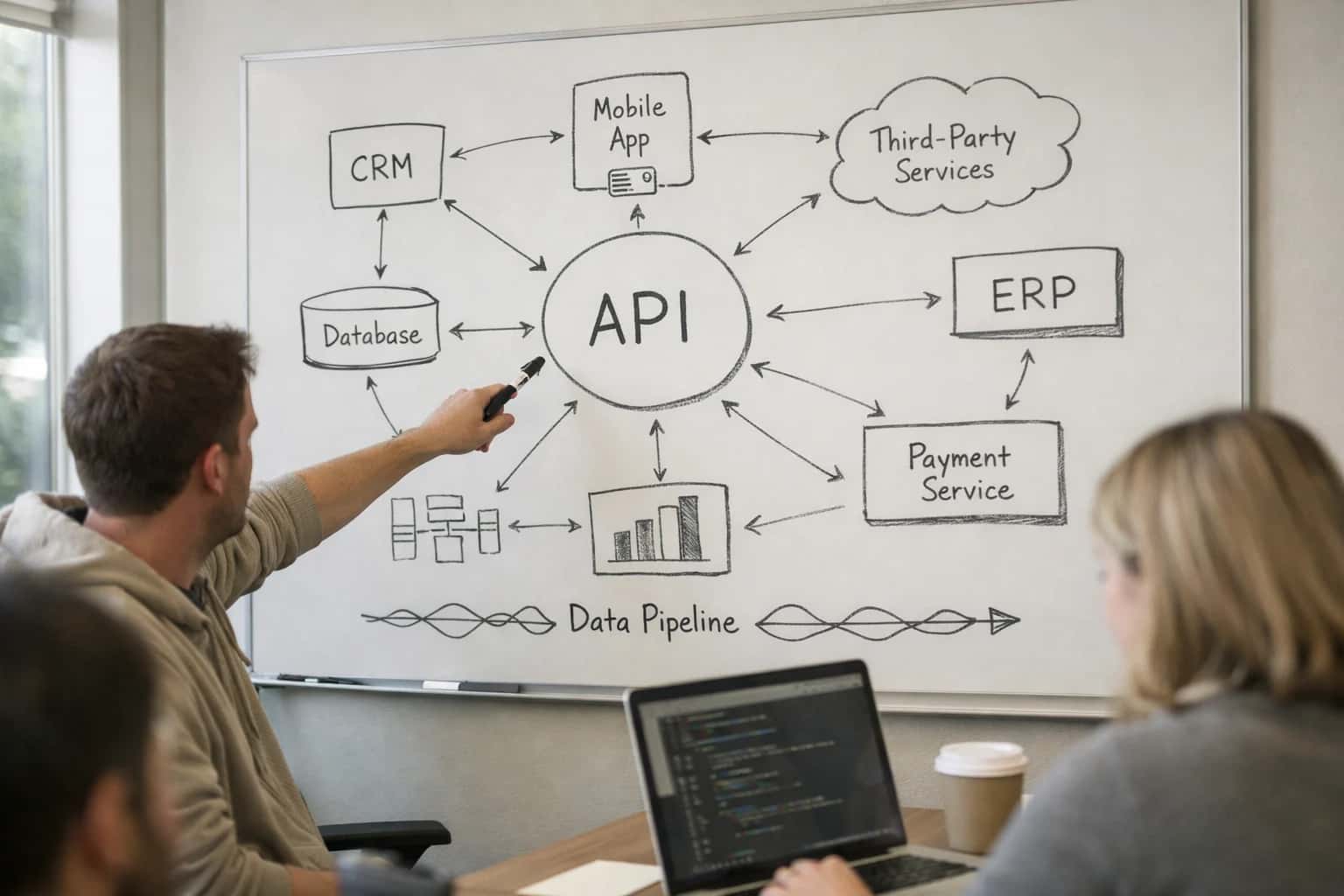
Where AI Fits in Kiosk Mode Management
AI integration transforms static, single-purpose devices into adaptive endpoints that respond to real-world conditions and usage patterns.
The high-value implementation pattern involves an AI orchestration agent that sits between your operational systems and the MDM platform. This agent ingests signals from various sources: a building access system indicating operational hours, a POS system signaling peak transaction times, or even a camera feed (via anonymized analytics) detecting queue lengths. Based on predefined rules or learned patterns, the agent calls the MDM API to execute actions. For example, it could:
- Dynamically switch kiosk apps from an interactive wayfinding application during business hours to a security slideshow after closing.
- Initiate a graceful app restart on devices showing memory leak patterns before a crash disrupts service.
- Push location-specific content updates to digital signage kiosks based on real-time inventory or promotion data from a CMS.
- Enforce a "deep sleep" schedule for power conservation during predictable downtime, then wake devices before the next operational window.
Rollout requires a phased, governance-first approach. Start with a pilot group of non-critical kiosks. Implement the AI agent with strict approval gates and a human-in-the-loop review for its first 100-200 automated actions, logging every API call, payload, and outcome to an audit trail. This builds trust in the system's decision-making. Governance must define the boundaries of autonomy: which profile attributes (like allowed URLs or app versions) can be changed automatically versus which require a ticket and manual review. Finally, integrate the agent's activity logs with your ITSM (e.g., ServiceNow) to auto-create tickets for any action that deviates from the expected outcome, ensuring continuous monitoring and improvement of the AI-driven workflow.
MDM APIs and Surfaces for Kiosk Control
Core Configuration APIs
MDM platforms provide primary APIs to lock devices into single-app or multi-app kiosk modes. For platforms like Jamf Pro, this involves managing Kiosk payloads within configuration profiles. In Microsoft Intune, you use the deviceConfiguration resource for Windows Kiosk settings or managed app configurations for iOS.
AI integration focuses on dynamic profile assignment. An AI agent can analyze operational schedules, usage patterns, or real-time alerts to call the MDM API and push a new kiosk profile. For example, switching a device from a "customer-facing" app suite to a "maintenance" mode after hours.
json// Example Intune Graph API call to update a device configuration PATCH /deviceManagement/deviceConfigurations/{id} { "@odata.type": "#microsoft.graph.windowsKioskConfiguration", "kioskProfiles": [{ "profileId": "MaintenanceMode", "appConfiguration": { "apps": [{"appId": "com.company.maintenance"}] } }] }
This enables automated, context-aware kiosk mode transitions without manual IT intervention.
High-Value AI Use Cases for Kiosk Fleets
Move beyond static kiosk configurations. Use AI to analyze usage patterns, operational hours, and device health to dynamically manage single-purpose devices via MDM APIs, reducing downtime and optimizing content delivery.
Dynamic Content Scheduling & Refresh
AI analyzes foot traffic patterns, time of day, and promotional calendars to instruct the MDM (via APIs like Jamf's mobileDeviceCommands or Intune's deviceManagement/deviceConfigurations) to push new content payloads or switch kiosk apps. Workflow: Model predicts peak engagement windows → Schedules content update commands → MDM executes remote configuration change during off-hours.
Predictive Restart & Health Maintenance
Prevent kiosk freezes and performance degradation. AI models consume MDM telemetry (CPU, memory, uptime) and historical crash logs to predict instability. The system automatically schedules and executes graceful restart commands via the MDM's device action API before user-facing failures occur.
Geofenced Kiosk Mode Activation
For mobile kiosks or pop-up deployments. AI integrates MDM location services with business rules. When a device's GPS enters a pre-defined geofence, an AI agent triggers the MDM to apply a specific kiosk lockdown profile, restricting apps and settings appropriate for that location. Integration: Uses Meraki location APIs or Intune's deviceLocations resource.
Usage-Based Power Management
Reduce energy costs and extend hardware life. AI analyzes interaction logs and proximity sensor data (if available) to understand idle periods. It dynamically adjusts MDM-managed power settings—like display timeout and sleep schedules—for individual kiosks based on predicted activity, without manual profile updates.
Automated Compliance & Security Lockdown
AI monitors for security anomalies or policy deviations (e.g., unauthorized USB connection attempts, app crashes). Upon detection, it triggers an immediate MDM command to enforce a stricter kiosk profile, disable peripherals, or initiate a secure reboot, creating an audit trail in the MDM's logs. Connects to platforms like Workspace ONE UEM.
Intelligent App Failure Fallback
When the primary kiosk app fails (detected via MDM app inventory or crash reports), an AI orchestrator can automatically instruct the MDM to launch a secondary, failover application or a diagnostic web dashboard. This maintains uptime while alerting support teams via integrated systems like /integrations/mobile-device-management-platforms/ai-integration-for-automated-service-desk-ticket-creation-from-mdm.
Example AI-Driven Kiosk Workflows
These workflows illustrate how AI can consume operational data and user patterns to dynamically manage kiosk devices via MDM APIs, moving from static configurations to adaptive, self-optimizing endpoints.
Trigger: Scheduled API poll (every 15 minutes) to an occupancy sensor API or POS transaction count.
Context Pulled:
- Current time and day from system.
- Real-time foot traffic count from IoT sensor feed.
- Next scheduled event from digital signage calendar.
AI/Agent Action: A lightweight model evaluates if the current app (e.g., a detailed product catalog) is optimal. During low-traffic periods or after closing hours, the agent decides to switch to a maintenance/info app or a high-impact promotional loop.
System Update:
The agent calls the MDM API (e.g., PATCH /api/v2/devices/{deviceId}/kiosk) with a new allowedApplications payload. It also logs the change reason ("Low traffic, switching to promo loop") for audit.
Human Review Point: Major app changes (e.g., removing a core transactional app) are flagged in a dashboard for manager approval. The system can auto-revert after 2 hours if no approval is granted.
Implementation Architecture: Data Flow and Guardrails
A production-ready AI integration for kiosk management uses the MDM as the policy execution layer, with an intelligent orchestration engine making dynamic decisions.
The core architecture establishes the MDM platform (e.g., Jamf, Intune, Workspace ONE) as the system of record and enforcement. An external AI orchestration service, hosted in your cloud or ours, consumes real-time signals via the MDM's REST API—device inventory, app usage logs, geolocation, and battery status. This service runs lightweight ML models to detect patterns (e.g., a kiosk's touchscreen becomes unresponsive after 14 hours of continuous use) and decides on an action. It then calls back to the MDM API to execute: pushing a new configuration profile to restart the kiosk app, updating a restriction payload to disable after business hours, or triggering a shell script to clear cache. This loop—observe via API -> analyze -> decide -> act via API—keeps the MDM in control while adding predictive intelligence.
Key implementation details focus on safe, incremental rollout. Start with a pilot group of non-critical kiosks. The AI service should log every decision and proposed MDM API call to an audit trail before execution. Implement a human-in-the-loop approval queue for the first 30-90 days, where high-impact actions (like a full device restart during peak hours) are presented to an admin dashboard for a one-click approve/deny. Use the MDM's built-in scoping mechanisms: deploy AI-managed configuration profiles to a dynamic smart group based on a custom extension attribute (e.g., "AI_Kiosk_Mode_Group: Pilot"). This allows for instant rollback by simply removing the device from the smart group, reverting it to a static, known-good configuration.
Governance is critical for scale. Define guardrail policies within the AI orchestration service itself: maximum restart frequency, blackout windows for updates, and battery level thresholds below which no power-intensive actions are taken. All actions must be idempotent and non-destructive; for example, a "restart kiosk app" command should first check if the app is already running. Integrate the audit log stream with your SIEM or ITSM platform (e.g., ServiceNow) to create a unified record. Finally, establish a weekly review of the AI's action log to tune models and guardrails, ensuring the system reduces operational load without introducing unexpected device churn.
Code and Payload Examples
Dynamic App Configuration via MDM API
AI agents can analyze kiosk usage patterns (peak hours, dwell time, error logs) and dynamically adjust the kiosk application payload via the MDM platform's API. This allows for time-based app switching, such as loading a maintenance app during off-hours or a promotional app during peak traffic.
Example JSON Payload for a Jamf Pro Kiosk App Configuration:
json{ "general": { "name": "Dynamic Kiosk - Lobby Terminal", "enabled": true }, "scope": { "all_mobile_devices": false, "mobile_devices": [ { "id": 12345, "name": "Kiosk-Lobby-01" } ] }, "self_service": { "self_service_display_name": "Kiosk App", "install_automatically": true, "force_users_to_view_description": false }, "options": { "auto_update_app": true, "prevent_backup": true, "vpp": { "assign_vpp_device_based_licenses": true } } }
An AI workflow can modify the scope.mobile_devices array and the self_service.install_automatically flag based on real-time operational schedules, pushing new configurations without manual intervention.
Realistic Time Savings and Operational Impact
How AI integration with MDM APIs transforms the manual oversight of single-purpose devices into a proactive, intelligent operation.
| Metric | Before AI | After AI | Notes |
|---|---|---|---|
Kiosk App Configuration Updates | Manual review & push per device group | Dynamic updates based on usage patterns | AI analyzes logs to trigger MDM profile changes via API |
Daily Restart Scheduling | Fixed schedule for all devices | Predictive scheduling based on uptime & errors | Reduces unnecessary downtime during peak hours |
Content Refresh & Caching | Scheduled bulk uploads overnight | AI-driven pre-caching before predicted demand | Ensures content is current without manual forecasting |
Anomaly & Failure Detection | Reactive support tickets from users | Proactive alerts on performance degradation | AI correlates MDM telemetry with failure patterns |
Compliance & Security Patching | Monthly manual audit & patch cycle | Automated, risk-prioritized patch deployment | Reduces vulnerability window for kiosk OS/apps |
Geofenced Policy Enforcement | Static policies based on broad location | Dynamic policy adjustment via real-time location APIs | Enables context-aware kiosk behavior (e.g., after-hours lock) |
Operational Reporting | Weekly manual report compilation | Automated daily digest with insights & recommendations | Frees 4-6 hours weekly for IT/operations staff |
Governance, Security, and Phased Rollout
A practical guide to implementing AI-driven kiosk management with built-in oversight, security controls, and a low-risk rollout strategy.
A production AI integration for kiosk management must operate within the existing MDM security model. This means your AI agent or orchestration layer should authenticate via the MDM's API (e.g., Jamf Pro's Classic API, Microsoft Intune's Graph API) using a service account with scoped, least-privilege permissions. Key actions include querying device inventory, pushing configuration profiles for kiosk mode, and executing scripts for app restarts. All API calls should be logged to a central audit trail, and the AI system itself should be governed by its own RBAC, ensuring only authorized operators can modify prompts, logic, or approval workflows.
Security is paramount when dynamically adjusting device behavior. Implement a 'human-in-the-loop' approval step for any high-impact action, such as changing the primary kiosk app or modifying network settings. For lower-risk, routine adjustments (like restarting a frozen app or adjusting brightness based on time), the AI can act autonomously. The integration should also enforce data minimization: the AI layer only needs device IDs, status flags, and operational logs—not personal user data. All data in transit and at rest should be encrypted, aligning with your MDM platform's own security and compliance frameworks (e.g., SOC 2, HIPAA if in healthcare).
A phased rollout minimizes risk and builds confidence. Start with a monitoring-only phase, where the AI system analyzes usage patterns and generates proposed actions for admin review via a dashboard. Next, move to a controlled automation phase for a pilot group of non-critical kiosks, enabling low-risk automations like scheduled restarts. Finally, proceed to full orchestration for the entire fleet, with continuous monitoring and a manual override switch readily available in your MDM console or a dedicated control panel. This approach allows you to validate AI recommendations, tune prompts and logic, and demonstrate ROI before scaling.
For ongoing governance, establish a regular review cycle of the AI system's logs and decisions. Use your MDM's reporting tools alongside the AI's own analytics to track key metrics: reduction in manual support tickets, improvement in kiosk uptime, and any unintended policy conflicts. This operational feedback loop ensures the integration remains aligned with business goals and adapts to changing kiosk use cases. For related architectural patterns, see our guides on /integrations/mobile-device-management-platforms/ai-integration-for-proactive-device-health-monitoring-with-mdm and /integrations/mobile-device-management-platforms/ai-integration-for-automated-script-remediation-with-mdm.
Enabling Efficiency, Speed & Accuracy
Intelligent Analysis, Decision & Execution
We build AI systems for teams that need search across company data, workflow automation across tools, or AI features inside products and internal software.
Talk to Us
Search across company data
Give teams answers from docs, tickets, runbooks, and product data with sources and permissions.
Useful when people spend too long searching or get different answers from different systems.

Automate internal workflows
Use AI to route work, draft outputs, trigger actions, and keep approvals and logs in place.
Useful when repetitive work moves across multiple tools and teams.

Add AI to products and internal tools
Build assistants, guided actions, or decision support into the software your team or customers already use.
Useful when AI needs to be part of the product, not a separate tool.
Frequently Asked Questions
Practical questions for architects and operations teams planning AI-driven kiosk management. These answers outline common integration patterns, data flows, and governance considerations for production deployments.
The agent follows a decision workflow based on MDM telemetry and external signals:
- Trigger: A scheduled check, a webhook from the MDM (e.g., device goes offline/online), or an external event (e.g., inventory system signals a product recall).
- Context Pull: The agent queries the MDM API for the device's:
- Current kiosk app configuration and version.
- Usage logs (uptime, app crashes, user interactions if available).
- Device health (battery for mobile kiosks, storage).
- Location (from MDM geotag or network gateway).
- Model Action: A lightweight classifier or rules engine evaluates the context against business logic. For example:
- If location = "Store Lobby" AND time > 6:00 PM then switch to "Evening Promo" content profile.
- If app crash count > 5 in last hour then flag for restart and notify support.
- If external event = "Weather Alert" then push emergency messaging profile.
- System Update: The agent calls the MDM API (e.g.,
PATCH /devices/{id}/kioskprofiles) to assign a new configuration profile or app payload. - Audit: The action, reason, and timestamp are logged to an audit trail, and a status check is performed post-deployment.

About the author
Prasad Kumkar
CEO & MD, Inference Systems
Prasad Kumkar is the CEO & MD of Inference Systems and writes about AI systems architecture, LLM infrastructure, model serving, evaluation, and production deployment. Over 5+ years, he has worked across computer vision models, L5 autonomous vehicle systems, and LLM research, with a focus on taking complex AI ideas into real-world engineering systems.
His work and writing cover AI systems, large language models, AI agents, multimodal systems, autonomous systems, inference optimization, RAG, evaluation, and production AI engineering.
Partnered with leading AI, data, and software stack.





How We Work
Custom AI workflows for your Business
One-fit-all AI don't work for modern businesses. At Inferensys, we aim to understand your business & custom requirements; which we use to define most efficient agentic workflows, the data, and the tools for your business.
01
Review the use case
We understand the task, the users, and where AI can actually help.
Read more02
Pick the right approach
We define what needs search, automation, or product integration.
Read more03
Build the first useful version
We implement the part that proves the value first.
Read more04
Improve from there
We add the checks and visibility needed to keep it useful.
Read moreThe first call is a practical review of your use case and the right next step.
Talk to Us