AI integration for BYOD policy configuration connects to the MDM platform's core policy surfaces—typically via REST APIs for platforms like Jamf Pro, Microsoft Intune, or VMware Workspace ONE. The AI layer acts as a decision engine that consumes signals (user role from HRIS, device model from inventory, network location from telemetry, installed app risk scores) to dynamically assign the appropriate configuration profile. Instead of a one-size-fits-all BYOD profile, the system can generate and push tailored profiles that enforce specific controls like app-level VPN, containerization settings, data loss prevention (DLP) rules, and certificate payloads based on a real-time risk assessment.

Integration
AI Integration for Automated BYOD Policy Configuration
Replace manual BYOD checklists with AI agents that analyze user role, device risk, and compliance requirements to automatically configure MDM policies, security controls, and resource access in minutes.
ARCHITECTURE AND ROLLOUT
Where AI Fits in BYOD Policy Configuration
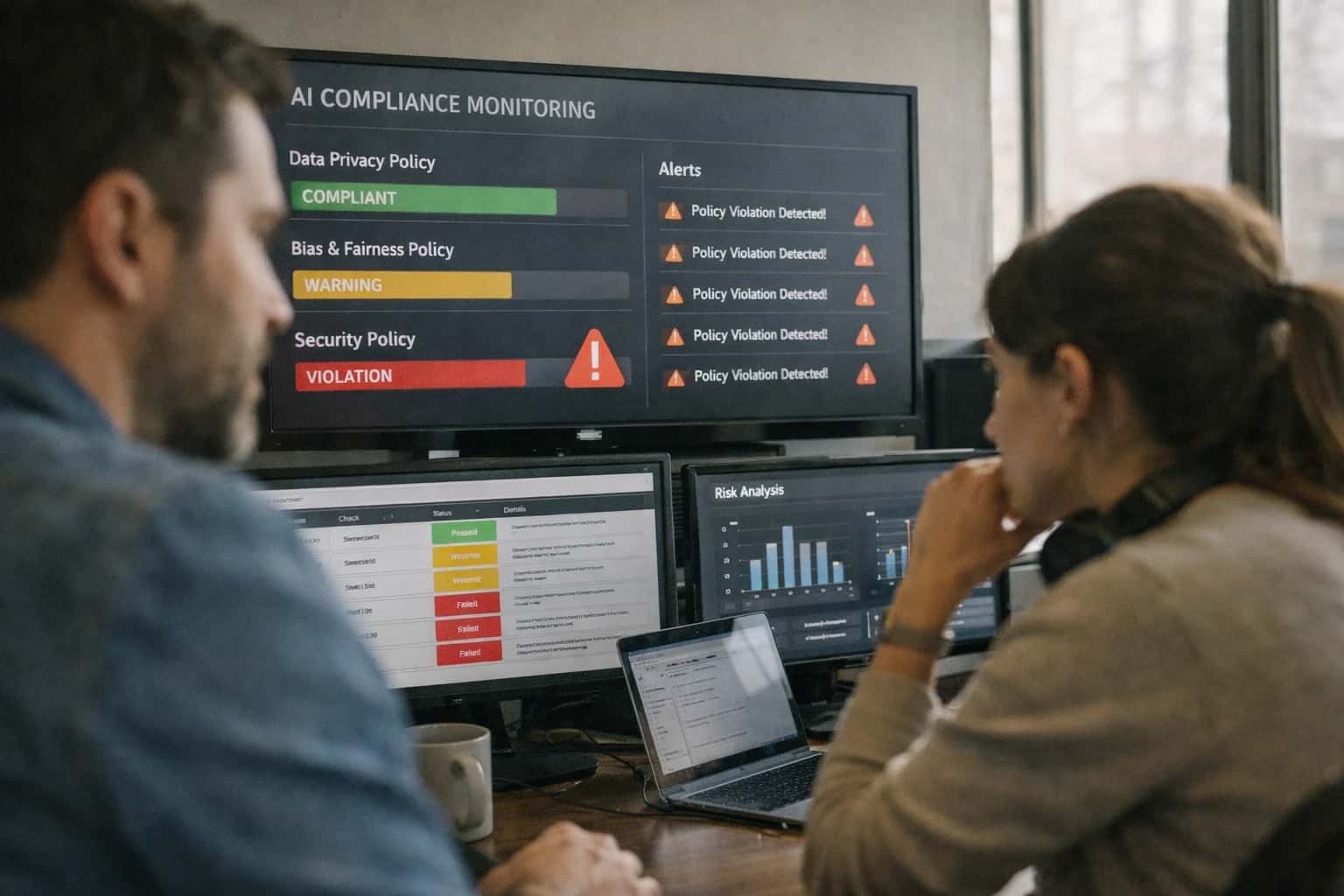
AI transforms BYOD from a static compliance checklist into a dynamic, risk-aware workflow that automatically configures devices based on user, data, and threat context.
The implementation typically involves an event-driven workflow: 1) A device enrolls via automated device enrollment (ADE) or Company Portal. 2) Enrollment webhooks trigger the AI agent. 3) The agent queries internal systems (HR, CRM, SIEM) and MDM inventory to assess context. 4) A policy decision is made (e.g., High-Risk Finance User vs. Contractor). 5) The agent calls the MDM API to assign the pre-built or dynamically assembled profile. This reduces manual IT overhead from hours per device to seconds, ensures policies are context-appropriate, and creates an audit trail linking each policy assignment to the specific risk factors that justified it.
Rollout requires a phased approach, starting with a pilot group and a human-in-the-loop approval step for the first 100 devices. Governance is critical: the AI's decision logic must be documented, and a rollback mechanism—such as a master Quarantine profile—should be on standby. Over time, the system learns from policy conflicts or support tickets to refine its logic, moving from automated assignment to predictive policy optimization, suggesting adjustments before users even encounter issues.
ARCHITECTURE FOR AUTOMATED BYOD ONBOARDING
MDM API Surfaces for AI-Driven Policy Assignment
Core Data for Risk Assessment
The initial BYOD policy decision requires real-time data from the MDM's enrollment and inventory surfaces. AI agents consume these APIs to build a device profile before applying any security controls.
Key endpoints include:
- Device Enrollment Program (DEP) APIs (Jamf, Intune): Provide pre-enrollment details like device model, serial number, and purchase type to flag corporate-liable vs. personal devices.
- Inventory/Device Details APIs: Fetch OS version, patch level, disk encryption status, installed applications, and hardware health (battery cycle count, storage capacity). This forms the baseline for a compliance score.
- User/Group Membership APIs: Retrieve the enrolling user's Active Directory or Azure AD group memberships, department, and job title from the identity provider synchronized with the MDM.
An AI system uses this data to answer: Is this a modern, secure device owned by a user in a high-risk department? The answer dictates the initial policy assignment, such as requiring mandatory encryption before granting email access.
AUTOMATED POLICY CONFIGURATION
High-Value Use Cases for AI-Powered BYOD
AI transforms the complex, manual process of onboarding personal devices by dynamically assigning security profiles and access levels based on real-time risk and role assessment. These use cases leverage MDM APIs to automate policy enforcement, reduce IT overhead, and maintain security compliance.
01
Dynamic Risk-Based Profile Assignment
An AI agent analyzes device telemetry (OS version, encryption status, jailbreak detection) and user context (role, department) during enrollment via the MDM API. It automatically assigns a tailored BYOD configuration profile with appropriate security controls (e.g., containerization, app restrictions) and resource access levels, eliminating manual classification.
Hours -> Minutes
Onboarding time
02
Automated Compliance Remediation Workflows
AI continuously monitors enrolled BYOD devices against compliance policies (e.g., required OS updates, antivirus status). When a drift is detected, it triggers automated remediation via MDM APIs—such as pushing a required app, notifying the user, or temporarily restricting network access—before escalating to IT.
Batch -> Real-time
Policy enforcement
03
Context-Aware Resource Provisioning
Based on the user's role and project affiliations (pulled from HRIS or IAM), AI dynamically provisions access to specific internal apps, Wi-Fi networks, and VPN configurations via the MDM's app distribution and payload delivery APIs. Access is automatically adjusted when roles change.
Same day
Access updates
04
Intelligent Data Loss Prevention (DLP) Policy Application
AI classifies the sensitivity of data a user typically accesses (from CRM, email, or content platforms) and automatically configures the MDM's DLP settings. This includes enforcing secure container policies, clipboard restrictions, and selective wipe capabilities on the BYOD profile to protect corporate data.
05
Predictive Policy Conflict Detection
Before deploying a new BYOD profile, AI simulates its application against existing device configurations (e.g., personal apps, other MDM profiles) to predict conflicts that could break functionality. It suggests adjustments or a phased rollout plan via the MDM's group assignment APIs, preventing support tickets.
1 sprint
Risk reduction
06
Self-Service Policy Adjustment Portal
An AI copilot embedded in an employee portal allows users to request temporary policy changes (e.g., access to a new app for a project). The AI evaluates the request against compliance rules and user role, then, if approved, executes the precise MDM API calls to modify the BYOD profile without IT intervention.
80% reduction
IT tickets
BYOD POLICY AUTOMATION
Example AI Orchestration Workflows
These workflows illustrate how AI agents can consume user and device context to dynamically configure MDM policies, automating the complex and risk-sensitive process of personal device onboarding.
Trigger: A new device attempts enrollment via the MDM's enrollment portal (e.g., Jamf User-Initiated Enrollment, Intune Company Portal).
Context/Data Pulled:
- User attributes from HRIS/Active Directory (department, job title, location).
- Device telemetry from the MDM API (OS version, patch level, disk encryption status, jailbreak/root detection).
- Historical compliance data for the user's department.
Model/Agent Action: A lightweight classifier model assesses the aggregate risk score. Based on score and role:
- Low Risk / Standard User: Assigns a standard BYOD profile with basic security (passcode, encryption) and access to corporate email/calendar.
- High Risk / Finance Role: Assigns a restrictive profile requiring a managed work container, advanced threat defense app, and stricter network access controls.
- Unpatched OS / High Risk: Triggers a conditional enrollment flow that requires the user to update before granting full access.
System Update: The AI agent calls the MDM's REST API (e.g., POST /api/v1/mobiledevices/{id}/profiles) to bind the selected configuration profile to the device object.
Human Review Point: Devices flagged with very high-risk signals (e.g., rooted device, user in a terminated status) are placed in a quarantine group and an alert is sent to the security team for manual review before any profile is assigned.
PRODUCTION-READY INTEGRATION PATTERN
Implementation Architecture: Data Flow and Guardrails
A secure, auditable architecture for AI-driven BYOD policy configuration that connects risk assessment models to MDM APIs.
The core integration pattern connects an AI decision engine to your MDM platform's REST API (e.g., Jamf Pro, Microsoft Intune, or VMware Workspace ONE). The workflow begins when a new device enrollment event is captured via an MDM webhook. This triggers an AI agent to ingest and analyze multiple data sources: the user's role from your HRIS (Workday, BambooHR), historical device compliance data from the MDM, and network location from your NAC or Wi-Fi system. The agent uses this context to generate a risk and role assessment, which determines the appropriate security posture and resource access tier.
Based on the assessment, the AI system constructs a precise API payload and executes a POST to the MDM's policy assignment endpoint. For a high-risk, contractor-owned iOS device, this might deploy a configuration profile with strict app restrictions, enforced encryption, and a VPN-only network policy. For a low-risk, executive-owned device, it might assign a lighter-touch profile with access to corporate email and a curated app catalog. All API calls are logged with a correlation ID, and the resulting policy assignment is written back to the MDM's custom extension attributes for auditability.
Critical guardrails are implemented at multiple layers. A human-in-the-loop approval step can be configured for policy assignments that deviate from a baseline or for high-privilege roles. All AI-generated decisions are logged to a dedicated audit trail, linking the user, device, data inputs, and final policy payload. The system includes automated rollback capabilities; if a device shows instability metrics (e.g., repeated crashes) after policy application, a monitoring agent can trigger an API call to revert to a known-good configuration. This architecture ensures the AI augments—rather than replaces—existing MDM governance, providing dynamic personalization within a controlled, reversible framework.
AUTOMATED BYOD POLICY CONFIGURATION
Code and Payload Examples
AI-Driven Risk Scoring for Device Onboarding
Before applying a BYOD policy, an AI model assesses the device and user context to generate a risk score. This Python example calls a risk assessment service, passing device attributes and user role data retrieved from the MDM platform. The score determines the strictness of the applied security profile.
pythonimport requests import json # Example payload from MDM webhook or API query device_context = { "device_id": "a1b2c3d4", "os_version": "iOS 17.4.1", "is_jailbroken": False, "encryption_status": "enabled", "last_security_patch": "2024-04-15", "user_role": "sales_executive", "department": "Revenue Operations", "access_tier_needed": "high" # Based on HRIS data } # Call AI risk assessment service response = requests.post( "https://api.inferencesystems.com/v1/risk/device", json=device_context, headers={"Authorization": "Bearer YOUR_API_KEY"} ) risk_result = response.json() # Result includes score and recommended policy tier # {"risk_score": 0.23, "policy_tier": "standard", "flags": []}
The policy_tier (restricted, standard, elevated) maps directly to a pre-configured policy bundle in your MDM, triggering the next step.
AI-ASSISTED BYOD ONBOARDING
Time Saved and Operational Impact
This table compares the manual, rule-based BYOD configuration process against an AI-integrated workflow, showing typical time savings and operational improvements for IT and security teams.
| Workflow Stage | Before AI (Manual/Rule-Based) | After AI (AI-Assisted) | Operational Impact |
|---|---|---|---|
Device Risk Assessment | Manual review of OS version, patch level, and installed apps | Automated scoring using ML models on device telemetry and threat feeds | Consistent, real-time risk evaluation; eliminates human oversight gaps |
Policy Profile Assignment | Static group mapping based on limited attributes (e.g., department) | Dynamic profile selection based on composite risk score, user role, and data sensitivity | Precise security controls; reduces over-provisioning and under-securing |
Security Control Configuration | Manual selection of 10-15 settings per profile (encryption, VPN, app restrictions) | AI-recommended and applied settings bundle, validated for conflicts | Cuts configuration time from 30+ minutes to under 5 minutes per device |
Exception Review & Handling | IT ticket creation and manual review for each non-standard device | AI pre-screens exceptions, suggests approved deviations, and routes only complex cases | Reduces exception review volume by 60-80%; faster user access |
Compliance Audit Preparation | Manual spreadsheet compilation from MDM reports for quarterly audits | AI auto-generates compliance evidence packs with device attestations | Turns a 2-3 day manual process into a same-day, on-demand report |
Post-Onboarding Support Volume | High volume of tickets for access issues and profile misconfigurations | Predictive issue detection and automated remediation scripts reduce ticket creation | Lowers related support tickets by 40-60% in first 90 days |
Policy Lifecycle Updates | Broad policy re-application to entire user groups during refresh cycles | AI-driven phased rollout and A/B testing of new policies on low-risk cohorts first | Minimizes rollout risk and user disruption; enables continuous policy optimization |
ARCHITECTING A CONTROLLED DEPLOYMENT
Governance, Security, and Phased Rollout
A production-ready AI integration for BYOD policy configuration requires careful governance, robust security, and a phased rollout to manage risk and prove value.
The core governance model treats the AI as a policy recommendation engine, not an autonomous actor. It should be integrated to read user and device attributes from your MDM platform (like Jamf Pro or Microsoft Intune) and output a structured policy assignment payload—such as a specific configuration profile ID or group tag—to a secure queue or API endpoint. A human-in-the-loop approval step or a rules-based validation layer should verify these assignments before they are applied via the MDM's native APIs. All AI-driven decisions, input data, and resulting actions must be logged to an immutable audit trail, linking policy changes to the specific AI inference session, user, and device for full traceability.
Security is paramount, as the system handles sensitive employee device data. Implement a zero-trust architecture where the AI service operates with the minimum necessary permissions via a dedicated service account in your MDM. Data in transit must be encrypted, and sensitive Personally Identifiable Information (PII) should be masked or tokenized before being sent to external LLM APIs. For on-premise or private cloud deployments, consider using locally-hosted open-source models for risk assessment to keep all data within your environment. The integration must also respect and enforce your existing MDM-based security controls, such as device compliance status, before applying any new BYOD policy.
A successful rollout follows a phased, metrics-driven approach. Start with a pilot group of low-risk users (e.g., a single department) and a limited set of policy decisions. Monitor key metrics like policy assignment accuracy, reduction in manual help desk tickets for device onboarding, and user satisfaction. Use this phase to tune the AI's prompts and decision logic. Gradually expand to more complex user segments and policy types, continuously validating outputs against your security and compliance baselines. This controlled approach de-risks the implementation, builds organizational trust, and provides clear evidence of ROI before enterprise-wide deployment. For related implementation patterns, see our guides on AI Integration for Automated Policy Enforcement and AI-Powered Root Cause Analysis for MDM Issues.
Enabling Efficiency, Speed & Accuracy
Intelligent Analysis, Decision & Execution
We build AI systems for teams that need search across company data, workflow automation across tools, or AI features inside products and internal software.
Talk to Us
Search across company data
Give teams answers from docs, tickets, runbooks, and product data with sources and permissions.
Useful when people spend too long searching or get different answers from different systems.
Enterprise searchRAGPermissions
Read more
Automate internal workflows
Use AI to route work, draft outputs, trigger actions, and keep approvals and logs in place.
Useful when repetitive work moves across multiple tools and teams.
AI agentsWorkflow automationGovernance
Read more
Add AI to products and internal tools
Build assistants, guided actions, or decision support into the software your team or customers already use.
Useful when AI needs to be part of the product, not a separate tool.
AI integrationDecision supportModel routing
Read moreAUTOMATED BYOD POLICY CONFIGURATION
Frequently Asked Questions
Common technical and operational questions about implementing AI-driven BYOD policy automation with MDM platforms like Jamf, Intune, and Workspace ONE.
The AI agent follows a multi-step assessment using data from your MDM and other enterprise systems:
- Trigger: A new device enrolls via your MDM's automated device enrollment (ADE) or user-initiated enrollment.
- Context Enrichment: The agent pulls and correlates data from multiple sources:
- MDM Inventory: Device type (iOS/Android), OS version, serial number.
- HRIS/Identity Provider: User's role, department, employment type (full-time, contractor).
- Security Tools: Any existing risk score from your IAM or EDR platform.
- Risk & Role Assessment: A classification model (often a fine-tuned LLM or a rules engine) analyzes this context against your corporate policy framework. It outputs a recommended policy profile, for example:
"high-security-finance"(Full disk encryption, strict app restrictions, mandatory VPN)"standard-corporate"(Standard encryption, managed work apps, basic compliance)"contractor-limited"(Web-only app access, containerization, no local data storage)
- System Update: The agent calls the MDM's REST API (e.g.,
POST /api/v1/mdm-devices/{id}/profiles) to assign the corresponding pre-built configuration profile and app assignments. - Audit Log: The action, reasoning, and all source data are logged to a secure audit trail for compliance review.

About the author
Prasad Kumkar
CEO & MD, Inference Systems
Prasad Kumkar is the CEO & MD of Inference Systems and writes about AI systems architecture, LLM infrastructure, model serving, evaluation, and production deployment. Over 5+ years, he has worked across computer vision models, L5 autonomous vehicle systems, and LLM research, with a focus on taking complex AI ideas into real-world engineering systems.
His work and writing cover AI systems, large language models, AI agents, multimodal systems, autonomous systems, inference optimization, RAG, evaluation, and production AI engineering.
LinkedIn
Limited slotsGet a Free AI Consultation
Partnered with leading AI, data, and software stack.





How We Work
Custom AI workflows for your Business
One-fit-all AI don't work for modern businesses. At Inferensys, we aim to understand your business & custom requirements; which we use to define most efficient agentic workflows, the data, and the tools for your business.
01
Review the use case
We understand the task, the users, and where AI can actually help.
Read more02
Pick the right approach
We define what needs search, automation, or product integration.
Read more03
Build the first useful version
We implement the part that proves the value first.
Read more04
Improve from there
We add the checks and visibility needed to keep it useful.
Read moreThe first call is a practical review of your use case and the right next step.
Talk to Us