AI integration in medical imaging is not a single point solution but a layered architecture that connects to specific functional surfaces within the PACS and broader clinical ecosystem. The primary integration targets are the worklist/workflow manager, the viewer/reading station, the reporting module, and the underlying data archive (VNA). For example, AI for study triage connects via HL7 ADT/ORM messages or DICOM Modality Worklist to reprioritize the radiologist's reading queue, while AI for anomaly detection injects findings as DICOM Structured Reports (SR) or overlays directly into the viewer's hanging protocol. The reporting layer integrates via speech recognition APIs or macro systems to suggest draft findings or populate structured report templates.

Integration
AI-Powered Medical Imaging Platforms
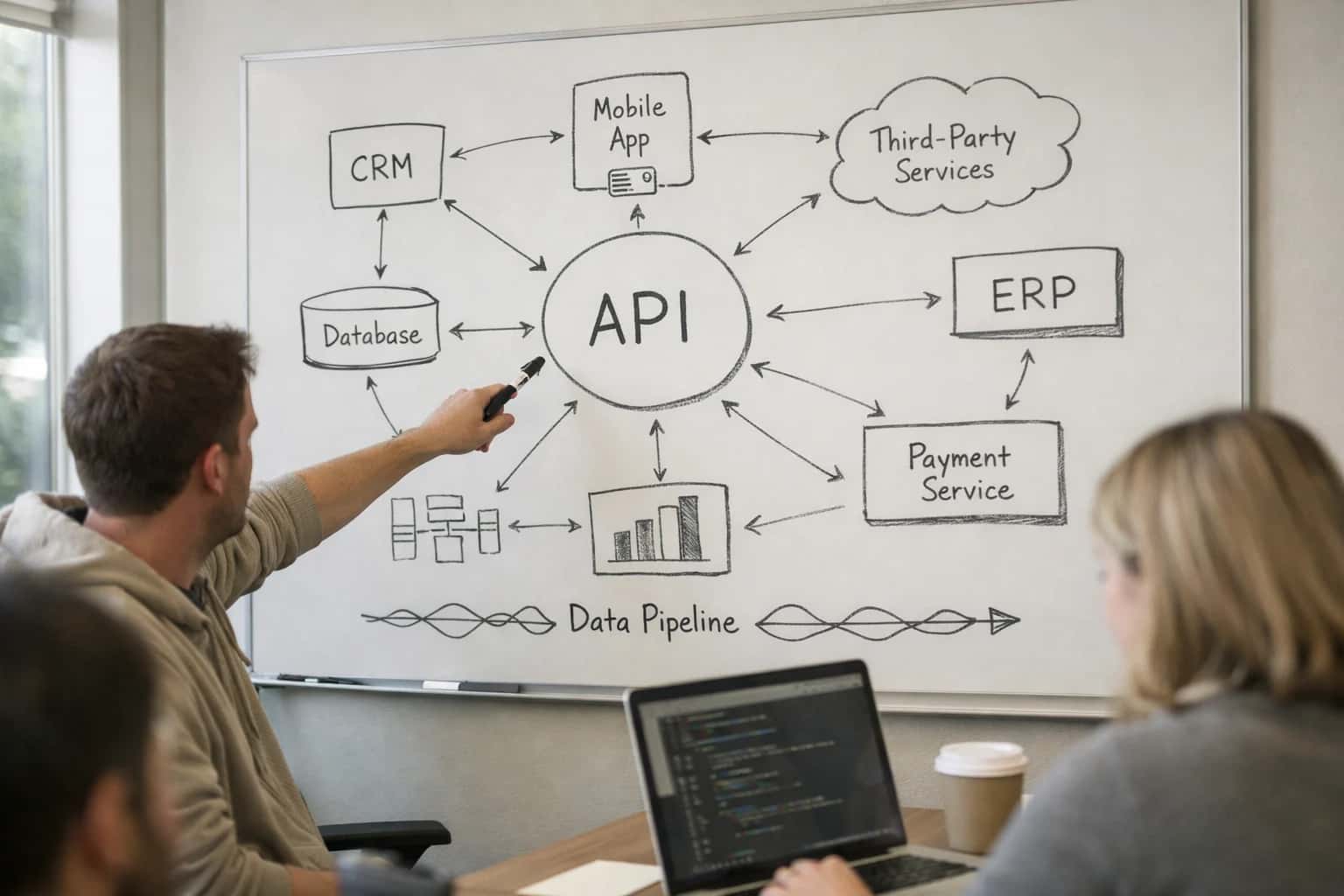
Where AI Fits in the Modern Imaging Stack
A practical guide to the integration points, data flows, and operational layers for embedding AI into enterprise imaging platforms like Sectra, Philips, Intelerad, and GE.
Implementation requires orchestrating secure data pipelines. A typical production pattern involves a DICOM listener service that watches for new studies in a PACS routing queue, extracts relevant series, and sends them to a containerized AI inference service (often on-premise GPU clusters or a compliant cloud like AWS HealthLake Imaging). Results are formatted as DICOM SR and sent back to the PACS via DICOM C-STORE, where they are linked to the original study. Critical findings can trigger HL7 ORU messages to the EHR or instant alerts via middleware platforms. Governance is enforced through RBAC at the PACS level to control which users see AI prompts and through audit logs tracking every AI inference for quality assurance and regulatory compliance.
Rollout should be phased, starting with non-diagnostic, operational AI—like protocoling support or automated quality checks—to build trust and iron out pipeline reliability. Subsequent phases introduce diagnostic support AI, initially configured as a silent second read where results are logged but not displayed, allowing for validation against radiologist reports. The final phase activates human-in-the-loop workflows, where AI findings are presented as interactive overlays or draft text, requiring explicit radiologist verification. This gradual approach manages change, gathers performance data for continuous model retraining, and aligns with frameworks like the FDA's SaMD Pre-Cert. The goal is not to replace the radiologist but to create a cognitive copilot that reduces repetitive tasks, surfaces subtle findings, and accelerates report turnaround for critical cases.
For health systems evaluating build-vs-buy, the key is assessing the integration surface area of your existing imaging stack. A platform like Sectra's Enterprise Imaging with its open API framework and workflow orchestrator offers different hooks than Philips IntelliSpace with its AI Orchestrator or GE's Edison AI platform. Success depends less on the AI model's standalone accuracy and more on its seamless, low-latency integration into the radiologist's native workflow, requiring deep expertise in DICOM, HL7, IHE profiles, and the specific PACS vendor's extensibility points. This is where a partner like Inference Systems delivers value, providing the integration architecture and deployment rigor to move from a proof-of-concept algorithm to a governed, scalable clinical workflow.
Key Integration Surfaces Across Major Platforms
AI Integration for Study Prioritization
The reading worklist is the primary control surface for radiologist workflow. AI integration here focuses on real-time study prioritization to ensure critical cases are read first.
Key Integration Points:
- HL7 ADT/ORM Messages: Ingest patient and order data to provide clinical context for AI triage models.
- DICOM Modality Worklist (MWL): Tag incoming studies with AI-derived priority scores (e.g., "Critical," "Routine," "Follow-up") before they hit the PACS worklist.
- PACS Worklist API: Platforms like Sectra, Intelerad, and Philips IntelliSpace expose APIs to programmatically reorder or flag studies based on AI output (e.g., suspected large vessel occlusion on CT Head).
Implementation Pattern: An AI service listens for incoming DICOM studies, runs inference for critical findings, and pushes a priority score back to the PACS via a custom DICOM tag or a dedicated API. The worklist UI then sorts or highlights these studies, reducing time-to-diagnosis for strokes, hemorrhages, or pneumothoraces.
High-Value AI Use Cases for Imaging
For CTOs and imaging directors evaluating AI, these are the proven integration patterns that deliver operational impact by embedding intelligence directly into the radiologist's workflow, not as a separate tool.
Critical Finding Triage & Prioritization
Integrate AI detection algorithms (for ICH, PE, pneumothorax) with the PACS worklist manager via HL7/DICOM hooks. High-probability positive cases are flagged and elevated to the top of the list, ensuring the sickest patients are read first. This reduces time-to-diagnosis for stroke and trauma from hours to minutes.
AI-Assisted Structured Reporting
Connect AI quantification outputs (e.g., nodule volume, LVEF, stenosis percentage) directly to the reporting module or speech recognition system. AI-generated measurements and draft findings are auto-populated into structured report templates, reducing dictation time and minimizing manual data entry errors.
Multi-Modality Correlation & Prior Comparison
Deploy AI to analyze current and prior studies across modalities (CT, MRI, PET) stored in the Vendor Neutral Archive (VNA). The system automatically retrieves relevant priors, highlights interval changes, and presents a synthesized comparison view within the PACS viewer, cutting search time and improving diagnostic confidence.
Automated Quality Control & Protocol Compliance
Integrate AI QA models with the dose monitoring and modality workstations. Scans are analyzed in near real-time for protocol adherence, positioning errors, and dose outliers. Automated alerts are routed to technologists and physicists via the PACS notification system, enabling immediate correction and consistent image quality.
Advanced Visualization & Surgical Planning
Embed AI segmentation models (for tumors, vessels, organs) within the 3D advanced visualization platform (e.g., IntelliSpace Portal, AW Server). With one-click, radiologists and surgeons generate patient-specific 3D models, measurements, and volumetric analysis directly from the PACS dataset, streamlining pre-operative planning.
Population Health & Screening Management
Use AI analytics on the enterprise imaging data lake to power population health workflows. Automate lung cancer screening LDCT recalls, track aortic aneurysm growth across a health system, or identify patients meeting criteria for osteoporosis screening. Findings and management recommendations are pushed to the EHR via FHIR for care coordination.
Example AI-Enhanced Imaging Workflows
These are concrete, high-impact workflows we implement for health systems using Sectra, Philips, Intelerad, and GE platforms. Each pattern details the trigger, data flow, AI action, and system update.
Trigger: A non-contrast head CT study is completed in the ED and sent to PACS.
Context/Data Pulled: The PACS (e.g., Sectra, Intelerad) sends a DICOM C-STORE notification to a listening service. The service retrieves the study's DICOM series via DICOMweb.
Model or Agent Action:
- A stroke detection AI model (e.g., for ICH, large vessel occlusion) runs inference on the image series.
- An agent packages the findings (e.g., "Positive for ICH, 15ml volume in left basal ganglia") and confidence scores into a DICOM Structured Report (SR).
System Update or Next Step:
- The DICOM SR is sent back to PACS and linked to the original study.
- A high-priority alert is pushed via HL7 ADT to the ED's EHR dashboard and the on-call neurologist's/pager system.
- The study is automatically flagged and moved to the top of the radiologist's "STAT" worklist in the PACS viewer.
Human Review Point: The radiologist reads the flagged study first. The AI findings are presented as a non-obstructive overlay or sidebar list, requiring explicit verification before inclusion in the final report.
Implementation Architecture: Build vs. Buy vs. Hybrid
A pragmatic analysis of the three primary pathways for operationalizing AI in your imaging platform, from full-stack development to managed integration services.
When evaluating AI for platforms like Sectra, Philips IntelliSpace, Intelerad, or GE HealthCloud, the core decision is how to connect AI inference to your clinical workflow. The 'Build' path involves developing custom pipelines to ingest DICOM studies via DICOMweb or HL7, run models on your own GPU infrastructure, and manually integrate results back into the PACS worklist and reporting module. This offers maximum control but requires significant in-house expertise in medical imaging informatics, MLOps, and PACS API integration, often taking 12-18 months to reach production. The 'Buy' approach means licensing a turnkey AI application from a vendor that claims native PACS integration. While faster to pilot, this often locks you into a single-vendor ecosystem, creates data silos, and may not address your specific departmental workflows for study triage, report support, or anomaly review.
For most health systems, a 'Hybrid' architecture—managed integration of best-in-class AI models into your existing PACS—delivers the optimal balance of speed, control, and clinical relevance. This involves: 1) A secure, HL7/DICOM-triggered data pipeline that routes anonymized studies from your VNA or PACS to a cloud or on-prem inference service, 2) A model orchestration layer that manages multiple AI algorithms (e.g., stroke detection, lung nodule segmentation, mammography density assessment) and returns structured results as DICOM Structured Reports (SR) or FHIR Observations, and 3) Seamless UI integration that presents AI findings as prioritized worklist flags, hanging protocol overlays, or draft report suggestions within the radiologist's native reading environment. This approach leverages your existing investment in Sectra or Philips while enabling you to swap AI models as clinical needs and evidence evolve.
Successful rollout requires more than technology. Governance must address algorithm validation (specificity/sensitivity in your patient population), radiologist feedback loops for continuous model improvement, and audit trails for regulatory compliance. A phased implementation—starting with a non-interruptive 'second read' workflow in a single modality (e.g., CT Head for ICH)—allows for clinical validation and change management before scaling to multi-specialty, AI-driven triage. The goal is not to replace radiologists but to embed AI as a co-pilot that reduces cognitive load, prioritizes critical cases, and captures quantitative data, turning imaging from a qualitative art into a data-driven operational asset.
Code & Payload Examples for Common Integrations
AI-Powered Worklist Prioritization
When a new imaging study arrives in the PACS, a DICOMweb STOW-RS event can trigger an AI service to analyze the images and assign a priority score. This Python example listens for the webhook, fetches the study, runs inference, and posts the result back to the workflow manager's API to reorder the radiologist's reading list.
pythonimport requests import json from inference_client import AIClient # Your AI service client # Webhook endpoint triggered by PACS on study arrival def handle_new_study(study_uid, pacs_ae_title): """Fetch study from PACS, run AI triage, update worklist.""" # 1. Retrieve study via DICOMweb dicomweb_base = "https://pacs.yourhospital.com/dicomweb" study_url = f"{dicomweb_base}/studies/{study_uid}" headers = {"Authorization": "Bearer <PACS_API_KEY>"} study_metadata = requests.get(study_url, headers=headers).json() # 2. Run AI inference for critical findings (e.g., ICH, PE, pneumothorax) ai_client = AIClient(model="triage_v1") priority_score, findings = ai_client.analyze(study_metadata["series"]) # 3. Post AI result to Workflow Manager API wfm_payload = { "studyInstanceUID": study_uid, "priorityScore": priority_score, "criticalFindings": findings, "assignedModality": study_metadata["modality"], "timestamp": study_metadata["studyDateTime"] } wfm_response = requests.post( "https://workflow.yourhospital.com/api/v1/prioritize", json=wfm_payload, headers=headers ) return wfm_response.status_code
Realistic Time Savings & Operational Impact
A realistic comparison of key diagnostic and operational workflows before and after integrating AI into a PACS platform, based on typical implementations for health systems.
| Workflow / Metric | Before AI Integration | After AI Integration | Implementation Notes |
|---|---|---|---|
Critical Finding Triage (e.g., ICH, PE) | Manual review in worklist order | AI-prioritized worklist with critical cases flagged | Requires DICOM/HL7 integration for real-time study routing; human verification remains essential. |
Report Draft Generation | Radiologist dictates all findings from scratch | AI suggests structured findings based on image analysis | Integrates with speech recognition; radiologist edits and finalizes. Quality varies by anatomy/algorithm. |
Quantitative Analysis (e.g., tumor volumetry) | Manual segmentation and measurement (15-30 mins) | AI auto-segmentation with manual verification (2-5 mins) | Requires integration with advanced visualization module; outputs DICOM SR for the report. |
Screening Workflow (e.g., Lung Nodule) | Radiologist reviews entire study for subtle findings | AI pre-highlights potential nodules for review | Implemented as a hanging protocol overlay; reduces perceptual fatigue but requires sensitivity validation. |
Study Protocol Compliance & QA | Periodic manual audit by physicist/technologist | AI auto-analysis of protocol parameters against dose benchmarks | Triggers alerts for outliers; integrates with dose monitoring platforms like Sectra Dose or Philips IntelliSpace Dose. |
Cross-modality Prior Comparison | Manual retrieval and side-by-side evaluation | AI auto-registers and highlights interval changes | Depends on VNA or enterprise archive integration; significantly speeds up follow-up reads. |
Operational Triage & Routing | All studies go to a general worklist | AI routes studies by subspecialty or urgency to appropriate radiologist | Uses worklist orchestrator APIs (e.g., Sectra Workflow Manager); improves subspecialty match and turnaround. |
Governance, Security, and Phased Rollout
Deploying AI in diagnostic imaging requires a governance-first architecture and a phased rollout that prioritizes patient safety, data integrity, and clinician adoption.
A production AI platform must integrate with the hospital's existing security and compliance fabric. This means connecting via HL7 ADT for patient context, using DICOMweb with strict access controls for image retrieval, and writing AI results back as DICOM Structured Reports (SR) or FHIR Observations to the PACS and EHR for a complete audit trail. All AI inference should occur within the health system's secure cloud tenancy (e.g., AWS, Azure) or on-premises GPU cluster, never sending protected health information (PHI) to unauthorized third-party endpoints. Role-based access in the PACS (e.g., Sectra, IntelliSpace) must control who sees AI prompts and preliminary findings, ensuring only credentialed radiologists can use AI for final interpretation.
A phased, use-case-led rollout is critical for adoption and risk management. A typical progression starts with non-diagnostic, operational AI—such as automated protocoling, dose monitoring, or image quality checks—which builds trust without affecting diagnostic decisions. Phase two introduces triage and prioritization AI for specific high-acuity workflows (e.g., flagging potential intracranial hemorrhage on head CTs in the ED), where the AI acts as a "safety net" to prioritize the worklist. The final phase deploys diagnostic assistance AI (e.g., lung nodule detection, mammography density scoring) integrated directly into the reading workstation, with results presented as a secondary finding list for radiologist verification. Each phase requires clear change management protocols, updated radiologist peer-review workflows, and continuous monitoring of AI model performance against ground truth.
Governance is sustained through a dedicated AI Steering Committee—comprising radiologists, IT security, compliance officers, and clinical engineers—that oversees model validation, approves new use cases, and manages the feedback loop where radiologist corrections are used for model retraining. Technical governance includes LLMOps for report-drafting models (prompt versioning, output guardrails) and MLOps for imaging models (drift detection, performance dashboards). A successful rollout concludes with AI becoming a silent, reliable partner in the workflow, reducing time to treatment for critical cases and mitigating diagnostic fatigue, all within a framework that meets HIPAA, GDPR, and hospital accreditation standards.
Enabling Efficiency, Speed & Accuracy
Intelligent Analysis, Decision & Execution
We build AI systems for teams that need search across company data, workflow automation across tools, or AI features inside products and internal software.
Talk to Us
Search across company data
Give teams answers from docs, tickets, runbooks, and product data with sources and permissions.
Useful when people spend too long searching or get different answers from different systems.

Automate internal workflows
Use AI to route work, draft outputs, trigger actions, and keep approvals and logs in place.
Useful when repetitive work moves across multiple tools and teams.

Add AI to products and internal tools
Build assistants, guided actions, or decision support into the software your team or customers already use.
Useful when AI needs to be part of the product, not a separate tool.
FAQs: Technical and Strategic Questions
For CTOs and imaging directors evaluating how to build or buy an AI-powered imaging platform, these are the most common technical and strategic questions we address.
There are three dominant integration architectures, each with different trade-offs for control, scalability, and vendor lock-in.
- PACS-Native AI Orchestrator: Leverage the platform's built-in AI engine (e.g., Philips AI Orchestrator, GE Edison AI Platform). You deploy validated AI models into the vendor's containerized environment. This offers tight workflow integration but can limit model choice and portability.
- API-Centric Middleware: Build a lightweight middleware layer that sits between your PACS/VNA and AI inference services. This layer uses DICOMweb, HL7, and REST APIs to:
- Listen for new studies via DICOM MWL or HL7 ADT/ORM.
- Retrieve images, send to internal or third-party AI services.
- Return results as DICOM Structured Reports (SR) or HL7 ORU messages. This model offers maximum flexibility and multi-vendor AI support but requires more integration and operational overhead.
- Cloud-Native AI Pipeline: For cloud PACS (Sectra Cloud, Intelerad Cloud, Philips on AWS), deploy serverless AI inference (e.g., AWS SageMaker, Azure ML) within the same cloud tenant. Studies are processed via event-driven pipelines (e.g., DICOM arrival in S3 triggers a Lambda function). This is highly scalable and cost-effective for variable workloads but requires deep cloud and healthcare data governance expertise.
The right choice depends on your existing vendor contracts, in-house engineering skill set, and long-term AI strategy.

About the author
Prasad Kumkar
CEO & MD, Inference Systems
Prasad Kumkar is the CEO & MD of Inference Systems and writes about AI systems architecture, LLM infrastructure, model serving, evaluation, and production deployment. Over 5+ years, he has worked across computer vision models, L5 autonomous vehicle systems, and LLM research, with a focus on taking complex AI ideas into real-world engineering systems.
His work and writing cover AI systems, large language models, AI agents, multimodal systems, autonomous systems, inference optimization, RAG, evaluation, and production AI engineering.
Partnered with leading AI, data, and software stack.





How We Work
Custom AI workflows for your Business
One-fit-all AI don't work for modern businesses. At Inferensys, we aim to understand your business & custom requirements; which we use to define most efficient agentic workflows, the data, and the tools for your business.
01
Review the use case
We understand the task, the users, and where AI can actually help.
Read more02
Pick the right approach
We define what needs search, automation, or product integration.
Read more03
Build the first useful version
We implement the part that proves the value first.
Read more04
Improve from there
We add the checks and visibility needed to keep it useful.
Read moreThe first call is a practical review of your use case and the right next step.
Talk to Us