A production-ready AI integration for platforms like DrChrono, Tebra, AdvancedMD, or CareCloud is not a point solution but a connected system. It requires mapping to specific data objects—claims, denials, payments, patient accounts, and payer contracts—via the platform's native APIs and webhooks. The architecture typically involves an external AI service layer that subscribes to platform events (e.g., a new claim created, a denial posted), processes the data using LLMs or specialized models, and returns actionable insights or triggers automations back into the RCM workflow. This keeps the core platform stable while augmenting its intelligence.

Integration
Healthcare Billing AI Integration Services
End-to-end services for designing, building, and deploying custom AI integrations into DrChrono, Tebra, AdvancedMD, and CareCloud. Practical blueprint for CTOs and IT directors evaluating partners.
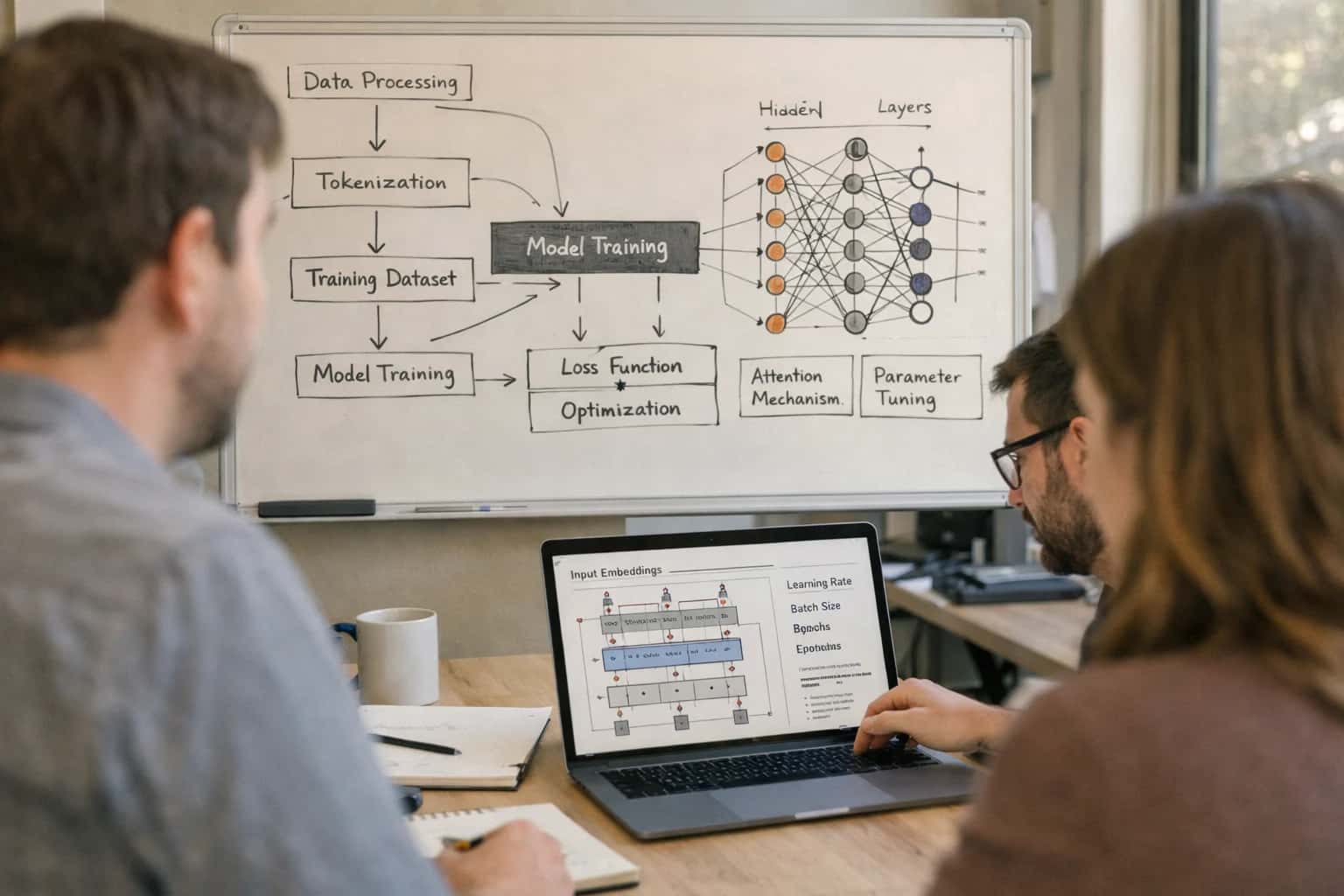
ARCHITECTURE & ROLLOUT
AI Integration Services for Medical Billing Platforms
A technical blueprint for designing, building, and deploying custom AI integrations that connect to your core RCM platform.
Rollout follows a phased, risk-managed approach. We start with a single high-impact, low-risk workflow, such as pre-submission claim review or automated payment posting from ERAs. This involves configuring secure API connections, building the initial AI agent or model, and establishing a human-in-the-loop review queue within the platform (often as a custom dashboard or integrated task list). Success is measured by operational metrics like reduction in manual review time or improvement in clean claim rate for that specific module before expanding to adjacent workflows like denial root-cause analysis or predictive A/R aging.
Governance is non-negotiable. Every AI interaction must generate an audit trail logged back to the platform, linking the AI's suggestion or action to the source record (e.g., claim ID). Implement role-based access controls (RBAC) to ensure only authorized billing managers or coders can approve AI-generated actions. For HIPAA compliance, PHI is never persisted in external AI services without a BAA; we use tokenization or on-premise processing options. The goal is a governed augmentation layer that your compliance officer and IT director can sign off on, turning AI from a black box into a traceable, accountable component of your revenue cycle. For a deeper dive on compliant architecture, see our guide on HIPAA-Compliant AI for Medical Billing.
HEALTHCARE BILLING & CLAIMS
Where AI Integrates: Platform Modules and Touchpoints
Superbill & Encounter Data
AI integrates directly into the charge capture workflow, reading from clinical notes in the EHR and writing to the billing platform's charge entry or superbill modules. Key touchpoints include:
- Clinical Documentation APIs: Extract diagnoses, procedures, and modifiers from provider notes using NLP.
- Charge Entry Objects: Automatically populate CPT, ICD-10, and HCPCS codes into the platform's charge tables, reducing manual entry and lag.
- Coding Validation Rules: Cross-reference AI-suggested codes against payer-specific and NCCI edits within the platform before claim creation.
This integration ensures charges are captured accurately and promptly after patient encounters, directly impacting revenue velocity and reducing missed charges for multi-specialty groups.
REVENUE CYCLE AUTOMATION
High-Value AI Use Cases for Medical Billing
Integrating AI into platforms like DrChrono, Tebra, AdvancedMD, and CareCloud automates high-friction workflows, reduces manual review, and accelerates cash flow. These are the most impactful areas to start.
01
Pre-Submission Claim Scrubber
An AI agent that integrates with the claim submission queue to validate CPT/ICD-10 codes, modifiers, and payer-specific rules before the claim is sent. Flags mismatches, missing documentation, and medical necessity issues, reducing front-end denials.
Days -> Hours
Denial turnaround
02
Intelligent Denial Triage & Appeal
An AI workflow that connects to the denial management module, analyzes ERA/EOB reason codes, prioritizes appeals by value and win probability, and drafts appeal letters with clinical and contractual evidence. Logs all actions back to the platform.
50-70%
Appeal workload reduction
03
Automated Payment Posting & Reconciliation
Uses computer vision and NLP to read EOBs/ERAs and post payments and adjustments directly into the billing platform's A/R ledger. Matches payments to claims, flags underpayments against contract rates, and reconciles discrepancies without manual entry.
Hours -> Minutes
Per batch processing
04
Predictive A/R Follow-Up Agent
An AI agent that monitors the aging report and payer portals, prioritizes accounts based on predicted collectability, and automates follow-up tasks—drafting emails, logging calls, and creating tasks in the platform for collectors. Focuses effort on high-value, recoverable debt.
1-2 Weeks
DSO reduction potential
05
Coding Assistant & Audit Trail
An in-workflow copilot for coders and providers that suggests codes based on clinical note NLP, validates against NCCI edits, and provides audit-ready rationale. Integrates directly with the superbill or charge capture screen in the EHR/RCM platform, creating a compliance record.
30-50%
Coding review time
06
Prior Authorization Workflow Orchestrator
An AI orchestrator that triggers from the scheduling module, summarizes clinical records, populates payer-specific forms, submits requests, and tracks status across multiple payer portals. Updates the platform record and alerts staff only for exceptions, reducing manual tracking.
Batch -> Real-time
Status updates
PRACTICAL IMPLEMENTATION PATTERNS
Example AI-Powered Workflows in Action
These are concrete, production-ready workflows we design and deploy for platforms like DrChrono, Tebra, and AdvancedMD. Each pattern connects AI agents to specific platform APIs, data objects, and user roles to automate high-friction points in the revenue cycle.
Trigger: A new charge is posted and a claim is queued for submission in the billing platform (e.g., a Claim record is created in AdvancedMD).
AI Agent Action:
- Context Pull: The agent retrieves the claim details, linked patient demographics, insurance details, and the associated clinical notes/superbill from the platform's API.
- Multi-Step Validation: The agent executes a sequence of checks using an LLM and rule engine:
- Coding Accuracy: Cross-references CPT/ICD-10 codes against the clinical documentation for medical necessity and correct sequencing.
- Modifier Logic: Validates modifier application (e.g., 25, 59) against NCCI edits and payer-specific rules.
- Demographic & Policy Gaps: Flags missing prior auth numbers, incorrect policy IDs, or patient eligibility issues.
- System Update: The agent logs its findings as a
ClaimReviewobject attached to the claim. For high-confidence errors (e.g., invalid ICD-10), it can automatically correct the claim data via PATCH request. For ambiguous issues, it assigns the claim to a "Review" work queue for a human coder, with specific notes.
Human Review Point: All suggested corrections are presented to a biller/coder in-platform for a final sign-off before submission, maintaining an audit trail.
A PRODUCTION-READY BLUEPRINT
Implementation Architecture: How We Wire It Together
Our integration architecture is designed to augment your existing DrChrono, Tebra, AdvancedMD, or CareCloud platform without disrupting core operations.
We connect via the platform's native APIs (e.g., DrChrono's FHIR/REST API, Tebra's Kareo API) to specific data objects and workflow triggers. Key integration surfaces include:
- Claim Submission Queues: Inject AI review agents before claims are sent to payers.
- A/R Aging and Payment Posting Modules: Attach AI agents to monitor, analyze, and act on open balances and EOB/ERA data.
- Denial Management Workbenches: Connect to denial reason code fields and appeal tracking objects to power root-cause analysis and automated appeal drafting.
- Charge Capture and Coding Interfaces: Integrate with superbill/charge entry screens to provide real-time coding suggestions and validation.
A typical implementation layers AI services atop your platform's data layer. We deploy containerized AI microservices (e.g., claim review, NLP coding, denial analytics) in your VPC or our HIPAA-compliant cloud. These services listen for webhooks (e.g., claim.created, denial.received) or poll designated API endpoints. Processed results—like a scrubbed claim, a prioritized denial, or a suggested CPT code—are written back to the platform via API, with a full audit trail logged to a separate data store for governance and model retraining.
Rollout is phased, starting with a single high-impact workflow like pre-submission claim review for one specialty. We implement human-in-the-loop approvals for the first 90 days, where AI suggestions are routed to a billing specialist's queue in the platform for review before action. Governance is managed through a dedicated dashboard that tracks AI accuracy, drift, and business impact KPIs (e.g., reduction in manual review time, improvement in clean claim rate). All PHI remains within your BAA-covered environment, and AI models are never trained on your data without explicit consent.
ARCHITECTURE BLUEPINTS FOR RCM PLATFORMS
Code and Integration Patterns
Core Integration Surface
Production AI integrations for billing platforms are built on secure, event-driven API orchestration. The primary pattern involves listening for platform events (e.g., a new claim created, a denial posted) via webhooks, processing with AI services, and writing results back via REST APIs.
Typical Flow:
- Platform (e.g., Tebra) triggers a webhook to your secure endpoint with a claim payload.
- Your service validates the payload, extracts relevant data (CPT codes, DX codes, patient/payer info).
- An AI agent calls an LLM (like GPT-4) or a specialized NLP model with a structured prompt for tasks like coding validation or denial root cause analysis.
- The AI response is parsed, and an action is determined (e.g.,
flag_for_review,auto_correct,create_appeal_task). - Your service makes an authenticated PATCH or POST call back to the platform's API to update the record or create a follow-up task.
This pattern ensures real-time, in-workflow augmentation without disrupting user experience. Governance is enforced via API rate limits, idempotency keys, and comprehensive audit logging.
TYPICAL IMPACT FOR A 10-PROVIDER PRACTICE
Realistic Time Savings and Operational Impact
This table illustrates the operational impact of integrating AI agents into core medical billing workflows. Metrics are based on typical implementations for platforms like DrChrono, Tebra, AdvancedMD, and CareCloud.
| Workflow | Before AI | After AI | Implementation Notes |
|---|---|---|---|
Pre-submission claim review | Manual coder review, 5-8 minutes per claim | AI-assisted coding validation & scrub, 1-2 minutes per claim | AI flags potential errors; human coder makes final decision |
Denial root cause analysis | Manual report analysis, 2-3 hours weekly | Automated denial pattern detection & prioritization, 30 minutes weekly | AI clusters denial reasons and suggests top 3 corrective actions |
Payment posting from EOB/ERA | Manual data entry, 4-6 minutes per remittance | AI-assisted data extraction & auto-posting, 1 minute per remittance | Computer vision extracts data; staff reviews exceptions |
A/R follow-up on aged claims | Manual list prioritization & outreach, 10-15 hours weekly | AI-prioritized work queues & draft communications, 3-5 hours weekly | AI drafts follow-up notes; collector reviews and sends |
Prior authorization documentation | Manual chart review & form filling, 20-30 minutes per auth | AI-generated clinical summary & form pre-fill, 5-10 minutes per auth | AI pulls relevant data from EHR; clinical staff reviews and submits |
Patient billing inquiry resolution | Call center handling, 8-10 minutes per call | AI chatbot handles common inquiries, deflects 40-50% of calls | Chatbot integrates with patient portal & billing platform API |
Charge capture & lag time | Manual entry from superbills/notes, next-day posting | AI-assisted auto-capture from notes, same-day posting | NLP extracts charges; billing staff verifies against encounters |
Monthly financial reporting | Manual spreadsheet compilation, 1-2 days monthly | AI-automated KPI dashboards & narrative insights, 2-4 hours monthly | AI connects to platform data warehouse, generates practice owner report |
ARCHITECTING FOR COMPLIANCE AND CONTROLLED ADOPTION
Governance, Security, and Phased Rollout
A production-ready AI integration for healthcare billing requires a security-first architecture and a deliberate rollout plan to manage risk and prove value.
Every integration begins with a HIPAA-compliant architecture that treats PHI from platforms like DrChrono, Tebra, and AdvancedMD as a first-class security concern. This means implementing strict data governance: AI models and vector stores are deployed in isolated, encrypted environments (e.g., private cloud VPCs) with access controlled via service principals. All data in transit to and from the billing platform's APIs is encrypted, and we implement comprehensive audit logging for every AI interaction—tracking which user, record, and module triggered an action, what data was processed, and what output was generated. This creates an immutable chain of custody for compliance reviews.
Rollout follows a phased, risk-managed approach. Phase 1 typically targets a low-risk, high-volume workflow like automated claim scrubbing, deployed in a human-in-the-loop mode. For example, an AI agent integrated via a platform's claim editing API pre-flights claims against payer rules, but its suggestions require a biller's approval before submission. This builds trust and generates initial performance data. Phase 2 expands to more complex workflows like denial root cause analysis, where the AI reads ERA data and platform denial trends to prioritize appeals. Phase 3 introduces predictive agents for cash flow forecasting or autonomous payment posting for clean, straightforward EOBs.
Governance is operationalized through a centralized AI control plane. This internal dashboard allows your IT and compliance teams to monitor model performance (e.g., coding suggestion accuracy), toggle features on/off for specific user groups or clinics, review audit trails, and manage prompts and business rules without code deployment. This ensures the integration remains adaptable as payer rules change and provides the oversight required for sensitive financial operations. The goal is not a "big bang" AI replacement, but a graduated automation of manual bottlenecks, with each phase delivering measurable ROI in reduced rework, faster collections, or higher staff productivity before proceeding to the next.
Enabling Efficiency, Speed & Accuracy
Intelligent Analysis, Decision & Execution
We build AI systems for teams that need search across company data, workflow automation across tools, or AI features inside products and internal software.
Talk to Us
Search across company data
Give teams answers from docs, tickets, runbooks, and product data with sources and permissions.
Useful when people spend too long searching or get different answers from different systems.
Enterprise searchRAGPermissions
Read more
Automate internal workflows
Use AI to route work, draft outputs, trigger actions, and keep approvals and logs in place.
Useful when repetitive work moves across multiple tools and teams.
AI agentsWorkflow automationGovernance
Read more
Add AI to products and internal tools
Build assistants, guided actions, or decision support into the software your team or customers already use.
Useful when AI needs to be part of the product, not a separate tool.
AI integrationDecision supportModel routing
Read moreIMPLEMENTATION AND ARCHITECTURE
Frequently Asked Questions for Technical Buyers
Common technical and operational questions from CTOs, IT directors, and revenue cycle leaders evaluating AI integration partners for platforms like DrChrono, Tebra, AdvancedMD, and CareCloud.
Our integrations are designed with a zero-PHI-exposure principle for external AI services. The typical pattern involves:
- On-Premises or VPC-Deployed Processing: For initial document parsing and PHI redaction, we deploy lightweight containers within your cloud environment (AWS, Azure, GCP) or on-premises.
- Structured Data Only: After redaction, only the structured, de-identified data (e.g., procedure codes, amounts, denial reason codes) is sent to external LLM APIs like OpenAI or Anthropic for analysis and generation.
- Audit Trails and BAAs: All data flows are logged. We ensure Business Associate Agreements (BAAs) are in place with all third-party AI vendors and use their HIPAA-compliant endpoints where available.
- Platform-Native Security: The AI agent acts as a user/service account within your billing platform, adhering to its native Role-Based Access Control (RBAC). All actions (e.g., "appeal drafted," "claim flagged") are logged in the platform's audit trail.
This approach keeps sensitive patient data within your controlled environment while leveraging external AI for logic and language tasks.

About the author
Prasad Kumkar
CEO & MD, Inference Systems
Prasad Kumkar is the CEO & MD of Inference Systems and writes about AI systems architecture, LLM infrastructure, model serving, evaluation, and production deployment. Over 5+ years, he has worked across computer vision models, L5 autonomous vehicle systems, and LLM research, with a focus on taking complex AI ideas into real-world engineering systems.
His work and writing cover AI systems, large language models, AI agents, multimodal systems, autonomous systems, inference optimization, RAG, evaluation, and production AI engineering.
LinkedIn
Limited slotsGet a Free AI Consultation
Partnered with leading AI, data, and software stack.





How We Work
Custom AI workflows for your Business
One-fit-all AI don't work for modern businesses. At Inferensys, we aim to understand your business & custom requirements; which we use to define most efficient agentic workflows, the data, and the tools for your business.
01
Review the use case
We understand the task, the users, and where AI can actually help.
Read more02
Pick the right approach
We define what needs search, automation, or product integration.
Read more03
Build the first useful version
We implement the part that proves the value first.
Read more04
Improve from there
We add the checks and visibility needed to keep it useful.
Read moreThe first call is a practical review of your use case and the right next step.
Talk to Us