Credentialing and enrollment workflows are high-touch, document-heavy processes that directly impact a practice's revenue and compliance. AI integration targets key surfaces in your RCM or practice management platform: the provider master file, credentialing module, document management repositories, and payer enrollment queues. The goal is to deploy AI agents that can parse application packets (CVs, licenses, malpractice certificates), extract structured data, validate against primary sources (like NPPES or state boards), track statuses across multiple payers, and automatically update platform records—reducing manual data entry and status chasing from weeks to days.

Integration
AI for Credentialing and Provider Enrollment
A technical blueprint for using AI to automate provider enrollment and credentialing workflows, parsing applications, tracking statuses, and updating platform records, designed for credentialing specialists and operations leaders.
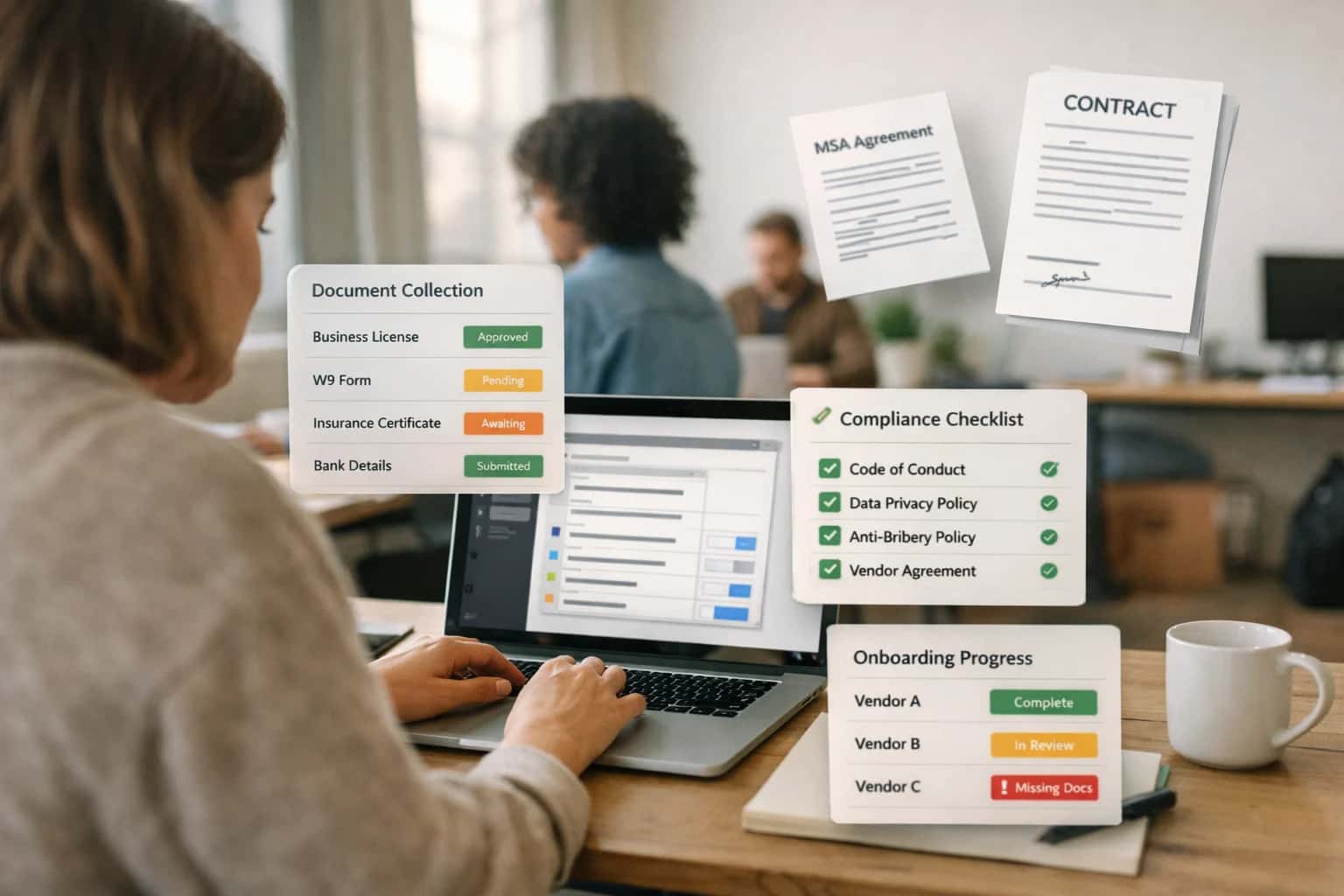
AI FOR CREDENTIALING AND PROVIDER ENROLLMENT
Automating a High-Touch, High-Risk Administrative Workflow
A technical blueprint for using AI agents to automate provider enrollment and credentialing workflows within platforms like DrChrono, Tebra, and AdvancedMD.
Implementation typically involves an orchestration layer that sits between your platform's API and external data sources. For example, an AI agent can be triggered when a new provider is added in DrChrono. It would: 1) fetch the uploaded documents via the Documents API, 2) use a vision/NLP model to extract key fields (license number, issue date, specialty), 3) call a verification service or scrape a state website for validation, 4) log discrepancies or missing items into a dedicated credentialing work queue within the platform, and 5) initiate payer-specific enrollment forms via pre-built templates. This creates a closed-loop system where the credentialing specialist reviews exceptions rather than performing every step manually.
Rollout requires careful governance. Start with a single, high-volume payer or state board to validate extraction accuracy and workflow logic. Implement a human-in-the-loop approval step for all initial enrollments and any AI-generated data updates to the provider record. Audit trails must be preserved: every AI action should be logged as a note or activity in the platform's native audit system, linking back to the source document and the agent's confidence score. This ensures compliance and builds specialist trust. The final architecture reduces credentialing cycle times, minimizes revenue delays from incomplete enrollments, and allows your team to focus on complex cases and relationship management.
AI FOR CREDENTIALING AND PROVIDER ENROLLMENT
Where AI Integrates: Platform Surfaces and Touchpoints
Automating Initial Data Capture
AI integrates directly into the credentialing module's application intake workflows. When a new provider application (CAQH, paper forms, PDFs) is uploaded to the platform (e.g., into DrChrono's document manager or Tebra's provider portal), an AI agent is triggered via webhook.
It uses OCR and NLP to extract structured data: provider demographics, license numbers, education history, work history, and malpractice coverage details. The extracted data is validated against external sources (like NPPES) and then used to auto-populate the corresponding provider object fields in the platform, creating a draft credentialing record. This reduces manual data entry from hours to minutes per application and flags incomplete or inconsistent submissions for specialist review before formal processing begins.
AUTOMATE PROVIDER ENROLLMENT
High-Value AI Use Cases for Credentialing
Credentialing is a document-intensive, multi-step process prone to delays. AI integration can parse applications, track statuses, and update platform records to reduce administrative burden and accelerate provider onboarding.
01
Automated Application Intake & Parsing
AI agents ingest credentialing packets (PDFs, scanned forms) via email or portal, extract key fields (NPI, licenses, certifications, malpractice history), and populate structured data into the credentialing module of platforms like Tebra or AdvancedMD. This eliminates manual data entry and reduces intake errors.
Hours -> Minutes
Data extraction time
02
Primary Source Verification Triage
AI orchestrates verification workflows by checking application data against external sources (NPPES, state boards, DEA). It flags discrepancies, queues items for specialist review, and logs verification status back to the platform's tracking dashboard, ensuring no step is missed.
Batch -> Real-time
Verification workflow
03
Expiration & Re-Credentialing Monitoring
An AI monitor scans provider records in the platform for expiring licenses, certifications, or malpractice policies. It automatically generates renewal task lists, sends alerts to credentialing staff, and can draft initial communications to providers, preventing lapses in network status.
Proactive Alerts
Reduce compliance risk
04
Payer Enrollment Packet Assembly
For each payer, AI assembles the required forms and supporting documents from the provider's digital file within the platform. It pre-fills known data, highlights sections requiring manual input, and generates a submission-ready packet, standardizing a highly variable process.
1 sprint
Typical implementation
05
Status Tracking & Communication Agent
An AI agent monitors payer portals and email for status updates (e.g., 'application received', 'under review', 'approved'). It parses these updates, logs them to the provider's record in the credentialing platform, and can notify the assigned specialist or provider, eliminating manual tracking.
Same day
Status update latency
06
Credentialing Workflow Orchestrator
AI acts as a central orchestrator, routing tasks between internal teams (credentialing specialists, compliance) and external entities (providers, payers). It uses platform APIs to update task statuses in CareCloud or DrChrono, assign follow-ups, and ensure SLAs are met, providing full visibility for managers.
End-to-End Visibility
Manager dashboard
AUTOMATED ENROLLMENT OPERATIONS
Example AI-Powered Credentialing Workflows
These workflows illustrate how AI agents and automations connect to credentialing modules in platforms like DrChrono, Tebra, and AdvancedMD. Each flow is triggered by a system event, uses AI to process documents or data, and updates platform records, reducing manual follow-up and status chasing for credentialing specialists.
Trigger: A new provider application is submitted via the platform's provider portal or intake form.
Context Pulled: The AI agent retrieves the application payload, including the provider's NPI, state license numbers, DEA number, and education/training history from the platform's Provider and CredentialingApplication objects.
AI Agent Action:
- Parses the application to identify required verifications (e.g., state medical board, NPDB, OIG).
- For each source, it drafts and sends the initial verification request via email or web portal (using configured templates).
- Logs each request with a unique tracking ID and expected response timeline back to a
VerificationTaskrecord linked to the application.
System Update: The platform's credentialing dashboard is updated to show "PSV Initiated" with subtasks for each verification source. The application's status moves from Intake to Under Review.
Human Review Point: The agent flags any discrepancies found between the application data and initial verification responses (e.g., a date mismatch on training) for specialist review before proceeding.
AUTOMATED, AUDITABLE, AND HUMAN-IN-THE-LOOP
Implementation Architecture: Data Flow and Guardrails
A production-ready blueprint for integrating AI into credentialing workflows within platforms like DrChrono, Tebra, and AdvancedMD.
The core integration pattern connects an AI orchestration layer to the platform's Provider, Application, and Document modules via secure APIs. Inbound data flows include new provider applications, supporting documents (licenses, DEA certificates, CVs), and payer roster feeds. The AI system parses these documents using a combination of OCR and LLMs to extract structured data—like license numbers, issue dates, and specialty certifications—which is then validated against external sources (e.g., NPPES, state boards) and matched to the correct provider record in the platform. Key outputs are status updates (e.g., application_review, primary_source_verified), task assignments for credentialing specialists, and alerts for missing or expiring documents, all written back to the platform's workflow engine.
To ensure reliability, the architecture employs a multi-stage review queue. High-confidence AI extractions (e.g., a clear license number with a valid format) can auto-populate fields and trigger the next step. Lower-confidence items or complex discrepancies are routed to a human-in-the-loop dashboard within the platform's interface, where specialists can review the AI's suggestion alongside the source document. All AI actions—data extracted, confidence scores, and final decisions—are logged as immutable audit events tied to the provider record, creating a clear lineage for compliance audits. This guardrail ensures the specialist retains final authority while the AI handles the bulk of manual data lifting.
Rollout follows a phased, payer-specific approach. Start with a single, high-volume payer or a specific application type (e.g., Medicare) to tune the extraction models and workflows. Use this pilot to establish key performance indicators: reduction in manual data entry hours, decrease in application processing time, and increase in first-pass completeness rate. Governance is critical; a weekly review of the AI's error log with the credentialing team helps identify patterns for model retraining. The final architecture is not a black-box replacement but an augmented intelligence layer that makes specialists faster and more accurate, turning a 45-day process into a same-week workflow for compliant providers.
AI INTEGRATION PATTERNS
Code and Payload Examples
Parse Provider Applications with NLP
AI models can extract structured data from scanned PDFs, faxes, and uploaded forms (CAQH, state-specific) to auto-populate platform records. This reduces manual data entry from hours to minutes per application.
Example Python payload for a credentialing API call after extraction:
pythonimport requests # Payload with AI-extracted fields provider_payload = { "provider_npi": "1234567890", "first_name": "Jane", "last_name": "Smith", "specialty": "Cardiology", "license_number": "MD123456", "license_state": "CA", "caqh_id": "CAQH98765", "application_status": "under_review", "extracted_from": "CAQH_application_2024.pdf", "confidence_score": 0.96 } # Post to platform credentialing module API response = requests.post( "https://api.billingplatform.com/v1/credentialing/providers", json=provider_payload, headers={"Authorization": "Bearer YOUR_API_KEY"} )
Integrate this with a document intake queue (like an S3 bucket) and trigger an AWS Lambda or Azure Function to process new uploads.
AI FOR CREDENTIALING AND PROVIDER ENROLLMENT
Realistic Time Savings and Operational Impact
How AI integration reduces manual effort and accelerates enrollment cycles within platforms like DrChrono, Tebra, AdvancedMD, and CareCloud.
| Workflow Stage | Manual Process | With AI Integration | Key Impact |
|---|---|---|---|
Application Intake & Data Entry | Manual keying from PDF/paper forms (15-30 min/app) | Automated OCR & data extraction (2-5 min/app) | Reduces data entry labor by 70-85% |
Primary Source Verification (PSV) | Manual lookup across 10+ databases (45-60 min) | AI-assisted multi-database query & cross-check (10-15 min) | Cuts verification time by 75%, flags discrepancies |
Document Gap Analysis | Specialist review for missing/expired items (20-30 min) | AI scans checklist, identifies gaps instantly (<1 min) | Eliminates manual checklist review, prevents submission delays |
CAQH & Payer Portal Updates | Manual login and form updates (30+ min per portal) | AI orchestrates data sync & form pre-filling (5 min) | Ensures consistency, reduces portal update fatigue |
Status Tracking & Follow-up | Manual spreadsheet/email tracking, reactive follow-ups | AI monitors portals, predicts delays, auto-drafts follow-ups | Proactive management, reduces credentialing lag by 2-4 weeks |
Provider Profile Activation | Manual final review & platform data entry (1-2 hours) | AI validates complete packet, triggers automated platform update | Accelerates go-live, ensures RCM system readiness |
Renewal & Expiration Management | Calendar reminders, manual audit every 6-12 months | AI continuous monitoring, alerts 90-120 days prior to expiry | Prevents lapses, maintains continuous network participation |
IMPLEMENTING WITH CONTROL
Governance, Compliance, and Phased Rollout
A practical guide to deploying AI for credentialing with the necessary controls, compliance checks, and a low-risk rollout strategy.
Integrating AI into credentialing workflows requires a governance-first architecture. This means building on top of your existing provider enrollment module and CAQH ProView integrations, not replacing them. The AI agent should act as a pre-processor and status tracker, parsing application PDFs, extracting key data points like licenses and malpractice history, and flagging incomplete sections for human review. All extracted data and AI-suggested actions must be written back to the platform's standard provider object and credentialing case records, maintaining a full audit trail within the system of record. This ensures the primary workflow and compliance controls remain intact.
A phased rollout is critical for managing risk and building trust with credentialing specialists. Start with low-risk, high-volume tasks:
- Phase 1: Document Parsing & Data Entry: Deploy AI to extract structured data from scanned application forms and populate the platform's intake screens, reducing manual keying.
- Phase 2: Status Tracking & Alerting: Enable the AI to monitor primary source verification sites and payer portals, updating status fields and triggering alerts for stalled applications.
- Phase 3: Gap Analysis & Recommendation: Activate the AI to compare extracted data against payer-specific requirements, generating a checklist of missing items or potential discrepancies for the specialist to review. Each phase should include a human-in-the-loop validation step, where a specialist reviews the AI's output before any system updates are committed, ensuring accuracy and allowing the model to learn from corrections.
Compliance is non-negotiable. The integration must be designed to handle Protected Health Information (PHI) and Personally Identifiable Information (PII) securely. All AI processing should occur within a HIPAA-compliant cloud environment (e.g., AWS or Azure with a BAA), and data transmitted via APIs must be encrypted in transit and at rest. Implement role-based access controls (RBAC) aligned with your platform's permissions, so AI-generated insights and actions are only visible to authorized credentialing staff and compliance officers. Finally, maintain a prompt library and versioning system for all AI interactions to ensure consistent, auditable behavior and facilitate updates as payer rules or accreditation standards (like NCQA) change.
Enabling Efficiency, Speed & Accuracy
Intelligent Analysis, Decision & Execution
We build AI systems for teams that need search across company data, workflow automation across tools, or AI features inside products and internal software.
Talk to Us
Search across company data
Give teams answers from docs, tickets, runbooks, and product data with sources and permissions.
Useful when people spend too long searching or get different answers from different systems.
Enterprise searchRAGPermissions
Read more
Automate internal workflows
Use AI to route work, draft outputs, trigger actions, and keep approvals and logs in place.
Useful when repetitive work moves across multiple tools and teams.
AI agentsWorkflow automationGovernance
Read more
Add AI to products and internal tools
Build assistants, guided actions, or decision support into the software your team or customers already use.
Useful when AI needs to be part of the product, not a separate tool.
AI integrationDecision supportModel routing
Read moreAI FOR CREDENTIALING AND PROVIDER ENROLLMENT
Frequently Asked Questions
Practical answers for credentialing specialists, IT leaders, and practice administrators evaluating AI to automate provider enrollment workflows within platforms like DrChrono, Tebra, AdvancedMD, and CareCloud.
AI integrates via the platform's API to read and update specific objects and automate manual steps. A typical architecture involves:
-
API Connections: Secure OAuth or API key connections to endpoints for:
- Provider/Clinician Objects: To read existing data and push updates.
- Document Management: To retrieve uploaded application PDFs, licenses, and CVs.
- Task/Work Queue Modules: To create follow-up tasks or update statuses.
- Payer/Insurance Plan Tables: To reference correct forms and requirements.
-
Orchestration Layer: A middleware service (often cloud-based) acts as the "brain," calling AI models and managing state. It listens for webhooks (e.g.,
new_application_uploaded) or runs on a schedule. -
AI Model Calls: The orchestrator sends data to models for specific tasks:
- Document Parsing: Extract structured data (names, dates, license numbers) from scanned forms using OCR + LLMs.
- Compliance Checking: Compare extracted data against payer rulesets to flag missing or inconsistent information.
- Status Tracking: Scrape or parse payer portal emails/notifications to update platform status fields.
-
System Updates: The orchestrator uses the platform API to write back:
- Populated data fields in the provider record.
- Flagged issues in a dedicated "verification notes" area.
- Updated status (e.g.,
Submitted,Under Review,Approved). - New calendar tasks for follow-ups.
Key Integration Points: Provider Master, Document Attachments, Custom Status Fields, and Internal Tasking modules.

About the author
Prasad Kumkar
CEO & MD, Inference Systems
Prasad Kumkar is the CEO & MD of Inference Systems and writes about AI systems architecture, LLM infrastructure, model serving, evaluation, and production deployment. Over 5+ years, he has worked across computer vision models, L5 autonomous vehicle systems, and LLM research, with a focus on taking complex AI ideas into real-world engineering systems.
His work and writing cover AI systems, large language models, AI agents, multimodal systems, autonomous systems, inference optimization, RAG, evaluation, and production AI engineering.
LinkedIn
Limited slotsGet a Free AI Consultation
Partnered with leading AI, data, and software stack.





How We Work
Custom AI workflows for your Business
One-fit-all AI don't work for modern businesses. At Inferensys, we aim to understand your business & custom requirements; which we use to define most efficient agentic workflows, the data, and the tools for your business.
01
Review the use case
We understand the task, the users, and where AI can actually help.
Read more02
Pick the right approach
We define what needs search, automation, or product integration.
Read more03
Build the first useful version
We implement the part that proves the value first.
Read more04
Improve from there
We add the checks and visibility needed to keep it useful.
Read moreThe first call is a practical review of your use case and the right next step.
Talk to Us