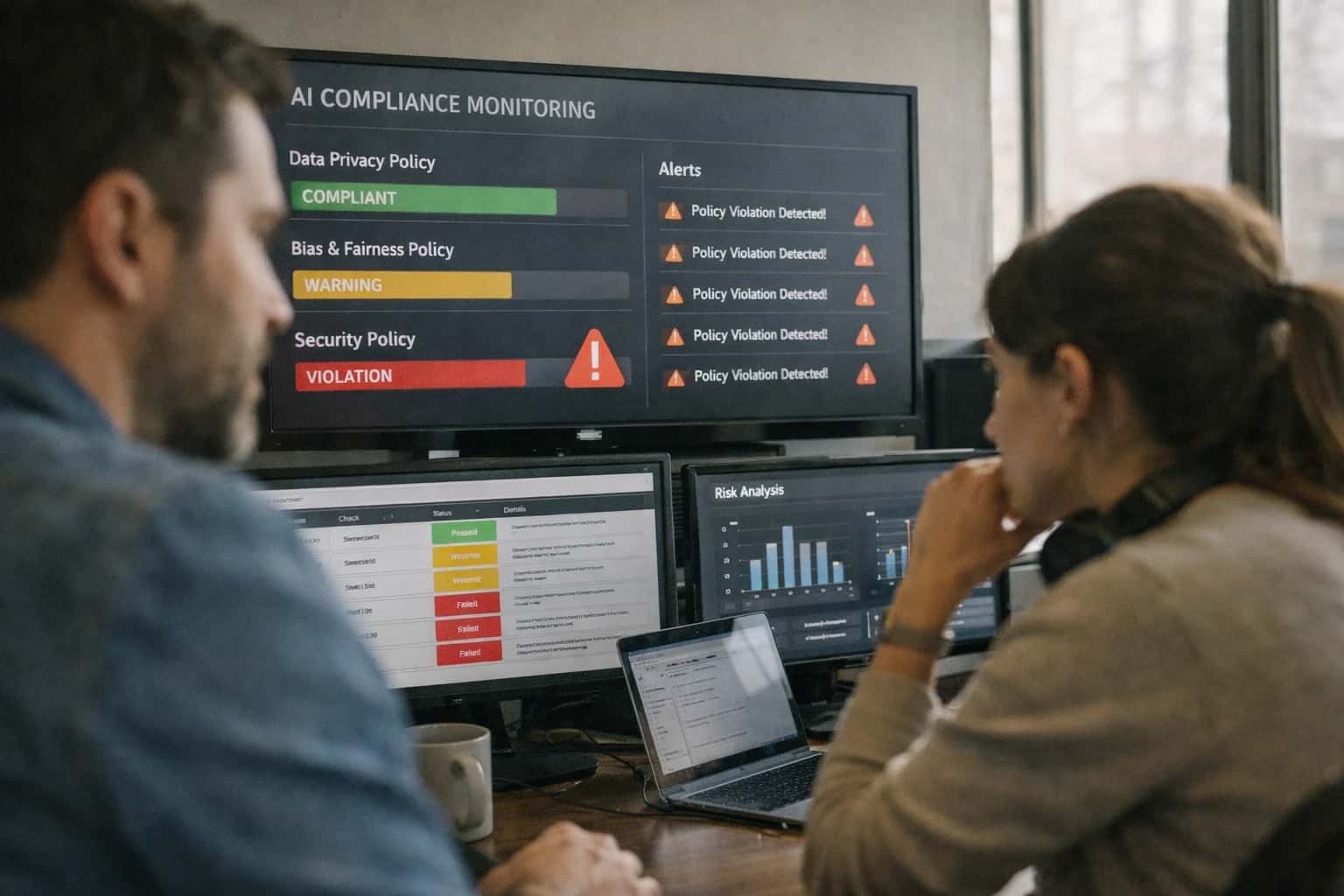
AI for billing compliance connects at three key surfaces within platforms like DrChrono, Tebra, AdvancedMD, and CareCloud: the claim submission queue, the payment posting/ERA feed, and the audit and reporting module. The integration acts as a pre-submission scrubber and a post-payment monitor. For each claim, an AI agent can cross-reference the billed CPT/ICD-10 codes against the patient's chart summary (pulled via FHIR or platform API), check for known payer-specific bundling rules, and flag potential modifier misuse or insufficient documentation risks. This creates a parallel compliance review layer that doesn't disrupt existing billing staff workflows but provides a prioritized list of claims for human review.

Integration
AI for Billing Compliance and Auditing
A technical guide for integrating AI-powered audit trails, anomaly detection, and compliance monitoring into medical billing platforms to proactively identify coding errors, unbundling, and upcoding risks for compliance officers and revenue integrity teams.
ARCHITECTURE FOR COMPLIANCE OFFICERS
Where AI Fits into Billing Compliance Workflows
Integrating AI into medical billing platforms to proactively identify coding errors, unbundling, and upcoding risks before they become audit findings.
The implementation detail lies in the data flow and governance. A typical pattern involves a secure, HIPAA-compliant microservice that subscribes to claim creation events via the platform's webhooks or polls a dedicated queue. The service enriches the claim data with clinical context from the connected EHR, runs it through a rules engine augmented with an LLM for nuanced guideline interpretation, and posts results back as a custom object or audit log entry within the platform. High-risk flags can automatically route to a 'Compliance Review' work queue in the RCM platform, complete with suggested corrective actions and links to source documentation. This gives compliance officers a system-of-record for all AI-assisted findings and their resolution, creating a defensible audit trail.
Rollout requires a phased, workflow-specific approach. Start with a single, high-volume risk area like E/M leveling or procedure unbundling for a specific payer. Integrate the AI review into the existing claim edit process, ensuring billers and coders see the flags as helpful guidance, not disruptive alerts. Governance is critical: the AI's recommendations must be logged, and its accuracy must be continuously measured against the decisions of your senior coding staff. This feedback loop is used to refine prompts and rules. The goal isn't full automation, but augmentation—reducing the manual chart-to-claim review from hours to minutes for your highest-risk transactions, allowing your compliance team to focus on complex cases and trend analysis.
For a deeper technical dive into building HIPAA-compliant AI services that integrate with these platforms, see our guide on HIPAA-Compliant AI for Medical Billing. To understand how AI can specifically power pre-submission review, review our blueprint for Automated Claim Review with AI.
AI AUDIT AND COMPLIANCE WORKFLOWS
Integration Surfaces in Leading Billing Platforms
Pre-Submission AI Audit Layer
Integrate AI directly into the claim submission queue of platforms like DrChrono, AdvancedMD, or Tebra. This surface acts as a final, automated compliance gatekeeper before claims are sent to payers.
Key Integration Points:
- Claim Validation APIs: Intercept claim JSON/HL7 payloads to apply real-time AI review.
- Scrubber Results Enrichment: Augment existing platform scrubber flags with LLM-powered narrative explanations of potential unbundling, modifier misuse, or medical necessity gaps.
- Workflow Triggers: Based on AI risk scoring, automatically route high-risk claims to a human auditor queue or hold them for review, using the platform's native task/alert system.
Example Workflow:
- A claim is built in the billing platform.
- The platform's native scrubber runs.
- An AI service is called via webhook with the claim data and scrubber results.
- AI analyzes coding patterns against historical denial data and payer-specific rules.
- A risk score and actionable findings are posted back to a custom object or note field on the claim record.
- A high-risk score automatically creates a task for the compliance officer in the platform.
PROACTIVE RISK MANAGEMENT
High-Value AI Compliance Use Cases
Integrate AI directly into your medical billing platform to automate audit trails, detect anomalies, and monitor compliance in real-time. These use cases help compliance officers and revenue integrity teams proactively identify coding errors, unbundling, or upcoding risks before they trigger audits or denials.
01
Automated Pre-Submission Coding Audit
Deploy AI agents that scan every claim before submission against payer-specific rules, NCCI edits, and local coverage determinations (LCDs). Flags potential unbundling, incorrect modifiers, or mismatched ICD-10-CPT pairs for human review within the platform's work queue. Integrates with the charge capture and claim scrubber modules.
Batch -> Real-time
Review cadence
02
Anomaly Detection for Billing Patterns
Connect AI models to the platform's data warehouse to continuously analyze provider- and practice-level billing patterns. Detects statistical outliers in coding frequency, average charges, or modifier use that may indicate upcoding or downcoding risks. Alerts are routed to compliance dashboards and linked directly to the relevant patient records and claims.
Same day
Risk identification
03
AI-Powered Audit Trail & Documentation
Implement an AI layer that automatically generates a defensible audit trail for high-risk or high-dollar claims. For each flagged item, the system documents the clinical note excerpts, coding guidelines referenced, and the rationale for the AI's assessment. This evidence package is stored within the platform's document management system, ready for internal or external audit requests.
1 sprint
Audit prep time
04
Proactive Risk Adjustment (HCC) Compliance
Integrate NLP models with the EHR to retrospectively review charts for missed Hierarchical Condition Category (HCC) opportunities and ensure documentation supports the coded diagnoses. For value-based care contracts, this prevents both under-coding risks (leaving money on the table) and over-coding risks (triggering RADV audits). Findings are surfaced in the provider's dashboard within the RCM platform.
Hours -> Minutes
Chart review
05
Real-Time Payer Policy Monitoring
Build an AI agent that ingests and interprets updates from payer policy portals and CMS transmittals. It maps new rules to your platform's code sets and fee schedules, then proactively identifies existing claims or future encounters that may be non-compliant. Alerts are pushed to coding managers and can trigger automated holds on affected claims in the billing workflow.
Batch -> Real-time
Policy updates
06
Compliance Workflow Orchestration
Create an AI orchestrator that routes and prioritizes compliance tasks across the RCM platform. When a potential issue is detected, it automatically assigns it to the appropriate team (coding, compliance, provider education), logs all actions in the audit module, and escalates based on SLA. This turns scattered alerts into managed, closed-loop workflows for the compliance officer.
PROACTIVE AUDIT AUTOMATION
Example AI-Powered Compliance Workflows
These workflows illustrate how AI agents can be integrated into medical billing platforms to automate compliance monitoring, flag potential issues before submission, and create defensible audit trails. Each workflow connects to specific platform APIs, data objects, and user roles.
Trigger: A claim is marked as ready-to-bill in the platform (e.g., DrChrono's Claim object status change).
Context/Data Pulled: The AI agent retrieves:
- The complete claim line items (CPT, ICD-10, modifiers, units).
- The patient's demographic and insurance details.
- Historical claim data for the same provider, payer, and patient.
- The practice's fee schedule and active payer contracts.
- Recent NCCI edits and LCD/NCD rules from a managed knowledge base.
Model/Agent Action: The agent runs a multi-step analysis:
- Coding Validation: Checks for unbundling (e.g., CPT 11720 + 11721), mutually exclusive codes, and inappropriate modifier use.
- Medical Necessity: Cross-references ICD-10 to CPT codes against payer-specific policies.
- Anomaly Scoring: Compares the claim's composition (e.g., total RVUs, number of units) to the provider's historical pattern. Flags statistical outliers.
- Contract Compliance: Simulates reimbursement based on the payer contract to identify potential under-coding or over-coding.
System Update/Next Step: The agent posts findings back to the claim record as structured audit notes. It can:
- Set a
compliance_holdflag and assign the claim to aReview Queuefor a certified coder. - For low-risk anomalies, add an informational comment and allow submission to proceed.
- Log all validations, data sources, and decision logic to a dedicated
Audit Trailobject for future reference.
Human Review Point: Mandatory for any claim scoring above a configurable risk threshold (e.g., potential upcoding, unbundling). The coder reviews the agent's reasoning in-platform before releasing the hold.
SECURE, AUDITABLE, AND CONTROLLED
Implementation Architecture: Data Flow and Guardrails
A production-ready architecture for embedding AI-powered compliance monitoring directly into your medical billing platform's workflow.
The integration connects at three key surfaces within platforms like DrChrono, Tebra, or AdvancedMD: the claim submission queue, the payment posting/ERA feed, and the audit log database. An AI service, deployed in your VPC or a compliant cloud, acts as a middleware layer. It subscribes to real-time claim events via webhooks or polls batch files via SFTP. For each claim, it extracts the relevant data payload—CPT/ICD codes, modifiers, patient demographics, and payer details—and runs it through a series of focused models: one for unbundling detection, another for modifier misuse, and a third for payer-specific policy checks against a maintained rules engine. High-confidence anomalies are flagged and written back to a dedicated AI_Review_Queue object in the billing platform via its REST API, triggering a workflow for your compliance officer.
To ensure safety and accountability, every AI action is governed by a human-in-the-loop approval step before any claim is held or modified. The system generates an explainable audit trail, logging the original claim data, the AI's detected risk (e.g., 'Potential upcoding: 99214 vs 99213 based on documented time'), the confidence score, and the final human disposition. This trail is stored in a separate, immutable audit database linked to the platform's record ID. For rollout, we recommend a phased pilot: start with a single specialty or payer, run the AI in 'monitor-only' mode to benchmark its findings against your manual audits, and gradually increase its scope to auto-route only high-confidence, low-dollar exceptions.
This architecture is designed for controlled impact. It does not autonomously change codes or halt claims. Instead, it reduces the manual review burden by pre-screening 100% of claims and surfacing the 5-15% that warrant a second look, turning a reactive, sample-based audit process into a proactive, continuous one. The result is earlier detection of coding drift, consistent application of complex payer rules, and a defensible documentation trail for external audits—all operating within the guardrails of your existing billing platform's security and user permissions.
IMPLEMENTATION PATTERNS
Code and Payload Examples
Analyzing Platform Audit Logs for Anomaly Detection
Integrate AI to continuously analyze audit logs from your billing platform (e.g., DrChrono, AdvancedMD) to detect patterns of non-compliance, such as unusual coding velocity, after-hours access, or bulk record modifications by a single user. The AI model flags high-risk events for human review.
A typical implementation involves a scheduled job that queries the platform's audit API, transforms the data, and sends it to an AI service for scoring. Results are written back to a dedicated compliance case object.
python# Example: Fetch and prepare audit logs for AI analysis import requests import pandas as pd # Fetch recent audit logs from platform API def fetch_audit_logs(api_key, base_url, hours=24): headers = {'Authorization': f'Bearer {api_key}'} params = {'since': f'-{hours}h', 'limit': 1000} response = requests.get(f'{base_url}/api/audit_logs', headers=headers, params=params) return response.json()['data'] # Structure log data for the AI model audit_logs = fetch_audit_logs(API_KEY, PLATFORM_URL) df = pd.DataFrame(audit_logs) features = df[['user_id', 'action', 'entity_type', 'timestamp', 'ip_address']].copy() features['hour_of_day'] = pd.to_datetime(features['timestamp']).dt.hour # Send to AI scoring endpoint payload = {'audit_events': features.to_dict('records')} # ai_response = requests.post(AI_SCORING_URL, json=payload)
Results are routed to a compliance dashboard or trigger a workflow in your platform's case management module.
AI FOR BILLING COMPLIANCE AND AUDITING
Realistic Operational Impact and Time Savings
This table illustrates the tangible operational shifts when integrating AI-driven anomaly detection and compliance monitoring into platforms like DrChrono, Tebra, AdvancedMD, and CareCloud. It focuses on realistic improvements for compliance officers and revenue integrity teams.
| Audit Workflow Stage | Traditional Manual Process | AI-Assisted Process | Impact & Implementation Notes |
|---|---|---|---|
Coding Anomaly Detection | Monthly sample audits by staff | Continuous, automated monitoring of 100% of claims | Proactive flagging of unbundling/upcoding. Reduces risk exposure from weeks to real-time. |
Claim Pre-Submission Review | Manual spot-check of high-dollar claims | AI-powered pre-submission scrub for all claims | Increases clean claim rate. Shifts focus from random checks to targeted, high-risk review. |
Audit Trail Generation | Manual log compilation for compliance reports | Automated, timestamped audit logs for all AI actions | Ensures defensibility. Cuts report preparation from days to hours for audits. |
Exception Investigation | Hours spent cross-referencing codes, notes, and payer rules | AI surfaces relevant guidelines and similar historical cases | Reduces investigation time per case by 60-70%. Analyst makes final determination. |
Compliance Report Creation | Manual data pull, spreadsheet analysis, narrative writing | AI generates draft reports with anomalies, trends, and supporting data | Turns a multi-day monthly task into a review-and-edit session. Ensures consistency. |
Policy Update Integration | Manual dissemination and training on new payer rules | AI models retrained and rules updated in staging, then deployed | Reduces lag between policy change and operational enforcement. Mitigates compliance gaps. |
Audit Workload Prioritization | First-In-First-Out or based on dollar amount | Risk-scored queue based on anomaly severity, provider history, and payer | Ensures highest-risk issues are addressed first. Optimizes limited compliance staff time. |
AUDITABLE, CONTROLLED, AND ITERATIVE DEPLOYMENT
Governance, Security, and Phased Rollout
A production AI integration for compliance and auditing must be built with governance-first principles, secure data handling, and a phased rollout to manage risk and prove value.
Architecture for Audit Trails and Control: Every AI action—from an anomaly detection alert on a batch of claims to a suggested coding correction—must generate an immutable audit log within the billing platform (e.g., as a custom object in AdvancedMD or an activity in CareCloud). This log records the input data (de-identified or tokenized), the AI model's reasoning, the suggested output, and the human reviewer's final decision (accept, modify, reject). Integration is via platform APIs to create these records, ensuring a complete chain of custody for compliance officers and external auditors. Access to AI tools is gated by the platform's existing RBAC, so only authorized coders, billers, or compliance managers can trigger reviews or override suggestions.
Phased Rollout to De-Risk and Validate: Start with a pilot on a single, high-volume, low-risk workflow—such as automated CPT-II code validation for preventive services in DrChrono—where errors are less likely to cause denials. In this "human-in-the-loop" phase, the AI acts as a copilot, flagging potential issues for review without making autonomous changes. Monitor key metrics: false positive/negative rates, reviewer adoption, and time saved. Phase two expands to more complex surfaces like modifier validation or unbundling detection within Tebra, gradually increasing AI autonomy for repetitive, rule-based tasks while keeping nuanced medical necessity reviews under human control.
Security and HIPAA Alignment: PHI never leaves your controlled environment unless using a fully on-premises or VPC-hosted LLM. For cloud-based models (e.g., OpenAI, Anthropic), implement a zero-data retention agreement and use a privacy layer that de-identifies data before processing—stripping patient names, MRNs, and exact dates—and re-identifies results securely within your network. All data flows are encrypted in transit and at rest, and the integration service account permissions follow the principle of least privilege, scoped only to the necessary API endpoints and data objects. A formal BAA with Inference Systems and ongoing penetration testing are non-negotiable for production deployment.
Ongoing Governance and Model Oversight: Establish a quarterly review cadence where compliance officers, billing managers, and IT evaluate AI performance against a hold-out dataset of manually audited claims. Track drift in model accuracy and update prompts or fine-tune models as payer rules or coding guidelines change. This governance loop ensures the AI remains a compliant asset, not a liability. For broader context on building HIPAA-secure architectures, see our guide on HIPAA-Compliant AI for Medical Billing.
Enabling Efficiency, Speed & Accuracy
Intelligent Analysis, Decision & Execution
We build AI systems for teams that need search across company data, workflow automation across tools, or AI features inside products and internal software.
Talk to Us
Search across company data
Give teams answers from docs, tickets, runbooks, and product data with sources and permissions.
Useful when people spend too long searching or get different answers from different systems.
Enterprise searchRAGPermissions
Read more
Automate internal workflows
Use AI to route work, draft outputs, trigger actions, and keep approvals and logs in place.
Useful when repetitive work moves across multiple tools and teams.
AI agentsWorkflow automationGovernance
Read more
Add AI to products and internal tools
Build assistants, guided actions, or decision support into the software your team or customers already use.
Useful when AI needs to be part of the product, not a separate tool.
AI integrationDecision supportModel routing
Read moreIMPLEMENTATION AND GOVERNANCE
Frequently Asked Questions
Common technical and operational questions for integrating AI-driven compliance and audit capabilities into platforms like DrChrono, Tebra, AdvancedMD, and CareCloud.
The safest approach is a read-first, write-via-workflow pattern using the platform's APIs.
- Trigger & Data Pull: The AI system polls or receives webhooks for new or updated records (e.g., claims, payments, adjustments). It uses the platform's REST API (like DrChrono's
/api/claimsor Tebra's Billing API) to pull the relevant data, including CPT/ICD codes, amounts, dates, and patient/provider context. - Secure Processing: Data is sent to a secure, HIPAA-compliant AI service (e.g., hosted in your VPC or a BAA-covered cloud). The AI analyzes the data against compliance rules, historical patterns, and payer policies.
- Action & Update: Findings (e.g., "Potential unbundling of CPT 93000 and 93010") are not written directly back. Instead, they create a review task in a dedicated audit queue within the platform or a connected system. This task contains the finding, confidence score, and evidence.
- Human Review & Resolution: A compliance officer reviews the task. They can approve the finding, which then triggers a platform-native workflow (like a claim hold or a chart correction request) via API, maintaining a full audit trail.
This pattern minimizes risk, keeps humans in the loop for critical decisions, and leverages existing platform workflows for remediation.

About the author
Prasad Kumkar
CEO & MD, Inference Systems
Prasad Kumkar is the CEO & MD of Inference Systems and writes about AI systems architecture, LLM infrastructure, model serving, evaluation, and production deployment. Over 5+ years, he has worked across computer vision models, L5 autonomous vehicle systems, and LLM research, with a focus on taking complex AI ideas into real-world engineering systems.
His work and writing cover AI systems, large language models, AI agents, multimodal systems, autonomous systems, inference optimization, RAG, evaluation, and production AI engineering.
LinkedIn
Limited slotsGet a Free AI Consultation
Partnered with leading AI, data, and software stack.





How We Work
Custom AI workflows for your Business
One-fit-all AI don't work for modern businesses. At Inferensys, we aim to understand your business & custom requirements; which we use to define most efficient agentic workflows, the data, and the tools for your business.
01
Review the use case
We understand the task, the users, and where AI can actually help.
Read more02
Pick the right approach
We define what needs search, automation, or product integration.
Read more03
Build the first useful version
We implement the part that proves the value first.
Read more04
Improve from there
We add the checks and visibility needed to keep it useful.
Read moreThe first call is a practical review of your use case and the right next step.
Talk to Us