AI coding assistance integrates at three key surfaces in your billing platform: the charge capture/superbill interface, the coding review queue, and the claim scrubber/validation engine. For a coder in DrChrono, this means the AI can suggest CPT, ICD-10, and modifiers as they review an encounter, pulling context from the clinical note text, patient history, and payer-specific rules. The integration is typically a secure API call from the platform to an inference service, passing de-identified note excerpts and encounter data, and returning structured code suggestions with confidence scores for human review.

Integration
AI Coding Assistance for Medical Billing Platforms
A technical guide for integrating NLP and LLMs to assist with CPT, ICD-10, and modifier selection within platforms like DrChrono and AdvancedMD, detailing integration points with superbill and charge capture workflows.
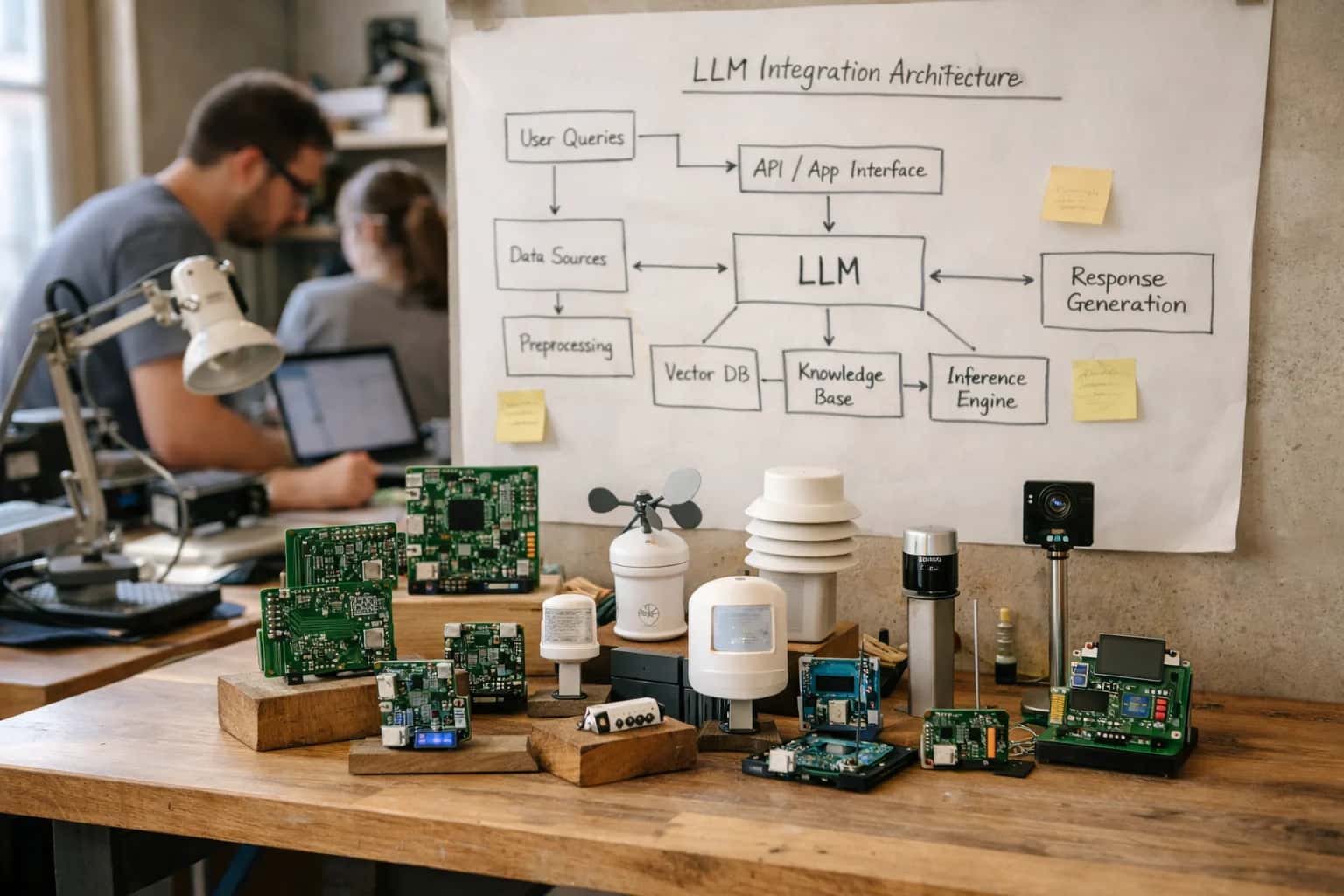
ARCHITECTURE BLUEPRINT
Where AI Fits into Medical Coding Workflows
A practical guide to embedding AI coding assistance directly into platforms like DrChrono, AdvancedMD, and Tebra, focusing on the data flows, user surfaces, and governance needed for production.
The high-value workflow is reducing manual lookup and minimizing down-coding or under-coding. For example, an AI agent can analyze a provider's free-text procedure description from an AdvancedMD encounter, cross-reference it against the practice's fee schedule and recent NCCI edits, and propose the optimal coded line items. This happens in seconds, allowing the coder to audit and approve rather than start from scratch. Implementation requires mapping to the platform's data model—typically the Encounter, Charge, and Diagnosis objects—and setting up a webhook or service bus to trigger the AI review upon encounter finalization or entry into the coding work queue.
Rollout should be phased, starting with a pilot specialty or coder group, using the AI in audit mode to log suggestions without auto-applying them. This builds trust and provides a accuracy baseline. Governance is critical: all suggestions must be logged with source data, user actions (accepted/rejected), and model version for audit trails. The system should allow for human-in-the-loop overrides and continuous feedback loops to retrain models on rejected codes. This approach turns the billing platform from a passive record-keeper into an active coding copilot, aiming to shift coder productivity from hours to minutes per chart without compromising compliance.
WHERE AI CONNECTS TO THE WORKFLOW
Integration Surfaces in Leading Billing Platforms
The Entry Point for AI-Assisted Coding
This is where clinical documentation meets billing. AI integration surfaces here focus on automating the translation of clinical notes into accurate CPT, ICD-10, and HCPCS codes before they hit the claim.
Key Integration Points:
- Charge Entry Modules: AI can be triggered on note save or visit close to analyze the provider's documentation and suggest a preliminary code set, reducing manual lookups.
- Mobile/Tablet Capture: For platforms with mobile charge capture, AI can run lightweight models to flag missing modifiers or suggest higher-specificity codes in real-time.
- API Hooks: Platforms like DrChrono and AdvancedMD expose APIs to push and pull charge data. An AI service can listen for new
EncounterorSuperbillobjects, process the attached notes, and return a structured coding suggestion payload.
Example Workflow:
- Provider completes a visit note in the EHR.
- A webhook sends the note text and visit context to an AI coding service.
- The service returns suggested codes with confidence scores.
- The coder/biller reviews and accepts suggestions within the platform's UI.
- Accepted codes populate the superbill automatically.
This reduces charge lag and improves coding accuracy directly at the source.
FOR MEDICAL BILLING PLATFORMS
High-Value Use Cases for AI Coding Assistance
Integrating AI into platforms like DrChrono, Tebra, AdvancedMD, and CareCloud transforms coding from a manual, error-prone task into a guided, efficient workflow. These use cases target specific integration points within superbill creation, charge capture, and claim validation to improve accuracy and accelerate revenue.
01
Automated CPT/ICD-10 Code Suggestion
AI analyzes clinical notes from the EHR module to suggest accurate CPT and ICD-10 codes during superbill creation. It integrates via the platform's API to read encounter notes, extracts procedures and diagnoses using NLP, and returns ranked code suggestions directly into the coder's workflow, reducing look-up time and minimizing unspecified codes.
Hours -> Minutes
Code lookup time
02
Real-Time Modifier Validation
An AI agent acts as a real-time compliance checker within the charge capture screen. As coders select codes, the agent cross-references payer-specific rules and NCCI edits via integrated logic, flagging invalid modifier combinations (e.g., 25/59) before claim submission. This reduces claim edits and denials for modifier misuse.
Pre-submission
Error detection
03
Clinical Documentation Improvement (CDI) Support
AI reviews provider documentation before coding is finalized to identify insufficient specificity for billing. Integrated with the platform's note review queue, it highlights vague terms (e.g., "chest pain") and suggests query templates for providers to clarify, supporting accurate HCC and risk-adjustment coding directly within the workflow.
04
Batch Charge Lag Reduction
For practices with batch charge entry, AI automates the extraction of billable events from unsigned charts. It scans the EHR's scheduling and documentation modules, identifies encounters ready for coding, pre-populates a charge batch with suggested codes, and creates a task for the coder in the platform's work queue, cutting charge lag from days to hours.
Days -> Hours
Charge lag
05
Specialty-Specific Coding Guidance
Deploys specialty-tuned AI models (e.g., orthopedics, cardiology) that understand complex procedural bundling. Integrated into the platform's specialty-specific charge forms, it provides context-aware guidance on code selection for surgeries, injections, or global periods, reducing denials for multi-specialty groups using platforms like Tebra.
06
Audit Trail & Coder Education
AI logs every interaction—code suggestions, overrides, and final submissions—back to the platform's audit module. It generates weekly reports highlighting common coder deviations, creating targeted education materials. This turns the integration into a continuous feedback loop, improving individual coder performance and overall team accuracy over time.
INTEGRATION PATTERNS FOR DRCHRONO, TEKTONIC, ADVANCEDMD, AND CARECLOUD
Example AI-Assisted Coding Workflows
These workflows illustrate how AI agents can be embedded into medical billing platforms to assist coders and providers, reducing manual review and accelerating claim creation. Each pattern connects to specific platform APIs, data objects, and user surfaces.
Trigger: A provider completes and signs an encounter note in the EHR module (e.g., DrChrono's encounters endpoint).
Context/Data Pulled: The AI service is triggered via a webhook. It fetches:
- The full clinical note text from the
clinical_notefield. - Patient demographics (age, sex) from the
patientsAPI. - Previous encounter history for context.
Model/Agent Action: A specialized NLP model (e.g., fine-tuned clinical BERT) extracts potential procedures and diagnoses. An LLM agent then:
- Maps findings to probable CPT and ICD-10 codes.
- Cross-references against the patient's insurance plan (from the
insurancesobject) for coverage rules. - Checks for bundling/unbundling issues based on NCCI edits.
- Returns a ranked list of suggested codes with confidence scores and rationale.
System Update/Next Step: The suggestions are posted back to the platform's superbill or charge_capture module as draft line items, flagged for coder review.
Human Review Point: The coder reviews the suggestions in the platform's coding interface, accepts, modifies, or rejects them before finalizing the claim. All AI suggestions and human actions are logged to an audit trail.
FROM CLINICAL NOTE TO CLEAN CLAIM
Implementation Architecture and Data Flow
A production-ready integration embeds AI directly into the coder's workflow, augmenting—not replacing—the existing platform.
The integration connects at two primary surfaces within platforms like DrChrono, AdvancedMD, or Tebra: the superbill/charge capture module and the coding/claim editing interface. An AI agent, deployed as a secure cloud service, listens via webhook for new clinical notes or encounter closures. It processes the unstructured text using a specialized NLP model (or a prompted LLM) trained on CPT, ICD-10, and HCPCS code sets, along with payer-specific policies and NCCI edits. The agent returns a structured JSON payload containing suggested codes, modifiers, and supporting documentation references, which is injected back into the platform's UI as a sidebar recommendation or into a dedicated review queue for the coder.
A critical nuance is the human-in-the-loop governance layer. The system does not auto-apply codes. Instead, it presents ranked suggestions with confidence scores and rationale (e.g., "Suggested CPT 99214 based on documented history, exam complexity, and MDM"). The coder accepts, edits, or rejects. All interactions are logged to an audit trail with user IDs, timestamps, and the final code set used, creating a feedback loop to continuously improve model accuracy and ensuring compliance. This pattern reduces manual lookup time and coding lag while keeping the certified coder firmly in control of the final claim.
Rollout is typically phased, starting with a pilot specialty or provider group. The AI model is first tuned on historical, de-identified encounter data from the platform's data warehouse to learn the practice's documentation patterns. Integration is via the platform's public REST API, requiring scoped permissions for notes and charge objects. For practices using computer-assisted coding (CAC) software, the AI layer can be integrated upstream to pre-process notes before the CAC engine runs, or downstream to validate CAC output, creating a multi-stage quality gate. The result is a measurable shift from reactive claim denials to proactive coding accuracy, turning hours of manual review into minutes of assisted verification.
INTEGRATION PATTERNS
Code and Payload Examples
Real-Time Code Suggestion via API
Integrate an AI service directly into the charge capture or superbill workflow within platforms like DrChrono or AdvancedMD. When a provider documents a visit, the platform sends a structured summary to an inference endpoint, which returns ranked code suggestions with confidence scores.
Example API Payload & Response:
json// POST /api/v1/coding/suggest { "encounter_id": "ENC-78910", "clinical_summary": "55yo male, established patient, 20min office visit for follow-up on hypertension. BP 142/88. Reviewed meds (lisinopril). No new complaints. Plan: Continue current dose, return in 3 months.", "provider_npi": "1234567890", "practice_tax_id": "12-3456789" } // Response { "suggestions": [ { "code": "99213", "code_type": "CPT", "description": "Office visit, established patient, 20-29 minutes", "confidence": 0.92, "rationale": "Matches time and complexity for established patient follow-up." }, { "code": "I10", "code_type": "ICD-10-CM", "description": "Essential (primary) hypertension", "confidence": 0.98 } ], "potential_modifiers": ["-25"], "audit_id": "aud_xyz123" }
The platform UI can present this as a click-to-apply suggestion, logging the user's acceptance or override back to the audit trail.
AI-ASSISTED CODING WORKFLOWS
Realistic Time Savings and Operational Impact
This table illustrates the practical impact of integrating NLP and LLM-based coding assistance into platforms like DrChrono, AdvancedMD, and Tebra. It compares manual and AI-assisted workflows for key revenue cycle tasks, showing realistic efficiency gains and operational improvements for coders and billers.
| Workflow | Manual Process | AI-Assisted Process | Impact & Notes |
|---|---|---|---|
CPT/ICD-10 Code Selection | Coder manually reviews chart notes, cross-references codebooks, and selects codes. Average 5-7 minutes per encounter. | NLP extracts key terms from notes, LLM suggests primary and secondary codes with confidence scores. Coder reviews and confirms. Average 1-2 minutes per encounter. | Reduces coding time by 60-80%. Maintains coder-in-the-loop for validation, crucial for compliance and accuracy. |
Modifier Application | Coder analyzes documentation for supporting details (e.g., -25, -59) and manually applies modifiers based on payer-specific rules. | AI flags potential modifier scenarios based on documentation and payer rules, suggests appropriate modifiers with rationale. Coder approves. | Reduces modifier-related errors and subsequent denials. Cuts review time for complex cases by 50%. |
Superbill/Charge Capture Completion | Provider or coder manually transcribes diagnoses and procedures from notes onto the superbill, often post-visit, creating lag. | AI pre-populates the superbill draft directly from the visit note in real-time. Provider or coder reviews and signs off at point-of-care. | Reduces charge lag from days to hours. Improves accuracy of captured charges, directly impacting days in A/R. |
Coding Discrepancy Review | Billing staff manually compares codes on claim against clinical notes during pre-submission audits, a sample-based process. | AI automatically compares all claims against associated documentation pre-submission, flagging mismatches for review. | Enables 100% claim review vs. sampling. Catches discrepancies before submission, improving clean claim rates. |
New Coder Onboarding & Guidance | Senior coders provide manual oversight and answer frequent questions on specialty-specific coding rules. | AI acts as a real-time copilot, providing rule explanations, coding guidelines, and examples within the platform interface. | Reduces ramp-up time by 30-40%. Frees senior staff for complex cases and quality assurance. |
Denial Analysis for Coding Errors | Staff manually categorizes denials, researches coding errors, and updates internal guides to prevent recurrence. | AI automatically categorizes coding denials, identifies root causes, and suggests updates to the coding assistance ruleset. | Accelerates root cause analysis from hours to minutes. Creates a feedback loop for continuous improvement of the AI system. |
Annual Code Update Integration | Team manually reviews annual CPT/ICD-10 updates, maps changes, and updates charge master and templates over weeks. | AI ingests update publications, suggests mappings to existing codes and workflows, and highlights impacted areas for team review. | Compresses update workflow from 4-6 weeks to 1-2 weeks. Reduces risk of non-compliance with new codes. |
CONTROLLED DEPLOYMENT FOR CLINICAL AND FINANCIAL WORKFLOWS
Governance, Compliance, and Phased Rollout
Implementing AI for medical coding requires a controlled, audit-ready approach that respects clinical data integrity and financial accuracy.
Start with a read-only, human-in-the-loop pilot in a non-production environment. Connect the AI agent to a sandbox instance of your platform (e.g., DrChrono, AdvancedMD) and limit its access to historical, de-identified superbill and chart data. The agent should function as a coding assistant, suggesting CPT, ICD-10, and modifier codes within a designated module or custom interface, but all final submissions to the charge capture or claim engine must be reviewed and approved by a certified coder. This phase validates model accuracy on your specific specialty mix and establishes a baseline for key metrics like coding time reduction and suggestion acceptance rate.
Governance is built on audit trails and RBAC. Every AI suggestion, along with the source clinical note snippet and the coder's final action (accept, modify, reject), must be logged back to a dedicated audit object within the billing platform or an external system. Access to the AI tool should be controlled via the platform's existing role-based permissions (e.g., only users with 'Coder' or 'Biller' roles). For compliance, ensure all data flows—from the EHR to the AI service and back—are covered under a BAA, with PHI encrypted in transit and at rest. Implement strict prompt management to prevent data leakage and ensure suggestions are grounded solely in the provided chart documentation.
A phased rollout mitigates risk and drives adoption. Phase 1 targets low-risk, high-volume scenarios like established patient office visits (CPT 99213-99215) for a single provider or specialty. Phase 2 expands to more complex evaluation and management (E/M) coding and procedure codes, incorporating feedback loops to retrain or fine-tune models. Phase 3 integrates the validated AI directly into the live charge capture workflow, triggering coding suggestions automatically as notes are signed. Throughout, maintain a parallel manual audit process and establish clear escalation paths to your compliance officer. This structured approach ensures the AI augments your revenue cycle team's expertise without introducing unbudgeted compliance or financial risk.
Enabling Efficiency, Speed & Accuracy
Intelligent Analysis, Decision & Execution
We build AI systems for teams that need search across company data, workflow automation across tools, or AI features inside products and internal software.
Talk to Us
Search across company data
Give teams answers from docs, tickets, runbooks, and product data with sources and permissions.
Useful when people spend too long searching or get different answers from different systems.
Enterprise searchRAGPermissions
Read more
Automate internal workflows
Use AI to route work, draft outputs, trigger actions, and keep approvals and logs in place.
Useful when repetitive work moves across multiple tools and teams.
AI agentsWorkflow automationGovernance
Read more
Add AI to products and internal tools
Build assistants, guided actions, or decision support into the software your team or customers already use.
Useful when AI needs to be part of the product, not a separate tool.
AI integrationDecision supportModel routing
Read moreAI CODING ASSISTANCE IMPLEMENTATION
Frequently Asked Questions
Common technical and operational questions about integrating AI coding assistance into platforms like DrChrono, AdvancedMD, Tebra, and CareCloud.
The AI integration uses a secure, API-first architecture designed for PHI handling:
- Context Retrieval: When a coder opens a patient encounter in the billing platform, a secure API call is made to the AI service, passing only the encounter ID.
- Data Fetching: The AI service, operating under a Business Associate Agreement (BAA), uses the platform's own APIs (e.g., DrChrono's
/api/chart_notes) to fetch the specific clinical note and associated data. The AI never has direct database access. - In-Memory Processing: The note text is processed in memory by the NLP/LLM model to extract potential CPT, ICD-10, and modifier suggestions.
- Audit Trail: Every access is logged with user ID, timestamp, and encounter ID within the AI service's audit logs, which are available for compliance review.
- Response: Suggestions are returned via API to the platform's UI as a secure overlay or sidebar, never storing PHI in a long-term vector database unless explicitly configured for learning within a fully isolated, de-identified environment.

About the author
Prasad Kumkar
CEO & MD, Inference Systems
Prasad Kumkar is the CEO & MD of Inference Systems and writes about AI systems architecture, LLM infrastructure, model serving, evaluation, and production deployment. Over 5+ years, he has worked across computer vision models, L5 autonomous vehicle systems, and LLM research, with a focus on taking complex AI ideas into real-world engineering systems.
His work and writing cover AI systems, large language models, AI agents, multimodal systems, autonomous systems, inference optimization, RAG, evaluation, and production AI engineering.
LinkedIn
Limited slotsGet a Free AI Consultation
Partnered with leading AI, data, and software stack.





How We Work
Custom AI workflows for your Business
One-fit-all AI don't work for modern businesses. At Inferensys, we aim to understand your business & custom requirements; which we use to define most efficient agentic workflows, the data, and the tools for your business.
01
Review the use case
We understand the task, the users, and where AI can actually help.
Read more02
Pick the right approach
We define what needs search, automation, or product integration.
Read more03
Build the first useful version
We implement the part that proves the value first.
Read more04
Improve from there
We add the checks and visibility needed to keep it useful.
Read moreThe first call is a practical review of your use case and the right next step.
Talk to Us