Integrating AI into Selligent focuses on three core surfaces: the Campaign Orchestrator, the Real-Time Interaction Engine, and the Compliance & Governance Layer. For enterprise retail and financial services clients, this means injecting AI logic directly into Selligent's decision nodes within a Canvas to dynamically select the next-best-offer, using the Interaction Engine's API to serve personalized content variants in milliseconds, and leveraging the governance layer to ensure all AI-generated copy and offers adhere to regional regulations and brand guidelines before deployment.

Integration
AI Integration with Selligent
A technical blueprint for connecting AI to Selligent's enterprise marketing orchestration engine to automate real-time offer decisions, generate compliant content, and analyze customer journeys.
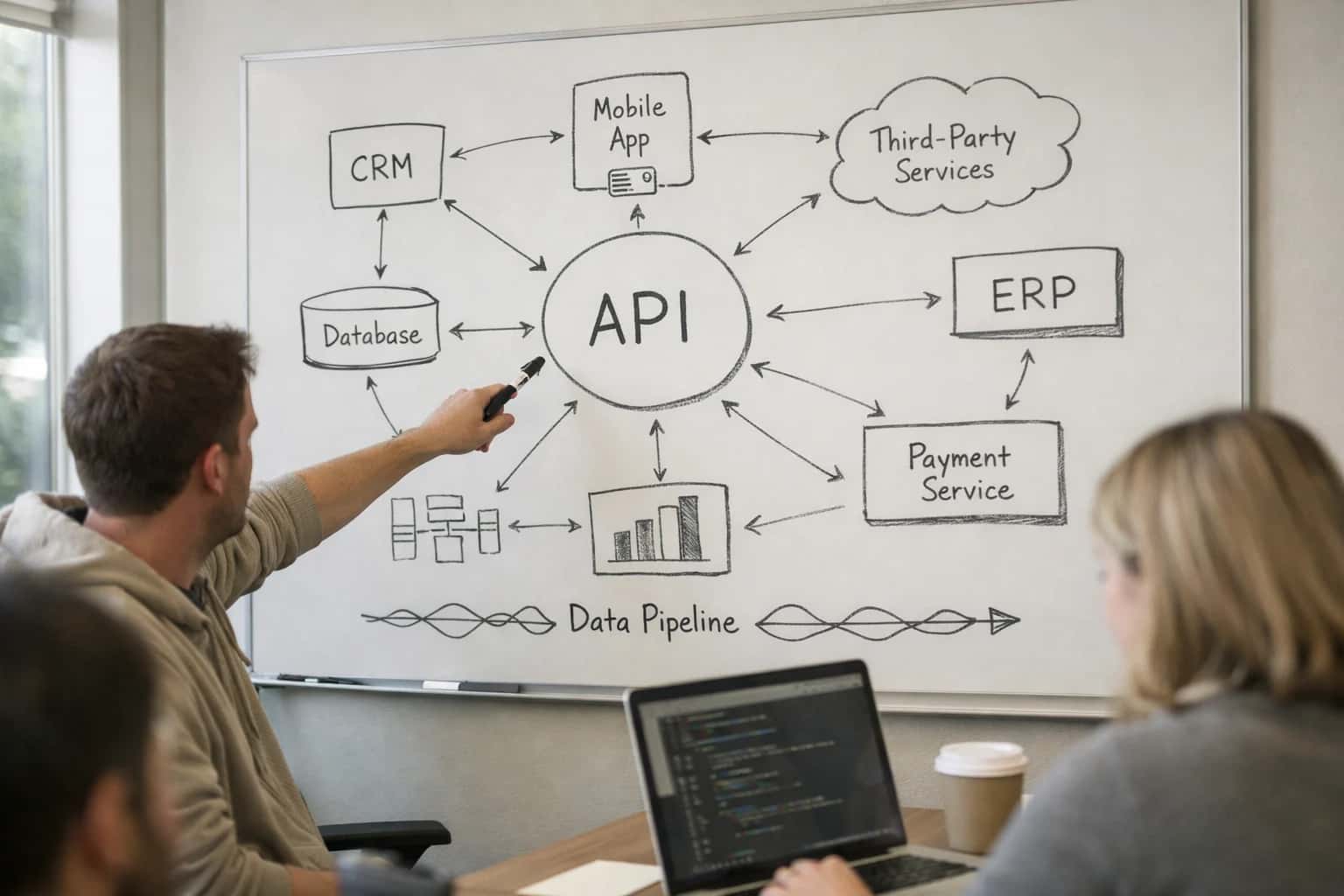
ARCHITECTURE & ROLLOUT
Where AI Fits into the Selligent Marketing Stack
A technical blueprint for integrating AI into Selligent's cross-channel orchestration engine to automate personalization, content, and compliance workflows.
Implementation typically involves a sidecar service that sits between Selligent's Contact Database and execution engines. This service uses Selligent's webhooks for behavioral events (e.g., cart abandonment, page view) to trigger AI models for predictive scoring (churn, LTV) or content generation. The scores are written back to custom contact properties, which then fuel segmentation and real-time decisions. For content, AI drafts email variants, push notifications, or web copy; these are routed through a human-in-the-loop approval queue configured within Selligent's workflow tools before being injected into live campaigns via the Content API.
Rollout should be phased, starting with a single high-impact channel like transactional email or post-purchase journey. Governance is critical: establish audit logs for all AI-generated content and decisions, and use Selligent's A/B testing framework to validate AI-driven personalization against control groups. This approach de-risks the integration while demonstrating clear ROI on reduced manual segmentation time and improved engagement rates, paving the way for broader AI automation across the marketing stack.
ENTERPRISE CROSS-CHANNEL ORCHESTRATION
Key Selligent Surfaces for AI Integration
Real-Time Decisioning & Offer Management
Selligent's Journey Orchestrator is the primary surface for AI-driven personalization. Integrate AI models to evaluate real-time customer signals—browsing behavior, transaction history, and engagement scores—to dynamically select the next-best-action or offer.
Key Integration Points:
- Decision Nodes: Replace static rule-based splits with API calls to an AI model that returns a personalized offer code, content variant, or channel preference.
- Audience Triggers: Use AI to score inbound events (e.g., cart abandonment, page view) for propensity (to buy, to churn) and trigger high-priority journeys.
- Wait Steps: Inject AI-powered hold periods, where the system polls for a model-recommended optimal send time before proceeding.
Example Workflow: A retail customer browses high-value items. An AI model, called via a Decision Node, analyzes their lifetime value and recent discount sensitivity to return a personalized promo code (e.g., "10% off" vs. "free shipping"), which is then passed to the Email or Web Channel action.
ENTERPRISE CROSS-CHANNEL ORCHESTRATION
High-Value AI Use Cases for Selligent
Connect AI directly to Selligent's real-time decisioning engine to automate content creation, personalize offers at scale, and optimize customer journeys for retail and financial services.
01
Real-Time Offer & Promotion Management
Use AI to analyze real-time customer behavior, cart contents, and inventory levels to generate and serve the next-best-offer via Selligent's Decisioning Engine. Dynamically assembles personalized promotions for email, SMS, and in-app messages, moving from batch campaign logic to real-time, context-aware offers.
Batch -> Real-time
Offer Logic
02
Compliance-Aware Content Generation
Automate the creation of on-brand, compliant marketing copy for regulated industries (e.g., finance, healthcare). AI drafts email subject lines, body content, and SMS copy, referencing approved compliance libraries and brand guidelines stored in Selligent's Content Studio, with human-in-the-loop review workflows.
Hours -> Minutes
Content Drafting
03
Predictive Journey Orchestration
Enhance Selligent Canvas journeys with predictive scoring. AI models analyze engagement patterns to forecast churn risk or upsell propensity, triggering automated branch logic to move customers into win-back or loyalty paths before they disengage, optimizing journey performance.
Proactive > Reactive
Journey Logic
04
Automated Audience Segmentation & Hygiene
Continuously analyze profile and event data in Selligent's Contact Database to suggest and maintain dynamic segments. AI identifies lookalike audiences, merges duplicate records, and tags inactive profiles for suppression, keeping lists and segments campaign-ready.
1 sprint
Segment Maintenance
05
Cross-Channel Performance Insight Summaries
Connect AI to Selligent's reporting APIs to generate daily or weekly executive summaries. Automatically analyzes performance across email, SMS, and push campaigns, highlighting top performers, anomalies, and actionable recommendations for marketing operations teams.
Same day
Insight Delivery
06
Dynamic Product Recommendation Feeds
For retail clients, integrate AI-powered recommendation models with Selligent's Product Catalog and real-time APIs. Generate personalized product carousels and content blocks for triggered emails (e.g., abandoned cart, browse abandonment) based on individual affinity, not just generic rules.
ENTERPRISE MARKETING AUTOMATION
Example AI-Augmented Workflows in Selligent
These workflows demonstrate how to connect AI agents and models directly into Selligent's cross-channel orchestration engine, automating high-value tasks in retail and financial services marketing.
This workflow uses real-time customer behavior and inventory data to dynamically select and serve the next-best-offer within a Selligent Canvas.
- Trigger: A customer clicks a product in an abandoned cart email, firing a webhook to Selligent.
- Context Pulled: The Selligent API retrieves the customer's profile, recent browse history, current cart contents, and local inventory levels for the clicked product.
- AI Agent Action: An AI agent analyzes the data. If inventory is low, it generates a personalized, compliant message suggesting a similar in-stock item. If inventory is high, it retrieves a pre-approved promotional offer (e.g., free shipping) from a connected content repository.
- System Update: The agent returns the selected offer ID and message variant. Selligent updates the journey path for this customer, injecting the personalized content into the next SMS or email send.
- Human Review Point: All generated message variants are logged for compliance review in regulated industries like finance. High-value offers (e.g., >$100 discount) can be routed for manager approval via a connected workflow platform like
/integrations/ai-agent-builder-and-workflow-platforms/before sending.
ENTERPRISE CROSS-CHANNEL ORCHESTRATION
Implementation Architecture: Wiring AI to Selligent
A technical blueprint for connecting AI agents to Selligent's real-time marketing engine for retail and financial services.
Integrating AI with Selligent focuses on three core surfaces: the Campaign Manager for real-time offer decisions, the Content Studio for compliance-aware asset generation, and the Event Streaming API for feeding behavioral data into predictive models. The goal is to inject intelligence into Selligent's orchestration engine without disrupting its core segmentation and delivery workflows. Key data objects include customer profiles, interaction histories, product catalogs, and suppression lists, which serve as the grounding context for AI-driven personalization and next-best-action logic.
A production implementation typically uses Selligent's webhook triggers and REST APIs to create a bidirectional flow. For example, when a customer triggers a journey step, a serverless function calls an AI agent to evaluate the context (profile, past offers, inventory) and returns a dynamic offer code or content variant back to Selligent for execution. This keeps the complex decision logic and model inference outside Selligent's runtime, while leveraging its robust channel delivery (email, SMS, push, web). For analytics, AI-generated predictions and content metadata are written back to Selligent's custom fields or a separate data lake, enabling closed-loop measurement of AI-driven lift versus control groups.
Governance and rollout require careful planning. Start with a single, high-value journey—such as cart abandonment or post-purchase cross-sell—where AI can select from a pre-approved set of offers or generate compliant email subject lines. Implement a human-in-the-loop review step for generated content in regulated industries (e.g., financial services) before it enters the Selligent send queue. Use Selligent's A/B testing framework to validate AI-powered branches against standard rules-based branches, measuring incremental conversion and revenue. This phased approach de-risks the integration and builds internal credibility for scaling AI to other orchestration surfaces.
SURFACES AND WORKFLOWS
Code and Payload Examples
Real-Time Segment Enrichment
Integrate AI directly with Selligent's Audience API to enrich segments with predictive scores before a campaign launch. A common pattern is to fetch a segment, run members through a scoring model (e.g., for churn risk or offer affinity), and write the scores back as custom attributes for use in journey logic.
Example Python payload for scoring a segment batch:
pythonimport requests # 1. Fetch segment members from Selligent segment_id = "audience_segment_123" url = f"https://api.selligent.com/v2/audiences/{segment_id}/members" headers = {"Authorization": "Bearer YOUR_API_KEY"} response = requests.get(url, headers=headers) members = response.json()['data'] # 2. Prepare data for AI model (e.g., last engagement, recency) member_features = [] for m in members: features = { 'member_id': m['id'], 'email': m['email'], 'last_open_days': m.get('metrics', {}).get('days_since_last_open', 90), 'total_orders': m.get('custom', {}).get('order_count', 0) } member_features.append(features) # 3. Call Inference Systems scoring endpoint scoring_payload = { "model": "retention_propensity_v1", "entities": member_features } scoring_response = requests.post( "https://api.inferencesystems.com/v1/score", json=scoring_payload, headers={"X-API-Key": "YOUR_INFERENCE_KEY"} ) scores = scoring_response.json() # 4. Write scores back to Selligent as custom attributes for score in scores['results']: update_url = f"https://api.selligent.com/v2/members/{score['member_id']}/attributes" update_data = {"custom": {"ai_churn_score": score['propensity']}} requests.patch(update_url, json=update_data, headers=headers)
This enables using {{contact.custom.ai_churn_score}} in Selligent's journey builder for conditional branching.
AI-ENHANCED CROSS-CHANNEL ORCHESTRATION
Realistic Operational Impact and Time Savings
How AI integration accelerates Selligent's core workflows for retail and financial services, focusing on real-time decisioning and content operations.
| Workflow / Metric | Before AI | After AI | Implementation Notes |
|---|---|---|---|
Real-time offer decisioning | Batch segmentation (next-day) | In-session scoring & delivery | Uses Selligent's real-time APIs; human defines guardrails |
Compliance-aware content generation | Manual review of all promotional copy | AI drafts with compliance flagging | Integrates with legal taxonomy; final human approval required |
Journey path analysis | Weekly report generation | Daily anomaly & opportunity alerts | AI analyzes Selligent journey analytics data; surfaces insights in-platform |
Audience segment refresh | Manual RFM rebuild every 2 weeks | Automated weekly refresh with predictive signals | AI enriches Selligent Data Model; marketer approves new segments |
Cross-channel message variant creation | 1-2 days for copy and design briefs | Hours for AI-generated variant options | Uses Selligent's content blocks; creative team selects from options |
Campaign performance forecasting | Historical comparison & gut feel | Model-driven forecast with scenario testing | AI uses Selligent campaign history; outputs feed into planning workflows |
Lead scoring for sales alerts | Static score based on form fills | Dynamic score with engagement decay | AI processes Selligent engagement data; syncs scores to CRM via native connector |
ENTERPRISE-READY IMPLEMENTATION
Governance, Security, and Phased Rollout
Integrating AI with Selligent requires a structured approach to data governance, secure execution, and controlled adoption.
For enterprise retail and financial services clients, AI integrations must respect Selligent's role as a governed orchestration engine. This means connecting AI models to specific surfaces like the Real-Time Decisioning API, Audience Builder, and Content Management modules via secure, audited API calls. All AI-generated content, such as personalized offers or email copy, should be logged within Selligent's activity streams and tagged with a source:ai metadata flag for compliance review. Data flows are designed to keep PII and transaction data within your cloud environment, using Selligent's webhook or batch export features to send anonymized or aggregated signals to inference endpoints, not raw customer databases.
A production rollout follows a phased, measurable path. Start with a single high-impact workflow, such as using an AI model to score customer propensity for a specific offer in real-time, replacing a static rule in a Selligent journey. This is implemented as a microservice that calls the Selligent Decisioning API, runs the inference, and returns a score—all monitored for latency and accuracy. Next, expand to content generation, where AI drafts subject lines or banner copy within Selligent's content blocks, but requires marketer approval via a built-in Selligent task before going live. Finally, integrate predictive analytics into Selligent's reporting dashboard, using AI to forecast campaign performance or churn risk, surfaced as a custom KPI tile.
Governance is enforced through technical and process controls. Implement role-based access in Selligent to restrict who can activate AI-driven journeys or approve AI-generated content. Use Selligent's A/B testing framework to validate AI-powered variants against control groups, measuring lift in key metrics like conversion rate or revenue per send. All AI interactions should generate audit logs that tie back to Selligent campaign IDs, user IDs, and customer profiles, ensuring full traceability for compliance audits in regulated industries like banking or healthcare. This controlled, iterative approach de-risks the integration while delivering tangible operational gains, such as reducing manual audience rule maintenance or accelerating personalized content production from days to hours.
Enabling Efficiency, Speed & Accuracy
Intelligent Analysis, Decision & Execution
We build AI systems for teams that need search across company data, workflow automation across tools, or AI features inside products and internal software.
Talk to Us
Search across company data
Give teams answers from docs, tickets, runbooks, and product data with sources and permissions.
Useful when people spend too long searching or get different answers from different systems.
Enterprise searchRAGPermissions
Read more
Automate internal workflows
Use AI to route work, draft outputs, trigger actions, and keep approvals and logs in place.
Useful when repetitive work moves across multiple tools and teams.
AI agentsWorkflow automationGovernance
Read more
Add AI to products and internal tools
Build assistants, guided actions, or decision support into the software your team or customers already use.
Useful when AI needs to be part of the product, not a separate tool.
AI integrationDecision supportModel routing
Read moreIMPLEMENTATION AND WORKFLOW DETAILS
Frequently Asked Questions
Common technical and operational questions about integrating AI agents and workflows into Selligent's cross-channel marketing engine for retail and financial services.
AI integrates with Selligent's decisioning engine via its REST API and webhook capabilities, acting as an external service that enhances offer logic and content assembly.
Typical Integration Pattern:
- Trigger: A customer event (e.g., cart abandonment, page view) fires a Selligent journey.
- Context Pull: The journey uses a Webhook activity to call an AI agent endpoint, passing key context (e.g.,
customer_id,product_skus,channel,past_offers). - AI Action: The agent, with access to enriched data (e.g., CRM, inventory, compliance rules), generates a personalized offer (discount, bundle, next-best-product) or dynamic message variant.
- System Update: The AI service returns a structured JSON payload (e.g.,
{ "recommended_offer": "BUNDLE_2024", "personalized_copy": "...", "compliance_checked": true }). - Journey Continuation: Selligent uses a Decision activity to branch the journey based on the AI response, injecting the personalized content into an email, SMS, or web channel message.
This pattern keeps Selligent as the orchestration controller while outsourcing complex personalization logic to scalable, governed AI agents.

About the author
Prasad Kumkar
CEO & MD, Inference Systems
Prasad Kumkar is the CEO & MD of Inference Systems and writes about AI systems architecture, LLM infrastructure, model serving, evaluation, and production deployment. Over 5+ years, he has worked across computer vision models, L5 autonomous vehicle systems, and LLM research, with a focus on taking complex AI ideas into real-world engineering systems.
His work and writing cover AI systems, large language models, AI agents, multimodal systems, autonomous systems, inference optimization, RAG, evaluation, and production AI engineering.
LinkedIn
Limited slotsGet a Free AI Consultation
Partnered with leading AI, data, and software stack.





How We Work
Custom AI workflows for your Business
One-fit-all AI don't work for modern businesses. At Inferensys, we aim to understand your business & custom requirements; which we use to define most efficient agentic workflows, the data, and the tools for your business.
01
Review the use case
We understand the task, the users, and where AI can actually help.
Read more02
Pick the right approach
We define what needs search, automation, or product integration.
Read more03
Build the first useful version
We implement the part that proves the value first.
Read more04
Improve from there
We add the checks and visibility needed to keep it useful.
Read moreThe first call is a practical review of your use case and the right next step.
Talk to Us