The integration primarily surfaces through AWeber's Automation and Campaigns modules. For autoresponder sequences, AI can generate or adapt email content dynamically based on the subscriber's entry point (e.g., a downloaded lead magnet) or engagement history. Within landing page builders, AI assists in creating variant copy for A/B testing headlines and body text. The key data objects for enrichment are the Subscriber fields (custom fields for interests, lifecycle stage) and Campaign performance metrics (open rates, click-through rates), which feed back into segmentation logic.

Integration
AI Integration with AWeber
Connect AI to AWeber's autoresponder sequences and landing pages to automate blog-to-email content repurposing, subscriber interest tagging, and broadcast timing optimization.
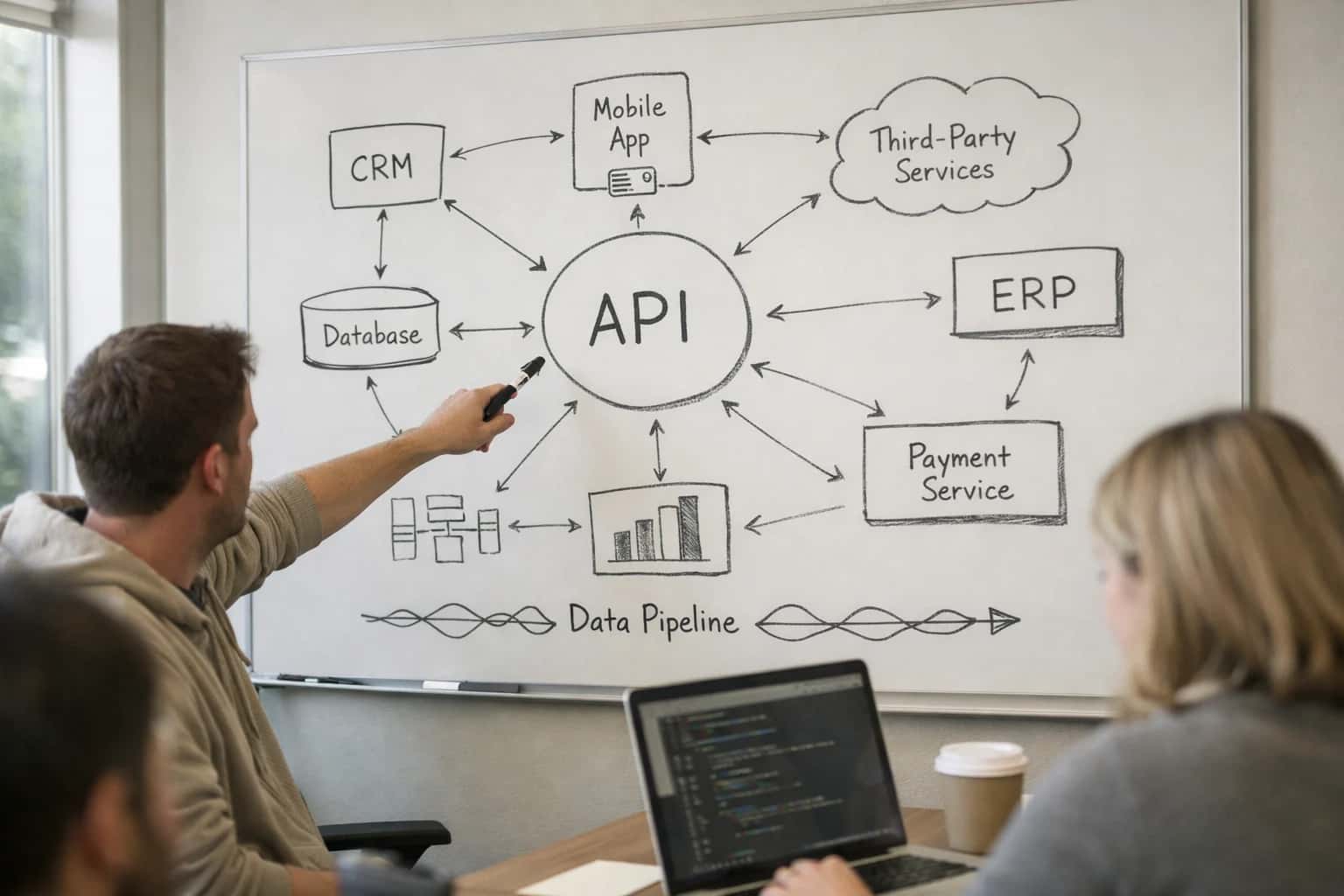
AUTOMATION SURFACES & DATA POINTS
Where AI Fits into AWeber's Workflow
AI integration connects to AWeber's core automation surfaces—autoresponders, landing pages, and subscriber lists—to automate content repurposing, enhance segmentation, and optimize send timing.
Implementation typically involves a middleware layer that listens to AWeber webhooks—like subscriber.added or campaign.sent—to trigger AI processes. For example, when a new subscriber joins a list tagged 'blog readers,' an agent can summarize the latest blog post via an LLM and queue a personalized welcome email. Another pattern uses the AWeber API to fetch campaign analytics, applies a lightweight model to predict optimal send times for different segments, and then updates the scheduling for future broadcasts in the automation rules.
Rollout should start with a single, high-volume autoresponder sequence or a key landing page to validate impact on engagement metrics before expanding. Governance is crucial: all AI-generated content should pass through a human-in-the-loop approval step or a compliance check, especially for regulated industries, before being published via the AWeber API. Audit logs should track which content was AI-generated and which user triggered the update, maintaining clear lineage for list management and campaign compliance. For deeper technical patterns on orchestrating these workflows, see our guide on AI Agent Builder Platforms.
WHERE AI CONNECTS TO AUTOMATION AND CONTENT WORKFLOWS
Key Integration Surfaces in AWeber
Automating Content Repurposing & Personalization
AWeber's autoresponders, triggered by subscriber actions like sign-ups or purchases, are a primary surface for AI integration. By connecting an AI agent to the sequence builder via webhook, you can automate the transformation of blog posts, product updates, or RSS feeds into personalized email content.
Key Use Cases:
- Blog-to-Email: An AI agent ingests a new blog post URL, summarizes key points, and drafts a compelling email body for the next sequence step.
- Dynamic Personalization: Use subscriber data (e.g., past opens, clicks) stored in AWeber custom fields to instruct the LLM on tone, detail level, or product focus.
- A/B Testing at Scale: Generate multiple subject line and preview text variants for a single broadcast to optimize for opens.
Implementation Pattern: A middleware service listens for AWeber webhooks (e.g., subscriber_added), calls an LLM with context and instructions, and uses the AWeber API to create or update a message in the corresponding sequence.
AUTOMATED EMAIL MARKETING
High-Value AI Use Cases for AWeber
Connect AI to AWeber's autoresponder sequences, landing pages, and subscriber data to automate content creation, personalize journeys, and optimize campaign performance without replacing your existing email infrastructure.
01
Automated Blog-to-Email Repurposing
Use an AI agent to monitor your blog RSS feed or CMS webhook. When a new post is published, it automatically generates a summary, multiple subject line options, and a compelling call-to-action, then creates and schedules a corresponding broadcast in AWeber via API. This turns a manual content task into a same-day automated workflow.
Manual -> Automated
Content workflow
02
Dynamic Subscriber Interest Tagging
Analyze subscriber engagement history (opens, clicks) and imported behavioral data (e.g., from your ecommerce platform) using an LLM. The AI classifies subscribers into interest-based segments (e.g., 'interested in tutorials,' 'price-sensitive shopper') and automatically updates custom fields or tags in AWeber. This enables hyper-targeted follow-up sequences without manual list management.
Batch -> Real-time
Segment updates
03
AI-Optimized Broadcast Send Times
Instead of using a global 'best time to send,' deploy an AI model that analyzes individual subscriber open patterns from AWeber's reporting data. The system calculates personalized optimal send windows and uses AWeber's API to schedule broadcasts or trigger time-based automation steps for each subscriber cohort, lifting overall open rates.
Global -> Personalized
Send logic
04
Automated Landing Page A/B Testing
Integrate an AI copilot with your landing page creation process. For a new lead magnet, the AI generates multiple headline, body copy, and CTA button variants. It then creates corresponding landing pages in AWeber, splits traffic, and analyzes conversion data to recommend the winning combination, automating the optimization cycle for small marketing teams.
1 sprint
Test cycle time
05
Intelligent Autoresponder Nurturing
Enhance standard drip sequences with conditional AI-generated content. Based on a subscriber's tags, custom fields, or lack of engagement during a sequence, an AI workflow can inject a personalized follow-up email, offer a different content asset, or adjust the cadence by pausing/resuming the automation via AWeber's API, creating a responsive, not static, nurture path.
Static -> Responsive
Nurture logic
06
Subscriber Support & List Hygiene Agent
Deploy an AI agent that monitors the AWeber-connected support inbox or subscription center. It can automatically handle common requests like updating preferences, resending a confirmation email, or processing unsubscribe requests via API. It also identifies potential spam traps or inactive accounts for review, keeping your list healthy and reducing manual admin. Learn more about our approach to AI for customer support workflows.
Hours -> Minutes
Admin time
PRACTICAL INTEGRATION PATTERNS
Example AI-AWeber Automated Workflows
These workflows demonstrate how to connect AI models to AWeber's autoresponder sequences, subscriber data, and landing page tools. Each pattern includes the trigger, data flow, AI action, and resulting system update.
This workflow transforms new blog posts into email-ready content, populating AWeber sequences automatically.
- Trigger: A new blog post is published (via CMS webhook or RSS feed monitoring).
- Context Pulled: The AI agent retrieves the full blog post content, URL, and metadata.
- AI Action: A specialized LLM (e.g., GPT-4) processes the content to:
- Generate a compelling email subject line and preview text.
- Extract or rewrite a 2-3 paragraph summary suitable for an email body.
- Propose 1-2 call-to-action (CTA) links back to the blog.
- Optionally, generate a relevant image prompt for use in the email.
- System Update: The agent uses the AWeber API to:
- Create a new broadcast or add the content as the next message in a predefined autoresponder sequence.
- Populate the subject, HTML/plain-text body, and links.
- Schedule the send based on predefined rules (e.g., 24 hours after publish).
- Human Review Point: For compliance or brand voice, the workflow can be configured to place the drafted email in a "Pending Review" folder within AWeber, sending a notification to a marketer for final approval before sending.
CONNECTING AI TO AUTORESPONDERS & LANDING PAGES
Implementation Architecture: Data Flow & APIs
A practical blueprint for wiring AI into AWeber's core workflows to automate content repurposing and subscriber personalization.
An effective AI integration with AWeber connects at two primary surfaces: the Subscriber/List API for audience intelligence and the Campaign/Broadcast API for content automation. The core data flow begins by syncing subscriber engagement data (opens, clicks, tags) from AWeber's webhooks or API to a vector database, creating a searchable profile of audience interests. This enriched context powers two key workflows: 1) Automated Blog-to-Email Repurposing, where an AI agent ingests a new blog post via RSS or webhook, summarizes it, and drafts a tailored email sequence via the AWeber Campaigns API; and 2) Dynamic Interest Tagging, where incoming subscriber activity is analyzed in real-time to suggest or apply new tags via the Subscriber API, enabling hyper-segmented autoresponders.
For production rollout, we recommend a serverless orchestration layer (e.g., using n8n or a custom service) that handles the bidirectional sync, manages API rate limits, and includes a human review step for drafted content before sending. Key implementation details include:
- Setting up a dedicated AWeber app with OAuth for secure, scoped API access.
- Using AWeber's webhooks for
subscriber.subscribeandsubscriber.opensevents to trigger real-time AI analysis. - Structuring prompts to output AWeber-compatible HTML and plain-text email bodies, subject lines, and predefined
utmparameters for tracking. - Implementing a fallback queue for API failures and audit logging for all AI-generated content and tag modifications to ensure list hygiene and compliance.
Governance is critical for maintaining sender reputation and list quality. We architect integrations with configurable gates: AI-suggested tags can be auto-applied or held for marketer review, and all AI-drafted emails are staged as drafts in AWeber for final approval before scheduling. This controlled approach allows teams to scale content production and personalization while keeping a human in the loop for brand voice and strategy. For teams using AWeber's landing pages, the same architecture can extend to dynamically personalize landing page copy or offers based on the referring source or known subscriber tags, creating a cohesive, AI-informed subscriber journey from click to inbox.
AI INTEGRATION PATTERNS
Code & Payload Examples
Automating Interest-Based Segmentation
Use AI to analyze subscriber engagement (opens, clicks) and content from your blog or landing pages to automatically apply tags in AWeber. This enables dynamic list segmentation for hyper-personalized autoresponder sequences.
Typical Integration Flow:
- Webhook from your CMS (e.g., WordPress) triggers on new blog post publish.
- AI service ingests post content and generates topic tags (e.g.,
intermediate-gardening,organic-pesticides). - AWeber API call applies these tags to subscribers who have engaged with related content.
Example API Payload to Add Tags:
jsonPOST https://api.aweber.com/1.0/accounts/{account_id}/lists/{list_id}/subscribers/{subscriber_id}/tags { "tags": [ { "name": "ai-tagged-gardening-advance" }, { "name": "content-interest-organic" } ] }
This moves segmentation from manual rules to behavior-driven automation, powering more relevant follow-up sequences.
AI-ENHANCED AUTOMATION
Realistic Time Savings & Operational Impact
How AI integration transforms manual, time-intensive AWeber workflows into assisted, efficient operations.
| Metric | Before AI | After AI | Notes |
|---|---|---|---|
Blog-to-email content repurposing | Manual copywriting & formatting (2-3 hours) | AI-assisted drafting & formatting (30-45 minutes) | Human editor reviews for brand voice and accuracy |
Subscriber interest tagging | Manual list segmentation based on clicks (1-2 hours weekly) | Automated semantic analysis of engagement (Near real-time) | Tags feed into AWeber automations for dynamic content |
Broadcast send-time optimization | Static schedule or basic timezone rules | Predictive model for individual open-rate windows | Integrates with AWeber's scheduling API |
Sequence performance review | Manual analysis of open/click rates (Weekly) | Automated weekly digest with insights & suggestions | Highlights underperforming emails for A/B testing |
Lead magnet follow-up logic | One-size-fits-all autoresponder sequence | Dynamic next-email selection based on engagement | Uses AWeber webhooks to trigger path changes |
Landing page headline generation | Manual brainstorming and A/B setup (1 hour) | AI generates 5-10 variants for quick testing (15 minutes) | Variants pushed to AWeber landing page editor |
List hygiene & re-engagement | Periodic manual review of inactive subscribers | Automated scoring flags at-risk subscribers for campaigns | Triggers AWeber automation to win back or sunset |
IMPLEMENTING AI IN MARKETING AUTOMATION
Governance, Security & Phased Rollout
A practical approach to deploying AI within AWeber that prioritizes data security, user control, and measurable impact.
Integrating AI with AWeber requires careful handling of subscriber data, campaign content, and automation logic. The core architecture typically involves a secure middleware layer that sits between AWeber's API and your chosen LLM provider. This layer manages authentication, data transformation, and prompt governance, ensuring sensitive subscriber information from AWeber's subscribers, campaigns, and lists objects is never exposed unnecessarily. All AI-generated content for autoresponders or broadcasts should be logged with versioning and linked to the source subscriber activity or blog post, creating a clear audit trail for compliance and optimization.
A phased rollout is critical for managing risk and proving value. Start with a read-only analysis phase, where AI analyzes subscriber engagement data and existing campaign performance to suggest tagging rules or content themes, with no live automation. Next, move to a human-in-the-loop generation phase, using AI to draft email sequences or landing page copy within a controlled sandbox environment, requiring marketer approval before any content is published to AWeber. Finally, implement controlled automation for specific, high-volume workflows like automated blog-to-email repurposing, where AI generates the draft and a final approval step or content score threshold is required before the campaign is scheduled.
Governance focuses on maintaining brand voice and list health. Implement prompt templates with strict guardrails for tone and formatting, and use AWeber's A/B testing features to validate AI-generated subject lines or content blocks against human-crafted controls. Establish clear metrics for success—such as open rate lift or reduced time-to-publish—and monitor for any drift in engagement that could indicate audience fatigue. This controlled, iterative approach allows marketing teams to harness AI for efficiency and personalization within AWeber while maintaining full oversight over their most valuable asset: the subscriber relationship.
Enabling Efficiency, Speed & Accuracy
Intelligent Analysis, Decision & Execution
We build AI systems for teams that need search across company data, workflow automation across tools, or AI features inside products and internal software.
Talk to Us
Search across company data
Give teams answers from docs, tickets, runbooks, and product data with sources and permissions.
Useful when people spend too long searching or get different answers from different systems.
Enterprise searchRAGPermissions
Read more
Automate internal workflows
Use AI to route work, draft outputs, trigger actions, and keep approvals and logs in place.
Useful when repetitive work moves across multiple tools and teams.
AI agentsWorkflow automationGovernance
Read more
Add AI to products and internal tools
Build assistants, guided actions, or decision support into the software your team or customers already use.
Useful when AI needs to be part of the product, not a separate tool.
AI integrationDecision supportModel routing
Read moreIMPLEMENTATION AND WORKFLOW DETAILS
Frequently Asked Questions
Common technical and strategic questions about integrating AI with AWeber's autoresponder and landing page workflows to automate content repurposing and subscriber engagement.
Integration typically uses AWeber's REST API and webhooks to create a two-way sync between your content sources and email sequences.
Typical Implementation Flow:
- Trigger: A new blog post is published (via RSS webhook or CMS integration).
- Context Pull: The AI system fetches the full post content, metadata, and target AWeber list ID.
- AI Action: An LLM (like GPT-4) is prompted to:
- Summarize the post into a compelling email teaser.
- Extract 3-5 key takeaways for a bulleted list.
- Generate a subject line and preheader text.
- Suggest relevant tags based on content.
- System Update: The AI-generated content, along with the original post link, is sent via the AWeber API to:
- Create a new broadcast or add to an existing autoresponder sequence.
- Apply the suggested tags to the subscriber(s) for future segmentation.
Key API Endpoints Used: POST /accounts/{accountId}/lists/{listId}/campaigns, POST /accounts/{accountId}/lists/{listId}/subscribers/{subscriberId}/tags.

About the author
Prasad Kumkar
CEO & MD, Inference Systems
Prasad Kumkar is the CEO & MD of Inference Systems and writes about AI systems architecture, LLM infrastructure, model serving, evaluation, and production deployment. Over 5+ years, he has worked across computer vision models, L5 autonomous vehicle systems, and LLM research, with a focus on taking complex AI ideas into real-world engineering systems.
His work and writing cover AI systems, large language models, AI agents, multimodal systems, autonomous systems, inference optimization, RAG, evaluation, and production AI engineering.
LinkedIn
Limited slotsGet a Free AI Consultation
Partnered with leading AI, data, and software stack.





How We Work
Custom AI workflows for your Business
One-fit-all AI don't work for modern businesses. At Inferensys, we aim to understand your business & custom requirements; which we use to define most efficient agentic workflows, the data, and the tools for your business.
01
Review the use case
We understand the task, the users, and where AI can actually help.
Read more02
Pick the right approach
We define what needs search, automation, or product integration.
Read more03
Build the first useful version
We implement the part that proves the value first.
Read more04
Improve from there
We add the checks and visibility needed to keep it useful.
Read moreThe first call is a practical review of your use case and the right next step.
Talk to Us