AI integration targets the functional surfaces where Opcenter manages external manufacturing and supplier data. This includes the Supplier Quality Management (SQM) module for incoming inspection results, nonconformance reports (NCRs), and corrective actions. It also extends to the external manufacturing execution interfaces where Opcenter coordinates work orders, specifications, and engineering change orders (ECOs) with contract manufacturers. The integration layer typically connects via Opcenter's RESTful APIs or database connectors to inject AI-driven analysis and automation into these existing workflows.

Integration
AI Integration with Siemens Opcenter for Supplier Integration
Embed AI agents and models into Siemens Opcenter to automate supplier quality analysis, predict delivery risks, and orchestrate engineering change workflows with external partners.
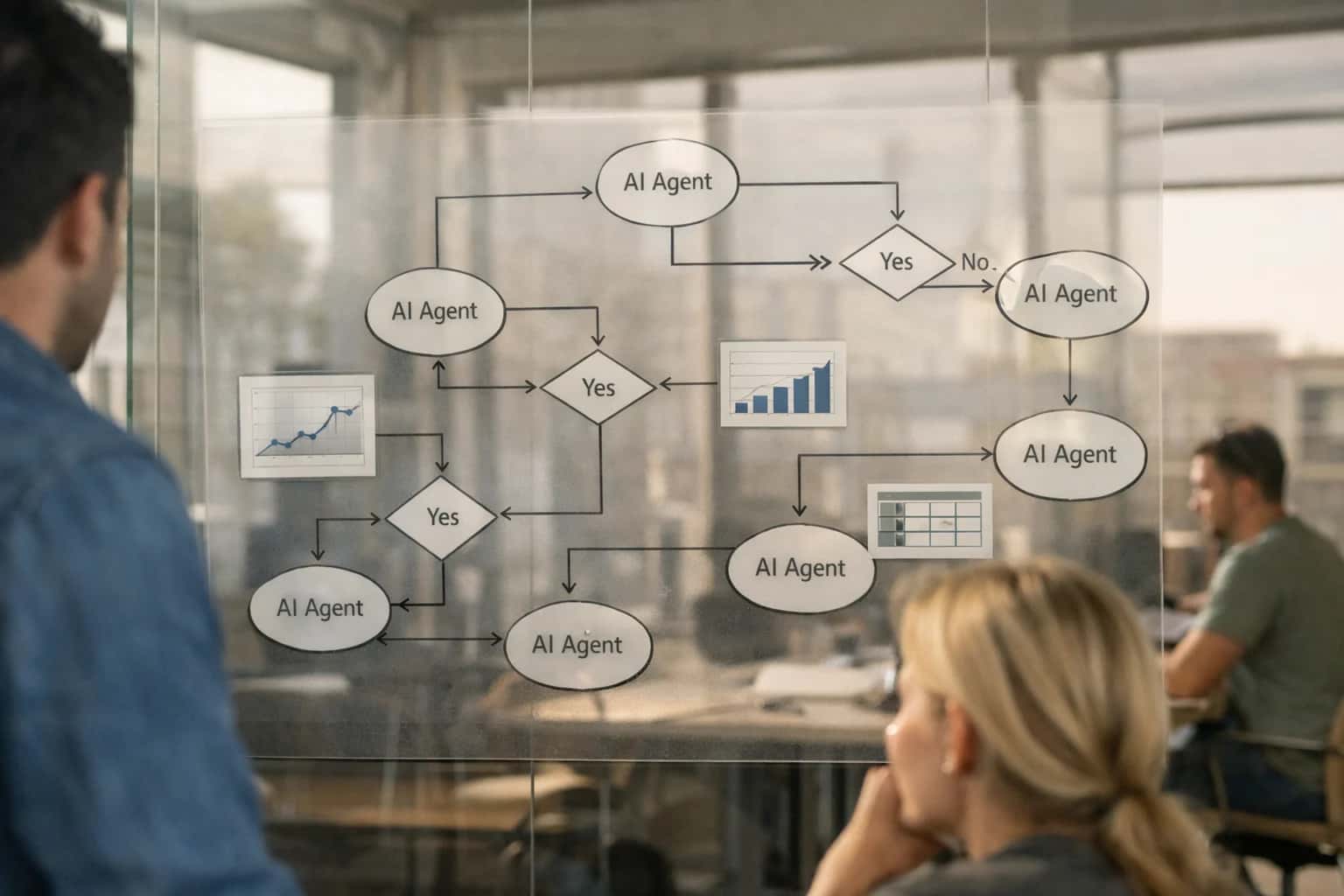
ARCHITECTURE FOR SUPPLIER QUALITY AND DELIVERY INTELLIGENCE
Where AI Fits into Opcenter's Supplier Integration Layer
Integrating AI into Siemens Opcenter's supplier connectivity transforms reactive quality checks and manual data exchange into a predictive, automated intelligence layer.
High-value use cases focus on turning supplier data into proactive intelligence. For example:
- Predictive Delivery Risk Scoring: An AI agent analyzes historical supplier performance data, current order backlog, and external factors (like weather or port delays) ingested into Opcenter to score each PO line with a risk of late delivery, triggering early alerts in the procurement workflow.
- Automated Engineering Change Propagation: When an ECO is released from PLM, an AI workflow parses the change impact, identifies all affected supplier-manufactured components in Opcenter, and automatically generates and routes updated specification packets to the correct external partners via Opcenter's collaboration portals.
- Incoming Quality Triage & Root Cause Suggestion: As inspection data (dimensional, visual, test results) flows into Opcenter from receiving docks, an AI model classifies defects, clusters them by probable root cause (e.g., tool wear, material lot, process parameter), and suggests linked corrective actions, reducing the time quality engineers spend on initial analysis.
A production implementation is wired with a middleware layer (often using a queue like RabbitMQ or Kafka) that listens to Opcenter events—such as a new inspection lot completion or a supplier portal upload. The event payload is enriched with contextual data from Opcenter's database, sent to an AI inference service (hosted on-premise or in a private cloud for data sovereignty), and the results are written back to specific Opcenter objects via API. Governance is critical: all AI suggestions should be logged in Opcenter's audit trail, and a human-in-the-loop approval step is typically maintained for high-risk actions like issuing a supplier corrective action request (SCAR). Rollout starts with a single high-volume part number or a specific contract manufacturer to validate the data pipeline and business impact before scaling.
SUPPLIER INTEGRATION FOCUS
Key Opcenter Modules and Integration Surfaces for AI
Supplier Quality Management (SQM)
The SQM module is the primary surface for AI-driven supplier analytics. Integration focuses on automating the analysis of incoming inspection data, Certificates of Analysis (CoA), and supplier scorecards.
AI Integration Points:
- Incoming Inspection Data: Use AI to classify defects from images or sensor data, automatically mapping them to non-conformance codes and calculating defect rates per supplier-part combination.
- Statistical Process Control (SPC): Inject AI models to analyze supplier-provided SPC data for early warning of process drift, predicting potential out-of-spec batches before they arrive.
- Scorecard Automation: Automate the generation and weighting of supplier performance scorecards (Quality, Delivery, Cost) by analyzing historical Opcenter records, reducing manual data aggregation from weeks to hours.
This enables proactive supplier quality management, where AI flags at-risk suppliers and suggests targeted corrective actions.
SIEMENS OPCENTER
High-Value AI Use Cases for Supplier Integration
Integrating AI into Siemens Opcenter transforms supplier collaboration from a reactive, document-heavy process into a proactive, data-driven partnership. These use cases focus on embedding intelligence into Opcenter's supplier quality, engineering change, and material planning modules to predict risks, automate workflows, and accelerate the flow of specifications and materials.
01
Predictive Supplier Quality Scoring
Analyze incoming inspection data, historical nonconformance reports (NCRs), and supplier-provided certificates within Opcenter to generate dynamic risk scores. AI models correlate material attributes with final assembly defects, flagging high-risk lots before they enter production and triggering automated supplier corrective action requests (SCARs).
Batch -> Real-time
Risk assessment
02
Automated Engineering Change Order (ECO) Propagation
When an ECO is released from PLM, AI parses the change to impacted specifications, drawings, and BOMs. It then automatically identifies affected supplier parts within Opcenter, drafts change notifications, and routes them to the correct supplier contacts via integrated portals or EDI, tracking acknowledgment and compliance.
1 sprint
ECO cycle time reduction
03
Intelligent Material Call-Off & Replenishment
Move beyond simple kanban by using AI to analyze real-time production schedules, consumption rates, and supplier lead time variability within Opcenter. The system generates optimized, dynamic call-off signals to suppliers, predicting shortages before they occur and adjusting pull signals based on line-side inventory cameras or IoT sensors.
Hours -> Minutes
Replenishment signal generation
04
Supplier Document & Certificate Validation
Automate the validation of mill certificates, material test reports, and compliance documents uploaded by suppliers to Opcenter portals. AI extracts key data (heat numbers, chemical composition), compares it against purchase order specifications, and flags discrepancies for quality review, automatically filing compliant documents to the correct material lot.
Same day
Document processing
05
Sub-tier Supplier Risk & Traceability
Enhance Opcenter's genealogy by using AI to map and monitor sub-tier supplier networks. Analyze external data (geopolitical, financial, ESG) and internal performance to predict disruptions. Automatically simulate the impact of a sub-tier failure on your production schedule and trigger dual-sourcing workflows within the procurement module.
Batch -> Real-time
Risk monitoring
06
Automated RFQ & Quotation Analysis
For new supplier onboarding or annual reviews, AI assists in analyzing Request for Quotation (RFQ) responses. It extracts pricing, terms, and capacity data from supplier submissions within Opcenter, compares them against historical benchmarks and cost models, and highlights outliers or optimal candidates for the sourcing team's final decision.
Hours -> Minutes
Quote triage & scoring
SIEMENS OPCENTER INTEGRATION PATTERNS
Example AI-Enhanced Supplier Workflows
These workflows demonstrate how AI agents can be embedded into Siemens Opcenter's supplier integration layer, using its APIs and data model to automate quality analysis, risk prediction, and specification exchange. Each flow is triggered by an Opcenter event, enriches data with external context, and updates records or triggers actions within the platform.
Trigger: A new inspection lot is created in Opcenter Quality Management for a received supplier material.
Context Pulled:
- Inspection lot details (material, supplier, PO, quantity)
- Associated inspection plan and characteristics
- Historical defect data for this supplier/material
- Recent supplier performance score from Opcenter Supplier Management
AI Agent Action:
- Ingests initial inspection results (manual or automated) via Opcenter's REST API.
- Uses a classification model to categorize defects (e.g., dimensional, cosmetic, functional) and assign a severity score.
- Cross-references defects with the supplier's recent history to identify recurring patterns.
- If severity threshold is breached, the agent drafts a preliminary Supplier Corrective Action Request (CAR), including:
- Defect classification and images/data
- Reference to similar past incidents
- Suggested containment actions (e.g., sorting, quarantine)
- Request for root cause analysis and preventive action plan
System Update / Next Step:
- The draft CAR is posted as a note to the inspection lot and a task is created in Opcenter for the Quality Engineer.
- The supplier's performance score in Opcenter is automatically adjusted.
- A notification is sent via Opcenter's alerting system to the SQE and buyer.
Human Review Point: The Quality Engineer reviews, edits, and formally issues the CAR from within Opcenter. The AI's draft accelerates the process from hours to minutes.
AI-ENHANCED SUPPLIER ORCHESTRATION
Implementation Architecture: Data Flow and System Boundaries
A secure, event-driven architecture that embeds AI into Opcenter's supplier integration layer to automate quality analysis, risk prediction, and specification exchange.
The integration connects to Siemens Opcenter's Supplier Integration Manager (SIM) module and its underlying Supplier Portal. AI models are deployed as containerized microservices, listening to key Opcenter events via its REST API and webhook system. Critical data flows include: incoming ASN (Advanced Shipping Notice) and quality certificate data, real-time supplier performance scorecards, and outbound engineering change orders (ECOs) and specification updates. The AI layer processes this data, generating predictions and automated actions that are written back to Opcenter's Supplier Quality and Procurement objects, or trigger workflows in connected ERP systems like SAP.
High-value workflows are automated at this intersection: 1) Automated Quality Data Analysis: Incoming inspection reports and certificates of analysis are parsed and compared against historical baselines using AI, flagging anomalies and auto-creating Non-Conformance Reports (NCRs) in Opcenter. 2) Delivery Risk Prediction: AI models analyze supplier lead times, geopolitical data, and past performance from Opcenter's scorecards to predict delays, triggering proactive material substitution or expedited freight workflows. 3) Specification Synchronization: When an ECO is released from PLM, AI assists in analyzing the change's impact on active supplier POs, drafts updated specifications, and routes them through Opcenter's approval workflows for automated distribution via the Supplier Portal.
Governance and rollout are critical. The architecture includes an audit trail logging all AI inferences and actions back to source Opcenter records. A human-in-the-loop approval step is configured for high-risk actions (e.g., issuing a supplier corrective action). Rollout typically follows a phased approach: starting with a single supplier category (e.g., raw materials), processing historical data to train initial models, and then expanding to high-volume suppliers. This ensures the AI augments—rather than disrupts—existing procurement and quality operations managed within Opcenter.
AI INTEGRATION WITH SIEMENS OPCENTER FOR SUPPLIER INTEGRATION
Code and Payload Examples
Ingesting Supplier Quality Data into Opcenter
Supplier integration often begins with ingesting quality data from external sources like supplier portals, EDI 856 (ASNs), or CSV files. This Python example uses Opcenter's REST API to create a new quality record in the SupplierInspection module, tagging it with the originating PO and lot number for traceability.
pythonimport requests import json # Opcenter API endpoint for quality data url = "https://your-opcenter-instance/api/quality/supplier-inspections" headers = { "Authorization": "Bearer YOUR_ACCESS_TOKEN", "Content-Type": "application/json" } # Payload representing an incoming inspection result payload = { "supplierId": "SUP-2024-001", "purchaseOrder": "PO-98765", "materialNumber": "MAT-1001", "lotNumber": "LOT-2024-05-01", "inspectionDate": "2024-05-15T08:30:00Z", "characteristics": [ { "characteristicId": "DIM-001", "measuredValue": 10.05, "upperTolerance": 10.10, "lowerTolerance": 9.90, "status": "ACCEPTED" }, { "characteristicId": "SURFACE-FINISH", "measuredValue": 1.2, "upperTolerance": 1.5, "status": "ACCEPTED" } ], "overallResult": "PASS", "documentReferences": ["https://supplierportal.com/certs/cert-123.pdf"] } response = requests.post(url, headers=headers, data=json.dumps(payload)) if response.status_code == 201: print(f"Inspection logged: {response.json()['inspectionId']}") else: print(f"Error: {response.status_code}, {response.text}")
This creates an auditable record in Opcenter, enabling downstream AI analysis of supplier performance trends.
AI-ENHANCED SUPPLIER OPERATIONS
Realistic Operational Impact and Time Savings
This table illustrates the tangible operational improvements achievable by integrating AI into Siemens Opcenter for supplier and external manufacturing workflows. It focuses on time savings, risk reduction, and workflow acceleration.
| Workflow / Metric | Before AI Integration | After AI Integration | Implementation Notes |
|---|---|---|---|
Supplier Quality Data Analysis | Manual review of inspection reports and SPC charts | Automated anomaly detection and trend flagging | AI scans incoming data, flags deviations for human review; reduces analysis time from hours to minutes. |
Delivery Risk Prediction | Reactive checks based on past performance | Proactive risk scoring using lead times, PO data, and external signals | Generates daily risk dashboards; enables preemptive mitigation weeks in advance. |
Engineering Change Order (ECO) Impact Assessment | Manual cross-referencing of BOMs and open orders | Automated impact simulation across affected suppliers and WIP | Reduces assessment cycle from days to hours; ensures accurate change propagation. |
Supplier Performance Scoring | Monthly/quarterly manual compilation of metrics | Real-time, multi-factor scoring (quality, delivery, compliance) | Dynamic scorecards auto-update; supports continuous improvement dialogues. |
Specification & Document Exchange | Email-based manual sending and version tracking | AI-assisted routing, version validation, and acknowledgment tracking | Ensures suppliers receive correct revisions; automates audit trail creation. |
Non-Conformance & Corrective Action Workflow | Manual triage, root cause investigation, and CAR drafting | Assisted classification, similar incident linking, and draft CAR generation | Accelerates initial response; provides data-driven suggestions for containment. |
Raw Material & Component Substitution Analysis | Engineering review of each substitution request | AI-powered feasibility check against specs and past performance | Provides rapid go/no-go recommendation for urgent requests; final approval remains with engineers. |
IMPLEMENTING AI IN A REGULATED SUPPLY CHAIN
Governance, Security, and Phased Rollout
Integrating AI into Siemens Opcenter for supplier workflows requires a controlled approach that prioritizes data integrity, compliance, and measurable operational gains.
A secure integration architecture treats Opcenter as the system of record, with AI models acting as a decision-support layer. Supplier data—including quality certificates (CofA), ASN details, engineering change notices (ECNs), and delivery performance—flows through Opcenter's APIs or integration framework (e.g., Opcenter Execution Foundation). AI agents access this data via a secure, audited service layer that enforces role-based access control (RBAC), ensuring quality engineers, procurement, and suppliers only see authorized information. All AI-generated recommendations, such as a predicted delivery delay or a suggested supplier corrective action, are logged as discrete events within Opcenter's audit trail, creating a transparent lineage from data input to AI inference to human action.
Rollout follows a phased, risk-based model. Phase 1 typically targets inbound quality analytics, deploying a model to analyze historical supplier inspection data and flag high-risk shipments for review. This low-touch workflow validates the AI's accuracy without disrupting core processes. Phase 2 introduces predictive delivery risk scoring, integrating AI with Opcenter's external manufacturing and scheduling modules to assess supplier lead times against production plans. Phase 3 automates engineering change propagation, using AI to parse ECNs from PLM systems, map affected parts to active supplier POs in Opcenter, and draft notifications for supplier portals. Each phase includes a parallel human-in-the-loop review period, with key performance indicators (KPIs) like false-positive rates and time-to-resolution tracked in Opcenter's intelligence dashboards.
Governance is embedded into the operational workflow. AI outputs do not auto-update master data or issue purchase orders; they create review tasks within Opcenter's quality or procurement modules. For example, an AI-suggested alternative supplier for a constrained part generates a task requiring a buyer's approval before the system updates the sourcing rule. This ensures compliance with sourcing agreements and maintains human accountability. Regular model retraining is triggered by Opcenter data—such as new supplier performance ratings or updated quality specs—keeping the AI aligned with evolving supply chain conditions. This controlled, audit-friendly approach allows manufacturers to harness AI for supplier integration while maintaining the rigorous governance required in aerospace, medical device, and automotive sectors.
Enabling Efficiency, Speed & Accuracy
Intelligent Analysis, Decision & Execution
We build AI systems for teams that need search across company data, workflow automation across tools, or AI features inside products and internal software.
Talk to Us
Search across company data
Give teams answers from docs, tickets, runbooks, and product data with sources and permissions.
Useful when people spend too long searching or get different answers from different systems.
Enterprise searchRAGPermissions
Read more
Automate internal workflows
Use AI to route work, draft outputs, trigger actions, and keep approvals and logs in place.
Useful when repetitive work moves across multiple tools and teams.
AI agentsWorkflow automationGovernance
Read more
Add AI to products and internal tools
Build assistants, guided actions, or decision support into the software your team or customers already use.
Useful when AI needs to be part of the product, not a separate tool.
AI integrationDecision supportModel routing
Read moreSIEMENS OPCENTER SUPPLIER INTEGRATION
Frequently Asked Questions
Practical questions for teams planning to inject AI into Siemens Opcenter to automate supplier quality, delivery, and engineering change workflows.
This workflow automates the triage and analysis of supplier Certificate of Analysis (CoA) and inspection data.
- Trigger: A new supplier shipment is received and logged in Opcenter, with inspection data or a CoA PDF attached via the document management module.
- Context/Data Pulled: An AI agent is triggered via webhook. It retrieves the attached documents and the associated material master, purchase order, and historical quality data for that supplier and part from Opcenter's SQL database.
- Model/Agent Action: A multi-modal AI model (e.g., GPT-4V + custom classifier) extracts key-value pairs from the CoA, validates them against the material specification stored in Opcenter, and performs statistical analysis on incoming inspection measurements against control limits.
- System Update: The agent updates the material receipt transaction in Opcenter, automatically:
- Setting the acceptance status (
Accepted,Quarantine,Rejected). - Logging any deviations in a new Non-Conformance Report (NCR) record.
- Updating the supplier performance scorecard with the event.
- Setting the acceptance status (
- Human Review Point: If the AI's confidence score is below a set threshold, or if a critical deviation is detected, the transaction is flagged for a quality engineer's review in the Opcenter Quality dashboard before final disposition.

About the author
Prasad Kumkar
CEO & MD, Inference Systems
Prasad Kumkar is the CEO & MD of Inference Systems and writes about AI systems architecture, LLM infrastructure, model serving, evaluation, and production deployment. Over 5+ years, he has worked across computer vision models, L5 autonomous vehicle systems, and LLM research, with a focus on taking complex AI ideas into real-world engineering systems.
His work and writing cover AI systems, large language models, AI agents, multimodal systems, autonomous systems, inference optimization, RAG, evaluation, and production AI engineering.
LinkedIn
Limited slotsGet a Free AI Consultation
Partnered with leading AI, data, and software stack.





How We Work
Custom AI workflows for your Business
One-fit-all AI don't work for modern businesses. At Inferensys, we aim to understand your business & custom requirements; which we use to define most efficient agentic workflows, the data, and the tools for your business.
01
Review the use case
We understand the task, the users, and where AI can actually help.
Read more02
Pick the right approach
We define what needs search, automation, or product integration.
Read more03
Build the first useful version
We implement the part that proves the value first.
Read more04
Improve from there
We add the checks and visibility needed to keep it useful.
Read moreThe first call is a practical review of your use case and the right next step.
Talk to Us