AI integration for Siemens Opcenter targets three primary surfaces within its process execution stack: the Execution Core for real-time batch control, the Quality Management module for inspection and SPC data, and the Process Intelligence layer for analytics and reporting. In process industries like pharmaceuticals, chemicals, and food & beverage, this means connecting AI models directly to Opcenter's batch records, process parameters (e.g., temperature, pressure, pH), and material genealogy objects. The goal is not to replace Opcenter's robust control logic, but to augment it with predictive and prescriptive insights that adapt to raw material variability, equipment drift, and compliance constraints.

Integration
AI Integration with Siemens Opcenter for Process Industries
A practical guide to embedding AI agents and models into Siemens Opcenter's process execution environment for batch recipe optimization, real-time parameter analysis, and automated compliance reporting in chemical, pharmaceutical, and food manufacturing.
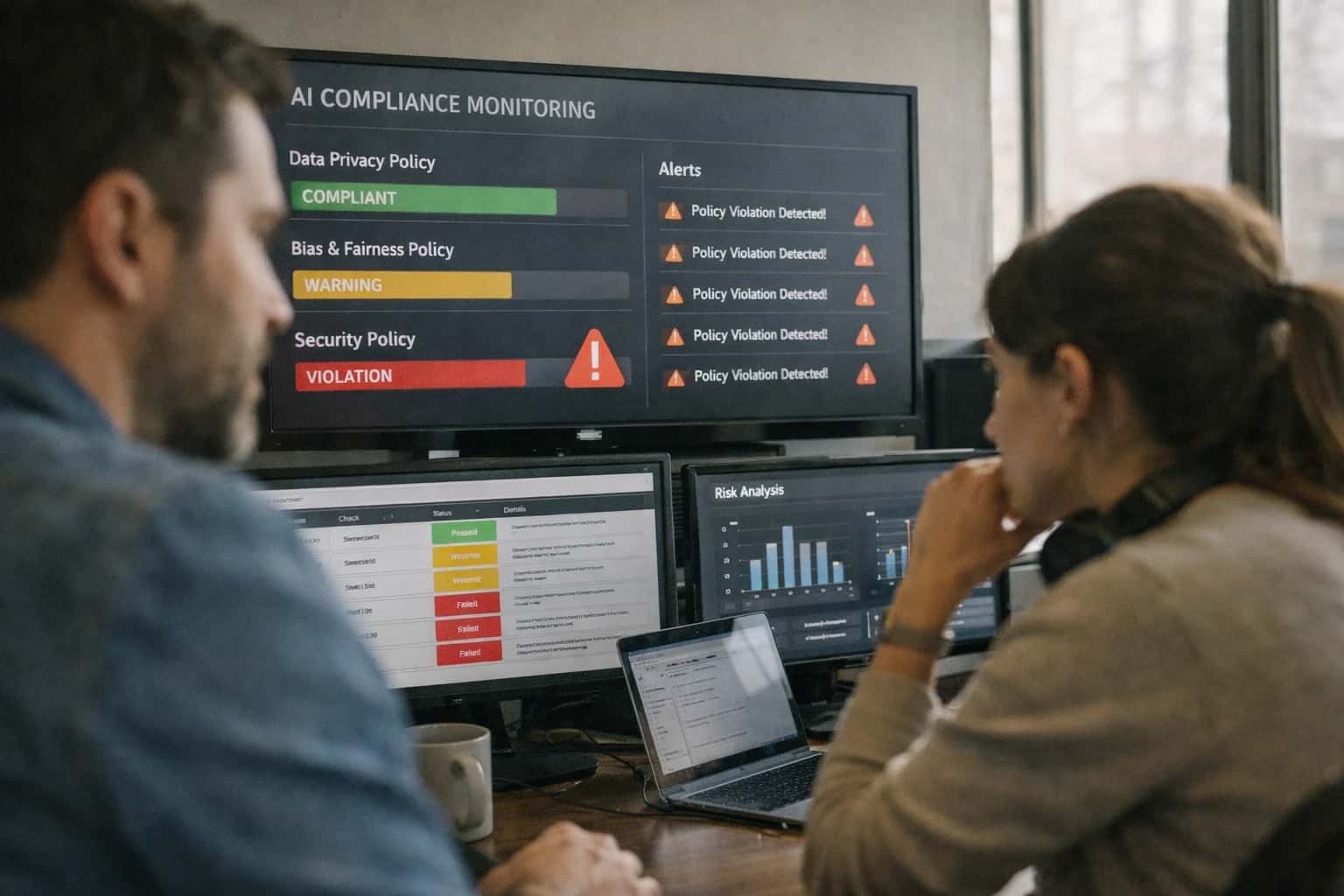
ARCHITECTURE FOR PROCESS MANUFACTURING
Where AI Fits in Opcenter's Process Execution Stack
A practical guide to embedding AI agents into Siemens Opcenter's modular environment for batch recipe optimization, parameter deviation analysis, and compliance automation.
Implementation typically involves using Opcenter's OData APIs and event-driven messaging to stream batch events and sensor data to an inference service. For example, an AI agent can monitor real-time parameter trends against the master recipe, predict potential deviations before they breach control limits, and suggest minor setpoint adjustments—logged as an electronic signature in the batch history. Another high-value pattern is using AI to analyze historical batch data from Opcenter's data warehouse to identify optimal parameter ranges for new raw material lots, automatically generating recipe variants that maintain yield while reducing cycle time. These workflows require careful governance, often implemented through a human-in-the-loop approval step within Opcenter's electronic batch record (EBR) workflow before any AI-suggested change is executed.
Rollout should be phased, starting with read-only analytics (e.g., AI-powered batch report summarization) before progressing to closed-loop advisory control. A critical success factor is establishing a feedback loop where the outcomes of AI recommendations (e.g., actual yield, quality results) are written back to Opcenter's production orders and quality records, creating a labeled dataset for continuous model retraining. This approach ensures AI becomes a governed, traceable component of the manufacturing execution system, not a black-box sideline. For teams evaluating this integration, the first step is often a proof-of-concept on a single product line or reactor, focusing on a specific pain point like reducing batch release time through automated deviation trend analysis.
WHERE TO CONNECT AI FOR BATCH OPTIMIZATION AND COMPLIANCE
Key Opcenter Modules and Integration Surfaces for Process AI
Core Batch Execution and Recipe Management
This module manages the lifecycle of process orders, master recipes, and equipment phases. AI integration surfaces here are critical for adaptive control and yield optimization.
Key Integration Points:
- Process Order API: Inject AI logic to dynamically adjust recipe parameters (e.g., temperature, pressure, dwell time) based on real-time sensor feeds or raw material property analysis before order release.
- Phase Logic: Use AI to evaluate phase completion criteria, predicting end-points to reduce cycle times or improve consistency.
- Equipment Allocation: AI models can recommend optimal equipment assignment for a batch based on cleaning status, historical performance data, and maintenance schedules.
Example Workflow: An AI agent monitors incoming raw material COAs (Certificates of Analysis) via Opcenter's data model, adjusts the master recipe's initial setpoints accordingly, and logs the rationale for audit trails.
PROCESS INDUSTRY FOCUS
High-Value AI Use Cases for Process Manufacturing in Opcenter
Integrating AI into Siemens Opcenter for process manufacturing moves beyond dashboards to adaptive, closed-loop intelligence. These use cases target batch recipe optimization, compliance acceleration, and real-time deviation management within Opcenter's process execution environment.
01
Batch Recipe Optimization & Scale-Up
Inject AI models into Opcenter's recipe management to analyze historical batch data, raw material variability, and equipment performance. Recommend optimal parameter sets (temperatures, pressures, durations) for new campaigns or scale-up scenarios, reducing trial runs and improving first-pass yield.
Batch -> Real-time
Parameter adjustment
02
Automated Batch Record Review & Compliance
Connect AI to Opcenter's electronic batch records (EBR) and audit trails. Automate the review of completed batch records against master formulas and SOPs, flagging deviations, missing signatures, or data integrity issues for QA review. Accelerates release and ensures audit readiness for FDA, EMA, or other regulators.
Hours -> Minutes
Record review time
03
Real-Time Parameter Deviation & Root Cause
Layer AI on Opcenter's real-time process data streams. Detect subtle multivariate deviations in temperature, pressure, or flow profiles that human operators might miss. Correlate deviations with upstream material lots or equipment states to suggest probable root causes, enabling proactive correction before quality is impacted.
Same day
Issue identification
04
Predictive Yield & Co-Product Analysis
Use AI to analyze process parameters, raw material attributes, and equipment conditions within Opcenter's batch genealogy. Predict final yield and co-product/by-product ratios before a batch completes. Provides operations with early signals to adjust downstream packaging or storage planning and improves financial forecasting accuracy.
Batch -> Real-time
Yield insight
05
Cleaning-in-Place (CIP) Cycle Validation
Integrate AI with Opcenter's equipment and cleaning management modules. Analyze sensor data (conductivity, flow, temperature) from CIP cycles to automatically verify cleaning efficacy against validation protocols. Flag cycles that show anomalous signatures, preventing cross-contamination risks and reducing manual QA sampling.
Automated
Compliance check
06
Dynamic Scheduling for Campaign Production
Augment Opcenter's scheduling engine with AI that factors in real-time equipment availability, cleaning durations, material shelf-life constraints, and quality hold times. Dynamically resequence campaigns and changeovers to maximize throughput and minimize waste in high-mix, regulated process environments.
1 sprint
Implementation cycle
PROCESS MANUFACTURING
Example AI-Enhanced Workflows for Opcenter Process Execution
These workflows demonstrate how to embed AI agents and models directly into Siemens Opcenter's process execution environment, focusing on batch recipe optimization, real-time deviation management, and automated compliance reporting for industries like pharmaceuticals, chemicals, and food & beverage.
Trigger: A new batch order is released to Opcenter Execution Process (OEP) with a master recipe.
Context Pulled: The agent retrieves the master recipe parameters, historical batch data for the same product from Opcenter Intelligence, and real-time data on current raw material lot properties (e.g., potency, moisture) from the connected LIMS.
Agent Action: An optimization model analyzes the historical yield and quality outcomes against material property variations. It generates a slight, validated adjustment to key process parameters (e.g., temperature setpoints, agitation time) to compensate for the current raw material characteristics, aiming to maximize yield while staying within the validated design space.
System Update: The adjusted recipe parameters are written back to the specific batch order in OEP as an "AI-optimized version." The change is logged in the electronic batch record (EBR) with a clear audit trail noting the AI recommendation and the approving engineer.
Human Review Point: The adjusted recipe is presented to the process engineer or supervisor for a final review and approval within the Opcenter UI before the batch is started on the floor.
PRODUCTION-GRADE AI FOR PROCESS EXECUTION
Implementation Architecture: Data Flow, APIs, and Guardrails
A practical blueprint for injecting AI into Siemens Opcenter's process manufacturing workflows without disrupting validated systems.
Integrating AI with Siemens Opcenter for process industries requires a layered architecture that respects the system's modular design and compliance requirements. The core pattern involves using Opcenter's Process Execution and Process Intelligence modules as the primary integration surfaces. AI agents connect via Opcenter's RESTful OData APIs to read real-time batch data (parameters, events, material consumption) and write back recommendations or alerts. For high-frequency sensor data, a sidecar service subscribes to Opcenter's message queues or historian streams, performing inference on time-series data for anomaly detection before summarizing findings back into the Opcenter event log. This keeps the core MES transactional while enabling real-time intelligence.
Key implementation details focus on the batch record as the central entity. AI models are trained on historical batch data—including process parameters, quality results, and deviations—to provide live recommendations. For example, during a batch run, an AI agent can analyze real-time parameter drift against the golden batch profile and suggest minor adjustments to setpoints via a secure API call, logging the recommendation as a ProposedAction record in Opcenter for operator review. Post-batch, another agent can automate the Electronic Batch Record (EBR) review, using NLP to compare executed steps against the master recipe and flagging discrepancies for quality assurance, significantly accelerating batch release.
Rollout and governance are critical. A phased implementation starts with read-only analytics on historical data to build trust, followed by advisory agents in a human-in-the-loop configuration. All AI inferences must be written to Opcenter's immutable audit trail with clear provenance (model version, input data snapshot). For regulated environments, a prompt governance layer ensures all generated text for reports or recommendations complies with Good Automated Manufacturing Practice (GAMP). The final architecture should include a feedback loop where Opcenter's recorded outcomes (e.g., batch acceptance, deviation reports) are used to retrain models, creating a closed-loop system for continuous improvement in yield and compliance. For related architectural patterns, see our guide on AI Integration with Siemens Opcenter Execution.
PROCESS MANUFACTURING FOCUS
Code and Payload Examples for Opcenter AI Integration
AI-Driven Recipe Parameter Adjustment
Integrate AI models with Opcenter's Process Execution module to dynamically adjust batch parameters. The workflow ingests real-time sensor data and historical batch performance to suggest optimal setpoints for critical process variables like temperature, pressure, and feed rates.
Example JSON Payload for Recipe Suggestion:
json{ "batchId": "BATCH-2024-05-15-001", "recipeName": "Polymerization_Base", "currentParameters": { "reactor_temp_c": 145, "pressure_psi": 45, "catalyst_flow_ml_min": 22 }, "aiSuggestions": [ { "parameter": "reactor_temp_c", "suggestedValue": 148.5, "confidence": 0.87, "rationale": "Historical data shows a 2.3% yield increase at this temp for current raw material lot viscosity." } ], "predictedImpact": { "yieldImprovement_pct": 1.8, "cycleTimeReduction_min": -4.2 } }
This payload can be sent via Opcenter's REST API or placed in a message queue (e.g., RabbitMQ) for the execution system to consume and apply, with optional human-in-the-loop approval.
AI INTEGRATION WITH SIEMENS OPCENTER FOR PROCESS INDUSTRIES
Realistic Operational Impact and Time Savings
This table shows the typical operational impact of integrating AI agents into Siemens Opcenter's process execution workflows, focusing on batch manufacturing, compliance, and quality operations.
| Process Workflow | Before AI Integration | After AI Integration | Implementation Notes |
|---|---|---|---|
Batch Record Review & Compliance Check | Manual review by QA, 4-8 hours per batch | AI-assisted anomaly flagging, review in 30-60 minutes | AI scans electronic batch records (EBRs) for deviations; human QA reviews flagged exceptions only |
Process Parameter Deviation Analysis | Engineer-led SPC chart review, next-day analysis | Real-time multivariate anomaly detection, alerts within minutes | AI models correlate sensor data from Opcenter Process with recipe parameters to predict quality drift |
Yield Reconciliation & Variance Explanation | Manual spreadsheet analysis post-campaign, 1-2 days | Automated co-product/by-product accounting, report in 2-4 hours | AI links Opcenter batch data to SAP material movements, explains yield gaps using historical patterns |
Environmental, Health & Safety (EHS) Incident Triage | Reactive investigation after incident report | Predictive risk scoring based on process data, pre-alerts | AI analyzes Opcenter process data (temps, pressures, rates) against EHS limits to forecast incident probability |
Cleaning-in-Place (CIP) Cycle Validation | Manual checklist verification after each cycle | Automated sensor data validation against master CIP parameters | AI validates Opcenter-acquired flow, temperature, and conductivity data; flags non-conformance for review |
Regulatory & Customer Compliance Report Drafting | Manual data extraction and narrative writing, 1-2 weeks per report | AI-assisted data aggregation and narrative drafting, 2-3 days | AI pulls data from Opcenter modules, drafts report sections (e.g., for FDA, EMA); compliance officer edits and approves |
Root Cause Analysis for Process Deviations | Cross-functional meetings, data gathering over several days | AI clusters similar deviations, suggests probable causes in hours | AI mines historical deviation data in Opcenter Quality, surfaces correlated factors (materials, equipment, parameters) for investigator review |
ENSURING CONTROLLED, AUDITABLE AI IN REGULATED PROCESS ENVIRONMENTS
Governance, Compliance, and Phased Rollout Strategy
Integrating AI into Siemens Opcenter for process manufacturing requires a strategy that prioritizes data integrity, change control, and phased validation to meet strict regulatory and operational standards.
In process industries like pharmaceuticals, chemicals, and food & beverage, AI integration must be governed through Opcenter's existing change management and audit trail frameworks. This means AI-driven recommendations—such as batch parameter adjustments or anomaly alerts—are implemented as controlled Electronic Records within Opcenter's Process Execution and Quality Management modules. Each AI inference should be logged with a timestamp, user context (system-initiated), input data snapshot, and the resulting action or override, creating a complete lineage for batch record reviews and regulatory audits (e.g., FDA 21 CFR Part 11, EU Annex 11).
A phased rollout is critical for managing risk and building trust. Start with a read-only pilot in a non-critical production line, where AI models analyze historical and real-time data from Opcenter's Process Historian and SPC modules to generate insights and predictions displayed in a dedicated dashboard. No automated actions are taken. Phase two introduces human-in-the-loop approvals, where AI-suggested recipe optimizations or deviation responses are routed through Opcenter's workflow engine for supervisor review and electronic signature before execution. The final phase, guarded automation, enables pre-defined, low-risk autonomous actions—like adjusting a setpoint within a validated operating range—only after extensive validation and with continuous monitoring and rollback capabilities.
Compliance is enforced through technical guardrails. AI models must be version-controlled and their performance continuously monitored against a golden dataset to detect drift. Access to configure or update models should be managed through Opcenter's Role-Based Access Control (RBAC), restricted to a validated change control process. Furthermore, all training data must be sourced from Opcenter's governed data objects to ensure it reflects validated processes and materials, avoiding contamination from unapproved sources. This structured approach ensures AI becomes a reliable, auditable component of the quality management system, not a black-box risk.
Enabling Efficiency, Speed & Accuracy
Intelligent Analysis, Decision & Execution
We build AI systems for teams that need search across company data, workflow automation across tools, or AI features inside products and internal software.
Talk to Us
Search across company data
Give teams answers from docs, tickets, runbooks, and product data with sources and permissions.
Useful when people spend too long searching or get different answers from different systems.
Enterprise searchRAGPermissions
Read more
Automate internal workflows
Use AI to route work, draft outputs, trigger actions, and keep approvals and logs in place.
Useful when repetitive work moves across multiple tools and teams.
AI agentsWorkflow automationGovernance
Read more
Add AI to products and internal tools
Build assistants, guided actions, or decision support into the software your team or customers already use.
Useful when AI needs to be part of the product, not a separate tool.
AI integrationDecision supportModel routing
Read morePROCESS MANUFACTURING
Frequently Asked Questions on AI and Opcenter Integration
Practical questions for process manufacturers evaluating how to embed AI into Siemens Opcenter for batch optimization, compliance, and operational intelligence.
AI models connect to Opcenter's process execution data through a layered, secure architecture:
- Data Access Layer: Use Opcenter's RESTful OData APIs (v4) and SOAP web services for transactional data (batches, parameters, events). For high-volume time-series data from historians (OSIsoft PI, SIMATIC IT), connect via dedicated connectors or a message broker (Kafka, MQTT).
- Security & Governance: AI service identities authenticate via Opcenter's Active Directory integration or OAuth 2.0. Access is scoped using Opcenter's role-based permissions (e.g.,
ProcessEngineer_ReadOnly,QualityAnalyst_Full). All data exchanges are logged in Opcenter's audit trail. - Integration Pattern: A common pattern is a middleware service (e.g., built with Node.js or .NET) that:
- Polls or receives webhooks from Opcenter for new batch events.
- Enriches the context with real-time sensor data.
- Calls the AI inference endpoint (hosted on-premise or in a private cloud).
- Posts recommendations or alerts back to Opcenter as process annotations or triggers automated actions via the API.
This keeps the AI logic decoupled, auditable, and does not require direct database access.

About the author
Prasad Kumkar
CEO & MD, Inference Systems
Prasad Kumkar is the CEO & MD of Inference Systems and writes about AI systems architecture, LLM infrastructure, model serving, evaluation, and production deployment. Over 5+ years, he has worked across computer vision models, L5 autonomous vehicle systems, and LLM research, with a focus on taking complex AI ideas into real-world engineering systems.
His work and writing cover AI systems, large language models, AI agents, multimodal systems, autonomous systems, inference optimization, RAG, evaluation, and production AI engineering.
LinkedIn
Limited slotsGet a Free AI Consultation
Partnered with leading AI, data, and software stack.





How We Work
Custom AI workflows for your Business
One-fit-all AI don't work for modern businesses. At Inferensys, we aim to understand your business & custom requirements; which we use to define most efficient agentic workflows, the data, and the tools for your business.
01
Review the use case
We understand the task, the users, and where AI can actually help.
Read more02
Pick the right approach
We define what needs search, automation, or product integration.
Read more03
Build the first useful version
We implement the part that proves the value first.
Read more04
Improve from there
We add the checks and visibility needed to keep it useful.
Read moreThe first call is a practical review of your use case and the right next step.
Talk to Us