Integrating AI with Siemens Opcenter Execution for packaging focuses on three key surfaces: the production order management API layer for dynamic scheduling, the operator terminal interfaces (often web-based HMIs) for real-time guidance, and the quality data collection framework for automated defect logging. AI models connect here to analyze images from line cameras (for label placement, fill levels, or case sealing), interpret sensor data from checkweighers and vision systems, and then trigger actions within Opcenter—such as flagging a nonconformance, adjusting a machine setpoint via OPC UA, or re-sequencing orders to account for a bottleneck. This turns Opcenter from a system of record into a system of real-time intelligence, where decisions are informed by live inference, not just historical averages.

Integration
AI Integration with Siemens Opcenter for Packaging
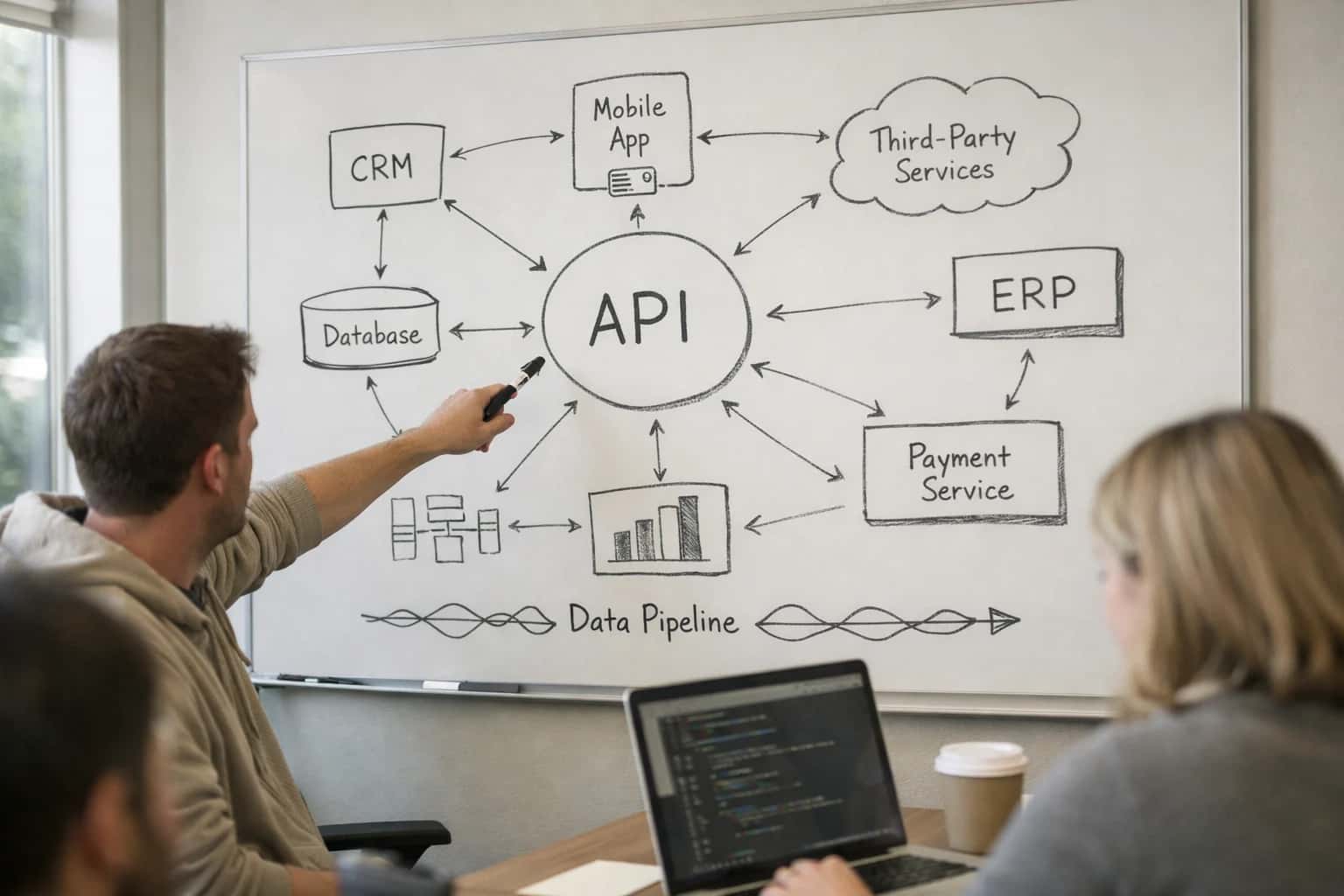
Where AI Fits into Opcenter-Powered Packaging Lines
A practical guide to embedding AI agents and models into Siemens Opcenter's execution and quality modules to automate visual inspection, optimize material flow, and enhance line coordination for packaging operations.
A typical implementation wires an AI inference service—hosted on-premises or in a hybrid cloud—to Opcenter's RESTful APIs and message queues. For example, a vision model analyzing case packing patterns can send a JSON payload to Opcenter's Nonconformance Management module to auto-create a defect record, complete with images and suggested root cause codes from a vector database of past incidents. Simultaneously, an agent workflow can consult Opcenter's material consumption data to predict a shortfall and automatically generate a pick request in the connected WMS. Governance is critical: all AI-triggered actions in Opcenter should flow through an approval step or audit log, with human-in-the-loop review for high-risk deviations, ensuring the MES remains the single source of truth.
Rollout follows a phased approach, starting with a single primary packaging line (e.g., fill-level monitoring) to validate the data pipeline and Opcenter integration points before scaling to secondary packaging and palletizing. Success depends on aligning AI model retraining cycles with Opcenter's production calendar and change management workflows, ensuring new inference logic is versioned and deployed in sync with Opcenter recipe updates. For teams evaluating this integration, the value isn't in replacing Opcenter but in amplifying its responsiveness, turning manual, lagging checks into automated, predictive safeguards that keep lines running and quality consistent.
Opcenter Modules and Surfaces for AI Integration
Production Order & Work Instruction Layer
This is the primary surface for AI-driven real-time decision support. AI models can be integrated to dynamically adjust work instructions, routing, and sequencing based on live packaging line conditions.
Key Integration Points:
- Production Order Management: Inject AI logic to modify order priorities or sequences in response to machine downtime, material shortages, or quality alerts from vision systems.
- Digital Work Instructions: Use AI to personalize and adapt operator instructions displayed on HMIs or mobile devices. For example, dynamically highlighting critical quality checks based on the product SKU or past defect patterns.
- Operator Guidance: Embed conversational AI copilots within the Opcenter interface to provide step-by-step troubleshooting, answer procedural questions, and capture operator feedback for continuous improvement.
Integration is typically achieved via Opcenter's RESTful APIs or by extending its .NET-based business logic services (BLS) to call external AI inference endpoints.
High-Value AI Use Cases for Packaging Lines
Integrate AI directly into Siemens Opcenter's execution and quality modules to automate visual inspection, optimize material flow, and provide real-time operator guidance—turning packaging line data into immediate, actionable intelligence.
Automated Label & Artwork Verification
Integrate vision AI models with Opcenter's quality module to inspect labels for correctness, legibility, and placement in real-time. AI analyzes images from line cameras, compares against the master artwork and batch record in Opcenter, and automatically logs deviations as non-conformances, preventing mislabeled cases from advancing.
Fill-Level & Seal Integrity Monitoring
Use AI to analyze sensor and vision data ingested into Opcenter's intelligence layer to monitor liquid fill levels and heat seal integrity. The system detects underfills, overfills, and weak seals, triggering automatic rejections and updating the production order's good quantity count in Opcenter Execution without manual intervention.
Dynamic Case Packing Pattern Optimization
An AI agent integrated with Opcenter's scheduling and execution modules analyzes incoming product SKUs, case sizes, and robot capabilities to calculate the optimal packing pattern. It dynamically updates the robot pick-and-place instructions and material consumption forecasts in the active production order to maximize pallet density and minimize changeover time.
Operator Copilot for Changeovers & Troubleshooting
Embed a conversational AI assistant within Opcenter's shop floor interface. Using Opcenter's work instructions and machine history, the copilot guides operators through changeover sequences, provides troubleshooting steps for common faults (like film jams or encoder errors), and logs resolved issues back to the production order for lineage.
Predictive Material Replenishment
An AI model analyzes Opcenter's real-time consumption rates of film, labels, and adhesives against warehouse inventory levels and supplier lead times. It predicts shortages before they cause a line stop and automatically generates material call-off signals or purchase requisitions in connected ERP systems via Opcenter's integration layer.
Automated Palletizing & Load Stability Audit
Integrate AI vision at the end of the line to audit completed pallets. The system verifies layer pattern correctness, label orientation, and overall load stability against Opcenter's shipping specifications. It generates a digital twin of the pallet for the electronic batch record and flags any non-compliant loads for rework before they leave the facility.
Example AI-Augmented Packaging Workflows
These workflows illustrate how AI agents and models connect to specific modules and data streams within Siemens Opcenter to automate packaging line decisions, reduce manual oversight, and improve first-pass yield. Each pattern is designed to be implemented as a microservice or agent that interacts with Opcenter's APIs and event system.
Trigger: A camera system or vision sensor at the labeling station sends an image payload via Opcenter's IIoT gateway upon each product pass.
Context/Data Pulled: The AI service receives the image and calls Opcenter Execution's Production Order API to retrieve:
- The current production order number and item master data.
- The correct label template and SKU details from the associated bill of material (BOM).
- The acceptable quality limits (AQL) for label defects from the connected Quality Management module.
Model/Agent Action: A computer vision model (e.g., fine-tuned YOLO or CLIP) analyzes the image for:
- Correct SKU and batch code.
- Proper placement and alignment.
- Legibility (no smudging, tearing).
- Presence of required regulatory symbols.
The model returns a confidence score and a defect classification (e.g.,
misplaced,unreadable,wrong_label).
System Update/Next Step: Based on a configurable confidence threshold:
- Pass: The agent logs a
verification_passevent to the production order's electronic batch record in Opcenter. - Fail: The agent immediately triggers a rejection mechanism via Opcenter's PLC integration layer and creates a Nonconformance Record (NCR) in Opcenter Quality. It auto-populates the NCR with the defect image, classification, and associated production order.
Human Review Point: NCRs with low-confidence model inferences or defects classified as critical are flagged for immediate quality technician review in the Opcenter Quality dashboard.
Implementation Architecture: Data Flow and Integration Points
A practical blueprint for integrating AI vision and optimization models directly into Siemens Opcenter's execution workflows for packaging operations.
The integration connects at three primary layers within Siemens Opcenter: the Execution module for real-time work order and operator guidance, the Quality Management module for inspection results and nonconformance records (NCRs), and the underlying Manufacturing Integration Framework (MIF) or OData APIs for bi-directional data flow. AI models for label verification, fill-level monitoring, and case packing optimization run as containerized microservices, consuming real-time image streams from line cameras and sensor data via Opcenter's event-driven architecture. Inference results are written back as quality events, work order attributes, or adaptive setpoints, triggering automated workflows within the MES without manual intervention.
A typical data flow for a fill-level inspection use case involves: 1) Opcenter dispatches a production order for a SKU, 2) the AI service subscribes to order start events via the MIF, 3) camera systems capture images at the fill station, streaming them to the vision model, 4) the model returns a pass/fail score and metadata (e.g., actual_fill_percentage: 98.2), 5) this payload is posted to Opcenter's Quality API to create an inspection result linked to the specific work order and material lot, and 6) if a fail is detected, Opcenter's automation rules can trigger an NCR, pause the line, or route the container for rework—all within the governed execution layer.
Rollout follows a phased approach, starting with a single primary packaging line (e.g., bottle filler) to validate the data pipeline and Opcenter integration points before scaling. Governance is critical: all AI inferences must be logged with traceability back to the production order, material lot, and sensor timestamp. A human-in-the-loop review queue should be maintained in Opcenter for low-confidence predictions, allowing operators to confirm or override AI calls, which then feedback to retrain the models. This architecture ensures AI augments Opcenter's existing audit trails and change control, rather than creating a parallel, ungoverned system.
Code and Payload Examples
Handling Vision System Alerts
Integrate AI for real-time label verification and fill-level monitoring by processing webhook alerts from vision systems (e.g., Cognex, Keyence) into Opcenter. This Python handler validates the alert, enriches it with Opcenter context (like line_id, product_sku), and routes it for AI inference.
python# Example: Flask endpoint for vision system webhook from flask import Flask, request, jsonify import requests app = Flask(__name__) OPCENTER_API_BASE = "https://opcenter-instance/api" AI_INFERENCE_ENDPOINT = "https://ai-service/infer" @app.route('/vision-webhook', methods=['POST']) def handle_vision_alert(): data = request.json # Validate and extract vision data alert = { "camera_id": data.get('cameraId'), "timestamp": data.get('timestamp'), "image_url": data.get('imageUrl'), "defect_code": data.get('defectCode'), "confidence": data.get('confidence') } # Fetch Opcenter context for this station opcenter_context = get_opcenter_context(alert['camera_id']) # Prepare payload for AI service ai_payload = { "alert": alert, "context": opcenter_context, "action_required": True } # Call AI service for classification & recommendation ai_response = requests.post(AI_INFERENCE_ENDPOINT, json=ai_payload).json() # Log result and trigger Opcenter workflow log_to_opcenter(ai_response) return jsonify({"status": "processed", "ai_recommendation": ai_response.get('action')}) def get_opcenter_context(camera_id): # Map camera to Opcenter line/station # Returns data like: {"line": "PACK-LINE-01", "product": "SKU-12345", "order": "WO-67890"} pass
Realistic Time Savings and Operational Impact
How AI integration into Siemens Opcenter's execution layer transforms packaging line workflows, focusing on label verification, fill-level monitoring, and case packing.
| Workflow | Before AI | After AI | Implementation Notes |
|---|---|---|---|
Label Verification | Manual visual checks at line speed | Automated camera-based inspection with AI scoring | Integrates with Opcenter's quality module to log defects and trigger rework |
Fill-Level Monitoring | Periodic manual sampling and scale checks | Continuous vision/weight sensor analysis with real-time alerts | AI model feeds deviation data into Opcenter's SPC charts for trend analysis |
Case Packing Pattern Validation | Post-palletization audit; errors found after the fact | Real-time validation of case count and orientation during packing | Uses Opcenter's event-driven architecture to stop the line or alert operators immediately |
Line Changeover Setup | Operator references paper SOPs; 30-45 minute process | AI-assisted digital work instructions with AR overlay guidance | Dynamic instructions served via Opcenter's execution client, personalized by operator skill level |
Defect Root Cause Analysis | Engineer manually reviews logs and SPC data over hours | AI correlates defects with machine parameters and suggests top 3 probable causes | Analysis presented within Opcenter Intelligence dashboards, reducing MTTR by 70% |
Daily Shift Production Report | Supervisor compiles data from multiple screens at shift end | AI auto-generates narrative summary with key anomalies and recommendations | Report is pushed to Opcenter's reporting module and emailed 15 minutes post-shift |
Preventive Maintenance Triggering | Time-based schedules; maintenance may not align with actual wear | AI predicts maintenance needs based on pack count, jam frequency, and motor current | Automatically creates work orders in integrated CMMS, synced via Opcenter's connector framework |
Governance, Security, and Phased Rollout
A structured approach to implementing AI within Siemens Opcenter for packaging, ensuring security, compliance, and measurable ROI.
Integrating AI into a regulated packaging environment requires a governance-first architecture. We design solutions that treat Opcenter's execution layer as the system of record, with AI models acting as advisory agents. This means AI inferences for label verification or fill-level monitoring are logged as annotations against specific production orders, material lots, and equipment IDs within Opcenter's native data model. All data flows are encrypted in transit, and model access is controlled via Opcenter's existing role-based access control (RBAC) to ensure only authorized personnel can view or act on AI-generated alerts. For traceability, every AI inference is linked to the source sensor data and user action, creating a complete audit trail for quality events or regulatory review.
A phased rollout minimizes disruption and builds confidence. A typical implementation follows this sequence:
- Phase 1: Observational Pilot. Deploy AI models for passive monitoring on a single packaging line. Models analyze camera feeds for label placement and fill levels, logging predictions to a separate dashboard without interrupting Opcenter's core workflows. This phase validates model accuracy and establishes a performance baseline.
- Phase 2: Assisted Workflow. Integrate AI alerts into Opcenter's operator dashboards or Andon systems. For example, a low-confidence label verification triggers a visual alert for the line operator, who makes the final accept/reject decision within Opcenter. This introduces AI as a copilot, not an autonomous system.
- Phase 3: Conditional Automation. For high-confidence, repeatable decisions, implement automated actions. A confirmed fill-level anomaly could automatically trigger a nonconformance record (NCR) in Opcenter Quality, pause the line via Opcenter Execution, and notify maintenance—all through Opcenter's existing APIs and workflow engine. Human-in-the-loop approvals are maintained for critical deviations.
Governance is continuous. We implement monitoring for model drift using Opcenter's historical production and quality data to ensure AI performance doesn't degrade as packaging materials or line speeds change. A cross-functional team from operations, quality, and IT reviews AI performance metrics weekly, using the phased approach to control the scope of automation. This structured rollout de-risks the investment, aligns AI capabilities with operational readiness, and ensures the integration enhances—rather than complicates—your existing Opcenter-driven packaging operations.
Enabling Efficiency, Speed & Accuracy
Intelligent Analysis, Decision & Execution
We build AI systems for teams that need search across company data, workflow automation across tools, or AI features inside products and internal software.
Talk to Us
Search across company data
Give teams answers from docs, tickets, runbooks, and product data with sources and permissions.
Useful when people spend too long searching or get different answers from different systems.

Automate internal workflows
Use AI to route work, draft outputs, trigger actions, and keep approvals and logs in place.
Useful when repetitive work moves across multiple tools and teams.

Add AI to products and internal tools
Build assistants, guided actions, or decision support into the software your team or customers already use.
Useful when AI needs to be part of the product, not a separate tool.
Frequently Asked Questions
Practical questions about embedding AI into Siemens Opcenter to enhance packaging line operations, from initial integration to ongoing governance.
AI models connect to Opcenter's core manufacturing objects via its OData REST APIs and event-driven architecture. Key integration points include:
- Production Orders & Operations: AI reads order details, SKU specifications, and planned vs. actual timings to predict line performance.
- Equipment & Resources: Real-time status from Opcenter Equipment Manager provides context for AI-driven anomaly detection on fillers, labelers, and case packers.
- Material Consumption: AI analyzes material usage records (e.g., film, labels, adhesive) against standards to flag waste or potential shortages.
- Quality Data: Inspection results (visual, weight, seal integrity) from connected vision systems or manual entries are ingested for AI-powered trend analysis and defect root cause suggestion.
A typical implementation uses a middleware layer (like a secure API gateway) to broker requests between Opcenter and AI inference services, ensuring data is formatted correctly and responses (e.g., "anomaly detected on Filler 3") are written back to Opcenter's event log or used to trigger automated workflows.

About the author
Prasad Kumkar
CEO & MD, Inference Systems
Prasad Kumkar is the CEO & MD of Inference Systems and writes about AI systems architecture, LLM infrastructure, model serving, evaluation, and production deployment. Over 5+ years, he has worked across computer vision models, L5 autonomous vehicle systems, and LLM research, with a focus on taking complex AI ideas into real-world engineering systems.
His work and writing cover AI systems, large language models, AI agents, multimodal systems, autonomous systems, inference optimization, RAG, evaluation, and production AI engineering.
Partnered with leading AI, data, and software stack.





How We Work
Custom AI workflows for your Business
One-fit-all AI don't work for modern businesses. At Inferensys, we aim to understand your business & custom requirements; which we use to define most efficient agentic workflows, the data, and the tools for your business.
01
Review the use case
We understand the task, the users, and where AI can actually help.
Read more02
Pick the right approach
We define what needs search, automation, or product integration.
Read more03
Build the first useful version
We implement the part that proves the value first.
Read more04
Improve from there
We add the checks and visibility needed to keep it useful.
Read moreThe first call is a practical review of your use case and the right next step.
Talk to Us