In automotive manufacturing, AI integration targets specific surfaces within Opcenter's modular architecture. For execution, AI agents connect to the production order management APIs to validate build sequences against the Bill of Material (BOM) and Engineering Change Orders (ECOs) in real-time, flagging mismatches before they reach the line. Within the quality module, models are wired to inspection data streams—particularly critical for torque audit analysis and dimensional measurements—to classify defects, cluster failure patterns by station, and automatically trigger Non-Conformance Reports (NCRs). For intelligence and reporting, AI enriches Opcenter's analytics by correlating sensor data from PLCs with final test results to predict yield deviations and generate root-cause narratives for downtime events.

Integration
AI Integration with Siemens Opcenter for Automotive
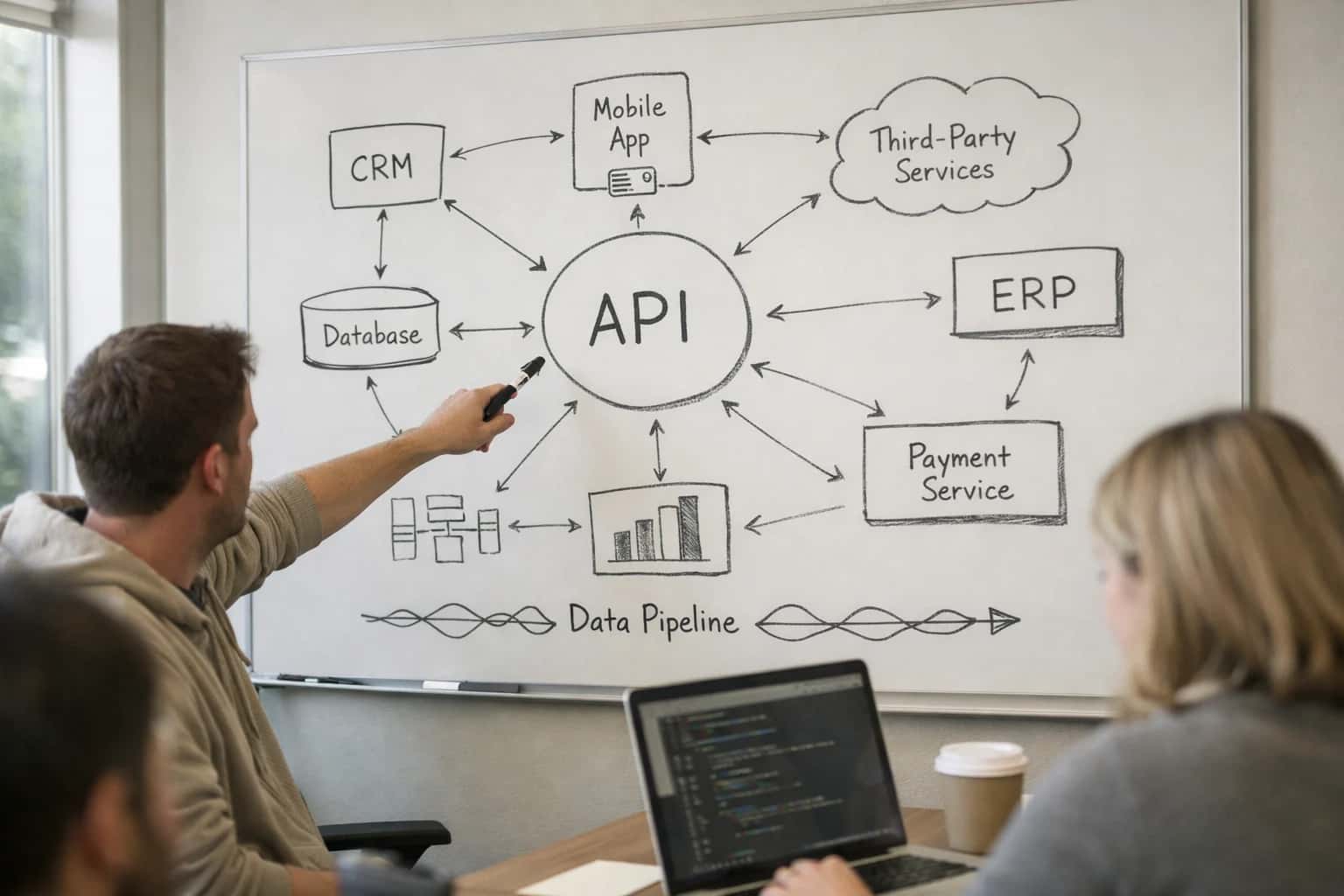
Where AI Fits in Automotive Opcenter
A practical blueprint for embedding AI agents into Siemens Opcenter's execution, quality, and intelligence modules to meet automotive manufacturing's unique demands for sequence integrity, torque audit, and defect pattern recognition.
Implementation follows a phased, use-case-led rollout. Start by deploying a read-only AI agent on a single high-value assembly line—such as the final drive unit or door panel station—using Opcenter's OData APIs and message queues to consume real-time Andon signals, cycle time data, and inspection results. The initial workflow might focus on automated torque audit review, where the AI validates every fastener's torque-angle curve against the golden batch, escalating only anomalous readings to quality engineers. This reduces manual review from hours to minutes per vehicle. Subsequent phases layer on defect pattern recognition across body shop weld inspections and predictive sequence validation for mixed-model scheduling, each requiring careful mapping of Opcenter's data objects like ProductionOrder, WorkUnit, and InspectionResult.
Governance is critical. AI inferences must be logged back to Opcenter's audit trail, and any automated actions—like holding a unit—should require human-in-the-loop approval for high-risk deviations. Rollout plans should include operator copilot interfaces built into Opcenter's existing Shop Floor Terminal screens, providing contextual guidance without disrupting the core workflow. The integration's value is measured in reduced escape of defects, faster containment actions, and improved First-Time-Through (FTT) rates, not by replacing Opcenter but by making its rigorous data actionable in real-time for supervisors and engineers.
Key Opcenter Modules for AI Integration
The Core Production Orchestrator
This module manages the real-time flow of work orders, materials, and resources across the assembly line. For automotive, this is where sequence integrity is paramount. AI integration focuses on injecting intelligence into the execution logic.
Key AI Use Cases:
- Dynamic Sequencing: Use AI to re-sequence vehicles in real-time based on material shortages, quality holds, or station downtime, while maintaining critical build constraints (e.g., engine/trim combinations).
- Exception Handling: Deploy AI agents to interpret Andon stops or operator inputs, diagnose the likely root cause from historical patterns, and suggest immediate containment or rerouting actions.
- Operator Guidance: Integrate a conversational copilot that provides context-aware next steps, torque specs, or troubleshooting guides based on the specific vehicle VIN and station.
Integration typically occurs via Opcenter's service layer (REST/OData) to read order status and post adaptive dispatch commands.
High-Value AI Use Cases for Automotive Opcenter
Integrate AI directly into Siemens Opcenter to address automotive manufacturing's unique challenges: high-mix assembly, stringent quality gates, and complex traceability. These use cases show where AI agents and models connect to Opcenter's data model and workflows to deliver measurable operational gains.
Automated Torque Audit & Sequence Validation
Integrate AI with Opcenter's execution layer to analyze real-time torque data from smart tools and assembly stations. The AI validates sequence integrity, flags missed or out-of-spec fasteners, and automatically triggers rework instructions—ensuring every vehicle meets critical safety specifications without manual audit sampling.
Defect Pattern Recognition Across Assembly Stations
Connect AI models to Opcenter's quality management module (NCRs, inspection data). The system clusters defect images and codes from final inspection, paint shops, and body-in-white, identifying root-cause stations or tooling issues. It suggests targeted corrective actions to engineering and maintenance teams within Opcenter workflows.
Dynamic Work Instruction Personalization
Embed an AI copilot into Opcenter's operator-facing screens (displays, tablets). Using the active production order, operator certification level, and real-time Andon status, the AI dynamically tailors digital work instructions—simplifying complex steps for new hires or adding advanced diagnostics for seasoned technicians, reducing errors and cycle time.
Predictive Material Shortage & Line-Side Replenishment
Leverage Opcenter's production scheduling and inventory transactions as a data source. An AI model analyzes consumption rates, supplier delivery performance, and line sequencing to predict stock-outs at specific stations hours in advance. It automatically triggers optimized pick lists in the connected WMS or alerts material handlers via Opcenter tasks.
Automated Device History Record (DHR) Review & Compliance
For electric vehicles or advanced driver-assistance systems (ADAS), use AI to audit the complete DHR within Opcenter's genealogy. The agent checks for missing data, validates test results against specs, and ensures UDI traceability compliance. It generates a pre-filled compliance report, cutting audit preparation from days to hours.
AI-Powered Andon Triage & Escalation
Integrate an AI agent with Opcenter's Andon system and maintenance modules. When a line stop occurs, the AI analyzes the fault code, station, and recent maintenance history to classify the issue, recommend immediate troubleshooting steps to the operator, and automatically route the ticket to the correct support team (electrical, mechanical, quality) within Opcenter.
Example AI-Augmented Workflows
These workflows illustrate how AI agents and models can be embedded into Siemens Opcenter to address automotive-specific challenges around quality, traceability, and assembly integrity. Each flow connects to Opcenter's data model and automation layer.
Trigger: A production order for a critical assembly (e.g., engine block, suspension) is completed in Opcenter Execution, and torque tool data is logged to the ProcessData tables.
Context Pulled: The agent retrieves:
- The specific torque sequence and target values from the Opcenter
WorkInstructionlinked to the operation. - Historical torque curves and final values for the same assembly from the last 50 units.
- Associated operator, station, and tool calibration records.
Agent Action: A pre-trained anomaly detection model analyzes the new torque curves against the historical set, flagging:
- Cross-threading patterns (abnormal ramp-up).
- Under-torque "cushioning" (final value in spec, but curve indicates soft joint).
- Tool drift across multiple stations.
System Update: The agent creates a Nonconformance record in Opcenter Quality, pre-populated with:
- The flagged anomaly type and confidence score.
- Links to the specific
ProductionOrder,SerialNumber, andToolID. - A recommended action: "Hold for manual inspection" or "Flag for audit sample."
Human Review Point: The NC record is routed via Opcenter workflow to the Quality Engineer for review. The agent surfaces similar past anomalies and their resolutions to aid decision-making.
Implementation Architecture & Data Flow
A practical architecture for injecting AI into Siemens Opcenter to enforce automotive manufacturing rigor, focusing on sequence integrity, torque analysis, and defect pattern recognition.
The integration architecture is built on Opcenter's Execution Foundation and Quality Management modules, using their native OData APIs and event-driven messaging (e.g., Opcenter Connect) as the primary data fabric. AI models are deployed as containerized microservices in a secure, on-premise or hybrid cloud environment, interfacing with Opcenter through a dedicated Integration Middleware Layer. This layer handles real-time ingestion of critical automotive data objects: production orders, workstation events, torque audit records from DC tools, vision system results, and nonconformance reports (NCRs). The middleware transforms this data into a unified context payload for AI inference, ensuring models receive structured inputs like VIN sequence, station ID, component serial numbers, and measured torque values with timestamps.
High-value inference workflows are triggered by specific Opcenter events. For sequence integrity validation, an AI agent listens for workstation scan events and cross-references the actual component sequence against the planned bill-of-material (BOM) and job routing, flagging mismatches (e.g., wrong trim variant) before the vehicle moves to the next station. For torque audit analysis, all torque records from a station are aggregated at the end of a job or shift; an AI model analyzes the multivariate distribution, identifying patterns indicative of tool drift, operator technique issues, or cross-threading, and automatically generates a quality alert or corrective action request in Opcenter Quality. Defect pattern recognition operates on images and defect codes logged in NCRs, clustering similar defects across assembly stations and shifts to suggest common root causes, such as a specific fixture or supplier batch.
Rollout follows a phased approach, starting with a single pilot assembly line or high-impact station (e.g., powertrain marriage). Governance is critical: all AI inferences are logged with a unique correlation ID back to the source Opcenter transaction, creating a full audit trail. A human-in-the-loop approval step is maintained for initial deployments, where AI-suggested actions are presented in a supervisor dashboard built within Opcenter Intelligence for review before system execution. This architecture ensures AI augments Opcenter's existing workflows without disrupting validated automotive processes, providing a path to scale from detection to prescriptive automation while maintaining the traceability and control required in regulated automotive production.
Code & Integration Patterns
Integrating AI for Assembly Line Integrity
Inject AI directly into Opcenter Execution's production order flow to validate assembly sequences in real-time. This pattern uses Opcenter's REST APIs or .NET SDK to fetch the current work order and component list, then calls an AI service to cross-reference the planned sequence against the vehicle's digital twin (e.g., from Teamcenter) and real-time station scans.
Key integration points:
- Production Order API: Retrieve active orders and their associated BOMs.
- Station Event Hooks: Trigger AI validation when a station reports a
component_scannedoroperation_completedevent. - Andon Integration: If a sequence deviation is detected (e.g., wrong torque spec for a VIN), the AI service can automatically trigger an Andon alert in Opcenter, pausing the line and notifying the supervisor with the specific discrepancy.
python# Example: Validate assembly sequence for a VIN import requests # 1. Get active production order from Opcenter opcenter_order = requests.get( f"{OPCENTER_BASE_URL}/api/productionorders/{vin}", headers={"Authorization": f"Bearer {token}"} ).json() # 2. Call AI service for sequence validation validation_payload = { "vin": vin, "planned_sequence": opcenter_order["operations"], "actual_components": scan_data_from_station, "vehicle_config": digital_twin_data } ai_result = requests.post( AI_VALIDATION_ENDPOINT, json=validation_payload ).json() # 3. Act on result in Opcenter if not ai_result["is_valid"]: # Trigger Andon alert requests.post( f"{OPCENTER_BASE_URL}/api/andon/alerts", json={ "station": station_id, "alert_code": "SEQ_DEVIATION", "details": ai_result["deviation_reason"] } )
Realistic Time Savings & Operational Impact
This table outlines the tangible impact of integrating AI agents into Siemens Opcenter for automotive manufacturing, focusing on high-rigor assembly, torque audit, and defect workflows. Metrics are based on typical pilot implementations, assuming integration with existing Opcenter modules and data sources.
| Metric | Before AI | After AI | Notes |
|---|---|---|---|
Sequence Integrity Validation | Manual station-to-station checklist review | Automated real-time validation with exception alerts | AI cross-references BOM, station scans, and component images; flags mismatches in <2 seconds |
Torque Audit Analysis | Post-shift batch analysis of 1000s of records | Continuous, per-fastener analysis with trend detection | AI correlates torque-angle curves with tool/operator data, surfaces drift patterns for immediate correction |
Visual Defect Pattern Recognition | Random sampling or post-assembly inspection | 100% inline inspection with automated defect clustering | AI analyzes camera feeds at key stations, groups similar defects to identify root causes (e.g., fixture wear, part variation) |
Nonconformance Report (NCR) Triage | Manual review and classification by quality engineer | Assisted classification with root cause suggestions | AI suggests defect codes and probable causes from historical NCRs, reducing initial review time by ~70% |
Andon Response Routing | Manual call for support based on operator judgment | Intelligent routing based on fault type and historical resolution | AI analyzes error codes and sensor states to dispatch the correct maintenance or engineering skill set |
Work Instruction Personalization | Static digital work instructions for all operators | Dynamic instructions adapted to operator certification and shift performance | AI tailors complexity and detail based on individual operator skill level and recent error rates, served via Opcenter's execution client |
End-of-Line Test Data Review | Engineer reviews pass/fail logs for patterns weekly | Automated daily summary of failure clusters and correlation to upstream process parameters | AI links test station failures to specific assembly stations and process variables, highlighting likely process deviations |
Governance, Security & Phased Rollout
Integrating AI into Siemens Opcenter for automotive production requires a controlled, secure, and phased approach to ensure reliability and compliance.
A production-ready integration must enforce strict data governance and role-based access control (RBAC) within Opcenter's modules. AI agents should operate with clearly defined permissions, interacting only with authorized data objects—such as production orders, torque audit records, SPC data, and nonconformance reports (NCRs). All AI-generated insights, like a sequence integrity alert or a defect pattern suggestion, must be written back to Opcenter with a full audit trail, linking the inference to the source data, model version, and user context for complete traceability.
Security is paramount, especially when AI models process sensitive operational data. The architecture should keep inference within the plant network or a private cloud, using Opcenter's APIs and event-driven architecture as a secure conduit. For example, a model analyzing weld seam inspection images or torque audit logs should receive data via authenticated API calls, with outputs returning as structured payloads to trigger predefined workflows in Opcenter Execution or Quality, never exposing raw model endpoints directly to the broader IT environment.
A phased rollout mitigates risk and builds operational trust. Start with a single, high-value use case in a controlled environment, such as AI-assisted sequence validation for a critical assembly line. This allows teams to validate the integration's accuracy, calibrate alert thresholds, and establish human-in-the-loop review steps before automation. Subsequent phases can expand to cross-station defect correlation or predictive torque audit analysis, each new capability rolled out module-by-module with clear change management, operator training, and success metrics tied to reducing manual review time or preventing escapes.
Enabling Efficiency, Speed & Accuracy
Intelligent Analysis, Decision & Execution
We build AI systems for teams that need search across company data, workflow automation across tools, or AI features inside products and internal software.
Talk to Us
Search across company data
Give teams answers from docs, tickets, runbooks, and product data with sources and permissions.
Useful when people spend too long searching or get different answers from different systems.

Automate internal workflows
Use AI to route work, draft outputs, trigger actions, and keep approvals and logs in place.
Useful when repetitive work moves across multiple tools and teams.

Add AI to products and internal tools
Build assistants, guided actions, or decision support into the software your team or customers already use.
Useful when AI needs to be part of the product, not a separate tool.
Frequently Asked Questions
Practical answers for automotive teams planning AI integration into Siemens Opcenter, covering implementation patterns, workflow specifics, and operational governance.
This integration uses Opcenter's Execution Foundation (EF) as the event broker.
Typical Architecture:
- Trigger: A
ProductionOrderOperationis completed and confirmed in Opcenter Execution, generating a transaction with torque tool data (tool ID, sequence, measured values, thresholds). - Context Pull: An integration service (e.g., a lightweight container) listens for this transaction via Opcenter's OData API or a message queue. It enriches the event with:
- Part number and station context from the
WorkCenter. - Historical torque data for the same tool/station from Opcenter's SQL database.
- Part number and station context from the
- AI Action: The enriched payload is sent to a dedicated inference endpoint. A model analyzes the multivariate sequence:
- Identifies patterns indicative of cross-threading, sealant issues, or tool calibration drift.
- Scores the audit as
PASS,REVIEW, orHOLD.
- System Update: The result is posted back to Opcenter via API:
- A
NonConformancerecord is auto-created forHOLDscores, linking to the specific operation. - A log entry is added to the
ProductionOrderforREVIEWscores, flagging it for supervisor attention in the Opcenter Intelligence dashboard.
- A
- Human Review Point:
REVIEWscores are routed via Opcenter to a station supervisor's tablet queue. The AI provides reasoning (e.g., "Sequence pattern matches 85% of historical cross-thread events") to guide the manual decision.

About the author
Prasad Kumkar
CEO & MD, Inference Systems
Prasad Kumkar is the CEO & MD of Inference Systems and writes about AI systems architecture, LLM infrastructure, model serving, evaluation, and production deployment. Over 5+ years, he has worked across computer vision models, L5 autonomous vehicle systems, and LLM research, with a focus on taking complex AI ideas into real-world engineering systems.
His work and writing cover AI systems, large language models, AI agents, multimodal systems, autonomous systems, inference optimization, RAG, evaluation, and production AI engineering.
Partnered with leading AI, data, and software stack.





How We Work
Custom AI workflows for your Business
One-fit-all AI don't work for modern businesses. At Inferensys, we aim to understand your business & custom requirements; which we use to define most efficient agentic workflows, the data, and the tools for your business.
01
Review the use case
We understand the task, the users, and where AI can actually help.
Read more02
Pick the right approach
We define what needs search, automation, or product integration.
Read more03
Build the first useful version
We implement the part that proves the value first.
Read more04
Improve from there
We add the checks and visibility needed to keep it useful.
Read moreThe first call is a practical review of your use case and the right next step.
Talk to Us