Ignition's native energy monitoring capabilities—through its Tag Historian, Perspective dashboards, and SQL Bridge connections to utility meters and machine PLCs—create a real-time data fabric of consumption across lines, cells, and entire facilities. AI integration injects intelligence at three key layers: 1) Streaming Analysis for immediate anomaly detection in kW draw or power factor, 2) Batch-Level Correlation linking energy spikes to specific production orders or equipment states in Ignition's MES modules, and 3) Forecasting Engines that use historical time-series data from the Ignition Historian to predict demand for upcoming production schedules.

Integration
AI Integration with Ignition for Energy Monitoring
Add predictive intelligence to Ignition's energy monitoring to identify waste, forecast demand, and optimize equipment sequences for measurable cost savings.
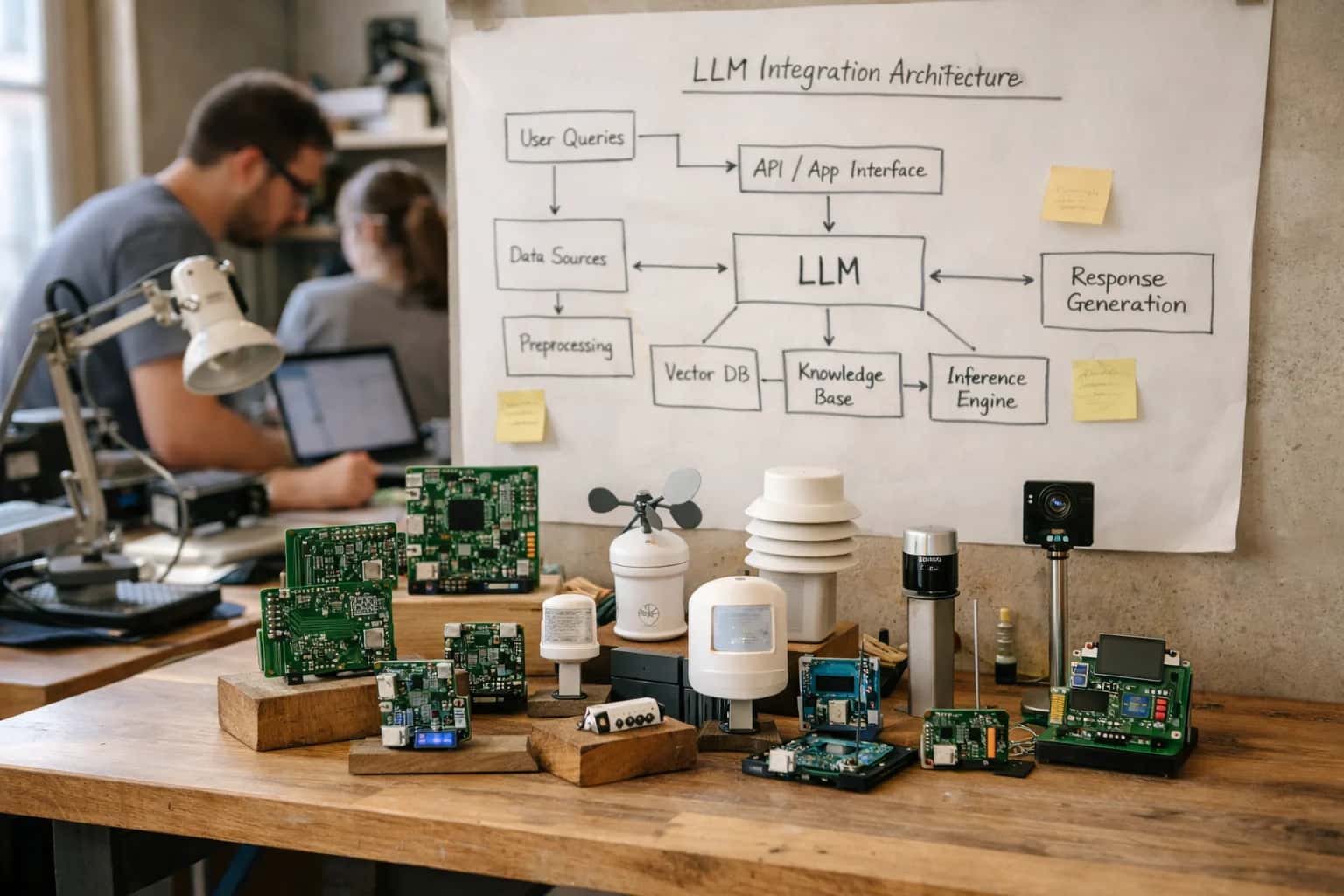
ARCHITECTURE FOR PREDICTIVE OPTIMIZATION
Where AI Fits into Ignition's Energy Data Stream
Integrating AI with Ignition's energy monitoring transforms passive data collection into a dynamic system for predictive cost control and equipment optimization.
A practical implementation wires an AI inference service to consume Ignition's MQTT or REST API streams. For example, a model trained on historical patterns can predict the energy cost of a scheduled batch, allowing the system to suggest optimal start times to avoid peak utility rates or recommend equipment pre-heat sequences that minimize total consumption. This logic can be fed back into Ignition's scripting engine to automate control actions—like staggering compressor starts—or to populate advisory alerts in operator HMIs. The result is a closed-loop system where energy data informs production, and production schedules inform energy planning.
Rollout focuses on high-consumption assets first, using Ignition's data to establish baselines. Governance is critical: AI recommendations for equipment start/stop should route through Ignition's alarm and approval workflows, requiring supervisor acknowledgment for major changes. This maintains human-in-the-loop control while automating the analysis. By layering AI onto Ignition's existing data streams, manufacturers achieve incremental efficiency gains—reducing energy costs per unit by 5-15% in typical scenarios—without replacing their core SCADA/MES investment.
WHERE TO CONNECT AI MODELS
Key Ignition Surfaces for AI Energy Integration
Real-Time Sensor Data Fabric
Ignition's core strength is its ability to aggregate high-frequency energy data from PLCs, meters, and IoT sensors into a unified historian. This creates the foundational data fabric for AI.
Key Integration Points:
- Tag Historian: Time-series data for kW, kWh, power factor, voltage, and amperage across circuits, machines, and buildings.
- SQL Bridge: Historical energy data stored in SQL databases (e.g., MSSQL, PostgreSQL) for batch analysis and model training.
- Real-time Tag Values: Live data streams for instantaneous AI inference and alerting.
AI Use Cases:
- Train predictive models on historical consumption patterns.
- Perform real-time anomaly detection on live power draws.
- Calculate baselines and forecast energy demand for upcoming production schedules.
IGNITION INTEGRATION PATTERNS
High-Value AI Energy Use Cases for Manufacturing
Ignition's real-time data acquisition and visualization platform provides the perfect foundation for AI-driven energy optimization. These patterns show where to inject intelligence to move from passive monitoring to predictive control.
01
Predictive Energy Demand for Production Schedules
Connect AI models to Ignition's production order and equipment status tags. The model analyzes the schedule, historical energy profiles per product/line, and real-time machine states to forecast energy demand for the next shift or day. This enables proactive utility purchasing and load balancing with the grid.
Batch -> Real-time
Forecast cadence
02
Intelligent Equipment Start/Stop Sequencing
Use AI to optimize the sequence and timing of non-critical equipment (HVAC, compressors, pumps, conveyors) based on real-time energy pricing signals from Ignition's data feeds and production line readiness. The model sends optimized setpoints back to Ignition's supervisory control scripts to execute staggered startups, avoiding peak demand charges.
Same day
ROI visibility
03
Anomaly Detection in Energy Consumption Patterns
Deploy unsupervised learning models on Ignition's historian or SQL-tagged energy streams (kW, kWh, pressure, flow). The AI establishes a normal baseline for each asset or zone and flags subtle deviations that indicate waste—like compressed air leaks, insulation failure, or bearing wear—long before traditional threshold alarms trigger.
Hours -> Minutes
Alert lead time
04
Root Cause Analysis for Energy Spikes
When an energy spike is detected, an AI agent correlates the event across Ignition's data model: production orders running, OEE states, ambient conditions, and parallel equipment activity. It generates a narrative summary for the supervisor's HMI dashboard, pinpointing the most likely cause (e.g., 'Spike correlates with Line 2 changeover and auxiliary heater activation').
1 sprint
Typical implementation
05
Per-Unit Energy Costing & Variance Reporting
Augment Ignition's OEE and production reporting by allocating actual energy consumption (from sub-meters) to specific work orders or batches in real time. An AI model handles the complex attribution logic, compares actual vs. standard cost, and pushes variance insights to Ignition's reporting modules or directly to ERP for granular cost accounting.
06
AI-Powered Energy Dashboards & Operator Guidance
Build Perspective modules that use AI to transform raw energy data into actionable guidance. Instead of just showing a kW graph, the dashboard highlights the top 3 energy-saving opportunities for the shift, suggests specific setpoint adjustments, and estimates the savings impact—all powered by models connected to Ignition's tag system.
IGNITION INTEGRATION PATTERNS
Example AI-Enhanced Energy Workflows
These workflows illustrate how AI models connect to Ignition's real-time data fabric to automate energy monitoring, prediction, and optimization. Each pattern uses Ignition's tags, scripting, and database connectivity as the integration layer.
This workflow uses AI to forecast energy needs based on the production schedule, enabling proactive utility purchasing or load shifting.
- Trigger: A new production schedule is released in the ERP (e.g., SAP) and synchronized to Ignition via its database bridge or MQTT connector.
- Context/Data Pulled: The Ignition script extracts the schedule details (product IDs, quantities, work centers, start times) and joins them with historical energy consumption data from the Ignition historian for similar past production runs.
- Model or Agent Action: A time-series forecasting model (e.g., Prophet, LSTM) is called via a REST API. The payload includes the schedule and historical context. The model returns a predicted energy demand curve (kW/h) for the scheduled period.
- System Update or Next Step: The predicted curve is written back to Ignition as a set of forecast tags. A dashboard in Ignition Perspective compares forecast vs. actual in real-time. If the forecast exceeds a contractual threshold, an automated alert can be sent to the energy manager or a utility API.
- Human Review Point: The energy manager reviews the forecast and dashboard daily. The system can be configured to require approval before automatically submitting a load adjustment request to the utility provider.
AI-ENHANCED ENERGY INTELLIGENCE
Implementation Architecture: Data Flow & Model Integration
A practical architecture for integrating AI models with Ignition's real-time energy monitoring to predict demand, identify waste, and automate optimization.
The integration architecture uses Ignition's Tag Historian and SQL Bridge as the primary data fabric. Energy consumption tags (kWh, power factor, demand) from meters, PLCs, and equipment are logged into Ignition's time-series database. Concurrently, contextual production data—such as active production orders, equipment states (running, idle, setup), and environmental setpoints—are stored in a connected transactional database (e.g., SQL Server, Oracle). An external AI service, hosted in a cloud or on-premises container, polls these data sources via Ignition's REST API and JDBC connections on a scheduled basis (e.g., every 15 minutes) to create a unified feature set for model inference.
Two primary AI models operate in this flow: a forecasting model and an anomaly detection model. The forecasting model uses historical energy and production schedule data from Ignition to predict hourly energy demand for the next production shift, enabling pre-cooling or load-shifting decisions. The anomaly detection model runs unsupervised learning on real-time streams to identify energy waste patterns, such as equipment drawing base load during non-production hours or compressors operating inefficiently. Inference results are written back to Ignition as new memory tags (e.g., AI_Predicted_Demand_kW, AI_Waste_Alert) and logged into a dedicated Alarm Journal for operator visibility. For closed-loop control, the system can generate Ignition SFCs (Sequential Function Charts) or scripts that automatically adjust setpoints or trigger equipment shutdown sequences during predicted low-utility-rate windows, with a required manual approval gate in the HMI for critical systems.
Rollout follows a phased approach: start with a single production line or utility plant, using Ignition's Perspective Module to build a dedicated energy copilot view that surfaces AI insights alongside traditional gauges. Governance is managed through Ignition's audit trail to log all AI-generated recommendations and actions, and a feedback loop where operators can confirm or reject waste alerts, improving model accuracy over time. The architecture is designed for resilience; if the AI service is unavailable, Ignition continues standard monitoring and control, with inference resuming once connectivity is restored.
AI-IGNITION INTEGRATION PATTERNS
Code & Payload Examples
Real-Time Anomaly Detection
This pattern uses Ignition's scripting engine to call an AI inference endpoint when sensor data exceeds dynamic thresholds. The model analyzes multivariate time-series data (e.g., power, vibration, temperature) to detect subtle failure patterns before traditional alarms trigger.
Typical Integration Points:
- Ignition's
system.tag.writeAsync()to log predictions. - Tag change scripts on critical equipment tags.
- Python Gateway module for model hosting.
Example Python Script (Gateway Module):
python# Called from Ignition script via py4j import requests import pandas as pd def predict_anomaly(tag_data_dict): """ tag_data_dict: {'motor_amp': 45.2, 'motor_temp': 82.1, ...} Returns: anomaly_score, predicted_failure_mode """ # Prepare payload for model endpoint payload = { "features": tag_data_dict, "model_version": "energy_motor_v1.2" } response = requests.post( 'http://ai-service:8000/predict', json=payload, timeout=2.0 ) if response.status_code == 200: result = response.json() return result['score'], result.get('failure_mode', 'unknown') else: return 0.0, 'inference_error'
The result is written to an Ignition tag, which can trigger alerts, data logging, or automated setpoint adjustments.
AI-ENHANCED ENERGY MONITORING
Realistic Operational Impact & Time Savings
This table illustrates the operational impact of integrating AI with Ignition's energy monitoring capabilities, focusing on measurable time savings and process improvements for energy-intensive manufacturing.
| Metric | Before AI | After AI | Notes |
|---|---|---|---|
Energy Anomaly Detection | Manual review of dashboards, hours per shift | Automated alerts within minutes | AI models continuously analyze sensor streams for deviations from expected consumption patterns. |
Root Cause Analysis for Spikes | Cross-referencing logs & schedules, 2-4 hours | Assisted diagnosis with probable causes, 30-60 minutes | AI correlates energy events with production schedules, equipment states, and environmental data. |
Demand Forecasting for Production | Spreadsheet-based estimates, next-day planning | Dynamic predictions updated with schedule changes, same-day | AI uses production orders and historical data to predict hourly energy needs for cost-aware scheduling. |
Equipment Start/Stop Optimization | Fixed schedules or manual operator commands | AI-recommended sequences based on real-time rates & demand | Suggests non-critical equipment sequencing to avoid peak charges and reduce baseload. |
Energy Waste Pattern Reporting | Monthly manual report compilation, 1-2 days | Automated weekly insights with prioritized actions | AI identifies recurring waste patterns (e.g., idle equipment, compressed air leaks) and quantifies savings potential. |
Utility Bill Variance Explanation | Manual reconciliation, 4-8 hours monthly | Automated variance attribution to specific lines/events, 1 hour | AI matches granular consumption data to billing periods and explains discrepancies. |
Sustainability Reporting Data Prep | Manual data extraction and aggregation for ESG reports | Automated data collection and initial draft generation | AI consolidates energy metrics, calculates carbon equivalents, and populates report templates. |
IMPLEMENTING AI FOR ENERGY OPTIMIZATION
Governance, Security, and Phased Rollout
A practical guide to deploying AI for energy monitoring in Ignition with a focus on control, safety, and measurable impact.
Integrating AI with Ignition's energy monitoring requires a governance-first approach, treating energy data as a critical operational asset. This starts with secure data pipelines from Ignition's SCADA tags, historians (like the Ignition Historian or PI System), and SQL databases to your AI inference layer. Use Ignition's built-in security—tag permissions, OPC UA security policies, and database credential vaults—to enforce role-based access. AI models should never write directly to control tags; instead, they generate recommendations (e.g., suggested setpoints, start/stop sequences) that are logged, reviewed in a dedicated HMI perspective, and optionally approved by an operator or automated through a supervised, rules-based release valve.
A phased rollout mitigates risk and builds trust. Phase 1 focuses on passive monitoring and alerting: deploy AI models to analyze historical and real-time energy streams from Ignition to identify baseline consumption, detect anomalous waste patterns (e.g., equipment running idle during non-production), and generate alerts within existing Ignition alarm pipelines. Phase 2 introduces predictive optimization: use AI to forecast energy demand for upcoming production schedules (pulled from Ignition's MES modules or connected ERP) and simulate equipment start/stop sequences for cost savings. These are presented as "what-if" scenarios in a dashboard. Phase 3 enables closed-loop advisory control: with proven accuracy, implement AI-driven setpoint adjustments for HVAC or non-critical process lines, using Ignition's scripting to apply changes only when within safe, pre-defined bounds and after a configurable human-in-the-loop delay.
Operational governance is sustained through audit trails and feedback loops. Every AI inference, recommendation, and override is logged to a dedicated SQL table with context (timestamp, user, equipment ID). Use Ignition's reporting tools to track AI recommendation adoption rates and realized kWh savings. Crucially, establish a feedback loop where actual energy consumption data post-implementation is fed back to retrain and calibrate models, ensuring they adapt to seasonal changes, new equipment, and shifting production mixes. This controlled, iterative approach ensures AI augments Ignition's robust supervisory role without introducing unmanaged risk to production stability or safety.
Enabling Efficiency, Speed & Accuracy
Intelligent Analysis, Decision & Execution
We build AI systems for teams that need search across company data, workflow automation across tools, or AI features inside products and internal software.
Talk to Us
Search across company data
Give teams answers from docs, tickets, runbooks, and product data with sources and permissions.
Useful when people spend too long searching or get different answers from different systems.
Enterprise searchRAGPermissions
Read more
Automate internal workflows
Use AI to route work, draft outputs, trigger actions, and keep approvals and logs in place.
Useful when repetitive work moves across multiple tools and teams.
AI agentsWorkflow automationGovernance
Read more
Add AI to products and internal tools
Build assistants, guided actions, or decision support into the software your team or customers already use.
Useful when AI needs to be part of the product, not a separate tool.
AI integrationDecision supportModel routing
Read moreIMPLEMENTATION AND WORKFLOW DETAILS
Frequently Asked Questions
Practical questions about embedding AI into Ignition's energy monitoring architecture for predictive insights and automated optimization.
AI models connect via Ignition's Tag Historian or direct SQL Bridge queries to time-series energy data (kW, kWh, power factor).
Typical Integration Pattern:
- Trigger: A scheduled script in Ignition's Gateway or an MQTT Engine subscription fires every 5-15 minutes.
- Context Pulled: The script queries the historian for recent energy consumption from key assets (chillers, compressors, HVAC, production lines) and contextual data (production schedule from a Production Order tag, ambient temperature).
- Model Action: This payload is sent via a secure REST API call to an inference endpoint (hosted on-premises or in a private cloud). The model returns predictions (e.g.,
predicted_demand_next_4_hours,anomaly_score) and recommendations (e.g.,optimal_start_time,suggested_setpoint_adjustment). - System Update: Ignition writes the results back to memory tags or a dedicated SQL table. These values can drive HMI dashboards, Alarm Notification events, or automated control sequences.
- Human Review Point: Major setpoint changes or shutdown recommendations are first presented as Alarm Journal entries or tasks in Perspective for supervisor approval before execution.

About the author
Prasad Kumkar
CEO & MD, Inference Systems
Prasad Kumkar is the CEO & MD of Inference Systems and writes about AI systems architecture, LLM infrastructure, model serving, evaluation, and production deployment. Over 5+ years, he has worked across computer vision models, L5 autonomous vehicle systems, and LLM research, with a focus on taking complex AI ideas into real-world engineering systems.
His work and writing cover AI systems, large language models, AI agents, multimodal systems, autonomous systems, inference optimization, RAG, evaluation, and production AI engineering.
LinkedIn
Limited slotsGet a Free AI Consultation
Partnered with leading AI, data, and software stack.





How We Work
Custom AI workflows for your Business
One-fit-all AI don't work for modern businesses. At Inferensys, we aim to understand your business & custom requirements; which we use to define most efficient agentic workflows, the data, and the tools for your business.
01
Review the use case
We understand the task, the users, and where AI can actually help.
Read more02
Pick the right approach
We define what needs search, automation, or product integration.
Read more03
Build the first useful version
We implement the part that proves the value first.
Read more04
Improve from there
We add the checks and visibility needed to keep it useful.
Read moreThe first call is a practical review of your use case and the right next step.
Talk to Us